
Review · HISTORY TOURS
Anuradhapura Private Ancient City Day Tour
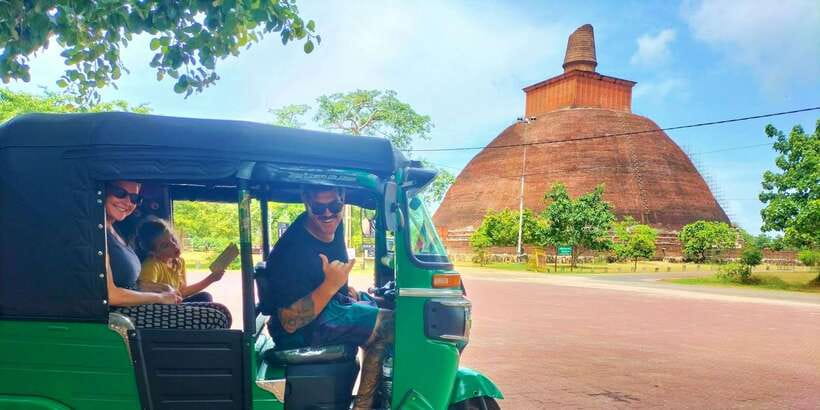
Anuradhapura is too spread out for a quick walk between its major stupas, monasteries, ponds, and statues. This private five-hour tuk-tuk tour solves that problem neatly, taking you from the sacred Sri Maha Bodhi to vast monastic ruins without the usual fuss of arranging transport at every turn.
I like the personal pace and the chance to ask questions about Buddhism, Sri Lankan customs, and ancient life as you go. I also like the small touches, including bottled water, light snacks mentioned by the guide, and a short tuk-tuk lesson. The main drawback is time: twelve listed stops in five hours means you are sampling Anuradhapura, not studying every ruin at length. Entry tickets are also extra, and the ancient city is hot and exposed.
Key points to know before you book
- Guide Navin brings history to life: He explains Buddhism, architecture, local culture, wildlife, and Sri Lankan traditions in clear English.
- A tuk-tuk makes the spread-out site practical: You spend less time arranging rides and more time at the important monuments.
- The route covers both living religion and archaeology: Sri Maha Bodhi and Ruwanwelisaya remain active sacred places, while Abhayagiri and Jethawanaramaya reveal the scale of ancient monastic life.
- The pace is flexible: You have time for photographs, questions, and a short break rather than being pushed from one stop to the next.
- Budget for the entry fee: The tour costs $30 per person, but tourist entrance tickets are not included. A recent booking note puts the foreign visitor fee at about $30 per person.
- Come prepared for sun and temple etiquette: Bring comfortable shoes, sunscreen, and your passport. Hats are not allowed on this activity.
Why Anuradhapura works best with wheels

Anuradhapura was Sri Lanka’s first capital, and its sacred center covers a large area. The monuments are not arranged in one compact square. A tuk-tuk lets you move between them quickly, while your guide handles the route and points out details that are easy to miss from the road.
I find this especially useful if you have only one afternoon in town. You will not see every corner of the ancient city, but you can reach its leading religious sites, major stupas, and several quieter archaeological remains in one outing.
The private format matters too. You are not tied to the pace of a large group, and you can ask Navin to spend a little longer on a point that interests you. Several parts of the route involve active worship, so having a guide who can explain what is happening helps you look with respect rather than treating each temple as just another photo stop.
Pickup and drop-off are included in Anuradhapura. You are asked to wait in your hotel lobby ten minutes before the agreed pickup time. The transport is by tuk-tuk, and a short lesson is part of the experience. One group of three adults was given two tuk-tuks for extra comfort, so it is worth mentioning your group size when you book.
More Ancient History Tours in the world:
- Pompeii: Entry Ticket and Guided Tour with an Archaeologist
★ 4.8 · 19,459 reviews - Athens: Acropolis & up to 5 Archaeological Sites Combo Pass
★ 4.2 · 13,904 reviews - Colosseum: Underground and Ancient Rome Tour
★ 4.7 · 12,691 reviews
Sri Maha Bodhi and Ruwanwelisaya: the sacred heart
The first major stop is Jaya Sri Maha Bodhi, usually known as Sri Maha Bodhi. This is an active Buddhist pilgrimage site, not simply an old tree behind a fence. Your guide can help explain its religious importance and the way worship remains part of daily life here.
The planned visit is about 25 minutes. That is enough for an introduction, a look around, and photographs, but not an unhurried religious visit during a busy period. Wear shoes that are easy to remove if required, and remember that temple grounds call for modest clothing and quiet behavior.
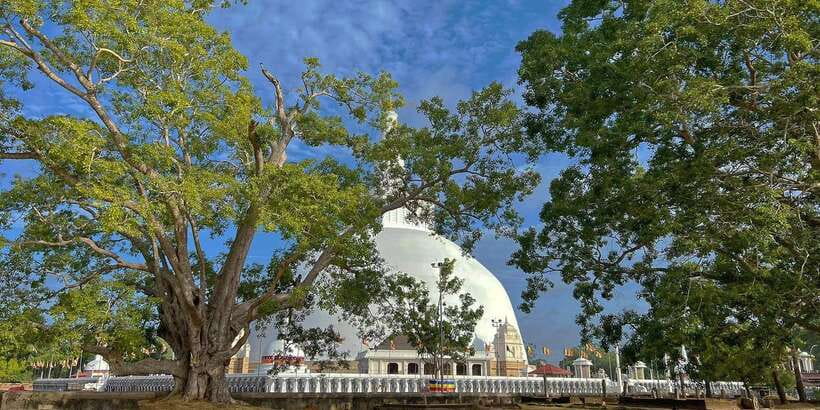
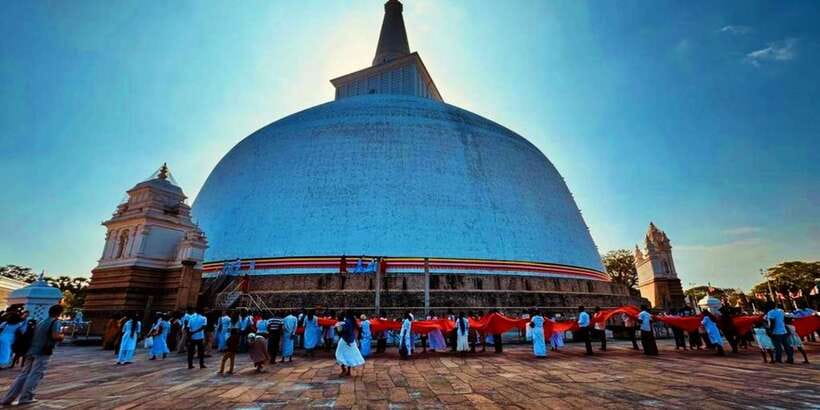
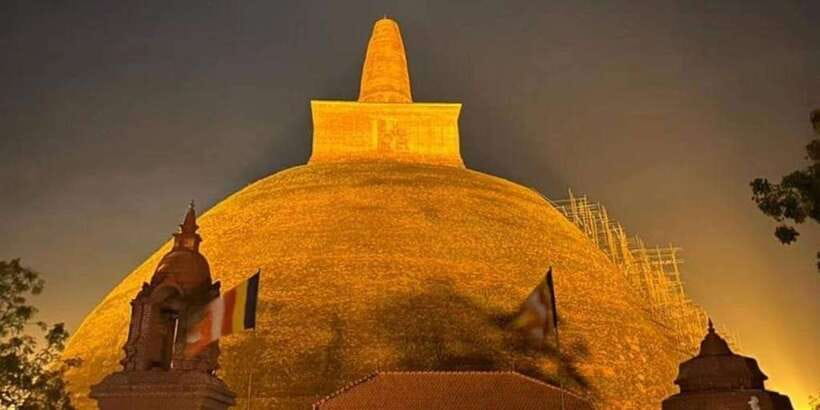
Next comes Ruwanweli Maha Seya, one of Anuradhapura’s best-known stupas. Its bright white form is far larger than many first-time visitors expect, and the open setting gives you a clear sense of its scale. Navin’s explanations add useful context about Buddhist practice and the stupa’s place in Sri Lankan culture.
The schedule again allows around 25 minutes. That works for a focused visit, though you may want more time if you care about architectural details or want to sit quietly. The value here is not just seeing a large white dome. It is understanding why stupas remain active places of devotion.
Jethawanaramaya and the scale of ancient engineering
Jethawanaramaya shifts the mood from active worship to monumental archaeology. The brick stupa is one of the major sights in the old city, and its scale hints at the power and resources once held by Anuradhapura’s monasteries.
A guide is useful here because bare brick and broken foundations do not always explain themselves. Navin’s role is to connect the remains with the religious and political life of the ancient capital. You can ask about construction, monastic communities, and the way Buddhism shaped the city.
The 25-minute visit keeps the tour moving, but it also limits how long you can linger. If huge ancient monuments are your main reason for coming to Anuradhapura, you may wish to arrange a longer private visit on another day. For a first look, this stop gives you an important piece of the city’s story without eating the whole afternoon.
Kuttam Pokuna and Elephant Pond
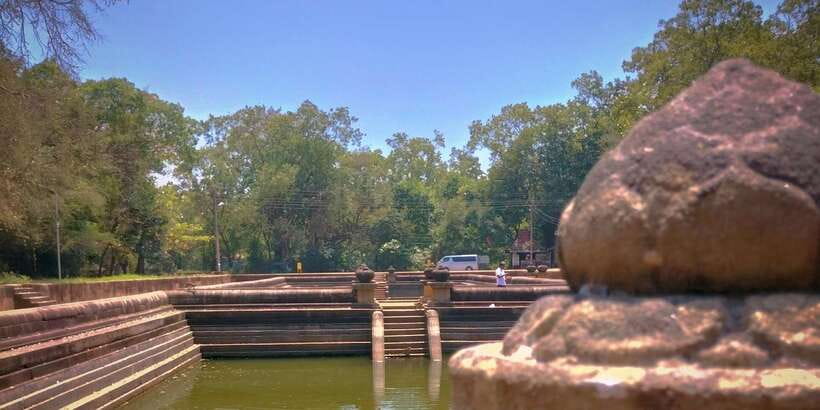
The route then reaches Kuttam Pokuna, the twin bathing ponds associated with the Abhayagiri monastic complex. Their stone steps and careful design show a level of planning that can be easy to overlook when you are focused on stupas.
Your guide can help you read the site as part of a working monastery rather than an isolated pool. The visit is scheduled for about 25 minutes, which gives you time to inspect the layout and hear the main explanation.
Elephant Pond adds another water-related stop. The name gives you a sense of its size, but the important point is how water management supported a large religious center. These quieter sites are valuable because they show the practical side of ancient life: bathing, water supply, movement, and monastic organization.
I like that the route includes places such as these instead of only the famous stupas. They make Anuradhapura feel like a city with systems and daily routines, not a collection of grand religious monuments.
More Private History Tours in the world:
- Private Historical Walking Tour of York
★ 5.0 · 1,324 reviews - Private Guided Historic Electric Cart Tour of St. Augustine
★ 5.0 · 1,194 reviews - Istanbul: Acemoglu Historical Turkish Bath w/Private Options
★ 4.6 · 1,190 reviews - From Cairo: Private Full-Day Tour of Historical Alexandria
★ 4.1 · 1,155 reviews
Samadhi Buddha and Abhayagiri Vihara
At the Samadhi Buddha Statue, you get a more intimate encounter with Buddhist art. The statue is a central stop for anyone interested in meditation, posture, and the visual language of Buddhist sculpture.
This is a good place to ask Navin about the difference between looking at a statue as art and understanding its religious meaning. He is particularly strong when discussing Buddhist philosophy and how it connects to Sri Lankan culture. His English is described as clear, and he can answer questions rather than delivering only a set speech.
The tour then moves to Abhayagiri Vihara, one of the most important monastic areas in Anuradhapura. The remains spread across a broad area, and a guide helps you understand how the buildings, stupas, ponds, and carved details fitted together.
Abhayagiri is also where the tour shows its value as a private outing. You can pause for photographs, ask about a carving, or request a little more explanation without worrying about holding up a coach full of people. You should still expect a brisk overview, since the route has many stops.
The refectory, Moonstone, and guard stone
The Main Refectory of Abayagiri Monastery offers a glimpse of monastic life beyond prayer and ceremony. A refectory points to the practical work of feeding a large community. The stone remains may appear simple at first, but they help explain how a major monastery functioned day to day.
At Anuradhapura Moonstone, look down. The carved semicircular stone at the base of a stairway is one of the city’s most distinctive artistic details. It is easy to rush past it while looking toward a larger building, so this is exactly the kind of stop where a guide earns his keep.
Navin can explain the symbols and patterns carved into the stone, along with their place in Buddhist architecture. You do not need to be an art historian to appreciate it. You only need a few minutes and someone who knows what to point out.
The Muragala, or Guard Stone, gives you another close look at carved architectural detail. These stones were placed near entrances, and their figures carry protective meaning. Together, the moonstone and guard stone show how much visual information was built into spaces that might otherwise look like a simple set of steps.
Thuparama Seya and the final stop
The final listed monument is Thuparama Seya, one of the ancient city’s important stupas. It provides a fitting end to a route that moves between living sacred places, giant brick monuments, monastic facilities, waterworks, sculpture, and carved entrances.
The planned stop lasts about 25 minutes. You can use the time for a final explanation, photographs, and a chance to ask Navin about anything you have not yet covered. The tuk-tuk then returns you to Anuradhapura.
Because the itinerary lists roughly twelve sightseeing locations at about 25 minutes each, you should understand the schedule as a series of focused visits. Travel time between monuments and the tuk-tuk lesson also use part of the five hours. That is not a flaw, but it is important to set the right expectation. You are getting a strong orientation to the ancient city, not a slow archaeological study.
What makes Navin a useful guide
The guide can make or break a site like Anuradhapura. Navin is the named guide associated with this tour, and his strongest qualities are his energy, clear English, humor, and broad knowledge of Sri Lankan religion and culture.
He does more than identify monuments. He explains Buddhism, answers questions about local customs, and connects ancient sites with present-day Sri Lanka. He also points out wildlife and birds along the way, according to the experience of one group. That adds a welcome change of pace during the rides between monuments.
The personal manner is another advantage. Navin has been described as flexible about breaks and interested in helping with later travel plans. He has shared tips by WhatsApp after the tour, and he may offer suggestions for other places in Sri Lanka. That extra help is useful if Anuradhapura is part of a longer journey.
A few details give the outing personality. There may be light snacks and refreshments, and the tuk-tuk lesson is a fun addition for first-time riders. One group even enjoyed Navin singing the theme from Game of Thrones. That is not a guaranteed part of the program, but it captures the friendly, informal tone you can expect.
Price, tickets, and what you get
The tour costs $30 per person. For a private guide, private transport, hotel pickup and drop-off, water bottles, and five hours of sightseeing, I consider that a fair price, especially if you are visiting Anuradhapura for the first time.
The important catch is the entrance ticket. Tourist entry is not included, and a recent booking note puts the foreign visitor charge at about $30 per person for the ancient city. Check the current amount before you go, since ticket prices can change. Once you add that fee, the total cost is much higher than the advertised tour price.
Still, the guide and transport solve two real problems. You do not need to arrange a tuk-tuk for each section, and you gain explanations at sites where signs alone may tell you very little. If you already have private transport and enjoy researching ruins on your own, the value is less clear. If you have limited time, the tour can save you a great deal of planning.
Free cancellation is available up to 24 hours before the start for a full refund, and you can reserve now and pay later. The tour is listed as wheelchair accessible, though you should discuss your specific needs when booking because ancient religious sites can have uneven surfaces.
Heat, clothing, and practical preparation
This is a sunlight tour, so bring sunscreen, water, and comfortable shoes. Water bottles are included, but I would still apply sunscreen before pickup and carry extra protection for the exposed parts of the site.
Bring your passport. Hats are not allowed on this activity, so plan accordingly. Comfortable footwear matters because you will be moving between monuments and may need to remove shoes at sacred places.
The tour is conducted in English, with a live English-speaking guide and an English audio guide included. It is a private group experience, not a shared coach tour. People over 95 are listed as unsuitable for the activity, and anyone with mobility concerns should confirm that the tuk-tuk transport and site conditions fit their needs.
Who should choose this Anuradhapura tour?
I would choose this tour if you want to see the main sacred and archaeological sites in one half-day, prefer a private setting, and want explanations instead of simply taking photographs. It is especially useful for first-time visitors, couples, families, and anyone who wants to ask questions about Buddhism and Sri Lankan culture.
It also suits you if you like a friendly guide with a sense of humor. Navin’s style appears warm and flexible rather than formal and academic. That makes the history easier to follow, though travelers seeking long, technical discussions at every monument may find the pace too quick.
You should think twice if you want to spend a full morning at only one or two sites, or if you already have a driver and extensive knowledge of Anuradhapura. The tour covers a lot of ground, and the 25-minute stops are designed for breadth.
Should you book it?
Book it if you want an efficient introduction to Anuradhapura, especially if you have only five hours and do not want to manage transport yourself. The strongest reasons are the private tuk-tuk, Navin’s clear explanations, the mix of famous monuments and smaller archaeological details, and the freedom to ask questions.
Just budget separately for the entry ticket, prepare for sun, and accept that this is a brisk overview. If those limits suit your plans, the tour offers a friendly and practical way to understand why Anuradhapura matters.
FAQ
How long does the Anuradhapura tour last?
The tour lasts five hours, including tuk-tuk transport and sightseeing around Anuradhapura.
What transport is used?
The tour uses private tuk-tuk transport. A short tuk-tuk lesson is included.
Is hotel pickup included?
Yes. Pickup and drop-off in Anuradhapura are included. You should wait in your hotel lobby ten minutes before the scheduled pickup time.
Which guide language is available?
The live tour guide speaks English, and an English audio guide is included.
Are entrance tickets included in the price?
No. Tourist entrance tickets are not included. A recent booking note gives the foreign visitor fee for the ancient city as about $30 per person, but you should confirm the current price.
Which major sites are visited?
The route includes Sri Maha Bodhi, Ruwanweli Maha Seya, Jethawanaramaya, Kuttam Pokuna, the Samadhi Buddha Statue, Abhayagiri Vihara, the Main Refectory of Abayagiri Monastery, Elephant Pond, Anuradhapura Moonstone, Muragala, and Thuparama Seya.
Is the tour private?
Yes. It is offered for a private group with private transport and a private guide.
Can I cancel the booking?
You can cancel up to 24 hours in advance for a full refund.
What should I bring?
Bring your passport, comfortable shoes, and sunscreen. Hats are not allowed on the activity.
Just added around the world
- Scenic Train ride to historical cities of Morretes and Antonina★ 4.0 · 188 reviews
- 6-Day Cultural Tour to Machu Picchu★ 5.0 · 76 reviews
- Jewish Heritage of Curacao★ 4.5 · 68 reviews
- The Curacao’s Colorful History Walking Tour★ 5.0 · 55 reviews
- Discover Scuba Diving Amathounta’s Ancient Port★ 5.0 · 30 reviews
- Olous – Guided Snorkelling Excursion to Discover Olous Sunken Ancient City★ 4.5 · 31 reviews
- Night Walking Tour of Medieval Cuenca★ 5.0 · 64 reviews
- WWII – The Battle of Crete Day Tour★ 5.0 · 103 reviews