
Review · COLOMBIA
Santa Marta A Historical & Street food Experience
Santa Marta’s best stories are packed into a walkable center of old squares, churches, painted walls and former trading buildings. This tour links those places with the Tayrona Gold Museum, local food stops and the city’s lively evening streets, giving you a useful first look at the city rather than a single museum visit.
I like the mix of history and food, especially the chance to connect Santa Marta’s past with lulo, exotic fruit drinks, ceviche and empanadas. I also like the guides’ personal approach. Sergio, named by several people who took the tour, has helped explain local history, answer basic questions and suggest other things to do in the area.
The main concern is value. At $56 per person, two hours is a short window for a museum, several churches, a cemetery, plazas and food tastings. Some departures have felt rushed, while another ran close to four hours, so you should confirm the timing and exactly which tastings are operating on your date.
Key points at a glance
- Tayrona Gold Museum: Begin at the former Customs House and spend guided time with artifacts connected to the Indigenous people of the Sierra Nevada.
- Santa Marta’s oldest center: Walk from Bolívar Park to the cathedral, Camellón, Parque de los Novios and Iglesia San Francisco.
- Food with a local angle: The experience describes tastings of ceviche, lulo, exotic fruit juice and empanadas, but the formal inclusions specify only a local drink.
- Guides with local context: English and Spanish tours are available, and Sergio has been singled out for his clear explanations and helpful advice.
- A compact walking tour: The route finishes near Parque de los Novios or returns to the Tairona Gold Museum, with no transport listed.
- Good timing matters: The 4:30 afternoon departure has been praised as cooler, though the exact start times depend on availability.
Starting at the Tairona Gold Museum
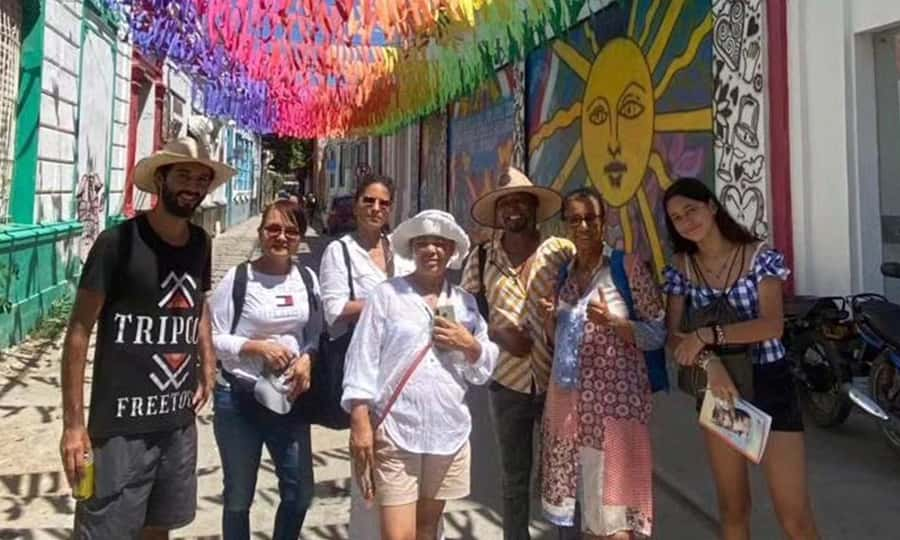
You meet at the Museo del Oro Tairona, housed in the Casa de la Aduana. That is a smart starting point. The building connects Santa Marta’s Indigenous past with its role as a colonial port and trading center, so the tour begins with more than a quick orientation.
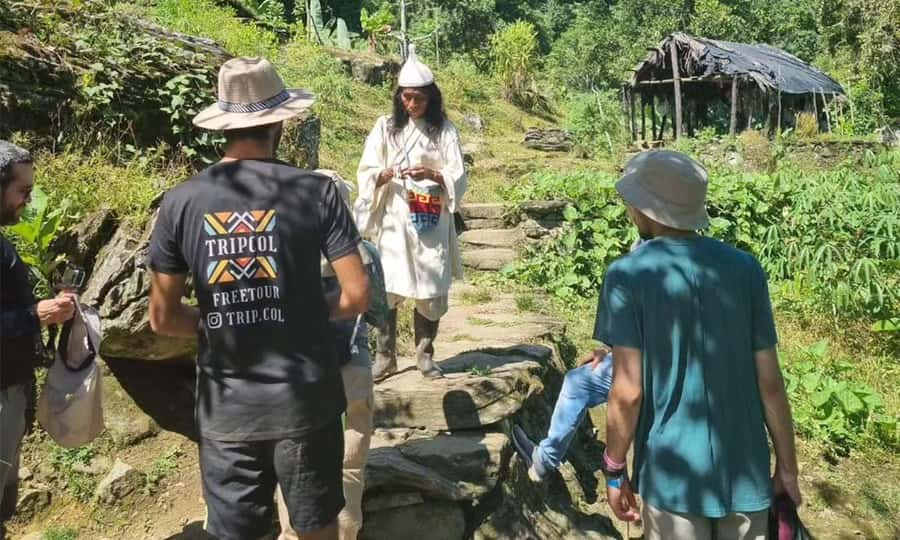
The museum portion is listed as two guided visits, one of 15 minutes and another of 30 minutes. In practical terms, plan for about 45 minutes of museum-focused interpretation, though the actual time can vary. The guide explains Tayrona culture, objects and traditions tied to the Sierra Nevada, giving you background that makes the later walk easier to understand.
I would pay close attention here. The museum is not just a collection of gold objects. It helps place Santa Marta in a wider cultural setting, where Indigenous communities, Spanish colonial power and modern Colombian identity meet. If learning about the Tayrona people is your main reason for booking, this is the most important part of the morning or afternoon.
There is one point to clarify before you set off. The experience promises a guided museum visit, but the museum segment has not always matched expectations. Ask at the beginning how much time you will have inside and whether the guide will accompany you throughout the galleries.
More Food and History Tours in Colombia:
- Sevilla Food Tour: Tapas, Wine, History & Traditions
★ 5.0 · 3,468 reviews - Victoria Guided Food and History Tour
★ 5.0 · 2,015 reviews - Gastown Historic Walking Food Tour
★ 5.0 · 1,863 reviews
Bolívar Park and the first city stories
From the museum, the route moves to Simón Bolívar Park for about 30 minutes of guided explanation. This is where the tour shifts from objects in display cases to the public spaces that shaped Santa Marta.
The focus is Bolívar and his connection with the city. The park also gives you a chance to see how Santa Marta’s old center is arranged, with historic buildings and streets radiating from a central civic space. A guide with a background in history, journalism or anthropology can add useful context here, especially if you ask how the city changed over time.
This stop is likely more about interpretation than grand monuments. Keep your expectations realistic. You are not signing up for a long historical lecture or a full architectural survey. Instead, you get a short explanation that helps you read the next streets with more purpose.
Camellón Rodrigo de Bastidas and the waterfront walk
The route continues to Parque Camellón Rodrigo de Bastidas, listed as a 15-minute visit and photo stop. This section adds a different view of Santa Marta, moving away from the tight streets of the center and toward the city’s waterfront setting.
The guide provides scenic views along the way, so this is a good moment to pause and take photographs. The stop also helps explain why Santa Marta developed as a port and why trade mattered so much to the city.
The short timing is both a strength and a limitation. You get a quick change of scene without spending half the tour at one location, but you should not expect a leisurely waterfront walk. If the group has fallen behind, this may be one of the places where the guide needs to keep moving.
The Cathedral Basilica and colonial details
The Cathedral Basilica of Santa Marta receives about 20 minutes. The stop centers on colonial architecture, with attention to details inside and around the building. The experience also describes hidden messages in the frescoes, so this is a place where a guide adds real value.
A church can look like a quick photo stop when you visit alone. With a good explanation, its design becomes evidence of the city’s colonial past and religious life. I would listen for the small details rather than expect a long formal tour.
The cathedral visit also gives you a useful contrast with the Tairona Gold Museum. One stop presents Indigenous objects and traditions. The other shows the institutions brought by Spanish colonial rule. That contrast is one of the tour’s better ideas, even though the total schedule leaves little room for lingering.
More Meals Out in Colombia:
- Prague: Medieval Dinner with Unlimited Drinks
★ 4.4 · 19,847 reviews - Prague 5 Courses Medieval Dinner and Live Performances
★ 4.0 · 2,920 reviews - Big Island Historical Dinner Cruise to Kealakekua Bay
★ 4.5 · 1,279 reviews - Budapest: Sir Lancelot Medieval Dinner with Drink and Show
★ 4.1 · 1,155 reviews
Parque de los Novios and Santa Marta after dark
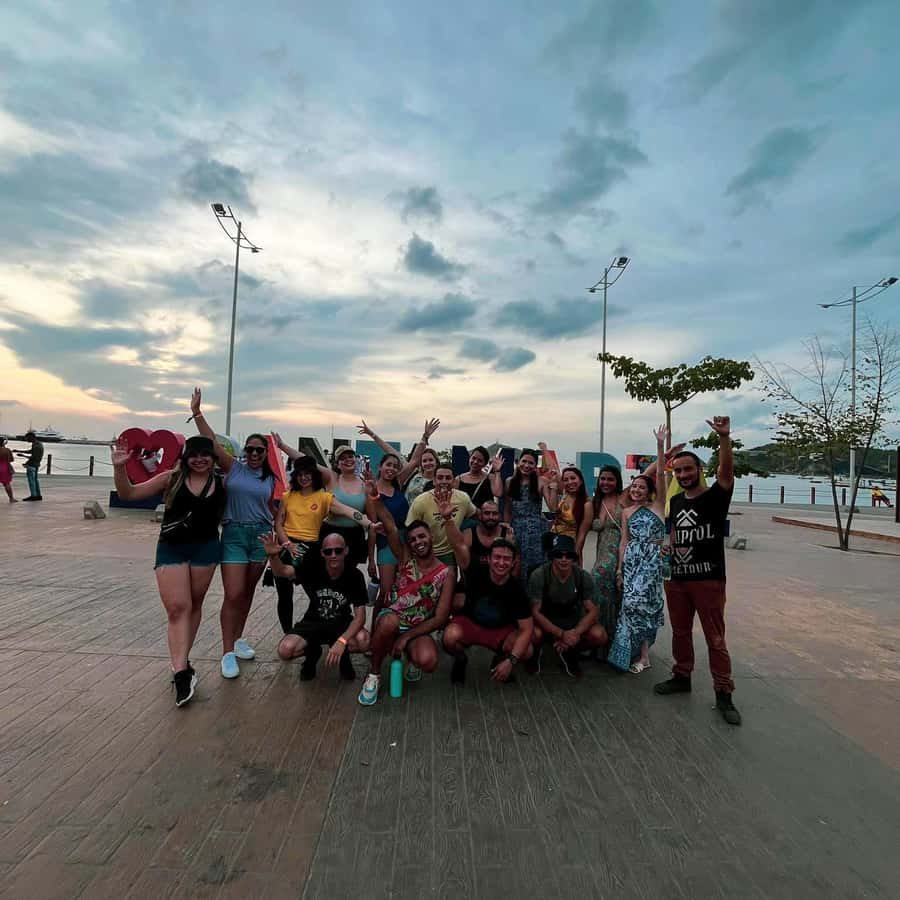
The largest single stop is Parque de los Novios, with about 45 minutes of guided time. This is the social center of modern Santa Marta, surrounded by restaurants, pubs and clubs. The tour uses the park to explain the city’s social life, romances and local legends.
This is also where the experience becomes practical. You can look around at places to eat or have a drink later, and the guide can point out the feel of the surrounding streets. The tour description promises highlights of restaurants, pubs and clubs in the central area, but it does not identify particular venues or include a meal at each one.
For many people, this will be the most useful stop after the museum. You learn where the evening action is, then return later on your own. If you prefer quiet historic streets, this area may feel livelier than the museum quarter, especially later in the day.
The 4:30 afternoon departure is worth considering. One person specifically found the cooler late-day timing helpful. It may also allow Parque de los Novios to feel more social, though you should not assume the route finishes after sunset. The listed duration is two hours.
San Francisco Church and San Miguel Cemetery
Iglesia San Francisco is a 15-minute photo stop and guided visit. Like the cathedral, it adds another piece to the city’s religious and architectural story without taking up too much time.
San Miguel Cemetery follows with about 20 minutes. This is an unusual inclusion for a short city walk. A cemetery can reveal local customs, family memory and the way a community honors its past. Here, the guide’s storytelling matters more than the length of the stop.
The route includes photographs at both locations, so bring a phone or camera if you enjoy small architectural details. You should also wear comfortable shoes. The tour is a walking experience through old streets, and the schedule includes several stops close together.
What the food stops really mean
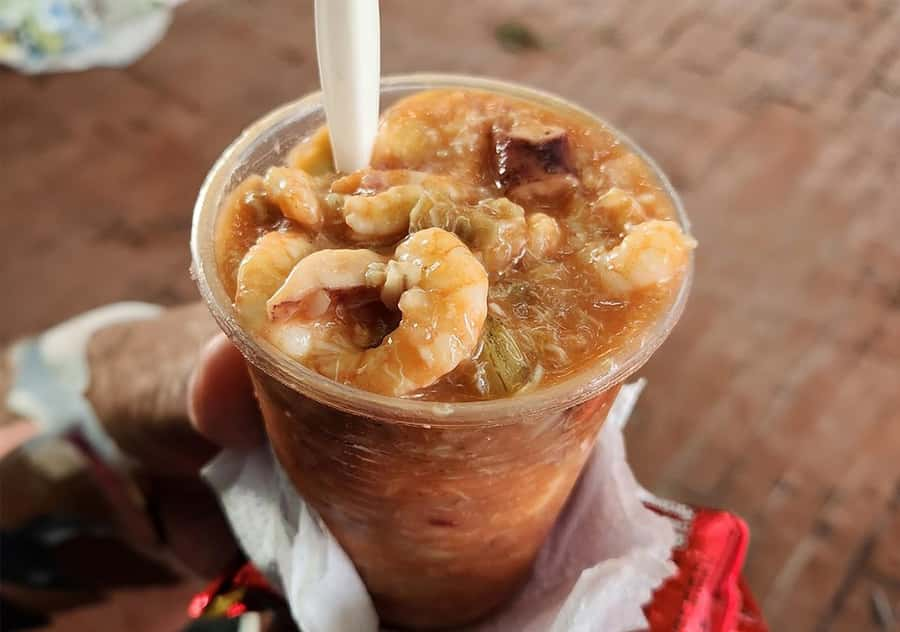
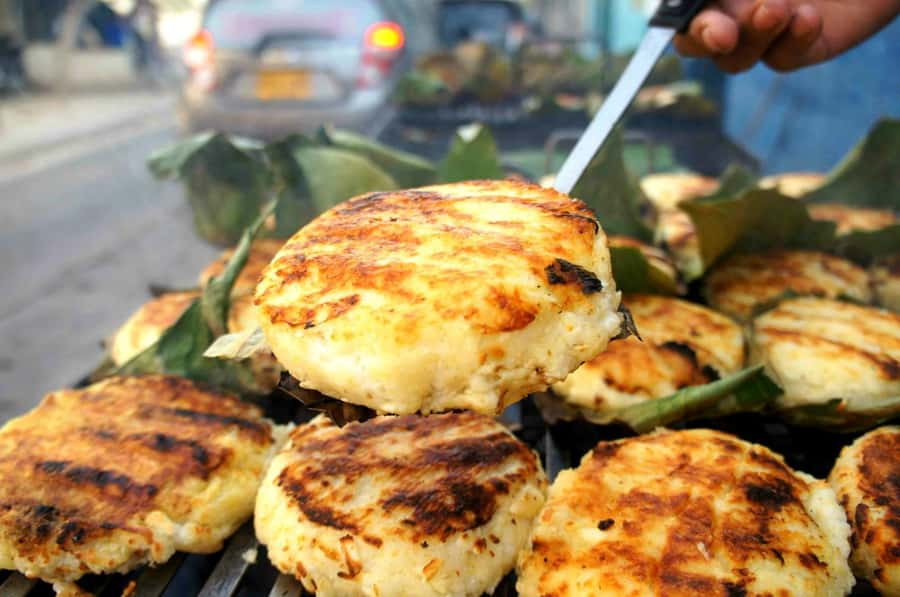
Food is a major part of the tour’s appeal, but the details need careful reading. The experience describes Colombian-style ceviche, lulo in different preparations, exotic fruit juice and crispy empanadas filled with local flavors. The formal inclusions list a local drink, not a full meal or every tasting named in the description.
The fruit stop may include drinks made with guanábana, maracuyá or zapote. Lulo is another Colombian favorite, often served as a juice or infusion. These flavors are a useful introduction to local ingredients, especially if you are new to Colombian food.
The ceviche is described as a stop at a local place, with fresh seafood and Colombian seasoning. But one departure could not offer the ceviche because the venue was closed, and no replacement was provided. That is an important practical warning: food stops may depend on opening hours and conditions on the day.
Empanadas are planned as the final tasting. They are a familiar Colombian street food, but fillings and preparation can vary. Treat the tastings as small samples, not lunch. If you need a full meal, plan one separately around Parque de los Novios.
Because the food portion is not fully clear, ask the guide at the start what is included that day. At $56, the difference between a drink and several tastings matters when you judge the price.
The guide can make or break the walk
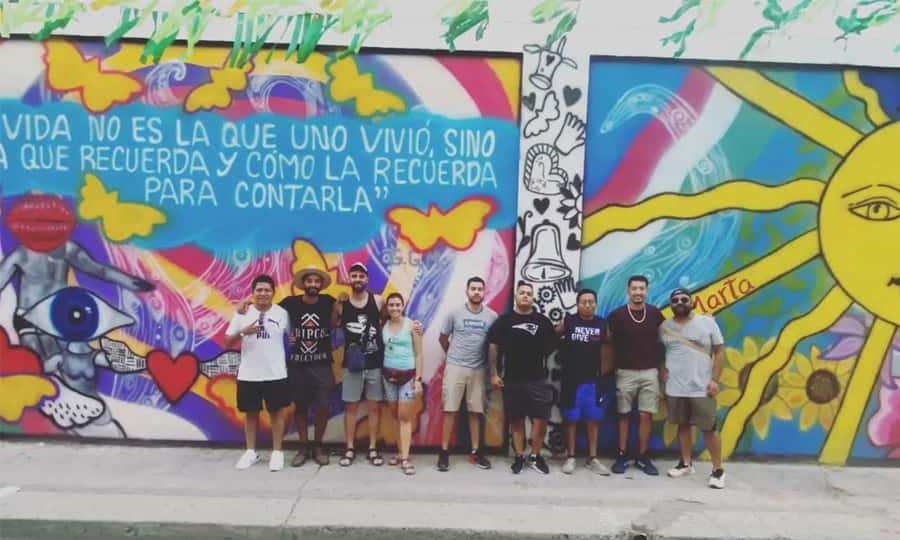
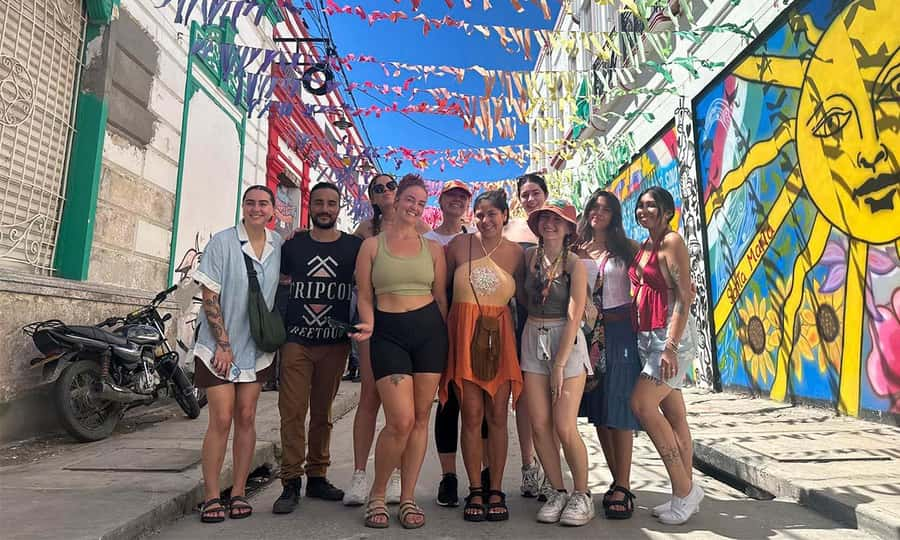
The tour is led in English or Spanish by a live guide. The guide’s background is described as history, journalism or anthropology, which suits a route built around stories rather than simple directions.
Sergio has received especially warm attention for explaining Santa Marta’s architecture, the Tayrona people and local history in an approachable way. He has also helped with basic questions about the area and offered suggestions beyond the scheduled walk. That kind of conversation is useful if Santa Marta is your first stop in Colombia.
At the same time, the quality of a walking tour depends heavily on pace. Two people found the experience too hurried, with one describing it as much shorter than expected. Another departure lasted close to four hours and was praised despite running well over the stated duration.
That wide difference matters. You should ask whether the tour will follow the full route, how long the museum visit will be and what happens if a food stop is closed. A careful guide can turn a compact route into a pleasant introduction. A rushed guide can make the same schedule feel like a checklist.
Is $56 a fair price?
The price is $56 per person. That is high for a two-hour walking tour if you receive only a brief museum visit and one local drink. It becomes easier to justify if you receive substantial guide time, the museum entry and several food samples, especially with a thoughtful guide who helps you plan the rest of your stay.
The strongest value comes from the combination of museum interpretation and local orientation. You are not paying only for a walk past buildings. You are paying for a guide to connect Tayrona culture, colonial architecture, public squares, food and present-day nightlife.
Still, the price leaves little room for disappointment. If the tour is rushed, lasts much less than two hours or loses the ceviche stop without a substitute, it will feel expensive. If it runs long with careful explanations and the planned tastings, the value improves.
I would book it early in a Santa Marta stay, not at the end. The route can help you decide where to return for food, drinks and further sightseeing. If you already know the historic center well, the cost is harder to defend.
Who should book this experience?
This tour suits you if you want a short introduction to Santa Marta and prefer a guide to explain what you are seeing. It is especially useful for first-time visitors interested in the Tayrona people, colonial architecture and Colombian snacks.
It also suits people who like asking questions. The best reports describe a personable guide who offered extra advice and made time for basic questions about the area. That turns the walk into more than a fixed script.
You may want another option if you need a reliably timed two-hour activity, a substantial meal or guaranteed access to every advertised tasting. The route has many stops, and closures can affect the food portion. You should also avoid booking it immediately before an important departure, since the actual finish time has varied.
Free cancellation is available up to 24 hours before the start, and you can reserve without paying immediately. Those policies help if your plans are still moving, but they do not solve the central question: confirm what will be included on your chosen departure.
Should you book the Santa Marta historical and street food experience?
Book it if you want one guide-led introduction to the Tairona Gold Museum, Santa Marta’s old center and local flavors. The best reason to choose it is the chance to connect Indigenous culture, colonial buildings and present-day city life in one compact route.
I would choose an afternoon start, ask for the fullest museum visit available and confirm the food tastings before paying. If ceviche, lulo and empanadas are essential to you, do not assume every sample is guaranteed. With a strong guide such as Sergio, this can be a helpful and engaging first look at Santa Marta. At $56, though, you should expect clear explanations, proper museum time and a fair effort to replace any closed tasting.
FAQ
Where does the tour start?
The tour starts at the Museo del Oro Tairona, also known as Casa de la Aduana.
Where does the tour finish?
The listed drop-off locations are Parque de los Novios and the Museo del Oro Tairona, Casa de la Aduana.
How long does the tour last?
The scheduled duration is two hours. Actual timing can vary, with some departures reported as shorter and another lasting close to four hours.
What languages are available?
The tour is offered with a live guide in English or Spanish.
What is included?
A professional guide, a guided tour inside the museum and a local drink are included.
Are ceviche, lulo, fruit juice and empanadas included?
These foods and drinks are described as part of the experience, but the formal inclusions specify only a local drink. Ask what tastings are operating on your date.
What places are visited?
The route includes the Tairona Gold Museum, Simón Bolívar Park, Parque Camellón Rodrigo de Bastidas, the Cathedral Basilica of Santa Marta, Parque de los Novios, Iglesia San Francisco and San Miguel Cemetery.
Can I cancel or pay later?
You can cancel up to 24 hours in advance for a full refund. The reservation option also allows you to book and pay later.
More Food Trips in Colombia
- Historic Ybor City Food Walking Tour
★ 5.0 · 2,210 reviews - Barcelona Tapas Walking Tour: Food, Wine & History
★ 4.5 · 1,928 reviews - Boston Food & History: Pizza, North End & Freedom Trail
★ 5.0 · 1,772 reviews - Dublin Historical Centre Food Tour with 8 Food Tastings & Drinks
★ 5.0 · 1,718 reviews
More Food and Drink Trips in Colombia
- Amsterdam Food and Cultural Tour with Tastings
★ 5.0 · 4,315 reviews - Barcelona: Tapas Walking Tour with Food, Wine, and History
★ 4.8 · 4,261 reviews - Normandy D-Day Small-Group Day Trip with Omaha Beach, Cemetery & Cider Tasting
★ 5.0 · 2,786 reviews - Madrid Tapas & Taverns Small Group Food & History Tour
★ 5.0 · 2,664 reviews
Just added around Colombia
- Cartagena Instagrammable History★ 4.5 · 29 reviews
- Premium Pirate Beach Adventure, Open sea Rope Swing, Drinks+Lunch★ 5.0 · 64 reviews
- Chiva Private Cultural Tour with Audio Guide in Buga★ 5.0 · 49 reviews
- Cali: Walking tour of the historic center★ 5.0 · 69 reviews
- Historical tour Bogota★ 5.0 · 72 reviews
- Bogota scooter tour★ 5.0 · 46 reviews
- Shared Tour of Bogota’s Historic Downtown (La Candelaria)★ 4.7 · 100 reviews
- Medellin Historic Walking Tour★ 4.9 · 86 reviews
Colombia History Tours, compared.
Cartagena: Historic Center and Getsemaní Shared Walking Tour
Read our review →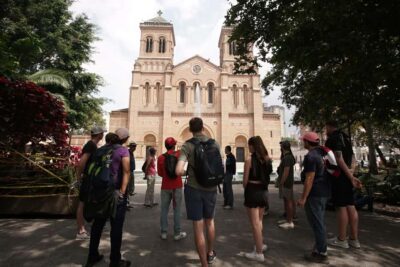
Shared Medellín Downtown Tour with Wireless Audio
Read our review →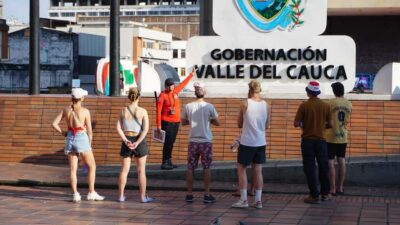
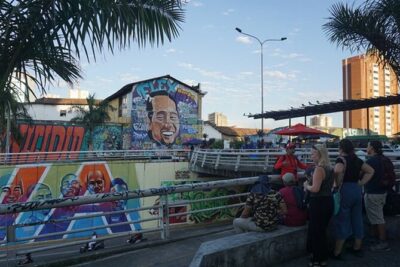
Historical Shared Tour Salsa, Graffiti & Resistance in Cali
Read our review →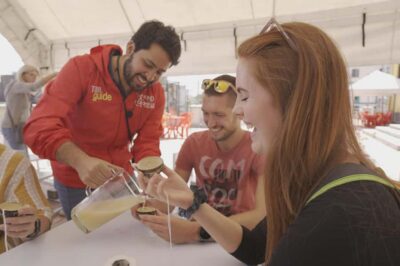
Shared Tour of Bogota’s Historic Downtown (La Candelaria)
Read our review →
From Medellín: Private Pablo Escobar History Tour
Read our review →
Browse the lists this tour appears in