
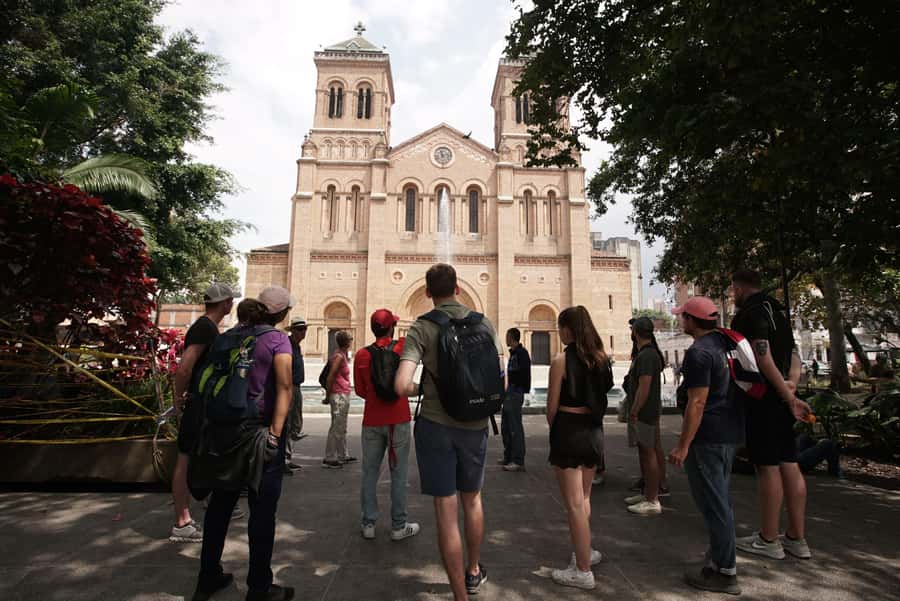
Review · COLOMBIA
Shared Medellín Downtown Tour with Wireless Audio
Medellín’s downtown is easiest to understand as a series of turning points: industry, railroads, violence, public investment, and social change. This walking tour connects those chapters while taking you through Botero Plaza, Junín Street, La Alpujarra, and the Park of Lights. The difficult 1980s and 1990s are discussed openly, without reducing the city to drug-trafficking stories.
I like two things here. First, the route gives you both famous sights and the meaning behind them. Second, the wireless receivers let you hear the guide clearly while you take photos or walk through crowded streets. Guides such as Santiago, Miguel, Carolina, Daniel, and Sebastián are repeatedly praised for explaining the city with warmth and energy.
The main drawback is the length and pace. You may walk about 8 kilometers over 150 minutes to three hours, with some standing stops, and downtown can feel crowded and confronting. This is not a gentle sightseeing stroll, and it is not suitable for people with mobility impairments.
Key points to know before you book
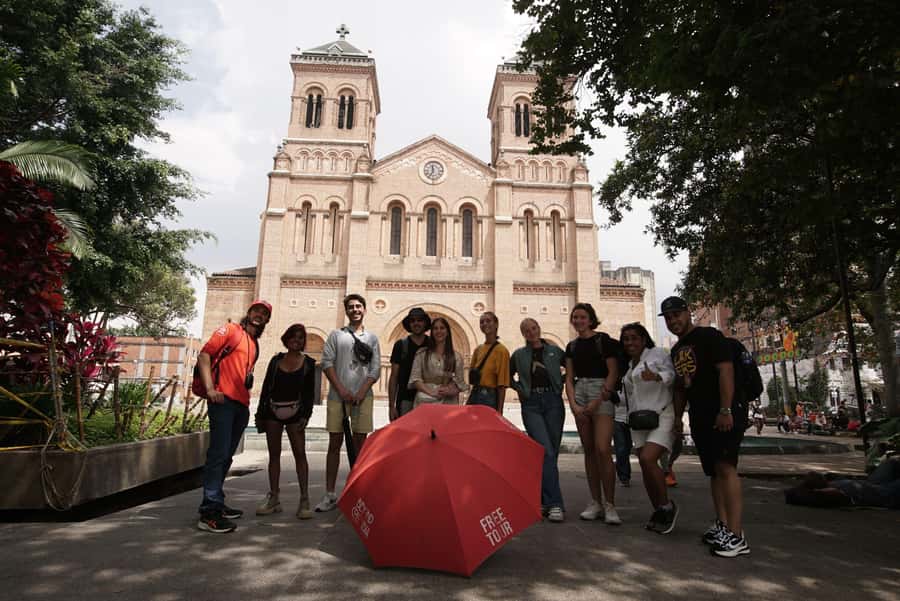
- Botero Plaza is the starting classroom: You begin in front of the Museo de Antioquia, surrounded by Fernando Botero’s large bronze figures and the daily activity of central Medellín.
- The past is treated directly: The route discusses the 1980s and 1990s, including drug trafficking and violence, while also explaining the city’s later social investment and recovery.
- Railroads explain Medellín’s growth: La Alpujarra and the old railroad story show how transport helped turn Medellín into an industrial center.
- Wireless audio makes a real difference: You can hear the guide on busy streets without standing shoulder to shoulder with the group.
- Local advice is part of the value: Guides provide suggestions for coffee, lunch, souvenirs, and other places to see.
- Bring rain protection and water: Medellín’s weather can change, and the route involves a long walk with no included transport.
Why this downtown walk gives Medellín useful context
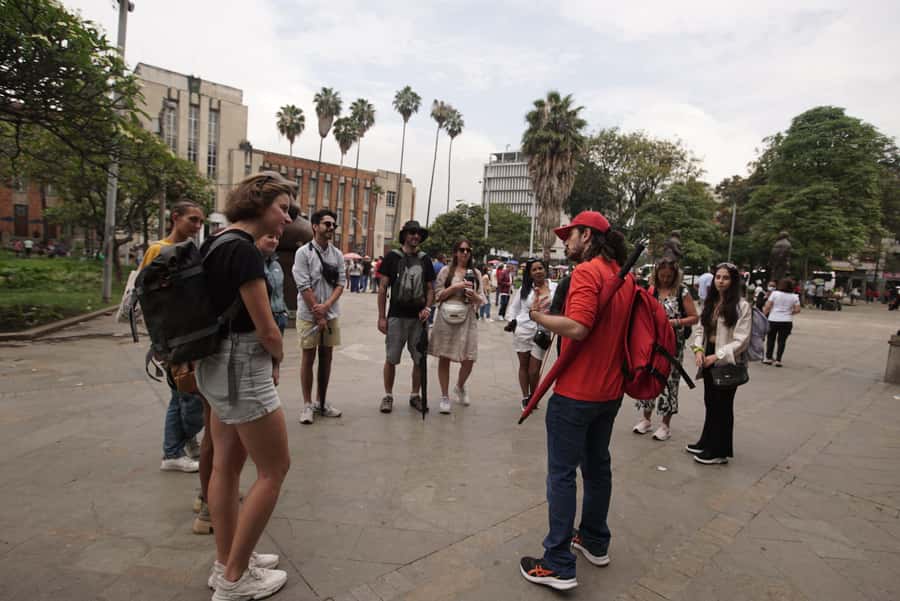
A first visit to Medellín can leave you with disconnected impressions: Botero sculptures, office towers, churches, street vendors, public squares, and the city’s famous reputation for violence. This tour aims to join those pieces together.
The focus is not only on what you see, but why it matters. You hear about Paisa culture, local industry, the railroad, public art, and the city’s attempts to address its past through collective action and social investment. That makes the tour useful on your first day, when you want a mental map before exploring on your own.
I also appreciate the stated promise to present objective information without taking sides. No historical tour is perfectly neutral, and one past participant felt the interpretation was not entirely free of opinion. That is worth keeping in mind. Still, the route appears to make room for difficult facts rather than offering a polished city promotion.
More Self-Guided Tours in Colombia:
- Chiva Private Cultural Tour with Audio Guide in Buga
★ 5.0 · 49 reviews - Taormina: Ancient Theater Skip-the-Line Ticket & Audio Guide
★ 4.5 · 2,412 reviews - Athens: National Archaeological Museum Ticket & Audio Guide
★ 4.3 · 1,330 reviews
Meeting at Botero Plaza, where Medellín makes its first impression
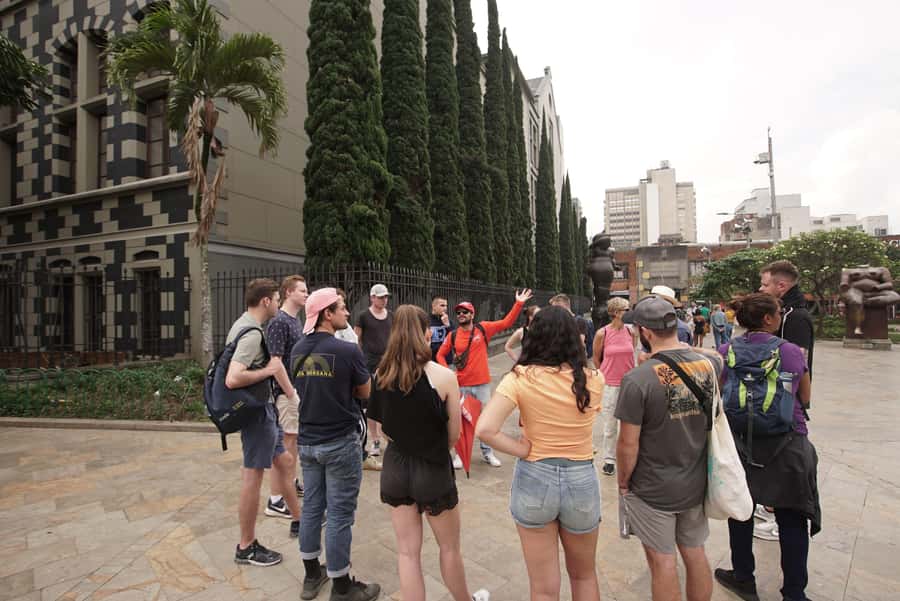
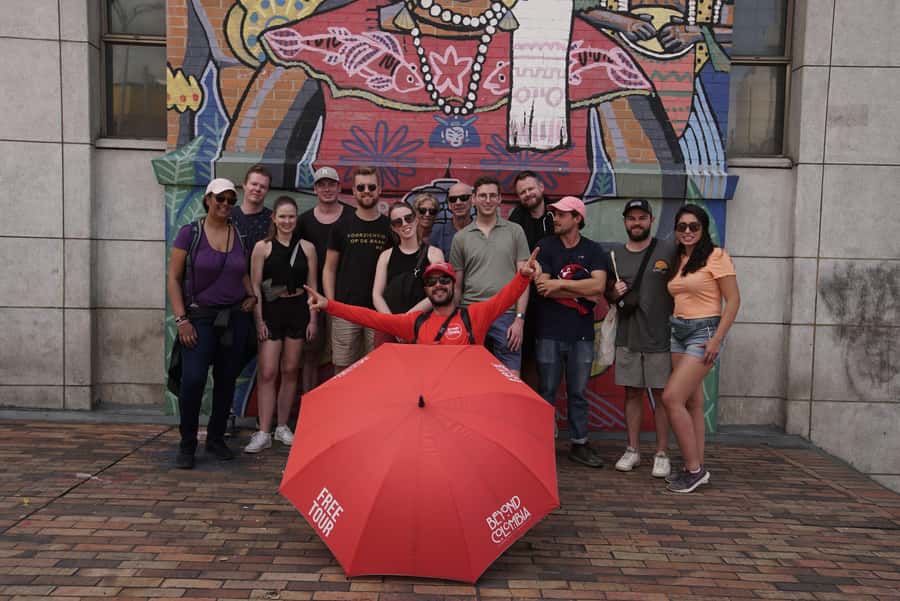
Look for the red umbrellas in front of the Museo de Antioquia at Botero Plaza. This is a clear meeting point, though the plaza can be busy, so arrive with enough time to spot the Beyond Colombia group.
Botero Plaza is a fitting place to begin. Fernando Botero’s generously proportioned bronze sculptures give you an immediate introduction to one of Colombia’s best-known artists, while the square places you right in the middle of downtown life. The art is not treated as a quick photo stop. Your guide explains Botero’s connection to Medellín, his work, and his contributions to the city and country.
This opening also sets the tone for the rest of the walk. You are not being taken straight to a quiet monument. You are entering the working center of the city, where public art, commerce, daily routines, and social problems sit side by side.
Art, murals, and the story behind public spaces
From Botero Plaza, the route moves through central streets and passages, including the famous Junín Street. You will see murals and other urban details that can be easy to miss if you are walking alone with your head down.
A guide adds value here by pointing out what is deliberate and what is simply part of the city’s daily life. The art becomes a way to discuss identity, public space, and Medellín’s effort to make central areas more welcoming and inclusive.
This is also where the wireless audio system earns its keep. You receive a wireless audio receiver, so you can hear explanations while looking around or taking a photo. On crowded streets, that is much easier than trying to stay within arm’s reach of a guide.
The devices are not waterproof. If rain starts, the group must return them for safekeeping. Bring a rain jacket or umbrella, but understand that heavy weather may affect the audio portion of the walk.
Paisa culture beyond the usual clichés
The tour spends time on the Paisas, the people and culture of Antioquia. This is important because Medellín is often presented through a few familiar labels: friendly locals, coffee, business, and a dramatic recent past. The Paisa story is broader than that.
Your guide explains the role of industry and local culture in Medellín’s importance within Colombia. The aim is to show how work, regional identity, and social values shaped the city. This gives you more useful context than a simple list of monuments.
I would pay attention to the guide’s examples and ask questions. Past tours have included guides such as Carolina, Alex, Santiago, Miguel, Deisy, Daniel, Manuel, and Sebastián. The strongest guide experiences appear to come from people who connect the historical material to current affairs and to their own sense of the city.
Guide assignment will vary, of course. You cannot book a particular person based on the details provided, but the repeated praise for clear explanations, energy, and willingness to answer questions is a good sign.
More Audio Tours in Colombia:
- Medieval Torture Museum Ticket with Audio Guide and Ghost Hunting
★ 5.0 · 962 reviews - Gettysburg Battlefield Self-Guided Driving Audio Tour
★ 4.5 · 910 reviews - Delphi: Archaeological Site & Museum Ticket with Audio Tours
★ 4.3 · 721 reviews - Athens: National Archaeological Museum Ticket w/ Opt. Audio
★ 4.4 · 713 reviews
The 1980s and 1990s, discussed without turning Medellín into a crime story
One of the most useful parts of this tour is its treatment of Medellín’s violent past. The 1980s and 1990s are discussed directly, including drug trafficking and the damage it caused. That matters because many visitors arrive knowing Medellín mainly through television versions of that era.
A good city tour should neither hide this history nor let it swallow everything else. This walk tries to show the violence as one chapter in a much longer story. You also hear about resilience, public investment, and the collective work that helped the city move toward a different future.
The framing is hopeful, but not entirely uncritical. One guide was praised for discussing the changes underway while remaining open about ongoing challenges. That is the balance I would want: no romanticizing the past, but no treating Medellín as permanently trapped in it either.
The subject matter may be intense. If you want a light orientation focused only on architecture and food, choose a different walk. If you want to understand why Medellín is discussed as a city of change, this section is central.
La Alpujarra and the railroad story
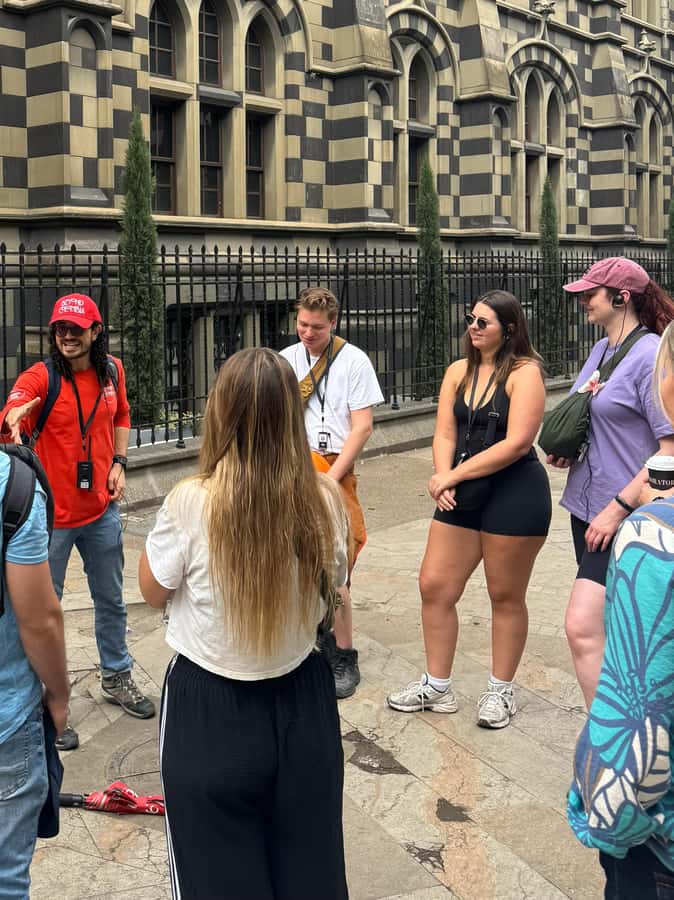
La Alpujarra represents a different chapter of Medellín’s development. Here the tour explains the railroad and the role it played in building the city’s industrial importance.
The railroad story gives the tour a practical backbone. Instead of treating Medellín’s growth as mysterious or inevitable, it shows how transport helped connect the city and support commerce. That history also helps explain why La Alpujarra remains such an important civic area.
This stop may appeal to you if you like understanding how cities function. It is not simply a pretty square or a landmark for a quick picture. It is a place where government, transport, industry, and urban growth come together in the tour’s larger explanation.
The walk between stops is part of the experience. You move through passages and central streets rather than riding from site to site. That lets you see changes in the streetscape, but it also adds physical demand. Comfortable shoes are essential.
The Park of Lights and a tribute to progress
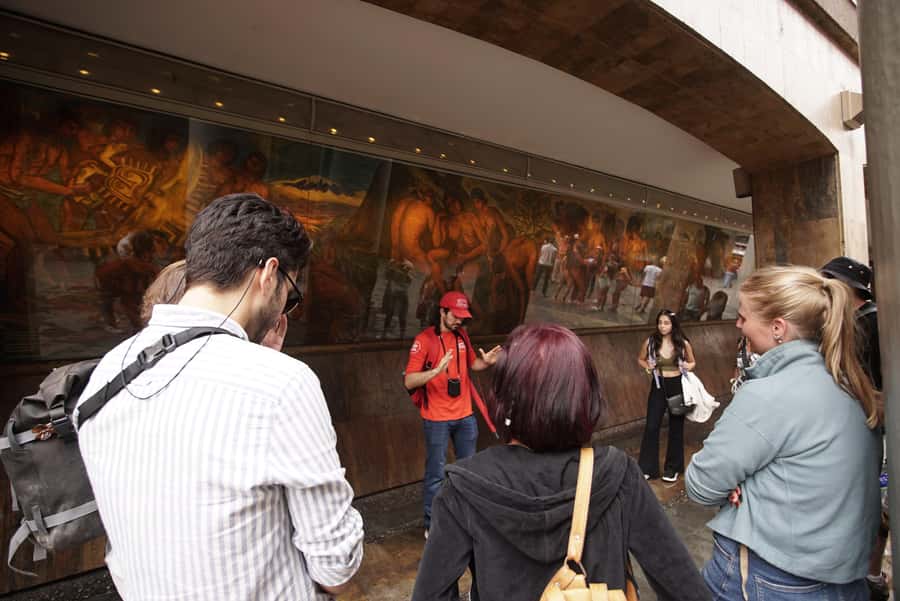
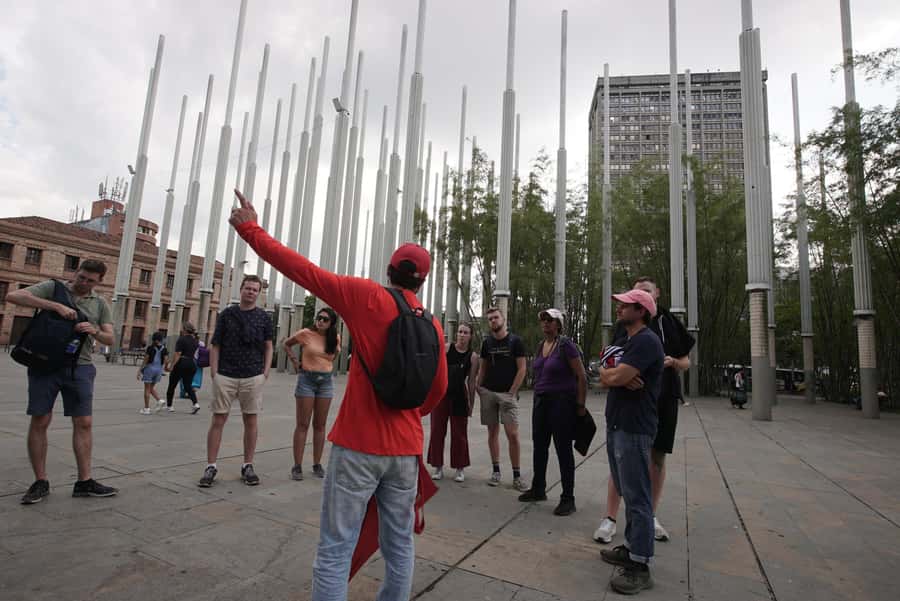
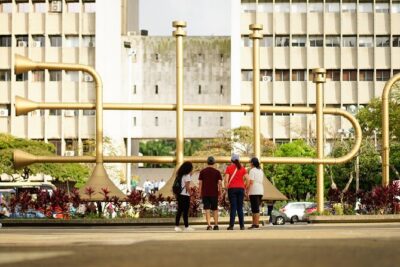
The Park of Lights is presented as a tribute to the father of Medellín’s railroads. Its name suggests a modern public space, but the tour uses it to return to the themes of infrastructure and progress.
Here, the route links the railroad’s role in Medellín’s growth with the city’s later use of public design and investment. The contrast is useful. You are not just looking backward at an old transport system. You are considering how Medellín has used public projects to express a new direction.
The stop also gives the group a chance to pause. This is welcome after a long stretch of walking. The tour includes resting stops, but do not mistake that for a short route. The total distance is about 8 kilometers, and the duration can run from 150 minutes to three hours depending on the start time, group pace, and stops.
What the wireless audio changes
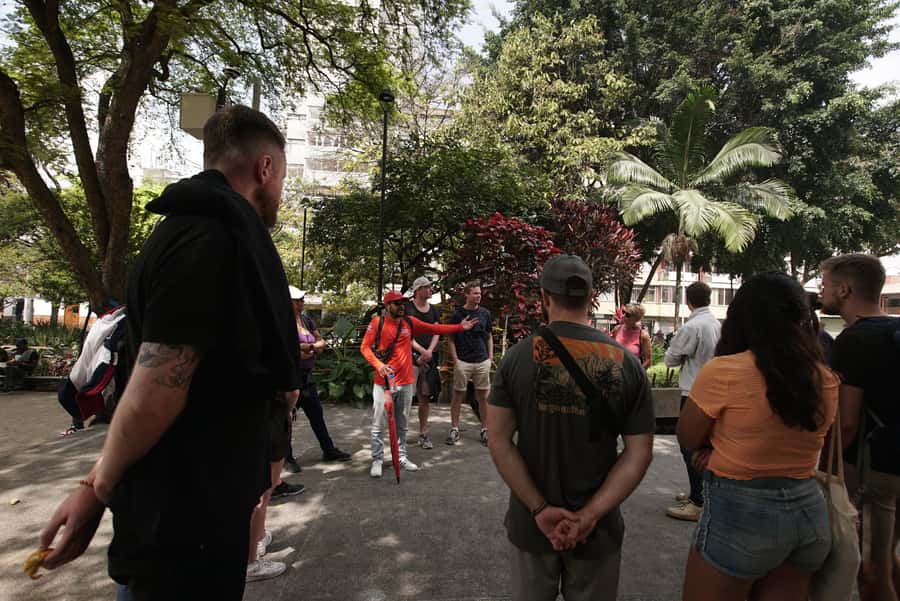
Many walking tours lose people at the back. You stop to take a picture, a street crossing separates the group, or the guide is speaking beside traffic. The wireless system addresses that common problem.
You can listen while taking photos, and the guide’s voice should remain clear on busy streets. That makes the narrative easier to follow and lets you look at the city instead of watching the guide’s mouth.
There are two limits. The equipment is not suitable for children under 15, and it must be collected if rain begins. The tour is also shared, not private, so you should expect to meet other people and adjust to the group’s pace.
For adults and older teenagers who want a story-led walk, the audio system is a useful extra. For families with younger children, it may be a reason to choose another activity.
The walking demands and downtown realities
Plan for a serious urban walk. The route covers about 8 kilometers and includes standing, street crossings, crowded areas, and resting stops. You should wear shoes you can walk in for several hours and carry water or another preferred drink.
Central Medellín can also be confronting. You may encounter aggressive begging and people dealing with serious addiction. This is part of the downtown setting, not a feature created by the tour, but it can affect your comfort.
Keep phones, wallets, and bags secure. The practical local phrase don’t give papaya applies here: do not make yourself an easy target by displaying valuables or drifting away from the group.
The tour is not suitable for people with mobility impairments. No transportation is included, either to the meeting point, back to your hotel, or between stops. You walk the route on foot.
Is $13 a fair price for three hours?
At $13 per person, the value is strong if you want a guided introduction to central Medellín. You receive an English or Spanish-speaking guide, the audio equipment, historical interpretation, and suggestions for local lunch spots, coffee, souvenirs, and other activities.
The price is especially reasonable because you are not being pushed into paid entrances or surprise charges during the route. Food, drinks, souvenirs, hotel transport, and admission tickets are not included, but the walk is built around public places, so those omissions are clear rather than frustrating.
The main question is not cost. It is stamina. If you can comfortably walk 8 kilometers and want history rather than a quick photo circuit, $13 buys a useful first look at the city. If you prefer private attention, shorter distances, or a slow pace, the shared format may not suit you.
Free cancellation up to 24 hours before the activity and reserve-now, pay-later booking add flexibility. Still, check the available start time and allow room for weather changes.
Who should book this Medellín walking tour?
I would recommend it most strongly for first-time visitors who want orientation on their first day. The route introduces major central sights while giving you ideas for what to do next.
It also suits you if you are curious about Medellín beyond the usual drug-trafficking narrative. The discussion of Paisa culture, industry, Botero, railroads, and social investment gives the city more dimension.
English and Spanish are available. The guide quality can vary by assignment, but the names most often associated with strong experiences include Santiago, Miguel, Carolina, Daniel, Sebastián, Alex, Manuel, Deisy, Alejandro, and Jhon. You cannot select one from the details provided, so book for the route and subject matter rather than a promised individual guide.
Should you book it?
Book this tour if you want an affordable, serious introduction to Medellín’s center, especially if you value local explanation over simply collecting photos. The wireless audio is useful, the route covers several important areas, and the history includes both the city’s painful years and its efforts to change.
Skip it if you need step-free access, dislike long walks, are traveling with children under 15, or want a private tour. Also think twice if you are looking only for a cheerful art walk. This is an honest downtown orientation, and honesty includes difficult streets, hard subjects, and a demanding route.
FAQ
Where does the tour meet?
Meet in front of the Museo de Antioquia at Botero Plaza. Look for the red umbrellas marked Beyond Colombia.
How long does the tour last?
The tour lasts approximately 150 minutes to three hours.
How far will I walk?
You will walk about 8 kilometers, with some stops to rest and listen to the guide.
Which languages are available?
The tour is offered in English and Spanish.
Is transportation included?
No. You must arrange transportation to and from the meeting point, and the tour itself is on foot.
What places does the route include?
The route includes Botero Plaza, Junín Street, La Alpujarra, the railroad-related areas, the Park of Lights, and other parts of Medellín’s historic center.
Is the tour private?
No. This is a shared tour with a group.
Are food, drinks, or entrance tickets included?
No. Food, drinks, souvenirs, and admission tickets are not included.
Can children use the wireless audio system?
The audio system is not suitable for children under 15 years old.
What happens if it rains?
The wireless devices are not waterproof. If rain begins, the devices must be collected and kept safe. Bring a rainproof coat, cape, or umbrella.
Is the tour suitable for people with mobility impairments?
No. The tour is listed as unsuitable for people with mobility impairments.
Can I cancel my booking?
Yes. You can cancel up to 24 hours in advance for a full refund. You can also reserve now and pay later.
Just added around Colombia
- Cartagena Instagrammable History★ 4.5 · 29 reviews
- Premium Pirate Beach Adventure, Open sea Rope Swing, Drinks+Lunch★ 5.0 · 64 reviews
- Chiva Private Cultural Tour with Audio Guide in Buga★ 5.0 · 49 reviews
- Cali: Walking tour of the historic center★ 5.0 · 69 reviews
- Historical tour Bogota★ 5.0 · 72 reviews
- Bogota scooter tour★ 5.0 · 46 reviews
- Shared Tour of Bogota’s Historic Downtown (La Candelaria)★ 4.7 · 100 reviews
- Santa Marta A Historical & Street food Experience★ 4.7 · 41 reviews
Colombia History Tours, compared.
Cartagena: Historic Center and Getsemaní Shared Walking Tour
Read our review →
Historical Shared Tour Salsa, Graffiti & Resistance in Cali
Read our review →
Shared Tour of Bogota’s Historic Downtown (La Candelaria)
Read our review →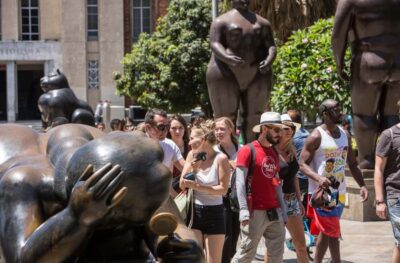
From Medellín: Private Pablo Escobar History Tour
Read our review →
Browse the lists this tour appears in