
Review · HISTORY TOURS
Sucre: Free Walking tour (History, culture and traditions)
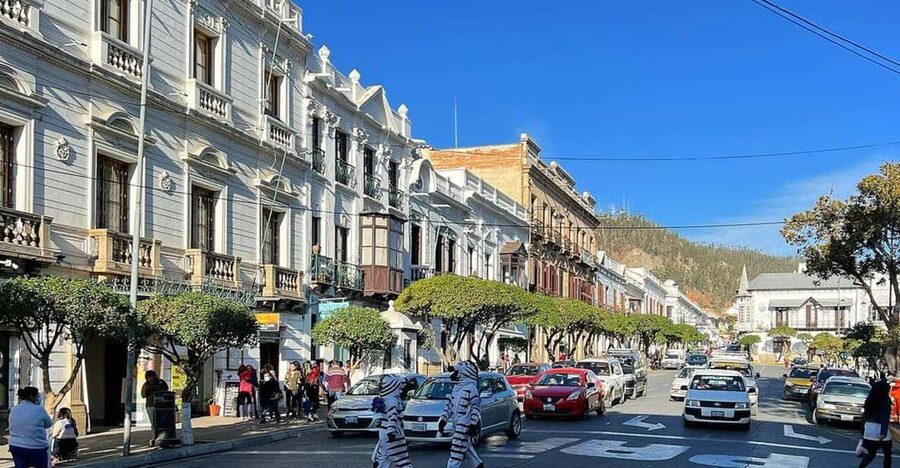
Sucre’s story comes alive on foot, from the Street of Cats, said to mark the city’s birthplace, to the old mayor’s office inside an ancient castle. You’ll also see Indigenous art, university courtyards, colonial squares, and mountain views, with a guide explaining how each place fits into Bolivia’s past and present.
I like the tour’s low price and its mix of famous central sights with less obvious places. I also like the local touch: the route may include a short colectivo ride costing 2 bolivianos, a useful introduction to getting around Sucre. The main drawback is the walking itself, since the tour is not suitable for wheelchair users or people with mobility impairments, and Sunday and holiday hours can change the route.
Key points about the Sucre walking tour
- The Street of Cats marks Sucre’s beginnings: This unusual stop connects the modern city with its earliest story.
- An ancient castle adds variety: You visit the old mayor’s office and castle gardens rather than seeing only plazas from the street.
- Indigenous art is part of the main route: The tour gives space to local communities and artistic traditions.
- The 2-boliviano bus ride feels practical: You may use a local colectivo to reach an older part of Sucre.
- Manuel and Silvana are named guides: Both have been praised for clear English, strong preparation, and helpful answers.
- The price is almost symbolic: At $0.50 per person, the tour offers a useful orientation for very little money, though you should carry cash for transport.
Why this Sucre tour is useful on your first day
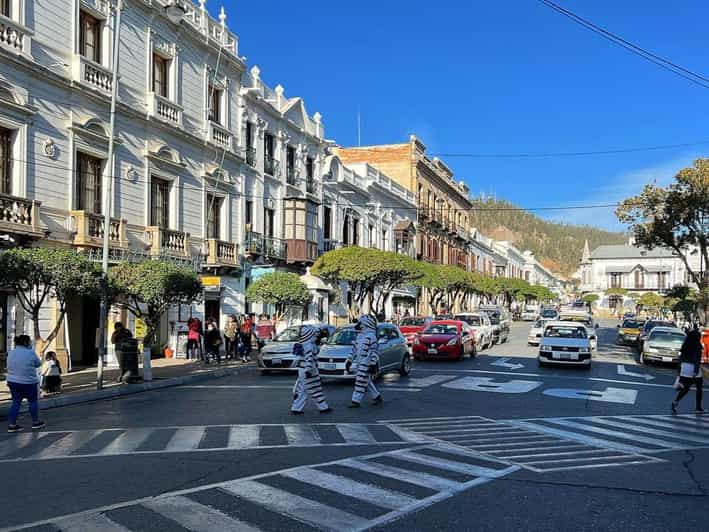
Sucre can look easy to understand at first. White colonial buildings, leafy squares, church towers, and a walkable center give you a clear starting point. But the city’s history has several layers, and a guide helps connect the streets to the people and events that shaped them.
This 2.5-hour walk is best thought of as an introduction rather than a full museum program. You move between public squares, historic buildings, art displays, and viewpoints. At each stop, the guide provides the background that you would likely miss by simply taking photographs and moving on.
I especially like that the route does not stay entirely within the polished central core. The ancient castle, the Street of Cats, Indigenous art, and the older part of Sucre give the walk a wider reach. You get a sense of the city as a living place, not just a collection of attractive buildings.
The guides named in the feedback are Manuel and Silvana. Manuel is praised for his English, his preparation, and his willingness to answer questions. He also gives practical tips for making better use of your time in Sucre. Silvana is described as an excellent guide with a strong command of the subject.
Guide quality matters here because several stops need explanation. A square can look pleasant without telling you why it matters. An old office may seem like another historic room unless someone explains its role. This is the sort of tour where a good guide makes the difference between seeing Sucre and understanding more of it.
More Local Culture and Traditions Tours in the world:
- Amsterdam Food and Cultural Tour with Tastings
★ 5.0 · 4,315 reviews - Sevilla Food Tour: Tapas, Wine, History & Traditions
★ 5.0 · 3,468 reviews - Tromsø: Reindeer Camp and Sami Cultural Tour with Lunch
★ 4.7 · 3,326 reviews
Starting at Plaza Cochabamba
The walk begins in the middle of Plaza Cochabamba. This gives you a clear public meeting point and puts you close to Sucre’s historic center.
Bring cash from the start. The tour price is listed as $0.50 per person, but transportation is not included. The local bus or colectivo costs 2 bolivianos per person when used, so keep small cash ready rather than relying on a card.
The exact start time depends on availability. Since the walk lasts about two and a half hours, I would place it early enough in your stay to help with your plans for the following days. You can then return to places that catch your interest, ask better questions on later visits, and use the guide’s local suggestions.
The tour is in English. That is important if you want explanations about Bolivia’s history, culture, and traditions without depending on translated signs or your own reading.
Plaza de Armas 25 de Mayo and the story of Sucre
The route includes about 20 minutes at Plaza de Armas 25 de Mayo, the city’s main square. This is one of the most useful stops because a central plaza often gives you the clearest introduction to a city’s public life.
Here you learn about Sucre’s political and cultural past, along with the role the city has played in Bolivia. The focus is not limited to buildings. The guide also discusses the city’s traditions and current cultural life, helping you see the square as a gathering place rather than a backdrop.
Twenty minutes is long enough for a proper explanation without turning the tour into a lecture. You should have time to take in the surrounding architecture, listen to the guide, and ask questions.
I would pay close attention here to names and dates, even if you do not normally enjoy formal history. The information from this stop helps explain several later parts of the walk. Once you understand the importance of the central square, the old university, colonial spaces, and civic buildings make more sense.
The old public university and its courtyards
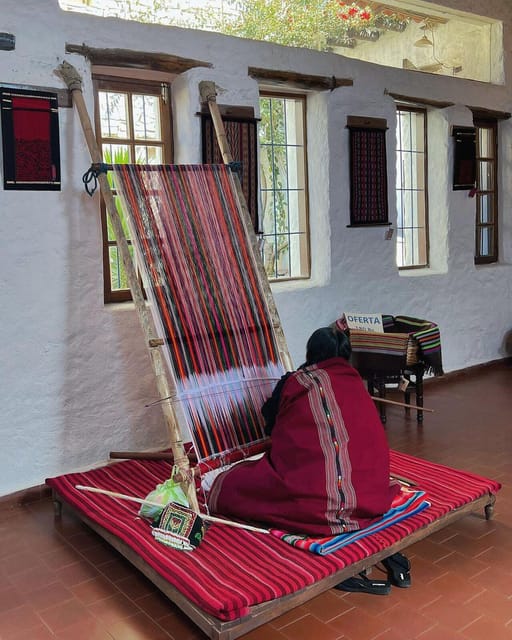
The walk continues to the Universidad Mayor, Real y Pontificia de San Francisco Xavier de Chuquisaca, commonly known as USFX. The visit is scheduled for about 15 minutes and includes the courtyards of the old public university.
University courtyards are valuable stops because they show how education and public life developed in Sucre. You are not just looking at an exterior facade. The courtyards let you experience the interior layout of an old institution, with open space and historic surroundings that are easy to miss from the street.
The short visit means you should expect an introduction rather than a full campus tour. Still, this stop adds an important civic layer to the experience. The university is part of the city’s identity, and its place in the route helps explain why Sucre has long been associated with learning and public debate.
Access can vary on Sundays and holidays because some places have different opening hours. That is one reason the precise order or content of the walk may change on those days.
More History Walking Tours in the world:
- History and Hauntings of Salem Guided Walking Tour
★ 5.0 · 14,564 reviews - Lisbon: History, Stories and Lifestyle Walking Tour
★ 4.8 · 10,902 reviews - Amsterdam: Life of Anne Frank and World War II Walking Tour
★ 4.8 · 10,467 reviews - Berlin: Third Reich & Cold War Guided Walking Tour
★ 4.9 · 8,378 reviews
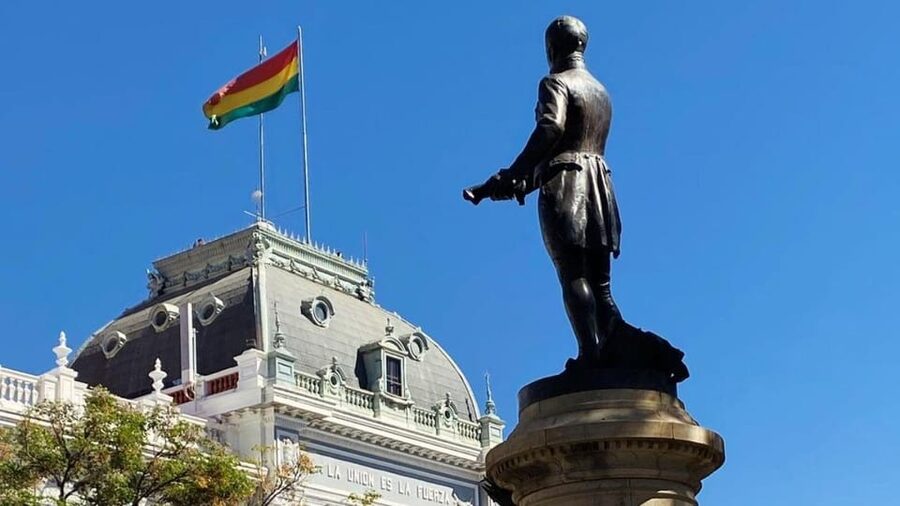
Plaza de la Libertad and the Obelisco
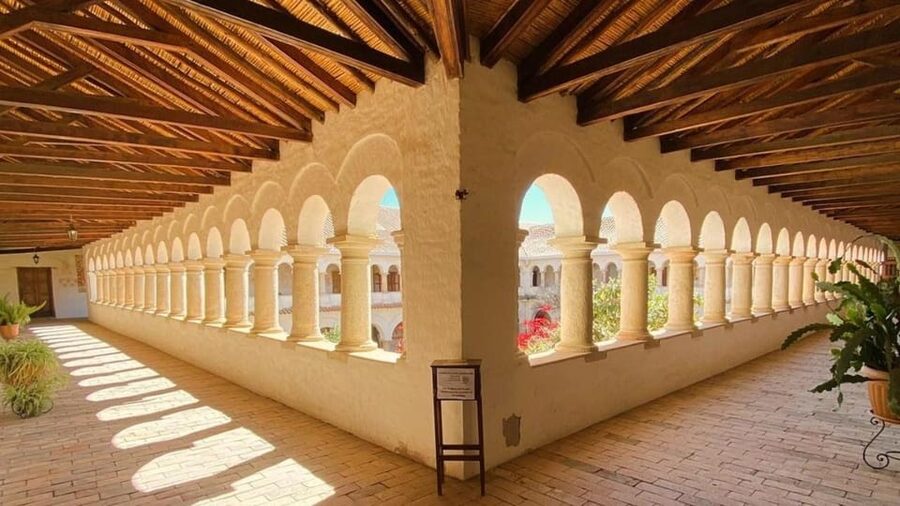
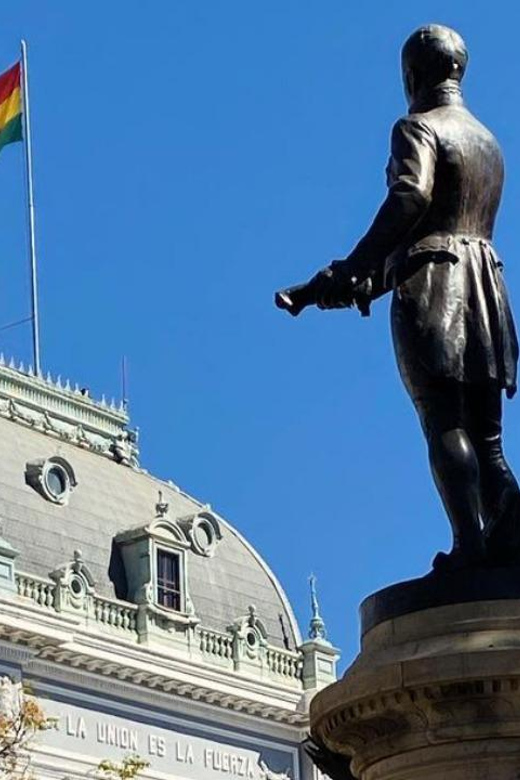
Next comes Plaza de la Libertad and the Obelisco, with about 15 minutes set aside for the visit. This stop continues the city’s public and political story through another important open space.
The name Plaza de la Libertad points toward themes of independence and civic identity. The Obelisco provides a clear focal point for the guide’s explanation, and the square gives you another chance to compare Sucre’s public spaces.
I like the way this stop breaks up the building visits. A walking tour can become tiring when every stop means entering another interior. Open squares give you room to breathe, orient yourself, and notice how Sucre’s streets connect.
This is also a good point to ask the guide about the city’s changing role and its traditions. The tour is designed around history, culture, and everyday identity, so your questions can take it beyond a fixed list of dates.
Indigenous art and nearby communities
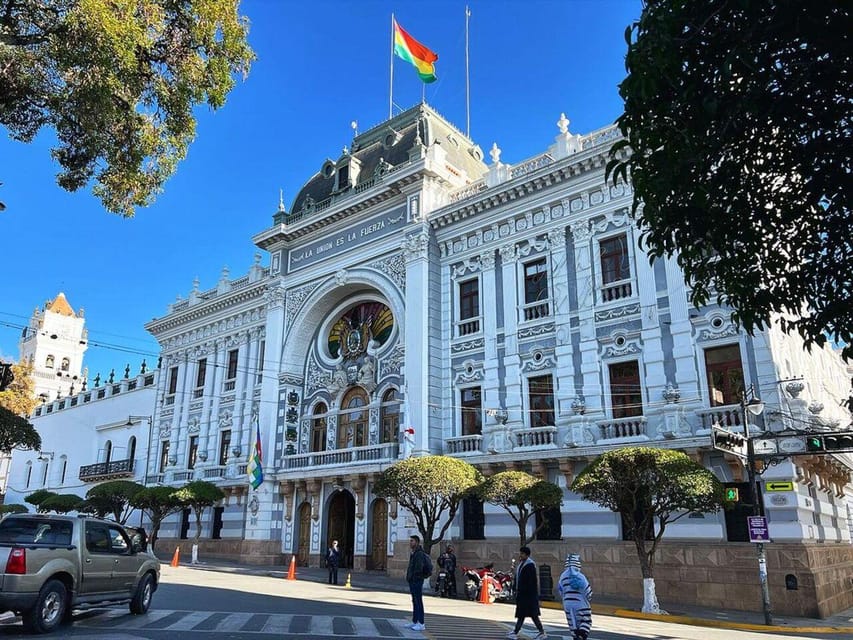
The Museo de Arte Indígena is one of the most meaningful stops on the route. You spend about 15 minutes seeing Indigenous art connected with communities living near Sucre.
This part of the tour matters because it widens the story beyond colonial buildings and national politics. Art offers a direct way to see patterns, techniques, symbols, and ideas linked to local communities. Even a short visit can add context to what you see in shops, markets, streets, and cultural events during the rest of your stay.
Do not expect a long museum visit in this format. Fifteen minutes gives you a focused look and an explanation of why the art matters. If you enjoy museums, you may want to return later for more time, but the guided stop works well as an introduction.
The Indigenous art visit also helps balance the tour. Sucre’s historic center can draw your attention toward colonial architecture. This stop reminds you that the region’s culture did not begin with colonial rule and cannot be understood through colonial buildings alone.
The ancient castle and the old mayor’s office
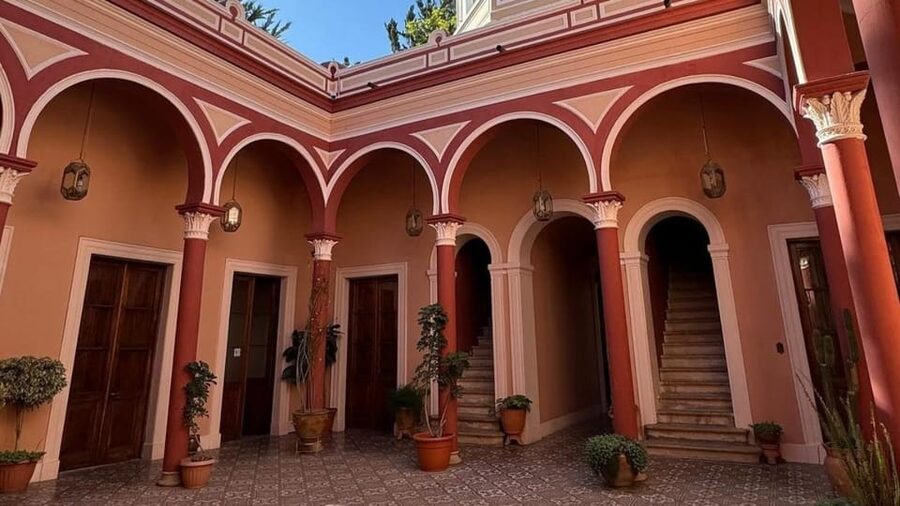
A key feature of the walk is the visit to an ancient castle, including the old office of the Mayor of Sucre and its gardens. The supplied details do not name the castle, so you should not expect a particular landmark name when planning your route.
This stop combines civic history with a change of setting. The former mayor’s office gives you a close look at how local government operated in an earlier period, while the gardens offer an outdoor pause after the denser streets and plazas.
I like this kind of stop because it has a human scale. Political history can feel remote when you hear it only in a square. Seeing an office, courtyard, or garden gives the story a physical setting.
The gardens also make the walk less repetitive. You are not simply moving from one facade to another. You pass through a historic place, hear about its former use, and have a chance to notice its design.
Opening times are especially relevant here. On Sundays and holidays, some places may close or operate on different schedules, so the program changes slightly. The guide may adjust the order or replace part of the visit.
The Street of Cats and the city’s birthplace
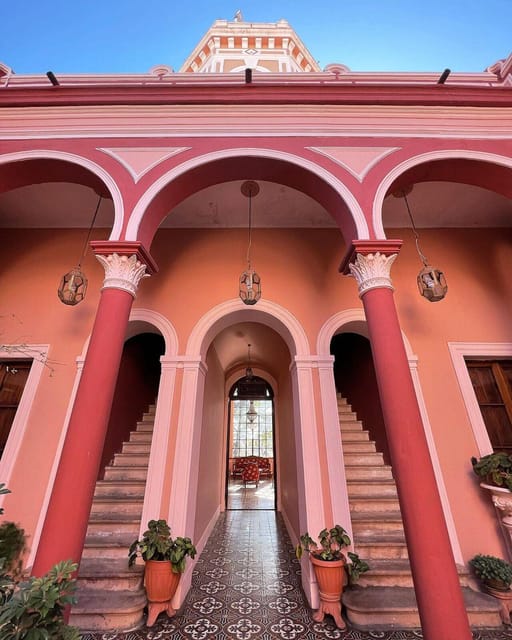
The Street of Cats is one of the tour’s most distinctive stops. The route presents it as the place where the city was born, giving you a direct link between an ordinary-looking street and Sucre’s earliest story.
A name like Street of Cats is easy to remember, which makes this a useful anchor for the tour. It gives the city’s beginnings a specific location instead of leaving them as an abstract date in a history lesson.
The walk here also shows why exploring on foot matters. You can move through narrow, old streets at a pace that allows the guide to point out details you could miss from a bus or taxi. You are close to the surfaces, corners, and paths that shaped the city.
This section may be particularly enjoyable if you prefer local stories to grand monuments. It is not presented as the largest or most formal attraction. Its value lies in the connection between a modest street and the origin story of Sucre.
The viewpoint and mountain views
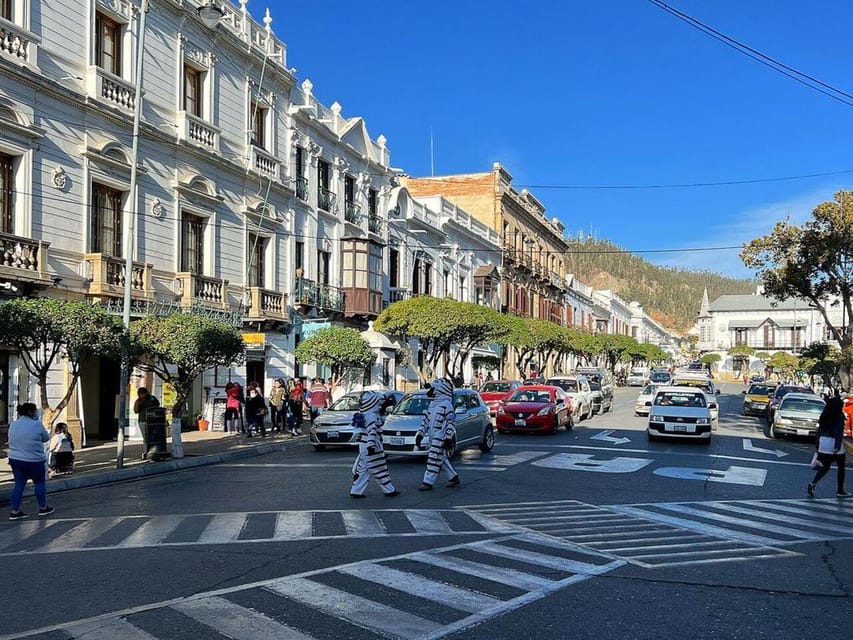
The route includes a viewpoint near the city, where you can see the surrounding mountains. This is a strong visual break from the historic center and gives you a clearer sense of Sucre’s setting.
A city can feel self-contained when you stay among plazas and colonial streets. From a viewpoint, you see the city in relation to the mountains around it. The view helps explain Sucre’s physical character and gives you a better sense of direction.
The viewpoint is also a natural place to take photographs, although the tour’s main purpose remains interpretation rather than a photography session. You should listen for the guide’s explanation of the area instead of treating the stop as only a scenic pause.
Because this is a walking tour that includes historic streets and a viewpoint, wear comfortable shoes. The activity is specifically not suitable for people with mobility impairments or wheelchair users. The supplied information does not state the exact amount of climbing, so anyone concerned about steep streets or uneven surfaces should ask before booking.
The local bus ride for 2 bolivianos
One of the most practical details is the possible local bus or colectivo ride, which costs 2 bolivianos per person. It is not included in the tour price, but the guide handles it as part of reaching an older section of Sucre.
For many visitors, taking a local bus in a new city can feel awkward. You may not know where to board, how much to pay, or which direction to take. Having an English-speaking guide with you turns this into a simple lesson in local transport.
The bus ride adds a little everyday life to the tour. Historic buildings tell you about the past, while a colectivo shows you how people move around the city now. That combination makes the experience more useful than a walk limited to monuments.
Carry cash for this part. The cost is only 2 bolivianos, but transport is separate from the tour price. The route may be different on Sundays and holidays because of opening hours, so the bus portion should not be treated as guaranteed in exactly the same form every day.
Ending at a colonial square
The tour finishes after exploring an old colonial square with a view of Sucre. The stated finish point is Suipacha 202, Sucre, while the meeting information describes the activity as ending back at the meeting point. Since the provided details give both descriptions, confirm the final location and route when you reserve.
Ending in a colonial square is a sensible choice. You finish with another broad view of the city’s architecture and a final chance to ask the guide for advice. It also leaves you in a useful central area for continuing your own plans.
The last stop works as a visual reminder of the tour’s main theme. You have moved from the city’s birthplace to public squares, education, Indigenous art, civic history, and mountain views. The final colonial setting brings those threads back to Sucre’s recognizable historic character.
What the $0.50 price really offers
At $0.50 per person, this is an unusually inexpensive way to spend 2.5 hours in Sucre. The price is low enough that the tour can function as a practical orientation, even if you plan to visit museums or historic sites independently later.
You should still budget for the 2-boliviano transport cost when it is used. Bring cash, as requested, and treat the small transport payment as part of the real cost of the experience.
The low price does not mean you should expect a private tour or a highly customized schedule. The information provided does not state the group size, so you should not assume an intimate group. The value comes from the route, the English explanations, the local transport lesson, and the range of places included.
Free cancellation up to 24 hours before the activity gives you some flexibility, and you can reserve now while paying later. Those terms are useful if your Bolivia plans are still shifting, but the main reason to book is the content of the walk rather than the booking policy.
Who should book this experience
I would choose this tour if you are arriving in Sucre and want a fast, structured introduction to the city. It suits visitors who enjoy walking, asking questions, and seeing several types of place in one outing.
It is also a good match if you want more than colonial architecture. The Indigenous art visit, the Street of Cats, the old university courtyards, and the local bus ride give you a broader view of Sucre.
You may prefer another option if you need step-free access, have trouble with extended walking, or want a slow visit to each museum. The schedule moves through several stops in 2.5 hours, and some places may have limited time.
If you care most about photography, the viewpoint and colonial squares will appeal to you. If you care most about history, the main square, old mayor’s office, university, and birthplace of the city provide the strongest material. If you want local orientation, Manuel’s practical advice and the colectivo ride are especially useful.
Should you book the Sucre walking tour?
Yes, I would book it as an inexpensive first look at Sucre, particularly if Manuel or Silvana is leading the walk. Their clear English and strong preparation are important advantages, and the route covers more ground than a simple central-plaza stroll.
Go with realistic expectations. This is not a full museum tour, the route may change on Sundays and holidays, and you need to be comfortable walking. But for $0.50, plus 2 bolivianos for transport if required, you receive a well-rounded introduction to Sucre’s civic past, Indigenous culture, old streets, public spaces, and mountain setting.
FAQ
How long does the Sucre walking tour last?
The tour lasts approximately 2.5 hours. Starting times depend on availability.
How much does the tour cost?
The listed price is $0.50 per person. Transportation is separate and costs 2 bolivianos when used.
Where does the tour start?
The meeting point is in the middle of Plaza Cochabamba in Sucre.
Where does the tour finish?
The stated finish point is Suipacha 202, Sucre. The meeting information also says the activity ends back at the meeting point, so confirm the final location when booking.
Is the tour offered in English?
Yes. The activity includes a live English-speaking guide.
Which places are included in the route?
The route includes Plaza de Armas 25 de Mayo, the old public university courtyards, Plaza de la Libertad and its Obelisco, the Museo de Arte Indígena, an ancient castle and the old mayor’s office, the Street of Cats, a viewpoint, and an old colonial square.
Does the tour include public transportation?
Transportation is not included in the tour price. A local bus or colectivo may be used, and the stated cost is 2 bolivianos per person.
Does the program change on Sundays and holidays?
Yes. The program changes slightly on Sundays and holidays because some places have different opening hours.
Is the tour suitable for wheelchair users?
No. The activity is not suitable for wheelchair users or people with mobility impairments.
Just added around the world
- 6-Day Cultural Tour to Machu Picchu★ 5.0 · 76 reviews
- Scenic Train ride to historical cities of Morretes and Antonina★ 4.0 · 188 reviews
- Jewish Heritage of Curacao★ 4.5 · 68 reviews
- The Curacao’s Colorful History Walking Tour★ 5.0 · 55 reviews
- Discover Scuba Diving Amathounta’s Ancient Port★ 5.0 · 30 reviews
- Olous – Guided Snorkelling Excursion to Discover Olous Sunken Ancient City★ 4.5 · 31 reviews
- Night Walking Tour of Medieval Cuenca★ 5.0 · 64 reviews
- WWII – The Battle of Crete Day Tour★ 5.0 · 103 reviews