
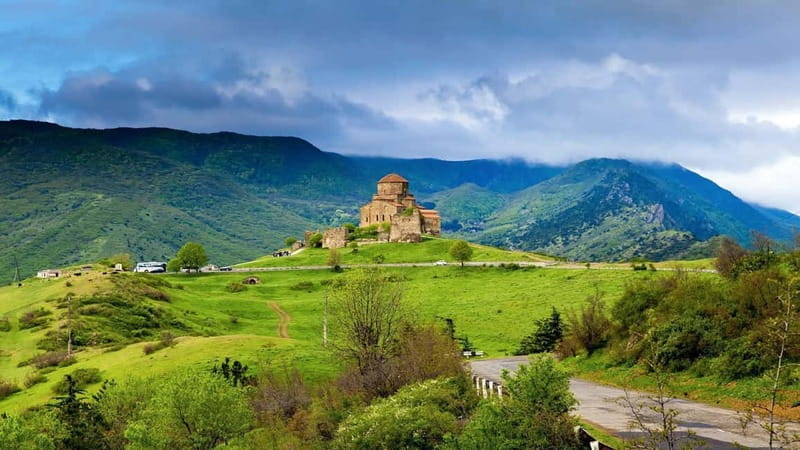
Review · HALF-DAY
Mtskheta: Ancient Capital of Georgia Half-Day Tour
Mtskheta gives you Georgia’s story in a compact, easy-to-manage half-day: royal churches, old streets, a limestone canyon drive, and hilltop views over two rivers. The Chronicle of Georgia adds a striking modern monument before you reach the ancient capital itself.
I like the flexible start time and the private format, which let you avoid a rushed group schedule. I also like the guides’ personal approach, especially names such as Khatuna, Khato, Alexi, Oksana, and Guram, who have helped visitors connect the sites with Georgian food, customs, legends, and daily life. The main drawback is that the four hours can feel tight if you want long walks, extended shopping, or extra monasteries such as Shio-Mgvime.
Key points at a glance
- Chronicle of Georgia first: Begin with dramatic stone panels and wide views toward Tbilisi and Tbilisi Sea.
- Three major stops: See Svetitskhoveli Cathedral, Mtskheta, and Jvari Monastery in one outing.
- Flexible private touring: Choose a convenient start time and adjust the pace with your guide.
- Strong guide element: English and Russian-speaking guides such as Khatuna, Khato, Alexi, and Oksana bring history and local life into the visit.
- Good value at $48: Entrance fees, water, and private hotel transport are included when you select the private option.
- Plan for walking: Religious sites require pedestrian access, and summer heat can reach 35°C.
Why Mtskheta makes a smart first outing from Tbilisi
Mtskheta was Georgia’s first capital and remains one of the country’s main spiritual centers. That makes it a useful introduction to Georgia rather than just another day trip for old buildings.
The route links political history, Orthodox Christianity, Georgian art, and everyday shopping. You will see formal monuments and sacred churches, then walk through a small town where churchkhela, wine, coffee, and souvenirs are part of the experience.
The short duration is a real advantage. In four hours, you can get your bearings outside Tbilisi without giving up a full day that could be used for another part of Georgia. The tour also involves relatively little driving, so more of your time goes into seeing places rather than sitting in a vehicle.
The private format matters here. A guide can spend longer on a question about Georgian kings, shorten a stop if the heat becomes unpleasant, or pause for photographs. Several guides have also helped with restaurant suggestions and plans for the rest of a Tbilisi stay.
More Ancient History Tours in the world:
- Pompeii: Entry Ticket and Guided Tour with an Archaeologist
★ 4.8 · 19,459 reviews - Athens: Acropolis & up to 5 Archaeological Sites Combo Pass
★ 4.2 · 13,904 reviews - Colosseum: Underground and Ancient Rome Tour
★ 4.7 · 12,691 reviews
Starting at the Chronicle of Georgia
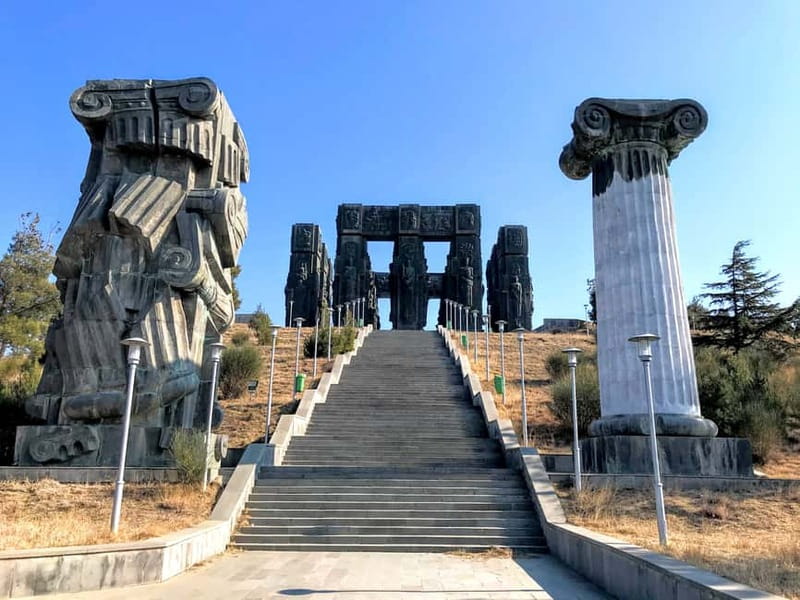
The first major stop is the Chronicle of Georgia, a huge monument on a hill above the city. Its tall stone columns carry carved scenes connected with Georgian history and religious tradition. The scale can surprise you, especially when you see people beside the panels.
Allow about 40 minutes here for a guided visit and photographs. This is not an ancient ruin, so you should come for the setting, the monumental design, and the views rather than for a preserved archaeological site.
From the hill, you can look toward Tbilisi and Tbilisi Sea. The high position gives you a useful visual sense of the city’s broad setting before the tour moves into the older religious center of Mtskheta.
The Chronicle is also a good early photo stop because it gives you something very different from the stone churches later in the morning. If your interest is architecture or photography, this contrast makes the route more satisfying.
The path to the monument is pedestrian, so wear shoes with a firm sole. Sun protection helps too. There is little reason to hurry here, but the stop is mainly about views and visual impact, not a long historical walk.
The drive through the limestone canyon
Between Tbilisi and Mtskheta, the road brings you through a scenic limestone canyon. The drive is part of the appeal, since the route shifts from the urban edge of Tbilisi to a more open setting around the old capital.
The tour description places little emphasis on long road time, and that is helpful if you have only half a day. You get a change of scenery without the commitment of a full excursion into the Caucasus.
Ask your guide to point out features along the route. The guides are not limited to memorized site facts, and names such as Khatuna and Alexi have been praised for explaining Georgian culture, legends, religion, and current life in clear English.
Transport is another strong part of the arrangement. Private hotel pickup and return are included when you choose the private option, and the stated drop-off points include 15, Tbilisi, and Europe Square. Check the exact pickup choice when booking, since the starting point depends on the option selected.
Svetitskhoveli Cathedral and Georgia’s sacred center
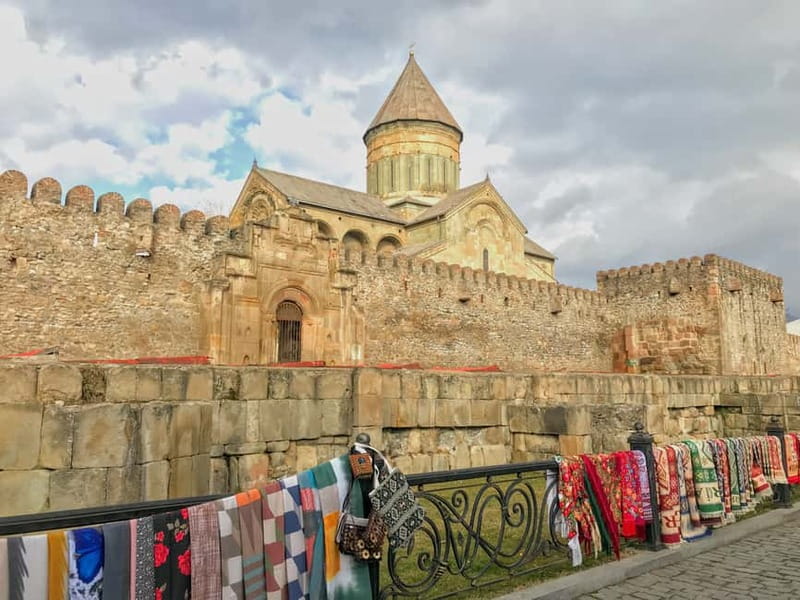
Svetitskhoveli Cathedral gets about an hour, making it the longest stop. That is the right balance for a place with major religious and historical importance.
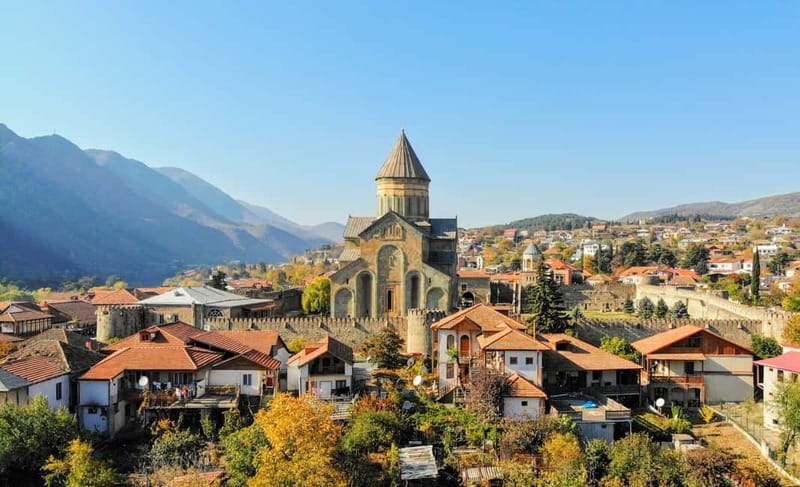
The cathedral is a UNESCO World Heritage site and one of the central churches in Georgian Christianity. Your guide can explain the traditions tied to the building, the role of ancient rulers, and why Mtskheta still matters to Georgian believers.
Do not expect a quiet museum visit. This is an active religious place, and services or holidays can limit access. You may be able to enter only parts of the complex, or entry may not be allowed during a service.
Dress with care. Men should avoid shorts and sleeveless shirts. Women need a headscarf and should also avoid shorts and sleeveless tops. A head covering is often available at the entrance, but it is better to arrive prepared.
The cathedral is reached on foot, with a walk around the grounds and interior areas. Comfortable shoes are more useful than stylish ones here. The tour is suitable for many ages, and one family found the guide willing to slow down for a baby, but the pedestrian access remains important for anyone with limited mobility.
What makes this stop worthwhile is the guide’s explanation. Without context, a Georgian Orthodox church can look like a beautiful stone building with painted walls. With a good guide, the symbols, stories, and place of the cathedral in Georgian life become easier to understand.
More Half-Day Trips in the world:
- From Bayeux: American D-Day Sites in Normandy Half-Day Tour
★ 4.9 · 656 reviews - Lima’s Vibrant Heritage: Exploring the City’s Landmarks Half-day
★ 4.5 · 581 reviews - From Ho Chi Minh: Cu Chi Tunnels Half-Day History Tour with Guide
★ 5.0 · 480 reviews - Naxos: Half-Day Guided History and Culture Sightseeing Tour
★ 4.7 · 435 reviews
Mtskheta’s streets, sweets, and short break
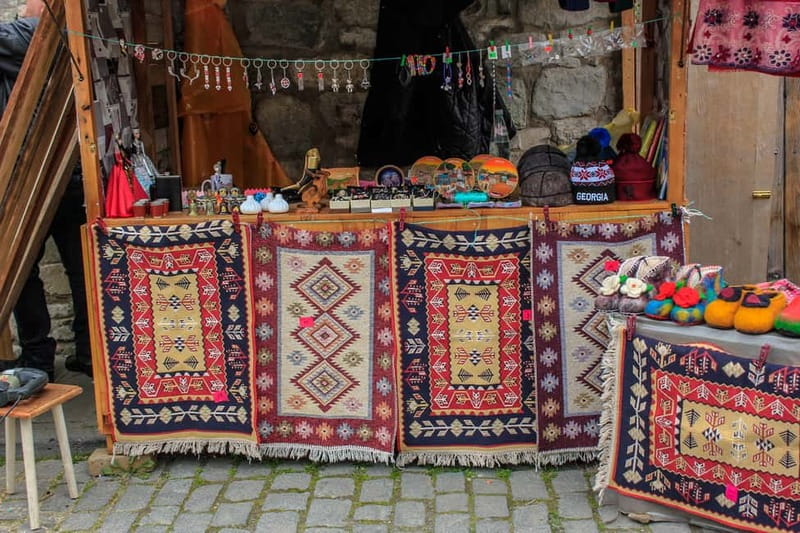
After the cathedral, you get roughly 30 minutes in Mtskheta itself. This is enough for a walk, a quick coffee, and some browsing, but not enough for an unhurried market afternoon.
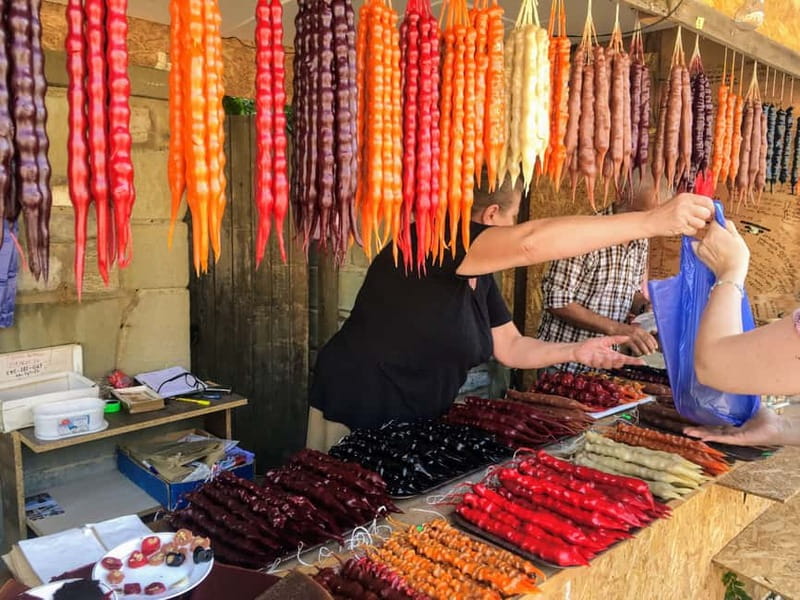
The old town has cobbled streets and shops selling traditional sweets, wine, and souvenirs. Churchkhela, a Georgian sweet made by coating nuts with thickened grape mixture, is a natural thing to try. Wine ice cream is another unusual local treat mentioned along this route.
This pause gives the tour a welcome change of pace. You move from formal religious sites into ordinary commercial life, where you can sample something, ask about Georgian wine, or find a small gift.
Guides sometimes point visitors toward particular sellers or food spots. One guide introduced a visitor to a local wine producer, while others helped with recommendations for places to eat in Tbilisi. These moments depend on the guide and the timing, so treat them as useful possibilities rather than fixed promises.
The limitation is the clock. Thirty minutes goes quickly if you want to shop, eat, photograph the streets, and listen to a detailed explanation. If Mtskheta’s town life interests you as much as its churches, ask whether the route can be adjusted slightly.
Jvari Monastery above the river confluence
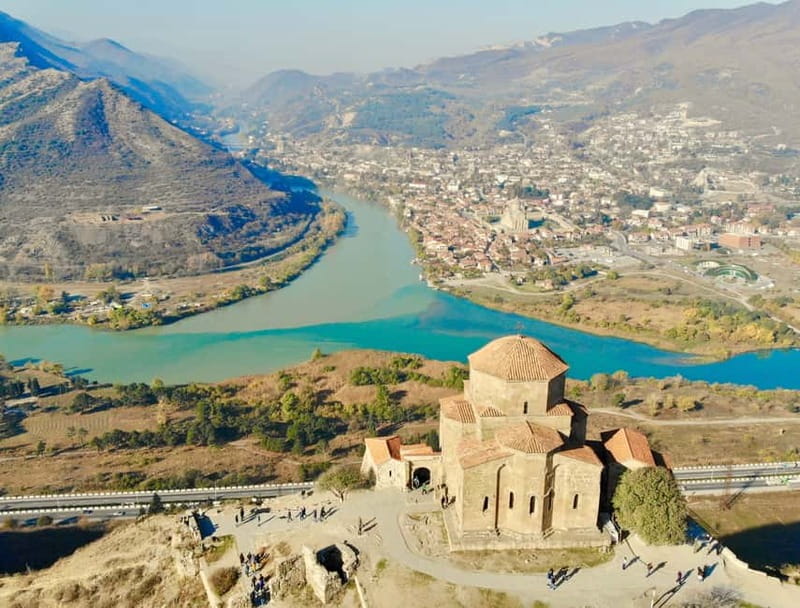
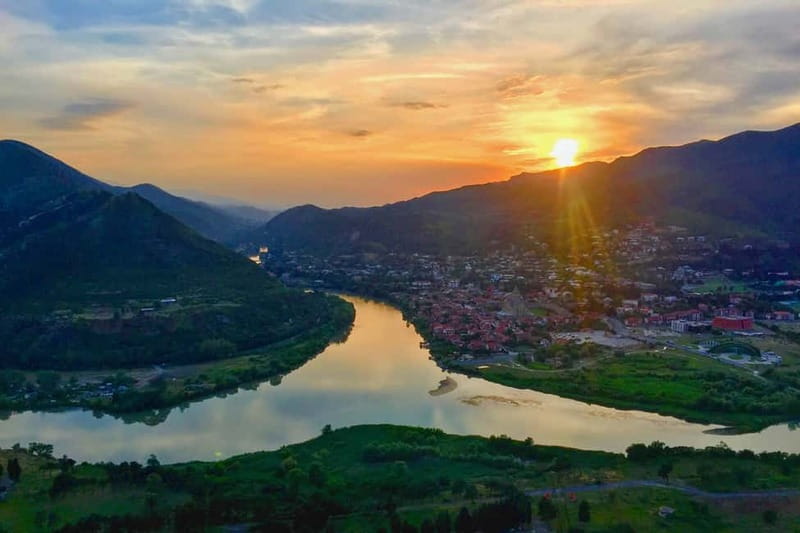
Jvari Monastery is the final major stop and one of the most memorable. It sits on a hill above the meeting point of the Aragvi and Mtkvari rivers, giving you a broad view back toward Mtskheta.
The visit and photo stop last about 45 minutes. The monastery itself is important, but the position is just as compelling. On a clear day, you may also see Mount Kazbeg in the distance, adding a dramatic mountain backdrop.
This is the place to save room on your phone for photographs. The view works in several directions, and the hilltop setting helps you understand why Mtskheta became such an important settlement.
Sunset can work well here. A past visitor found the open sites and river views especially appealing later in the day. Still, afternoon timing in summer needs care because Mtskheta can reach 35°C, and exposed hilltops offer limited relief from the sun.
The approach and visit involve walking. One practical complaint concerned a return route with many steps and no cable car, so you should not assume that every part of this stop will be effortless. The tour is described as wheelchair accessible in one section, but the same information says it is not suitable for wheelchair users and warns that all sites require pedestrian access. Anyone using a wheelchair should confirm the current route directly before booking.
What the guides add to the visit

The guide can make or break a short history tour. Here, the strongest pattern is clear explanation combined with a relaxed manner.
Khatuna and Khato appear repeatedly among the named guides, along with Alexi or Aleksi, Oksana, Guram, and others. Their role goes beyond naming buildings. They explain how Georgian religion, monarchy, mythology, food, and modern society connect.
That matters because Georgian history can be difficult to follow in a short visit. Facts about capitals, saints, invasions, and royal families can blur together. A good guide helps you see the sequence and explains which stories are traditional, which are historical, and which belong to Georgian legend.
The guides also tend to answer questions rather than push through a script. That is useful if you are curious about wine, church customs, family life, or what to do next in Tbilisi.
English and Russian are the listed tour languages. Guide quality can vary from person to person, but the named guides have received especially strong praise for clear English, patience, safe driving, and flexibility. If a specific guide is important to you, ask the operator about availability rather than assuming you will receive a particular person.
Is $48 a fair price?
At $48 per person, this is a solid value if you want a private, guided half-day from Tbilisi. The price includes entrance fees and water, and hotel pickup and drop-off are included with the private option.
You are paying for more than transport. The main value is the guide’s interpretation of four different settings: a modern monument, a UNESCO cathedral, the old town, and a hilltop monastery.
A self-guided visit could cost less, especially if you use public transport and spend little on entry fees. But you would need to arrange the route, manage the timing, and supply your own explanation of the sites. For a first visit to Georgia, the added cost buys convenience and historical context.
Lunch is not included. That is not a serious flaw for a four-hour outing, especially since the Mtskheta stop offers a chance to buy sweets or drinks. Still, eat before departure if you choose a morning start and do not want to rely on a short town break.
The private format is best value for couples, families, and small groups who can share the cost. It is less compelling if you only want a quick transfer to Mtskheta and prefer to explore without a guide.
Timing, weather, and what to bring
The tour can begin at a time that suits you, so use that flexibility well. In summer, morning or late afternoon is wiser than midday. Temperatures may reach 35°C, and several stops involve open ground, steps, or walking between vehicle access and monuments.
Bring:
- Comfortable walking shoes
- Sunglasses
- A sun hat
- Clothing suited to the weather
- Church-appropriate clothing
- Water, although water is provided
Spring and autumn should offer more comfortable walking conditions, while winter brings a different mood to the churches and hilltop views. The tour operates in all seasons, but outdoor conditions will shape your experience.
Religious holidays can change the route. Services may restrict entry to Svetitskhoveli or Jvari, so the tour remains worthwhile for the exterior views and historical setting, but you should not expect guaranteed interior access on every date.
Free cancellation is available up to 24 hours before departure, and you can reserve now and pay later. Those terms help if your Tbilisi plans are still changing.
Who should choose this Mtskheta tour?
I would choose this tour if you want a focused introduction to Georgian history without giving up an entire day. It suits first-time visitors, photographers, families, and anyone who prefers explanations instead of reading signs alone.
It is also a good choice for visitors who want a flexible pace. The private setup lets you ask questions, pause for photographs, and make reasonable adjustments.
The tour is less suitable if you want ancient ruins in an untouched setting. Mtskheta has been renewed in parts, and its old streets are maintained rather than left as crumbling archaeology. The attraction is the living town, the active churches, and the way old and modern Georgia meet.
You should also think carefully about mobility. All the main sites require walking, and Jvari involves a hilltop visit. The supplied information gives conflicting descriptions of wheelchair access, so confirm before booking if this affects you.
Should you book it?
Book it if you want to see the main Mtskheta sights in four hours, value a private guide, and prefer a simple pickup from Tbilisi. The mix of cathedral, monastery, market street, canyon road, and city views gives you a lot without an exhausting schedule.
Choose a longer day trip instead if you want Shio-Mgvime, a full meal, extended shopping, or more time in the countryside. For most first visits, though, this is a sensible and well-priced introduction, especially when you request a morning or late-afternoon start and arrive ready for church visits and walking.
FAQ
How long does the Mtskheta tour last?
The tour lasts four hours, including visits to the Chronicle of Georgia, Svetitskhoveli Cathedral, Mtskheta, and Jvari Monastery.
What languages do the guides speak?
Live guides are available in English and Russian.
Is hotel pickup included?
Hotel pickup and drop-off are included if you select the private option. The exact starting point depends on the option selected.
What is included in the price?
Entrance fees and water are included. Private hotel transportation is included with the private option. Lunch is not included.
Can I choose the starting time?
Yes. You can choose a convenient starting time, subject to availability. Morning or late afternoon is recommended during the hot summer season.
What should I wear to the churches?
Men should not wear shorts or sleeveless shirts. Women should wear a headscarf and avoid shorts or sleeveless tops. A headscarf may be provided at the entrance.
Is the tour suitable for wheelchair users?
The information is inconsistent. One section describes the activity as wheelchair accessible, while another says it is not suitable for wheelchair users. All sites require pedestrian access, so confirm current conditions with the operator before booking.
Just added around the world
- Scenic Train ride to historical cities of Morretes and Antonina★ 4.0 · 188 reviews
- 6-Day Cultural Tour to Machu Picchu★ 5.0 · 76 reviews
- Jewish Heritage of Curacao★ 4.5 · 68 reviews
- The Curacao’s Colorful History Walking Tour★ 5.0 · 55 reviews
- Discover Scuba Diving Amathounta’s Ancient Port★ 5.0 · 30 reviews
- Olous – Guided Snorkelling Excursion to Discover Olous Sunken Ancient City★ 4.5 · 31 reviews
- Night Walking Tour of Medieval Cuenca★ 5.0 · 64 reviews
- WWII – The Battle of Crete Day Tour★ 5.0 · 103 reviews
Half-Day, compared.
Normandy Beaches Half-Day Afternoon Trip from Bayeux (A2)
Read our review →
From Bayeux: American D-Day Sites in Normandy Half-Day Tour
Read our review →
Lima’s Vibrant Heritage: Exploring the City’s Landmarks Half-day
Read our review →
From Ho Chi Minh: Cu Chi Tunnels Half-Day History Tour with Guide
Read our review →
Naxos: Half-Day Guided History and Culture Sightseeing Tour
Read our review →
Historical Italica: Half-Day Guided Tour from Seville
Read our review →
Miyajima Half-day Trip Historical Walking Tour
Read our review →Browse the lists this tour appears in