
Review · BARCELONA
Barcelona: 2.5-Hour Bike or E-Bike Historical Tour
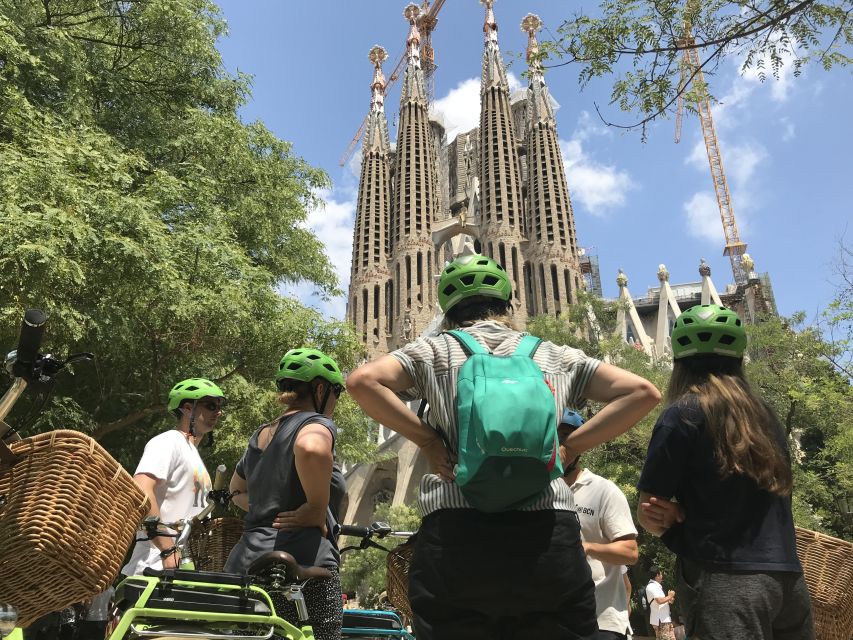
The best thing about this 2.5-hour Gaudí bike tour is how much Barcelona you can cover without spending the day on foot. You ride from Arc de Triomf through Ciutadella Park, El Born, Gràcia, and along Passeig de Sant Joan to Sagrada Familia, with the city’s great Modernist buildings appearing one after another.
I like the easy pace and the choice of a regular or electric bike. I also like the small-group format, with no more than 15 people per guide. The main consideration is time: most stops are for views, photos, and commentary rather than interior visits, so you’ll need a separate ticket if you want to go inside the famous buildings.
Key points to know before you book
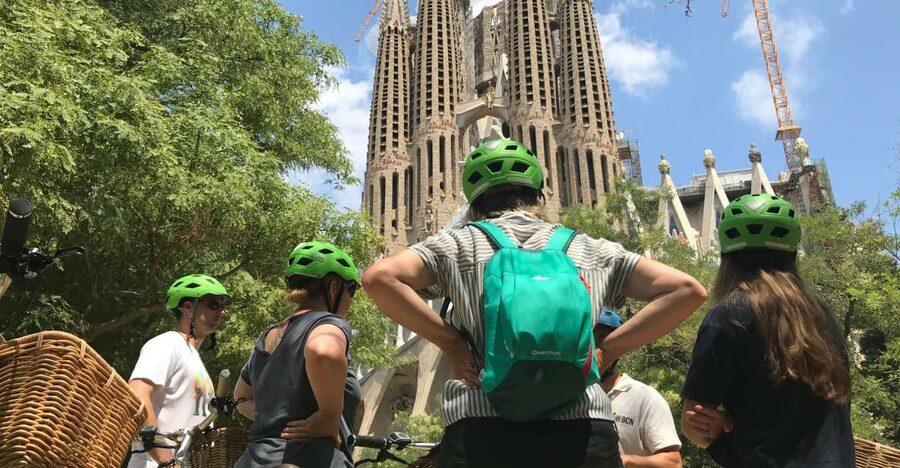
- Gaudí’s major works in one ride: See Casa Batlló, La Pedrera, Casa Calvet, Casa Vicens, and Sagrada Familia.
- Electric assistance helps: The route is mostly easy, with a few uphill sections where an e-bike makes starting again after traffic lights less work.
- A useful first-day orientation: You cover central Barcelona, El Born, Gràcia, and the streets around Sagrada Familia in a single outing.
- Small groups keep the tour personal: Groups range from 2 to 15 people per guide, with private options available.
- The starting point is simple to reach: The office is three minutes from Arc de Triomf Metro station on Line 1.
- Good value at $28: The price includes the bike, guide, helmet, insurance, and a bottle of water.
Why a bike is a smart way to see Gaudí’s Barcelona
Barcelona is a city of grand avenues, tight old lanes, broad squares, and scattered architectural sights. Walking between all the major Gaudí buildings can take much of a day. Public transport gets you close, but it does not give you the same feel for how the districts connect.
A bike fills the gap. You can cover more ground than on foot while still seeing street life at eye level. The 2.5-hour route links several parts of town rather than keeping you in one sightseeing zone.
The electric bike option is especially useful if you are not a regular cyclist. It helps on uphill stretches and makes it easier to get moving after traffic lights. One guide, Maria, explained that the route can also be managed on a normal bike because much of it is flat, so you do not need an e-bike unless you want extra help.
The bikes are described as easy to use and well maintained. Still, a bike tour requires attention. You will be riding in an active city, stopping at traffic lights, and keeping track of the group. If you are uneasy on a bike, choose the electric option and tell your guide at the start.
More History Tours by Bike, Segway and Tuk-Tuk in Barcelona:
- Historical and Modernist Bike Tour Barcelona
★ 5.0 · 262 reviews - Barcelona Historical 3-Hour Bike Tour
★ 4.7 · 222 reviews - Historical Barcelona E-bike Guided Tour
★ 4.5 · 106 reviews
Starting beside Arc de Triomf
Meet at the activity provider’s office at Passeig de Lluís Companys, 10. The easiest route is by Metro to Arc de Triomf on Line 1. From the station, walk about three minutes along the broad avenue toward Passeig de Sant Joan. The office is on the left.
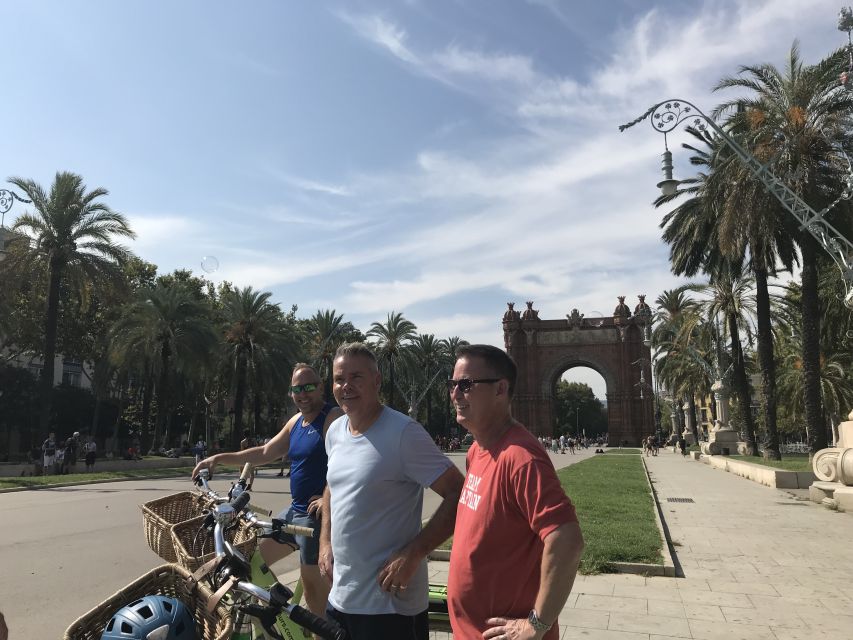
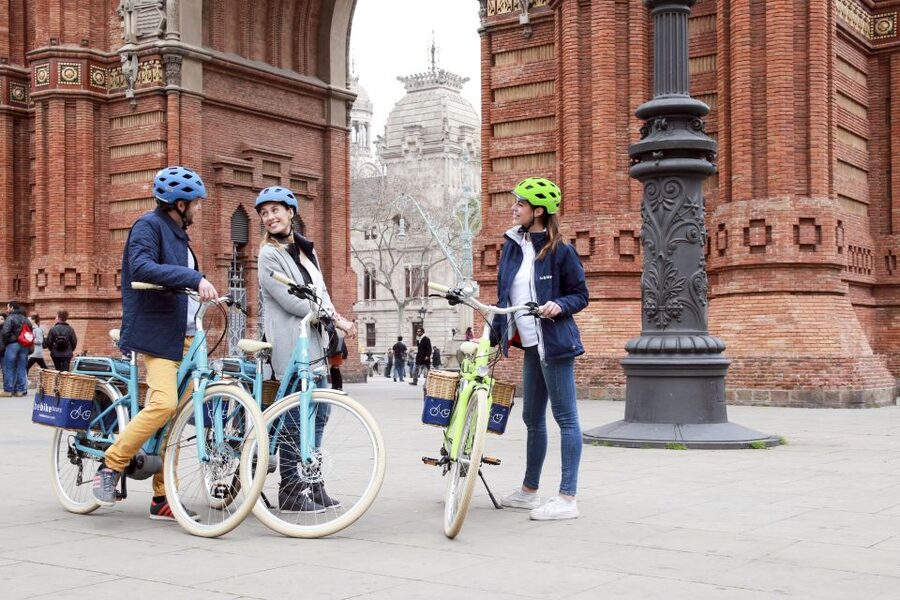
The tour begins with Arc de Triomf, a handsome neo-Mudéjar gateway built for the 1888 Barcelona Universal Exposition. It is not a military monument, and its warm brickwork and sculpted details make it a fitting first image of Barcelona’s taste for decorative architecture.
This is also a practical meeting point. The avenue gives you room to gather, receive your helmet, and get used to the bike before heading into narrower streets. The guide leads the group from here toward Parc de la Ciutadella.
A quick ride through Parc de la Ciutadella
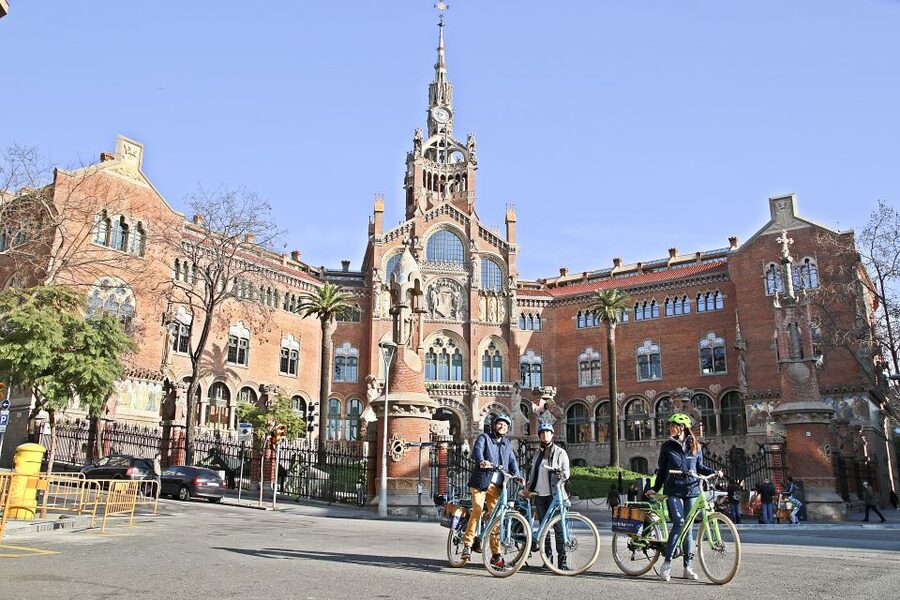
Parc de la Ciutadella was once part of Barcelona’s military citadel and later became a public park. On the tour, you see its large fountain, which has Italian-inspired design elements and may include contributions from a young Antoni Gaudí.
This stop gives you a useful bit of context. Gaudí is usually associated with fantastical facades and twisting stone, but his career developed within a wider Catalan Modernist movement. The park helps show the mix of decorative art, public design, and architecture that shaped Barcelona in the late 19th century.
You have some free time here, but do not expect a long park visit. The tour keeps moving, and the main purpose is to see the fountain and get a sense of the area before continuing into El Born.
El Born, Mercat del Born, and Santa Maria del Mar
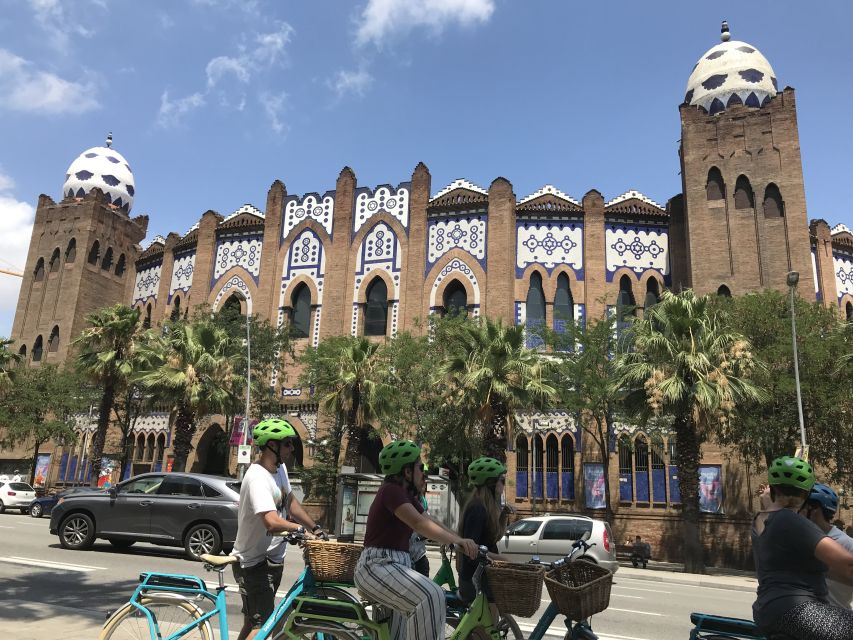
The route then reaches El Born, one of Barcelona’s most atmospheric central districts. Its narrow streets and old buildings reflect a time when this area was linked to the city’s medieval commercial life and was once a seaside resort for aristocratic families.
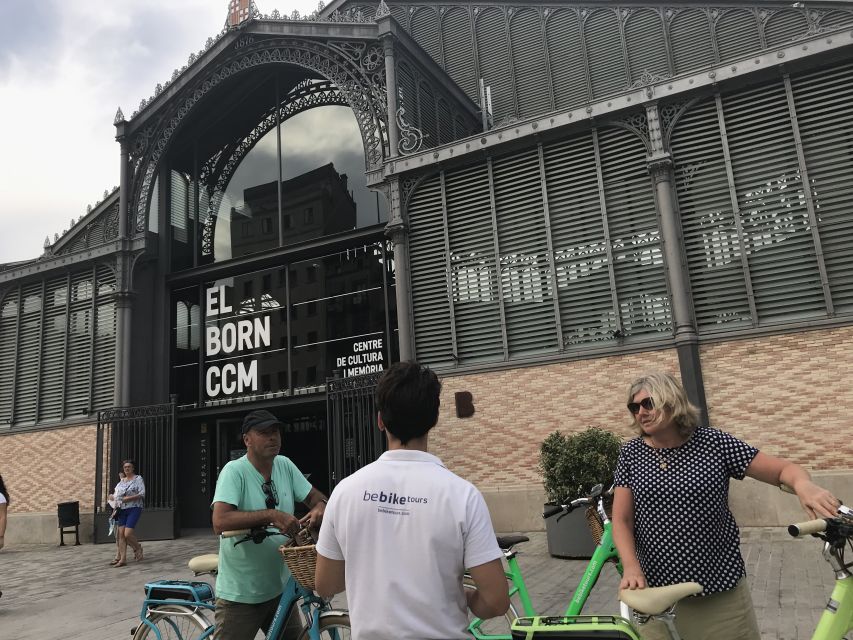
You pass Mercat del Born, a large iron-and-glass market building that now serves as a cultural site. Its structure is worth seeing from the outside, particularly because it feels different from Gaudí’s organic forms. Here, the interest comes from urban history and engineering rather than elaborate decoration.
The ride also passes the Basilica of Santa Maria del Mar, often called the cathedral of the sea. The church gives you another architectural contrast, with a more restrained medieval appearance than the later Modernist buildings on the route.
This section is one reason I like the tour. You are not simply collecting Gaudí facades. You are seeing how Barcelona changed from a medieval city into a modern European capital, with different periods sharing the same streets.
More Cycling Trips in Barcelona:
- Bike Tour in Barcelona: History, Architecture and Culture
★ 3.5 · 29 reviews - Historical Singapore Bike Tour on Full-Sized Bicycles
★ 5.0 · 1,421 reviews - Asheville Historic Downtown Guided Electric Bike Tour with Scenic Views
★ 5.0 · 1,234 reviews - Historic Athens: Small Group Electric Bike Tour
★ 4.9 · 966 reviews
Casa Calvet and the move toward Modernist Barcelona
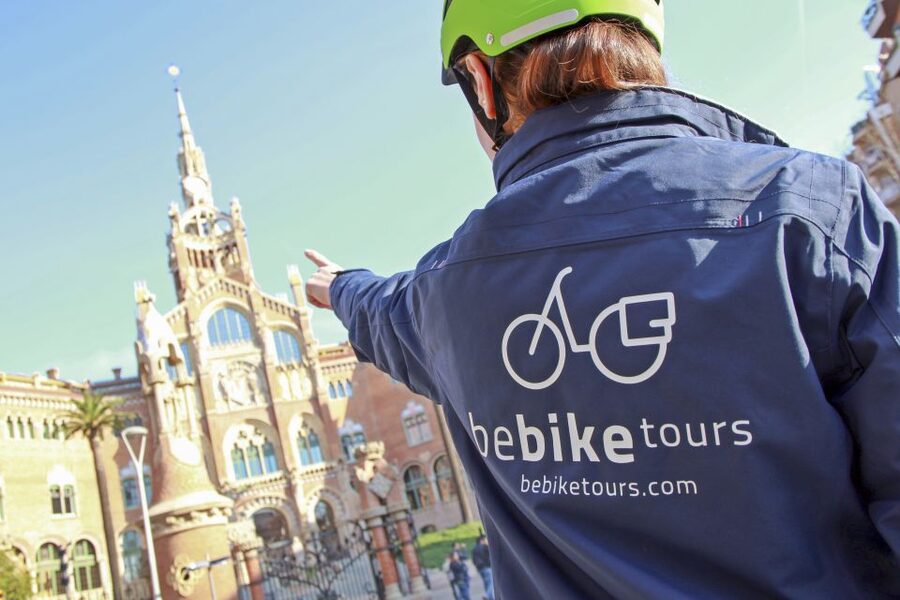
Casa Calvet is one of Gaudí’s less famous works, and that makes it a useful stop. It was designed as a home and business building, with a more orderly facade than Casa Batlló or La Pedrera. Decorative details still hint at Gaudí’s imagination, but the building fits more neatly into its urban setting.
Casa Calvet was declared a Place of Cultural Interest in 1969. You will generally see it from the street rather than tour its interior, so listen closely to the guide’s explanation of its design and place in Gaudí’s career.
This is a good point to remember that Gaudí did not work in only one style. His buildings range from restrained and practical to theatrical and dreamlike. Casa Calvet helps you see the earlier, more controlled side of his work before the route reaches his better-known masterpieces.
Casa Batlló and La Pedrera on Passeig de Gràcia
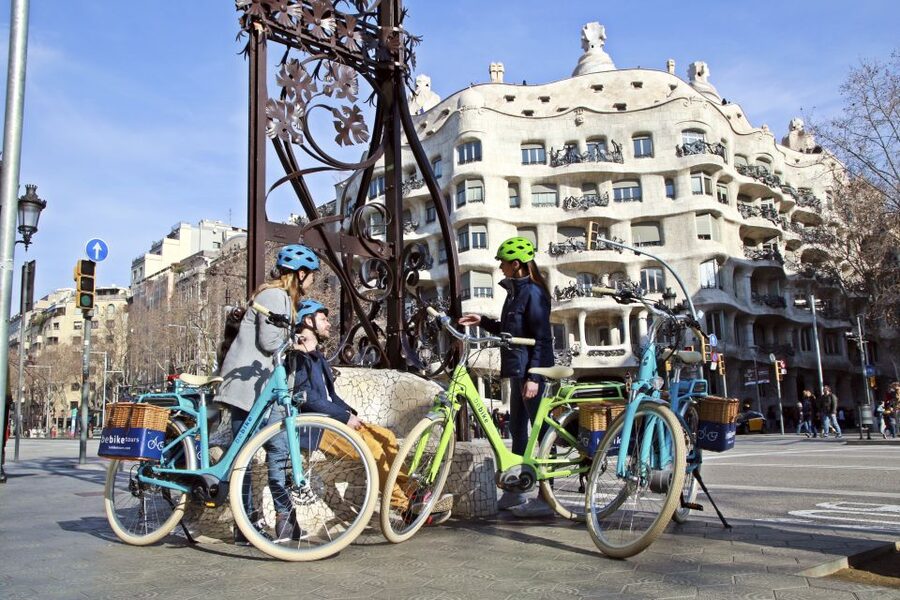
The route continues toward the modern quarter of Eixample and the grand avenue of Passeig de Gràcia. Here you see Casa Batlló and La Pedrera, two of Barcelona’s most famous buildings.
Casa Batlló is easy to recognize. Its facade has curved forms, unusual window shapes, colorful ceramic details, and a roofline that suggests the back of a dragon. From a bike, you get a quick but useful exterior view. The guide can point out details that are easy to miss when you are standing in front of the building with a crowd of pedestrians.
La Pedrera, also called Casa Milà, is more massive and less obviously colorful. Its rough stone facade and wave-like balconies give it a strong presence along the avenue. The roof, with its sculptural chimneys, is one of the building’s best-known features, though you will not visit it on this tour.
These two stops are among the busiest parts of the route. You may have only a short time to take photographs, and the streets can be active. That is the tradeoff for covering several major sights in one outing. If you want detailed architectural study or interior access, plan a separate visit to one of the buildings.
Vila de Gràcia and Casa Vicens
The ride moves into Vila de Gràcia, once a separate town and now one of Barcelona’s most distinctive districts. It has its own local center, shops, squares, and everyday rhythm. The tour describes it as Barcelona’s coolest suburb, but the more useful point is that Gràcia feels less monumental than Passeig de Gràcia.
You see the 33-meter bell tower crowned by the bell known as Marieta. This gives the district a strong visual marker and helps explain its local identity. The tower is not simply another photo stop. It shows how Gràcia retains traces of its village past even though it is now part of the city.
Casa Vicens is another important stop. Built by Gaudí, it is considered one of the first buildings of the Art Nouveau movement and his first house design. Its patterned tiles, colorful surfaces, and Eastern-inspired decorative touches look different from the later Casa Batlló and La Pedrera.
I find Casa Vicens especially valuable on a short tour because it gives you a beginning point for Gaudí’s development. You can compare its more compact and decorative style with the larger, more sculptural buildings seen earlier in the ride.
Passeig de Sant Joan to Sagrada Familia
From Gràcia, the group follows Passeig de Sant Joan toward Sagrada Familia. This broad route provides a change from the smaller streets and gives the group room to ride together.
Sagrada Familia is the grand finish. Gaudí began work on the basilica in 1883, and construction has continued for generations. From outside, you can study the towers and facades while the guide explains the building’s role in Barcelona and why it remains unfinished.
The route includes a photo stop and some free time. You will have a chance to look up at the spires and take photographs, but this is not an interior visit. The basilica deserves more time than a bike tour can provide, so I recommend treating this stop as an introduction and returning later if you want to see the inside.
The exterior can be hard to absorb all at once. Use the guide’s commentary to focus on a few details rather than trying to understand every sculpture and tower. A good guide makes a difference here. Sergio, Peter, Sergey, Alex, Marina, Liuba, and Maria are among the guides praised for clear explanations, enthusiasm, patience, and useful suggestions for places to eat or shop.
Guide quality can vary on any group tour, but this experience offers several language choices: Spanish, English, French, German, Italian, Russian, Dutch, and Portuguese. Peter also tailored one private tour to the rider’s interests and ability, even adding a ride toward the beach. That kind of flexibility is more likely with a private booking or a very small group.
What the $28 price really covers
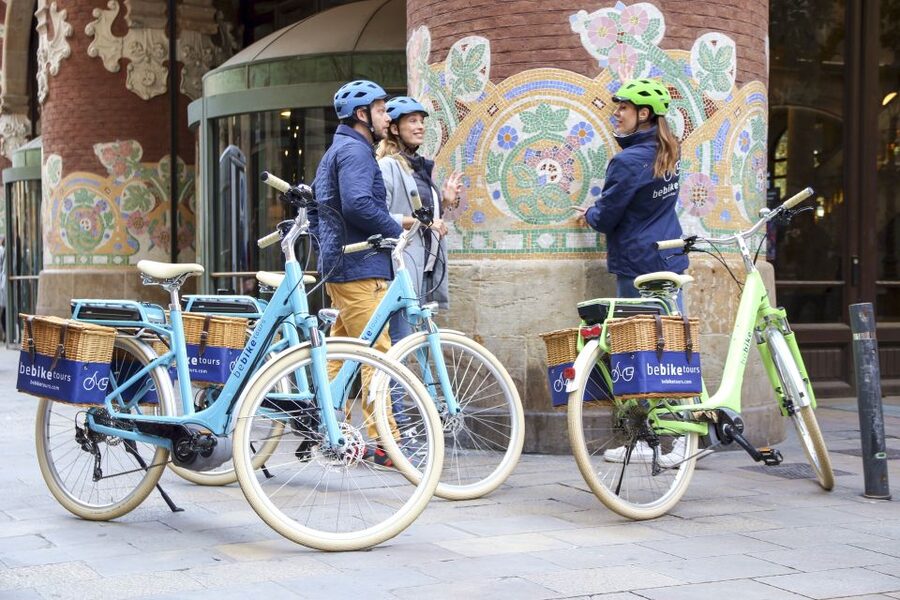
At $28 per person, this is a strong value if you want a guided overview of Barcelona’s major architecture. The price includes your regular or electric bike, local guide, helmet, insurance, and water. You are also paying for a route that connects sights spread across several districts.
The price does not include admission to Casa Batlló, La Pedrera, Casa Vicens, or Sagrada Familia. That is not a flaw, but you should know what you are buying. This is an exterior sightseeing tour with context, movement, and city orientation.
A separate visit to Sagrada Familia alone requires planning and more time. Adding this bike ride first can help you decide which buildings deserve your limited sightseeing hours. It also gives you a better sense of where the major sites sit in relation to one another.
Free cancellation is available up to 24 hours before the start, and you can reserve now and pay later. Starting times vary, so check availability when you book.
Group size, children, and comfort
Groups range from 2 to 15 people per guide, with private and small-group options available. A smaller group makes it easier to ask questions and stay close to the guide, especially in busy streets.
Children under six can ride free in a child safety seat on a parent’s bike. Children up to 20 kilograms and 130 centimeters can also ride free in a parent’s child seat. Children under two are not accepted.
The tour is not suitable for people with heart problems. If you have concerns about cycling, hills, or balance, choose the e-bike and explain your needs before setting off. Comfortable clothes, secure shoes, and a water bottle are sensible, though a bottle of water is included.
Who will get the most from this tour
I would choose this tour early in a Barcelona stay. It gives you a working map of the central districts and lets you see which buildings deserve a longer visit. It suits first-time visitors, architecture fans, active families with eligible children, and anyone who wants more than a bus window view.
It is also a good fit if you have only a short time in the city. In two and a half hours, you see Arc de Triomf, Ciutadella Park, El Born, Santa Maria del Mar, Casa Calvet, Casa Batlló, La Pedrera, Casa Vicens, Gràcia, and Sagrada Familia.
You may prefer another option if your main goal is to tour interiors, spend long periods at each monument, or avoid cycling in city traffic. The ride is efficient, but efficiency means brief stops. People who want a slow, detailed look at Gaudí should pair this experience with a separate building visit.
Should you book the Gaudí e-bike tour?
Book it if you want a lively introduction to Barcelona’s architecture and like the idea of seeing several districts in one morning or afternoon. The $28 price is fair because it covers transport by bike, a guide, safety equipment, insurance, and water.
Choose the electric bike if you want an easier ride, especially for uphill sections and frequent stops. Choose a private or very small group if you want the guide to adjust the route or answer lots of questions.
Skip it if you need interior access or dislike cycling in an active city. For everyone else, this is a practical way to get your bearings, see Gaudí’s best-known exteriors, and understand how Barcelona’s medieval core connects with its Modernist neighborhoods.
FAQ
How long does the Barcelona Gaudí bike tour last?
The tour lasts 2.5 hours, including the ride back to the starting point.
Where does the tour start?
You meet at the activity provider’s office at Passeig de Lluís Companys, 10.
How do I reach the meeting point by Metro?
Take Line 1, the red line, to Arc de Triomf. From the station, walk about three minutes along Passeig de Lluís Companys toward Passeig de Sant Joan.
Does the tour include an electric bike?
You can select a regular bike or an electric bike when booking. A helmet, insurance, and a bottle of water are included.
Which Gaudí buildings can I see?
The route includes Casa Calvet, Casa Batlló, La Pedrera, Casa Vicens, and Sagrada Familia. You also see Gaudí-related details at Parc de la Ciutadella.
Does the tour include admission to Sagrada Familia?
No. The tour includes an exterior sightseeing stop, photo time, and guide commentary at Sagrada Familia, but not interior admission.
What languages are available?
Guided tours are available in Spanish, English, French, German, Italian, Russian, Dutch, and Portuguese.
Can children join the tour?
Children under six can join free in a child safety seat on a parent’s bike. Children up to 20 kilograms and 130 centimeters can also ride free in a parent’s child seat. Children under two cannot take part.
More E-Bike Trips in Barcelona
- San Sebastian E-bike trour: Basque History and Cultural.
★ 5.0 · 367 reviews - Athens: Small Group E-Bike Tour of Historic Highlights
★ 4.9 · 154 reviews - Athens Highlights by E-Bike: Small-Group Historic Tour
★ 5.0 · 131 reviews - Tenerife: Guided Historical Bike Tour with E-Bike Option
★ 3.9 · 83 reviews
Just added around Barcelona
- Girona, Costa Brava and Medieval Village from Barcelona★ 5.0 · 149 reviews
- Tarragona and Sitges Small Group Tour – Roman History & Culture★ 4.5 · 339 reviews
- Barcelona Tapas Food Tour, Taverns, History & Local Culture★ 5.0 · 42 reviews
- Savor Spain: Food, Wine, History & Culture Small Group Tour in Old Barcelona★ 5.0 · 140 reviews
- Private Pre-Pyrenees Medieval Village Hike from Barcelona★ 5.0 · 39 reviews
- Sip, Sites & Bites Barcelona Food, Drinks & History Tour★ 4.5 · 95 reviews
- History Museum of Catalonia & Rooftop Access Ticket★ 4.5 · 43 reviews
- Private Besalú & 3 Medieval Towns Tour with Hotel PickUp from Barcelona★ 5.0 · 37 reviews
Barcelona History Tours, compared.
Montserrat with Black Madonna & Medieval Winery with Tapas/Lunch
Read our review →
Barcelona Tapas Walking Tour: Food, Wine & History
Read our review →
Pyrenees & Medieval Towns Small Group Tour from Barcelona
Read our review →
Besalu & 3 Medieval Towns Small Group Tour with Hotel Pick-Up
Read our review →
Costa Brava & Medieval Village Tour with Lunch
Read our review →
Barcelona Erotic Museum – Explore Art, History & Fun
Read our review →
Private Jewish Heritage Journey by Barcelona Dreaming
Read our review →Browse the lists this tour appears in