
Review · HISTORY TOURS
Aruba Downtown Historic and Cultural Walking Tour
Oranjestad reveals itself best on foot, one short block at a time. This 2.5-hour walk links Fort Zoutman, old houses, government buildings, churches, museums, shops, and food stops, giving you a useful first look at Aruba beyond the beach. Guides such as Wendell, Evy, Marisa, and Milton bring different personal stories and local viewpoints.
I like the two food tastings, which turn a history walk into a small introduction to Aruban eating. I also like the chance to enter Fort Zoutman and the National Archaeological Museum when they are open, since the included admission adds real value to the $45 price. The main concern is the heat and the quick pace at some stops, especially if you want time to read every museum display.
Key points to know before you book
- About 30 stops in 2.5 hours: You cover many sights, but most stops are brief rather than long visits.
- Two local tastings included: Expect pan bati at Coco Plum and another local bite, often pastechi or a breakfast and party food specialty.
- The route stays around central Oranjestad: This is a city walk, not an island-wide tour, so do not expect beaches or countryside.
- Museum access depends on opening hours: Fort Zoutman and the National Archaeological Museum are included when open.
- Morning is the smart choice: The tour begins at 9:00 am, before the strongest heat settles over the streets.
- Guide style can shape the experience: The strongest tours depend on a lively storyteller, and the guides named most often include Wendell, Evy, Marisa, Yvonne, Hazel Milton, and Milton.
Why Oranjestad works well as a walking tour
Oranjestad is compact enough to explore on foot, yet it carries several layers of Aruba’s story. You move from a colonial-era fort to a public park, from local government to Protestant worship, then through streets lined with older homes and long-running shops.
The route is not about covering great distances. It is about learning what you are looking at. A guide can explain why a building matters, how Aruba’s political system works, and how local food fits into family life. I find that especially useful on a first day, when you are still trying to place the island’s culture beyond the familiar resort strip.
The tour has a maximum group size of 20 people. That is large enough to provide energy, but still small enough for a guide to keep the group together on city streets. The actual feel may depend on the day’s turnout and on your guide’s style.
The 4.8 rating from 623 ratings and 96 percent recommendation rate point to a generally strong experience. Still, the walk has a clear tradeoff: you see many places, but you do not linger long at most of them. One person found the route too limited in distance, while another found the amount of information hard to absorb. Both points are fair.
More Local Culture and Traditions Tours in the world:
- Amsterdam Food and Cultural Tour with Tastings
★ 5.0 · 4,315 reviews - Sevilla Food Tour: Tapas, Wine, History & Traditions
★ 5.0 · 3,468 reviews - Tromsø: Reindeer Camp and Sami Cultural Tour with Lunch
★ 4.7 · 3,326 reviews
Starting at Cosecha and Fort Zoutman
The meeting point is Cosecha Aruban Craft Design & Heritage at Zoutmanstraat 1. The tour begins at 9:00 am and ends back at the same meeting point. Selected accommodations offer pickup, which helps if you are staying near the main hotel areas, but you should confirm that your lodging qualifies.
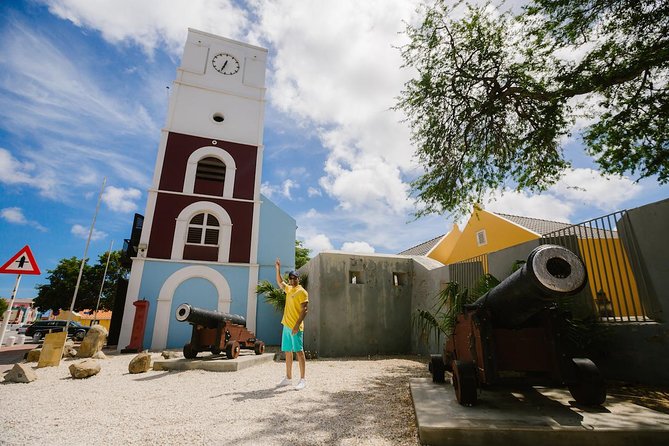
Fort Zoutman is the historic anchor of the morning. The fort dates to the 1700s, and when the Historical Museum is open, you can go inside to see displays about Aruba’s past. The old clock tower, added in the 1800s, offers a view over downtown when climbing access is available.
The stop is listed for about 10 minutes, so think of it as a focused introduction, not an hour-long museum visit. If you want to read every panel, you may feel rushed. The value comes from hearing the guide explain the fort’s place in the city before you continue through the streets.
The fort and museum are among the strongest reasons to book this walk rather than simply stroll around town alone. Admission is included when the site is open, and the guide gives the building context that a quick photograph cannot provide.
Wilhelmina Park and Aruba’s public spaces
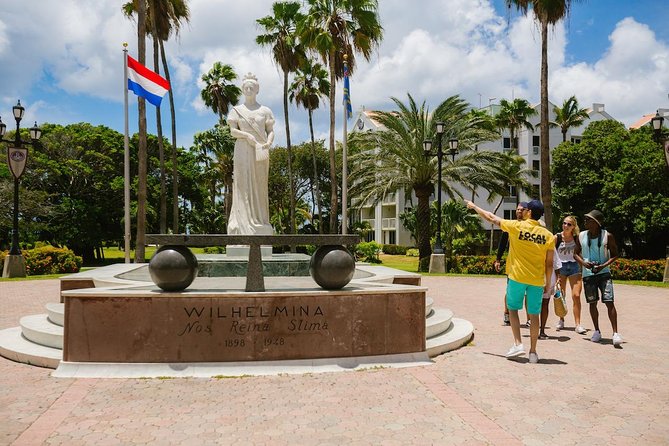
Wilhelmina Park provides a change of pace. You hear about two notable statues and may see iguanas around the park. The stop lasts roughly 10 minutes, so it is more about orientation and local stories than a formal garden visit.
This is also a useful moment to notice how central Oranjestad mixes public spaces with government buildings, shops, churches, and homes. The guide helps connect these pieces instead of treating them as unrelated sights.
Do not expect a long break under shade. Aruba’s sun can be intense, even in the morning, and the tour continues at a steady walking pace. Wear comfortable walking shoes, bring sun protection, and start with breakfast. The operator specifically advises eating before the tour because heat can cause discomfort.
The National Archaeological Museum and Aruba’s first inhabitants
When open, the National Archaeological Museum introduces Aruba’s earliest inhabitants through pottery, skulls, and tools. The exterior also makes a good photo setting, but the interior displays are the real reason to stop.
This is an important counterweight to a tour focused on forts, Dutch-era buildings, and modern government. Aruba’s story begins long before those structures. Even a short museum visit helps you understand that the island’s past is not only colonial or political.
Again, the scheduled stop is about 10 minutes. That may be enough for a guided overview, but not enough for a careful museum visit. If archaeology is a major interest, you may want to return later, provided the museum’s opening schedule allows it. The tour gives you a preview and a reason to come back.
More History Walking Tours in the world:
- History and Hauntings of Salem Guided Walking Tour
★ 5.0 · 14,564 reviews - Lisbon: History, Stories and Lifestyle Walking Tour
★ 4.8 · 10,902 reviews - Amsterdam: Life of Anne Frank and World War II Walking Tour
★ 4.8 · 10,467 reviews - Berlin: Third Reich & Cold War Guided Walking Tour
★ 4.9 · 8,378 reviews
Pan bati at Coco Plum
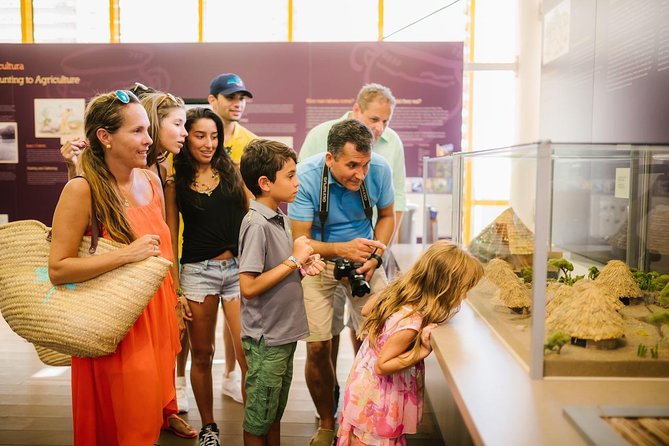
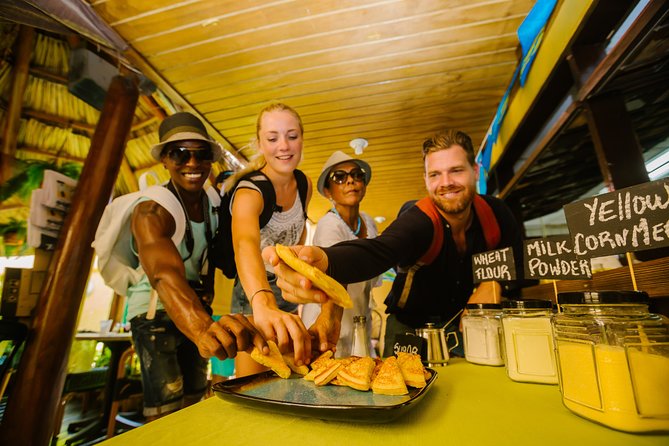
At Coco Plum Restaurant, you taste pan bati, a local snack that remains common in Aruba. This is one of the most enjoyable parts of the route because food gives you something concrete to remember. You are not only hearing about local life, you are sampling it.
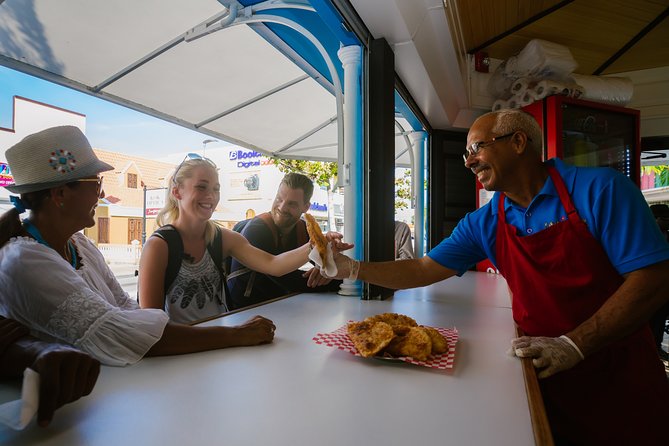
The tasting is small, not a full meal. Have breakfast first, especially if you are sensitive to heat or plan to spend the rest of the day sightseeing. The walk includes a second food tasting later, with pastechi or another local specialty connected to breakfast and parties.
The two tastings help justify part of the $45 cost. They are modest portions, but they add a local touch that a standard architecture walk might not include. They also give you ideas for what to order during the rest of your stay.
One caution: the exact food experience can depend on the route and guide. The advertised plan includes two tastings, so confirm with your guide if one seems to have been missed.
Mansions, Main Street, and the tram
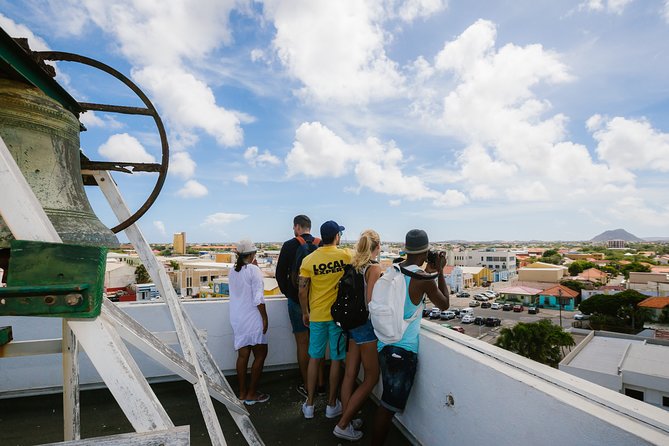
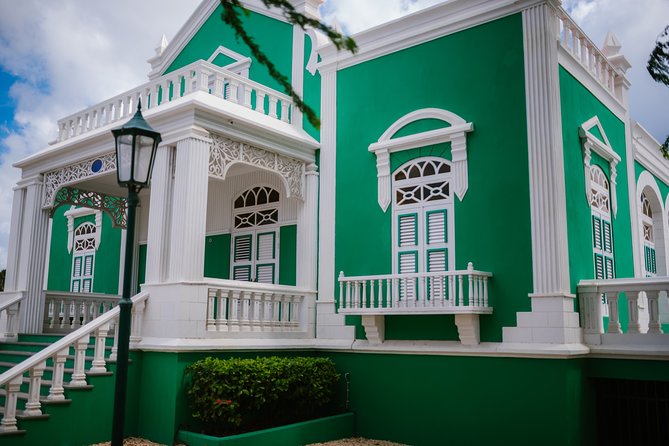
The walk continues through central Oranjestad, including an early 20th-century family mansion with a romantic story behind its construction. This is the sort of detail that makes an ordinary-looking building more interesting.
You also walk along Aruba’s main shopping street, where the guide points out stores that have been in place since 1928. The tram passes through this area, adding movement and color to the downtown scene. The shopping district may not satisfy someone looking only for major historic monuments, but it helps you understand how Oranjestad functions today.
The shopping area also matters for practical reasons. You can return later for souvenirs, browsing, or a meal, and the guide may point out places worth revisiting. The route is not designed as a dedicated shopping excursion, so you will not have much time to shop during the tour itself.
One poorly run version of this experience reportedly skipped part of the main shopping route and lost one of the planned tastings. That is not a problem to expect automatically, but it is a useful reminder to check that the walk is following the advertised route.
Government buildings and Aruba’s political system
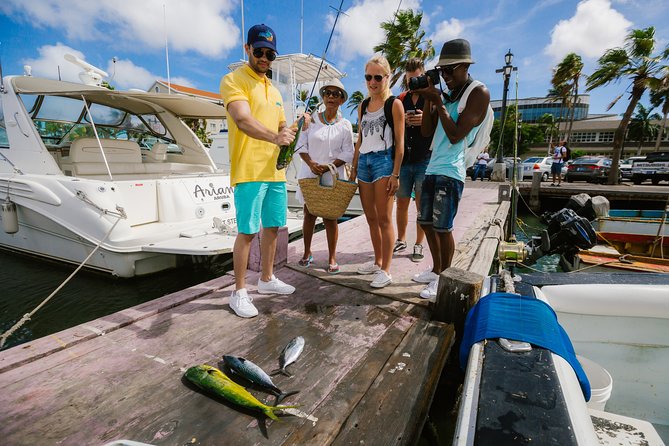
The tour starts near one of Aruba’s first government buildings, a structure that served several purposes and now houses local arts and crafts by accredited artists. This stop connects the old civic center with present-day creative work.
At the Aruba Parliament, you hear how the island’s political system works and see where politicians debate laws and current affairs. It is a short stop, about five minutes, but it adds substance to the walk. You are learning how Aruba operates rather than simply photographing façades.
Some guides bring politics into the conversation. That can be useful when the discussion stays focused on how government functions, but personal political comments may not suit everyone in a mixed group. If you prefer a neutral presentation, keep that in mind when choosing a small-group walking tour rather than a self-guided route.
The strongest guide experiences seem to come from people who connect public facts with family stories. Hazel Milton, for example, has been noted for linking Aruba’s buildings and institutions with his own family background and conversations about the island’s relationship with the Netherlands. That personal layer can make the political material easier to remember.
The Protestant Church and local religious life
The Protestant Church is one of Oranjestad’s older churches, dating to the 1800s. The guide explains how Protestantism arrived on Aruba and points out that it is not the island’s largest religion.
The stop is brief, about two minutes, so you should not expect a full church tour or extended time to study the building. Its value is in the wider social picture. Aruba has a mix of religious and cultural influences, and this small stop helps place one tradition within that larger setting.
The route then reaches Havenstraat, where you hear about foods served at breakfast and parties and receive the second tasting. This pairing of religion, daily life, and food is typical of the tour’s approach: the guide uses ordinary places to explain how people live.
Wilhelminastraat and the residential side of town
Wilhelminastraat takes you away from the main commercial streets and into a residential area. The guide points out distinctive houses and explains where local people live.
This section may be especially useful if you want more than a resort view of Aruba. It is not a grand architectural district with a long list of formal monuments. Instead, you see the scale and character of everyday Oranjestad.
The route remains gentle rather than strenuous, but it is still a real walk in warm weather. The total time may run longer than the estimated 2.5 hours, depending on the guide and group. One person reported finishing about an hour late, so do not schedule an immediate airport transfer or fixed activity after the tour.
How much value does the $45 price offer?
At $45 per person, the tour is reasonably priced if you value a local guide, the two tastings, and included entry when the museums are open. You also receive a useful orientation to restaurants, shops, streets, and landmarks that you can revisit independently.
The value drops if you want long museum visits, extensive shopping time, or a broad view of the island. You stay mainly in central Oranjestad and see many stops quickly. A bus tour is likely better for someone who wants beaches, natural sights, and several districts in one outing.
I would judge the price this way:
- Good value for first-time visitors: You gain context, food samples, and a practical city introduction.
- Less useful for repeat visitors focused on museums: The short stop times may leave you wanting more.
- Good for cruise passengers with limited time: The downtown focus keeps the route manageable, but confirm the ship booking rules.
- Not a replacement for an island tour: This experience is about Oranjestad, not all of Aruba.
Heat, footwear, pickup, and timing
The tour operates in all weather conditions. Wear walking shoes and light, comfortable clothing. Have breakfast before arriving, carry water, and plan for strong sun. The morning start is a real advantage.
Selected accommodation pickup is available, and the area is near public transportation. Cruise passengers on Carnival, Holland America, Princess, and P&O must book through the cruise line’s website or onboard system. Other cruise passengers need to provide ship name, docking time, disembarkation time, and reboarding time when booking.
A mobile ticket is provided, and confirmation arrives at booking. Service animals are allowed, and the tour uses multilingual guides. Most people can take part, but the heat and the amount of walking matter more than the route’s gentle grade.
The meeting point can be easy to miss for some people, so allow time to find Cosecha. One late start was reported, with a guide arriving 15 to 20 minutes behind schedule. That appears to be an isolated complaint rather than the normal pattern, but I would still avoid booking something immediately afterward.
Free cancellation is available up to 24 hours before the 9:00 am start time. Changes or cancellations inside that window are not accepted for a refund.
Which guide style suits you best?
The guide makes a noticeable difference. Wendell is praised for energy, storytelling, and personal accounts of how Aruba has changed. Evy is described as funny, thorough, and passionate about the island’s buildings and past. Marisa is noted for detailed explanations and a considerate manner, while Milton is associated with clear explanations of history and local government.
You may receive a different guide, and the tone can range from poetic storytelling to a more factual walk. The best fit for you depends on what you want. If you enjoy conversation and personal stories, a lively guide can make the morning memorable. If you prefer quiet, self-paced museum time, the group format may feel busy.
A multilingual guide operates the tour, but the supplied information does not specify which languages are offered on a particular date. Ask before booking if language is important to you.
Should you book the Oranjestad walking tour?
Book it if you are new to Aruba, enjoy learning through stories, want two small local tastings, and prefer a gentle city walk over a bus excursion. It is particularly useful at the start of a stay, since the guide can point you toward places to eat, shop, and revisit.
Skip it if you want a full island survey, long museum visits, or plenty of free time at each sight. The route covers many stops quickly, and the tropical heat can make the final part feel longer than expected.
For most first-time visitors, I think the best approach is to book the 9:00 am departure, eat beforehand, wear good shoes, and leave your afternoon open. The walk gives you a grounded introduction to Oranjestad, with enough food, politics, archaeology, architecture, and local stories to make the capital feel more familiar.
FAQ
How long is the Aruba Downtown Historic and Cultural Walking Tour?
The tour lasts about 2 hours and 30 minutes, though the actual finish can vary. One reported experience ran about an hour longer than expected.
What time does the tour begin?
The tour starts at 9:00 am local time.
Where does the tour meet?
The meeting point is Cosecha Aruban Craft Design & Heritage, at Zoutmanstraat 1 in Oranjestad.
Where does the tour end?
The activity ends back at the meeting point.
Are museum admissions included?
Yes. Entrance fees at Fort Zoutman and the National Archaeological Museum are included when those museums are open.
What food is included?
The tour includes two local tastings. One is pan bati at Coco Plum Restaurant. The second is a local food served along Havenstraat, such as pastechi or another breakfast and party specialty.
How much walking is involved?
The tour is a gentle walking route through central Oranjestad, with approximately 30 stops. Comfortable walking shoes are recommended.
Is the tour suitable for cruise passengers?
Cruise passengers on Carnival, Holland America, Princess, and P&O must book through their cruise line’s website or onboard system. Passengers from other cruise lines must provide ship and port timing details when booking.
Can I cancel for a refund?
You can cancel up to 24 hours before the experience start time for a full refund. Cancellations and changes made less than 24 hours before the start are not accepted for a refund.
Just added around the world
- Scenic Train ride to historical cities of Morretes and Antonina★ 4.0 · 188 reviews
- 6-Day Cultural Tour to Machu Picchu★ 5.0 · 76 reviews
- Jewish Heritage of Curacao★ 4.5 · 68 reviews
- The Curacao’s Colorful History Walking Tour★ 5.0 · 55 reviews
- Discover Scuba Diving Amathounta’s Ancient Port★ 5.0 · 30 reviews
- Olous – Guided Snorkelling Excursion to Discover Olous Sunken Ancient City★ 4.5 · 31 reviews
- Night Walking Tour of Medieval Cuenca★ 5.0 · 64 reviews
- WWII – The Battle of Crete Day Tour★ 5.0 · 103 reviews