
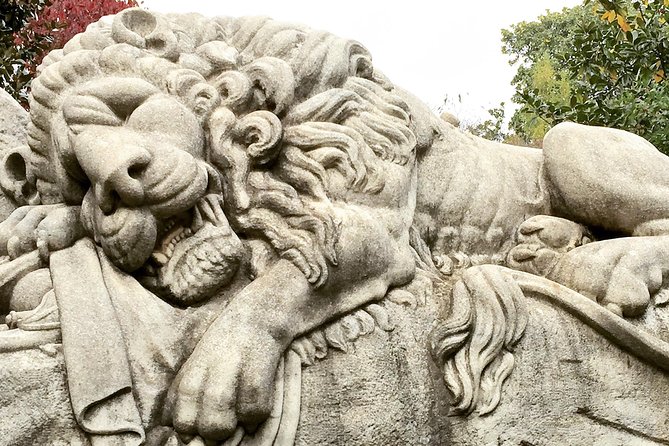
Review · ATLANTA
Private Atlanta History Tour From Civil War to Civil Rights
Atlanta’s past comes into focus on this private tour, which connects the Battle of Atlanta with the city’s central role in the Civil Rights movement. You’ll ride between neighborhoods, walk through historic places, and finish at the Martin Luther King Jr. National Historic Site, where his birthplace, church, and grave bring the story close to home.
I like the personal format and the mix of driving with short walks. Guides such as Chris, Dan, Melinda, and Julio have been praised for their Atlanta background, friendly manner, and ability to point out murals, homes, and city details you might miss from a car. I also like that pickup is offered in Midtown, Downtown, and Buckhead.
The main caution is the tight three-hour schedule. The tour covers a lot, and some of your time may go toward driving through neighborhoods rather than visiting formal exhibits. If you want a detailed Civil War study or a long visit at every Civil Rights site, you may need more time on your own.
Key points to know before booking
- The tour links two major chapters of Atlanta history: the Civil War and the Civil Rights movement.
- You get a private vehicle and guide: only your group takes part, so the pace can be adjusted within the short tour window.
- The Martin Luther King Jr. National Historic Site gets about an hour: this is the tour’s most substantial stop.
- Oakland Cemetery adds personal detail: Civil War soldiers, Margaret Mitchell, and the founder of The Masters Golf Tournament are buried here.
- Historic neighborhoods are part of the experience: Inman Park, Cabbagetown, Grant Park, and areas near Krog Street show how Atlanta changed over time.
- Pickup is available in key central areas: Midtown, Downtown, and Buckhead pickup must be arranged with the guide.
Atlanta’s story, told from a comfortable vehicle
This is a useful first look at Atlanta because the city’s history is spread across several neighborhoods. You are not staying in one museum or walking one compact old quarter. Instead, you ride between sites and get short walks at places where the story happened.
That format matters in Atlanta. The city grew, burned, rebuilt, expanded, and changed quickly. Its historic buildings sit beside newer development, so moving through the city helps you see those contrasts. Your guide may point out old homes, murals, former industrial buildings, movie locations, and streets tied to Atlanta’s growth.
The experience is private, with a minimum booking of two people. That gives you more room to ask questions than you would have on a large bus tour. Guides have included Atlanta natives and long-time local experts such as Julio, Chris, Dan, and Melinda. Their styles may differ, but the strongest part of the experience is the chance to hear the city explained by someone who knows its neighborhoods rather than simply following a fixed script.
You should expect a conversational tour, not a formal lecture. That can be a strength if you want to shape the discussion around your interests. It can also mean that the amount of Civil War or Civil Rights detail varies by guide, so tell your guide early what you most want to understand.
More Private History Tours in the USA
- Private Guided Historic Electric Cart Tour of St. Augustine
★ 5.0 · 1,194 reviews - Private Tour of Savannah’s Historic/Victorian Districts & Bonaventure Cemetery
★ 5.0 · 418 reviews - Gettysburg: Private Tour with Licensed Battlefield Guide
★ 5.0 · 362 reviews
Inman Park and the Battle of Atlanta

The tour begins with Inman Park, an attractive east-side neighborhood filled with decorative Victorian homes. It is also tied to the Battle of Atlanta, making it an important starting point for the Civil War portion of the experience.
The neighborhood helps explain how Atlanta’s past remains part of an active residential area. You are looking at houses and streets, not entering a large battlefield museum. The value is in hearing how the battle affected this part of the city and how Atlanta later rebuilt and grew around it.
The homes add another layer. Inman Park includes grand Victorian architecture, including a home connected with the founder of Coca-Cola. You may also hear about how the neighborhood changed over time and how its older buildings were preserved.
Plan on about 30 minutes here. That is enough for an introduction and some explanation, but not a detailed examination of every building or Civil War event. If architecture interests you, keep your eyes open as you ride and walk. The guide may call out details you would otherwise pass without noticing.
Krog Street Tunnel and Cabbagetown’s industrial past
Next comes the Krog Street Tunnel area, near Cabbagetown. This stop shifts the story from battlefield and mansion to industry and working-class Atlanta.
Cabbagetown grew around a late nineteenth-century cotton mill. Its historic setting includes restored shotgun houses, a reminder that Atlanta’s past was not only shaped by prominent business owners and political figures. The nearby tunnel is also known for its painted walls and changing murals, adding a modern layer to the older neighborhood.
The former Fulton Cotton Mill, known as the Stacks, is another important piece of this story. The old industrial building was transformed into loft homes, showing how Atlanta has reused parts of its manufacturing past. You may not spend a long period inside the building, but seeing it in context helps connect the city’s industry, housing, and redevelopment.
This is one of the tour’s better stops for understanding change. Atlanta is not presented as a preserved museum city. You see old structures adapted for new uses, historic homes beside newer development, and public art layered over older streets.
The drawback is that the tunnel and surrounding neighborhoods are mainly viewed during a brief stop. If you want to study the murals at length or explore Cabbagetown on foot, return independently with extra time.
Grant Park and Atlanta’s older homes
Grant Park brings the tour to Atlanta’s oldest park and one of the city’s strongest collections of Victorian homes and Craftsman bungalows. The area also includes one of the few homes in Atlanta that predates the Civil War.
This stop is especially useful if you want to see how the city’s residential architecture changed. Victorian houses point to one era of growth, while Craftsman bungalows reflect another. The homes give you a visual way to follow Atlanta’s expansion and changing social patterns.
You are not simply looking at pretty streets. The guide can connect the buildings with the city’s development after the war and with the socioeconomic changes that shaped Atlanta neighborhoods later. That broader explanation is one reason a private tour can be more useful than driving around alone.
About 30 minutes is planned here. The timing works well for a first visit, although architecture fans may wish they had longer. You will get an overview rather than a house-by-house tour.
More Battlefield and Military History Tours in the USA:
- 2-Hour Gettysburg Battlefield Guided History Bus Tour with a National Park Guide
★ 4.5 · 2,201 reviews - Gettysburg Battlefield Self-Guided Driving Audio Tour
★ 4.5 · 910 reviews - Gettysburg: Horse-Drawn Carriage Battlefield Tour
★ 4.8 · 896 reviews - Guided Savannah Civil War History Walking Tour
★ 5.0 · 492 reviews
Oakland Cemetery, where the city’s story becomes personal

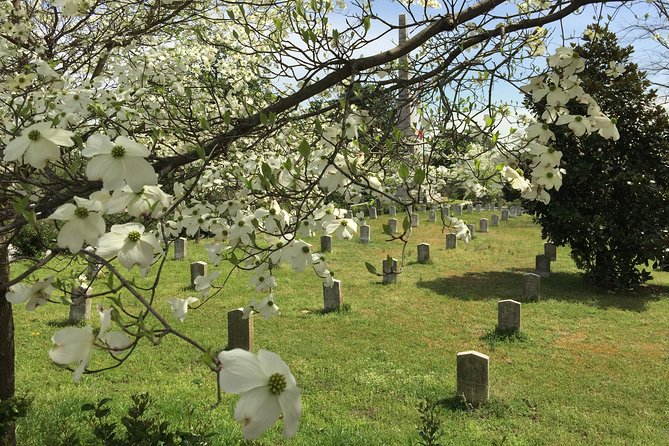
Oakland Cemetery is one of the most meaningful stops because it turns broad history into individual lives. This garden cemetery contains the graves of Civil War soldiers, Margaret Mitchell, and the founder of The Masters Golf Tournament, among others.
A cemetery can be easy to skip when planning an Atlanta visit, but Oakland gives you a quieter way to understand the city. Names, dates, family connections, and memorials can make the Civil War and Atlanta’s later growth feel less abstract.
Margaret Mitchell’s grave adds a literary connection through Gone with the Wind. The cemetery also reflects the city’s changing population and public memory. Your guide can help you see why this is more than a collection of old headstones.
Admission is included, and about 30 minutes is scheduled. That is enough for a focused introduction and the principal points, but it is not a full exploration of the grounds. Wear comfortable shoes, since this is one of the walking portions of the tour. The overall activity requires a moderate level of physical fitness, though the vehicle reduces the amount of walking between sites.
The Martin Luther King Jr. National Historic Site

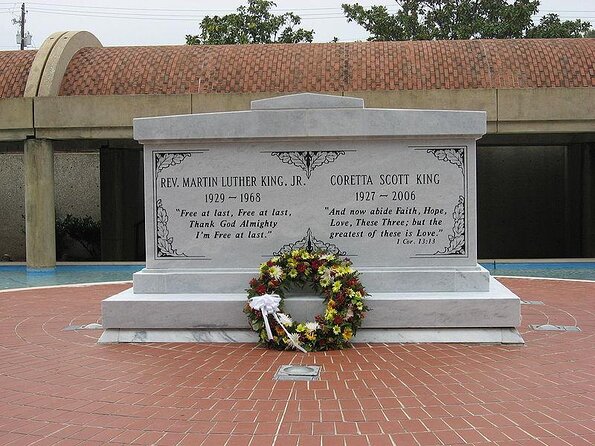
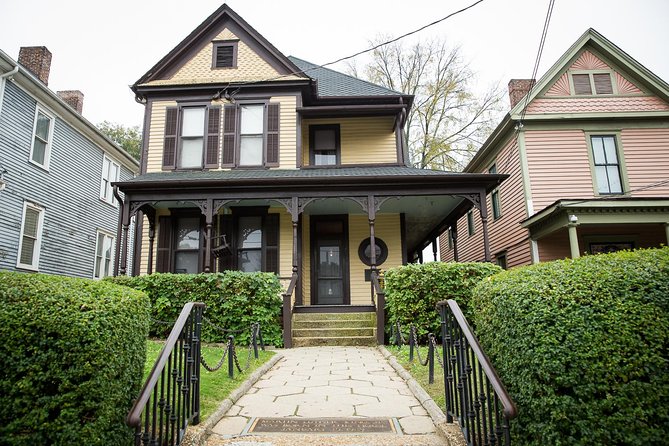
The final major stop is the Martin Luther King Jr. National Historic Site, with about an hour set aside. This district includes Dr. King’s birthplace, Ebenezer Baptist Church, and his final resting place.
For many people, this is the emotional center of the tour. Standing near the home where Dr. King grew up and the church connected to his family gives the Civil Rights story a strong sense of place. The experience is not limited to dates and speeches. It connects a national movement with a neighborhood, a congregation, and a family.
The timing is important. One hour allows you to see key parts of the district, but you should not expect to absorb every exhibit in detail. Guides such as Chris and Dan have been praised for helping people use limited time well, pointing out the major highlights and explaining their importance.
This is also where the tour’s title makes the most sense. The experience begins with Atlanta’s Civil War past and ends with the city’s role in the struggle for racial equality. The connection is not automatic, and the guide’s explanation matters. Atlanta’s rebuilding, economic growth, racial divisions, and civic leadership all form part of the story.
One caution is worth keeping in mind. At least one account of the experience found the first two hours focused heavily on homes, neighborhoods, and filming locations, with the Civil War and Civil Rights discussion concentrated mainly at the final stop. If those subjects are your priority, say so at the start. A clear request can help your guide give them more attention.
What the private format is really worth
The price is $175 per person, with at least two people required to book. For two people, that means a minimum of $350 before any separate plans you make for meals or additional attractions.
That is not the cheapest way to see Atlanta. You are paying for private transportation, a guide, pickup in central areas, and the ability to keep the experience limited to your own group. Bottled water and snacks are included, which is helpful on a warm day, but they are a small part of the value.
I see the price making the most sense for couples, families, and small groups who want a personal introduction rather than a large coach tour. It can also work well if you have only a few hours in Atlanta and want to cover several neighborhoods without figuring out the driving yourself.
The value is weaker if you prefer to spend long periods inside museums or explore independently. Three hours passes quickly, and you may leave with a broad understanding rather than a specialist’s view of any one subject.
Walking, riding, and keeping the pace comfortable
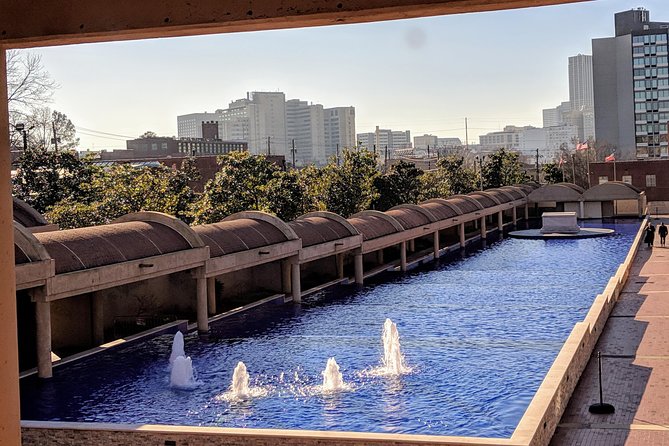
The combination of driving and walking is practical. Atlanta’s historic sites are separated by busy roads and different neighborhoods, so a vehicle saves time and energy. You still get out at Inman Park, Krog Street, Grant Park, Oakland Cemetery, and the Martin Luther King Jr. site.
The walking is not described as strenuous, but you should have a moderate fitness level. Comfortable shoes are sensible, especially at Oakland Cemetery and the historic districts. Children must be accompanied by a paying adult, and animals are not allowed.
The private setting also helps with pace. One account praised the guide for adjusting the tour for people in their seventies, while another described a comfortable vehicle and a calm, friendly approach. That does not guarantee the exact same guide or vehicle for every departure, but it shows why the private format can suit mixed-age families.
Pickup is offered from Midtown, Downtown, or Buckhead. You provide your location, then the guide contacts you within 24 hours to confirm details. If you stay outside those areas, you meet at 423 John Wesley Dobbs Avenue Northeast. The tour ends back at the meeting point.
Who should book this Atlanta tour
I would recommend this experience if you are visiting Atlanta for the first time and want a useful city overview without joining a large group. It is also a good match for history-minded couples, families with older children, and anyone who wants to connect neighborhoods with major events.
You will get the most from it if you enjoy asking questions and looking beyond headline attractions. The guide may point out murals, homes, former mills, public spaces, and other details that are easy to miss when you travel alone.
It is less suitable if you want a full museum day, a carefully timed Civil War battlefield tour, or a long, academic treatment of the Civil Rights movement. The tour covers both subjects, but it does so through a wide city circuit.
The experience is offered in English. Confirmation arrives when you book, and free cancellation is available until 24 hours before the start time. Poor weather can lead to a new date or a full refund, since the tour requires good conditions.
My take: a strong introduction with one important caveat
I like this tour for its range. In three hours, you see old homes, an industrial district, a cemetery, Civil War connections, and the Martin Luther King Jr. National Historic Site. That gives you a stronger sense of Atlanta than a simple downtown drive.
The private guide is the biggest advantage. Guides including Julio, Chris, Dan, and Melinda have been praised for their local background, good humor, patience, and ability to tailor the experience. Several people found the tour helpful for getting oriented at the start of a visit, and some received useful suggestions for places to eat afterward.
Still, you should set realistic expectations. This is a broad introduction, not a deep study. If your main reason for booking is the Civil War or Civil Rights history, tell the guide before the vehicle pulls away and again when you reach the first stops.
Book it if you want a comfortable, personal overview of Atlanta and value local explanation over a fixed group route. Skip it if you would rather spend three hours at one museum or explore each neighborhood slowly on foot.
FAQ
How long does the Atlanta history tour last?
The tour lasts approximately three hours.
What historical subjects does the tour cover?
It connects Atlanta’s Civil War history with the city’s role in the Civil Rights movement. Stops include the Battle of Atlanta area, Oakland Cemetery, and the Martin Luther King Jr. National Historic Site.
Is the tour private?
Yes. Only your group participates in the activity.
How many people are required to book?
A minimum of two paid guests is required for each booking.
Is hotel pickup available?
Pickup is available in Atlanta’s Midtown, Downtown, and Buckhead areas. If you stay outside those areas, you meet the guide at 423 John Wesley Dobbs Avenue Northeast.
Where does the tour end?
The activity ends back at the meeting point.
What is included in the price?
Bottled water and private transportation are included. Admission to Oakland Cemetery and the Martin Luther King Jr. National Historic Site is also included.
Is the tour suitable for children?
Children may participate, but they must be accompanied by a paid adult.
Can I cancel for a full refund?
Yes. You can cancel at least 24 hours before the local start time for a full refund. Cancellations or changes made less than 24 hours before the start time are not accepted, and poor weather may result in a different date or a full refund.
Just added around the USA
- Red Rocks Amphitheatre Historical Walking Tour★ 5.0 · 74 reviews
- 1-Hour Segway Tour of Cheyenne Cañon Art, History and Nature★ 5.0 · 36 reviews
- Colorado Springs – Guided Walking Ghost / History Tour★ 5.0 · 168 reviews
- Ancient Landscapes Private Geology Hike at Garden of the Gods★ 5.0 · 31 reviews
- Village Food Tours Lunch & History Tour★ 5.0 · 80 reviews
- 2.5 Hour Kayaking with Manatee and History Tour in Tarpon Springs★ 5.0 · 24 reviews
- Safety Harbor Ghost Tour★ 5.0 · 60 reviews
- Historical Bicycle Tour of Dunedin★ 5.0 · 44 reviews
Atlanta History Tours, compared.

Atlanta’s Black History and Civil Rights Tour
Read our review →

3-Hour Atlanta Beltline Food, Street Art and History Tour
Read our review →

2 Hour Historic Market Food Tour and Hands-On Biscuit Class
Read our review →
2-Hour Food, History and Street Art Tour of Ponce City Market
Read our review →
Atlanta: Black History & Civil Rights City Bus Tour
Read our review →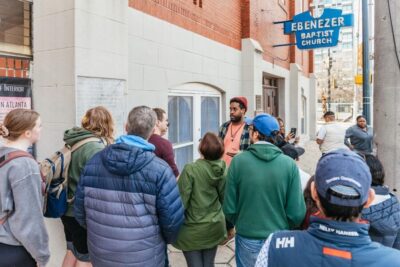
Atlanta: Martin Luther King Historical Park Walking Tour
Read our review →Browse the lists this tour appears in