
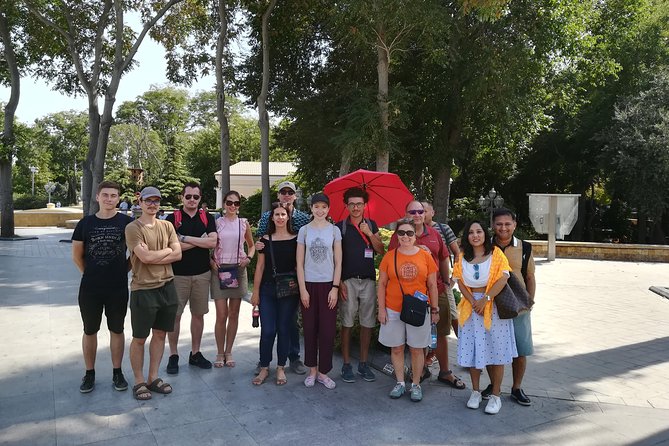
Review · HISTORY TOURS
Baku Oil Heritage & Old Town Walking Tour
Baku’s story is easiest to grasp on foot, where medieval walls, oil-barons’ mansions, Soviet traces, and modern city life sit within a short walk of one another. This 2.5-hour walking tour links those layers through Icherisheher and the grand streets outside the fortress.
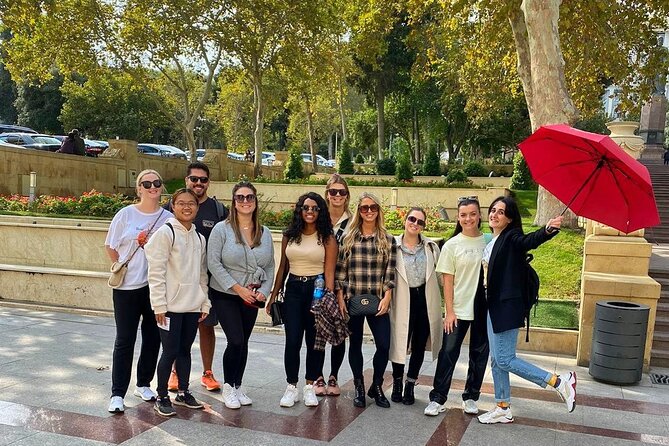
I like the way the tour connects famous sights to people and ideas, not just dates. I also like the use of historic photos and diagrams, which help you picture Baku before the oil boom reshaped it. Guides Gani and Lina receive especially strong praise for clear storytelling, humor, cultural insight, and useful food and phrase tips.
The main consideration is that most major interiors are explained from outside, rather than visited. The tour is described as private, yet the practical information also gives a maximum of 30 participants, so confirm the expected group size if personal attention is your top reason for booking.
Key points to know before you book
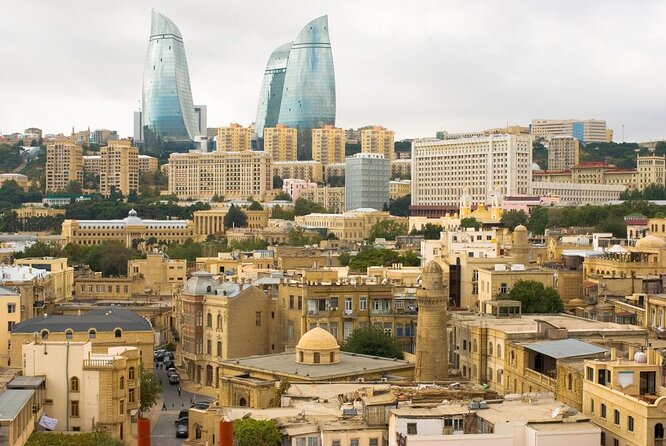
- Oil wealth gives the walk its unusual focus: You learn how petroleum money changed Baku’s streets, architecture, schools, and social life.
- Icherisheher is covered in about an hour: See the Maiden Tower, Shirvanshah’s Palace, mosque, gates, and fortress walls without paying admission to enter them.
- Gani is a major strength when assigned as guide: His English, humor, historic photos, and answers to questions are repeatedly singled out as valuable.
- The route links medieval and imperial Baku: Fountain Square, Istiglaliyyat Street, grand civic buildings, and the Old City form a clear introduction to the capital.
- The $70 price pays for interpretation, not admissions: Water is included, but lunch, transport, and entry fees are extra.
- Start early in your Baku stay: The guide can point you toward food, later sights, Azerbaijani phrases, and places worth returning to.
Why Baku’s oil story is best told beside its buildings
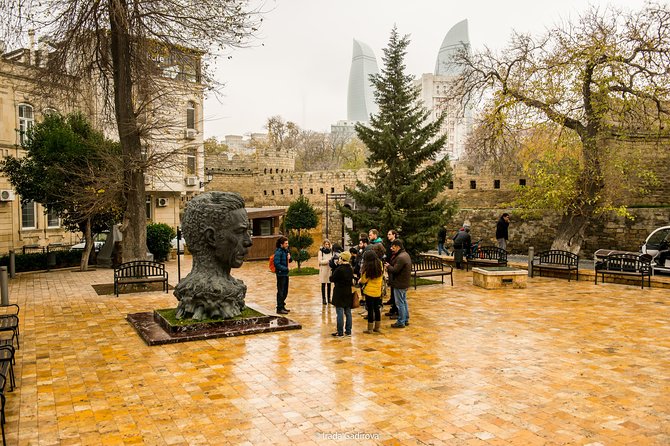
Baku can look like a city of contrasts without much explanation. A medieval fortress appears beside a polished boulevard. Ornate European-style mansions rise near narrow lanes. A marriage registry occupies an oil baron’s former home. This walk gives those contrasts a human cause: petroleum wealth transformed a Caspian port into a cosmopolitan imperial city.
The tour also moves beyond architecture. You hear about oil barons, Muslim modernization, everyday life, Soviet influence, and Azerbaijan’s first independence. That wider frame matters because Baku’s grand buildings are not just pretty facades. They reflect competition, ambition, social change, and the desire of wealthy families to place themselves on the city map.
I would choose this experience early in a Baku visit. It gives you a working map of central Baku, then supplies the background you need when you return to the Old City, look at a palace, or hear local references to the oil boom.
Guiding style is important here. Gani is the name most often associated with the experience, and his approach appears to mix facts with humor, personal stories, architectural details, and political and cultural context. Lina is also mentioned as a guide who gives a useful Old City introduction, including food and vegetarian suggestions. Your guide may vary, but the format clearly depends on an articulate person who can make a short walk feel full without rushing it.
More Old Town and Historic Centre Walks in the world:
- Madrid Essential: Historic Center, Plaza Mayor & Royal Palace
★ 5.0 · 6,416 reviews - Lisbon: Live Fado Show with Port Wine in Historic Center
★ 4.7 · 4,166 reviews - Valencia Old Town Tour with Wine & Tapas in 11th Century Historic Monument
★ 5.0 · 3,234 reviews
Fountain Square: a modern meeting point with an oil-boom past
The walk begins and ends at Fountain Square, on Nizami Street. Today, this is Baku’s central leisure and entertainment area, but its earlier role was more commercial.
In the late nineteenth and early twentieth centuries, the area formed part of the main trading street of a booming oil city. That opening idea is useful because it immediately ties present-day Baku to the first oil boom. You are not simply meeting at a convenient plaza. You are starting in a district shaped by commerce, wealth, and rapid urban growth.
The meeting point is listed as KFC9RCP+28F, Nizami St, Baku. Use the exact map location supplied with your booking, and allow a little time to find your guide in the busy central area. Since the route finishes at the same meeting point, you do not need to arrange a pickup or learn a second end location.
Fountain Square itself is not a ticketed attraction on this walk. Think of it as the opening chapter and useful orientation point rather than the main event.
Icherisheher: one hour inside Baku’s walled core
The longest section takes place in Icherisheher, Baku’s Old City. Its lanes, stone walls, gates, and courtyards give you the clearest sense of the city before its oil fortunes pushed expansion beyond the fortress.
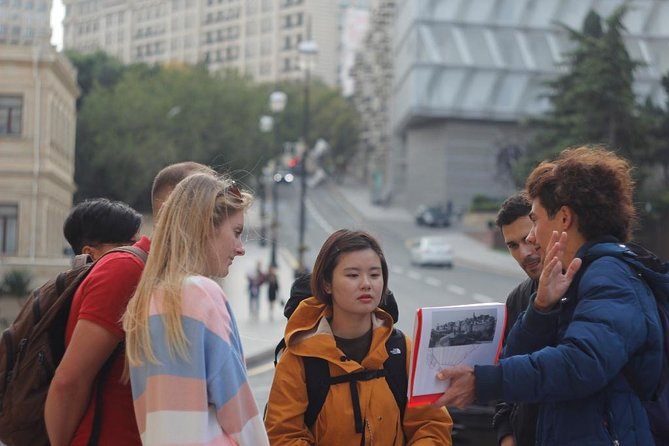
The walk covers the main entrance at Gosha Gala Gate and sections of the twelfth-century citadel walls. Your guide explains how the fortified core worked and uses historic photographs to show how the area looked in earlier periods. Those visual aids are particularly helpful when ruins, rebuilt surfaces, and modern streets make the past hard to picture.
The Maiden Tower receives an exterior explanation at its entrance. You do not go inside, so this stop suits you if you want orientation and context rather than a museum visit. The tower is one of Baku’s essential symbols, but its meaning can be hard to read from the outside alone. A guide can give the building a place within the city’s larger story.
You also stop at the eleventh-century Muhammad Mosque, another part of the Old City’s historic fabric. The tour includes the mosque among its UNESCO-related sites, but there is no admission visit listed. Dress and behavior should be respectful around religious buildings, even during a brief exterior stop.
The narrow streets are a key part of the experience. Here, the value comes from the walk itself: changing views, old masonry, bends in the lanes, and the way the enclosed streets differ from the broad avenues outside the walls. The route is not only a checklist of monuments.
Shirvanshah’s Palace is explained from outside rather than entered. That is a real limitation if you want to see the palace rooms and collections, and the same applies to the Maiden Tower. Still, the guide’s explanation can help you decide if you want to return later and pay for admission on your own.
The Old City section also includes the Museum of Miniature Books. The supplied details do not list an interior visit, so treat it as a point of explanation rather than a guaranteed museum stop. Ask your guide how much time is available if this small museum is high on your list.
I like this portion because it gives you both the major landmarks and the ordinary shape of the old quarter. The tour does not pretend that one hour can explain every layer of Icherisheher. Instead, it gives you a sensible first pass, then leaves room for a later independent visit.
Istiglaliyyat Street: where oil money changed the city’s look
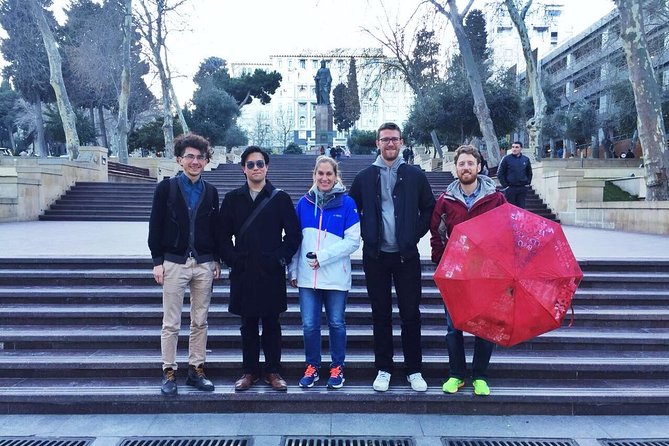
After the Old City, the walk follows Istiglaliyyat Street, formerly called Nikolayevskaya and Kommunisticheskaya. This was one of the main streets of imperial-era Baku, and it shows how the growing city expanded beyond its fortress.
Here, the guide explains the urban changes driven by oil wealth and the personal ambitions of the men who made fortunes from it. The buildings along this route reflect European influence, local identity, imperial power, philanthropy, and private display. That mixture is one of the most interesting parts of Baku. The city does not fit neatly into one architectural category.
The route includes Governor’s Garden, Baku’s Town Hall, Philharmonic Hall, the Palace of Happiness, the Institute of Manuscripts, Ismailiyya Palace, the Literature Museum, and the statue of Nizami. You will not spend equal time at every building, so if one facade catches your eye, ask about it while you are there.
This section is also where the oil theme becomes concrete. Oil wealth paid for civic buildings, family mansions, schools, gardens, and institutions. The guide connects those projects to the social world around them, including the diverse groups who helped shape the city.
More History Walking Tours in the world:
- History and Hauntings of Salem Guided Walking Tour
★ 5.0 · 14,564 reviews - Lisbon: History, Stories and Lifestyle Walking Tour
★ 4.8 · 10,902 reviews - Amsterdam: Life of Anne Frank and World War II Walking Tour
★ 4.8 · 10,467 reviews - Berlin: Third Reich & Cold War Guided Walking Tour
★ 4.9 · 8,378 reviews
Philharmonic Fountain and Governor’s Garden
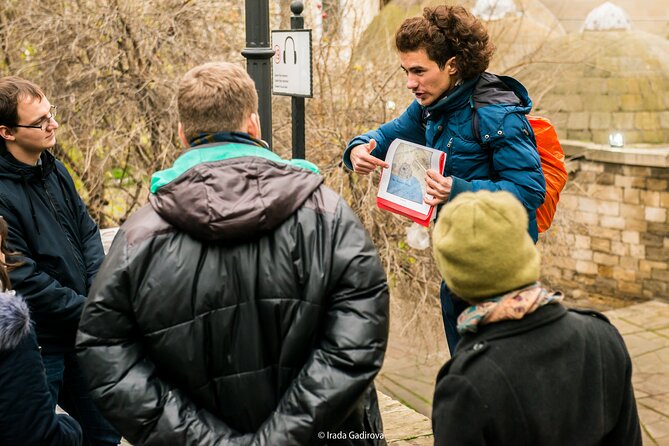
The Philharmonic Fountain marks one of the landscaped areas created as Baku grew beyond its old walls. The stop is brief, about 10 minutes, but it adds a softer side to the city’s expansion.
The garden’s story is linked to Ali and Nino, the famous novel set against the cultural and political world of Baku and the Caucasus. The reference gives the stop a literary angle and helps connect architecture to the city’s ideas about romance, identity, and change.
Do not expect an extended garden visit. This is a short explanation and photo stop within a longer route. Its value comes from the connection between place and story, not from a long period of free time.
Baku City Executive Power and the public face of the oil boom
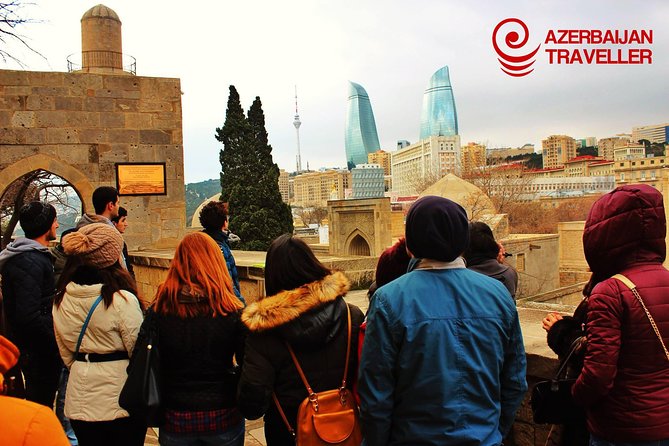
Baku’s Town Hall, now the Baku City Executive Power building, is one of the route’s clearest examples of oil-boom architecture. The guide uses it to explain European design influences and the effect of Baku’s cosmopolitan population.
This building helps answer a basic question: why does Baku contain so many grand structures that seem more Parisian, Venetian, or imperial Russian than traditionally local? Oil drew money, workers, merchants, engineers, and ideas from different places. The result was a city that looked outward while still carrying its own regional character.
The stop lasts about 10 minutes and takes place outside. You get the architectural story without entering the building, so photographers and architecture fans will likely find it more rewarding than visitors seeking a public interior.
Saadet Sarayi and the personal side of oil wealth
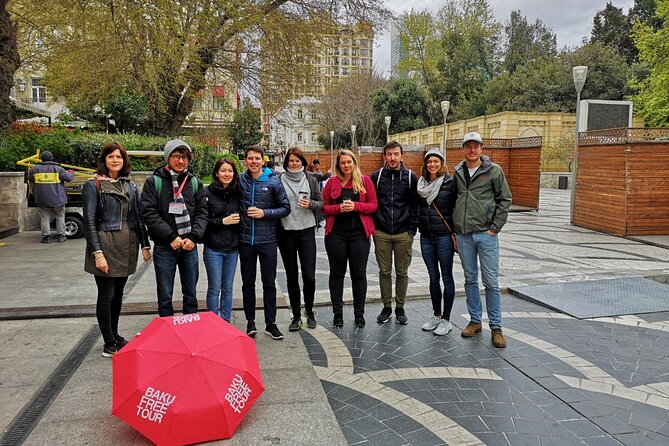
Saadet Sarayi, also known as the Palace of Happiness, shifts the story from public power to private life. The building is tied to an oil baron and his wife, and its romantic story has continued because the mansion now serves as a marriage registry.
That use gives the building an appealing connection with present-day Baku. A former private palace is still part of important family celebrations, though the tour focuses on the story and exterior setting rather than an interior visit.
I find this kind of stop more useful than a long list of wealthy names. It shows how oil money entered family life, social display, and ideas about love and status. The stop is around 10 minutes, enough for a clear explanation and photographs.
The former Taghiyev School for Girls
The former Taghiyev School for Girls now houses the Institute of Manuscripts of Azerbaijan. Its earlier role is more important to the tour’s social history: it was the first secular school for Muslim women.
This is one of the strongest stops for understanding modernization in Baku. The building points to education, women’s changing opportunities, and the debate over how Azerbaijan could modernize while dealing with religious, imperial, and local traditions.
The guide links the school’s story to Azerbaijan’s first independence. That connection broadens the walk beyond oil and architecture. You see that modernization was not simply imported through grand buildings. It also involved schools, public debate, and new ideas about who should have access to education.
Again, the stop is exterior-focused. If you want a long look at manuscripts or museum collections, you will need to arrange that separately. On the walking tour, the building works best as a compact lesson in social change.
Ismailiyya Palace and the memory of a son
Ismailiyya Palace is one of the most striking architectural stops. It was commissioned by an oil baron in memory of his son and designed in a Venetian Gothic style.
That combination of grief, wealth, and imported architectural language explains why Baku’s oil-boom buildings can feel so personal. This is not merely a rich man’s showpiece. It is also a memorial, shaped by family loss and the desire to create something lasting.
The palace became an important landmark, and the guide uses it to connect individual ambition with the city’s wider transformation. You see how private money helped create a public architectural identity.
The stop is listed as about 10 minutes. That is enough for the main story, but not for a full architectural study. If you care about facade details, take notes or photographs during the explanation and return later at your own pace.
What the guide adds to a self-guided walk
You can walk through central Baku alone, but the buildings will not always explain themselves. A palace may look Venetian, a school may look like another grand civic structure, and an old garden may seem like a pleasant pause. The guide supplies the connections.
Gani’s strongest reported qualities include fluent English, humor, patience, and the ability to hold a group’s attention. He also uses prepared photographs and diagrams to show earlier versions of Baku. That is a practical advantage, especially when modern streets obscure the historic setting.
The personal element also matters. The guide can answer questions about Azerbaijani culture, daily life, politics, food, and language rather than delivering only a fixed speech. Useful tips have included Azerbaijani phrases, restaurant advice, baklava suggestions, and vegetarian food ideas.
The experience is described as private, but the stated maximum is 30 people. Those details do not fully match. If your booking is for a small private party, the format should feel personal. If you are booking through a group arrangement, ask how many people will actually attend so your expectations match the service.
Is $70 good value for 2.5 hours?
At $70 per person, this is not a cheap orientation walk. The value depends on how much you want interpretation rather than simply access to sights.
The fee includes a guide and bottled water. It does not include lunch, private transportation, or admission fees. Since the main Old City monuments are explained from outside, you are not paying for a bundle of museum tickets. You are paying for a focused history walk through several important districts.
For someone with only a day or two in Baku, the price can make sense. In 150 minutes, you cover Fountain Square, Icherisheher, the main fortress landmarks, Istiglaliyyat Street, oil-boom buildings, a former girls’ school, and memorial architecture. A good guide also saves you from spending your limited time wondering what each building represents.
The value is weaker if you prefer to enter every major attraction or wander at your own speed. You may want to pay separately for the Maiden Tower or Shirvanshah’s Palace afterward, and the tour will not replace a full museum visit.
Group discounts are available, which may improve the cost for a larger booking. The activity is also offered with a mobile ticket, and confirmation is provided at booking.
Pace, weather, and practical planning
The route lasts about 2 hours and 30 minutes and takes place entirely on foot. Wear comfortable shoes, bring water beyond the bottle supplied, and leave room for pauses at busy streets and historic lanes.
The tour requires good weather. If poor weather causes cancellation, you are offered another date or a full refund. This matters in Baku because the experience depends on being outside for the full route, not simply moving between indoor sites.
Most people can participate, and service animals are allowed. The meeting point is near public transportation. Private transport is not included, so you need to reach the starting point independently.
Book at least a few weeks ahead if your schedule is fixed. The activity is booked, on average, 25 days in advance. You can cancel for a full refund up to 24 hours before the start time, but cancellations or changes within 24 hours are not refunded or accepted.
Who should book this Baku walking tour?
I would recommend it to first-time visitors who want a clear introduction to Baku’s history without committing to a full-day excursion. It suits architecture fans, history students, couples, families with older children, and anyone curious about how oil shaped society.
The format can work well for families because the guide’s storytelling and humor help break up dates and building names. One guide has also been praised for keeping children aged 10 and 12 engaged, though the route still requires steady walking and attention.
It is less suitable if your priority is extensive museum time, interior access, or a slow photographic walk. The tour gives you the outside story of many places. You will need to return on your own for longer visits.
Should you book it?
Book this tour if you want Baku to make sense quickly. Its best feature is the way it links the medieval Old City with the oil boom, imperial planning, women’s education, literary culture, and modern city life.
I would schedule it near the start of your stay, ideally when you can use the guide’s restaurant, phrase, and sightseeing suggestions afterward. Confirm the group size, understand that admissions are extra, and accept that the palaces and museums are mainly exterior stops.
For $70, you are buying a concentrated history lesson led by a guide who can make the city’s unusual contrasts readable. If Gani is leading, his humor, visual aids, and broad cultural knowledge may add a great deal. If your guide is Lina, expect a strong Old City introduction and practical local suggestions. Either way, this is a solid choice for getting your bearings before exploring Baku on your own.
FAQ
How long does the Baku Oil Heritage and Old Town Walking Tour last?
The tour lasts approximately 2 hours and 30 minutes.
Where does the tour start?
It starts at KFC9RCP+28F on Nizami Street in Baku, near Fountain Square.
Where does the tour end?
The walk ends back at the meeting point at Fountain Square.
Is the tour private?
The experience is described as a private tour with a personal guide, but the additional information gives a maximum of 30 participants. Confirm the expected group size when booking.
Are admission tickets included?
No. Admission fees are not included. The tour explains the Maiden Tower and Shirvanshah’s Palace from outside, without entering those sights.
What is included in the price?
Bottled water is included. Lunch, private transportation, and admission fees are not included.
Can most people participate?
Yes. Most people can participate, and service animals are allowed. The tour takes place on foot and requires good weather.
What is the cancellation policy?
You can cancel at least 24 hours before the start time for a full refund. Cancellations or changes made less than 24 hours before the start time are not accepted and are not refunded. If bad weather or too few participants cause cancellation, you are offered another date or a full refund.
Just added around the world
- Scenic Train ride to historical cities of Morretes and Antonina★ 4.0 · 188 reviews
- 6-Day Cultural Tour to Machu Picchu★ 5.0 · 76 reviews
- Jewish Heritage of Curacao★ 4.5 · 68 reviews
- The Curacao’s Colorful History Walking Tour★ 5.0 · 55 reviews
- Discover Scuba Diving Amathounta’s Ancient Port★ 5.0 · 30 reviews
- Olous – Guided Snorkelling Excursion to Discover Olous Sunken Ancient City★ 4.5 · 31 reviews
- Night Walking Tour of Medieval Cuenca★ 5.0 · 64 reviews
- WWII – The Battle of Crete Day Tour★ 5.0 · 103 reviews