Review · BARCELONA
Barcelona El Raval Dark History Walking Tour
Barcelona’s El Raval Dark History Walking Tour takes you beyond Gaudí, grand boulevards, and postcard views. In two hours, you’ll follow a local guide through old institutions, narrow streets, former nightlife districts, and one of the city’s most striking graffiti parks. The stories touch on murder, poverty, medicine, religion, migration, art, and social rights.
I like the small group limit of 15, which makes it easier to hear the guide and ask questions. I also like the route itself: it connects overlooked corners of Raval with the former Hospital de la Santa Creu, Sant Pau del Camp, Avenida del Paralelo, and the Tres Xemeneies gardens.
The main drawback is the subject matter. This is not a gentle introduction built around pretty architecture. Some stories involve violence, abandoned infants, autopsies, and the city’s seedier past. The walk also ends in Poble-sec rather than where it starts, so you’ll need to plan your next stop.
Key points to know before you book
- Six stops in two hours: Expect about 20 minutes at each location, with the guide linking the sites into one story about Raval and Barcelona.
- A small group capped at 15: This is a more personal format than a large city walk, especially useful when the guide is explaining detailed or sensitive subjects.
- A route with real variety: You’ll see churches, an old medical academy, a former foundling wheel, a nightlife district, and a public art space.
- Guide quality is central: Eoghan, Zeynep, Callum, Cal, and Andres are among the guides associated with the experience, though your guide depends on the date.
- The walk finishes at Tres Xemeneies: You end near Avenida del Paralelo, a useful place for continuing toward Poble-sec or nearby parts of Montjuïc.
- Good value at $33.42: The price is reasonable if you want context and storytelling rather than only a quick look at Raval streets.
Why Raval is worth seeing beyond the famous sights
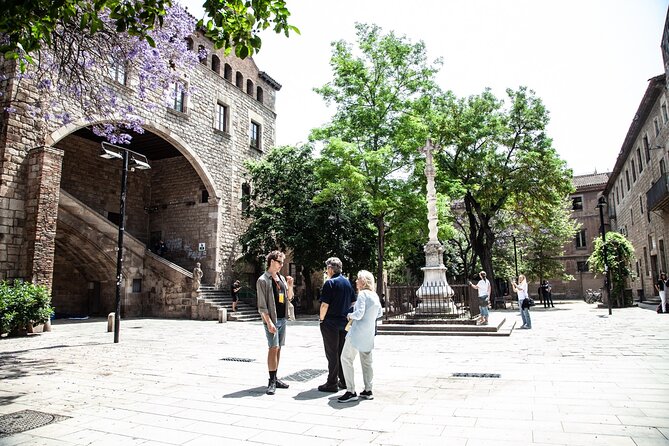
Raval is one of Barcelona’s most layered neighborhoods. The tour does not present it as a polished museum district. Instead, you see how religious institutions, hospitals, factories, theaters, immigrant communities, crime, and public art have all shaped the same streets.
That makes this a useful early-trip activity. By the end, you should have a better sense of how Barcelona’s center changed over time and why Raval can feel so different from the Gothic Quarter just east of it. The guide also gives you a more grounded way to read the city. You are not simply looking at old walls. You are hearing what happened inside them.
The dark theme is a hook, but it is not the whole point. The strongest part of the experience is the connection between grim stories and present-day city life. Crime leads into questions about poverty and policing. Old medical buildings lead into changing ideas about science and public health. Industrial history leads to graffiti and neighborhood renewal.
Several guides have been praised for making the walk easy to follow and enjoyable. Eoghan is known for a warm style, humor, strong storytelling, and restaurant and activity suggestions. Zeynep, also referred to as Zaynab in the supplied information, has been described as helpful and well informed. Callum is noted for keeping the whole group involved, while Cal is especially good at helping people feel comfortable in an area that guidebooks can make sound intimidating.
Your actual guide may be someone else, so book this for the route and subject, not for one guaranteed personality. Still, the consistent rating of 4.9 from 70 reviews and a 99 percent recommendation rate suggest that guide quality is a major strength.
More Dark History and Haunted Tours in Barcelona
- Barcelona: Dark History Night Walking Tour
★ 4.8 · 344 reviews - Barcelona’s Dark History Night Tour
★ 5.0 · 181 reviews - Barcelona Dark History Night Walking Tour With Drinks
★ 5.0 · 153 reviews
Starting at Sant Pere Nolasc Mercedaris
The walk begins at the Church of Sant Pere Nolasc Mercedaris on Plaça de Castella. This is a practical meeting point in central Ciutat Vella, close to public transportation and within reach of the main old-town sights.
Starting here places you near the edge of Raval rather than dropping you straight into its most crowded streets. The guide can set the tone, explain the route, and introduce the group before the darker stories begin. One useful feature is the chance to ask questions early. Several guide accounts describe a friendly introduction that helps strangers relax and talk with one another.
The church itself also gives the route a clear opening. Barcelona’s religious buildings are often treated as decorative stops, but here the setting helps explain the role of religious orders and charitable institutions in the city. You do not need to expect a major interior visit. The experience is primarily a street walk, with each stop used as a prompt for the guide’s story.
Wear comfortable shoes. Two hours is not a long walk by Barcelona standards, but you will be standing for much of it, and the old streets can be uneven.
The foundling wheel at Casa de Misericòrdia
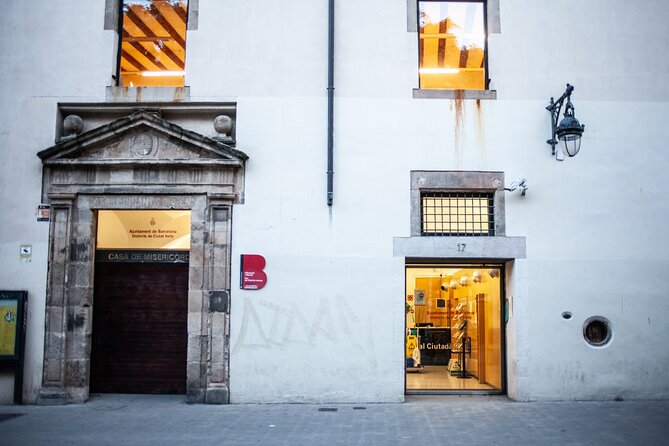
The first stop is the Fundació Privada Casa de Misericòrdia de Barcelona. Its most striking detail is the old foundling wheel, a discreet feature once used for leaving unwanted infants at a charitable institution.
This is the kind of stop that gives the tour its edge. You are looking at an ordinary piece of the city while learning about a painful social reality. The story is not simply about an old building. It shows how poverty, social judgment, religion, and charity worked together in earlier Barcelona.
The visit is listed as free, and the stop lasts about 20 minutes. You should expect the guide to explain the site from the street rather than treat it as a standard museum visit. That keeps the pace moving, but it also means you should listen closely and ask questions when something catches your attention.
This stop may be difficult for some children. Families can still enjoy the walk, but parents should decide if the subject of abandoned infants is suitable for their group.
Carrer de Joaquín Costa and the Vampire of Raval
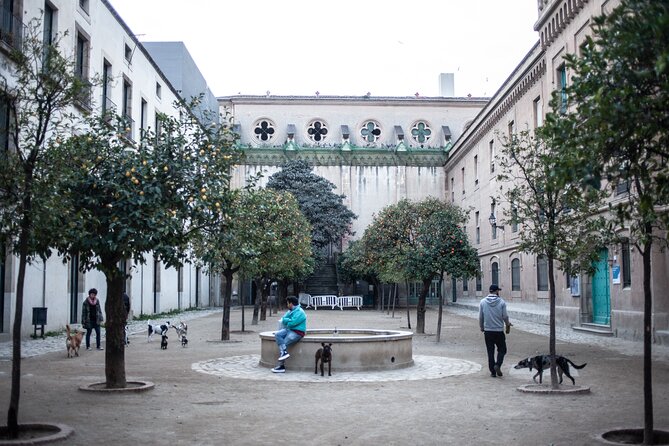
Next comes Carrer de Joaquín Costa, connected with one of Barcelona’s most notorious criminals. The tour presents this part of the route through the story of the Vampire of Raval, a figure often compared with Barcelona’s own Jack the Ripper.
That framing gives you a memorable way into the neighborhood’s criminal past. It also creates one of the tour’s clearest expectations: you will hear about real violence, not just spooky legends. The guide’s job is to place the story in its street and social setting, rather than offer a string of sensational tales with no context.
Joaquín Costa is also a good reminder that Raval is not a single mood. The same streets that now hold bars, shops, and everyday city life have carried very different reputations over time. You may find the contrast more interesting than the crime story itself.
If you prefer architecture, food, and art with little mention of death, this stop may feel too heavy. If you enjoy urban folklore and the less polished side of city history, it will likely be one of the most memorable sections.
More Dark History and Haunted Tours in Spain
- Barcelona: Gothic Quarter Tour Dark History & Ghosts Tour
★ 4.8 · 64 reviews - Montjuïc Cemetery Walking Tour – Hidden Art, History & Views
★ 5.0 · 62 reviews - Barcelona Ghosts of a Dark Past Gothic Walking Tour
★ 5.0 · 55 reviews - Barcelona: Cemetery Tour – Gothic Graves & Local History
★ 4.9 · 33 reviews
The old hospital and Barcelona’s medical past
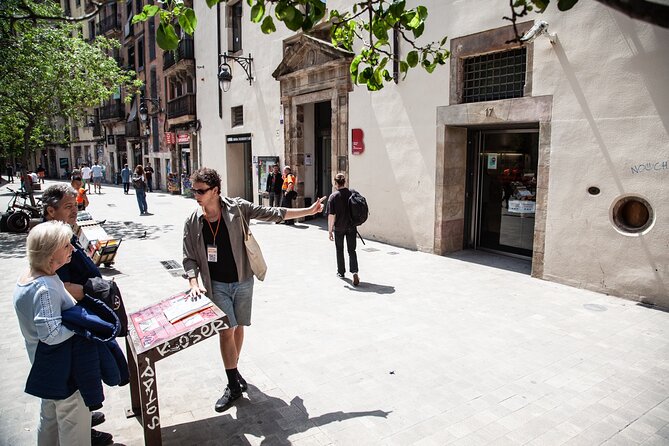
The Real Academia de Medicina de Cataluña forms the third stop. It occupies part of the former Hospital de la Santa Creu, a major old medical complex with a reputation for autopsies.
This is where the tour moves from crime into medicine. The guide can explain how the hospital functioned and why its work became associated with autopsies. The subject is unsettling, but it offers a useful look at the practical side of Barcelona’s past. Hospitals were places of care, research, death, and public anxiety all at once.
I particularly like this stop because it broadens the tour. You are not getting only murder stories dressed up as entertainment. You are also hearing about institutions that shaped the city and its understanding of the human body.
The stop lasts around 20 minutes and admission is free. Since the walk does not include a separate lunch or indoor attraction package, the value comes from the guide’s explanation and the route. That is worth remembering when comparing this with a ticketed museum visit.
Sant Pau del Camp and a violent monastery past
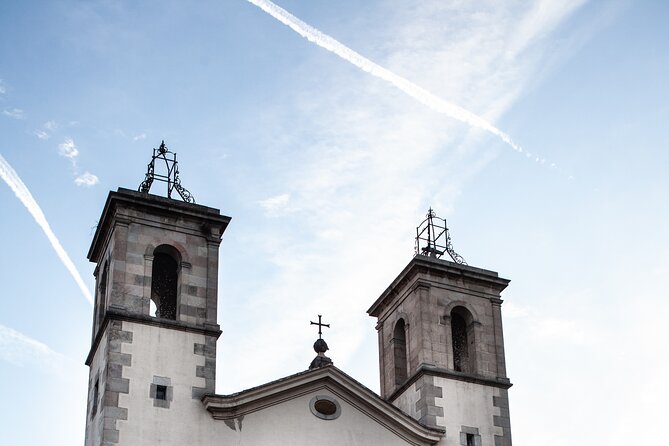
Sant Pau del Camp is one of the route’s architectural highlights. It is presented as Barcelona’s oldest church and was formerly a monastery with a violent past.
The building gives the walk a change of pace. After stories about crime and medicine, you get a religious site with a much older sense of time. The church’s age and former monastic role show how far back the city’s story reaches beyond the modern Raval people see today.
The violent history of the monastery keeps the stop tied to the tour’s central theme. You are not simply pausing to admire an old facade. The guide uses the site to show how religious power, conflict, and daily life met in one place.
This is also a spot where a good guide matters. Historic churches can blur together when you are moving quickly through Barcelona. A clear explanation helps you notice why Sant Pau del Camp belongs on this route rather than serving as another quick photo stop.
Avenida del Paralelo and the old Chinese district
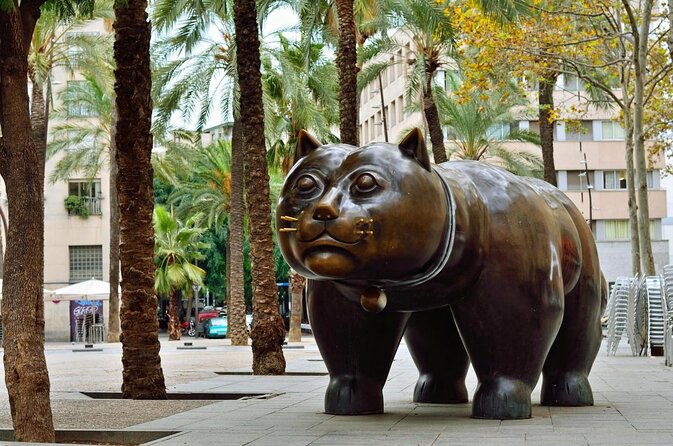
The route then moves toward Avenida del Paralelo, once linked with Barcelona’s Chinese district and the city’s seedier 20th-century nightlife.
This part of the walk adds modern social history. You hear about clubs, entertainment, migration, and the less respectable businesses that developed around a major nightlife corridor. The district’s past helps explain why this part of Barcelona has long attracted people looking for work, pleasure, escape, or a fresh start.
The guide may also point out places and squares that you would be unlikely to find on a standard first-time route. This is one reason the tour suits repeat visitors. You get a sense of Barcelona as a lived-in city, not just a collection of famous buildings.
Avenida del Paralelo also links the historic center with the areas around Poble-sec and Montjuïc. Pay attention to the final directions from your guide, since the end point is close to places where you can continue exploring, eat, or take public transportation.
Finishing at Tres Xemeneies and Barcelona’s street art
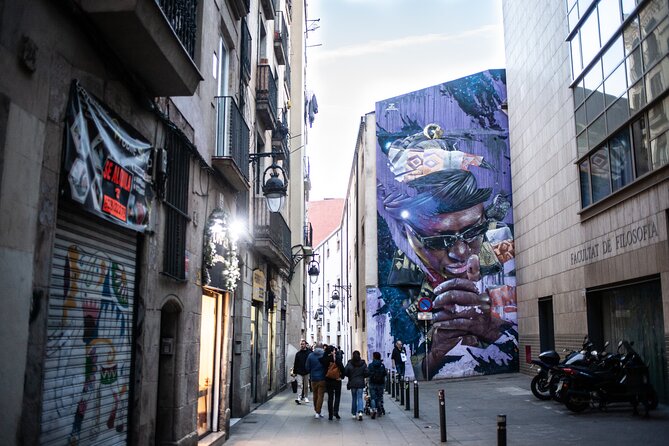
The final stop is Jardins de les Tres Xemeneies, or the Gardens of the Three Chimneys. The site was once tied to industrial Barcelona and is now known for graffiti art.
This is a fitting finish. The tour begins with old churches and charitable institutions, then moves through crime, medicine, nightlife, and industry before ending in a public space shaped by contemporary art. The change shows how Raval and the surrounding districts have kept changing without erasing every trace of what came before.
If you like street art, allow time to look around after the tour. The gardens are described as one of the best places in this part of the city for graffiti. The tour itself ends here at Plaça de Les Tres Xemeneies, on Avenida del Paralelo, 49, rather than returning to the starting church.
That one-way route is useful, but it requires planning. You will not finish where you began, so do not leave a bag, shopping purchase, or meeting plan based on returning to Plaça de Castella. The final location also makes a natural transition to more of Poble-sec or nearby Montjuïc areas.
What the $33.42 price really gives you
At $33.42 per person, this is not the cheapest way to walk around Barcelona. You can walk through Raval for free. The question is what you want from the outing.
The fee pays for a two-hour route, a local guide, and a small group capped at 15 people. You are paying for connections: why a certain street matters, how an old hospital fits into the city’s story, and how nightlife and industry changed the area. If you explored alone, you would see the same buildings but miss much of that meaning.
The price looks strongest for first-time visitors who want a clear orientation to Raval, and for repeat visitors who have already seen the Sagrada Família, Park Güell, and the Gothic Quarter. It is also good value if you enjoy walking and prefer stories over formal museum displays.
It is less compelling if you want entrance tickets, food, or a long indoor visit. Lunch is not included, and the tour does not promise admission to a series of attractions. Think of it as a guided neighborhood walk, not a full sightseeing package.
Who should book this Raval walk
I would choose this tour if you want to:
- See a side of Barcelona that is often skipped on a first visit.
- Hear crime and ghostly stories tied to specific streets and buildings.
- Understand links between social rights, art, medicine, religion, and city change.
- Walk with a small group instead of a large crowd.
- Get local suggestions for food and further activities.
- Finish near a strong street-art site rather than another major monument.
I would pause before booking if you dislike stories about murder, abandoned children, autopsies, or seedy nightlife. The name is accurate. The walk is personable and often humorous, but the material can still be grim.
Most travelers can take part, service animals are allowed, and the route is near public transportation. Confirmation arrives when you book. Free cancellation is available up to 24 hours before the start time. If the minimum number is not reached and the operator cancels, you are offered another date or a full refund.
My take: book it for the stories, not the souvenirs
I recommend the Barcelona El Raval Dark History Walking Tour for curious visitors who want context and a less polished view of the city. The best parts are the focused route, the small group, the shift from old institutions to street art, and guides such as Eoghan, Zeynep, Callum, Cal, and Andres, whose warmth and storytelling help the difficult subjects land well.
Book it early in your stay if you want practical suggestions for the rest of Barcelona. Book it later if you already know the center and want a final look at the city’s rougher edges.
At $33.42, it is a fair buy for two hours of guided history. Just arrive ready for a serious walk, keep an open mind about Raval, and remember that the tour ends at Tres Xemeneies rather than back at the church.
FAQ
How long is the Barcelona El Raval Dark History Walking Tour?
The tour lasts approximately two hours.
How much does the tour cost?
The listed price is $33.42 per person.
What is included?
An experienced local guide is included. The tour uses a mobile ticket.
Is lunch included?
No. Lunch is not included in the tour price.
Where does the tour start?
It starts at Parròquia de Sant Pere Nolasc Mercedaris, Plaça de Castella, 6, Ciutat Vella, Barcelona.
Where does the tour end?
The tour ends at Plaça de Les Tres Xemeneies on Avenida del Paralelo, 49, at Jardines de las Tres Chimeneas.
How many people can join the tour?
The group has a maximum of 15 travelers.
Can I cancel for a full refund?
Yes. You can cancel at least 24 hours before the experience start time for a full refund. Changes or cancellations made less than 24 hours before the start time are not accepted for a refund.
More History Walking Tours in Spain
- Barcelona Historical Walking Tour: Gothic Quarter and El Born
★ 5.0 · 217 reviews - Barcelona in 2 Hours: Guided Walk Through History and Sights
★ 5.0 · 203 reviews - Barcelona: La Boqueria Food, Wine & History Walking Tour
★ 5.0 · 126 reviews - Madrid Historical Walking Tour
★ 5.0 · 721 reviews
More History Walking Tours in Barcelona
- Barcelona: Tapas Walking Tour with Food, Wine, and History
★ 4.8 · 4,261 reviews - Barcelona Tapas Walking Tour: Food, Wine & History
★ 4.5 · 1,928 reviews - Barcelona 1.5h Private Old Town, Gothic & Ramblas Walking Tour
★ 5.0 · 318 reviews - Barcelona: The Spanish Civil War Historical Walking Tour
★ 4.9 · 239 reviews
Just added around Barcelona
- Girona, Costa Brava and Medieval Village from Barcelona★ 5.0 · 149 reviews
- Tarragona and Sitges Small Group Tour – Roman History & Culture★ 4.5 · 339 reviews
- Barcelona Tapas Food Tour, Taverns, History & Local Culture★ 5.0 · 42 reviews
- Savor Spain: Food, Wine, History & Culture Small Group Tour in Old Barcelona★ 5.0 · 140 reviews
- Private Pre-Pyrenees Medieval Village Hike from Barcelona★ 5.0 · 39 reviews
- Sip, Sites & Bites Barcelona Food, Drinks & History Tour★ 4.5 · 95 reviews
- History Museum of Catalonia & Rooftop Access Ticket★ 4.5 · 43 reviews
- Private Besalú & 3 Medieval Towns Tour with Hotel PickUp from Barcelona★ 5.0 · 37 reviews
Barcelona History Tours, compared.

Montserrat with Black Madonna & Medieval Winery with Tapas/Lunch
Read our review →
Barcelona Tapas Walking Tour: Food, Wine & History
Read our review →
Barcelona: 2.5-Hour Bike or E-Bike Historical Tour
Read our review →
Pyrenees & Medieval Towns Small Group Tour from Barcelona
Read our review →
Besalu & 3 Medieval Towns Small Group Tour with Hotel Pick-Up
Read our review →
Costa Brava & Medieval Village Tour with Lunch
Read our review →