
Review · FRANCE
Carcassonne During World War 2
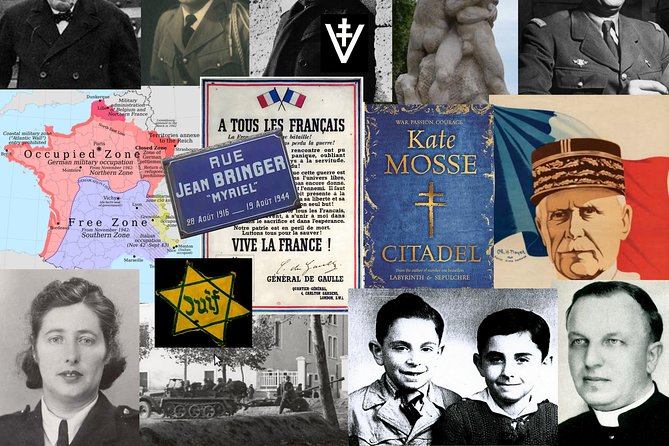
Carcassonne’s medieval walls draw the crowds, but this walk takes you into a less familiar story: how the town lived through World War II. You follow streets linked to occupation, resistance, collaboration, rationing, and liberation while Paul, the guide, uses wartime photographs to show what has changed and what remains.
I like the focus on ordinary local people, including national heroes, local figures, and forgotten men and women. I also like the private format, which gives your group room to ask questions and set the pace. The main caution is group size. One reported group reached 23 people, making narrow streets and quiet listening harder, so ask about the expected number when booking.
Key points to know before you book
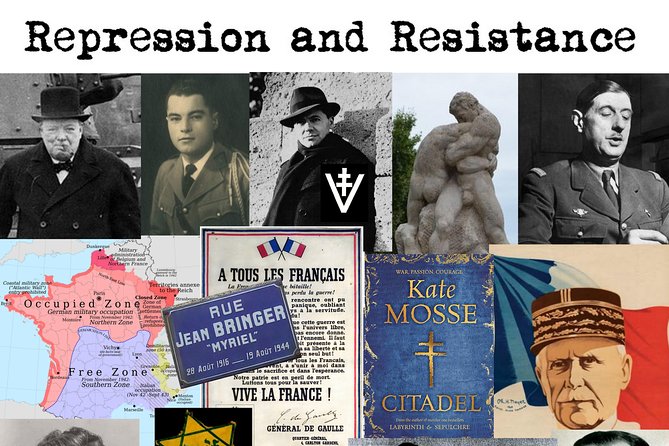
- Local wartime stories: The tour connects Carcassonne’s streets and memorials with the people who lived through the years from 1939 to 1945.
- Paul’s visual approach: Black-and-white photographs help you compare wartime Carcassonne with the town around you.
- A broader French setting: The walk explains local events alongside Vichy France, the occupied and unoccupied zones, and the invasion of the Free Zone.
- A serious but lively morning: The subject includes repression, collaboration, and post-war purges, but the presentation also allows questions, humor, and a coffee stop.
- A useful route through the lower town: You begin near Brasserie a 4 Temps and finish at the Resistance memorial in Square Gambetta.
- Good value for history fans: At $24.19 per person, the roughly two-hour-plus walk costs less than many major paid attractions.
Carcassonne beyond the medieval walls
Many people come to Carcassonne for la Cité, the walled medieval citadel that rises above the town. This experience points your attention elsewhere, especially toward la Bastide and the lower town. That change of focus is one of its best features.
You still walk through Carcassonne’s streets, but the purpose is not architecture alone. A plaque, corner, square, or public building can become evidence in a story about the war. The setting gives you a physical sense of how close history was to daily life.
The walk begins at Brasserie a 4 Temps, at 2 Boulevard Barbès, with a 9:30 a.m. start. From there, you move through places connected with the years 1939 to 1945. The route finishes at 16 Avenue Arthur Mullot, at the memorial to the Resistance in Square Gambetta.
The exact route between these points is not listed stop by stop, so you should expect a connected walking circuit rather than a succession of formal museum visits. Admission to the walking portion is free, while the booking price covers the guided experience.
More History Tours in France:
- Normandy D-Day Sites & Cemetery Day Trip from Paris with Lunch
★ 5.0 · 6,877 reviews - Paris: Louvre Museum Entry with History of Mona Lisa
★ 3.9 · 2,823 reviews - Normandy D-Day Small-Group Day Trip with Omaha Beach, Cemetery & Cider Tasting
★ 5.0 · 2,786 reviews
Paul’s photographs make the streets speak
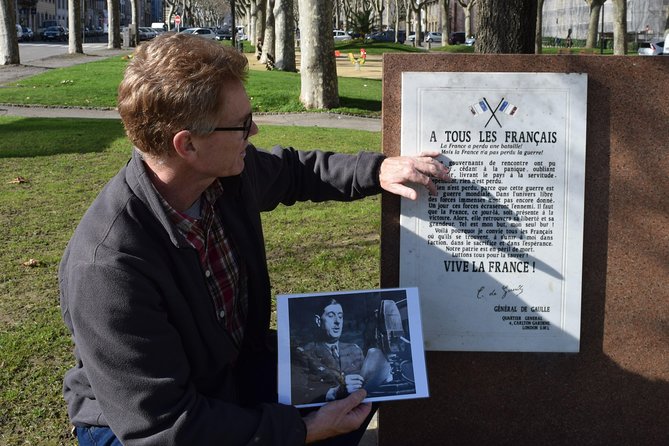
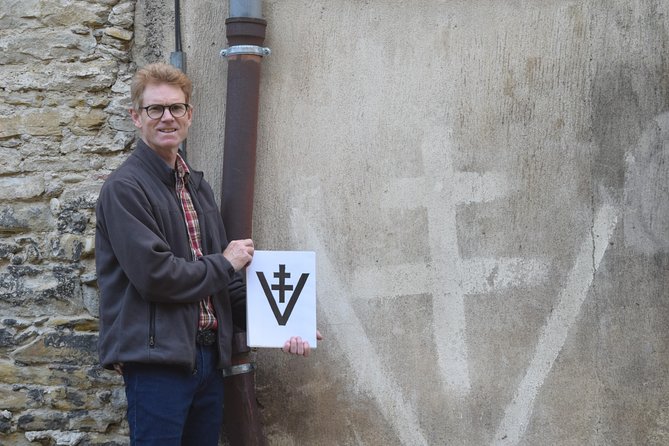
Paul’s method is straightforward and effective. He carries black-and-white photographs from the wartime period and uses them beside the streets and buildings you see today. This gives you more than a spoken account. You get a visual link between present-day Carcassonne and the town under occupation.
That detail matters because World War II history can feel distant when presented only through dates and national leaders. A photograph of a local street, a person, or a wartime scene gives the subject a human scale. You can better imagine how rationing, official controls, fear, and changing loyalties affected people who lived in the same town you are walking through.
Paul also encourages you to look for things around you as he explains them. That makes the walk interactive without turning it into a game. You are not simply following a guide from one point to the next. You are watching for details in the town and connecting them to the photographs and stories.
The presentation seems suited to mixed experience levels. If you already read widely about World War II, you will get local detail and personal stories. If your interest is only casual, the clear structure and visual material should help you follow the larger events.
The fall of France and the division of the country
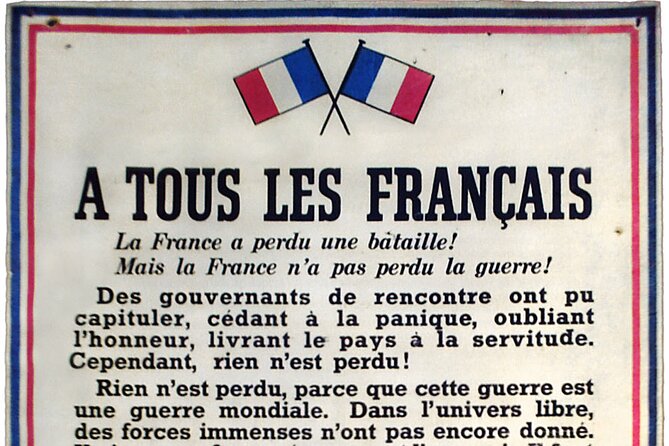
The tour begins with the wider setting: the fall of France and the division between the occupied zone and the non-occupied zone. This is important preparation for understanding what happened in Carcassonne.
A local wartime walk can become confusing if it jumps straight into names and incidents. Here, the national picture comes first. You learn how the division of France shaped everyday life and why the later invasion of the Free Zone changed the situation again.
The strength of this section is its connection between major events and local consequences. Carcassonne was not simply watching the war from a distance. The town’s people had to deal with shifting authority, shortages, political pressure, and difficult choices.
Paul’s role is to put local anecdotes against the wider French and international setting. That balance keeps the walk from becoming either a narrow list of names or a general lesson about France with little connection to Carcassonne.
Rationing, the Milice, and the pressure of occupation
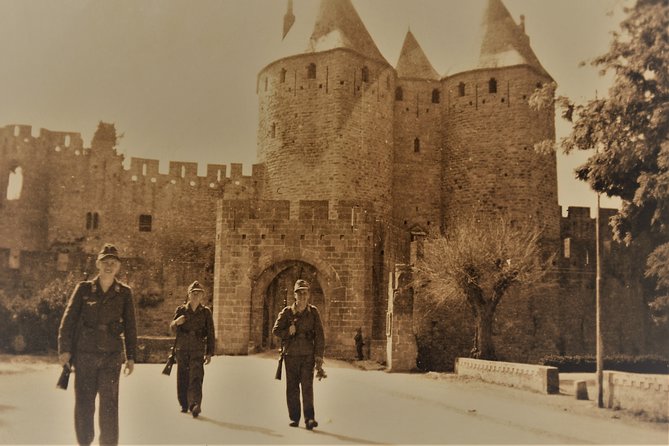
The itinerary includes rationing, the Milice, and the S.T.O., three subjects that show how occupation and collaboration touched civilian life.
Rationing gives the war an everyday face. It is about food and supplies, but also about paperwork, scarcity, fairness, and the strain placed on families. The Milice brings the story into the realm of French collaboration and repression. The S.T.O. adds another difficult subject, forced labor service and the pressure it placed on French people.
These topics are not presented as clean categories with easy answers. The tour’s stated focus includes both the spectrum of resistance and the spectrum of collaboration. That wording is useful. It suggests a look at the gray areas between open defiance, accommodation, opportunism, fear, and active support for the authorities.
I value that approach because wartime choices were rarely simple. Some people resisted. Some collaborated. Others tried to protect their families or survive from one day to the next. A good local tour should help you see those distinctions rather than divide everyone into heroes and villains too quickly.
The subject matter can be somber. You should not book this expecting a light sightseeing walk with occasional wartime decoration. The tone includes thoughtful and difficult moments, but it remains approachable, with room for questions and a sense of humor when appropriate.
Same city, a different century:
- Normandy D-Day Beaches and American Cemetery Day Trip from Paris
★ 4.5 · 2,673 reviews - Normandy American D-Day Beaches Full Day Tour from Bayeux
★ 5.0 · 2,103 reviews - Normandy American D-Day Experience – Group tour from Bayeux
★ 5.0 · 1,566 reviews - Normandy Beaches Half-Day Afternoon Trip from Bayeux (A2)
★ 4.5 · 1,116 reviews
Resistance, collaboration, and personal choices
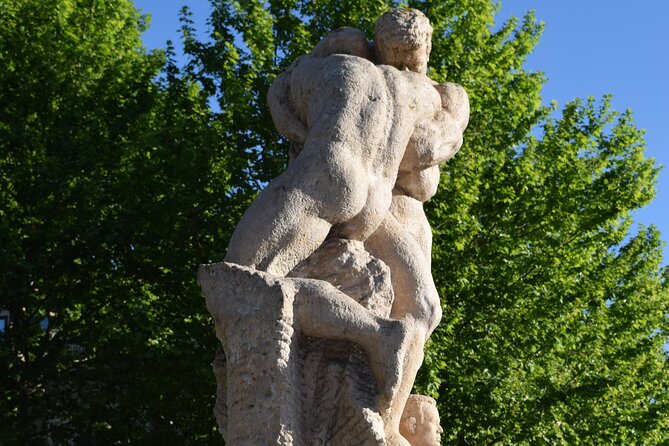
The central part of the experience is the local resistance story. Paul gives attention to national heroes, local heroes, and people who have largely been forgotten. That range is a real strength.
The Resistance is often taught through famous names and dramatic events. This walk brings the focus back to men and women in and around Carcassonne. Their stories help you understand the practical risks of passing information, helping another person, refusing an order, or choosing when to act.
The tour also includes collaboration, which is essential for an honest account of the period. A town’s wartime experience cannot be explained only through acts of bravery. Repression and resistance existed alongside accommodation, betrayal, official collaboration, and personal survival.
The walk’s title, Repression and Resistance, captures that balance. You learn about the forces used to control people, then about the ways people pushed back. You also hear about those who were caught between the two.
This is where the private format can matter most. A group that wants to ask about motives, local personalities, or the difference between passive and active resistance can spend more time on those questions. If you are with family or friends who have different levels of interest, the guide can adjust the conversation more easily than on a large scheduled tour.
Liberation and the difficult peace afterward
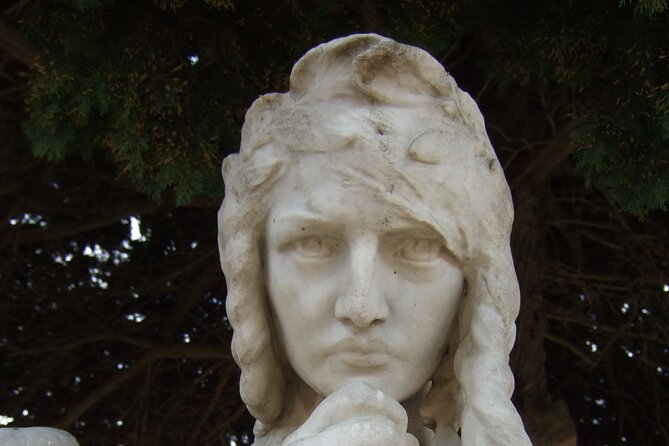
The story does not end with liberation. The itinerary continues into post-war purges, an important inclusion that many short wartime tours skip.
Liberation is a moment of relief, but the return to peace brings accusations, punishment, revenge, and arguments over who did what during the occupation. The post-war purges raise questions about justice, guilt, evidence, and political pressure.
Including this section gives the walk a fuller shape. You are not left with a simple ending in which the Resistance wins and every problem disappears. Instead, you see how a community had to deal with the aftermath of occupation and collaboration.
The final stop at the Resistance memorial in Square Gambetta is a fitting place to end. It gives the walk a clear point of reflection and leaves you with the local memory of those who fought for a free France. The route’s ending also provides a practical advantage: you finish in the lower town rather than returning to the starting café.
How long the walk feels and what the pace is like
The advertised duration is about two hours and 15 minutes, while the itinerary describes roughly two hours. In practice, you should set aside a little more than two hours for the experience, especially if your group asks questions or takes the possible coffee break.
The pace has been described as comfortable rather than rushed. That is useful in Carcassonne, where narrow streets can make it difficult to gather a large group safely. You need time to listen, look at photographs, and take in the setting without being hurried to the next point.
The main practical concern is group size. This is described as a private activity for your group, but the tour has also had a large group of 23 on at least one occasion. A group that size can make it harder to hear and find a safe place to stand in narrow streets. Paul acknowledged the problem and considered limiting groups to 12.
For the best experience, ask about the number of participants before you commit. A smaller group should make the photographs easier to see, questions easier to ask, and street crossings less awkward. It also better suits a subject that depends on careful listening.
Price, timing, and value at $24.19
At $24.19 per person, this is a good-value choice if World War II is a genuine interest. You get an English-language guide, a walk of roughly two hours, local research, photographs, and a route through parts of Carcassonne that many people pass without understanding.
The price is especially reasonable when compared with the time involved. You are not paying for a short introduction followed by free wandering. The guide stays with you through the main subjects, from the fall of France to the post-war purges.
The value is less obvious if you want a broad introduction to Carcassonne or a tour focused on medieval architecture. This is a specialist experience. It works best as a second tour, or as your main activity if you have already seen la Cité and want a different side of the town.
The 9:30 a.m. start also works well for a morning plan. You can finish around midday and continue with lunch, a visit to la Cité, or more time in the lower town. Because the meeting point is near public transportation, getting to the start should be manageable, though the supplied details do not name specific bus or train services.
The tour is offered in English and uses a mobile ticket. Most people can participate, but the experience is a walking tour, so you should be comfortable spending more than two hours on foot.
Who should book this Carcassonne WWII tour?
I would choose this experience if you have a strong interest in World War II, the French Resistance, Vichy France, or local stories of occupation. It should also suit you if you prefer human stories to a long list of military dates.
You do not need to be a specialist. The structure begins with national events and then brings them down to Carcassonne. The guide’s photographs and clear delivery help make the material accessible to people who know only the basics.
It is also a smart pick if you have already seen the medieval citadel. The walk gives you a reason to explore la Bastide and the lower town, which can otherwise become a quick route between major sights.
I would be more cautious if you have limited mobility, dislike extended walking, or want a purely cheerful sightseeing activity. The subject includes repression, forced labor, collaboration, and post-war punishment. It is worthwhile, but it asks for attention and a willingness to think about difficult choices.
Should you book Carcassonne During World War 2?
Book it if you want local wartime stories told on the streets where they unfolded, rather than a general overview of France during World War II. Paul’s use of photographs, his attention to lesser-known figures, and the link between Carcassonne and the wider French story give the walk a clear purpose.
Before booking, ask about the expected group size. A small private group should offer the best balance of hearing, safety, and conversation. If that point is settled, $24.19 buys a thoughtful two-hour-plus look at a side of Carcassonne that the medieval walls do not explain.
Free cancellation is available up to 24 hours before the start time. Changes or cancellations made later are not accepted for a refund. The experience requires good weather and a minimum number of participants, and if the operator cancels for either reason, you are offered another date or a full refund.
FAQ
Where does the tour begin?
The tour begins at Brasserie a 4 Temps, 2 Boulevard Barbès, 11000 Carcassonne, France.
What time does the tour start?
The listed start time is 9:30 a.m.
Where does the tour end?
The walk ends at the memorial to the Resistance in Square Gambetta, at 16 Avenue Arthur Mullot, 11000 Carcassonne.
How long does the experience last?
The tour lasts approximately two hours and 15 minutes. The itinerary also describes the walking portion as about two hours.
Is the tour offered in English?
Yes. The experience is offered in English and includes an English-speaking guide.
Is this a private tour?
Yes. It is described as a private activity, with only your group participating.
What subjects does the tour cover?
It covers the fall of France, the occupied and non-occupied zones, the invasion of the Free Zone, rationing, the Milice, the S.T.O., resistance, collaboration, liberation, and post-war purges.
Can I cancel for a full refund?
Yes, if you cancel at least 24 hours before the experience’s local start time. Cancellations made less than 24 hours before the start are not refunded.
Just added around France
- Medieval Carcassonne: Interactive Ghost Story & City Game★ 3.5 · 33 reviews
- Carcassonne ‘s Medieval Walls: A Self-Guided Tour★ 4.5 · 43 reviews
- Small Group Guided D-Day Tour and Mémorial de Caen Museum★ 5.0 · 237 reviews
- Normandy: Private tour D-Day landing beaches American sector★ 5.0 · 62 reviews
- Mémorial de Caen Museum Admission and Guided Tour of D-Day Sites★ 4.5 · 275 reviews
- Private Day Tour including Normandy Landing Beaches & Battlefields from Caen★ 5.0 · 53 reviews
- Private Bordeaux History Tour with a glass of Bordeaux wine.★ 5.0 · 28 reviews
- Historical Center, Bordeaux Food Tour★ 5.0 · 33 reviews
France History Tours, compared.

Normandy D-Day Sites & Cemetery Day Trip from Paris with Lunch
Read our review →
Paris: Louvre Museum Entry with History of Mona Lisa
Read our review →
Normandy D-Day Small-Group Day Trip with Omaha Beach, Cemetery & Cider Tasting
Read our review →
Normandy D-Day Beaches and American Cemetery Day Trip from Paris
Read our review →
Normandy American D-Day Beaches Full Day Tour from Bayeux
Read our review →
Normandy American D-Day Experience – Group tour from Bayeux
Read our review →
Normandy Beaches Half-Day Afternoon Trip from Bayeux (A2)
Read our review →
Omaha Beach D-Day Experience – Afternoon group tour from Bayeux
Read our review →Browse the lists this tour appears in