Review · CHARLESTON
Charleston’s Historic Downtown Food Tour
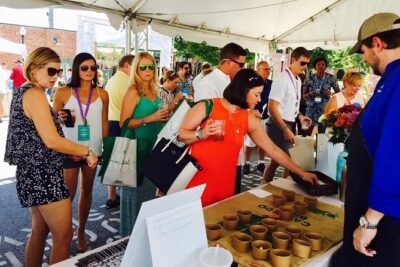
Charleston’s food tells its story one plate at a time. This walking tour connects she-crab soup, rice dishes, barbecue, and dessert with the French, African, and pirate influences that shaped the city’s cooking. You walk through the historic center while stopping at four restaurants for enough food to serve as lunch.
I like the clear link between food and place, especially the discussion of African ingredients, Gullah Geechee culture, and the role of slavery in Charleston’s past. I also like the small maximum of 15 people and the sit-down restaurant stops, which make this more than a quick series of counter samples.
The main caution is accuracy on timing and menu. Some bookings finish closer to two hours than the advertised two and a half, and shrimp and grits may not be served even though it has appeared in promotional material. Come ready for a fast pace and a menu that can change.
Key points at a glance
- Four restaurant stops: The food amounts to a full lunch rather than a few token bites.
- She-crab soup is a highlight: This Charleston classic is often the first taste and comes with useful background on its local roots.
- Food and history stay connected: French cooking, African ingredients, Gullah Geechee culture, slavery, and piracy all enter the conversation.
- Historic landmarks shape the route: Rainbow Row, Pineapple Fountain, the Old Exchange, and City Market provide the setting between meals.
- Small group format: The tour allows up to 15 people, a manageable size for questions and street walking.
- Plan around a two-hour window: The stated duration is about 2 hours 30 minutes, but some departures have ended sooner.
A Charleston lunch told through four restaurants
At $110, this is not a cheap snack walk. It is priced more like a guided lunch with a history program attached. You receive food at four restaurant stops, and the portions are meant to add up to a full meal. That makes the price easier to justify if you would otherwise spend money on lunch and a separate downtown history tour.
I would book this early in a Charleston visit. The route gives you a useful first look at the French Quarter, the waterfront area, the City Market, and the streets between them. Just as important, it introduces dishes you may want to seek out again later.
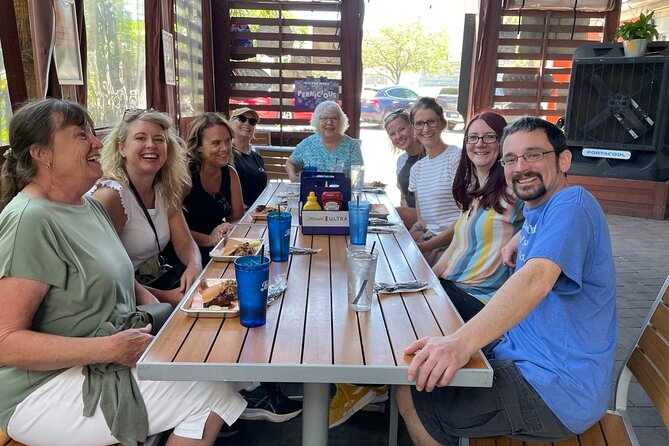
The format is social and fairly active. You walk between stops, listen to short talks, sit down to eat, then move on. This is not a slow restaurant crawl with time for long conversations over drinks. One past departure moved quickly enough that there was little time to savor a cocktail or linger at the table.
That brisk pace works well for a first-day orientation. It may feel rushed if your ideal food tour means lingering over each course.
More Food and History Tours in the USA
- Charleston: Historic Downtown Food Tour
★ 4.7 · 67 reviews - New Orleans Food and History Walking Tour
★ 5.0 · 1,544 reviews - Boston Pizza Lovers Food and History Walking Food Tour
★ 4.5 · 1,082 reviews
Rainbow Row and the French table
The walk passes Rainbow Row on the way toward food stops in Charleston’s French Quarter. The colorful row houses are a familiar Charleston sight, but the useful part here is the food connection. The guide explains how French culture helped shape local dishes and cooking habits.
This gives the tour a stronger foundation than simply naming ingredients. You begin to see Charleston cuisine as a meeting point of cultures rather than a single fixed tradition. The French influence is one piece of that story, alongside African traditions and Low Country ingredients.
The Rainbow Row stop is brief, about 15 minutes, and there is no separate admission charge. Think of it as a street-side history lesson, not a house visit or extended architectural tour. If you want detailed information about the buildings themselves, you will need another tour.
The route also gives your group a chance to settle in. Guides including Paige, sometimes spelled Page in tour feedback, have been praised for making room for questions and keeping the tone friendly. Jeff and Emerson have also led departures, with an emphasis on Charleston and broader American history.
Pineapple Fountain and Southern hospitality
Near the waterfront, the tour pauses at Pineapple Fountain for about 20 minutes. The pineapple is used here as a symbol of Southern hospitality, and the guide ties that idea to Charleston’s food traditions.
This is a good example of the tour’s method. A landmark is not treated as a photo stop alone. It becomes a prompt for talking about local customs, hospitality, and the way Charleston presents its table to visitors.
The fountain area also breaks up the eating schedule. You are not simply moving from one restaurant to the next. The walk gives your meal some breathing room and lets the guide add context before the next tasting.
Weather matters here. Much of the experience takes place outdoors, and the tour requires good weather. If poor weather cancels it, you are offered another date or a full refund. On a rainy day, the walk can be less comfortable, even when the food and guide are strong.
The Old Exchange, pirates, and a less expected food story
The Old Exchange and Provost Dungeon provides another short stop, around 15 minutes. Here the subject turns to pirates, privateering, and the effect both had on Charleston’s early food supply.
This is one of the more unusual themes in the tour. Food history is often reduced to recipes and famous dishes, but the guide also looks at how trade, ships, and lawless activity affected what people could obtain and eat. The subject adds a practical edge to the city’s past.
The stop is outside in the flow of the downtown walk, with no admission included. You should not expect a dungeon visit as part of this experience. The value is the explanation of the site and its connection to Charleston’s early economy and diet.
I like this section because it keeps the tour from becoming a simple parade of pleasant food stories. Charleston’s past includes wealth, trade, slavery, conflict, and exploitation. A good food tour needs to acknowledge all of that, and this one does make room for difficult subjects.
More Old Town and Historic Centre Walks in the USA
- Philadelphia Old City Historic Walking Tour with 10+ Top Sites
★ 5.0 · 2,020 reviews - Asheville Historic Downtown Guided Electric Bike Tour with Scenic Views
★ 5.0 · 1,234 reviews - Walking History Tour of St. Augustine’s Historic District
★ 5.0 · 1,152 reviews - Creepy Crawl Night-Time Haunted Pub Walking Tour of Savannah’s Historic District
★ 4.5 · 802 reviews
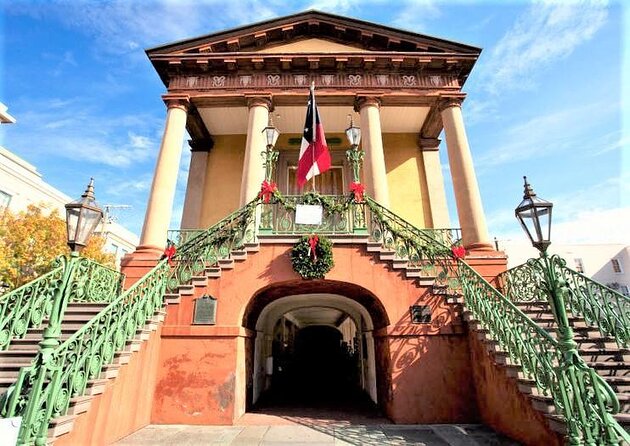
City Market and the African roots of Charleston cooking
The City Market stop lasts about 20 minutes and focuses on African influence on Charleston cuisine. The guide discusses ingredients introduced to local cooks and the larger role of African food traditions in Low Country cooking.
This is essential context. If you only hear about French technique or Southern hospitality, you receive a partial version of Charleston. The African contribution is central, and the tour also addresses slavery and the slave trade in Charleston. The subject is handled as part of the city’s food story, not pushed aside for a more comfortable narrative.
The route’s discussion of Gullah Geechee culture adds another important layer. The food you taste is connected to people, labor, memory, and survival. That makes the meal more meaningful than a list of regional specialties.
City Market is also a practical landmark. It helps you place the route within the historic center and gives you a clear sense of how close the food stops are to major downtown sights. Expect street walking and short talks rather than a long market shopping session.
What you are likely to eat
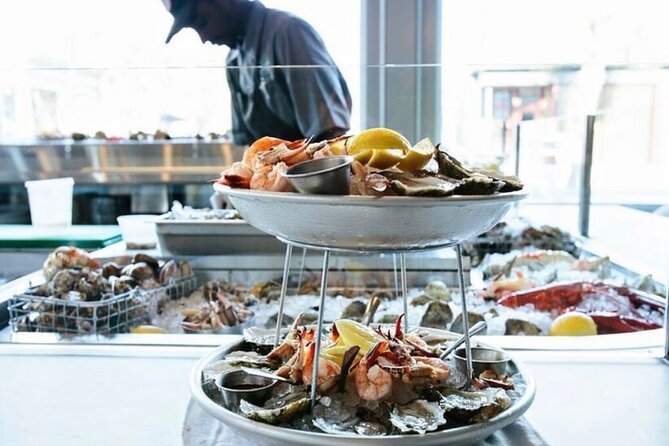
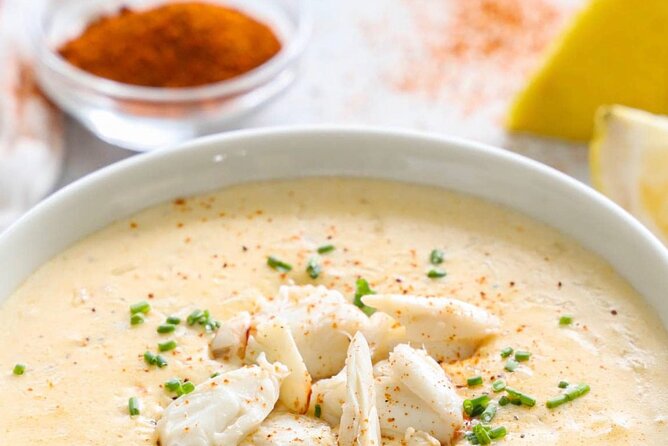
The exact menu can change, so I would not book this expecting one specific dish. The most often praised course is she-crab soup, a creamy Charleston classic that several departures have served early in the meal. It is often the dish people remember most.
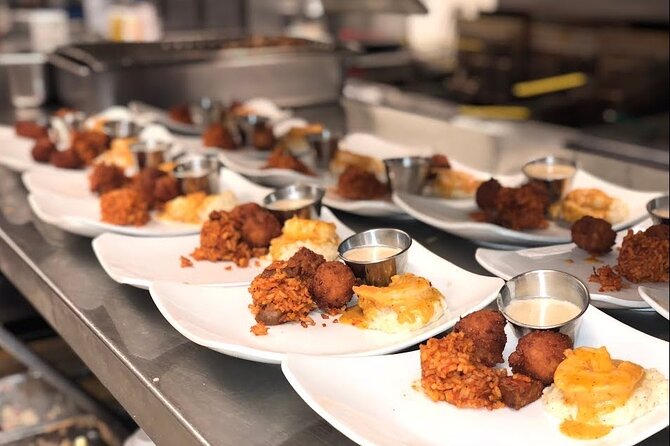
Other reported tastings include a Carolina rice and chicken dish, rice jollof, a pulled pork slider, and dessert. These samples give you a broad meal: soup, a rice-based course, barbecue, and something sweet. Portions are described as enough to leave you full by the end.
The inclusion of rice is especially useful because it shows the connection between Low Country cooking and African food traditions. The pulled pork brings in a familiar Southern flavor, while the soup points toward Charleston’s own restaurant tradition.
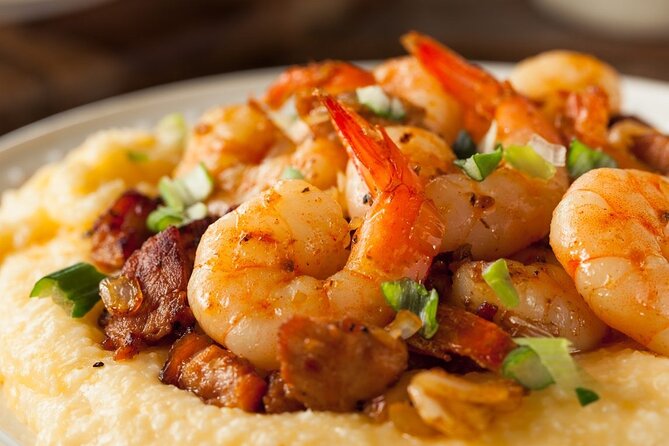
Do not count on shrimp and grits. It has appeared in older promotional imagery, but some departures have not included it. If that dish is the reason you are booking, contact the operator before paying or choose a tour that guarantees it in writing.
Alcohol is not included. You can buy a cocktail or other drink at the venues if available, but the fast schedule may leave little time to enjoy it. I would treat alcohol as optional, not part of the tour’s value.
Guides, group size, and the pace of the walk
The tour allows up to 15 people, which is a useful limit in busy downtown streets and restaurant dining rooms. A smaller group also makes it easier to hear the guide and ask questions. The guide matters a great deal here because the food portions alone do not explain the $110 price.
Paige, also listed in some feedback as Page, has led departures praised for her friendly delivery and strong command of Charleston and Low Country food. Jeff and Emerson have also been singled out for historical material. The assigned guide is not guaranteed, so think of these names as examples of the style you may encounter, not a promise.
The best guides tie each plate to a place and a story. They also leave room for questions. That matters because the subject can move from soup to slavery to pirates in a short time. The tour works best when the guide keeps those changes clear and respectful.
You should be comfortable walking for the full outing and moving along when the group does. Most people can participate, and service animals are allowed. The meeting point is 195 E Bay Street, and the tour returns there at the end. It is near public transportation, which helps if you are staying outside the historic center.
Is $110 a fair price?
I see the price as reasonable for the right person, but not automatically a bargain. You receive four food stops, a full lunch, a guide, and a structured walk through several important areas. Buying a comparable lunch plus a private history lesson would likely cost more.
The value is strongest if you want both food and context. You are not paying only for soup, barbecue, and dessert. You are paying for someone to explain why those foods belong in Charleston and how different cultures shaped the table.
The value is weaker if you mainly want a long, relaxed eating session. The tour can feel like eat and walk, with limited time for drinks and conversation. It is also less appealing if you have already taken several downtown history tours and want only restaurant recommendations.
I would also allow some flexibility around the end time. The official duration is approximately 2 hours 30 minutes, but some tours have taken closer to two hours. Do not schedule another activity so tightly that a shorter or longer finish creates a problem.
Who should book this Charleston food tour?
I would recommend it to first-time Charleston visitors who want a quick orientation with lunch built in. It suits couples, families with older children, and solo visitors who enjoy meeting a small group while learning the story behind local food.
It is especially good for people who want Charleston history presented through everyday life. The discussions of African ingredients, Gullah Geechee culture, slavery, French influence, and piracy give you more substance than a standard sightseeing walk.
It may not suit very young children. Children from ages 0 to 6 do not receive food as part of the ticket, so families need to check the arrangements before booking. It is also not the best choice for anyone who needs a slow pace, guaranteed shrimp and grits, or a long cocktail stop.
The tour is friendly, but the history is not always light. I appreciate that slavery and the slave trade are treated as necessary parts of Charleston’s past. You should be ready for that subject rather than expecting a purely cheerful food outing.
Should you book it?
Book this tour if you want a full lunch with a serious history lesson and like the idea of walking through Charleston between sit-down tastings. The she-crab soup, rice dishes, barbecue, and dessert create a satisfying meal, while the stops at Rainbow Row, Pineapple Fountain, the Old Exchange, and City Market give the route a clear sense of place.
Skip it if you need a guaranteed menu, a leisurely pace, or a precise 2.5-hour schedule. For everyone else, $110 is a fair spend for a small-group introduction to Charleston’s food and past. Just plan for changing dishes, possible weather issues, and a finish time that may be closer to two hours.
FAQ
How long does Charleston’s Historic Downtown Food Tour last?
The stated duration is approximately 2 hours 30 minutes. Some departures have finished in about two hours, so leave extra space before your next activity.
What is included in the price?
The $110 price includes lunch food tastings at four different restaurant stops and the guided walking tour.
Is alcohol included?
No. Alcoholic drinks are not included, but you may purchase your own drinks at the venues if you wish.
Where does the tour begin?
The meeting point is 195 E Bay Street, Charleston, South Carolina 29401.
Where does the tour end?
The activity returns to the starting meeting point.
How many people can join the tour?
The maximum group size is 15 travelers.
Are children ages 0 to 6 included in the food tastings?
Children ages 0 to 6 may attend, but food is not included in the children’s ticket.
Is shrimp and grits included?
Shrimp and grits is not guaranteed. Some departures have served she-crab soup, rice dishes, barbecue, and dessert instead.
What happens if the weather is poor?
The tour requires good weather. If it is canceled because of poor weather, you can receive a different date or a full refund. You can also cancel for a full refund up to 24 hours before the start time.
More Old Town and Historic Centre Walks in Charleston
- Madrid Essential: Historic Center, Plaza Mayor & Royal Palace
★ 5.0 · 6,416 reviews - Lisbon: Live Fado Show with Port Wine in Historic Center
★ 4.7 · 4,166 reviews - Valencia Old Town Tour with Wine & Tapas in 11th Century Historic Monument
★ 5.0 · 3,234 reviews - Prague Old Town, Medieval Underground and Dungeon Historical Tour
★ 4.5 · 3,227 reviews
More Food and History Tours in Charleston
- Sevilla Food Tour: Tapas, Wine, History & Traditions
★ 5.0 · 3,468 reviews - Victoria Guided Food and History Tour
★ 5.0 · 2,015 reviews - Gastown Historic Walking Food Tour
★ 5.0 · 1,863 reviews - Dublin Historical Centre Food Tour with 8 Food Tastings & Drinks
★ 5.0 · 1,718 reviews
Just added around Charleston
- Charleston’s Historic Pubs, Taverns, and Taprooms Tour★ 4.5 · 33 reviews
- Small-Group Tour: Charleston Old Walled City Historical Walking Tour★ 4.5 · 283 reviews
- Charleston’s Strong Women of the South History Tour★ 4.5 · 27 reviews
- Sip History In a Secret Speakeasy Cocktail Class★ 5.0 · 40 reviews
- Sip History in The Sun Cabana Covered Cocktail Class★ 5.0 · 332 reviews
- Private Sunset Sail BYOB Dolphin/History Tours on 43ft Mystique★ 5.0 · 42 reviews
- Charleston History and Hops Tour: Bar and History Walk★ 5.0 · 316 reviews
- Private Walking Tour of Historic Charleston★ 5.0 · 38 reviews
Charleston History Tours, compared.
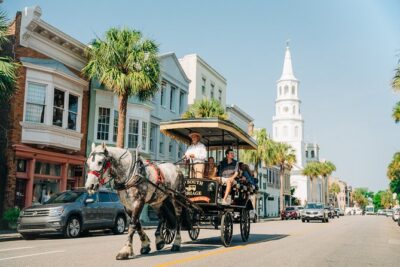
Charleston’s Old South Carriage Historic Horse & Carriage Tour
Read our review →
Historic Charleston Guided Sightseeing Walking Tour
Read our review →
Charleston Harbor History Day-Time or Sunset Boat Cruise
Read our review →
Hidden Alleyways and Historic Sites Small-Group Walking Tour
Read our review →
Charleston: Daytime or Sunset Historic Harbor Cruise
Read our review →
Charleston historical walking tour with a Professor of History at The Citadel
Read our review →
Charleston: Historical Downtown Tour by Horse-drawn Carriage
Read our review →