Review · NEW ORLEANS
New Orleans Food and History Walking Tour
New Orleans food is a lesson in migration, geography, and survival, and this three-hour walk serves that lesson one plate at a time. You move through the French Quarter with a guide, stopping for gumbo, hot sauces, pralines, po-boys, muffulettas, and other local staples. I like the generous portions, which make the $85 price feel more like lunch than a string of tiny tastes. I also like the way guides such as Beth, Meg, and Dylan connect each dish to the people and places that shaped it.
The main consideration is that this is primarily a food tour, not a full architectural walk. You will hear plenty about New Orleans history, but you should not expect long stops at major landmarks. The food stops can change with availability, and the tour is not suitable for gluten-free, dairy-free, or vegan diets.
Key points at a glance
- A full progressive lunch: Five food stops provide enough food to leave you satisfied, not merely curious.
- Classic New Orleans dishes: Expect gumbo, catfish po-boy, muffuletta, praline, boudin, red beans and rice, and bread pudding, though the exact lineup can change.
- French Quarter setting: The route begins at 3rd Block Depot on Chartres Street and ends at New Orleans Creole Cookery on Toulouse Street.
- Food with context: Your guide explains Creole influences, Louisiana geography, seafood harvesting, and the origins of dish names.
- Small-group feel: The maximum group size is 16, which helps keep questions and conversation manageable.
- Come hungry and wear good shoes: The portions are substantial, and the tour involves steady walking in all weather.
A progressive lunch through the French Quarter
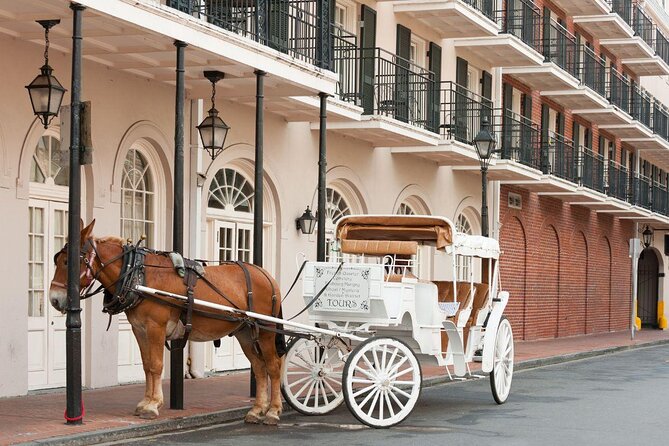
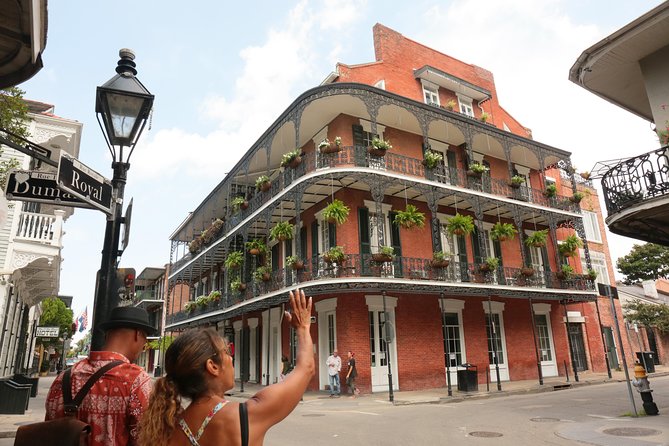
The tour begins at 3rd Block Depot, at 310 Chartres Street, in the French Quarter. From there, you set off through the Vieux Carré, the old square at the heart of New Orleans.
This is a smart place to begin a food tour because the French Quarter puts many culinary traditions close together. French, Spanish, African, Caribbean, Italian, German, and Cajun influences all appear in the city’s cooking. Your guide does not treat the food as a list of famous names. You learn why rice matters, how local ingredients shaped everyday meals, and how words such as étouffée and jambalaya entered the local vocabulary.
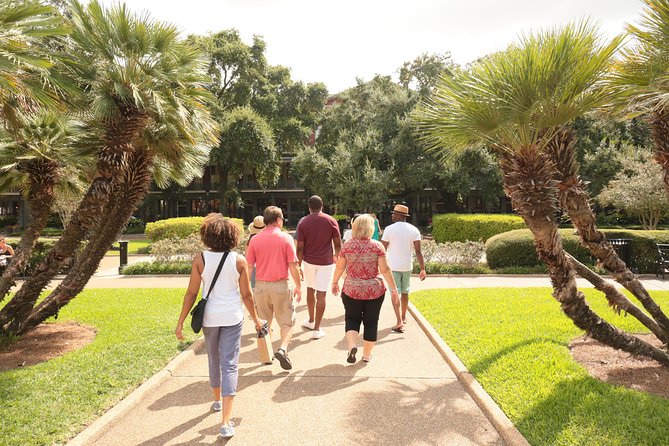
The walk itself is not designed as a strenuous trek, but you are on your feet for about three hours. Several people found the pace comfortable, while one review described the walking as brisk and advised wearing walking shoes. I would take that advice seriously. The tour is not recommended if you have mobility or walking problems.
With a maximum of 16 people, the group is small enough for questions. That matters here. Guides such as Beth, Meg, John, Sarah, Ben, and Dylan have been praised for explaining recipes, answering questions, and keeping the group involved. Dylan, also known as Dr. Gumbo, is especially good at putting the food into a wider story about New Orleans culture.
More Food and History Tours in the USA
- Boston Pizza Lovers Food and History Walking Food Tour
★ 4.5 · 1,082 reviews - Savannah: Historic District Foodie Walking Tour
★ 4.8 · 613 reviews - Boston’s North End Food and History Walking Tour
★ 5.0 · 459 reviews
Gumbo at 3rd Block Depot
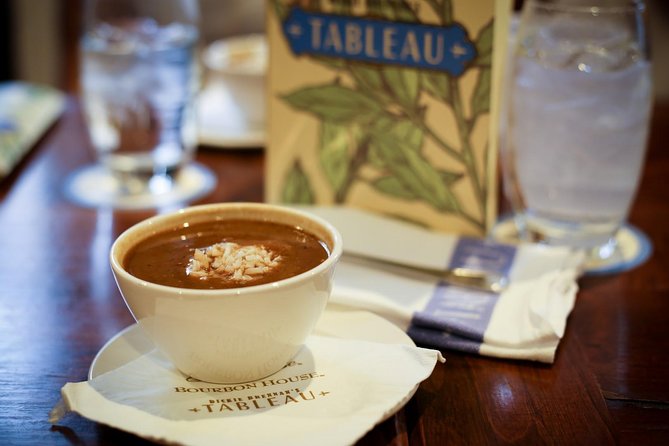
Your first food stop is 3rd Block Depot, where the sample is a rustic Cajun gumbo made with chicken, andouille sausage, dark roux, and chicken stock. It comes with a dollop of warm country-style potato salad.
Gumbo is a useful first taste because it shows how New Orleans cooking builds flavor slowly. The dark roux gives the stew its deep color and roasted taste, while andouille adds smoke and spice. The potato salad is not a random side dish. Served warm and mixed with gumbo, it gives the first course a hearty, home-style quality.
This stop can take a little longer than the others, which is useful if you want time to ask questions, but less appealing if you prefer a faster series of tastings. You may also buy a drink at the bar, but beverages are not included in the tour price.
One practical note: the food is served as a set menu, so you do not choose every dish. A vegetarian option is available if requested at checkout, but there is no vegan, dairy-free, or gluten-free version. Allergies should be reported during checkout. The operator asks you to distinguish allergies from foods you simply dislike, which suggests that the menu is not designed for broad substitutions.
Hot sauces, seasonings, and a useful pause
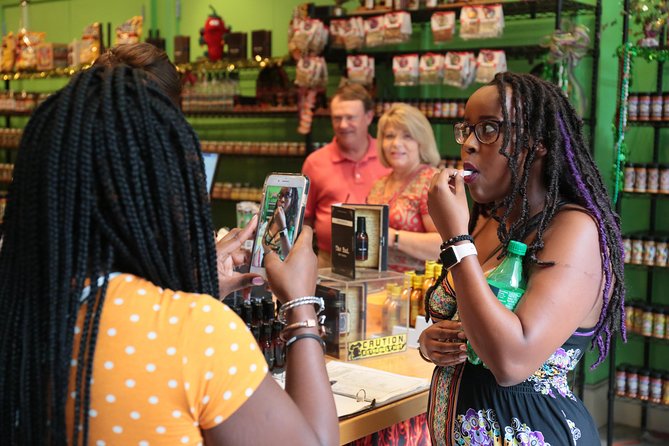
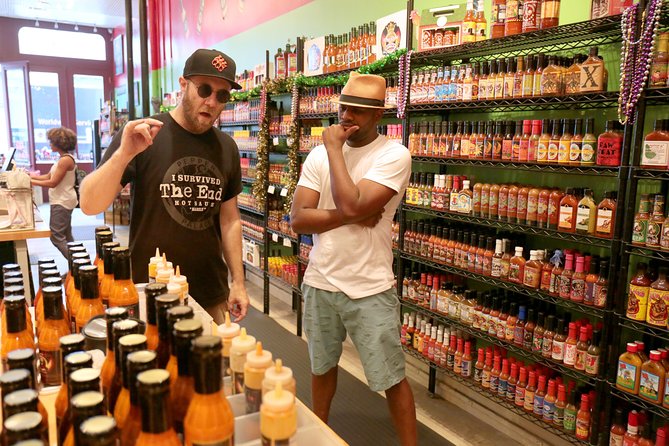
Next comes a stop at a hot sauce shop, where you can sample a wide range of sauces, dry rubs, barbecue sauces, marinades, and Buffalo-style wing sauces.
This is more than a quick novelty stop. Louisiana food depends on seasoning, and tasting several sauces side by side helps you understand how heat, vinegar, sweetness, smoke, and salt can change a dish. You can also find food gifts here, making the stop handy if you want to take a little New Orleans flavor home.
Still, this is the least substantial food stop. One person would have preferred using that time for another restaurant and smaller tastes of additional dishes such as jambalaya and étouffée. That is a fair criticism. The tour covers many famous foods, but it cannot include every important New Orleans dish in three hours.
If you already know your way around hot sauce, you may find this stop less interesting than the main meal portions. If you are curious about local seasoning or want to test your tolerance, it adds a playful change of pace.
Pralines and the sweet side of Creole cooking
At Leah’s Pralines, you sample a traditional praline or a newer variation such as bacon pecan brittle. Traditional pralines are made with local brown sugar, dairy, and pecans, and they show how a simple sweet became part of New Orleans food culture.
This is a good point in the walk for a small sweet bite. Pralines are dense and sugary, so the sample is enough to give you the idea without replacing the savory dishes still ahead. The shop also offers a chance to buy edible souvenirs.
The bacon pecan brittle is a reminder that local food is not frozen in the past. New Orleans cuisine has strong traditions, but cooks continue to alter familiar ingredients and textures. If you want to understand the city’s food rather than just photograph it, these small comparisons are useful.
More History Walking Tours in New Orleans
- New Orleans Garden District History Walking Tour
★ 5.0 · 2,879 reviews - French Quarter Historical Sights and Stories Walking Tour
★ 5.0 · 2,724 reviews - New Orleans: French Quarter Food History Walking Tour
★ 4.9 · 713 reviews - New Orleans Cocktail History Walking Tour in the French Quarter
★ 5.0 · 604 reviews
Catfish po-boy and the story of Louisiana seafood
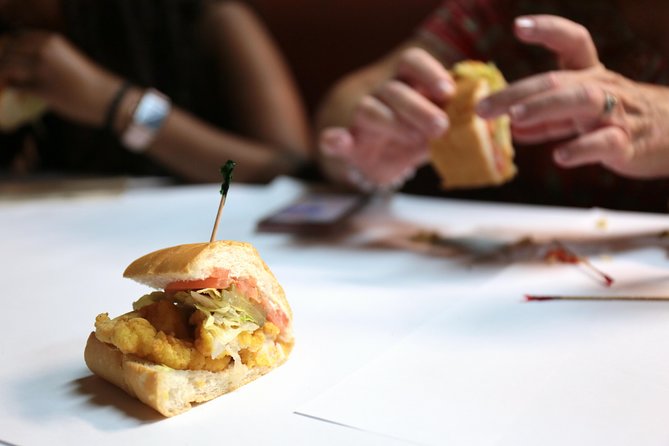
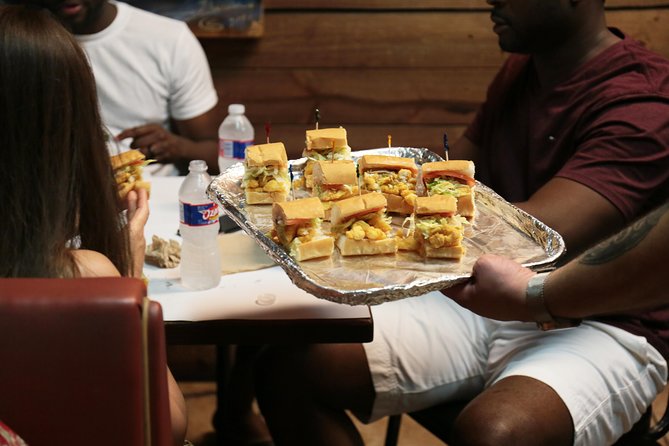
At NOLA Poboys, the menu calls for a fried catfish po-boy on local French bread. It is dressed with lettuce, tomato, mayonnaise, and pickles, with hot sauce available if you want more heat.
The sandwich is substantial. The bread matters as much as the filling, since a po-boy needs a sturdy yet yielding roll that can handle fried fish and dressing. The catfish also gives your guide a chance to explain Louisiana seafood harvesting and the connection between the state’s waterways and its daily cooking.
This is one of the tour’s most practical lessons because a po-boy can look simple until you consider the details. The bread, frying, seasoning, dressing, and seafood all need to work together. You are not just tasting fried fish. You are tasting a portable meal shaped by local work and local ingredients.
The tour may use a different po-boy or restaurant if conditions change. That flexibility is worth remembering when you compare the advertised sample menu with what appears on your plate. The stops depend on availability.
Muffuletta, boudin, and the Italian and Cajun links
The muffuletta brings an Italian influence to the table. It is served on Sicilian-style bread with smoked ham, mortadella, Genoa salami, provolone, mozzarella, and local olive salad.
This is a rich sandwich, and it is easy to underestimate how filling it will be. The olive salad cuts through the meat and cheese with salt, acidity, and briny flavor. The dish makes clear that New Orleans cooking is not only French and Creole. Italian immigrants left a strong mark on the city’s food shops and sandwiches.
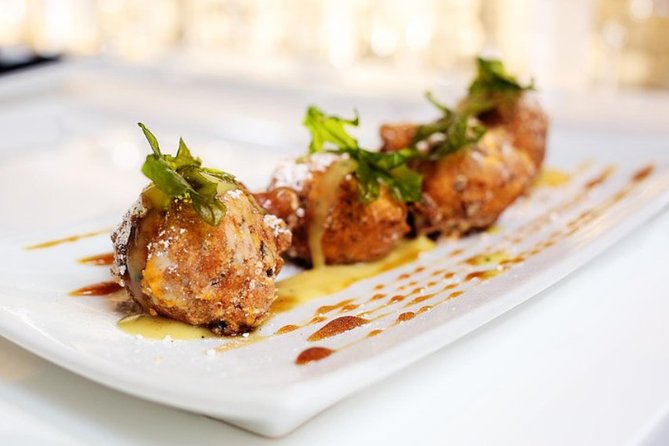
You may also receive a boudin ball, a fried Cajun sausage ball made with smoked pork, rice, and spices, served with Creole remoulade. Boudin is a fine example of practical cooking. Rice stretches the meat, spices add character, and frying turns the mixture into an easy-to-eat snack.
These portions can be generous. Several people finished the tour feeling well fed, so do not eat a large meal before meeting the group. A light breakfast is the sensible plan for a morning tour, and you should arrive equally hungry for the afternoon departure.
Red beans, rice, and the everyday table
Red beans and rice with smoked ham and andouille sausage may appear as another savory course. The beans are slow cooked, then served over rice with green onions or scallions.
This dish offers a different view of New Orleans food than the po-boy or muffuletta. It is less about a famous sandwich and more about a filling household meal. Red beans, rice, smoked meat, and seasoning create a dish that can feed a family without expensive ingredients.
Your guide uses this kind of food to explain how cooking traditions formed around what was available. You also hear about the many communities that settled in New Orleans and the foods they brought with them. That context is one of the tour’s strongest features. The information helps you recognize what you are eating later in your trip.
Bread pudding and the final sweet bite
Dessert may include seasonal bread pudding, served baked or fried, and one sample menu lists bananas Foster bread pudding. A praline may also appear earlier in the route.
Bread pudding is an apt finish for a city that has long valued practical cooking. Day-old bread becomes dessert, with texture and sweetness added through custard and seasonal ingredients. The fried version offers a crisp outside, while a baked version is softer and more traditional.
The dessert was a favorite for some people, along with the muffuletta and boudin. It also gives you one last example of how New Orleans cooks take ordinary ingredients and turn them into something worth seeking out.
By the end, the tour finishes at New Orleans Creole Cookery, 508 Toulouse Street. The final location is useful because you remain in the French Quarter, with plenty of nearby options if you want to continue eating or order a drink afterward. The exact end-of-tour dish and restaurant sequence can change, so treat the menu as a guide rather than a fixed promise.
What the $85 price really covers
The $85 cost includes a set lunch menu and the gratuities paid to servers at the food establishments. It does not include drinks other than water, and any tip for your guide is optional.
I think the price is reasonable if you treat this as lunch plus a guided introduction to New Orleans food. You are not paying only for a few bites. You receive several substantial portions, access to places you might not choose on your own, and explanations that make later restaurant visits easier.
The value is weaker if you want a cheap snack crawl or if you are mainly interested in architecture. You may leave with fewer dishes sampled than on some small-plate tasting tours, but the portions are larger. One person wanted more variety and smaller servings, while others appreciated not leaving hungry.
For a first day in New Orleans, the tour can be a practical investment. You learn which foods deserve more attention, hear useful restaurant advice, and get a basic map of the city’s culinary traditions. Several people returned to some of the stops later for drinks or more food, which is a good sign that the tour can help shape the rest of your visit.
Guides make the difference
The tour depends heavily on the person leading it. Beth has been praised for humor, recipes, and her ability to keep a group focused. Meg is known for an upbeat style and clear explanations. John, Sarah, Ben, and Dylan have also led tours, with Dylan often praised for combining humor, food knowledge, and city history.
You should expect the guide’s personality to shape the day. The food is important, but the best parts come when the guide explains why a dish exists, how communities influenced it, or what a food name means.
The experience works well for solo visitors, couples, families, and friends. A solo participant can ask questions and feel comfortable in the small group. Families should note that the menu is designed for adventurous eaters rather than picky or restricted diets.
Weather, timing, and practical details
Morning and afternoon departures are available, so you can fit the walk around other plans. I would choose the morning if you want to use the tour as your main lunch and get restaurant ideas early in your stay. The afternoon option works well if you prefer a slower start.
The tour operates in all weather conditions, so bring suitable clothing. Rain has not stopped every tour, but you should be ready for wet streets and changing conditions. If poor weather forces a cancellation, you can receive a new date or a full refund under the stated policy.
The experience is confirmed at booking, accepts mobile tickets, and is offered in English. Service animals are allowed, and the meeting point is near public transportation. Free cancellation is available up to 24 hours before the start time. Changes or cancellations inside that window are not accepted unless the operator cancels the experience.
The tour is not a good match for anyone who cannot walk steadily for several hours. It is also a poor choice for strict dietary restrictions. Vegetarians can request an alternative, but people avoiding gluten, dairy, or all animal products should choose another experience.
Should you book the New Orleans Food and History Walking Tour?
Book it if you want a filling introduction to New Orleans food, enjoy asking questions, and like learning the story behind each dish. It is especially useful early in your visit, when you still need help sorting gumbo, boudin, po-boys, muffulettas, pralines, and red beans from the long list of local specialties.
Skip it if you need a gluten-free, dairy-free, or vegan menu, dislike walking in uncertain weather, or want a serious tour of French Quarter buildings. You may also prefer another option if your priority is maximum variety in tiny portions.
For most food-minded visitors, the strongest reason to book is the combination of generous food portions and lively explanation. You get a real lunch, a taste of several cultures, and a guide who can turn a sandwich or bowl of beans into a useful lesson about New Orleans.
FAQ
How long is the New Orleans Food and History Walking Tour?
The tour lasts about three hours. It includes walking through the French Quarter and stops at several food businesses.
Where does the tour begin and end?
It begins at 3rd Block Depot, 310 Chartres Street, New Orleans. It ends at New Orleans Creole Cookery, 508 Toulouse Street.
What food is included?
The menu may include chicken and andouille gumbo, hot sauce samples, pralines, fried catfish po-boy, muffuletta, boudin balls, red beans and rice with andouille sausage, and bread pudding. Stops and dishes can change based on availability.
Is a vegetarian option available?
Yes. A vegetarian option is available if you request it at checkout.
Can the tour accommodate vegan, dairy-free, or gluten-free diets?
No. The tour does not offer vegan, dairy-free, or gluten-free options. You should report food allergies during checkout.
What happens if I need to cancel?
You can receive a full refund if you cancel at least 24 hours before the start time. Cancellations or changes made less than 24 hours before the experience are not accepted.
More Food and History Tours in New Orleans
- Sevilla Food Tour: Tapas, Wine, History & Traditions
★ 5.0 · 3,468 reviews - Victoria Guided Food and History Tour
★ 5.0 · 2,015 reviews - Gastown Historic Walking Food Tour
★ 5.0 · 1,863 reviews - Dublin Historical Centre Food Tour with 8 Food Tastings & Drinks
★ 5.0 · 1,718 reviews
More History Walking Tours in the USA
- New Orleans Jazz History and Music Walking Tour
★ 4.5 · 477 reviews - New Orleans Historic Cemetery Walking Tour
★ 5.0 · 175 reviews - New Orleans: Drunk History Walking Tour
★ 4.2 · 165 reviews - New Orleans: Haunted Drunken History Walking Tour
★ 4.9 · 50 reviews
Just added around New Orleans
- New Orleans: 1.5-Hour Voodoo History Evening Tour★ 4.5 · 34 reviews
- New Orleans: Swamp Boat Ride and Historic Plantation Tour★ 4.7 · 303 reviews
- New Orleans: Wicked History Walking Tour with a Local Witch★ 4.3 · 29 reviews
- New Orleans: Garden District Food, Drinks & History Tour★ 4.9 · 97 reviews
- New Orleans: Tremé African American & Creole History Tour★ 4.9 · 208 reviews
- New Orleans: French Quarter Saints & Sinners History Tour★ 4.6 · 56 reviews
- New Orleans: Drunk History Walking Tour★ 4.2 · 165 reviews
- New Orleans: Haunted Drunken History Walking Tour★ 4.9 · 50 reviews
New Orleans History Tours, compared.

New Orleans Garden District History Walking Tour
Read our review →
French Quarter Historical Sights and Stories Walking Tour
Read our review →
New Orleans Small-Group Haunted History Carriage Tour
Read our review →
The National WWII Museum Admission Ticket New Orleans
Read our review →
Paddlewheeler Creole Queen Historic Mississippi River Cruise
Read our review →
New Orleans: Creole Queen History Cruise with Optional Lunch
Read our review →