
Review · CHARLESTON
Charleston History and Architecture Walking Tour
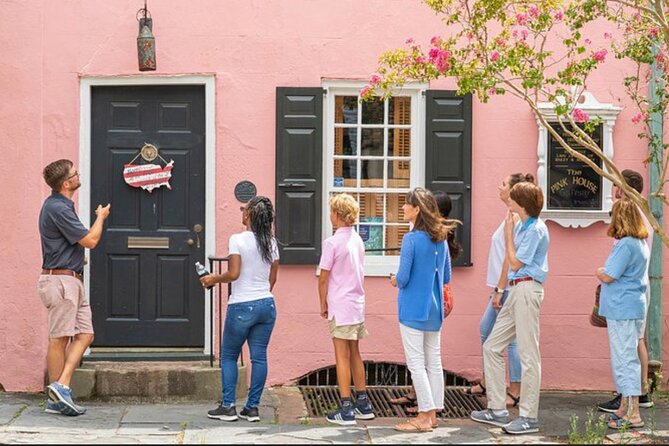
Charleston’s best stories are often found above eye level, behind colorful facades, and down narrow lanes that you could easily miss alone. This two-hour walk links Rainbow Row, the Unitarian Church, Philadelphia Alley, and other landmarks with an architectural historian who explains the people and choices behind the city’s look.
I like the efficient route and the way it gets you oriented soon after arrival. I also like the strong guide work, especially from Emerson and Paige, whose storytelling turns old buildings into places with human drama. The main drawback is simple: you are outdoors for most of two hours, on cobblestones and city sidewalks, so rain, heat, and tired feet can affect the experience.
Key points to know before you book
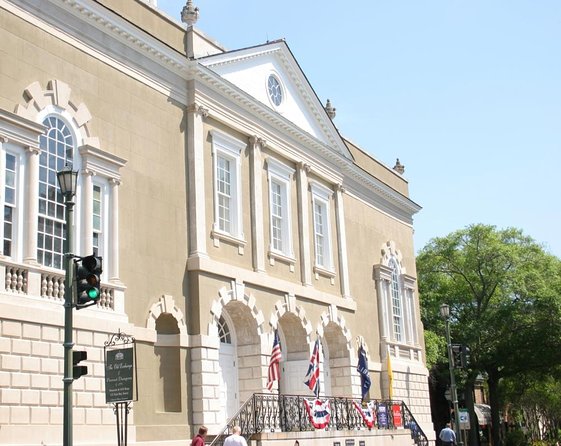
- Six central Charleston stops: The route includes the Pineapple Fountain, Rainbow Row, the Unitarian Church, Twenty-one Magazine, the Old Exchange, and Philadelphia Alley.
- Architecture with stories attached: You learn not only what a building looks like, but how Charleston’s culture and past shaped it.
- A useful first-day walk: The route helps you get your bearings before exploring more of the city on your own.
- Strong guide-led experience: Emerson and Paige receive especially warm praise for lively, clear explanations.
- Small maximum group: The tour is limited to 20 people, which should make it easier to hear and follow the guide.
- Good value at $27: You get roughly two hours of focused sightseeing without paying separate admission for the listed stops.
Why this two-hour walk works well in Charleston
Charleston rewards slow travel. The historic center is compact enough to explore on foot, yet its streets can feel confusing at first. A guided route gives you a useful framework: you see major sights, hear the stories that connect them, and finish near Waterfront Park with a better sense of where you are.
The focus on architecture gives the walk more substance than a simple photo tour. You will look at color, shape, church design, street layout, and the way old buildings relate to Charleston’s past. That matters because a pretty facade alone tells you very little.
I also like the pace. Six stops in about two hours keeps the tour moving without trying to cover the whole city. You get a concentrated introduction rather than a long march through every historic street. The route includes free admission at each listed stop, so the $27 price mainly pays for the guide, the route, and the interpretation.
The group limit of 20 is another plus. This is not a private tour, but it is small enough that you should have a reasonable chance of hearing the guide and asking a question. The experience depends heavily on the person leading it, and the comments about Emerson and Paige suggest that the storytelling is one of its strongest features.
More History Walking Tours in Charleston
- Historic Charleston Guided Sightseeing Walking Tour
★ 5.0 · 6,216 reviews - Hidden Alleyways and Historic Sites Small-Group Walking Tour
★ 5.0 · 2,335 reviews - Charleston historical walking tour with a Professor of History at The Citadel
★ 5.0 · 1,284 reviews
Starting at the Pineapple Fountain
The meeting point is at 195 East Bay Street, and the walk includes the Pineapple Fountain as an early stop. The fountain makes an easy opening photo, with its playful pineapple shape offering a quick visual introduction to Charleston’s decorative style.
You spend about 10 minutes here. That is enough time for pictures and a short explanation without letting the first stop slow the group down. It also gives you a gentle start before the longer architecture stops.
Do not expect a long visit at the fountain. Its value is as a recognizable landmark and a way to settle into the tour. If you arrive early, confirm the exact meeting spot and keep your mobile ticket ready. The booking confirmation is issued at the time of booking.
Rainbow Row and Charleston’s colorful facade
Rainbow Row is one of Charleston’s most familiar sights: 13 privately owned antebellum homes painted in pastel colors. The row is photogenic, but the guide adds the useful part, explaining why this group of buildings matters and how it fits into the city’s older streets.
The stop lasts about 20 minutes. That gives you time to take photographs and listen without being rushed. It also lets you notice details that a quick walk-by can hide, including the repetition of the facades and the differences between individual homes.
This is a good example of why the tour is more useful than a list of landmarks. You could find Rainbow Row on a map in seconds. The value comes from understanding the architecture and the stories connected to the place.
Because these are privately owned homes, the experience centers on the street and its exterior views. You should not expect a house tour here. Still, the stop gives you one of Charleston’s clearest visual symbols and a strong sense of the city’s historic character.
The Unitarian Church and the chance to step inside
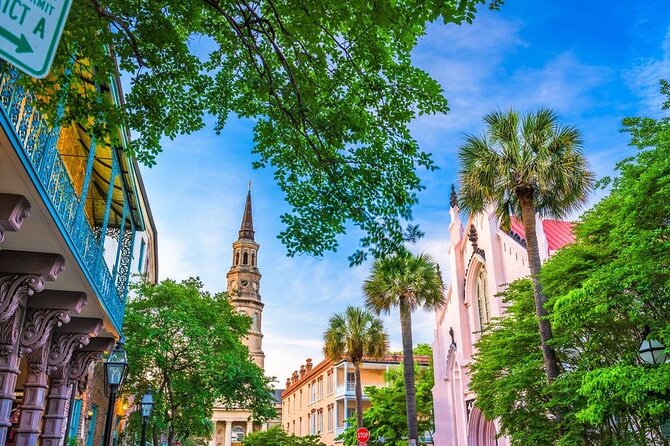
The Unitarian Church is one of the more important architecture stops. You get time to admire the building, hear about its history, and take photographs. The stop is scheduled for about 20 minutes, which is long enough for the guide to explain more than just the exterior.
There may also be an opportunity to enter the church. That detail can make a big difference, since interior architecture often gives you a better feel for a building than the street view alone. One of the tour’s strongest moments, according to the supplied comments, was seeing a church interior with striking Tiffany windows.
Keep in mind that access inside a working church can vary. The tour information describes an opportunity rather than a guaranteed entry at every departure. The exterior visit remains part of the route, but you should treat the interior as a welcome possibility rather than the main reason to book.
This stop also shows the benefit of having an architecture-focused guide. Paige is praised for explaining facts in an entertaining way, while Emerson is praised for making the city’s past feel immediate and personal. Those skills matter most at buildings that could otherwise seem attractive but distant.
More History Walking Tours in the USA
- Charleston: Old Walled City Historical Walking Tour
★ 4.7 · 705 reviews - Historic Charleston Walking Tour: Rainbow Row, Churches, and More
★ 5.0 · 691 reviews - Charleston: History and Architecture Guided Walking Tour
★ 4.8 · 349 reviews - Charleston History and Hops Tour: Bar and History Walk
★ 5.0 · 316 reviews
Twenty-one Magazine and the city’s darker stories
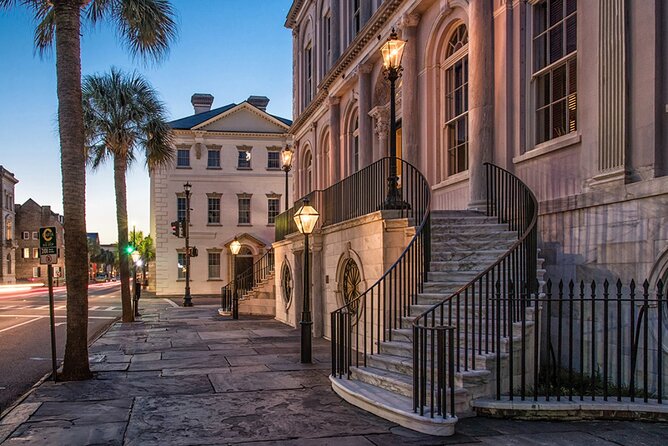
Twenty-one Magazine brings a different mood. Here, the guide covers architecture and history along with scary stories. That change of tone keeps the walk from becoming a string of formal building descriptions.
You spend about 20 minutes at this stop. The subject is a useful reminder that Charleston’s past includes more than polished houses and colorful streets. The tour presents the city through stories about people, places, and events, giving the architecture a human edge.
The exact balance between history and spooky material may depend on the guide. If you enjoy local legends alongside factual history, this should be one of the more memorable parts of the route. If you prefer a strictly academic architecture walk, the ghostly angle may feel less central to your interests.
That said, the tour’s strongest guides appear to handle this mix well. Emerson is praised for being entertaining while explaining Charleston’s past, and Paige is described as enthusiastic and fun. You are getting a broad introduction to the city, not a narrow lecture on building styles.
The Old Exchange and Provost Dungeon
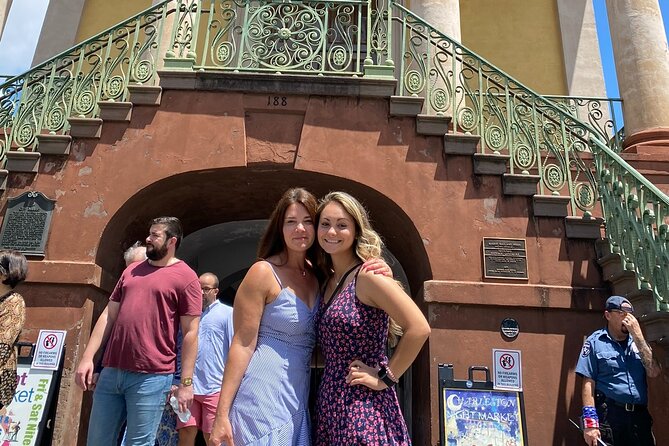
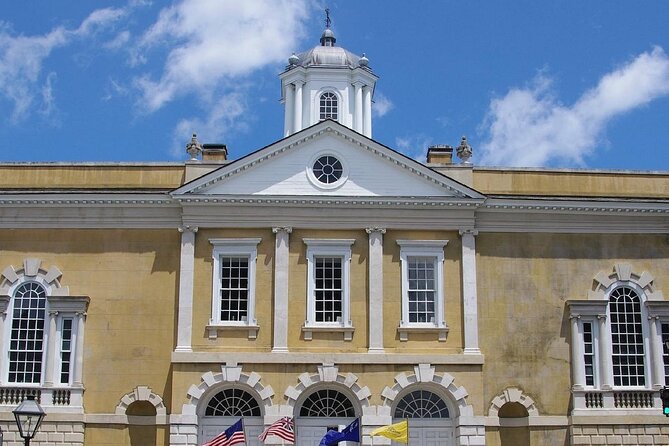
The Old Exchange and Provost Dungeon takes you into Charleston’s colonial period. The guide discusses the building’s architecture and the city’s early history, helping connect the street-level walk to the larger development of Charleston.
The scheduled time is about 20 minutes. That gives the guide room to explain why the site matters and to place it within the city’s colonial story. The stop is especially useful if you want more than the antebellum image many people associate with Charleston.
The tour information does not promise an extended interior visit here, so plan on learning about the site as part of the walking route rather than expecting a long museum session. The focus is on context, design, and the stories attached to the building.
I like having this stop in the middle of the tour. By this point, you have seen colorful homes, a church, and a narrow lane. The Old Exchange broadens the timeline and shows that Charleston’s past was built in several distinct periods.
Philadelphia Alley, the walk’s atmospheric finish
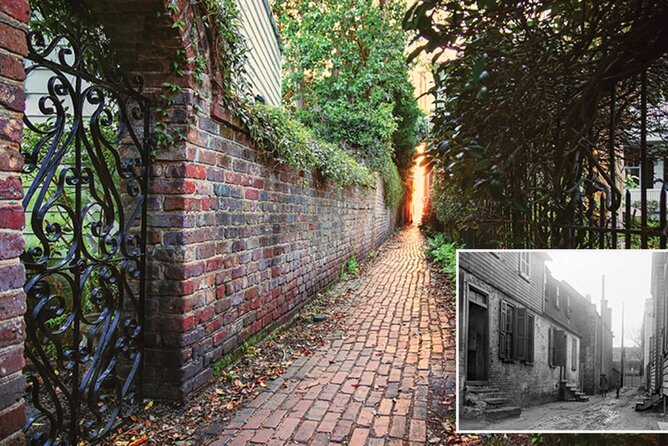
Philadelphia Alley is also known as Duelers Alley, and it is exactly the sort of place that benefits from a guide. Narrow passages can be easy to overlook, yet they often reveal more about an old city than its grandest streets.
You spend about 20 minutes here, with time for architecture, photographs, and stories. The alley gives the route a strong sense of place because it feels more intimate than the larger landmarks. Its nickname also opens the door to the darker and more dramatic side of Charleston’s past.
This is a photo-friendly stop, but it is not only a backdrop. The guide explains why the alley matters and how small urban spaces fit into the city’s history. You may find that this is the point where the walking format feels most worthwhile. A bus would pass by. On foot, you can pause and take in the scale of the lane.
The tour ends around Waterfront Park, near Vendue Range and Concord Street. That is a practical finish, since you can continue exploring the waterfront area afterward or use it as a clear reference point for the rest of your day.
What the guides add to the route

The strongest theme in the feedback is guide quality. Emerson receives repeated praise for being personable, entertaining, and well informed. Paige is also praised for enthusiasm, clear facts, and an entertaining way of presenting Charleston’s past.
That matters because this is not a ticketed attraction with a fixed audio track. The guide shapes the experience. A good leader helps you connect a building to the people who lived there, the choices that shaped the street, and the culture that developed around it.
The comments also show some variation in presentation style. One person found the guide overly apologetic about the sun and cobblestones. That is a minor issue, but it is worth noting if you prefer a brisk, no-nonsense delivery.
The tour can still work in light rain, and one departure was praised despite wet weather. Yet the activity requires good weather, and the operator may cancel for poor conditions. You should bring sensible walking shoes and plan for outdoor conditions, even though the tour itself does not list special equipment.
Is $27 a fair price?
At $27, this is a solid-value introduction to central Charleston. You get about two hours with a guide, a route through several major landmarks, and explanations that would be difficult to gain from photographs alone.
The price looks especially reasonable for a first visit. You can use the walk to identify places you want to revisit later, understand the city’s basic layout, and avoid spending your first morning wandering without context. Since the listed stops do not require separate admission, most of what you are paying for is the guide’s time and the structure of the experience.
The value is lower if you already know Charleston well or want extensive interior access. This is a sightseeing walk, not a museum tour or a private architectural consultation. The group can include up to 20 people, and the itinerary moves between several stops rather than lingering at one site.
Still, for a modest fee, you get a focused route and a good amount of content. I would consider it a practical use of two hours, especially early in a Charleston visit.
Who should book this Charleston walking tour?
I would recommend it to first-time visitors, architecture fans, history-minded visitors, and anyone who likes learning through stories rather than reading plaques. It also suits people who want a short activity that covers several major sights without committing to a full-day tour.
Families and mixed-age groups may also find the range of subjects useful. The pineapple fountain and pastel homes offer easy photo stops, while the church, Old Exchange, and Philadelphia Alley add more serious history. The scary stories at Twenty-one Magazine provide a change of pace.
You should think twice if walking for two hours is difficult or if you strongly dislike uneven city streets. The tour is outdoors, and the itinerary includes cobblestones and weather exposure. Most people can participate, service animals are allowed, and the route is near public transportation, but the supplied details do not promise a fully step-free route.
You can cancel for a full refund up to 24 hours before the start time. Inside that window, the payment is not refunded, and changes are not accepted. If poor weather causes the operator to cancel, you are offered another date or a full refund.
My take: a smart first look at Charleston
Book this tour if you want a well-priced introduction to Charleston’s old center and care about the stories behind the buildings. The route covers the city’s most recognizable sights while also slipping into places, such as Philadelphia Alley, that are easier to miss alone.
The best reason to choose it is the guide-led storytelling. Emerson and Paige appear to bring warmth, humor, and strong subject knowledge to the walk, with Emerson receiving especially consistent praise. Just keep your expectations clear: this is a two-hour outdoor overview, not an in-depth visit to every interior.
For a first morning in town, I would book it. You will leave with photographs, a basic map in your head, and a better idea of which parts of Charleston deserve a longer second look.
FAQ
How long does the Charleston History and Architecture Walking Tour last?
The tour lasts approximately two hours.
How much does the tour cost?
The listed price is $27.
Where does the tour start?
The meeting point is 195 E Bay Street, Charleston, South Carolina 29401.
Where does the tour end?
The tour ends at Waterfront Park, near Vendue Range and Concord Street in Charleston.
Which sights are included?
The route includes the Pineapple Fountain, Rainbow Row, the Unitarian Church in Charleston, Twenty-one Magazine, the Old Exchange and Provost Dungeon, and Philadelphia Alley.
Is the tour available in poor weather?
The experience requires good weather. If it is canceled because of poor weather, you are offered another date or a full refund.
What is the cancellation policy?
You can cancel at least 24 hours before the start time for a full refund. Cancellations or changes made less than 24 hours before the start time are not accepted, and the amount paid is not refunded.
Just added around Charleston
- Charleston’s Historic Pubs, Taverns, and Taprooms Tour★ 4.5 · 33 reviews
- Small-Group Tour: Charleston Old Walled City Historical Walking Tour★ 4.5 · 283 reviews
- Charleston’s Strong Women of the South History Tour★ 4.5 · 27 reviews
- Private Sunset Sail BYOB Dolphin/History Tours on 43ft Mystique★ 5.0 · 42 reviews
- Sip History In a Secret Speakeasy Cocktail Class★ 5.0 · 40 reviews
- Sip History in The Sun Cabana Covered Cocktail Class★ 5.0 · 332 reviews
- Private Walking Tour of Historic Charleston★ 5.0 · 38 reviews
- Charleston History and Hops Tour: Bar and History Walk★ 5.0 · 316 reviews
Charleston History Tours, compared.

Charleston’s Old South Carriage Historic Horse & Carriage Tour
Read our review →
Historic Charleston Guided Sightseeing Walking Tour
Read our review →
Charleston Harbor History Day-Time or Sunset Boat Cruise
Read our review →
Hidden Alleyways and Historic Sites Small-Group Walking Tour
Read our review →
Charleston: Daytime or Sunset Historic Harbor Cruise
Read our review →
Charleston historical walking tour with a Professor of History at The Citadel
Read our review →
Charleston: Historical Downtown Tour by Horse-drawn Carriage
Read our review →
Undiscovered Charleston: Half Day Food, Wine & History Tour with Cooking Class
Read our review →Browse the lists this tour appears in