
Review · CHARLESTON
Charleston historical walking tour with a Professor of History at The Citadel
Charleston’s past comes into sharper focus when the guide can explain not only what a building is, but why it mattered. Dr. Eric Lager, a professor of history at The Citadel, leads this three-hour walk from Meeting Street through the French Quarter and down to the Battery, with stories reaching from the colonial era to the Civil War and beyond.
I like the small group limit of 12, which gives you room to ask real questions and hear the answers. I also like the route’s range: churches, government buildings, theaters, private homes, and a harbor view of Fort Sumter all fit into one walk. The drawback is simple: this is a long, information-packed stroll, and hot, rainy, or cold weather can affect your enjoyment.
Key points to know before you book
- A professor leads the walk: Dr. Eric Lager brings a Ph.D. historian’s command of Charleston, American history, politics, religion, and architecture.
- The group stays small: A maximum of 12 people makes it easier to hear, ask questions, and speak with the guide along the way.
- The route covers about 400 years: You move from early Charleston and French Huguenot roots through the Revolution, the old statehouse, and the Civil War.
- Fort Sumter is viewed from shore: You see the site from the Battery, but this tour does not take you out to the fort.
- It ends in a useful location: The walk finishes on the Battery near Rainbow Row, a good spot for continuing your own sightseeing.
- You pay $40 per person: Admission to the walk and taxes are included, while bottled water and private transportation are not.
Why this Charleston walk feels different
Many city walks give you a string of dates and names, then send you on your way. This one is built around interpretation. Dr. Lager’s role matters because Charleston’s buildings often carry several stories at once: political, religious, architectural, and personal.
You may hear about the same city from more than one angle. A church is not just an old church. A public square is not just a pleasant patch of green. A theater can reveal social habits, local power, and the people who shaped public life. That wider frame is what makes this tour a strong match for anyone who wants more than a quick introduction.
The experience is offered in English and lasts about three hours. The pace is walking-paced, with stops ranging from five to fifteen minutes. You should be comfortable on your feet for a substantial part of the morning or afternoon, and you will want weather-appropriate clothing.
The small size is one of the best practical features. With no more than 12 people, you are less likely to lose the guide’s voice on a busy street. You also have a better chance to ask about a particular building, family, religious group, or Civil War detail. The guide has been praised for adjusting to questions and speaking with each person in the group while walking.
The tour is not designed as a private experience, but the group cap gives it a personal feel. That is especially useful for solo visitors, couples, and small family groups who prefer conversation over a scripted presentation.
More History Walking Tours in Charleston
- Historic Charleston Guided Sightseeing Walking Tour
★ 5.0 · 6,216 reviews - Hidden Alleyways and Historic Sites Small-Group Walking Tour
★ 5.0 · 2,335 reviews - Charleston: Old Walled City Historical Walking Tour
★ 4.7 · 705 reviews
Starting at Mills House on Meeting Street
The walk begins at Mills House Charleston, Curio Collection by Hilton, at 108 Meeting Street. The hotel itself provides the opening setting, with attention to its role during the early part of the American Civil War.
This is a smart place to begin because you are immediately looking at a building connected to the city’s wartime story rather than hearing a general introduction in an empty plaza. Expect about ten minutes here. Admission is free because the visit is an exterior stop within the walking route.
Meeting Street also puts you in the middle of Charleston’s historic core. From here, the tour gradually links individual buildings to the larger story of the city. You will want to arrive ready to listen from the first stop, since the guide begins building the historical framework right away.
Dock Street Theater and the city’s early stage
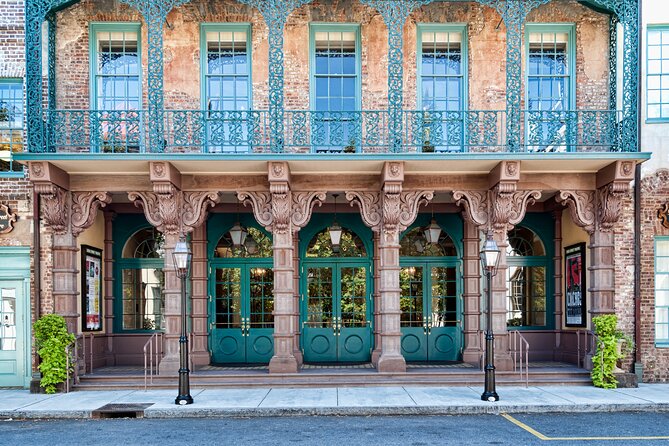
The next stop is Dock Street Theater, where you spend about ten minutes. The focus is on the first theater built in North America and on the colorful figures connected with its past.
This stop gives the walk a welcome change of subject. Charleston’s story is not only about war, government, and worship. Theater reveals how people spent leisure time, who had access to public entertainment, and which personalities became part of the city’s folklore.
The building also helps make the route feel varied. You are not simply moving from one church to the next. If you enjoy architecture and social history, this is likely to be one of the more memorable early stops.
The Pink House and Charleston’s oldest buildings
At the Pink House Gallery, the visit is brief, about five minutes, but the building carries considerable weight. It dates to around 1712 and is described as one of the oldest buildings in Charleston.
A short stop here makes sense. The point is less about entering for a long visit and more about seeing an early surviving structure in its urban setting. Dr. Lager can use the building to explain how Charleston developed and how much the city’s appearance has changed over time.
You should not expect admission to an interior gallery visit as part of the walk. The value comes from the exterior explanation and from placing the building within Charleston’s early growth.
More History Walking Tours in the USA
- Historic Charleston Walking Tour: Rainbow Row, Churches, and More
★ 5.0 · 691 reviews - Charleston: History and Architecture Guided Walking Tour
★ 4.8 · 349 reviews - Charleston History and Hops Tour: Bar and History Walk
★ 5.0 · 316 reviews - Small-Group Tour: Charleston Old Walled City Historical Walking Tour
★ 4.5 · 283 reviews
Washington Square and the old centers of power
Washington Square receives about fifteen minutes, making it one of the longer stops. The square contains several monuments, and the guide uses it to discuss the people and events represented there.
Public squares are useful teaching spots because they gather civic memory in one place. Monuments tell you what a community chose to honor, while the surrounding buildings show where authority and commerce once operated. This is also a good point to ask questions, since the tour has enough time here for more than a quick photograph.
The walk then continues to Charleston City Hall. The building’s earlier lives as a meat market and bank help explain how Charleston reused and adapted its public spaces. You spend about ten minutes here.
That detail is a reminder that historic buildings were working places before they became protected landmarks. Looking at the building through those changing uses gives you a clearer sense of how the city functioned day to day.
The old statehouse at Charleston County Courthouse
Charleston County Courthouse is next, with another ten-minute stop. The site once served as the old South Carolina statehouse, giving it a direct connection to the state’s political development.
This is where the walk moves beyond attractive façades. The building connects Charleston to decisions made at the state level, and it helps explain why the city mattered far beyond its streets and harbor. If you are interested in the Revolution, state government, or the road toward secession, listen closely here.
The route’s strength is the way these stops build on one another. You are not asked to memorize isolated facts. You see institutions, religious buildings, homes, and civic spaces in a compact area, then hear how they relate.
St. Michael’s Church and the city’s religious story
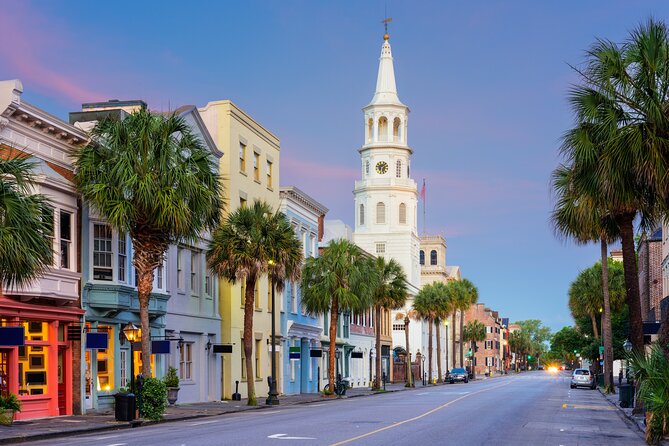
St. Michael’s Church receives about ten minutes. Completed in 1761, it is Charleston’s oldest church edifice, and its age alone makes it an important part of the walk.
The stop also opens the door to Charleston’s religious history. The tour later visits the French Huguenot Church, so St. Michael’s helps establish a useful contrast between different religious communities and the buildings they created.
As with several stops, the supplied details do not indicate an interior visit. Plan on seeing the church from the route and hearing its story from outside. That is typical of this experience: it gives you broad access to the historic district without charging separate admission for most of the stops.
Heyward-Washington House and the Old Exchange
The Heyward-Washington House is linked to George Washington’s 1791 visit to Charleston. You spend about ten minutes here, but admission is not included.
That distinction matters. The walking tour brings you to the site and explains its place in Charleston’s story, but you should not assume that the $40 price includes entry to the house. If you want to go inside, treat that as a separate sightseeing choice.
The Old Exchange and Provost Dungeon gets about five minutes. It is described as the last public building built by the British in North America and the place where the Constitution was ratified in 1788.
This is a compact stop with a lot packed into it. The building links British colonial rule, American independence, and the new nation’s political beginnings. Admission is not included here either, so the tour gives you context and an exterior look rather than a full paid visit.
French Huguenot Church and the French Quarter
The French Huguenot Church receives ten minutes. The focus is on the French Huguenots in Charleston and on the church’s place as the first building in the city constructed in the Gothic Revival style.
This stop works especially well for people who enjoy the meeting point of religion and architecture. It also keeps Charleston’s story from becoming a simple British-versus-American narrative. Different communities helped shape the city, and the route makes room for that complexity.
From there, you enter the French Quarter for about fifteen minutes. This is one of the longer stops and one of the most scenic sections of the walk. You get time to take in the streets, buildings, and atmosphere rather than stopping only for a single photograph.
The French Quarter is also where the tour’s various threads come together. You have already seen churches, civic buildings, homes, and public institutions. Here, the surrounding streets provide the setting that ties those individual pieces into one historic district.
Hibernian Hall and the road to disunion
Hibernian Hall is another ten-minute stop. The guide discusses the building’s connection to the beginnings of disunion and its relationship to Greek Revival architecture.
This is a good example of the tour’s academic edge. The stop is not included simply because the building is attractive. It is used to discuss political division and the architectural language favored by Americans who looked to ancient Greece for inspiration.
Some parts of this walk may feel dense if you prefer only light sightseeing. Dr. Lager covers politics, religious groups, architecture, and military history, and he welcomes detailed questions. That depth is a benefit for history fans, but it means you should not expect a breezy stroll with only a few fun facts.
Fort Sumter from the Battery
The final major stop is Fort Sumter National Monument, viewed from the Battery on Charleston Harbor. You spend about ten minutes here, but the tour does not go out to the fort.
This is an important point when comparing Charleston activities. You see the place where the first shots of the Civil War were fired, but you do not take a boat or enter the national monument. Admission is not included, and no private transportation is provided.
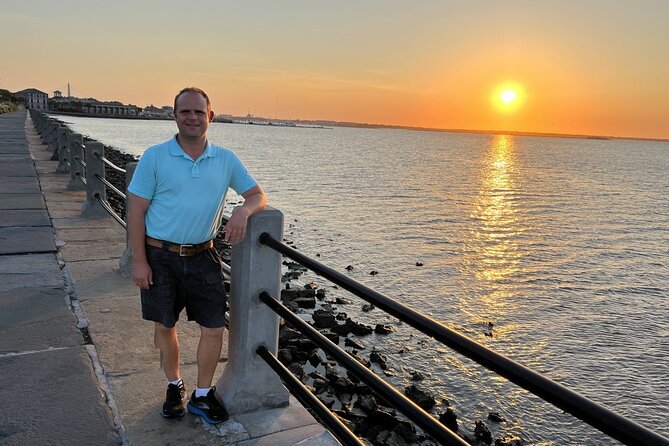
Even from shore, the location gives the war story a strong closing image. After hearing about Charleston’s institutions, political disputes, and social divisions, you can look across the water toward the site where conflict began. The harbor view provides a natural endpoint for the historical narrative.
The tour ends at 39 East Battery, near the Rainbow Row section of Charleston. That location is convenient for continuing on foot, taking photographs, or choosing another nearby activity. It also means the walk finishes in a different part of the historic district from where it began, so plan your return route in advance if you need to get back to a hotel or parked car.
What the $40 price buys you
At $40 per person, this is priced above a casual self-guided stroll but below many private experiences. The value comes from the guide rather than from admission tickets. Taxes and fees are included, while bottled water and private transportation are not.
I would consider the price fair if you want historical explanation that goes well beyond dates and famous names. The walk covers roughly three hours, a dozen major points, and subjects ranging from architecture to state politics. A private historian would cost much more, while a large group tour may not give you the same chance to ask questions.
You are also paying for efficiency. Charleston’s historic center contains far more sites than you can easily organize on your own in one morning. This route gives you a coherent path and a guide who can explain why each stop matters.
The value drops if you mainly want to enter several buildings. The Heyward-Washington House and Old Exchange list separate admission, and the tour does not include Fort Sumter itself. Think of this as a guided outdoor history course with selected viewpoints, not an all-inclusive ticket to Charleston’s museums and monuments.
Who will enjoy this walk most
I would choose this tour for:
- History fans who want context, not just photographs
- People interested in the Revolution, state politics, and the Civil War
- Architecture lovers who enjoy comparing church, civic, residential, and Greek Revival buildings
- Visitors who prefer a small group and direct access to the guide
- Anyone planning to spend several days in Charleston and wanting a strong orientation early in the visit
You may want something else if you have limited walking ability, dislike extended lectures, or want an indoor tour on uncertain-weather days. A moderate level of physical fitness is advised, and the experience requires good weather. Service animals are allowed, and the start and finish are near public transportation.
The walk has also been praised for staying engaging despite its academic content. Dr. Lager is described as funny, personable, and willing to answer questions, which matters during three hours of detailed material. The best experience will come from treating it as an interactive class rather than background entertainment.
Practical advice for your day
Wear comfortable shoes and check the forecast. Rain, cold, or strong heat can change the feel of a walking tour quickly, especially one that lasts three hours.
Bring your own water, since bottled water is not included. Keep your schedule flexible after the tour if you want to visit the paid interiors at the Heyward-Washington House or Old Exchange.
Booking around three weeks ahead is sensible, since the experience is often reserved about 22 days in advance. The group limit is small, and popular dates can fill before a last-minute decision works.
Free cancellation is available up to 24 hours before the start time. Inside that window, the payment is not refunded, and changes are not accepted. If poor weather cancels the walk, you are offered another date or a full refund.
Should you book Charleston History Walk by Eric Lager?
Book it if you want Charleston explained by a professional historian, with enough time for questions and a route that connects buildings to larger events. The small group, the range of subjects, and the final view toward Fort Sumter make this one of the stronger choices for a serious introduction to the city.
Skip it if you want a short, highly visual outing with little commentary, or if you need indoor access to every landmark. For everyone else, $40 buys a focused three-hour lesson on Charleston’s streets, delivered by Dr. Eric Lager and paced for people who genuinely want to understand what they are seeing.
FAQ
How long does the Charleston historical walking tour last?
The tour lasts approximately three hours.
Where does the tour begin?
It begins at Mills House Charleston, Curio Collection by Hilton, at 108 Meeting Street, Charleston, South Carolina 29401.
Where does the tour end?
It ends at 39 East Battery, near the Rainbow Row section of Charleston.
Does the tour visit Fort Sumter?
The tour views Fort Sumter from the Battery on Charleston Harbor. It does not travel out to the fort.
How many people can join the tour?
The group is limited to a maximum of 12 participants.
What happens if the weather is poor?
The experience requires good weather. If it is canceled because of poor weather, you will be offered another date or a full refund.
Just added around Charleston
- Charleston’s Historic Pubs, Taverns, and Taprooms Tour★ 4.5 · 33 reviews
- Small-Group Tour: Charleston Old Walled City Historical Walking Tour★ 4.5 · 283 reviews
- Charleston’s Strong Women of the South History Tour★ 4.5 · 27 reviews
- Private Sunset Sail BYOB Dolphin/History Tours on 43ft Mystique★ 5.0 · 42 reviews
- Sip History In a Secret Speakeasy Cocktail Class★ 5.0 · 40 reviews
- Sip History in The Sun Cabana Covered Cocktail Class★ 5.0 · 332 reviews
- Charleston History and Hops Tour: Bar and History Walk★ 5.0 · 316 reviews
- Private Walking Tour of Historic Charleston★ 5.0 · 38 reviews
Charleston History Tours, compared.
Charleston’s Old South Carriage Historic Horse & Carriage Tour
Read our review →
Historic Charleston Guided Sightseeing Walking Tour
Read our review →
Charleston Harbor History Day-Time or Sunset Boat Cruise
Read our review →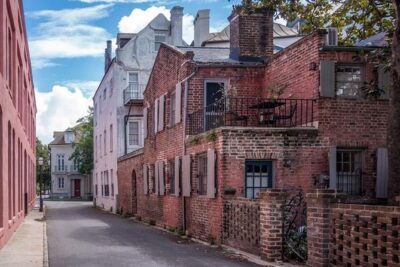
Hidden Alleyways and Historic Sites Small-Group Walking Tour
Read our review →
Charleston: Daytime or Sunset Historic Harbor Cruise
Read our review →
Charleston: Historical Downtown Tour by Horse-drawn Carriage
Read our review →
Undiscovered Charleston: Half Day Food, Wine & History Tour with Cooking Class
Read our review →
Charleston: Historic City Highlights Guided Bus Tour
Read our review →Browse the lists this tour appears in