
Review · STREET ART
Bishkek Street Art & Kyrgyz Nomadic History (Walks & Talks)
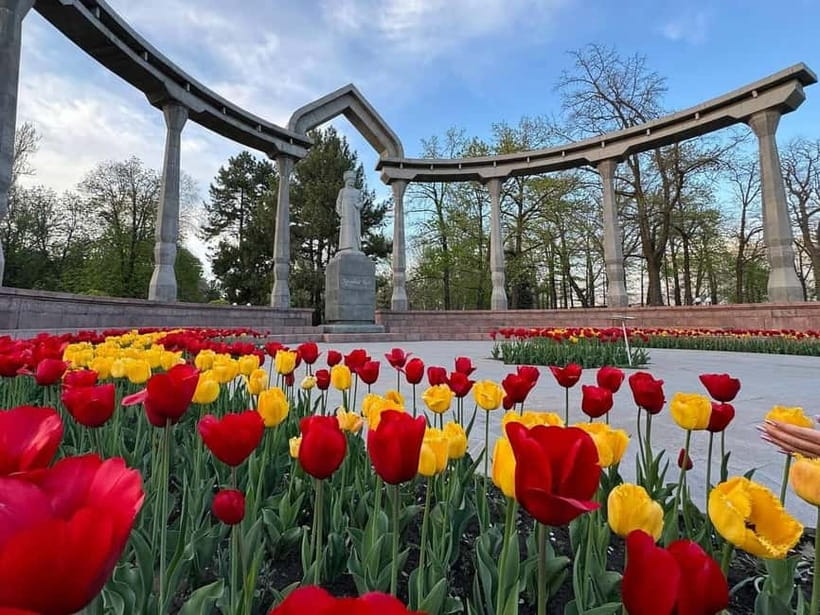
Bishkek’s art is often painted on walls, built into mosaics, or tucked beside parks and public buildings. This walking tour connects those works to Kyrgyz traditions, Soviet-era history, and the country’s long relationship with the Russian Empire. You get a city lesson told through what you can see around you, not just through dates.
I like the way the tour combines USSR mosaics and modern street art, then adds practical stops at Kyrgyz souvenir shops. I also like the open conversation. Guides Sofia, Alex, and Andrew have been praised for explaining history, legends, economics, and everyday life in a friendly way. The main caution is that the amount of street art may feel modest, and one scheduled 3.5-hour walk lasted closer to 2.5 hours.
Key points to know before you book
- Start at the Paramount Kyrgyz Republic Flag: The walk begins and ends at the same central meeting point.
- Ala-Too Square anchors the tour: Expect a guided look at Bishkek’s central public space, monuments, and surrounding city stories.
- Soviet mosaics are a major subject: You’ll learn how public art reflected political events, celebrations, and cultural ideas.
- The tour is as much about conversation as art: Guides discuss Kyrgyz history, myths, traditions, economics, and present-day life.
- Souvenir shops add a practical stop: You can browse Kyrgyz crafts and buy something connected to local culture.
- The art focus has limits: If you want wall after wall of contemporary murals, this may not be the right tour.
Why Bishkek’s public art tells a bigger story
Bishkek can look orderly and spacious at first glance, with broad streets, open squares, parks, statues, and public buildings. Look closer, and the city becomes a collection of visual clues. A mosaic may point to a Soviet celebration. A statue may reflect a national figure. A painted wall may show how modern Bishkek is presenting itself.
That is the useful idea behind this walk. You are not simply stopping for photographs. You are learning how public art can explain power, identity, memory, and daily life. The guide helps you connect the image in front of you with the culture behind it.
The tour is especially helpful if you are new to Kyrgyzstan. Tamara described it as a strong introduction on a first day because it gave her a way to understand the country before moving on to other places. I agree with that use of the tour. A capital-city walk gives you basic reference points, and later trips through Kyrgyzstan make more sense when you already know something about Kyrgyz customs, Soviet influence, and national symbols.
The experience is not presented as a formal art-history class. It is a walking conversation. You can ask about old and recent history, local myths, cultural celebrations, economics, and the way people live today. Gary specifically wanted discussion of history, culture, and economics, and the tour suited that request.
More History Walking Tours in the world:
- History and Hauntings of Salem Guided Walking Tour
★ 5.0 · 14,564 reviews - Lisbon: History, Stories and Lifestyle Walking Tour
★ 4.8 · 10,902 reviews - Amsterdam: Life of Anne Frank and World War II Walking Tour
★ 4.8 · 10,467 reviews
Starting beside the Kyrgyz Republic Flag
The meeting point is the Paramount Kyrgyz Republic Flag. The walk returns there at the end, which keeps the route simple and removes the need to arrange a ride back from a distant neighborhood.
The starting point also sets the tone. You begin in the middle of the capital, where national symbols and public spaces are easy to read. Your guide can give you the basic frame for Bishkek before you move into the details of mosaics, statues, street art, and shops.
The tour is offered in English or Russian. Guides named in the experience include Sofia, Alex, and Andrew. Sofia received especially warm praise for making people feel comfortable and for explaining Bishkek’s parks, statues, and street art with energy. Alex was noted for giving brief but useful historical explanations without burying the group in detail.
That balance matters. A guide who gives you every date can turn a city walk into homework. A guide who gives you no context leaves you looking at colorful walls without understanding them. The best accounts of this tour suggest that you can ask for more detail when a particular monument or artwork catches your attention.
Ala-Too Square and the civic heart of Bishkek
Ala-Too Square receives about 1.5 hours of the scheduled program, including walking, a guided tour, passing nearby sights, and a safety briefing. This is the central portion of the experience, and it gives you time to understand why public space matters in Bishkek.
The square is more than a large open area for photographs. It is a place where national identity, civic ceremony, and public memory meet. Your guide uses the square and its surroundings to explain Kyrgyz culture and key points in the country’s past. The discussion can include the Soviet period, national celebrations, and the way Kyrgyz traditions are presented in the capital.
The tour also connects some of Bishkek’s mosaics with the centenary of Kyrgyzstan’s relationship with the Russian Empire. That subject gives the art a complicated background. Soviet public art often celebrated progress, industry, education, workers, agriculture, or friendship among peoples. In Kyrgyzstan, those images sit alongside older nomadic traditions and modern national identity.
You should expect interpretation rather than a long list of famous monuments. The value comes from hearing why a particular image matters and how its meaning may have changed. A mosaic that once promoted a Soviet ideal can now be read as part of Kyrgyzstan’s architectural and political past.
If you like stopping, asking questions, and looking carefully, this part should suit you. If you prefer a fast route with constant new sights, the square may feel slow. The experience works best when you give the guide room to explain the setting rather than treating each stop as a quick photo break.
Following art through central Bishkek
The second section lasts about 105 minutes on the stated schedule. You walk through Bishkek, pass public art and monuments, and stop at arts and crafts shops. This is where the tour shifts from one major civic space to the broader city.
The phrase street art needs a little explanation. You will see street art, mosaics, statues, and other public artworks, but this is not necessarily a nonstop mural hunt. One visitor expected more street art and found the amount limited. That is a fair warning for anyone choosing the tour mainly for contemporary graffiti or large wall paintings.
I would treat the art as a route into Bishkek rather than the entire point of the walk. You may find that a Soviet mosaic or a small public detail is more interesting once you know its background. Guides have discussed legends, myths, recent events, and personal observations while walking, which adds layers that a self-guided photo walk would miss.
Alex was praised for answering questions at monuments and artworks, while Sofia was described as welcoming and attentive to cultural detail. Those qualities are important here because the art may not explain itself. The guide’s interpretation turns an ordinary-looking corner into a place worth pausing over.
The walk also gives you a feel for the capital’s main streets. You are not being driven from landmark to landmark. You move at street level, with time for conversation and small observations. For a first day in Bishkek, that can be more useful than a packed sightseeing schedule.
More Street Art Walks in the world:
- Naples: Street Art & History Tour in the Spanish Quarters
★ 4.9 · 540 reviews - 3-Hour Atlanta Beltline Food, Street Art and History Tour
★ 5.0 · 345 reviews - 2-Hour Food, History and Street Art Tour of Ponce City Market
★ 5.0 · 159 reviews - Atlanta: Beltline Food, Street Art, and History Walking Tour
★ 5.0 · 47 reviews
Shopping for Kyrgyz crafts along the way
The souvenir stop is not just a shopping add-on. It gives you a chance to see how Kyrgyz culture is represented in objects you can take home. The experience promises visits to souvenir shops and an arts and crafts market, with time to browse and buy if something appeals to you.
The information provided does not specify exactly which crafts or shops you will visit, so you should not expect a guaranteed list of products. You might find items connected to Kyrgyz nomadic culture, traditional designs, or local craftwork. Your guide can help explain what you are looking at and why it has cultural meaning.
I like this part because it gives the history a practical ending. You hear about traditions, then see how those traditions are presented for local use and for visitors. It is also a chance to ask questions you might not think to ask in a museum.
You are not required to buy anything. The tour includes the shop visits, but food, drinks, and purchases are not included in the $38 price. If you do want a souvenir, this is a useful place to compare items with some cultural context instead of buying the first object you see elsewhere.
The guide makes the difference
The strongest part of this experience is the guide. Several guides are named, and the comments about Sofia and Alex are particularly consistent. Sofia has been described as warm, reassuring, and talented at explaining the city. Alex has been praised for combining distant history with more recent events and for responding patiently to questions.
Andrew was also described as enthusiastic and helpful, including arranging a cab after the tour. That does not mean a taxi is part of the walking experience, but it suggests a practical, guest-focused approach when a problem comes up.
The tone appears to be conversational rather than stiff. You can ask about Kyrgyz legends, myths, cultural values, economics, and modern life. One useful criticism is that the tour could include more facts about life in Kyrgyzstan today. If present-day issues matter to you, ask directly. The guides seem willing to follow questions beyond the basic route.
The English-language experience is the natural choice for most international visitors, but Russian is also available. The quality of any walking tour depends partly on the match between your interests and the guide’s style. If you want a quiet route with only landmark names, you may find the discussion more than you need. If you want context and conversation, this is a strong feature.
What $38 buys you
At $38 per person, this is not a bargain-priced stroll, but it can be good value if you use the guide well. The price includes an English or Russian-speaking guide, the walking tour of Bishkek’s art and culture, and visits to souvenir shops. It does not include meals, drinks, or health insurance.
The value comes from the interpretation. You could walk around Ala-Too Square and central Bishkek on your own for less, but you would not automatically know the stories behind the mosaics, the meaning of public art, or the cultural background of the city’s monuments. You also would not have the same easy chance to ask about Kyrgyz traditions and modern life.
I would book it early in your Bishkek stay, especially if you want an introduction to the city. That timing lets you use the guide’s advice and historical framing during the rest of your visit. Tamara’s experience supports this approach, as the walk helped her get oriented on her first day in Kyrgyzstan.
The advertised duration is 3.5 hours. Plan for a long city walk, but keep your schedule slightly flexible. One experience lasted about 2.5 hours, so the actual timing can be shorter than advertised. That may be convenient if you want to add another activity, but it is worth knowing if you are paying specifically for a full half-day.
Free cancellation is available up to 24 hours before the activity for a full refund. You can also reserve and pay later, which helps if your plans in Central Asia are still moving around.
Who will enjoy this walking tour
I would recommend this tour to a first-time visitor who wants a readable introduction to Bishkek. It is also a good fit for anyone curious about the meeting point between Kyrgyz nomadic traditions, Russian imperial connections, Soviet public art, and today’s capital.
You will get the most from it if you:
- Enjoy asking questions during a walk
- Like history explained through buildings and public art
- Want to learn about Kyrgyz legends and cultural customs
- Prefer a local guide to a fixed audio tour
- Want to browse souvenir shops with some context
- Are comfortable walking through central Bishkek for several hours
The tour may not suit you if your main goal is a large collection of modern murals. The street-art title sets an expectation that the actual route may not always meet. It is better understood as an art, culture, and city-history walk with street art included.
The activity is wheelchair accessible, which is useful information for visitors who need a step-free option. It is not suitable for people with altitude sickness or people over 95 years old. Alcohol and drugs are not allowed.
My advice before you go
Wear comfortable shoes and bring water, since this is a walking experience and food and drinks are not included. Keep your camera ready, but listen before rushing to the next picture. The meaning behind a mosaic or statue is the part you cannot get from a photograph alone.
Tell your guide what interests you early. If you want more modern life, economics, or recent history, ask for it. If you want legends and older traditions, say so. The walk appears flexible enough for a real conversation, and the most praised guides are the ones who respond carefully to questions.
Also, leave some room in your expectations. You may see fewer contemporary murals than the title suggests, and the tour may finish earlier than 3.5 hours. In exchange, you get a broader view of Bishkek, one that includes public art, Soviet memory, Kyrgyz culture, shopping, and ordinary city conversation.
Should you book it?
Book this tour if you want a thoughtful first look at Bishkek and prefer stories to a checklist of sights. The strongest reasons are the guides, the Soviet mosaics, the chance to discuss Kyrgyz history and culture, and the easy introduction to local souvenir shops.
Skip it if you want a dedicated contemporary street-art hunt or a precisely timed 3.5-hour program. For most first-time visitors, though, the $38 cost is reasonable for a private-feeling cultural orientation, especially when you ask questions and use the guide to shape the conversation.
FAQ
Where does the Bishkek walking tour start?
It starts at the Paramount Kyrgyz Republic Flag and returns to the same location.
How long does the tour last?
The advertised duration is 3.5 hours. One reported experience lasted 2.5 hours, so the actual length may vary.
What places are included?
The route includes Ala-Too Square, central Bishkek streets, public art and mosaics, souvenir shops, and an arts and crafts market visit.
What languages are available?
Live tours are available in English and Russian.
What is included in the price?
The $38 price includes the English or Russian-speaking guide, the walking tour of Bishkek’s arts and culture, and visits to souvenir shops.
Are food and drinks included?
No. Food and drinks are not included.
Is the activity wheelchair accessible?
Yes, the activity is listed as wheelchair accessible.
Can I cancel for a full refund?
Yes. You can cancel up to 24 hours in advance for a full refund.
Who is the activity not suitable for?
It is not suitable for people with altitude sickness or people over 95 years old. Alcohol and drugs are not allowed.
Just added around the world
- Scenic Train ride to historical cities of Morretes and Antonina★ 4.0 · 188 reviews
- 6-Day Cultural Tour to Machu Picchu★ 5.0 · 76 reviews
- Jewish Heritage of Curacao★ 4.5 · 68 reviews
- The Curacao’s Colorful History Walking Tour★ 5.0 · 55 reviews
- Discover Scuba Diving Amathounta’s Ancient Port★ 5.0 · 30 reviews
- Olous – Guided Snorkelling Excursion to Discover Olous Sunken Ancient City★ 4.5 · 31 reviews
- Night Walking Tour of Medieval Cuenca★ 5.0 · 64 reviews
- WWII – The Battle of Crete Day Tour★ 5.0 · 103 reviews
Street Art, compared.
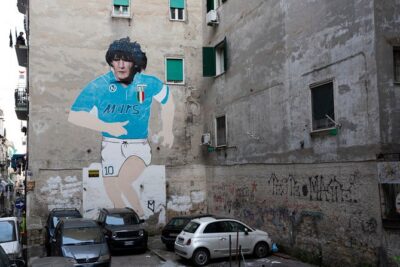
Naples Spanish Quarters Walking Tour Street Art, Folklore & Sweet
Read our review →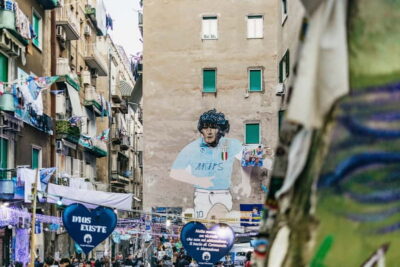
Naples: Street Art & History Tour in the Spanish Quarters
Read our review →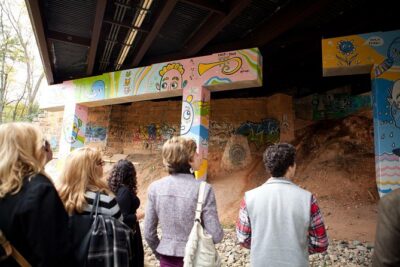
3-Hour Atlanta Beltline Food, Street Art and History Tour
Read our review →
2-Hour Food, History and Street Art Tour of Ponce City Market
Read our review →
Atlanta: Beltline Food, Street Art, and History Walking Tour
Read our review →
Browse the lists this tour appears in