
Review · AUSTRALIA
Darwin Heritage Walk
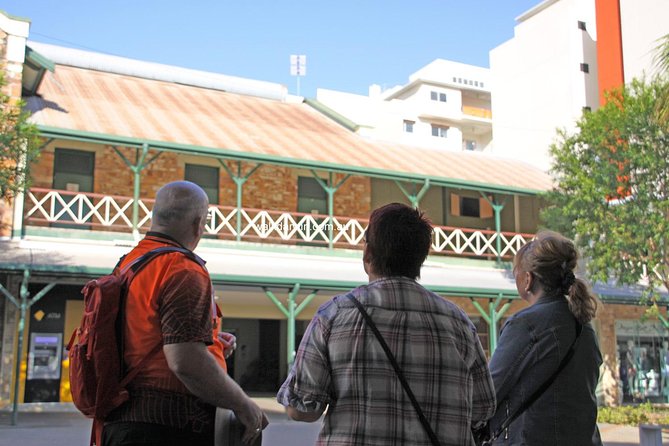
Darwin’s past is not tucked away in a museum. It sits in shopfronts, ruins, gardens, offices, and harbour-side streets. This walking tour connects those everyday places with the city’s story, from early settlement and civic life to the bombing of Darwin and Cyclone Tracy. The local guides, including John and Robin, add personal stories that help the buildings speak.
I like the small group size, capped at six, and the easy pace with regular stops for photos and shade. I also like that the tour shows both old and new Darwin, rather than focusing on one period. The main drawback is that much of the experience is listening, and one section around the Mall may feel slow if you want a brisk sightseeing walk.
Key points to know before you book
- Cyclone Tracy and wartime Darwin take centre stage: Expect clear attention to the two events that reshaped the city.
- Six people is the maximum: This allows plenty of time for questions and conversation with your guide.
- The walk is easy but not effortless: You will stand and walk for two to two and a half hours in tropical weather.
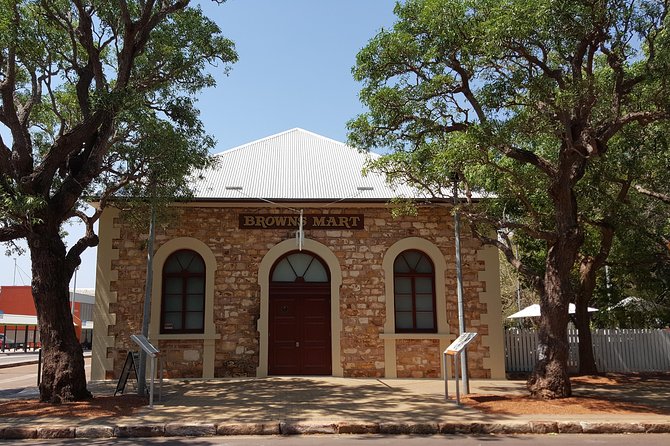
- Historic sites are mostly viewed from outside: Star Village, Brown’s Mart Theatre, the Old Town Hall, and Parliament House are part of the route, but entry is not included.
- The route ends near Lyons Cottage: You finish at the intersection of The Esplanade and Knuckey Street, opposite the cottage.
- Bring shade and water: A hat, sunscreen, drinking water, and enclosed non-slip shoes are practical choices.
Why this Darwin walk works as a first introduction
I would use this tour near the start of a Darwin stay. It gives you a working map of the central business district, then adds the background you would miss by walking alone. Streets that might look like a mix of offices, shops, and newer buildings begin to show layers of older Darwin.
The guide’s role matters here. John is repeatedly singled out for his broad knowledge, friendly manner, careful pacing, and willingness to answer questions. Robin is also praised for adding personal experience and local stories to the walk. Those names are not a promise that either guide will lead your departure, but they show the kind of guide the company aims to provide.
The tour is also a good reminder that Darwin is a city shaped by disruption. Wartime bombing and Cyclone Tracy are not side notes. They explain why so much of the central city feels newer than its age suggests, and why a few surviving structures carry unusual weight.
The route covers about two hours to two and a half hours. The pace is generally gentle, with time to stop in the shade and take photographs. You should still expect standing, walking on city streets, and exposure to heat. A moderate level of fitness is recommended.
More History Walking Tours in Australia
- Ultimate Melbourne Walking Tour: History, Laneways & Culture
★ 5.0 · 1,451 reviews - Sydney: The Rocks 90-Minute History Walking Tour
★ 4.7 · 1,092 reviews - Discover Perth Walking Tour: History, Art, Local Insights + More!
★ 5.0 · 458 reviews
Starting beside The Mall at 8:30 am
Meet at John McDouall Stuart near the corner of The Mall and Knuckey Street in Darwin City. The early start is useful in a tropical city. It does not remove the heat, but it gives you a better chance of enjoying the walk before the day becomes more intense.
You receive spoken commentary from a local guide, not an audio recording or a self-guided map. That makes the route flexible. If you have a question about a building, a person, or Darwin’s political life, you can ask as you go.
The group limit of six is one of the strongest practical features. A large walking group can turn a city tour into a march, with people at the back struggling to hear. Here, you should be able to stay close to the guide and take part in the conversation.
The route does not include hotel pickup, food, or drinks. Plan to reach the meeting point on your own. The area is near public transportation, and the finish is within central Darwin, so you can continue exploring after the walk.
Star Village and Darwin’s surviving older buildings
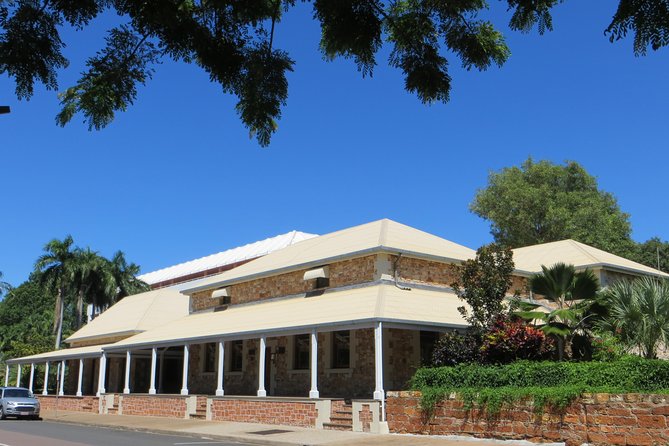
The first listed stop is Star Village, a former open-air cinema and one of the few original buildings remaining from before Cyclone Tracy. It now operates as a stylish retail area, but the guide points out features connected to its earlier life.
This is a useful opening stop because it shows how Darwin’s past often survives in altered form. You are not simply looking at a preserved building with a label beside it. You are seeing an old structure used in a newer way, with its earlier purpose explained through stories.
Allow about 10 minutes here. Admission is free, though the tour does not promise entry into individual shops or interior spaces. The value comes from understanding what survived and what changed.
Brown’s Mart Theatre and a century of social life
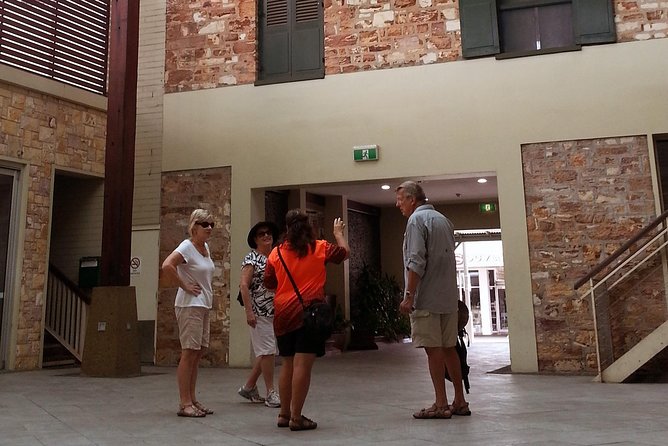
Brown’s Mart Theatre has been part of Darwin’s social life for more than 100 years. The tour examines the exterior while the guide explains its place in the city.
This stop adds a human side to the route. Buildings are not only about architecture. A theatre or gathering place tells you something about how people spent time together, and how social life continued through the city’s difficult periods.
Again, plan on about 10 minutes. If you want a tour based on long interior visits, this will not meet that expectation. If you enjoy hearing how a building fits into the life of a town, it earns its place on the route.
Same city, a different century:
- Puffing Billy Railway: Heritage Steam Train Journey
★ 4.6 · 1,195 reviews - Morning World Heritage Cruise on the Gordon River from Strahan
★ 5.0 · 1,193 reviews - Strahan: World Heritage Cruise on Gordon River with Lunch
★ 4.8 · 1,143 reviews - Experience History onboard The Mary Valley Rattler
★ 5.0 · 963 reviews
The Old Town Hall and the visible remains of Palmerston
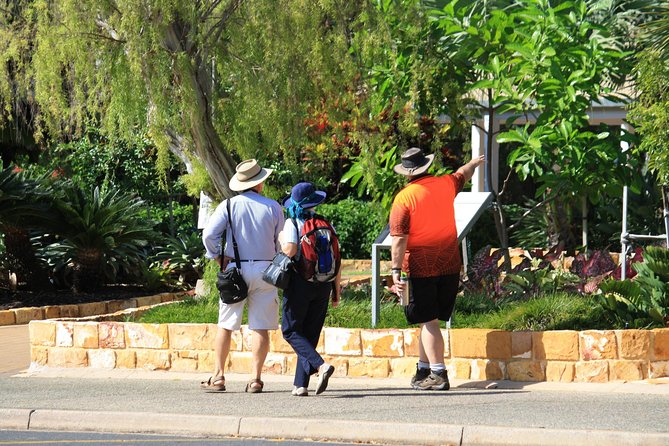
The Old Town Hall is now in ruins, offering a sharp contrast to the newer offices and commercial buildings around it. Many of Darwin’s early residents and pioneers passed through this site when the settlement was known as Palmerston.
The ruined structure gives the guide a solid starting point for discussing the city’s early civic life. It also helps you picture how much has been lost, rebuilt, or repurposed over time.
This is another 10-minute stop. The attraction is not polish. It is the directness of the remains. A ruin in the middle of a functioning city can tell you more about change than a perfectly restored facade.
The Administrator’s buildings and their gardens

The buildings associated with the Administrator of the Northern Territory have been restored, along with their gardens. They represent the administrative side of early Darwin and continue to serve as offices today.
I like this stop because it puts official life next to the more informal stories of theatres, shops, and city streets. You get a sense of how Darwin was governed, as well as how it was lived in.
The buildings are used as offices, so the experience is primarily an exterior viewing stop. The guide provides the context, and you have a chance to look at the restoration and gardens without needing a long indoor visit.
Parliament House and modern self-government
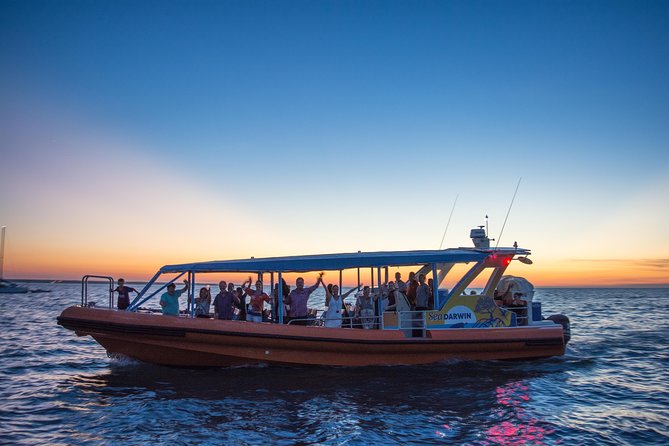
Parliament House is the most formal building on the route. It presides over Darwin Harbour and gives the guide a natural place to discuss the modern, self-governing Northern Territory.
This stop broadens the tour beyond old facades. Darwin is not presented only as a place of ruins and surviving structures. You also see the institutions of the present city and hear how modern Darwin developed.
Expect roughly 10 minutes here. The stop works best if you are interested in how the Northern Territory functions today, not just in old buildings. The guide’s commentary may also touch on current political life, which one highly rated experience specifically praised.
Bicentennial Park, the Cenotaph, and harbour views
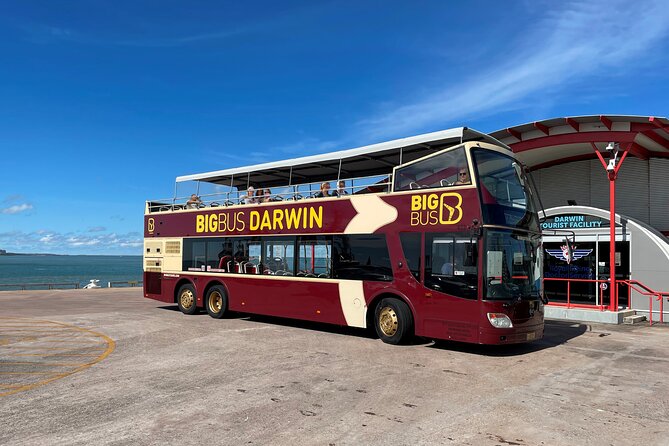
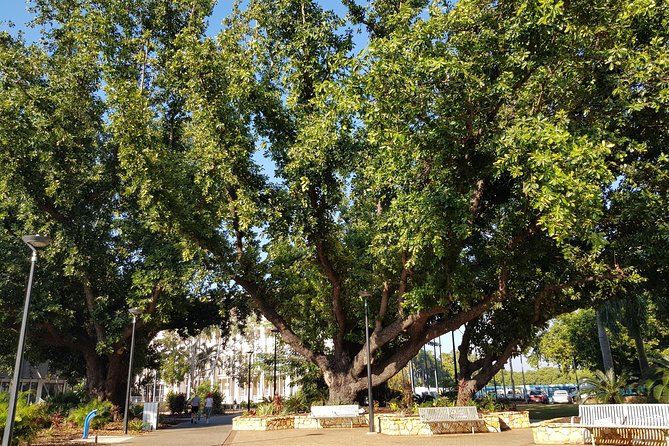
Bicentennial Park is the longest listed stop, at about 15 minutes. It follows the streets with open space beside Darwin Harbour, along with reminders of early Darwin and its residents.
This is where the route gains breathing room. You have room for photographs and a change of pace after several building stops. The park also contains less obvious memorial details, so listen closely as the guide points out features you might otherwise pass without noticing.
The Cenotaph and the area around it matter to the story of wartime Darwin. One criticism of the tour was that this section did not receive enough time, especially compared with the longer discussion around the Mall. That is useful to know if military history is your main reason for booking. You may want to ask the guide questions when you reach this part.
The harbour setting also makes this a good place to appreciate Darwin’s geography. Bring a hat and sunscreen, even for a morning departure, and keep water within reach.
The stories that give the route its character
The strongest part of this experience is not a single building. It is the way the guide connects places with people, accidents, survival, and local memory.
Personal anecdotes are a recurring strength. John is described as passionate about Darwin and generous with his time. Other guides have been praised for answering questions, stopping for photos, and choosing shaded places for commentary. One guide had lived in Darwin for 30 years, bringing a long personal connection to the city’s recent past.
That does not mean every minute will move at the same speed. A few participants found the early Mall section too drawn out and felt the most interesting material came later. Another said the walk involved less walking than expected and more listening. If you like a guided history talk with short walks between stops, that is a benefit. If you want constant movement and fast photo opportunities, it may feel slow.
The content is strongest when it explains resilience. Darwin has faced major shocks, and the guide gives those events a human scale. You hear about the bombing of Darwin and Cyclone Tracy, but you also hear about the people who kept the city going and helped it develop.
An important question about Larrakia history
There is one serious content issue to consider. At least one participant felt that the tour gave too little attention to the Larrakia people, first contact, colonisation, and what happened to Aboriginal people as Darwin developed. The response from the operator indicated that the guide can adapt to questions and provide more information when asked.
That means you should raise the subject directly if it matters to you. Do not assume the standard commentary will give equal time to every part of Darwin’s history. A city tour is better when it addresses the fact that Indigenous history predates the colonial town, and your questions can help shape the discussion.
This is not a reason for everyone to reject the walk. It is a reason to book with clear expectations and to ask direct questions. The tour offers strong coverage of Darwin’s civic past, wartime experience, Cyclone Tracy, and modern political identity. Its treatment of Larrakia history may require you to prompt the conversation.
Is $42.32 good value?
At $42.32 per person, the tour is not the cheapest way to stroll through central Darwin, but you are paying for a small group, a local guide, and roughly two to two and a half hours of commentary. The group cap of six improves the value because you are not paying for a distant voice in a crowd.
You also get access to stories rather than attractions with admission fees. The listed stops are free, and most are viewed from outside. The price makes sense if you want interpretation, local context, and an opportunity to ask questions. It makes less sense if you mainly want to enter buildings or cover a large area quickly.
The recorded score is 4.7 from 101 ratings, with 95 percent recommending the experience. That points to a reliable product, though the lower scores offer useful warnings about pace, time allocation, and Indigenous history. I would treat the price as fair for a small, guide-led introduction, especially at the start of a Darwin visit.
Who should book this experience?
This walk suits you if you enjoy local history, city architecture, personal stories, and a relaxed pace. It is especially useful if you have just arrived in Darwin and want a framework for understanding the central city before exploring on your own.
It also suits couples, solo visitors, and small groups who prefer conversation over a large group format. Children can join, but they must be accompanied by an adult. The steady walking and standing mean you should have a moderate fitness level.
You need good enclosed non-slip shoes. Darwin’s weather can be hot, wet, or changeable, and the tour operates in all weather conditions unless poor weather forces a cancellation. Wear clothing suited to the conditions, and carry water, sunscreen, and a hat.
You should look elsewhere if you want a museum tour, a fast-paced route, or a walk focused almost entirely on Indigenous history or military memorials. This is a broad central Darwin introduction, with its greatest strength in spoken stories and local interpretation.
Final call: book it for context, not just sightseeing
I recommend the Darwin Heritage Walk if you want Darwin to make more sense after your first morning in town. The route is easy, the group is tiny, and the guides bring warmth and personal knowledge to buildings you could otherwise pass without a thought.
Book it with two cautions. Expect plenty of listening, and ask about Larrakia history if you want that part of the story addressed in greater detail. If you accept those limits, the tour offers a useful, fairly priced introduction to Darwin’s old buildings, modern government, wartime past, Cyclone Tracy, and resilient local character.
Free cancellation is available up to 24 hours before the 8:30 am start. The tour needs at least two people to operate, and poor weather or an insufficient group can lead to a new date or a full refund.
FAQ
How long does the Darwin Heritage Walk take?
The experience lasts about two to two and a half hours, including walking, standing, commentary, and stops for photographs.
Where does the tour start?
It starts at John McDouall Stuart, near the corner of The Mall and Knuckey Street in Darwin City, Northern Territory.
Where does the tour finish?
The walk ends at the intersection of The Esplanade and Knuckey Street, opposite Lyons Cottage.
What time does the tour begin?
The scheduled start time is 8:30 am.
How many people can join the tour?
The maximum group size is six people. At least two people are required for the tour to operate.
Are entrance fees included?
All listed stops have free admission. The experience includes a local guide and spoken commentary, but it does not include food, drinks, or hotel pickup and drop-off.
What should I bring?
Bring a camera, sunscreen, a hat, and drinking water. Enclosed non-slip walking shoes are recommended, and you should dress suitably for the weather.
Can I cancel for a full refund?
You can cancel at least 24 hours before the start time for a full refund. Changes or cancellations made less than 24 hours before the start are not accepted for a refund. If poor weather or an insufficient number of participants cancels the tour, you can choose another date or receive a full refund.
Just added around Australia
- Bombing of Darwin World War II Tour with Harbour Cruise★ 4.5 · 219 reviews
- Darwin History and Wartime Experience Tour★ 5.0 · 144 reviews
- 1-Hour Thunderball WWII Adventure Jet Skiing in Darwin★ 5.0 · 70 reviews
- Bombing of Darwin WWII Heritage Tours★ 5.0 · 261 reviews
- Authentic Indigenous Cultural Tour Including Scenic River Cruise★ 5.0 · 88 reviews
- Cairns History Walking Tour★ 5.0 · 52 reviews
- Entry Ticket at Historic Village Herberton★ 5.0 · 114 reviews
- Self-Guided Ngilgi Cave Ancient Lands Experience★ 4.5 · 154 reviews
Australia History Tours, compared.

Ultimate Melbourne Walking Tour: History, Laneways & Culture
Read our review →
Puffing Billy Railway: Heritage Steam Train Journey
Read our review →
Morning World Heritage Cruise on the Gordon River from Strahan
Read our review →
Strahan: World Heritage Cruise on Gordon River with Lunch
Read our review →
Sydney: The Rocks 90-Minute History Walking Tour
Read our review →
Experience History onboard The Mary Valley Rattler
Read our review →
Snorkel & Dive the Reef: Sustainable, Scientific & Cultural Tour
Read our review →
Derwent River Historic Harbour Cruise From Hobart
Read our review →Browse the lists this tour appears in