
Review · BUDAPEST
Budapest: Jewish History Guided Walking Tour with Historian
Budapest’s Jewish Quarter is not just a pretty cluster of synagogues and cafés. It is a place where centuries of Jewish life, forced conversion, wartime terror, survival, and modern renewal meet on the same few streets. This 2.5-hour walk with a historian gives you that difficult story in its full shape, including the uncomfortable parts.
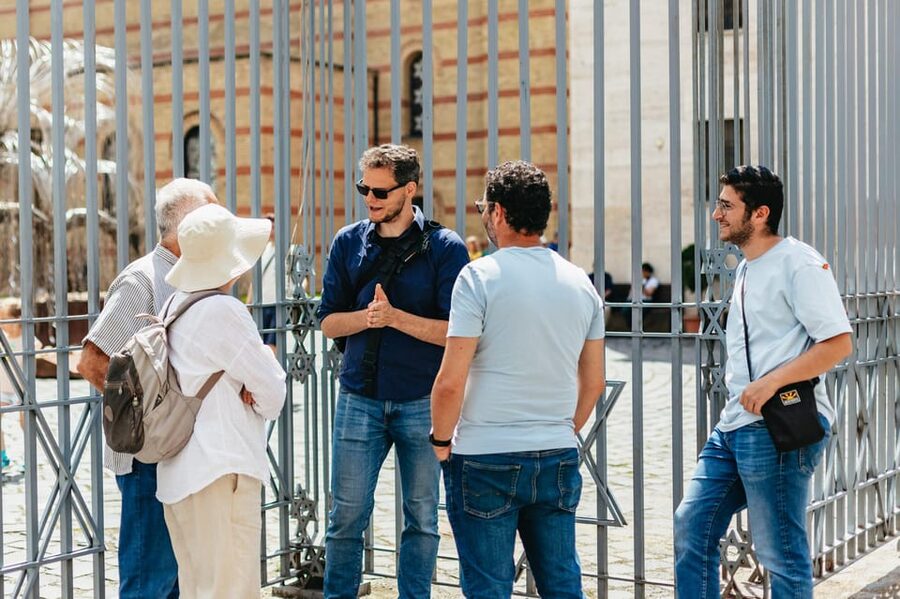
I like two things especially. First, the tour connects famous buildings with people and events, from Otto Wagner’s 1872 Rumbach Street Synagogue to the lifesaving work of Raoul Wallenberg and Carl Lutz. Second, the small group, limited to 10 people, gives guides such as Noémi, Gábor, András, and Maggie room to answer questions and adjust the pace.
The main limitation is clear: you do not enter the three synagogues. If seeing the interiors matters to you, plan separate visits. Also, this is a walking tour through a busy city district, so comfortable shoes and weather-ready clothing are essential.
Key points at a glance
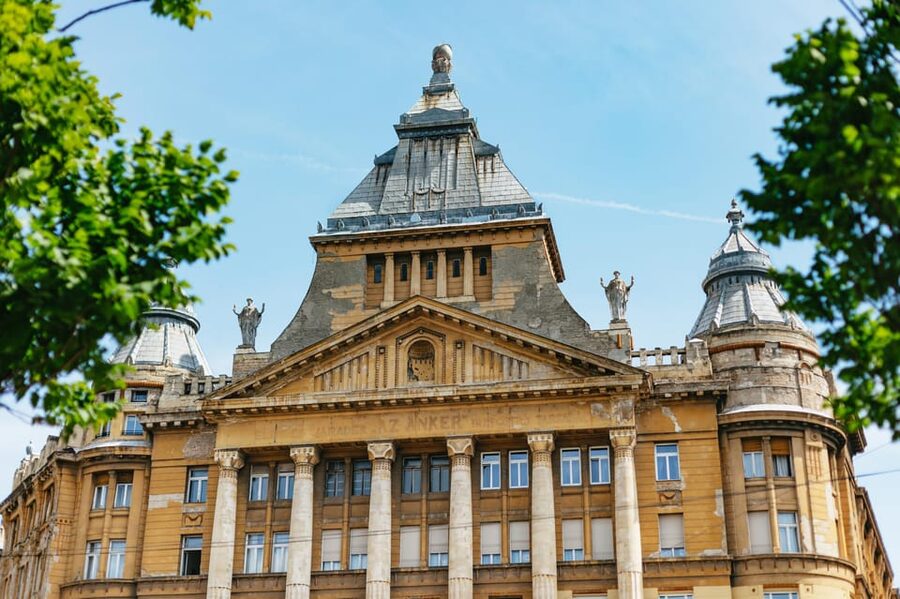
- Three major synagogues from the street: See the Dohány Street, Rumbach Street, and Kazinczy Street synagogues without paying admission as part of this tour.
- A serious look at the former ghetto: Hear how Jewish life changed before, during, and after World War II, including the short but terrible existence of the Budapest ghetto.
- Memorials to rescuers: Learn how Raoul Wallenberg and Carl Lutz helped save tens of thousands of Jewish people in 1944 and 1945.
- A real local treat: Stop for coffee or a soft drink and flódni, a traditional Jewish Hungarian cake made with layers of pastry and filling.
- Small groups help: With no more than 10 participants, you can usually hear the guide clearly and ask questions.
- A useful look at modern Budapest: The walk includes Gozsdu Passage, street art, kosher shops, restaurants, ruin pubs, and current Jewish life.
Why this walk matters in Budapest
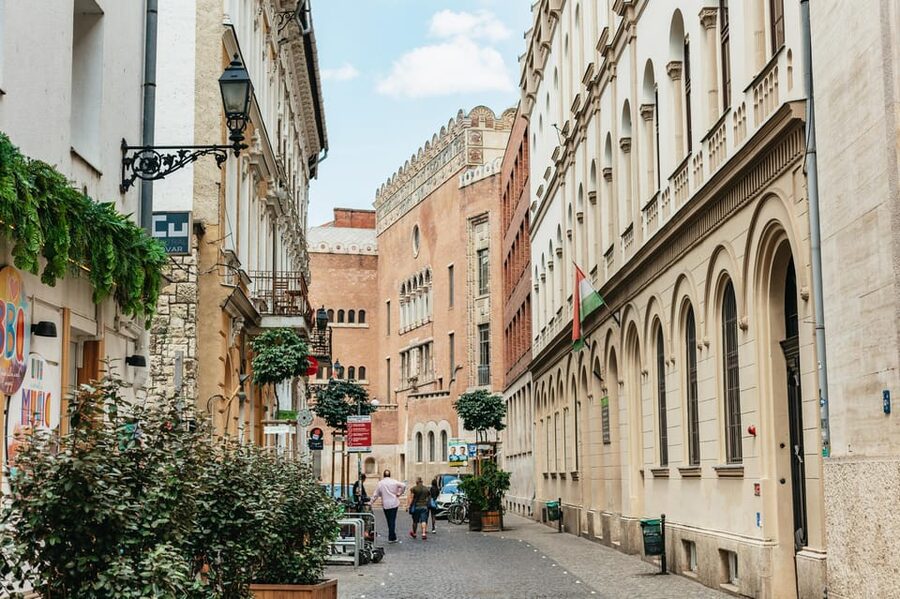
The 7th District, often called the Jewish Quarter, can be confusing at first. You may see a grand synagogue beside a lively bar, a memorial tucked into a small street, and a kosher shop close to loud nightlife. This tour helps you read those contrasts instead of treating the district as just another entertainment area.
Jewish life in Budapest has developed for more than 200 years, and the story reaches well beyond the Second World War. Your guide places Jewish communities within the wider political history of Hungary, including restrictions placed on Jewish people and pressures to convert. That broader setting matters because it explains why Jewish communities grew, moved, adapted, and sometimes disappeared from particular parts of the city.
The strongest part of the experience is the way the guide ties large events to ordinary streets. A discussion of laws and politics becomes easier to grasp when you are standing beside a synagogue, walking along the former ghetto boundary, or looking at a memorial to someone who risked his life to help others.
This is not a tour that smooths away Hungary’s difficult choices during the war. Several guides, including Gábor, Noémi, and Maggie, have been praised for speaking plainly about the treatment of Jewish people and the role of Hungarian society and government. That direct approach gives the walk weight.
More Jewish Heritage Tours in Budapest:
- Budapest Jewish Heritage Memorial Walking Tour & Synagogue Entry
★ 5.0 · 568 reviews - Budapest: Jewish Heritage Guided Tour with Synagogue Ticket
★ 4.8 · 533 reviews - Budapest Grand Half-Day Jewish Heritage Tour
★ 4.8 · 135 reviews
Starting at Erzsébet Square
You meet in front of the Kempinski Hotel Corvinus Budapest, facing the Ferris wheel on Erzsébet Square. This is a practical central meeting point, not a remote hotel location. Deák Ferenc tér is the nearest transport hub, served by the M1, M2, and M3 metro lines, as well as several buses and trams.
Arrive a few minutes early. The square can be busy, and finding a guide in a moving crowd is easier when you are already near the hotel entrance and facing the Ferris wheel.
From the start, expect an English-language walking tour rather than a lecture delivered at one fixed stop. The group moves through the district, pauses for explanations, and has opportunities for questions. The walk normally includes about 2 hours and 15 minutes of sightseeing, followed by a 15-minute café stop.
The three synagogues, seen from outside
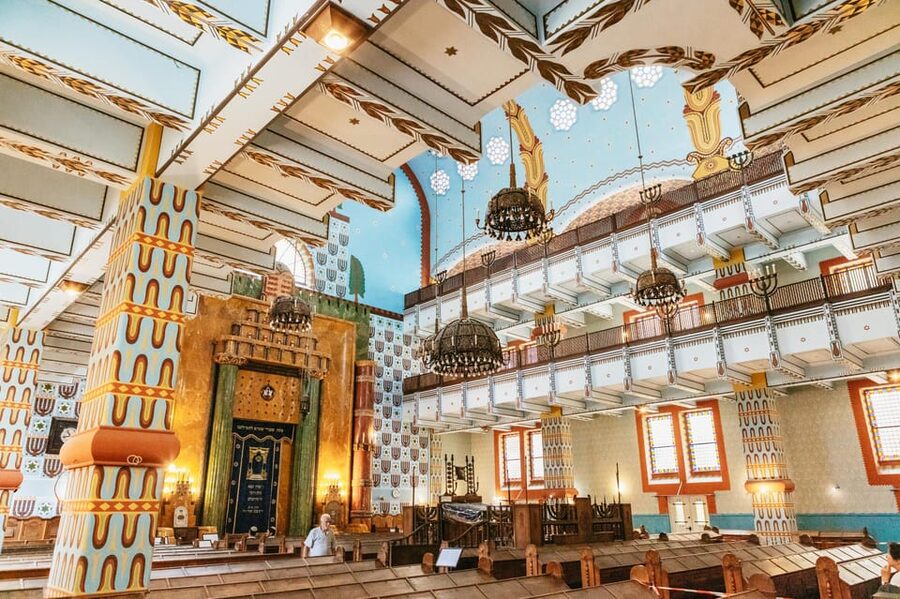
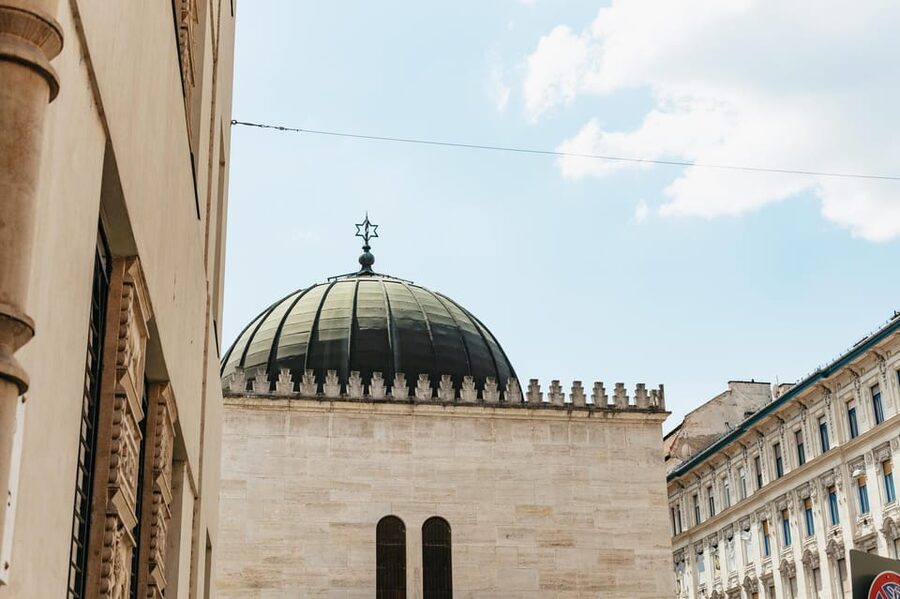
The route takes in the exteriors of Budapest’s three main synagogues in the Jewish Quarter. Each represents a different part of Jewish religious and architectural life.
The Dohány Street Synagogue is the most imposing of the three and is described as the largest synagogue in Europe. Its grand exterior gives you a sense of the size and confidence of Budapest’s Jewish community during the period when the building was created. It is also closely tied to the wartime story of the district and the former ghetto.
The Rumbach Street Synagogue was built in 1872 by Viennese architect Otto Wagner. Its exterior offers a useful contrast with Dohány Street, and the guide explains its place within the Jewish community and the architectural development of Budapest.
The Kazinczy Street Orthodox Synagogue represents Orthodox Jewish life. Seeing all three from the outside helps you understand that Budapest’s Jewish community was never one uniform group. Religious practice, institutional life, and social identity differed within the community.
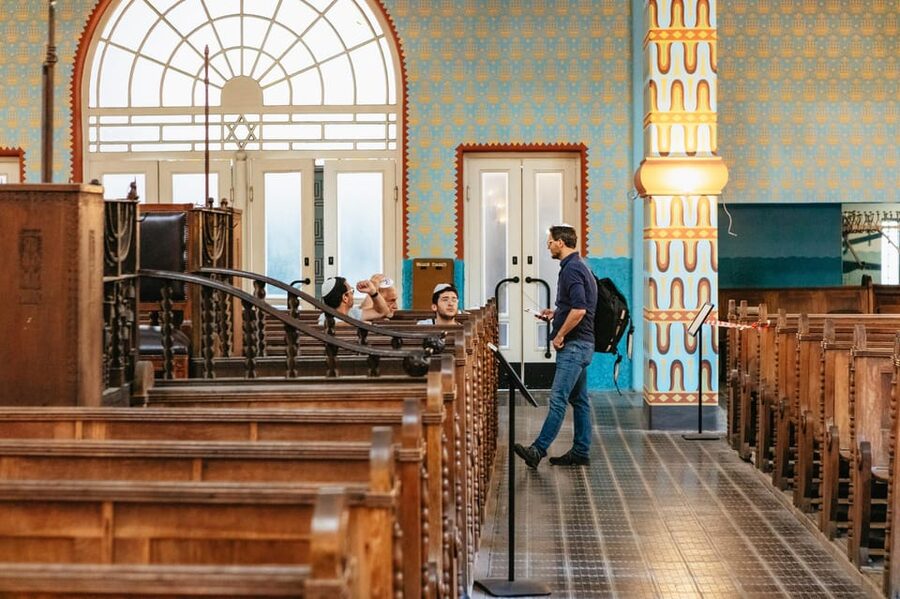
The catch is that the synagogue visits are exterior visits only. You will not receive admission to the interiors as part of the $63 price. This keeps the tour focused and avoids turning the walk into a series of ticketed entries, but you should budget extra time and money if you want to explore inside afterward.
Walking through the former ghetto
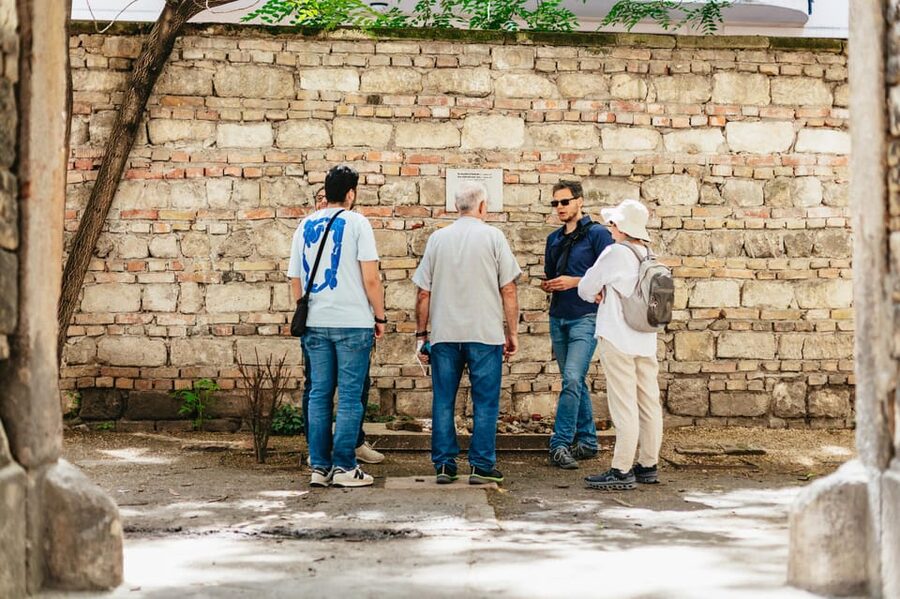
The former ghetto is the emotional center of the walk. Your guide points out streets, buildings, and a remaining section of the original ghetto wall. The Budapest ghetto existed for less than two months, but its short duration does not make the story less important. The speed with which daily life was restricted and transformed is part of what makes this section so unsettling.
Here, the tour moves beyond dates and famous names. You hear about how the neighborhood functioned, where people lived, and how the area’s synagogues, shops, and community institutions fit together. The district still contains kosher restaurants and shops, so the walk also shows how Jewish life continues rather than ending with wartime events.
A guide can make a major difference here. Noémi has been singled out for explaining Hungary’s role clearly and for making room for individual needs. Other guides, including András and Gábor, have been praised for balancing facts, humor, and difficult material without making the subject feel casual.
The pace is generally manageable, but this is still a city walk. One person specifically described it as good exercise on a hot day. You will be outdoors in all weather, so bring water in warm months and wear suitable layers in cooler or wet conditions.
More History Walking Tours in Budapest:
- Budapest Historical Sightseeing – Free Walking Tour
★ 5.0 · 1,302 reviews - BloodThirsty Hungary: Walking tour & Dark Historical Stories
★ 4.9 · 633 reviews - Palace District Evening Culinary, Wine, and History Walk
★ 5.0 · 55 reviews - Budapest: Nightlife Bar Crawl Walking Tour
★ 5.0 · 38 reviews
Wallenberg, Carl Lutz, and moral courage
Two memorial stops focus on people who acted when the official system was persecuting Jewish citizens.
Raoul Wallenberg and Carl Lutz are remembered for helping save tens of thousands of Jewish lives during the winter of 1944 and 1945. The tour places their actions within the streets where the crisis unfolded, giving the memorials more meaning than they would have as isolated monuments.
This section is valuable because it avoids presenting wartime Budapest as a story with only villains and victims. It examines choices made by individuals, institutions, and governments. You learn about the people who enforced persecution, but also about those who used their positions, documents, networks, and courage to protect others.
The guide-led format works well for this material. Memorials are often easy to walk past without knowing why they are there. A historian can explain who is represented, what the person did, and why the act mattered at that point in the war.
Gozsdu Passage, street art, and modern Jewish life
The walk is not solemn from start to finish. It passes through Gozsdu Passage, one of the liveliest parts of the district, and points out street art, nightlife, and the famous ruin pubs.
That change in mood is useful. Budapest’s Jewish Quarter is a living neighborhood, not a museum frozen in 1944. Restaurants, bars, shops, art, and new businesses share space with memorials and religious buildings. The guide helps you see the tension between the district’s commercial nightlife and its older cultural identity.
Street art adds another layer. You may notice striking work that you would otherwise pass without a second look. The guide also shares local tips about ruin pubs and the less obvious corners of Erzsébet Town. These suggestions are practical if you plan to return in the evening, though the tour itself is about history first and nightlife second.
Coffee, soft drink, and flódni
Near the end, the group stops at a local café for a coffee or soft drink and a slice of flódni, a Jewish Hungarian cake. The stop lasts about 15 minutes, so think of it as a short cultural pause rather than a full meal.
Flódni is particularly fitting here because food can explain cultural exchange in a way a monument cannot. The cake is associated with Jewish Hungarian traditions and gives you something concrete to remember from the neighborhood.
The café break also gives you a chance to ask follow-up questions. Several guides have been praised for giving stories and explanations that remain useful after the walk ends. A short pause can help you sort through the heavier material before the tour finishes.
The guide makes the difference
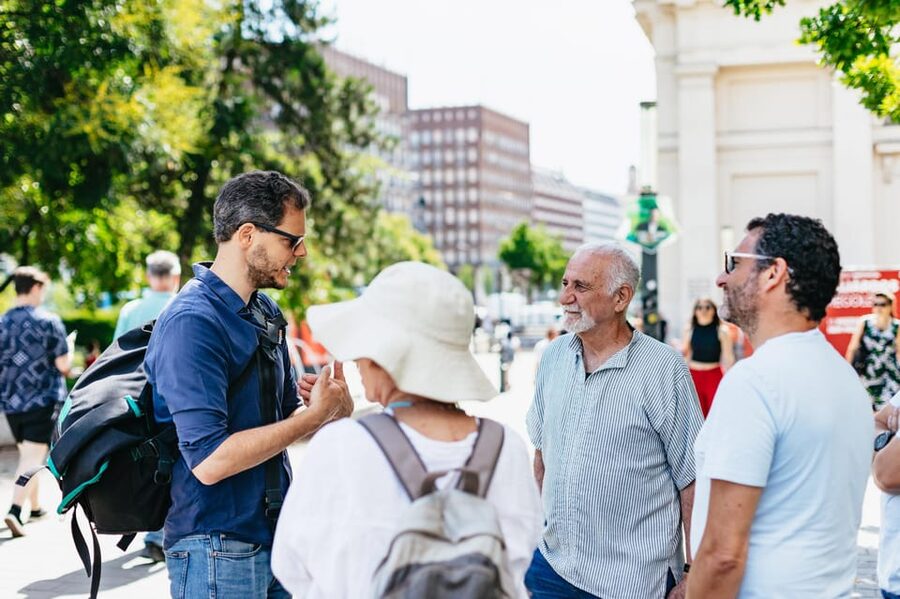
The experience is sold with a historian guide, and the guide’s skill matters greatly here. The subject includes religious divisions, Hungarian politics, persecution, rescue efforts, architecture, and present-day culture. A weak guide could turn that into a list of dates. A strong guide makes the connections clear.
The consistently high rating, 4.8 out of 5 from 205 reviews, reflects how often the guides are praised for clear explanations and a personal manner. Names that appear repeatedly in the feedback include Noémi, Gábor, András, Maggie, Gabriel, Daniel, and Judit.
Noémi is especially noted for her command of Hungarian and Jewish history and for adjusting to the group. Gábor is described as engaging, funny, and able to handle questions well. András is praised for combining Hungarian history with the story of the Jewish Quarter. Daniel has been appreciated for telling difficult material in an appealing way.
Guide assignments can change, so you should not book on the assumption that one particular person will lead your walk. The important point is that the small-group format gives any guide more freedom to respond to questions than a large coach tour usually allows.
Is $63 a fair price?
At $63 per person, this is not the cheapest walking tour in Budapest. It is also not simply a general city walk with a few Jewish sites added. You are paying for a specialist subject, a small group of up to 10 people, a historian guide, and the café stop with flódni.
The value is strongest if you want context. The guide explains how the buildings, memorials, laws, wartime events, and current neighborhood fit together. You also avoid paying synagogue admission during the tour, since the buildings are viewed only from outside.
The price is less attractive if your main goal is to enter the synagogues. In that case, compare the cost of this walk with the separate entrance fees and time required for your preferred synagogue visits. This tour can still work well as an introduction, followed by an independent interior visit later.
Free cancellation up to 24 hours before the start and the option to reserve now and pay later make it easier to fit into an uncertain Budapest schedule.
Who should book this experience?
I recommend it for anyone interested in Jewish history, Hungarian history, architecture, memory, or the way old neighborhoods change. It is also a good first activity in the 7th District because the guide points out places you may want to revisit later.
It suits people who prefer a serious tour with room for questions. Families and first-time visitors can benefit from the wider explanation of Hungary’s changing borders, politics, and religious communities. The material is difficult at times, but the guides use stories and clear explanations rather than relying only on formal lectures.
You should think twice if you dislike walking, outdoor tours, or emotionally heavy subjects. The tour runs in all weather, and some of the content concerns persecution and mass suffering. Anyone hoping to spend most of the time inside buildings should choose a synagogue visit instead, or add one after this walk.
Should you book the Jewish History Guided Walking Tour?
Book it if you want to understand Budapest’s Jewish Quarter rather than simply photograph its synagogues. The combination of the former ghetto, the three synagogue exteriors, rescue memorials, street art, Gozsdu Passage, and flódni gives you a broad view of the district in a short time.
Do not book it expecting synagogue interiors or a relaxed café crawl. For $63, the strongest value comes from the historian’s interpretation and the small group, not from the number of attractions checked off a list. For a thoughtful first look at one of Budapest’s most important neighborhoods, it is a sound choice.
FAQ
How long does the tour last?
The tour lasts 2.5 hours. The sightseeing portion takes about 2 hours and 15 minutes, followed by a 15-minute coffee and cake stop.
Where does the tour meet?
Meet in front of the Kempinski Hotel Corvinus Budapest, facing the Ferris wheel on Erzsébet Square.
How do I reach the meeting point?
You can reach the meeting point by the M1, M2, or M3 metro lines, along with several buses and trams. Get off at Deák Ferenc tér.
Are the synagogue interiors included?
No. The Dohány Street, Rumbach Street, and Kazinczy Street synagogues are visited from the outside only.
Which language is the tour offered in?
The live tour guide speaks English.
How large is the group?
The group is limited to 10 participants.
Is food included?
Yes. The tour includes a coffee or soft drink and a local Jewish cake called flódni at a café.
Does the tour operate in bad weather?
Yes. The tour starts in all weather conditions, so you should dress accordingly.
Just added around Budapest
- Time Machine Budapest Historical Exhibition Ticket★ 5.0 · 32 reviews
- Budapest Jewish Heritage: Synagogues, Shoes, Secrets & Flódni★ 5.0 · 47 reviews
- Michael Jackson History Exhibition Ticket★ 5.0 · 42 reviews
- Private Jewish Heritage Tour including Hotel Pickup★ 4.5 · 35 reviews
- Jewish Heritage in Hungary with a Historian★ 5.0 · 37 reviews
- Communist History Evening Walking Tour of Budapest★ 4.5 · 23 reviews
- Jewish Heritage / Full tour★ 5.0 · 59 reviews
- Budapest Paddle Steamer Danube Cruise with Tokaj & Audio Guide★ 4.5 · 338 reviews
Budapest History Tours, compared.
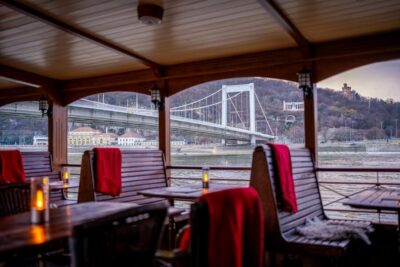
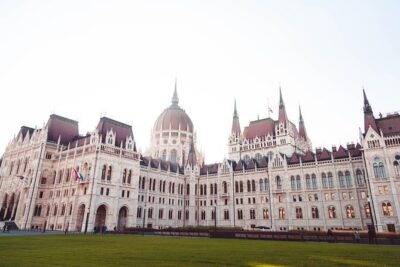
Budapest Historical Sightseeing – Free Walking Tour
Read our review →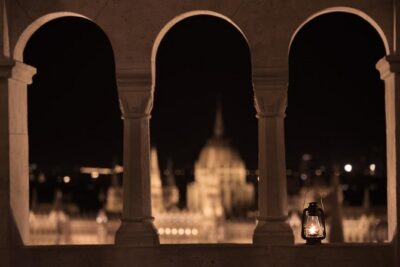
Buda Castle District Dark History, Legends and Vampire Night Tour
Read our review →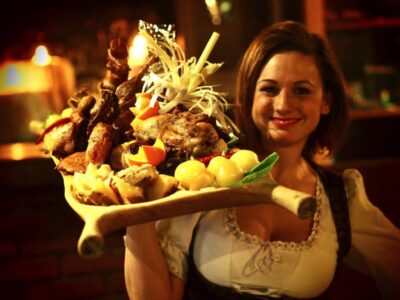
Budapest: Sir Lancelot Medieval Dinner with Drink and Show
Read our review →
BloodThirsty Hungary: Walking tour & Dark Historical Stories
Read our review →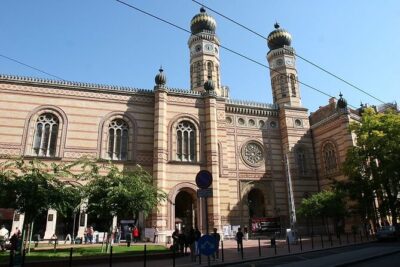
Budapest Jewish Heritage Memorial Walking Tour & Synagogue Entry
Read our review →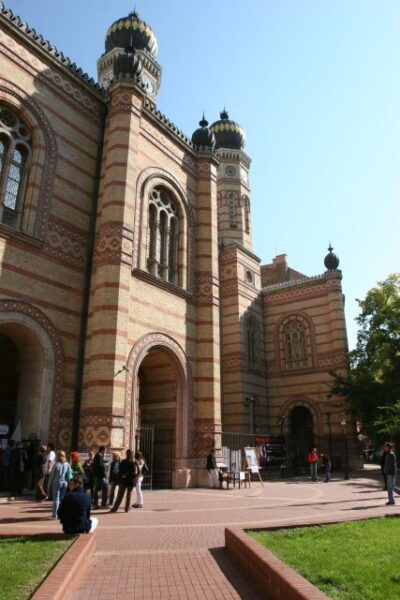
Budapest: Jewish Heritage Guided Tour with Synagogue Ticket
Read our review →
Budapest Paddle Steamer Danube Cruise with Tokaj & Audio Guide
Read our review →Browse the lists this tour appears in