
Review · BUDAPEST
Communist History Evening Walking Tour of Budapest
Budapest’s communist past is written across ordinary streets, grand squares, churches, war memorials, and the Parliament itself. This evening walk connects those pieces in a way a standard sightseeing circuit cannot, with the guide explaining how political change altered both the city and daily life.
I like the small maximum group of 15, which gives you a fair chance to hear the guide and ask questions. I also like the route’s mix of famous places and less polished corners, plus the provided bottled water. The main drawback is that you walk about 3 kilometers in two hours, often pausing in open public spaces where street noise can make detailed explanations harder to hear.
Key details before you book
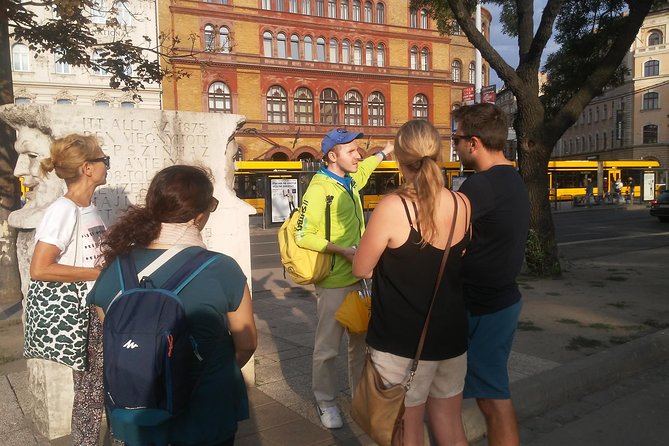
- Victoria may lead the walk: She is described as a university history professor with clear English, humor, and a strong grasp of modern Hungarian life.
- The route covers about 22 locations: You move through parts of districts VIII, VII, VI, and V, rather than visiting just one memorial or museum.
- The walk links 1956 to present-day Budapest: Parliament Square, Liberty Square, and the church stops show how political events still shape the city.
- You finish beside Parliament: The endpoint is Kossuth Lajos Square, close to the Kossuth red-line metro station and tram 2.
- No museum admission is included or needed at the listed stops: The value comes from the guide’s explanations and the outdoor route.
- The tour is in English: It begins at 6:00 pm and lasts about two hours, with free cancellation up to 24 hours before departure.
Why this walk gives Budapest more context
A city tour can show you beautiful Budapest without explaining why certain monuments feel politically charged. This walk takes the opposite approach. It uses streets and squares as evidence, then supplies the missing context.
You begin at Blaha Lujza tér, in central Budapest, and walk toward Parliament. The route passes along Andrássy Avenue, where the guide explains how the area and its former monuments changed over time. That opening matters because it gives you a sense of how regimes reshape public space. A statue, avenue, or official building is never only decoration in a city with Hungary’s 20th-century past.
The route reportedly includes about 22 locations and monuments across districts VIII, VII, VI, and V. Some are grand and photogenic. Others are simply places where something important happened. I appreciate that balance. You are not being taken only from one postcard view to the next. You get a Budapest that includes political memory, street life, and places that may look unremarkable until the guide explains them.
The evening start also makes practical sense. At 6:00 pm, you can spend the earlier part of the day at museums or the thermal baths, then use the walk to connect what you have seen with the city outside. Bring comfortable shoes and a light layer. The experience requires you to walk or wheel yourself around 3 kilometers, and the tour depends on good weather.
More Cold War and Communism Tours in Budapest:
- Budapest: Communist History Tour with House of Terror Option
★ 4.8 · 182 reviews - Berlin: Third Reich & Cold War Guided Walking Tour
★ 4.9 · 8,378 reviews - Berlin’s Best: 2 Hour Walking Tour Third Reich and the Cold War
★ 5.0 · 5,486 reviews
Starting at Blaha Lujza tér and walking Andrássy Avenue
The meeting point is Blaha Lujza tér, 1085 Budapest. The route then heads down Andrássy Avenue, with the guide discussing changes to the area and former monuments.
This is where the tour’s approach becomes clear. You are not simply told that communism ended in Hungary. You are shown how power affected streets, symbols, and public memory. The avenue lets the guide move between architecture and politics, giving you a useful introduction before the more specific stops.
Because the walk covers several neighborhoods, expect a steady pace with regular pauses. It is not a museum lecture delivered in one place. You will be listening while moving, then stopping in public squares or near buildings. That format suits you if you learn best from seeing places in person. It may be less comfortable if you prefer a seat, a headset, or long uninterrupted explanations.
The small group helps here. With no more than 15 people, you should be able to stay close to the guide and ask about details that catch your attention. Victoria is the named guide associated with the strongest comments about the experience. Her style is described as clear, humorous, and direct, with personal insight into life in Budapest alongside the historical material.
St. Stephen’s Basilica and the church under communism
At St. Stephen’s Basilica, the guide explains how communism affected the Hungarian church and religion. The stop lasts about 10 minutes and has no admission fee listed.
The basilica is a useful place to discuss the uneasy relationship between religious institutions and a communist state. You do not need to enter the church for this part of the tour. The building itself becomes a starting point for a wider explanation of what happened to religion and public life under the system.
This stop also brings in the story of a famous Hungarian football player who fled the communist system and was later buried at the basilica. The guide uses that personal story to show that political control was not an abstract matter reserved for ministers and party officials. It affected artists, athletes, religious figures, and ordinary families.
I like this kind of connection because it keeps the discussion from becoming a list of dates. You see a major Budapest landmark, then hear how a celebrated Hungarian figure’s life was shaped by the political system. If you are mainly interested in church architecture, this is not a full basilica visit. If you want to understand how religion and public identity were handled under communism, the stop adds useful weight.
Liberty Square, the stock exchange, and public protest
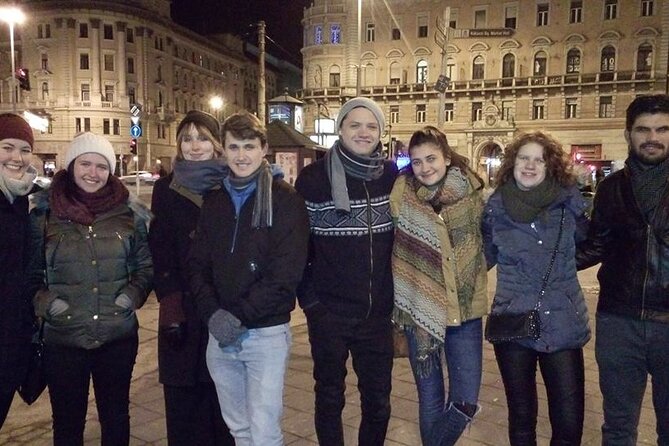
Liberty Square is one of the central stops, lasting about 15 minutes. The guide discusses the former stock exchange, which was closed at the start of communism, and the bloody protests connected with the square.
This stop helps you see communism not only as a system of government but also as an economic break. The closure of the stock exchange marked a major change in how business and public finance operated. The square also carries the memory of confrontation and protest, making it a strong place to discuss both official policy and public resistance.
The name Liberty Square creates an interesting contrast with the history explained there. That contrast gives the guide room to talk about the meaning of public space and the way names, statues, memorials, and institutions can carry competing messages.
The practical weakness is that Liberty Square is an active urban setting. Children, traffic, pedestrians, and other city noise can interfere with a detailed talk. One piece of useful advice is to position yourself close to the guide when the group stops. The experience is strongest when you can hear the full explanation, not just the broad outline.
The walk also includes a war memorial site. That adds another layer to the question of who gets remembered, who controls the story, and how Hungarians resisted political rule. You are likely to get more from this stop if you come ready to ask questions rather than simply take photographs.
More History Walking Tours in Budapest:
- Budapest Historical Sightseeing – Free Walking Tour
★ 5.0 · 1,302 reviews - BloodThirsty Hungary: Walking tour & Dark Historical Stories
★ 4.9 · 633 reviews - Budapest Jewish Heritage Memorial Walking Tour & Synagogue Entry
★ 5.0 · 568 reviews - Budapest: Jewish History Guided Walking Tour with Historian
★ 4.8 · 205 reviews
Parliament Square and the 1956 uprising
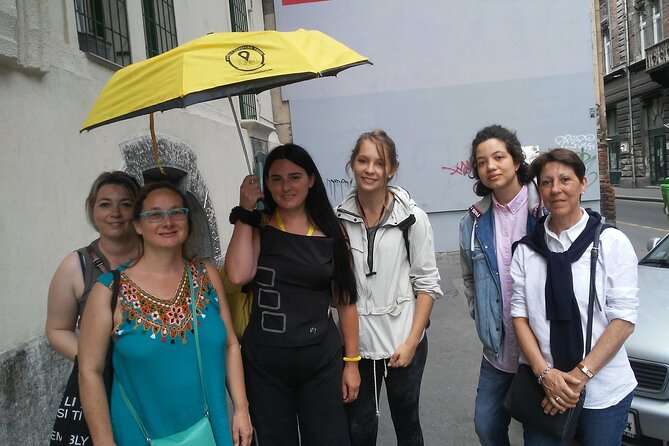
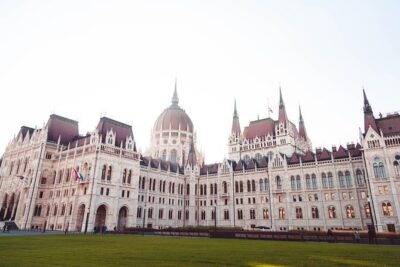
The final major stop is the Hungarian Parliament Building, at Kossuth Lajos tér. Here the guide explains that the square was the site of the 1956 uprising against the ruling communist party, where considerable blood was shed. The stop lasts about 15 minutes.
Parliament is one of Budapest’s most striking sights, but this tour asks you to see it as more than a grand riverside building. The square was a place of political action and violence. Hearing that history while standing there gives the building a different meaning than it has on a standard photo stop.
The timing is helpful. You arrive at the end of the walk, after hearing about changes to streets, religion, economics, protest, and resistance. Parliament then provides a natural place to bring those themes together. The route ends here, so you can continue your evening nearby instead of retracing your steps across the city.
Kossuth Lajos Square is close to the Kossuth red-line metro station and tram 2. That makes the ending convenient if you are staying elsewhere in Budapest. It also gives you a simple way to continue sightseeing or return to your accommodation without arranging a separate pickup.
What the guide adds to the outdoor stops
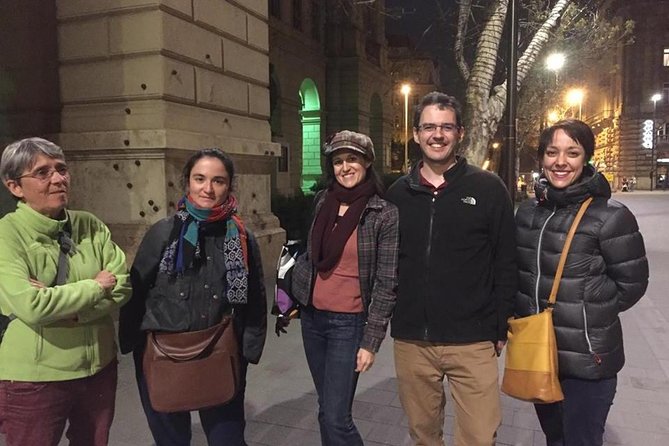
The guide is the main reason to choose this tour over walking the same streets alone. The listed sites are public places, and you can see the basilica, Liberty Square, and Parliament without joining a paid activity. What you cannot easily get on your own is the link between those places.
Victoria is specifically praised for combining university-level history with explanations of present-day Budapest. That combination is important. A discussion of communism can become dry if it stays at the level of party names and political dates. It can also become vague if it focuses only on personal impressions. The best part of this tour appears to be the meeting point between the two.
You should expect a guide who answers questions and adds stories beyond the most obvious facts. Clear English and a sense of humor are especially useful during a walking tour, where attention can wander and the surroundings compete for your focus.
The experience is not presented as a sanitized museum lesson. It includes the effects of political change on culture, religion, economics, public protest, and modern Hungarian society. If you want a short introduction to why the communist period still matters in Budapest, this is the tour’s real purpose.
Is $36.01 a fair price?
At $36.01 per person, this is not the cheapest way to see central Budapest. You can walk past the major buildings for free, and the listed stops have no admission charge.
The value comes from the route design and the guide. In two hours, you cover around 3 kilometers and about 22 locations and monuments across four central districts. You also get bottled water and a small group capped at 15 people. For a visitor who would otherwise spend hours trying to connect these sites through separate museum visits and online reading, the price is reasonable.
It helps to know what you are paying for. This is not an entry ticket to Parliament, a museum tour, or a food experience. It is an outdoor history walk led in English. If you want interiors, long time at each landmark, or a broader overview of Budapest’s art and architecture, spend your money elsewhere or pair this with another tour.
If modern Hungarian politics and communist history are high priorities, I think the price is easier to justify. You are paying for interpretation rather than access. A visit to the House of Terror Museum can also add more detail on the subject, but this walk gives you the city streets and public squares that a museum cannot provide.
Who will enjoy this tour most
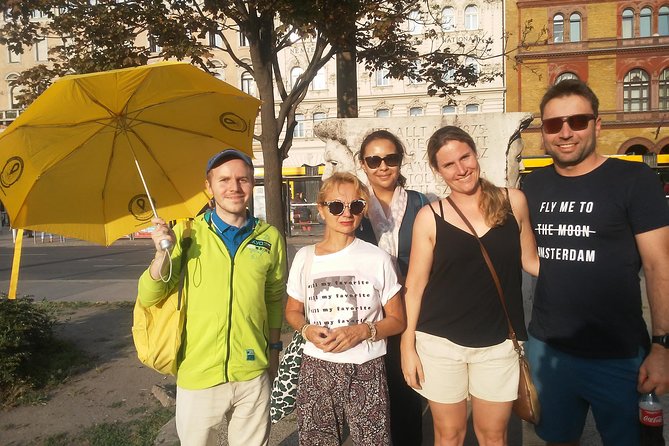
I would choose this walk if you like history, political change, and city tours that explain why buildings matter. It suits first-time visitors who want more than the usual Budapest highlights, as well as repeat visitors who have already seen the basilica and Parliament but want a different frame for understanding them.
It is also a good fit for families with older children, students, and anyone considering the history of Hungary as a field of study. The guide’s ability to answer questions makes it more useful for curious participants than for people who want a silent sightseeing stroll.
You should think twice if you dislike walking, need a fully seated activity, or want every stop to be beautiful. The route includes attractive places such as Parliament Square, Liberty Square, and the basilica, but it also visits sites that matter because of their history rather than their appearance.
The tour is wheelchair accessible in the sense that participants must be able to walk or wheel themselves 3 kilometers, but no further accessibility details are provided. If you need specific information about surfaces, seating, or restroom access, ask the provider before booking.
Timing, group size, and what to bring
The tour starts at 6:00 pm and lasts about two hours. You meet at Blaha Lujza tér and finish at Parliament Square. Plan to arrive early enough to find the meeting point without rushing, especially if you are using public transportation.
Wear shoes suited to a 3-kilometer city walk. Bring water beyond the supplied bottle if you tend to drink often, and consider a light layer because much of the experience takes place outdoors. The provider can cancel for poor weather or if the minimum number of participants is not reached.
The booking rules are fairly forgiving if your plans change. You can cancel for a full refund up to 24 hours before the start time. Changes or cancellations inside that period are not accepted for a refund.
Should you book the Communist History Evening Walking Tour?
Book it if you want Budapest’s major landmarks explained through the communist period, especially the 1956 uprising, religious policy, protest, economic change, and resistance. The combination of a small group, a manageable two-hour route, and a guide such as Victoria makes the experience more personal than a self-guided walk.
Skip it if your main goal is entering buildings, seeing communist-era objects in a museum, or avoiding outdoor walking. In that case, choose a museum visit and use the city’s public transport for sightseeing.
For most history-minded visitors, this is a useful first step. It gives you enough context to look at Budapest differently for the rest of your stay, and it leaves you at Parliament Square with convenient metro and tram connections.
FAQ
Where does the tour start?
The tour starts at Blaha Lujza tér, 1085 Budapest, Hungary.
Where does the tour end?
It ends at Kossuth Lajos tér beside the Hungarian Parliament Building. The square is close to Kossuth red-line metro station and tram 2.
What time does the tour begin?
The start time is 6:00 pm.
How long is the walking tour?
The tour lasts approximately two hours, and you must be able to walk or wheel yourself about 3 kilometers.
Is the tour offered in English?
Yes. The experience is offered in English.
What is included in the price?
Bottled water is included. Alcoholic beverages, parking fees, landing and facility fees, and scuba equipment are not included.
More Evening Trips in Budapest
- Buda Castle District Dark History, Legends and Vampire Night Tour
★ 4.5 · 1,240 reviews - Palace District Evening Culinary, Wine, and History Walk
★ 5.0 · 55 reviews - Charleston Harbor History Day-Time or Sunset Boat Cruise
★ 4.5 · 2,788 reviews - Dubai Evening Heritage Safari by Vintage G Class Al Marmoom Oasis
★ 5.0 · 1,500 reviews
Just added around Budapest
- Time Machine Budapest Historical Exhibition Ticket★ 5.0 · 32 reviews
- Budapest Jewish Heritage: Synagogues, Shoes, Secrets & Flódni★ 5.0 · 47 reviews
- Michael Jackson History Exhibition Ticket★ 5.0 · 42 reviews
- Private Jewish Heritage Tour including Hotel Pickup★ 4.5 · 35 reviews
- Jewish Heritage / Full tour★ 5.0 · 59 reviews
- Jewish Heritage in Hungary with a Historian★ 5.0 · 37 reviews
- Budapest Historic Downtown Bicycle Tour in small groups★ 5.0 · 288 reviews
- Budapest: Historic Downtown ride on E-Bicycles Buda & Pest★ 5.0 · 227 reviews
Budapest History Tours, compared.
Budapest Historical Sightseeing – Free Walking Tour
Read our review →
Buda Castle District Dark History, Legends and Vampire Night Tour
Read our review →
Budapest: Sir Lancelot Medieval Dinner with Drink and Show
Read our review →
BloodThirsty Hungary: Walking tour & Dark Historical Stories
Read our review →
Budapest Jewish Heritage Memorial Walking Tour & Synagogue Entry
Read our review →
Budapest: Jewish Heritage Guided Tour with Synagogue Ticket
Read our review →
Budapest Paddle Steamer Danube Cruise with Tokaj & Audio Guide
Read our review →Browse the lists this tour appears in