
Review · MADRID
Spanish Civil War start of 2 World War, Guernica Franco
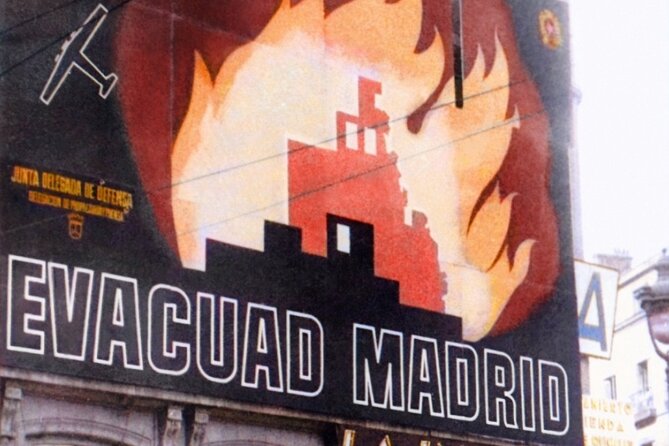
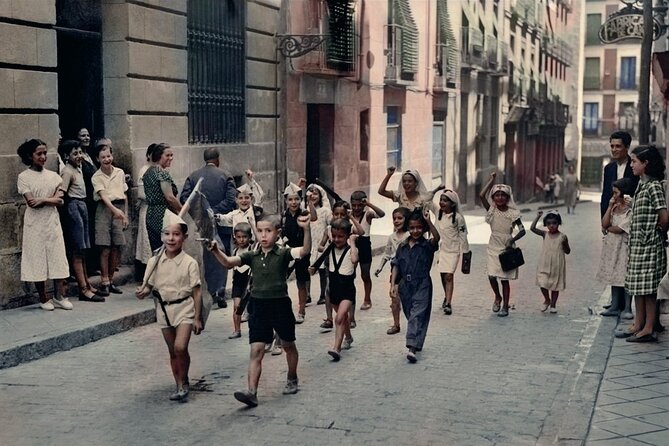
Madrid’s Civil War story is written into the city’s walls, squares, monuments, and even its old wartime sayings. This walking tour follows that story from Plaza del Callao to the Victory Arch, showing how Madrid endured bombing, siege, political violence, and the rise of Franco.
I like the way the tour connects street-level evidence with wider European history. I also like the use of maps, images, audio, and video, which can make a complicated subject easier to follow. The main drawback is the pace: seven stops in about two and a half hours means some topics receive a brisk treatment rather than a long historical lecture.
Key points
- Madrid’s wartime scars: Begin in central Madrid, where bombings and damaged buildings help place the conflict in everyday surroundings.
- A clear route through the war: Move from the causes of the Civil War to the siege, propaganda, Guernica, and the postwar dictatorship.
- Strong visual support: Maps, photographs, audio, and video add context at the stops.
- Franco and the divided country: Learn how two competing visions of Spain led to open conflict and how the capital held out for roughly 900 days.
- Art, music, and memory: Picasso’s Guernica, the Prado, wartime songs, and monuments show how culture became part of the conflict.
- Easy transport connection: The tour ends at the Victory Arch near Metro Moncloa, away from the starting point in central Madrid.
Why this Madrid walk matters
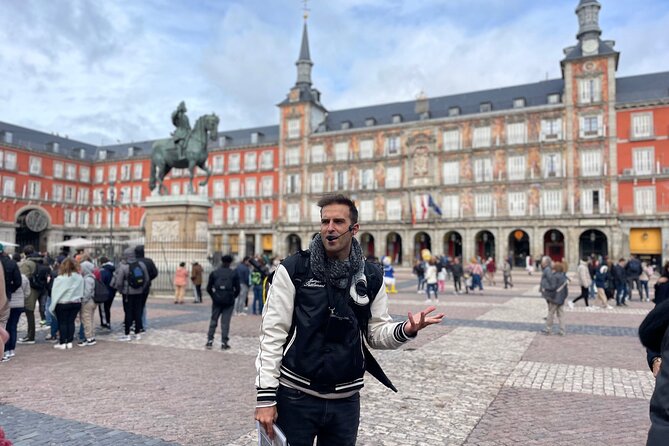
The Spanish Civil War can feel confusing at first. Republicans, fascists, anarchists, socialists, foreign powers, propaganda, and regional tensions all enter the story. A good walking route gives those forces a physical setting, and this one does that well.
You begin near Callao, a busy central square, then move west toward Moncloa. The route gradually shifts from the first bombings and the causes of the war to the defense of Madrid, the role of art and propaganda, and the end of the conflict. That order gives you a useful framework instead of a pile of disconnected dates.
The experience is offered in English and lasts about two hours and 30 minutes. It is a walking tour, so wear shoes you can manage on city streets and plan to remain on your feet for most of the session. Admission tickets are not needed for the listed stops, which keeps the focus on the outdoor sites and the guide’s explanation.
Guides who have led this experience include Victor, Maikel, Guillermo, Adria, and Chato. The strongest praise centers on clear storytelling, warmth, and the ability to make a serious subject approachable without turning the walk into a dry classroom lesson.
More Battlefield and Military History Tours in Madrid:
- 2-Hour Gettysburg Battlefield Guided History Bus Tour with a National Park Guide
★ 4.5 · 2,201 reviews - Prague Communism History and Nuclear Bunker Tour
★ 5.0 · 1,742 reviews - Communism & Nuclear Bunker Tour + 70s Canteen Lunch (own expense)
★ 5.0 · 1,036 reviews
Callao: Madrid under the bombs
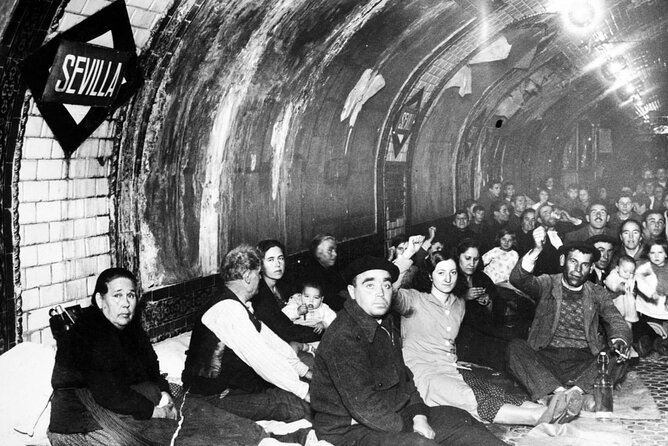
The first stop, Plaza del Callao, introduces the bombing of central Madrid and the effects of war on ordinary city life. You look at buildings and scars connected with the attacks, then consider what it meant to live in a capital under fire.
One especially human topic is the life of a Spaniard at war. The tour asks whether people still went to the movies, a small but useful question. War does not erase every routine at once. People still seek distraction, news, companionship, and a few hours away from fear.
That approach is one of the walk’s strengths. Instead of treating the conflict only as a battle between generals, it brings the subject down to daily choices. You begin to see Madrid not simply as a military objective, but as a city where civilians tried to carry on.
The stop is listed at about 15 minutes. That is enough for an introduction and some visual context, but not enough for a full account of every bombing or building. If you want a detailed military study, you will need another source alongside the tour. If you want a clear opening chapter, this is a practical start.
The Senate and two divided Spains
At the Palacio del Senado, the guide turns to the question of how the Spanish Civil War began. This is where the route moves from visible wartime damage to the political divisions behind the fighting.
The idea of two divided Spains gives the discussion a simple frame, though the reality was more complicated. The conflict involved rival political visions and competing social forces, including fascists, anarchists, and socialists. The walk helps you understand that the war did not appear out of nowhere. It grew from a country split over power, society, and the future direction of Spain.
This stop also presents Spain as a kind of test range for World War II. The Civil War drew international attention and became connected with wider European struggles. That makes the Spanish conflict important beyond Spain itself, especially if you are trying to understand how the political tensions of the 1930s led toward a larger war.
The Senate stop lasts around 20 minutes. I would pay close attention here, because the later discussions of Franco, propaganda, and the siege make more sense once you understand the basic division. The guide’s maps and images are particularly useful for keeping the factions and sequence of events straight.
Plaza de España and the long defense of Madrid
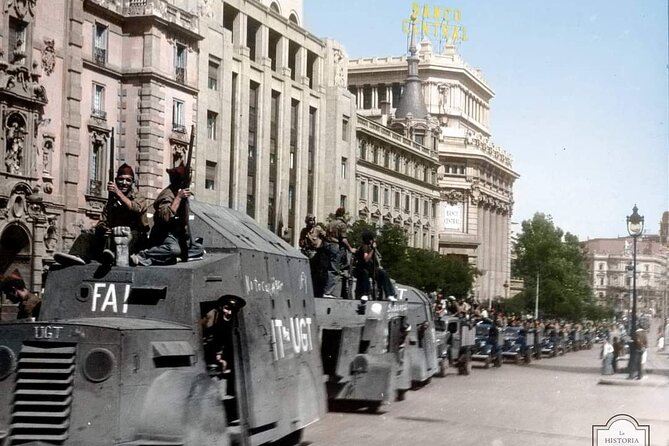
At Plaza de España, the focus shifts to Francisco Franco and Madrid’s defense. The city endured about 900 days of siege, a fact that gives the capital’s wartime story its weight.
The guide also discusses Madrid under bombardment and wartime sayings. These details help show how people adapted their speech and routines to danger. A phrase or local expression can reveal how fear, humor, and political loyalty entered ordinary conversation.
This section should interest you if you want more than a political biography of Franco. The emphasis is on how leadership, military pressure, and civilian experience met in the capital. Madrid was not simply waiting for the war to end. It was a major symbol and an active front.
At 15 minutes, this is another compact stop. You will get the main line of the story, but the guide cannot pause at every military decision or political turn. The advantage is momentum. The tour keeps moving through Madrid rather than remaining in one place for a long lecture.
More History Tours in Madrid:
- Madrid Essential: Historic Center, Plaza Mayor & Royal Palace
★ 5.0 · 6,416 reviews - Madrid Tapas & Taverns Small Group Food & History Tour
★ 5.0 · 2,664 reviews - Madrid Historical Tour with Local Guide in Eco Tuk Tuk Private
★ 5.0 · 876 reviews - Madrid Historic Centre Food Tour with Authentic Tapas & Wines
★ 5.0 · 814 reviews
Templo de Debod: money, propaganda, and memory
Templo de Debod provides a change of setting and a chance to examine who paid for the war. Funding matters because wars need weapons, supplies, transport, and political support. This part also looks at propaganda, treating the conflict as a war of ideas as well as a military struggle.
The Egyptian temple itself is not a Civil War monument, but the stop uses the location to discuss the conflict and then turns to the Sculpture to the Fallen of the Civil War. That pairing creates a useful contrast. One object represents a much older civilization, while the nearby memorial points toward Spain’s more recent and painful past.
You may find this part particularly helpful if you are interested in memory and public space. Monuments do not only record events. They also show how later generations choose to remember, honor, or debate them.
The planned time is about 20 minutes. The topic range is broad, covering money, propaganda, the temple, and a memorial. Expect a focused explanation rather than a long examination of one monument.
Rosales and the human cost of Guernica
At Paseo del Pintor Rosales, the tour takes up one of the most recognizable images of the Spanish Civil War: Picasso’s Guernica. The focus is the bombing of civilians and the way the attack became a symbol of modern warfare.
This section also brings in the Prado Museum and the protection of art under fire. That detail matters because war threatens more than buildings and people. Paintings, archives, and cultural objects can also be lost, moved, hidden, or damaged. The discussion shows how art became part of the effort to preserve Spain’s identity.
The connection between the bombing of civilians and Picasso’s painting gives the tour an emotional center. You are not only learning what happened at a particular place. You are looking at how an event was transformed into an image that carried the conflict to an international audience.
The stop also includes Christmas in a truce, described as a brief breather. A pause in fighting does not erase the war, but it shows how even a short break could matter to people living through it. The contrast between a fragile pause and the violence of civilian bombing gives this section a human scale.
The allotted time is 20 minutes. If Guernica is your main reason for booking, remember that the tour discusses the painting and its meaning, but the route does not include an admission visit to a museum. The experience remains an outdoor walking tour.
Air Force Headquarters: songs, medicine, and the war’s final turn
Near the Cuartel General del Ejército del Aire, the guide explores music and wartime identity. Songs such as They Won’t Pass and Cara al Sol represented opposing political camps and helped turn public space into a place of loyalty and persuasion.
Music is an effective way to understand the emotional side of political conflict. It can rally supporters, mark group identity, and carry messages when printed speeches or formal broadcasts are out of reach. This part gives the war a sound, not just a map and a set of dates.
The stop also covers the first remote blood transfusion, presenting it as an example of life-saving medicine in the middle of death. It is a striking reminder that the war affected medical practice as well as military tactics. The topic adds variety to the walk and shows how urgent wartime conditions could produce new methods.
The final subject here is the end of the war, the beginning of World War II, and the dictatorship that followed. The connection should not be reduced to a single simple cause, but the tour places Spain’s conflict within the wider crisis of Europe. That makes this stop an important bridge between the Spanish Civil War and the years that came after it.
The scheduled time is about 15 minutes. The material is wide-ranging, so listen for the main connections rather than expecting a full account of medical history, music, and the transition to dictatorship.
The Victory Arch and the problem of public memory
The walk finishes at the Victory Arch, or Arco de la Victoria, near Moncloa. The monument raises a direct question: should it be destroyed or preserved?
That question gives the tour a thoughtful ending. A monument connected with victory can be read as architecture, propaganda, a political statement, or a painful reminder. The right answer is not always simple, especially when a society is still deciding how to face a dictatorship and a divided past.
The guide uses the arch to discuss reflections on war. After two and a half hours of bombings, political conflict, siege, propaganda, art, songs, and civilian suffering, the final stop asks you to consider what remains in the city after the fighting ends.
The route ends at Arco de Moncloa, on Avenida de la Memoria, near Metro Moncloa. That is useful for continuing your day, though it is a fair distance from the central starting point. You should plan your onward route before the tour ends, especially if you have a timed reservation elsewhere.
Price, group size, and what you receive
The listed price is $3.62 per group of up to 15 people, which is unusually low for a guided historical walk. The activity information also gives a maximum of 30 participants, so check the exact group arrangement when booking if party size matters to you.
At that price, the value is strong if you want an introduction to Madrid’s Civil War story. You receive a local guide plus maps, images, audio, video, and a link with personalized ideas for things to do in Madrid. You also receive personalized attention from the guide after the tour, described as ongoing support.
The value depends on what you want. You are paying for interpretation and access to a carefully arranged route, not museum tickets or a private vehicle. Since the listed sites do not require entry tickets, there are no extra admission costs during the walk.
The tour is booked, on average, about 16 days ahead. That suggests you should not assume a last-minute place during a busy visit. Free cancellation is available until 24 hours before the start time. Changes or cancellations inside that window are not refunded.
Who will get the most from this walk?
I would choose this tour if you want a clear first look at the Spanish Civil War in Madrid and prefer learning while moving through the city. It suits history-minded visitors, people interested in Franco and dictatorship, and anyone curious about how bombing, propaganda, art, and public memory overlap.
It also works well if you want a guide to explain the subject in plain English. The guides named in the feedback, including Victor, Maikel, Guillermo, Adria, and Chato, are described as warm, clear, passionate, and able to add humor without making light of the subject. Chato is specifically noted for extending the session beyond two and a half hours to continue the discussion.
You may want a different format if you need a highly detailed military study, extensive time inside museums, or a private tour with a slower pace. Seven stops and a broad subject require the guide to keep moving. The experience is best treated as a strong framework for further exploration.
Most participants can join, service animals are allowed, and the route is near public transport. Still, this is a walking tour with several outdoor stops, so your comfort with standing and walking matters.
Should you book it?
Book it if you want Madrid’s Civil War story tied to real streets and monuments rather than explained only in a book. The route gives you a useful sequence: bombing, political division, Franco, the siege, money, propaganda, Guernica, music, medicine, dictatorship, and public memory.
The strongest reason to go is the mix of serious history and human detail. You learn about factions and military pressure, but also about cinema, songs, brief truces, damaged buildings, and the fate of art. At a very low listed price, that makes the tour a sensible choice for a first introduction.
Skip it only if you want a narrow specialist lecture or an indoor museum experience. For most visitors who want to understand why Madrid looks and feels the way it does, this walk is a practical and worthwhile starting point.
FAQ
Where does the tour start?
It starts at C. del Postigo de San Martín, 26, Centro, 28013 Madrid, Spain.
Where does the tour finish?
It ends at Arco de Moncloa, Avenida de la Memoria, 32, Moncloa-Aravaca, 28040 Madrid, near Metro Moncloa.
How long does the experience last?
The tour lasts approximately two hours and 30 minutes.
What language is the tour offered in?
The experience is offered in English.
Are admission tickets included?
No admission tickets are needed for the listed stops. The experience focuses on outdoor locations and guided explanations.
What is included in the booking?
You receive a local guide, maps, images, audio, video, a link with personalized Madrid recommendations, and personalized attention from the guide after the tour.
Can I cancel for a full refund?
Yes. You can cancel at least 24 hours before the local start time for a full refund. Cancellations or changes made less than 24 hours before the start time are not accepted for a refund.
Just added around Madrid
- Madrid: Tapas, Taverns & History Tour★ 4.7 · 71 reviews
- Madrid Historical in French (petit comité & private)★ 4.8 · 228 reviews
- Madrid: Royal Palace, Prado Museum & Historic Center Tour★ 4.6 · 50 reviews
- Madrid: Tour of the Historic City Center★ 5.0 · 87 reviews
- Madrid: Authentic Tapas Evening Tour with a side of History★ 4.9 · 37 reviews
- Madrid: Archaeological Museum E-Ticket and Audio Guide★ 4.3 · 115 reviews
- Madrid City Tour: Culture and History★ 5.0 · 29 reviews
- Tapas Crawl in Madrid Historical Quarter for Lunch or Dinner★ 4.9 · 45 reviews
Madrid History Tours, compared.
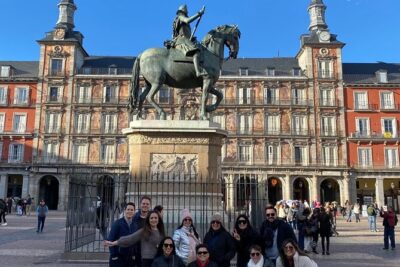
Madrid Essential: Historic Center, Plaza Mayor & Royal Palace
Read our review →
Madrid Tapas & Taverns Small Group Food & History Tour
Read our review →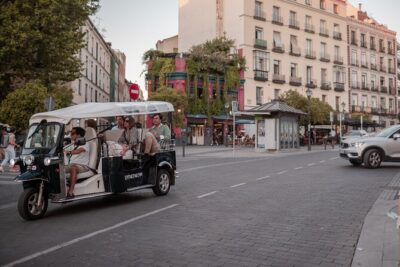
Madrid Historical Tour with Local Guide in Eco Tuk Tuk Private
Read our review →
Madrid Historic Centre Food Tour with Authentic Tapas & Wines
Read our review →
Madrid in a Day Tour:Royal Palace, Historic Center & Prado Museum
Read our review →
Madrid Local’s Tapas Tour Dinner with a side of History
Read our review →
Guided Tour of Madrid of the Austrias and the Historic Center
Read our review →Browse the lists this tour appears in