
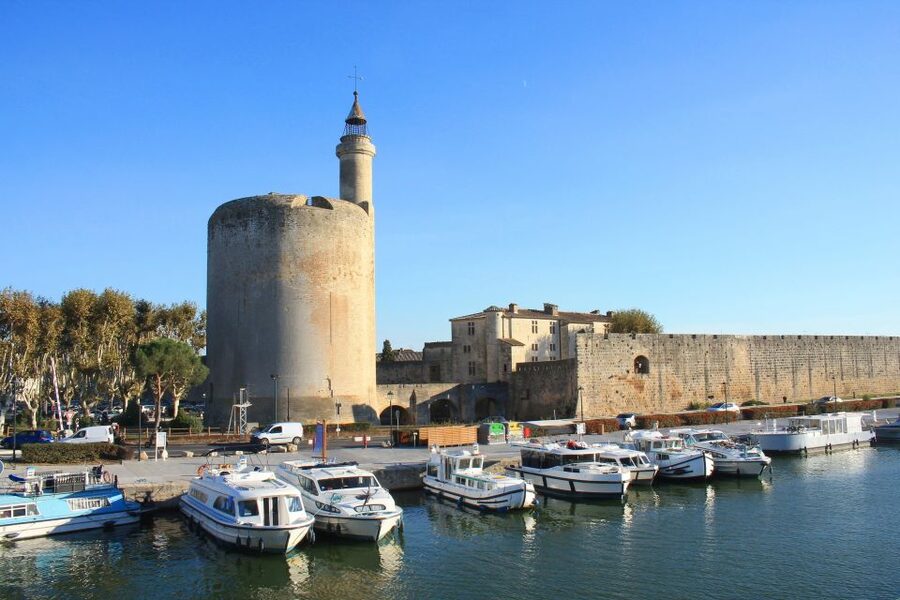
Review · FRANCE
Aigues Mortes: Medieval Ramparts Entry Ticket
Aigues-Mortes gives you a rare chance to walk along nearly a mile of 13th-century defensive walls. Built from 1278 to protect a Mediterranean port, the fortifications let you read French military history in stone, from clever tower design to scars left by old projectiles.
I like the long, open walk and the chance to study 20 medieval towers at your own pace. I also like the Tower of Constance, which later served as a prison for Protestant dissidents. The main drawback is that the ticket does not include an audio guide, so the architecture can feel short on explanation unless you arrange extra interpretation yourself.
Key points to know before you go
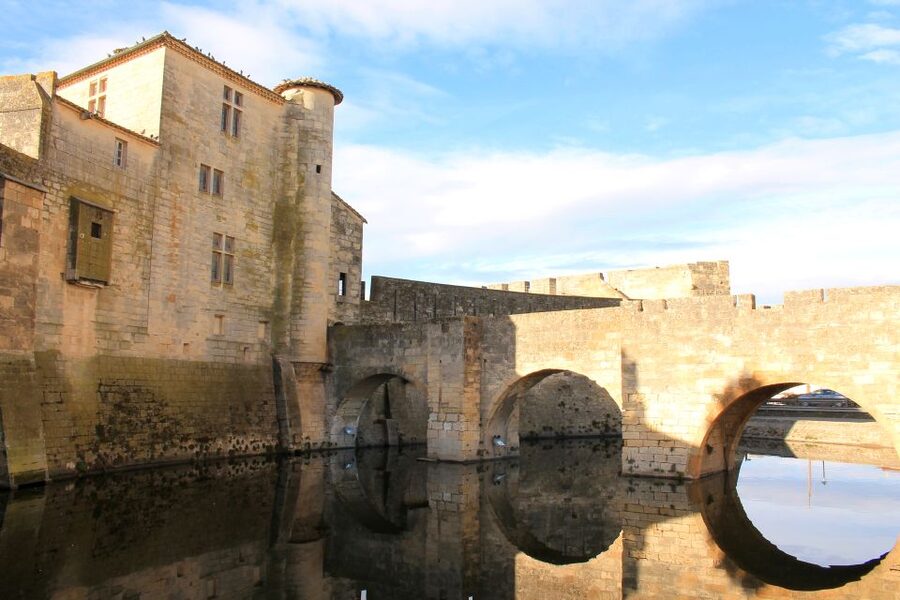
- Nearly one mile of ramparts: You can walk a substantial stretch of the medieval walls rather than seeing only one tower or gate.
- 20 defensive towers: The towers show how architects and generals planned for attacks from different directions.
- Tower of Constance: This well-preserved tower later became a prison for Protestant dissidents in the 19th century.
- Gardette Door and other entrances: The gateways help you understand how movement into the fortified town was controlled.
- Marks from old attacks: Look closely for traces of projectiles fired during centuries of conflict.
- Good value at $11: The ticket covers monument entry for one day, but an audio guide costs extra and admission is non-refundable.
Why Aigues-Mortes was built
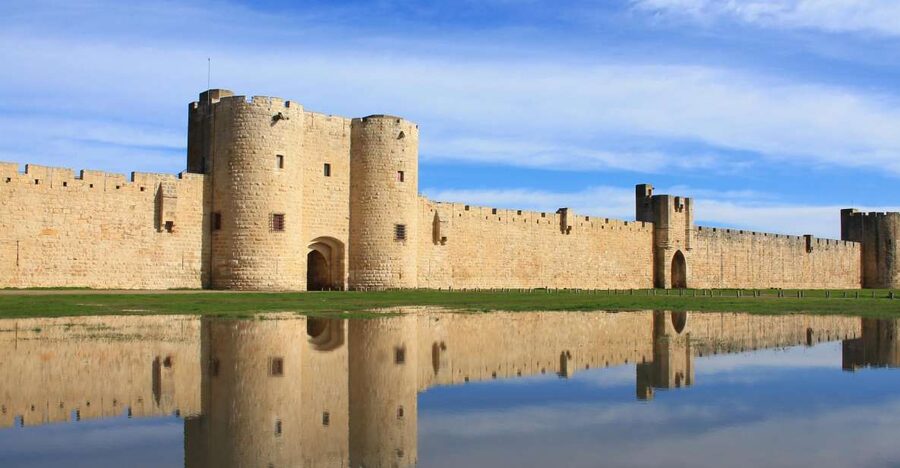
Aigues-Mortes was not simply a pretty walled town. Its fortifications were built to protect a Mediterranean port, and their layout reflects a serious military purpose.
The walls date from the reign of Louis IX, with their use reaching back to 1278. At a time when stone fortifications were the main answer to attack, height, thickness, visibility, and controlled entry all mattered. As you walk, you can think like a medieval commander: Where could an enemy approach? Which tower gives the best view? How could defenders move along the wall without exposing themselves?
The site makes those questions easy to picture because the architecture remains so complete. You are not looking at a reconstructed ruin or a few scattered remains. You are walking beside long runs of stone wall, passing towers and gateways that still define the town.
That is the chief pleasure here. Aigues-Mortes gives you history through scale. The length of the ramparts helps you understand the size of the defensive system, while the towers show how the system was broken into smaller points of strength.
More Medieval History Tours in France
- Colmar, Medieval Village & Castle Small Group from Strasbourg
★ 5.0 · 769 reviews - From Nice: Provence and its Medieval Villages Full-Day Tour
★ 4.8 · 352 reviews - From Strasbourg: Medieval Villages & Wine Tasting Day Trip
★ 4.8 · 329 reviews
Walking the nearly mile-long ramparts
The central activity is simple: you enter the monument and walk the ramparts. You have one day of validity, so you can choose a time that fits your schedule and take the route at a measured pace.
I recommend allowing more time than you might expect for a quick look. The walls are long enough to reward pauses. You will want to study the stonework, compare the towers, and stop at points where the fortifications meet the waterfront.
The route is useful for two kinds of visitors. If you enjoy architecture, you can focus on the construction and defensive layout. If you prefer a story, use each gate and tower as a prompt to consider the conflicts that shaped the town.
The ramparts also give you a view of Aigues-Mortes that you cannot get from street level. The stone towers stretch over the waterfront, creating the town’s strongest visual feature. The experience is less about a single dramatic room and more about seeing how the entire fortified town works together.
Bring an identity document with a photograph. Visitors under 18 and European Union citizens under 26 can enter free, but they must first show photo ID at the ticketing station before going to the monument entrance.
The towers and the art of medieval defense
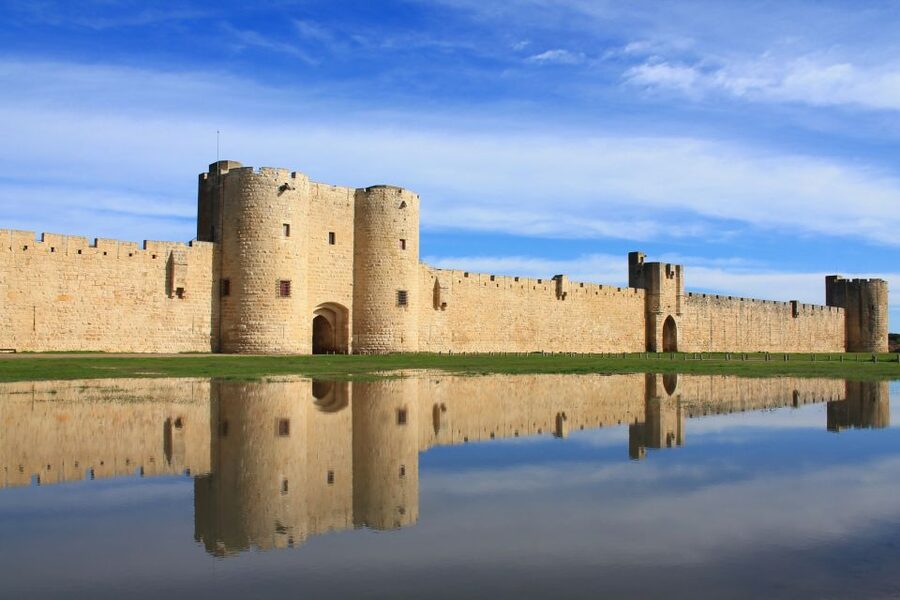
Aigues-Mortes has 20 towers, and each one helps explain the planning behind the walls. The towers were not added only for decoration. They gave defenders positions from which they could watch approaches and protect sections of wall.
You can look for the ways the towers project from the fortifications. Their position allowed defenders to observe more than they could from a flat wall. The gateways also mattered. An entrance was a weak point by nature, so doors and passages had to be carefully controlled.
The Gardette Door is one of the entrances worth seeking out. It helps you picture how people, supplies, and enemies all had to pass through limited openings. The gates turn a broad history lesson into something concrete. Instead of hearing that medieval towns controlled access, you can look at the actual point where that control happened.
The site also preserves physical traces of conflict. Keep your eyes open for marks left by projectiles fired at the ramparts. These small scars may be easy to miss, but they are among the most direct links to the fighting that took place around the walls.
I find these details more rewarding than a polished display. A mark in the stone is modest, but it connects the building to a specific kind of danger. The walls were not only symbols of power. They were built to absorb attack.
Tower of Constance and the Protestant story
The Tower of Constance is the most important single stop on the route. It is one of the best-preserved medieval towers in the complex, and its later use gives the monument a story that reaches beyond the original military purpose.
In the 19th century, the tower was used as a prison for Protestant dissidents. That chapter connects Aigues-Mortes to the long and difficult struggle between Catholics and Protestants in France.
This change in use is worth keeping in mind as you visit. The tower first belonged to a defensive system designed around warfare and control. Centuries later, it served as a place of confinement. The same thick walls that protected the port could also be used to hold people.
You may be able to choose between the Constance Tower, the ramparts, or the mediation area during the final hour before closing. Since access to parts of the monument becomes more limited near closing, do not plan to arrive at the last minute. Last access is 45 minutes before closing, and one hour before closing you may need to choose which part to visit.
Same city, a different century:
- Normandy D-Day Sites & Cemetery Day Trip from Paris with Lunch
★ 5.0 · 6,877 reviews - Paris: Louvre Museum Entry with History of Mona Lisa
★ 3.9 · 2,823 reviews - Normandy D-Day Small-Group Day Trip with Omaha Beach, Cemetery & Cider Tasting
★ 5.0 · 2,786 reviews - Normandy D-Day Beaches and American Cemetery Day Trip from Paris
★ 4.5 · 2,673 reviews
Getting more from the visit without an audio guide
The ticket includes entrance to the monument, but not an audio guide. That matters because the ramparts are visually clear yet historically dense. You can understand the basic military purpose from the walls and towers, but an audio guide can add names, dates, and explanations as you walk.
If you want a fuller account of the site, arrange an audio guide separately or bring your own background notes. The extra interpretation is especially useful for the religious conflicts and the later prison history of Tower of Constance.
Without added commentary, I would treat this as a self-guided architecture and history walk. Read the signs available on site, look closely at the gates, and give yourself time to connect the different parts of the fortifications.
That approach works well for independent visitors. You are not locked into a guide’s pace, and you can spend longer at the towers or move along when you have seen enough. The tradeoff is that you must supply some of the historical structure yourself.
The activity is described as a small-group experience limited to 10 participants, but the main product is monument entry rather than a guided tour. Do not expect a named guide or a continuous spoken presentation. The strength is access and freedom, not a scheduled lecture.
Is the $11 ticket good value?
At $11 per person, the ticket is good value if you want to see one of France’s most complete medieval fortification systems. You are paying for access to a long route, 20 towers, multiple entrances, the Tower of Constance, and evidence of more than 700 years of military history.
The value improves if you are already in Aigues-Mortes and can give the visit enough time. A rushed walk would reduce the experience to a few stone towers and a view. With time to inspect the walls and understand their purpose, the ticket gives you a much stronger sense of the town.
The price is less complete if you expect a fully interpreted tour. Since the audio guide is not included, you may need to pay extra for the historical explanation you want. Families should also check the free-entry rules, since visitors under 18 do not pay admission, and European Union citizens under 26 can enter free with photo ID.
The ticket is non-refundable, so check your plans before booking. The monument closes on January 1, May 1, November 1 and 11, and December 25. Free entry is also offered on the first Sunday of January, February, March, November, and December, plus European Heritage Days on the third weekend of September each year.
Timing, access, and practical planning
The meeting point is Tours et remparts d’Aigues-Mortes at the Logis du Gouverneur, 30220 Aigues-Mortes. The ticket is valid for one day, with starting times subject to availability.
The ramparts are wheelchair accessible, which makes this a useful historic site for visitors who need an accessible attraction. Even so, check the exact route and current conditions if you have specific mobility needs, since old fortifications can include uneven historic surfaces and changes in level.
Plan around the closing time rather than merely the opening time. Last access is 45 minutes before closing. One hour before closing, you may have to choose between the mediation area, Tower of Constance, and the ramparts, so an afternoon visit should begin early enough to avoid that choice.
Carry your passport or photo ID. It is especially important if you qualify for free admission, since you must show identification at the ticketing station before proceeding to the entrance.
The site is in southern France, in the Aigues-Mortes area. If you are combining it with other activities nearby, the ramparts make a useful history-focused stop alongside outings in the Camargue, such as a 4×4 safari or an electric-bike excursion. Those activities offer a different view of the region, while Aigues-Mortes explains the fortified town at its center.
Who will enjoy this experience most?
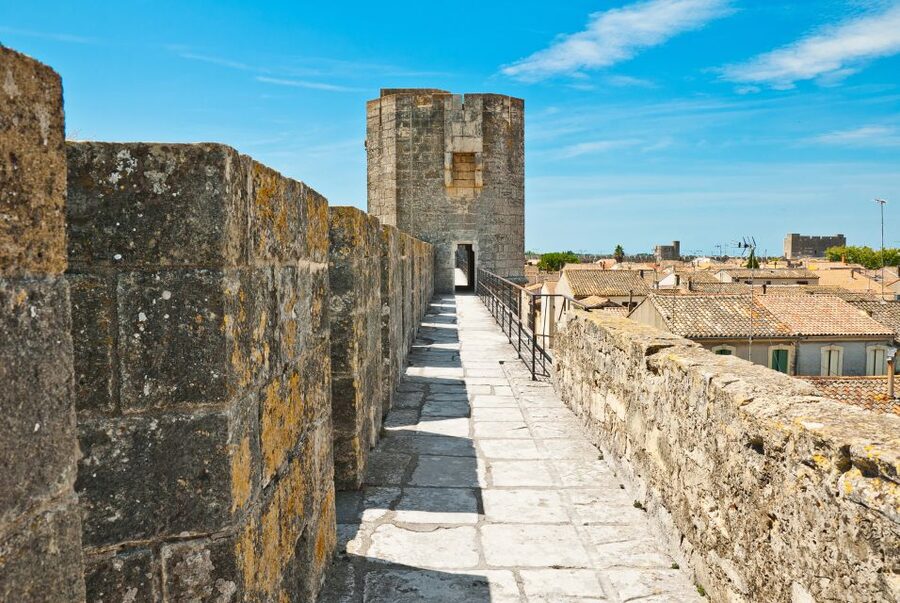
I would recommend the ramparts to anyone who likes history that can be seen and touched. You do not need to know French medieval history in advance. The size of the walls, the towers, and the old attack marks give you plenty to notice immediately.
It is also a good choice for families with older children. The fortifications provide an easy question-and-answer setting: Why is this tower here? Why are there only certain entrances? What happened to the stone during an attack? The free admission for those under 18 makes the price especially appealing for families.
Architecture fans will get the most from the visit if they study the relationship between the towers, the wall, and the entrances. The route is also suitable for independent visitors who prefer to stop and start without a guide.
I would be more cautious if you want a highly narrated experience. With no audio guide included and no named guide attached to the ticket, you will need to arrange extra interpretation if you want every historical detail explained as you go.
The site also rewards visitors who care about religious history. The Tower of Constance links military architecture to the later imprisonment of Protestant dissidents, giving the visit a human and political dimension.
Should you book the Aigues-Mortes ramparts?
Yes, if you are near Aigues-Mortes and want a low-cost, substantial historic visit. The nearly mile-long walk, 20 towers, Gardette Door, Tower of Constance, and old projectile marks give you far more than a quick photo stop.
Book it with enough time to walk slowly, and consider adding an audio guide if you want fuller historical context. If you only have a few spare minutes or expect a guide to lead you through every detail, this may not meet your needs.
For most visitors, though, the $11 entry offers a strong look at medieval France on your own terms. Bring photo ID, watch the closing deadlines, and look beyond the big towers for the small scars that reveal how hard these walls once had to work.
FAQ
How much does admission to the Aigues-Mortes ramparts cost?
The listed price is $11 per person.
How long is the ticket valid?
The ticket is valid for one day.
What does the ticket include?
It includes entrance to the Aigues-Mortes monument and its fortifications.
Is an audio guide included?
No. The audio guide is not included in the admission ticket.
Where is the meeting point?
The meeting point is Tours et remparts d’Aigues-Mortes, Logis du Gouverneur, 30220 Aigues-Mortes.
Is the monument wheelchair accessible?
Yes, the activity is listed as wheelchair accessible.
Who can enter free of charge?
Visitors under 18 and European Union citizens under 26 can enter free with a photo ID. They must show the ID at the ticketing station before going to the monument entrance.
When is admission free for everyone?
Admission is free on the first Sunday of January, February, March, November, and December, as well as during European Heritage Days on the third weekend of September each year.
When is the monument closed?
The ramparts are closed on January 1, May 1, November 1 and 11, and December 25. Last access is 45 minutes before closing.
Just added around France
- Medieval Carcassonne: Interactive Ghost Story & City Game★ 3.5 · 33 reviews
- Carcassonne During World War 2★ 5.0 · 127 reviews
- Carcassonne ‘s Medieval Walls: A Self-Guided Tour★ 4.5 · 43 reviews
- Small Group Guided D-Day Tour and Mémorial de Caen Museum★ 5.0 · 237 reviews
- Normandy: Private tour D-Day landing beaches American sector★ 5.0 · 62 reviews
- Mémorial de Caen Museum Admission and Guided Tour of D-Day Sites★ 4.5 · 275 reviews
- Private Day Tour including Normandy Landing Beaches & Battlefields from Caen★ 5.0 · 53 reviews
- Private Bordeaux History Tour with a glass of Bordeaux wine.★ 5.0 · 28 reviews
France History Tours, compared.

Normandy D-Day Sites & Cemetery Day Trip from Paris with Lunch
Read our review →
Paris: Louvre Museum Entry with History of Mona Lisa
Read our review →
Normandy D-Day Small-Group Day Trip with Omaha Beach, Cemetery & Cider Tasting
Read our review →
Normandy D-Day Beaches and American Cemetery Day Trip from Paris
Read our review →
Normandy American D-Day Beaches Full Day Tour from Bayeux
Read our review →
Normandy American D-Day Experience – Group tour from Bayeux
Read our review →
Normandy Beaches Half-Day Afternoon Trip from Bayeux (A2)
Read our review →
Omaha Beach D-Day Experience – Afternoon group tour from Bayeux
Read our review →Browse the lists this tour appears in