
Review · POLAND
Archaeological Museum of Krakow Entrance Ticket
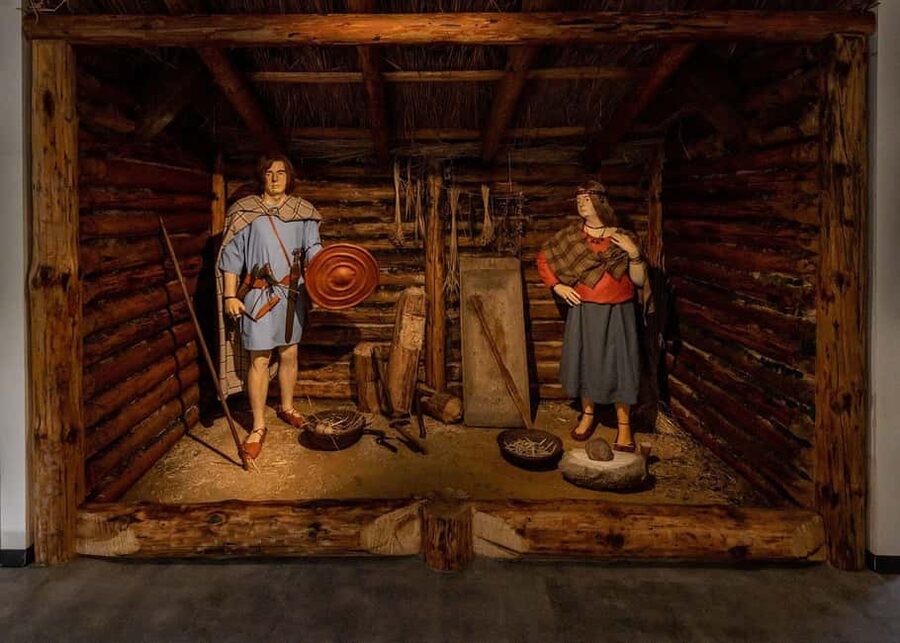
The museum’s star is Światowid, a carved pagan figure with four faces dating from the 9th to 10th century. Found in 1848 at Zbrucz, it gives the visit a memorable focus and offers a rare look at beliefs in this part of Europe before Christianity took hold.
I like two things here: the ticket is very inexpensive at about $2.13, and it connects several archaeological sites rather than limiting you to one display room. The main drawback is practical: a booking report describes a visitor who never received a QR code and was refused entry at the ticket desk, so confirm your voucher before setting out.
Key points to know
- Światowid is the main attraction: See the four-faced pagan statue from the 9th to 10th century, found at Zbrucz in 1848.
- The museum occupies a former prison: The building once belonged to the Barefoot Carmelites before becoming St. Michael’s Prison under Austrian rule.
- Three archaeological locations are included: Visit the main museum, the underground exhibition at St. Adalbert’s Church, and Nowa Huta-Branice.
- The ticket is valid for one or two days: Check your chosen option carefully, since starting times and validity can vary.
- You do not get a guide: This is an entrance ticket, so plan to explore the exhibits on your own.
- The last admission is 90 minutes before closing: Opening hours can change, so check the museum’s official information before you go.
Why Światowid gives this small museum a clear purpose
Krakow has many major museums, but the Archaeological Museum offers a different kind of visit. Its most famous object is not a painting by a celebrated Renaissance artist or a royal artifact. It is a pagan stone figure with four faces, linked to religious beliefs that existed before Poland became a Christian country.
That makes Światowid more than a photo stop. The statue helps you picture a time when religious life was expressed through carved figures and local cults rather than churches and saints. The details provided for the museum identify it as a 9th to 10th century work, discovered in 1848 in Zbrucz. It is the object to seek out first if your time is short.
I like museums that give you one strong object to organize the visit around. Here, you can see Światowid, then look at the other archaeological material from Lesser Poland with a better sense of the period and place it represents.
The museum is not presented as a guided tour. Your ticket covers entry, but no guide is included. That keeps the cost low, though you will need to read the displays and set your own pace.
More Archaeological Site Tours in Poland:
- Pompeii: Entry Ticket and Guided Tour with an Archaeologist
★ 4.8 · 19,459 reviews - Athens: Acropolis & up to 5 Archaeological Sites Combo Pass
★ 4.2 · 13,904 reviews - Pompeii: Small Group Tour with an Archaeologist
★ 4.8 · 12,264 reviews
The former monastery and St. Michael’s Prison
The main museum is housed in a building with a striking change of purpose. It was once connected with the Monastery of St. Michael, operated for decades by the Barefoot Carmelites. In the 19th century, the Austrian authorities stationed in Krakow turned the building into a prison.
The prison inherited the monastery’s name and became known as St. Michael’s Prison. That shift from religious house to penal institution adds useful context before you even consider the exhibits. The walls have witnessed very different kinds of life: monastic routines, imprisonment, and now public learning.
After World War II, the prison closed and the Archaeological Museum was established there. The building’s past is one of the reasons I would not rush straight through the entrance halls. Take a moment to notice that you are not entering a purpose-built modern museum. The setting is part of the experience.
The available information does not provide a room-by-room route or a detailed list of every object in the main building. You should therefore treat this as a self-guided museum visit rather than an arranged sequence of stops. Begin with the museum’s major archaeological themes, find Światowid, and then allow time for the wider collection from Lesser Poland.
What you can expect inside the main museum
The collection focuses on archaeological treasures discovered in the Lesser Poland region. That regional focus matters. Instead of presenting unrelated objects from around the world, the museum helps you connect artifacts with the area you are visiting.
You can expect material linked to the long human story of southern Poland, including the period of pagan beliefs highlighted by the four-faced statue. The supplied information does not list each gallery or artifact, so I would avoid arriving with the expectation of a precisely defined tour route. Think of the main building as the core collection, with the two additional branches extending the subject into different parts of Krakow.
The main building is the best choice if you want the museum’s central attraction and the broadest introduction to its holdings. It is also the simplest stop to understand if you have only a short window. Give yourself enough time to read, since the value here comes from context rather than from a long list of famous names.
If your interest is mainly in medieval Krakow’s Main Square, the St. Adalbert’s Church branch may be more immediately relevant. If you want archaeology connected with the city’s eastern industrial district, add Nowa Huta-Branice.
St. Adalbert’s Church beneath the Main Square
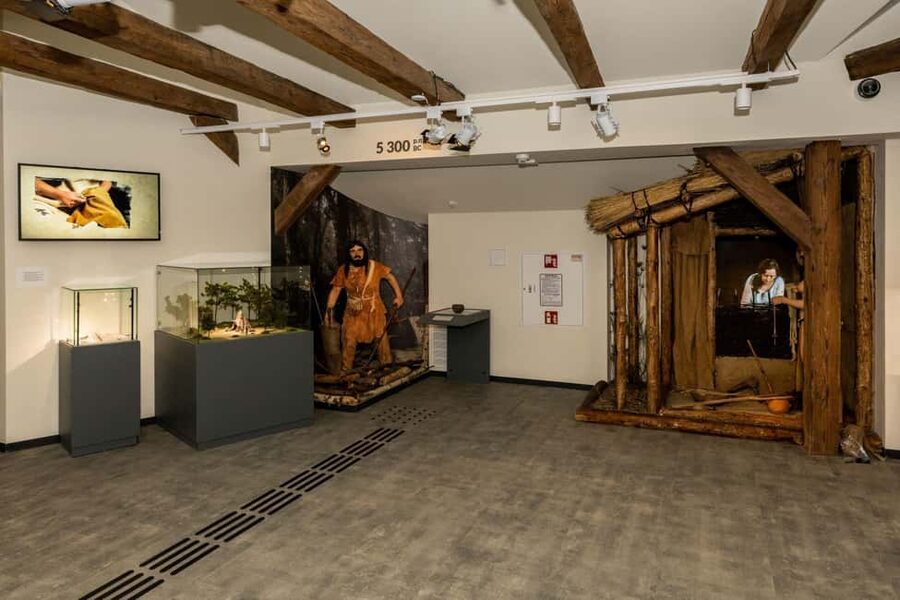
One branch is located at St. Wojciech’s Church, better known in English as St. Adalbert’s Church, on Krakow’s Main Square. Its underground exhibition presents the history of the square, the church, and its patron, Saint Wojciech.
This stop has a different feel from the main museum. You are not simply viewing portable objects in display cases. The underground area lets you see remnants of wooden and stone floors, along with Romanesque walls. Those remains show how the square and church developed over time beneath the modern city.
I find this kind of stop especially useful because it connects archaeology to a place you are already likely to visit. Krakow’s Main Square can feel polished and complete at street level. Below it, the older layers make the city’s development easier to understand.
The exhibition is compact in concept, but its location makes it valuable. You can pair it with time around the Main Square without making a separate trip across the city. Since the ticket may be valid for one or two days depending on the option you book, you may be able to visit the main museum on one day and return to the square branch when you are already in the area.
Do not assume every part of the Archaeological Museum is in the same building. The St. Adalbert’s Church exhibition is a separate branch, and your planning should allow for that.
More Tickets in Poland:
- Warsaw: POLIN Museum of the History of Polish Jews Ticket
★ 4.7 · 1,142 reviews - Krakow: Kościuszko Mound Ticket – History & Views!
★ 4.4 · 303 reviews - Edinburgh: Edinburgh Castle Guided History Tour with Tickets
★ 4.8 · 9,933 reviews - Taormina: Ancient Theater Skip-the-Line Ticket & Audio Guide
★ 4.5 · 2,412 reviews
Nowa Huta-Branice and the archaeology of a changing district
The second branch is Nowa Huta-Branice. It is closely connected with the Nowa Huta district and its metallurgical plant, giving the museum a strong link to Krakow’s 20th-century expansion.
Archaeological discoveries in the area began in 1949 during early construction works. That date is important because the finds emerged while a major new district and industrial project were taking shape. The branch lets you see how archaeological work can appear in the middle of modern building activity.
This stop will suit you if you want to get beyond Krakow’s historic center. It also gives the museum a broader reach. The collection is not only about the old town, monasteries, and medieval remains. It includes discoveries tied to the development of Nowa Huta and the surrounding area.
The supplied details do not specify transport arrangements, travel time, or the exact layout of the branch. I would check the official opening information before making a special trip there. This is the biggest planning point in the ticket: the branches are separate, and a cheap entry ticket does not remove the time needed to reach each location.
If you have only a few hours in central Krakow, choose the main building and St. Adalbert’s Church first. If you have more time and want a fuller archaeological picture, Nowa Huta-Branice adds a worthwhile second setting.
How much time should you allow?
The ticket is listed as valid for one to two days, depending on the option selected. That is more useful than a single fixed admission window because the museum has multiple branches. You can spread the visit out instead of trying to force every location into one hurried afternoon.
There are no guaranteed start times described as part of a guided program. You should check availability for the option you want, then confirm the exact opening hours through the local operator’s official website. Opening hours may differ from those shown at the time of booking.
The last entrance is 90 minutes before closing. Do not arrive near closing and expect a quick dash through every room. The main museum and both branches require separate attention, and the ticket’s one or two-day validity is most useful when you use it calmly.
A sensible plan would be:
- Visit the main building first to see Światowid and understand the museum’s themes.
- Stop at St. Adalbert’s Church while exploring Krakow’s Main Square.
- Add Nowa Huta-Branice only if you have enough time to travel beyond the center.
- Check each location’s hours before leaving your accommodation.
The exact amount of time you need depends on how closely you read the displays. Since there is no guide leading you from room to room, you control the pace.
Is the $2.13 ticket good value?
At roughly $2.13 per person, the admission price is low enough to make this an easy addition for anyone interested in Krakow’s past. The value is strongest if you visit more than just the main building, since the ticket includes the museum’s branches at St. Adalbert’s Church and Nowa Huta-Branice.
The price also makes the museum a practical rainy-day choice or a short cultural stop between larger Krakow attractions. You are not paying for a tour leader, transport, or a special presentation. You are paying for access to the archaeological sites and collections.
That low price comes with a few limits. The ticket does not include a guide, and the information supplied does not promise a guided explanation in English or any other language. If you prefer a story-led visit, you will need to read the displays yourself or arrange separate information.
Also compare the ticket with the Krakow City Card if you plan to visit several museums. Card holders receive free admission to the Archaeological Museum, and the city pass can provide access to 36 museums and landmarks for one to three days. Its listed attractions include the main Archaeological Museum, Nowa Huta-Branice, and the underground exhibition at St. Adalbert’s Church, along with places such as Schindler’s Factory, Rynek Underground, the Polish Aviation Museum, and the Princes Czartoryski Museum.
If you are already buying the city card, do not pay separately for this ticket. If you are not using the card and want the archaeological sites, the individual admission is inexpensive.
The QR code warning you should take seriously
There is one concrete booking risk to handle before you arrive. One recorded case involved a person who did not receive a ticket and was refused entry at the ticket office because there was no QR code.
That does not prove every booking will have a problem, but it is enough reason to check your confirmation carefully. Make sure you have the actual ticket or QR code, not only a payment receipt or booking reference. If the voucher does not arrive, contact the booking provider before going to the museum.
This is especially important because the meeting point may vary according to the option booked. Do not assume every ticket begins at the main museum. Read the exact meeting instructions and confirm which branch your selected option covers.
The activity ends back at the meeting point, but this is an entrance ticket rather than a walking tour with a stated route. In practical terms, you should treat the end point as the location where you finish your self-guided visit.
Who will get the most from this visit?
I would recommend the museum to you if you enjoy archaeology, early religious history, old buildings, or the story beneath modern Krakow. The four-faced Światowid figure gives the visit a clear highlight, while the church and Nowa Huta branches add variety.
It also suits repeat visitors who have already seen Krakow’s most famous art museums. The Archaeological Museum offers a different subject and places more attention on artifacts, remains, and regional discoveries.
Families with older children may find the pagan statue and underground remains easier to engage with than a long gallery of paintings. The ticket price also keeps the risk low if you are unsure how much interest your group will have.
I would be more cautious if you want a fully guided experience, fixed transport, or a tightly organized itinerary. Nothing in the ticket includes a guide, and no transport is provided in the information available. You need to plan the branches yourself.
People with only a brief stop in Krakow should not feel obliged to visit every location. Choose the main museum for Światowid, or choose St. Adalbert’s Church if you are already on the Main Square and want to see the archaeological remains beneath it.
Should you book the Archaeological Museum ticket?
Book it if you want an inexpensive, self-guided look at Krakow before and beyond its Christian era. Światowid is a strong reason to go, and the former monastery and prison give the main building a setting with its own story.
The ticket is especially good value for anyone who will visit the branches over one or two days. If you hold a Krakow City Card, use that instead, since admission is free with the card.
Before paying, check whether your option includes the locations you want, confirm the validity period, and make sure the QR code arrives. If you prefer a guide or need transport arranged, this simple admission ticket will not provide it. For an independent museum visit at a very low price, though, it is a sensible addition to a Krakow itinerary.
FAQ
What does the Archaeological Museum ticket include?
It includes admission to the Archaeological Museum. The museum has a main building and branches at St. Adalbert’s Church on Krakow’s Main Square and Nowa Huta-Branice, depending on the option booked.
Is a guide included?
No. This is an entrance ticket, and a guide is not included.
How long is the ticket valid?
The ticket is valid for one or two days, depending on the option selected. Check availability and the details of your chosen booking.
What is the museum’s most famous object?
The best-known object is Światowid, a four-faced pagan statue dating from the 9th to 10th century. It was discovered in 1848 in Zbrucz.
Where is the St. Adalbert’s Church exhibition?
It is located beneath St. Adalbert’s Church on Krakow’s Main Square. The exhibition covers the history of the square, the church, and Saint Wojciech, and includes wooden and stone floor remains and Romanesque walls.
Can Krakow City Card holders enter for free?
Yes. Admission to the Archaeological Museum is free for Krakow City Card holders.
Just added around Poland
- Best of Wroclaw 3-Hour History and Culture Walking Tour★ 4.9 · 49 reviews
- Krakow: Vistula River Cruise with Historical Views★ 3.5 · 357 reviews
- Krakow: Kościuszko Mound Ticket – History & Views!★ 4.4 · 303 reviews
- Krakow Old Town Segway Tour — 2H of History, Fun & Discovery★ 4.8 · 91 reviews
- Warsaw: Historic Private Tour in Retro Fiat★ 4.9 · 41 reviews
- Private Tour: Warsaw’s Communist History by Retro Fiat★ 5.0 · 115 reviews
- Private Historical Tour of Warsaw by a Retro Fiat with Pickup★ 5.0 · 190 reviews
- Warsaw for WWII Buffs – private tour with hotel pickup★ 5.0 · 166 reviews
Poland History Tours, compared.

Gdansk: City Cruise on Historical Polish Boat
Read our review →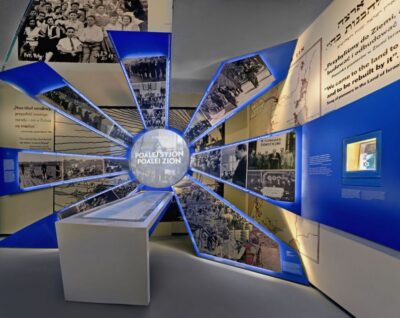
Warsaw: POLIN Museum of the History of Polish Jews Ticket
Read our review →
Gdańsk: Sunset Cruise on a Historic Polish Boat
Read our review →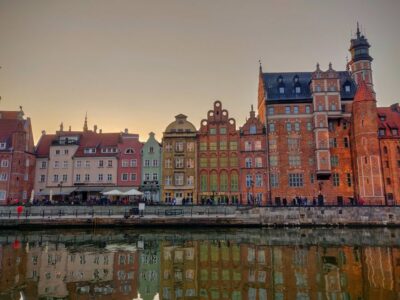
Gdańsk City Sights & History Guided Walking Tour in English
Read our review →

Warsaw: Chopin Concert at Historical Venue in Old Town
Read our review →
Krakow: Tipsy Polish Food Tour With History, Pierogi & Shots
Read our review →
Krakow: Vistula River Cruise with Historical Views
Read our review →Browse the lists this tour appears in