
Review · WARSAW
Warsaw: POLIN Museum of the History of Polish Jews Ticket
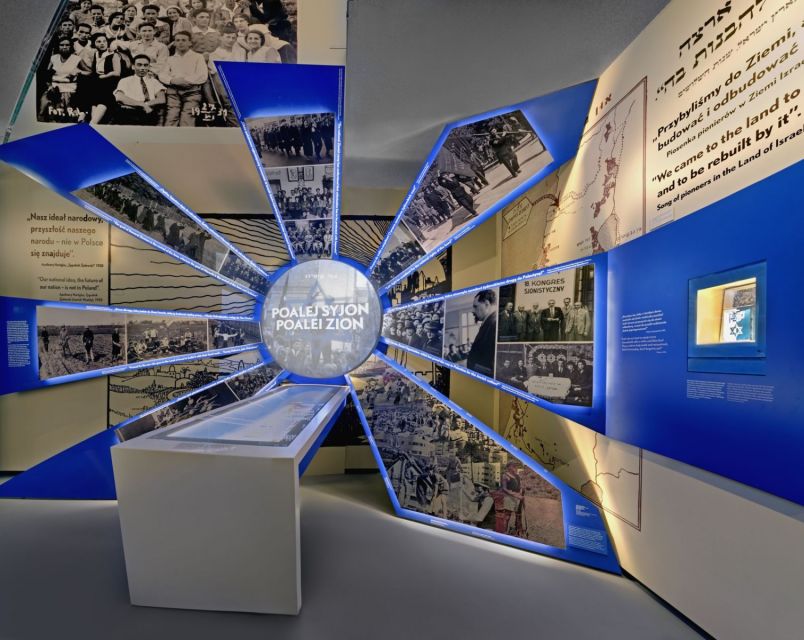
POLIN Museum does something important: it tells the story of Jewish life in Poland before, during, and after the Holocaust, rather than treating Jewish history as only a story of loss. You move through eight main galleries filled with objects, paintings, sound, films, and hands-on displays.
I like the museum’s balance and its excellent audio guide. The galleries show how Jewish communities formed, worked, worshipped, argued, created, and contributed to Polish society. I also like the freedom to move at your own speed, take breaks, eat lunch, and return later the same day.
The main drawback is simple: two hours is not enough if you read carefully. Plan on three to five hours, and understand that the subject becomes emotionally heavy, especially in the Holocaust galleries.
Key points to know before you go
- A thousand years in eight galleries: The route begins with the arrival of Jewish communities and continues to modern times.
- The audio guide is a real asset: It provides clear explanations and can help you follow the story without a private guide.
- This is not only a Holocaust museum: Much of the exhibition presents Jewish daily life, culture, faith, politics, and work before 1939.
- Allow at least three hours: Fast visitors may manage in two, but careful readers can spend five or six hours.
- You can take a same-day break: Leave for lunch and return, as long as you come back on the day of your ticket.
- Book for a serious, thoughtful visit: Children seven and younger enter free, but children twelve and younger must stay with an adult.
Why POLIN belongs on your Warsaw itinerary
Warsaw has many places connected with the Second World War, but POLIN gives you the long view. Before you reach the Holocaust galleries, you learn how Jewish communities became part of Poland over centuries.
That order matters. It gives meaning to the people and communities later destroyed. You first see Jewish life as active and varied, with its own institutions, religious traditions, internal debates, businesses, schools, and political movements. The museum presents Polish Jewish history as a living subject, not simply a prelude to catastrophe.
I find this one of the museum’s greatest strengths. If you visit only a memorial or a former camp, you may leave with a powerful but narrow picture. POLIN adds the missing context: the people who suffered persecution also lived ordinary, creative, family-centered lives for many generations.
The museum is also useful if you are visiting the Warsaw Ghetto Uprising Monument nearby. The monument becomes easier to understand after you have seen the social and political world in which the uprising took place. POLIN also adds historical background to a visit to Auschwitz-Birkenau, though it is not a replacement for that visit.
More Tickets in Poland:
- Krakow: Kościuszko Mound Ticket – History & Views!
★ 4.4 · 303 reviews - Archaeological Museum of Krakow Entrance Ticket
★ 3.8 · 31 reviews - Pompeii: Entry Ticket and Guided Tour with an Archaeologist
★ 4.8 · 19,459 reviews
Entering the first galleries: Jewish life begins before the tragedy
The early galleries explain how Jewish communities arrived in Poland and developed. You will encounter religious and civic life, trade, settlement, and the changing relationship between Jewish communities and Polish rulers.
Do not rush this section. It contains a large amount of information, and some visitors find the medieval and early modern material more demanding than the later rooms. Yet it is essential if you want to understand why Poland became such an important center of Jewish life.
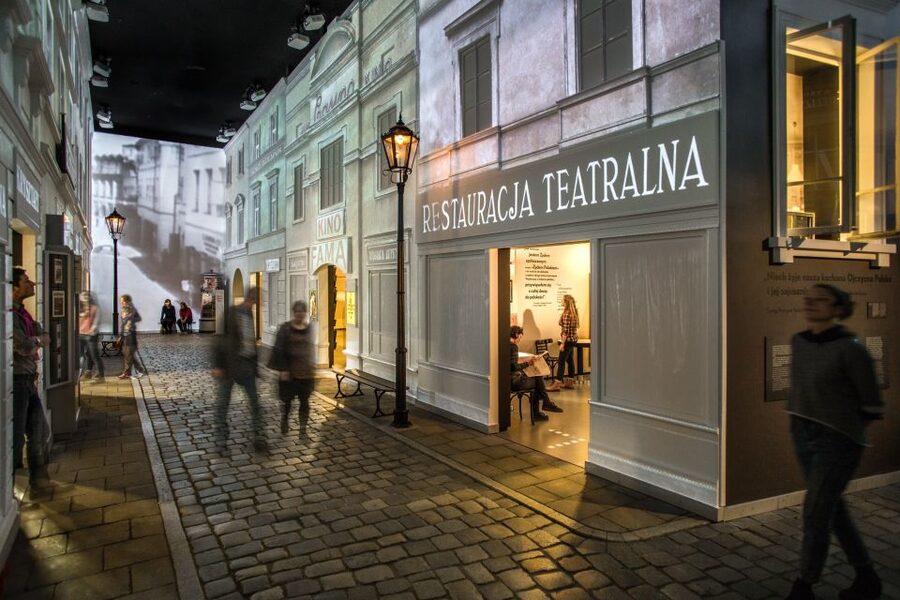
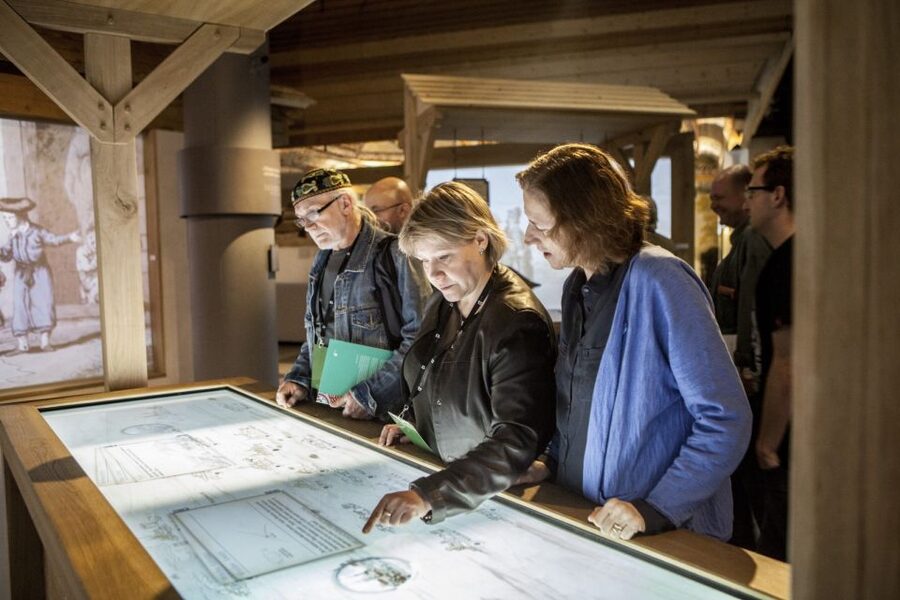
Objects, artwork, written material, sound, and reconstructed settings help turn dates into human stories. The presentation is designed for more than silent reading. You press buttons, listen to recordings, look at visual displays, and move through spaces that suggest different periods and ways of life.
The museum does not reduce Jewish identity to one experience. You see religious traditions alongside political, economic, and social change. That approach is especially useful for visitors who know Jewish history mainly through the Holocaust and want a fuller picture.
Community, culture, and everyday life
As you continue, the museum shows how Jewish communities functioned within Polish society. You learn about communal organization, education, worship, work, and the role of individual Jewish figures.
This part asks you to think about identity in practical terms. How did people preserve religious customs while responding to modern life? How did Jewish communities relate to the Polish state and to their neighbors? How did cities, industry, migration, and new political ideas change Jewish life?
The exhibition also presents Jewish culture as varied rather than uniform. Religious and secular viewpoints existed side by side. Political movements disagreed. People made different choices about language, education, tradition, and modernity.
That variety is one reason the museum takes so long. A quick route may give you the main story, but reading the smaller panels and trying the interactive stations adds much more detail. If you want to see every screen, read every label, and listen to the full audio guide, schedule a large part of your day.
The reconstructed synagogue ceiling
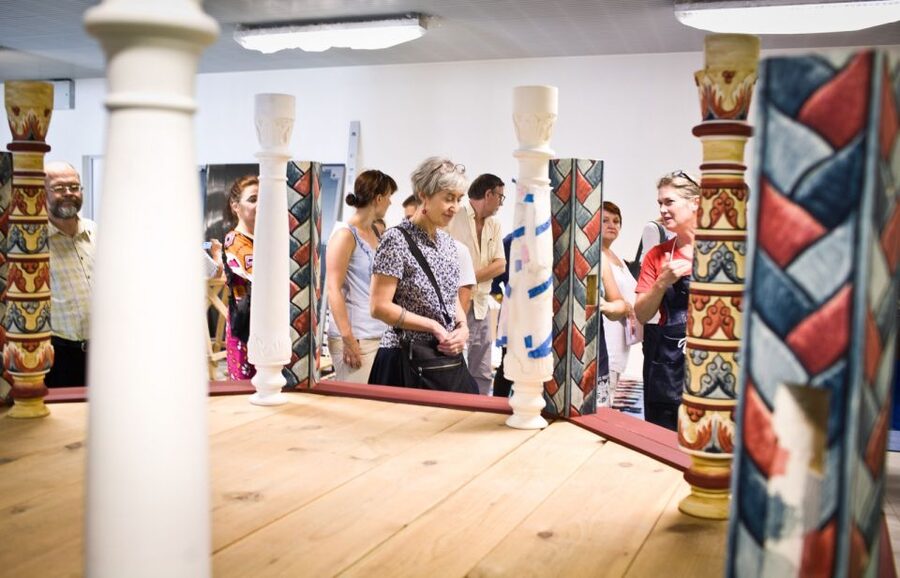
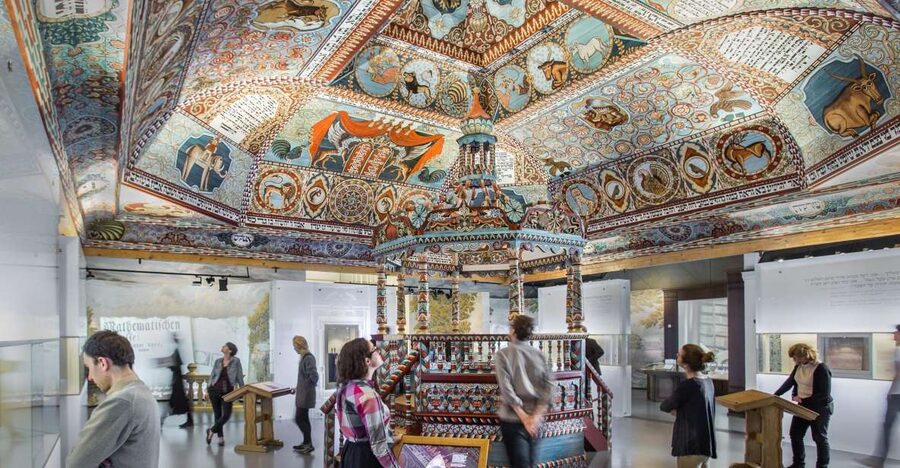
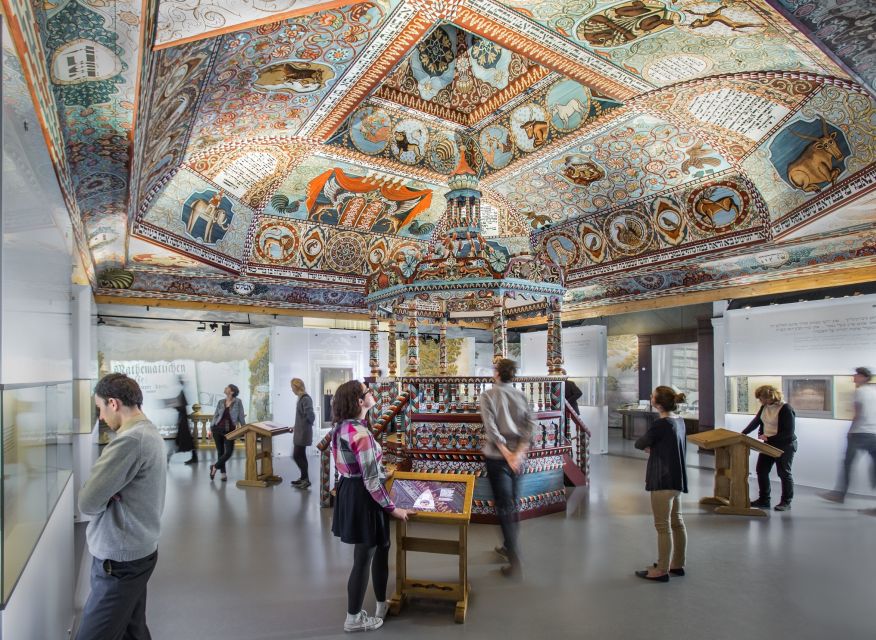
One of the most memorable displays is the reconstructed wooden ceiling of a historic synagogue. It gives you a sense of the artistry and care found in Jewish religious spaces that no longer survive.
This display is valuable because it shifts the focus from historical documents to physical culture. A ceiling, a painted design, or a place of worship can tell you something about community life that a timeline cannot.
Take a moment here instead of treating it as a passage between larger galleries. The museum uses architecture and design to help you understand the scale of what was lost, but also the skill and imagination of the people who built these places.
More History Tours in Poland:
- Gdansk: City Cruise on Historical Polish Boat
★ 4.8 · 2,913 reviews - Gdańsk: Sunset Cruise on a Historic Polish Boat
★ 4.9 · 977 reviews - Gdańsk City Sights & History Guided Walking Tour in English
★ 4.8 · 876 reviews - Historic City Center Tour Gdansk in German
★ 4.6 · 455 reviews
The Holocaust galleries: difficult, direct, and necessary
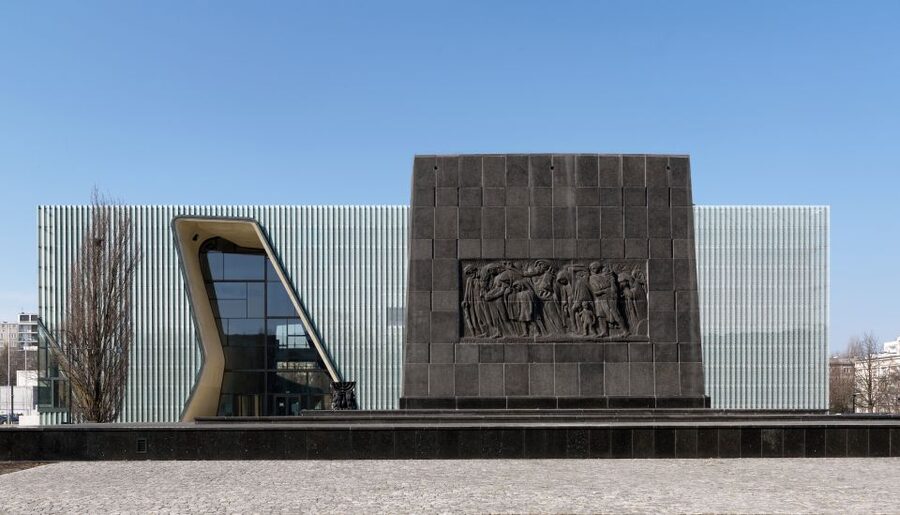
The Holocaust section is emotionally intense, but the museum generally relies on evidence and personal stories rather than theatrical effects. You will see how Nazi persecution destroyed Jewish communities in Poland and how the Holocaust changed political, social, and religious life.
This section deserves time and quiet attention. Personal accounts give the broad events a human scale. The displays explain not only murder and deportation, but also the destruction of homes, institutions, family networks, cultural life, and local memory.
The museum’s decision to place this section within the larger thousand-year story is important. It helps you see the Holocaust as the destruction of an established society, not as an isolated episode.
You may need a break afterward. The museum has seating throughout, and you can pause without losing your place. Some visitors find the subject moving and exhausting, even when the display style remains calm and factual. I would not schedule this visit immediately before a packed evening of sightseeing.
After 1945: survival, memory, and cultural revival
The story does not end in 1945. Later displays consider what happened to Jewish life after the war and how memory, identity, and culture have developed in modern Poland.
This final part prevents the museum from presenting Jewish history as something that ended with the Holocaust. It asks what survival means, how communities rebuild, and how a country remembers the people and traditions nearly destroyed on its soil.
You may find this section shorter than the earlier historical galleries, but it gives the visit a necessary direction. The museum shows not only absence, but also efforts to preserve and revive Jewish culture.
How the audio guide works
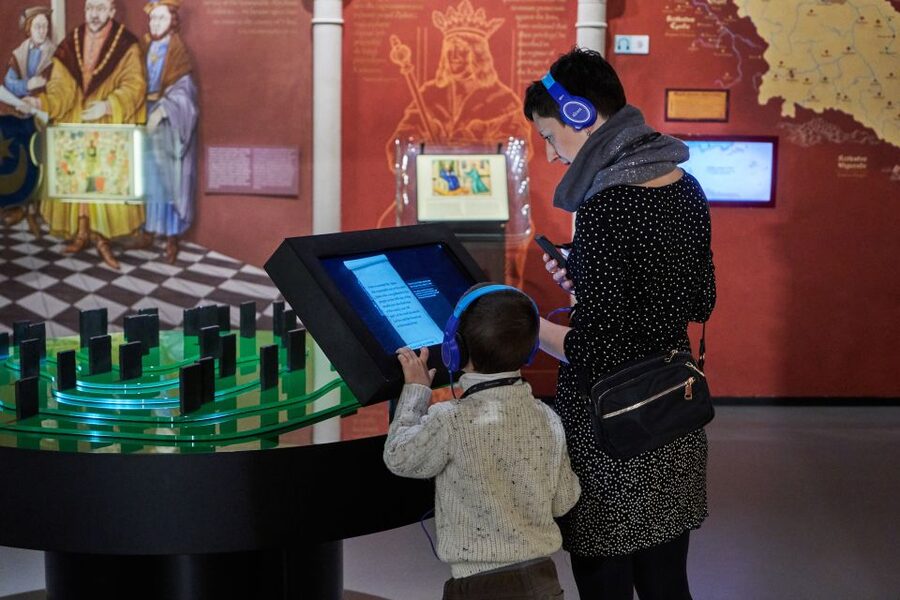
The included audio guide is one of the best reasons to choose this ticket. It gives clear explanations and helps connect the objects and displays to the larger story.
The guide is especially useful for first-time visitors who do not know what to look for. It offers a route through the historical periods and can make the exhibition easier to follow. Some users found that the system recognized their location and supplied the relevant narration automatically, which reduces the need to search for each item manually.
There is one tradeoff. The galleries contain a lot of written material, and listening while reading can split your attention. I suggest using the audio guide as your main thread, then pausing it when you want to study a long panel or interactive display.
The stated language options are Polish and English. The host or greeter service is also available in those languages. A private guided tour is not included, so the audio guide is the main support provided with this ticket.
How long should you spend inside?
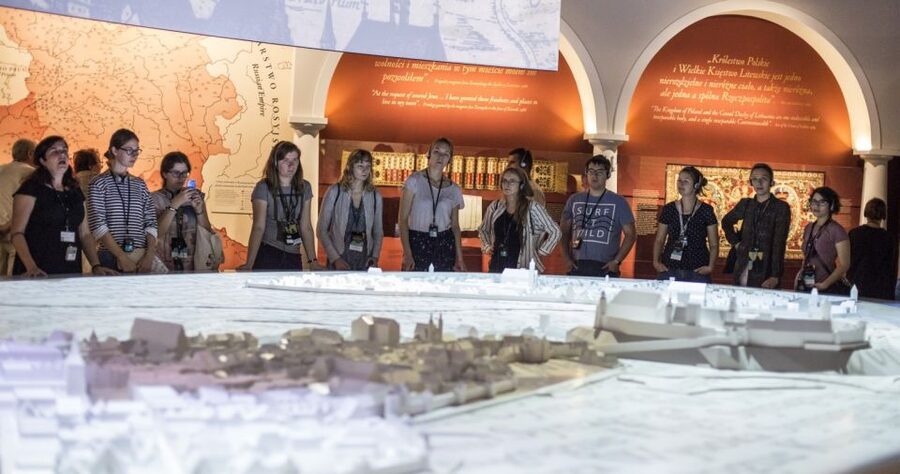
The official estimate for the core exhibition is about two hours. Treat that as a minimum outline, not a full visit.
Use these rough plans:
- Two hours: Follow the main audio route and accept that you will skip some material.
- Three hours: A sensible first visit for most people who want to see the principal displays.
- Four to five hours: Best if you read carefully and use the interactive stations.
- Six hours or more: Possible if you want to explore nearly everything and take a meal break.
The museum is arranged for a long visit. There are seats along the route, and you can leave to have lunch and return on the same day. That makes the ticket more useful than a timed entry that forces you to complete everything in one stretch.
Wear comfortable shoes. This is a walking museum, and the amount of material can tire you before the physical distance does. Portable seating is useful for anyone who has difficulty standing for long periods, although seating is available in the exhibition areas.
Is the $12 ticket good value?
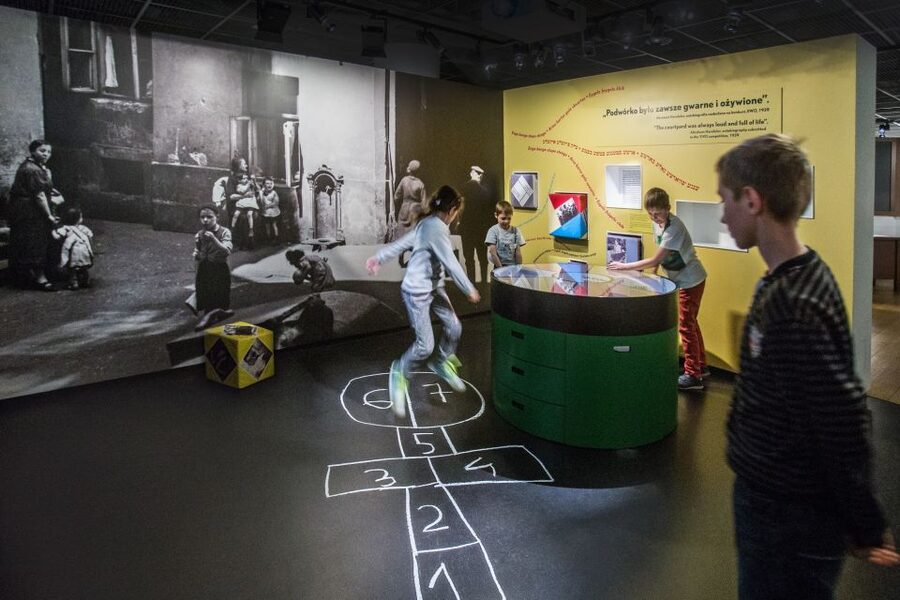
At $12 per person, this is strong value if you have enough time to use it. The ticket covers the permanent exhibition, any temporary exhibition available with the admission, and the audio guide.
You are not paying for a short tour or a single dramatic display. You are paying for a full historical museum that can occupy half a day. The cost per hour is low, especially compared with many major European museums.
The value drops if you arrive near closing time. Admission to the core exhibition ends two hours before the museum closes, and the building is closed on Tuesdays. Check the available starting times before booking, then arrive early enough to avoid a rushed visit.
Children aged seven or younger can enter free. Children twelve or younger must be supervised by an adult at all times. Oversize luggage is not allowed, so do not plan to arrive with large bags.
Practical access and arrival advice
Present your voucher at the POLIN Museum of the History of Polish Jews. Every visitor must pass electronic security screening before entering the core exhibition.
The museum is wheelchair accessible. Its size and long visit still mean that you should plan your energy carefully. Take advantage of seating and the option to leave for lunch.
The ticket is valid for one day, and you may enter at your convenience during that day. It is not a guided group experience, so you are free to set your own pace once inside.
The museum is closed on Tuesdays. Cancellation is free up to 24 hours before the visit, and the reserve-now, pay-later option can help if your Warsaw schedule is still changing.
Who will appreciate this museum most?
I recommend POLIN to anyone interested in Jewish history, Polish history, the Second World War, religion, migration, urban life, or museum design.
It works well for:
- History-minded adults who want context before visiting Auschwitz.
- Families with older children who can handle a serious subject and stay with an adult.
- Visitors who prefer self-guided sightseeing to a fixed group tour.
- People who enjoy interactive displays, audio stories, and objects rather than text alone.
- Anyone who wants to understand Jewish life in Poland beyond the years of Nazi occupation.
It may be less suitable if you have only an hour or if you want a light, quick museum stop. The material is demanding, and the amount of reading can overwhelm you if you try to finish everything at speed.
What I would do on the day
I would visit early, start with the audio guide, and give myself at least three hours. I would not try to read every panel on the first pass.
I would pay close attention to the early galleries, even if my main interest were the Holocaust. That background changes how you understand the later rooms. After the Holocaust section, I would take a proper pause rather than immediately rushing to the final gallery.
If you have five or six hours available, use the museum’s option to leave for lunch and return. The on-site restaurant has informal cafeteria-style service, generous portions, and good food, according to the available information. That makes a long visit easier.
Should you book the POLIN Museum ticket?
Yes, if you can spare at least three hours and want a serious look at Poland’s Jewish past and present. The audio guide, interactive displays, and broad time span make the $12 admission a good buy.
Book it with realistic expectations. This is not a quick Holocaust memorial, and it is not a private guided tour. It is a large, thoughtful museum that asks you to make time for the people, communities, and culture that existed before the destruction, as well as the difficult story that followed.
FAQ
How long is the POLIN Museum ticket valid?
The ticket is valid for one day. You may enter at your convenience during that day, but admission to the core exhibition closes two hours before the museum closes.
How long does the museum visit take?
The estimated time for the core exhibition is two hours. Plan on three to five hours if you want to read more carefully and use the interactive displays.
Is an audio guide included?
Yes. The ticket includes an audio guide, along with access to the permanent exhibition and any available temporary exhibition.
Is a guided tour included?
No. A guided tour is not included. The visit is self-guided, with the audio guide providing explanations as you move through the galleries.
What languages are available?
The listed languages are Polish and English. The host or greeter service is also available in Polish and English.
Can I leave the museum and return?
Yes. You can leave to have lunch and return later, as long as you return on the same day as your visit.
Is the museum open every day?
No. The museum is closed on Tuesdays.
Is POLIN Museum wheelchair accessible?
Yes. The museum is wheelchair accessible.
Are children allowed to visit?
Yes. Children aged seven or younger may enter free of charge. Children aged twelve or younger must be supervised by an adult at all times.
Can I bring oversize luggage?
No. Oversize luggage is not allowed. Every visitor must also undergo electronic security scanning before entering the core exhibition.
Just added around Poland
- Best of Wroclaw 3-Hour History and Culture Walking Tour★ 4.9 · 49 reviews
- Krakow: Vistula River Cruise with Historical Views★ 3.5 · 357 reviews
- Krakow: Kościuszko Mound Ticket – History & Views!★ 4.4 · 303 reviews
- Krakow Old Town Segway Tour — 2H of History, Fun & Discovery★ 4.8 · 91 reviews
- Warsaw: Historic Private Tour in Retro Fiat★ 4.9 · 41 reviews
- Archaeological Museum of Krakow Entrance Ticket★ 3.8 · 31 reviews
- Private Tour: Warsaw’s Communist History by Retro Fiat★ 5.0 · 115 reviews
- Private Historical Tour of Warsaw by a Retro Fiat with Pickup★ 5.0 · 190 reviews
Warsaw History Tours, compared.

Warsaw: Chopin Concert at Historical Venue in Old Town
Read our review →
Warsaw: Jewish History Guided Walking Tour in English
Read our review →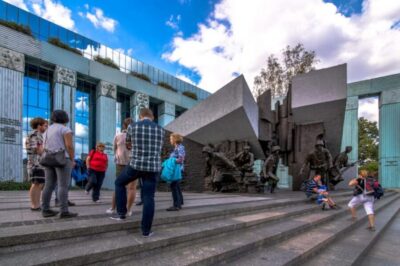
Private Tour: Warsaw’s Jewish Heritage by Retro Fiat
Read our review →
Private Historical Tour of Warsaw by a Retro Fiat with Pickup
Read our review →
Warsaw for WWII Buffs – private tour with hotel pickup
Read our review →
Private Tour: Warsaw’s Communist History by Retro Fiat
Read our review →
Browse the lists this tour appears in