
Review · PERU
Arequipa: Walk through the Historic Center of the City
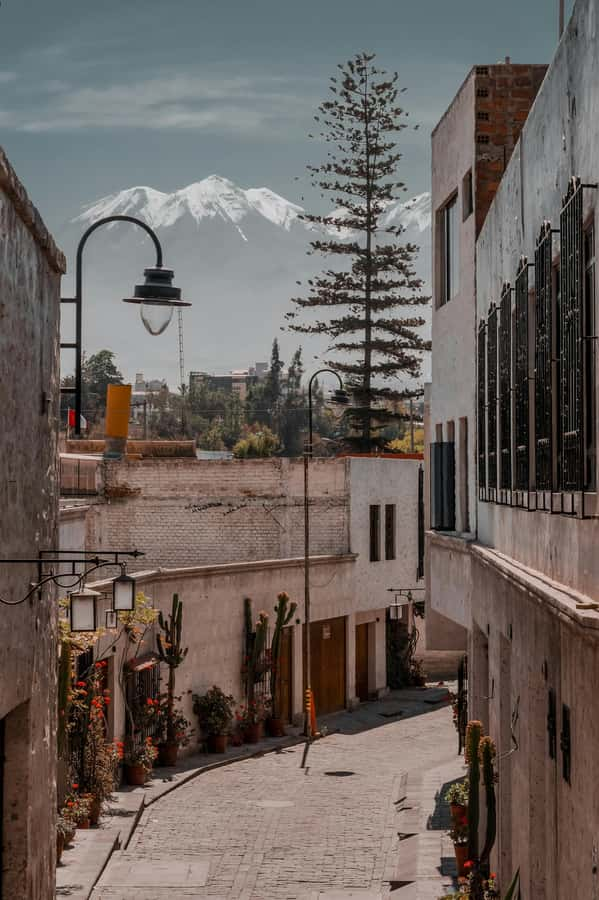
Arequipa reveals itself best on foot, and this small-group walk takes you beyond the postcard façades of the White City. You’ll visit the Cathedral, colonial cloisters, and old tambos, then finish at a lookout facing Misti, Chachani, and Pichu Pichu.
I like the personal touch from local guides such as Joss, Joseph, and Jose, who add stories, legends, restaurant tips, and practical advice for Peru. I also like the six-person limit, which can turn the outing into a private tour when others cancel. The main caution is that one visitor felt the walk had too much time between stops without enough explanation, so expectations should match a friendly introduction rather than a specialist architectural tour.
Key points at a glance
- Start in San Lázaro: Meet at Campo Redondo, a useful launch point for exploring Arequipa’s old center.
- Five historic sites: The route includes the Cathedral, colonial cloisters, tambos, and other notable places in the center.
- Local stories matter: Guides explain traditions, legends, architecture, geography, and cultural influences.
- Small groups help: The tour is limited to six people, with private outings possible when only a few book.
- Volcano views finish the walk: The lookout faces Misti, Chachani, and Pichu Pichu.
- Good first-day activity: You receive recommendations for restaurants, bars, museums, and things to do in Peru.
Why this walk works as an Arequipa introduction
Arequipa can look simple at first glance: white volcanic stone, bright plazas, tall churches, and a dramatic volcano in the distance. A good walk helps you connect those pieces. This outing gives you the basic story of the city while pointing out details you could easily miss on your own.
The route lasts two hours, with the walking portion described as roughly one and a half hours. That leaves enough time for stops, questions, and the final viewpoint without turning the experience into an exhausting half-day march.
I would book this near the beginning of your stay. Guides such as Joss have provided lists of places to eat and drink, suggestions for museums, and ideas for exploring beyond the center. Those tips can save you from spending your first evening choosing a restaurant by guesswork.
The tour is conducted in English or Spanish. The small group size is a real advantage. Six people is enough for conversation but small enough for the guide to hear questions. Several outings have ended up as private or nearly private walks when other participants canceled.
More Old Town and Historic Centre Walks in Peru:
- Lima: Historic Center Street Food, Market, and Eateries Tour
★ 4.9 · 216 reviews - Walking tour in the Historic Center of Arequipa
★ 4.4 · 180 reviews - Lima: Historic Downtown, Miraflores & Catacombs Private Tour
★ 4.5 · 28 reviews
Meeting the White City at Campo Redondo
The meeting point is Campo Redondo in the San Lázaro area, at coordinates -16.3934138, -71.5336117. This is not a generic hotel pickup. You meet in a part of the old city and begin with Arequipa’s streets around you.
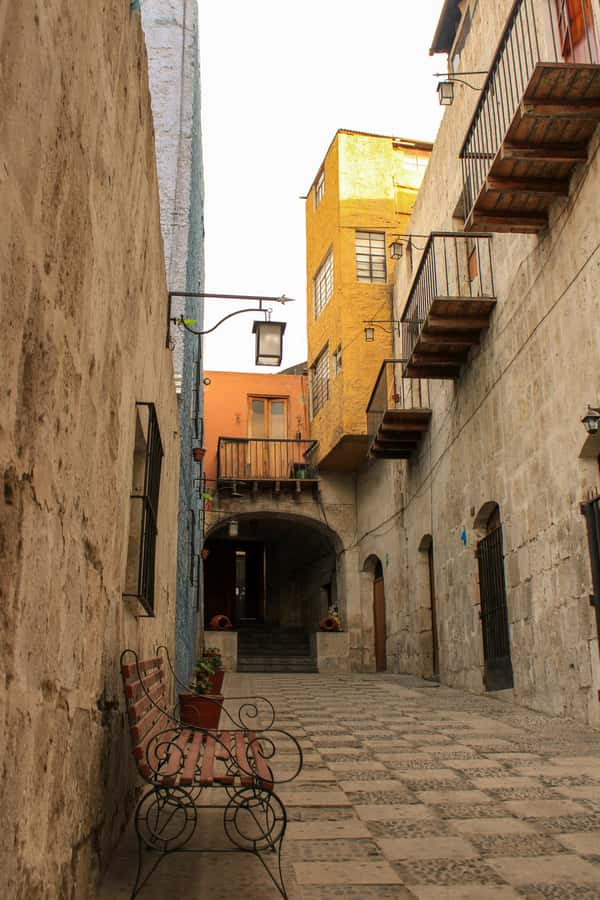
San Lázaro is a fitting starting area because the tour is built around walking rather than moving between sights by vehicle. From here, you can expect cobblestone streets, white volcanic-stone construction, and the shift from residential corners to the major monuments of the center.
The walking surface is important to keep in mind. Cobblestones can make the route slower and less comfortable than a pavement-only city tour. Wear shoes with a good grip and keep some water with you. The experience is described as a walk through the center, not a strenuous mountain hike, but you will be on your feet for most of the two hours.
The Cathedral and Arequipa’s main monuments
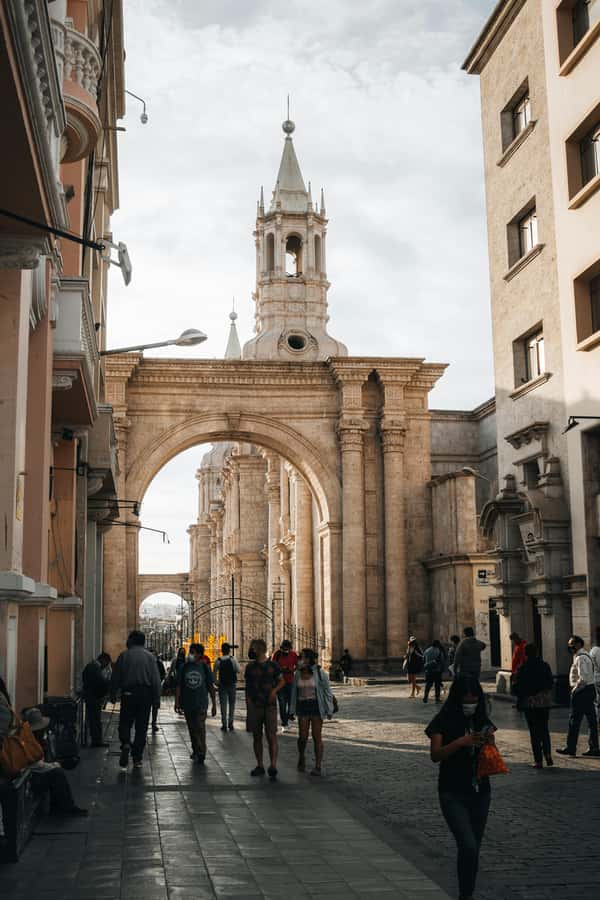
The Cathedral is the first major stop. It is one of Arequipa’s best-known symbols, and beginning here gives the tour a clear anchor. Your guide can place the building within the city’s religious, civic, and architectural story before the route moves into smaller spaces.
The Cathedral visit should not be confused with a separate, detailed guided Cathedral tour. One participant followed Joss’s recommendation and booked an additional Cathedral visit afterward. That is useful advice if you want a full interior explanation, rather than simply seeing the building as one part of a wider walking route.
The route then continues through five historic sites in all. The supplied information does not name every one of those sites, so the exact order may vary. You can expect the focus to remain on the center’s major buildings, colonial courtyards, old passageways, and places that show how Arequipa developed.
What makes this useful is the connection between famous monuments and ordinary city life. Instead of seeing the Cathedral as an isolated photo stop, you get a guide’s explanation of how architecture, religion, geography, and local customs fit together.
Cloisters, courtyards, and the city’s quieter corners
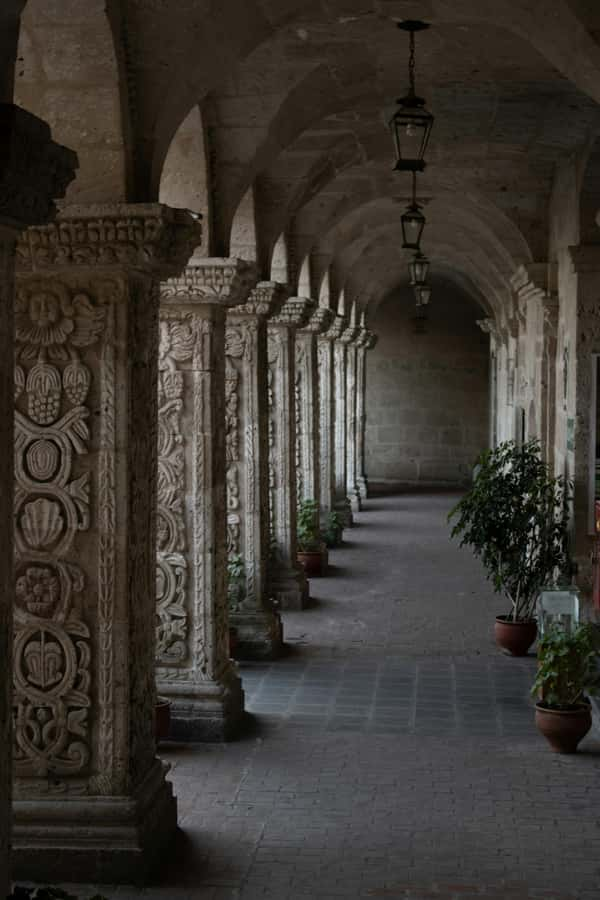
The colonial cloisters are among the most appealing parts of the route. These enclosed spaces give you a closer look at arches, stonework, proportions, and the calm geometry of colonial design.
Cloisters can be easy to skim through when you visit alone. A guide helps you slow down and notice the features that give the place character. Joss has been praised for explaining architecture alongside cultural influences, rather than offering a list of dates that quickly blur together.
The route also seeks out less familiar corners. One outing included the San Camilo Market, though the market is not presented as a guaranteed stop on every departure. If it appears on your route, it adds a useful contrast to the formal churches and cloisters. You see a part of daily Arequipa rather than only its grand monuments.
This is also where the tour’s main weakness may appear. One participant felt there were stretches of walking with too little information about the streets and buildings along the way. If you want a running commentary on every façade, ask questions as you walk. The guide’s strength appears to be a mix of selected sites, stories, and personal recommendations, not a lecture at every block.
More History Walking Tours in Peru:
- Cusco: Historic Walking Tour with Pisco Sour and Music Show
★ 4.6 · 65 reviews - History and Hauntings of Salem Guided Walking Tour
★ 5.0 · 14,564 reviews - Lisbon: History, Stories and Lifestyle Walking Tour
★ 4.8 · 10,902 reviews - Amsterdam: Life of Anne Frank and World War II Walking Tour
★ 4.8 · 10,467 reviews
Tambos and the working life of old Arequipa
The tambos are another distinctive part of the outing. These old lodgings played an important role in Arequipa for centuries, and they help explain how the city functioned beyond its churches and official buildings.
For you, the value of the tambos is practical context. They show that historic Arequipa was not only a collection of elegant façades. It was also a place of movement, trade, lodging, and everyday work.
This part of the walk is especially helpful if you want local history presented through buildings rather than only through dates. Your guide can connect the spaces to traditions and stories passed down through generations.
The exact amount of time spent at each tambo is not specified. With five historic sites in a two-hour activity, expect a focused visit rather than a long museum-style examination. If a particular building catches your interest, use the small group setting to ask for more detail.
Stories, legends, and local advice
The walk includes traditions, legends, curious facts, and cultural exchange. This is where the guide makes the biggest difference. Joss, Joseph, and Jose are the names most closely associated with the experience, and the strongest descriptions of their guiding style point to warmth, clear explanations, and a willingness to answer questions.
Joss has explained Arequipa through several angles: architecture, geography, cultural influences, and local customs. That combination gives you more than a standard list of monuments. You begin to understand why the city looks the way it does and how its setting affects what you see.
The stories are also a good reason to choose a local guide instead of following a map. Legends and curious details are not always easy to find in a guidebook. Just keep the nature of the experience in mind. This is a conversational city walk, not an academic history seminar.
The practical advice can be just as valuable as the sightseeing. Guides have offered restaurant and bar suggestions, museum ideas, and recommendations for things to do elsewhere in Peru. One guide even shared a WhatsApp number for follow-up tips after the tour. That kind of help is not guaranteed in every booking, but it shows the personal style associated with the experience.
The final lookout and the volcano view
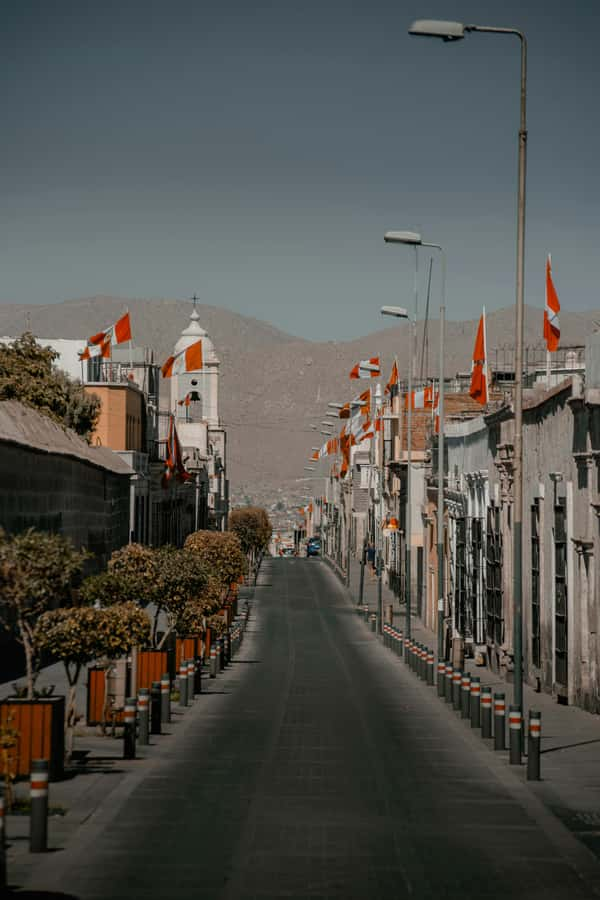
The tour ends at a lookout with a broad view over Arequipa and the volcanoes around it. Misti, Chachani, and Pichu Pichu are specifically named as part of the panorama.
This closing view gives the walk a strong shape. You start among close-up stone buildings and narrow streets, then finish by seeing the city in relation to the mountains around it. Arequipa makes more sense from above, especially after a guide has explained its architecture and geography.
Several outings have ended at a rooftop or terrace, with one group enjoying pisco sours and another describing a sunset view. A drink is not listed as an included feature, so treat that as a possible finishing option rather than part of the guaranteed package. If the timing works, the afternoon departure may offer better light for the view, but the activity is also available in the morning.
The lookout is a highlight, but weather and visibility can affect it. The volcanoes are part of the planned view, not a promise of perfect conditions. Even with cloud or haze, the high point still provides a useful sense of the city’s layout.
Is $15 a fair price?
At $15 per person, this is inexpensive for a two-hour guided introduction, especially with a maximum of six participants. The value comes from the guide’s local knowledge, the five historic sites, the smaller corners of the center, and the recommendations you can use for the rest of your stay.
The price looks strongest if you are new to Arequipa and want orientation without paying for a long private tour. It is also appealing for solo travelers and couples. If the group is small, you get more room for questions and may receive something close to a private outing without paying a private-tour rate.
The value is less clear if you already know the center well or want detailed commentary on every street and building. The one lower rating specifically raised the concern that the price felt high for a basic tour and that some walking sections lacked information.
I would see the $15 as payment for a well-planned introduction, not an all-inclusive sightseeing package. Entry fees, drinks, and any separate Cathedral tour should not be assumed to be included. The advertised inclusions are the historical sites, stories, recommendations, tips, and cultural exchange.
Timing, language, and group size
You can choose a morning or afternoon departure, subject to availability. Morning is a sensible choice if you want to use the recommendations during the rest of the day. Afternoon may be better if you care most about finishing near sunset, though the exact light depends on the season and schedule.
English and Spanish are available. Some content may appear in its original language, so ask the guide to clarify anything you do not understand.
The stated duration is two hours. The walking portion is described as about one and a half hours, which means the rest is likely used for stops and the lookout. The tour is not presented as a fast-paced exercise. Still, you should be comfortable walking on cobblestones and standing at several sites.
Free cancellation is available up to 24 hours before the activity for a full refund. You can also reserve and pay later, which helps if your Peru itinerary is still shifting.
Who should book this walk?
I would recommend it to first-time visitors who want to understand Arequipa before exploring on their own. It suits people who prefer small groups, local stories, and a guide who can suggest what to do next.
It is also a strong choice for solo visitors. A small group makes it easier to ask questions, and the tour may become private if other bookings cancel. Couples and friends will get a relaxed introduction without committing to a full-day excursion.
You may want something else if you are seeking a highly technical architecture tour, a full interior visit to every major church, or a route with constant commentary. The itinerary gives you selected sites and local perspective, with some walking between them.
Should you book it?
Book this tour if you want a friendly first look at Arequipa, a few less obvious corners, and a final volcano view for $15. The best reason to choose it is the guide-led perspective from people such as Joss and Joseph, especially if you value restaurant tips and help planning the rest of your time.
Go in expecting a compact introduction, not an exhaustive survey of every building. Ask questions during the quieter walking stretches, confirm what the day’s route includes, and consider adding a separate Cathedral visit if you want more detail inside. For most first-time visitors, the small group, local advice, and lookout make this a sensible opening activity.
FAQ
How long does the Arequipa walking tour last?
The activity lasts two hours. The walking portion is described as approximately one and a half hours, with time also used for stops and the final lookout.
How much does the tour cost?
The price is $15 per person.
Where does the tour meet?
The meeting point is Campo Redondo in San Lázaro. The coordinates are -16.3934138, -71.5336117.
Which languages are available?
The live guide is available in English and Spanish. Some content may be presented in its original language.
How many people can join the tour?
It is a small-group experience limited to six participants.
What sights are included?
The walk includes five historical sites, including the Cathedral, colonial cloisters, and tambos. It also includes stories, legends, curious facts, and a final lookout with views toward Misti, Chachani, and Pichu Pichu.
Can I cancel or pay later?
You can cancel up to 24 hours in advance for a full refund. You can also reserve now and pay later.
Just added around Peru
- 6-Day Cultural Tour to Machu Picchu★ 5.0 · 76 reviews
- Piramids of Tucume Tour, Sican Museum and Lambayeque city tour★ 5.0 · 30 reviews
- Arequipa, Historic and Colonial City and Santa Catalina Monastery★ 4.5 · 42 reviews
- Aymara Route Mystical Cultural Tour★ 4.7 · 27 reviews
- Lima: Pachacamac Inca Archaeological Complex Tour★ 4.8 · 164 reviews
- Machu Picchu: historical and photographic guided tour★ 4.9 · 27 reviews
- Lima: Historic Downtown, Miraflores & Catacombs Private Tour★ 4.5 · 28 reviews
- Cusco: Historical Guided City Tour with 4 Inca Ruins★ 4.5 · 99 reviews
Peru History Tours, compared.
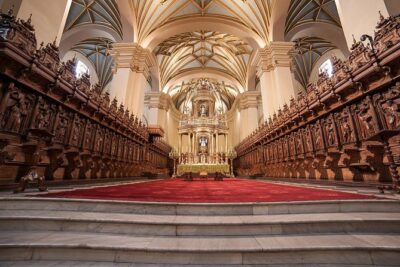
Lima’s Vibrant Heritage: Exploring the City’s Landmarks Half-day
Read our review →
Lima: Historic Center Street Food, Market, and Eateries Tour
Read our review →
Cusco: City Tour | Half-Day Tour to 4 Archaeological Sites
Read our review →
Walking tour in the Historic Center of Arequipa
Read our review →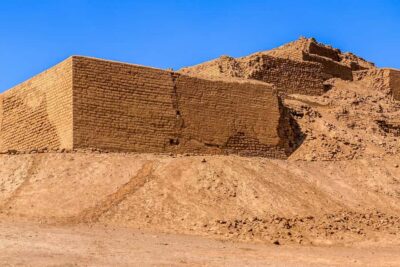
Lima: Pachacamac Inca Archaeological Complex Tour
Read our review →
Cusco: Historical Guided City Tour with 4 Inca Ruins
Read our review →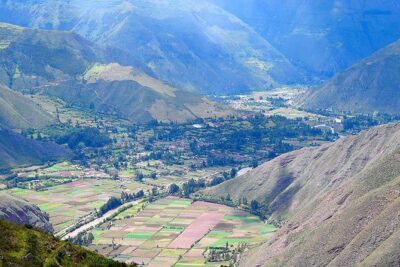
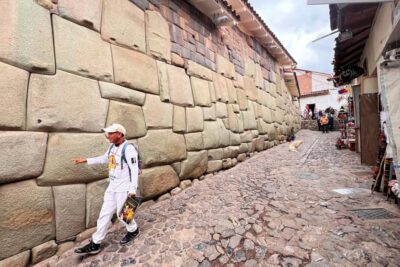
Cusco: Historic Walking Tour with Pisco Sour and Music Show
Read our review →Browse the lists this tour appears in