
Review · PERU
Cusco: City Tour | Half-Day Tour to 4 Archaeological Sites
Cusco’s best first lesson in Inca history comes in a compact half-day loop through the city and surrounding hills. For $29, you visit the former Sun Temple, the massive stones of Sacsayhuamán, and three smaller Inca sites that are easy to miss on your own. The variety is the real strength: religion, engineering, ritual, military control, and water worship all fit into one outing.
I like the excellent value and the guides, especially Luis, Maribel, Joel, and Fabrisio, who are repeatedly praised for their clear explanations and friendly way with mixed-language groups. I also like the practical hotel pickup and the good mix of short walks and vehicle time. The main catch is the bilingual format: it can lengthen each explanation, and a few people felt rushed or lost time at an unplanned textile stop.
Key points to know before booking
- Five major stops in four hours: Qoricancha plus Sacsayhuamán, Qenqo, Puca Pucara, and Tambomachay.
- Strong guide quality: Luis, Maribel, Joel, Yenny, and Fabrisio are among the guides praised for history, local culture, and group care.
- Bilingual pacing: English and Spanish are both used, so explanations may take longer than on a single-language tour.
- Extra costs matter: Qoricancha costs 20 soles, and the Cusco Tourist Ticket costs 70 to 120 soles depending on the ticket type.
- Afternoon timing can work well: A 2 p.m. departure may finish with a sunset or evening view over Cusco.
- Bring layers and cash: The hilltop sites can feel cold, and entry payments are reported as cash only.
What this Cusco half-day tour actually covers
The tour begins with pickup from a hotel in Cusco’s historic center. You meet the group and head first toward the central area, where the guide frames Cusco as a meeting point of Andean and Spanish traditions.
The main square is part of the introduction, but it is not necessarily a full guided stop. If you want a detailed visit to the Plaza de Armas or Cusco Cathedral, plan that separately. The optional Cathedral visit is not included.
From there, the route moves through five important places. The first is Qoricancha, inside the city. The other four are reached by tourist transport in the hills around Cusco. You get a useful overview rather than a long, slow examination of one site, which makes this a good orientation tour early in your stay.
The tour is advertised at four hours. In practice, timing can shift. Some outings finish on schedule, while one reported departure lasted about five and a half hours after delays and an extra textile market stop. That matters if you have dinner reservations, a train, or another booked activity.
More Archaeological Site Tours in Peru:
- Lima: Pachacamac Inca Archaeological Complex Tour
★ 4.8 · 164 reviews - Cusco: Historical Guided City Tour with 4 Inca Ruins
★ 4.5 · 99 reviews - Pompeii: Entry Ticket and Guided Tour with an Archaeologist
★ 4.8 · 19,459 reviews
Qoricancha, where Inca stonework meets Santo Domingo
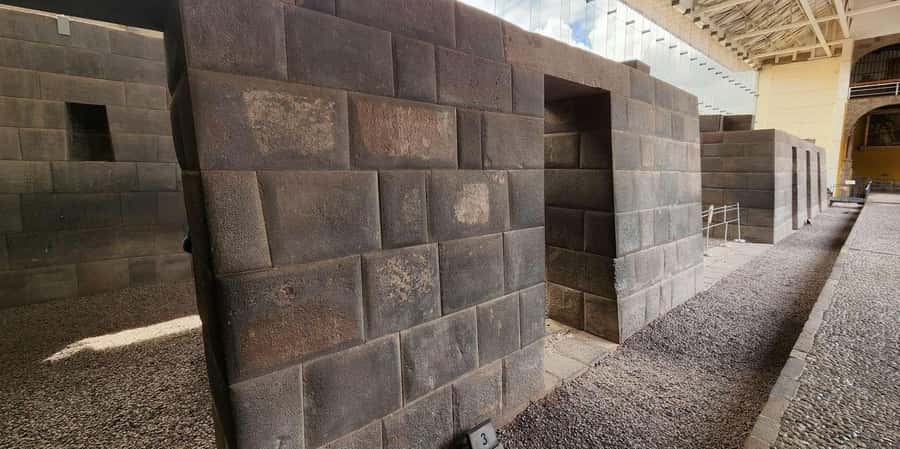
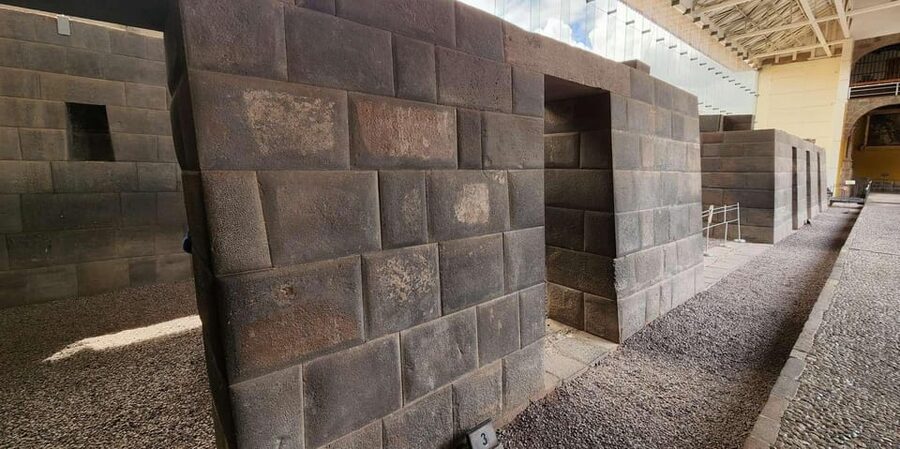
Qoricancha is the strongest urban stop on the route. It was the most important Inca religious center in Cusco, dedicated to the Sun, and later became the site of the Santo Domingo church and convent.
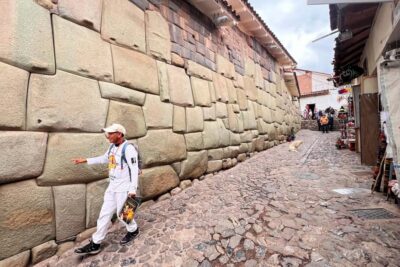
The appeal is not only the history. You can see how the Inca construction fits tightly together, with carefully cut stones and clean lines that still draw attention. Inside, the guide also discusses the colonial building and paintings from the Cusco School. This pairing lets you see the city’s layered past in one place rather than treating Inca and Spanish history as separate subjects.
The entry fee is not part of the $29 tour price. Expect to pay 20 soles for Qoricancha. Bring Peruvian currency, since cash is important for this and the other entrance payments.
The city setting also makes Qoricancha a different experience from the hilltop ruins. It can feel busy, and the visit is more enclosed. Still, it gives you the architectural vocabulary you need for the rest of the day: fitted stone, ceremonial design, and the importance of sacred space.
Sacsayhuamán and the stones that define the tour
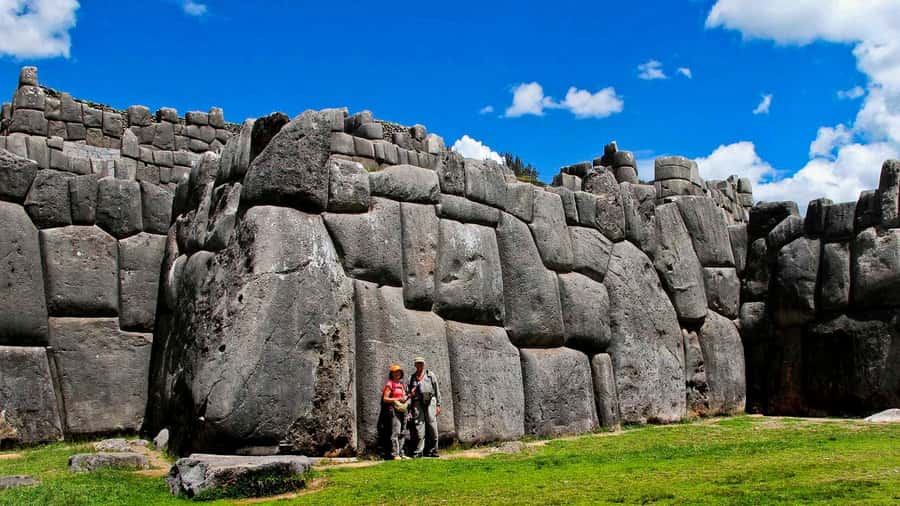
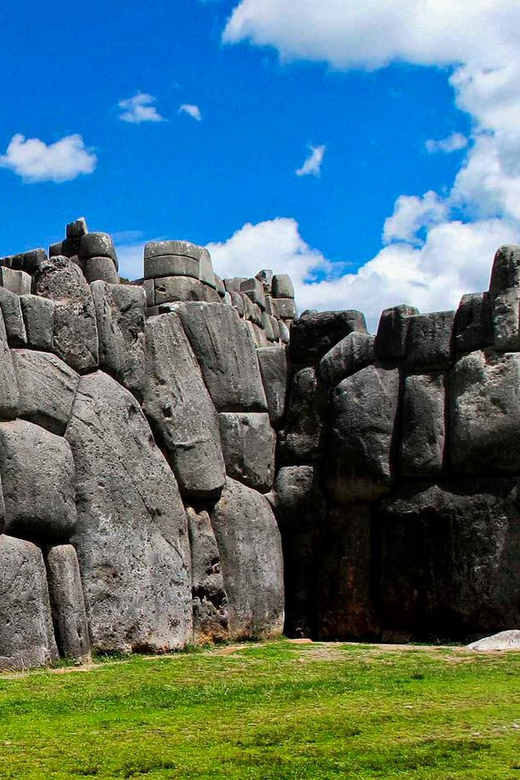
Sacsayhuamán is the headline stop. The fortress and ceremonial complex sits above Cusco, and the scale changes quickly once you see the enormous stone walls. Some blocks are described as reaching about 9 meters high and weighing more than 350 tons.
You do not need to be an architecture specialist to appreciate the work. The stones are fitted with remarkable precision, and the sheer size raises the obvious question: how were they moved and placed? A good guide can explain the leading ideas while separating established evidence from interpretation.
That last point is worth keeping in mind. Guides sometimes present theories about Inca construction and ritual with great confidence. Luis, praised for writing a history book about the Incas and the region, is one of several guides noted for substantial subject knowledge. Still, you should feel free to ask which details are documented and which are scholarly opinion.
Sacsayhuamán also hosts Inti Raymi, the Festival of the Sun, on June 24. The tour does not include that festival, but the connection explains why the site remains important in Cusco’s ceremonial life.
This is the stop most vulnerable to poor timing. One group reached Sacsayhuamán with only about 30 minutes before closing after an unplanned textile market visit. If the tour starts late or the group is delayed, you may have less time here than the site deserves. When you meet the guide, it is sensible to confirm the order of stops and ask if any shopping stop is planned.
Qenqo’s carved rock and ritual spaces
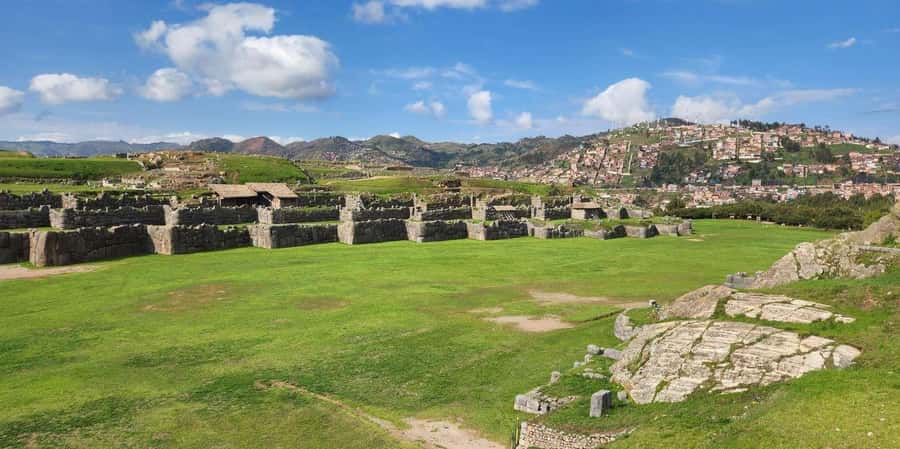
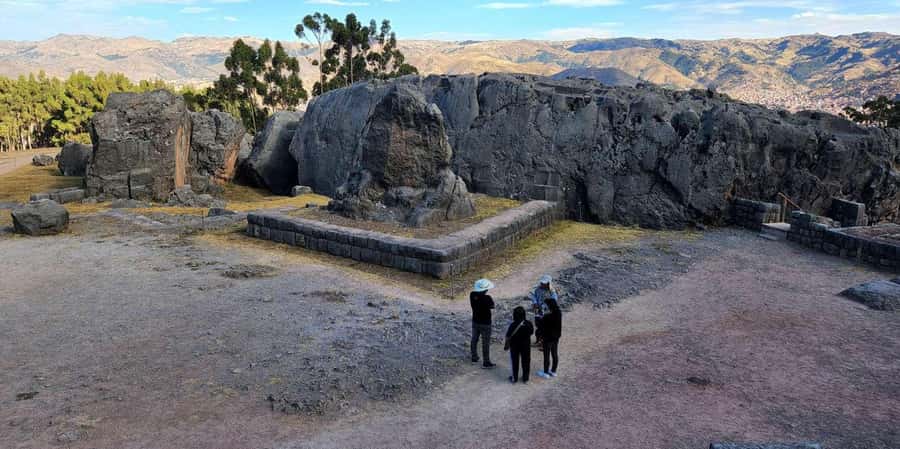
Qenqo is smaller and more enigmatic than Sacsayhuamán. The site served as a ceremonial and religious center, with rocky outcrops, carved surfaces, paths, and spaces cut into the stone.
The guide’s explanation is especially useful here because the remains do not announce their purpose as clearly as a wall or terrace. Qenqo is linked with ritual activity and sacrifice, and you hear how the amphitheater and rock formations may have worked within Inca ceremonies.
This stop rewards attention more than speed. Look at the stone itself, then listen for how the guide connects the physical features to religious practice. You may find the visit less immediately dramatic than Sacsayhuamán, but it adds a different side of Inca life.
Because the tour includes both English and Spanish, the guide may explain the same point twice. That can help if you want careful context, but it also reduces free time at smaller sites. English speakers on mixed groups have generally been included well, though one person felt that Spanish questions were not always repeated in English. If you need clarification, ask directly rather than waiting.
More Half-Day Trips in Peru:
- Lima’s Vibrant Heritage: Exploring the City’s Landmarks Half-day
★ 4.5 · 581 reviews - Normandy Beaches Half-Day Afternoon Trip from Bayeux (A2)
★ 4.5 · 1,116 reviews - From Bayeux: American D-Day Sites in Normandy Half-Day Tour
★ 4.9 · 656 reviews - From Ho Chi Minh: Cu Chi Tunnels Half-Day History Tour with Guide
★ 5.0 · 480 reviews
Puca Pucara, the checkpoint above the road
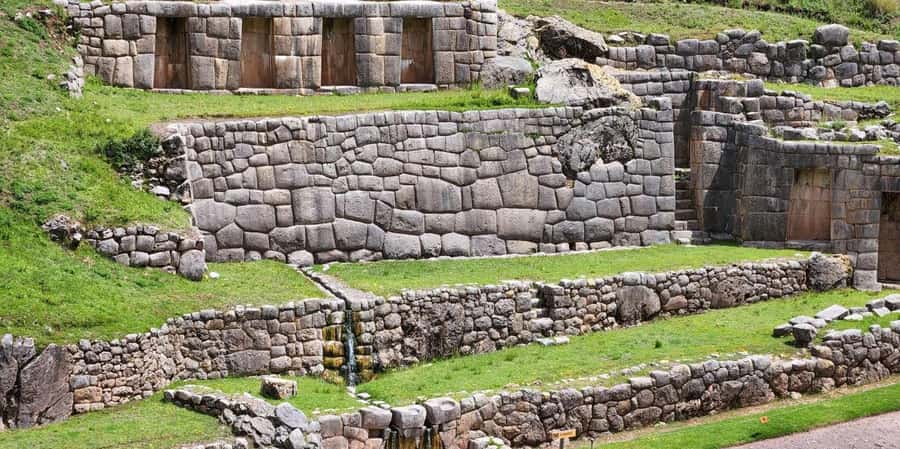
Puca Pucara was an Inca surveillance post and entrance-control point for the road toward Cusco. Its terraces, walls, and steps are more restrained than the giant blocks at Sacsayhuamán, but its position helps explain the wider system.
This is a good stop for seeing the Inca state as organized and practical. The site was not only about temples and ceremonies. Roads, visitors, supplies, and movement into the capital also required control.
You will likely spend less time here than at Qoricancha or Sacsayhuamán. That is reasonable, since the complex is more compact, but the short visit can feel brisk if the group is behind schedule. Keep your camera ready and listen closely while the guide explains how the site fitted into the route network.
Tambomachay, water and the final view
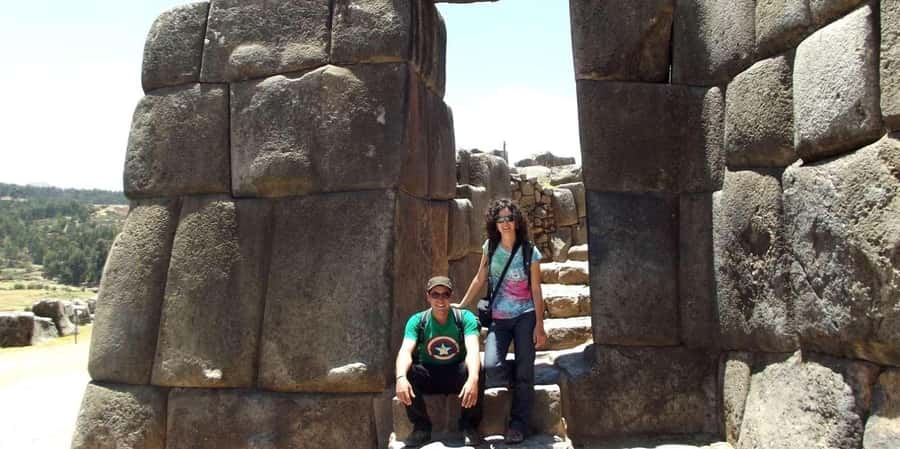
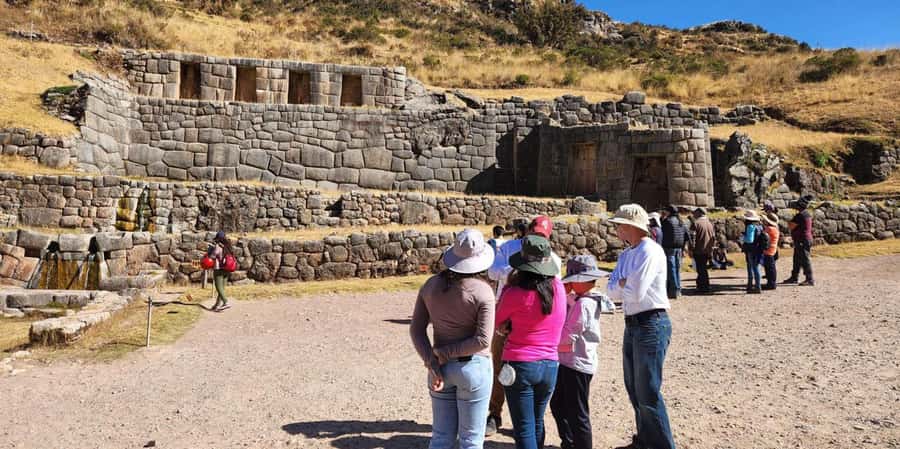
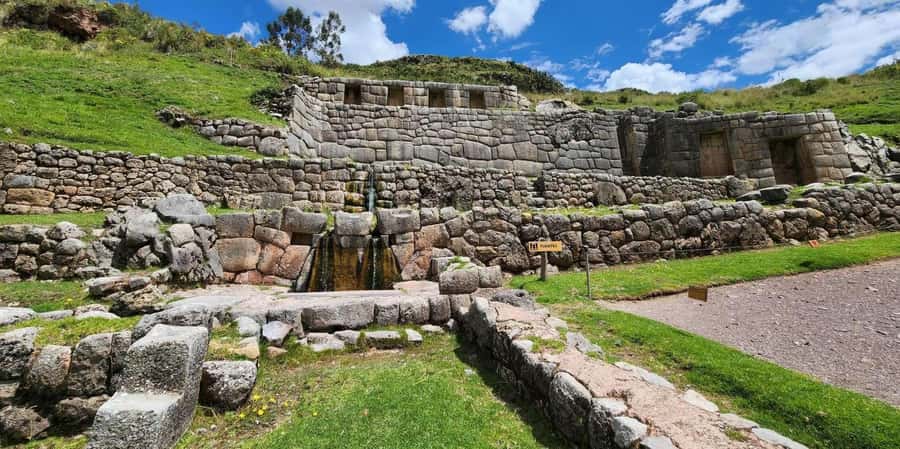
Tambomachay is the final archaeological stop. Its fountains, channels, terraces, and stonework are tied to the Inca worship of water. It is also associated with rest and leisure, and is sometimes called the place of the waters of eternal youth.
The water theme gives the tour a pleasant finish. After the massive military and ceremonial structures earlier in the day, Tambomachay shows a more refined relationship between architecture and flowing water. The fountains are not simply decorative. They help you see how the Inca gave spiritual value to natural resources.
This is also where timing can pay off. A 2 p.m. departure may return you toward Cusco in the evening, with a broad view over the city as the light changes. One visitor specifically advised not skipping the last stop because of the view. The return puts you near the center in time for dinner and drinks, though the actual finish can depend on traffic, group delays, and any extra stops.
Temperatures can drop toward the end of the afternoon, especially around the higher sites. Carry a warm layer. Vendors along the route sell hot tea, which can be welcome, but it is an extra purchase.
How the bilingual guiding works
This is an English and Spanish tour, not a single-language departure. Guides take turns covering the same material in both languages, and the strongest guides manage that rhythm well.
Luis is repeatedly praised for being friendly, patient, and attentive to English speakers. Maribel is described as strong on Cusco, Inca history, and local culture. Joel is praised for passion and for answering questions, while Yenny receives high marks for guiding quality. Fabrisio is also noted for history and practical help.
The bilingual format has two effects. First, it lets you join a more locally mixed group instead of being placed in a separate English-only bubble. Second, it means each stop can take longer. One person found the bilingual structure less effective, while others felt their guides handled both languages very well.
Your experience will depend partly on the group balance. If most people speak Spanish, English explanations may be shorter or may come after the Spanish section. If most people speak English, the reverse can happen. Ask questions clearly, and let the guide know if you need a point repeated.
Transport, walking, and the pace of the day
Hotel pickup is included for hotels in Cusco’s historic center. Tourist transport connects the city with the hilltop sites, so you do not need to arrange taxis between Sacsayhuamán, Qenqo, Puca Pucara, and Tambomachay.
The day combines vehicle travel with walking around ruins, terraces, stone steps, and uneven paths. You do not spend four straight hours walking, but you should wear shoes that handle rough ground. The review details describe the mix as a good balance, though another account found the schedule rushed.
Pickup can be the least polished part. One person reported a late and somewhat chaotic beginning, and another felt the transport process could be faster. Once the group is moving, the tour generally becomes more orderly. Leave some space in your schedule at both ends, especially if you have evening plans.
What the $29 price really gives you
At $29, this is a strong-value way to see the main archaeological circuit without arranging separate transport or a private guide. You receive hotel pickup, tourist transport, and a bilingual guide. The price is low because several important entrance fees are extra.
Budget for:
- 20 soles for Qoricancha
- 70 to 120 soles for the Cusco Tourist Ticket, depending on the ticket type
- The optional Cathedral of Cusco, if you choose to add it
- Small purchases such as hot tea or items at a market stop, if included
The Tourist Ticket can make financial sense if you plan to visit more Cusco museums and Sacred Valley sites. One useful approach is to buy the full ticket from the office near the central plaza before the tour, then bring proof of purchase. The exact ticket needed depends on your wider plans, so check the current options before paying.
The $29 fee is best understood as a transport and guiding price, not an all-inclusive admission price. Once you add tickets, the total cost rises, but you are still getting several major sites in one half-day.
Who should book this tour
I would choose this for a first day or second day in Cusco, once you have rested enough to enjoy the altitude and the walking. It gives you a working map of the city’s Inca sites and helps you decide which places deserve a longer return visit.
It suits you if you want:
- Several major ruins in one outing
- A guide who can connect architecture, religion, and local culture
- Hotel pickup in the historic center
- A low-cost alternative to private touring
- An afternoon finish near dinner time
It is less suitable if you want long, quiet visits at every site, a fully private schedule, or an English-only guide. It is also not ideal if your evening is tightly booked. A four-hour tour can run longer, particularly if pickup is delayed or an extra market stop appears.
The experience also works well for solo participants and mixed groups. One English-speaking participant was the only non-Spanish speaker and still felt included by the guide. That depends on the individual guide, but the better guides make a clear effort to bring everyone along.
Practical ways to get more from the visit
Buy or confirm your entrance tickets before departure. This prevents a delay at the first site and avoids discovering too late that you need cash.
Wear layers. The city may feel mild when you leave, while Sacsayhuamán and Tambomachay can feel cold later. Add comfortable shoes, water, and a phone or camera with space for wide views and close stonework.
Ask about the schedule at the start. Confirm whether the route includes any textile or shopping stop, and ask how much time is planned at Sacsayhuamán. This is the largest and most important site, so it should not be squeezed into the final minutes.
Treat explanations as informed guidance, not absolute proof. Inca history includes evidence, later accounts, and competing interpretations. A guide who says when something is uncertain will give you a more useful understanding than one who presents every theory as settled fact.
Should you book it?
Yes, if you want an affordable introduction to Cusco’s archaeological sites and can accept a bilingual group format. The combination of Qoricancha, Sacsayhuamán, Qenqo, Puca Pucara, and Tambomachay gives you an unusually broad view in four hours, and the best guides add real value.
Book with realistic expectations. Entry fees are extra, the start can be untidy, and the tour may run longer than advertised. If you want a relaxed private visit, choose something else. If you want strong coverage, helpful transport, and a guide-led first look at the Inca world, this is a sensible Cusco booking for the price.
FAQ
How long does the Cusco City Tour last?
The scheduled duration is four hours, although the actual finish can vary. Delays, traffic, or an additional textile market stop have caused some tours to run longer.
Which archaeological sites are included?
The route includes Qoricancha, Sacsayhuamán, Qenqo, Puca Pucara, and Tambomachay.
Is hotel pickup included?
Yes. Pickup is included from hotels in Cusco’s historic center.
Is the tour offered in English?
Yes. The guide speaks English and Spanish, and the tour is bilingual.
Are entrance tickets included in the $29 price?
No. Qoricancha costs 20 soles, and the Cusco Tourist Ticket costs 70 to 120 soles depending on the ticket type. The Cathedral visit is optional and is not included.
Is transport included?
Yes. Tourist transport between the city and archaeological sites is included.
Can I visit the Cathedral of Cusco on this tour?
The Cathedral is an optional visit, not part of the included archaeological route.
What should I bring?
Bring cash for entrance fees, layers for cooler conditions at the hilltop sites, and comfortable shoes for terraces, steps, and uneven paths.
Just added around Peru
- 6-Day Cultural Tour to Machu Picchu★ 5.0 · 76 reviews
- Piramids of Tucume Tour, Sican Museum and Lambayeque city tour★ 5.0 · 30 reviews
- Arequipa, Historic and Colonial City and Santa Catalina Monastery★ 4.5 · 42 reviews
- Aymara Route Mystical Cultural Tour★ 4.7 · 27 reviews
- Lima: Pachacamac Inca Archaeological Complex Tour★ 4.8 · 164 reviews
- Machu Picchu: historical and photographic guided tour★ 4.9 · 27 reviews
- Lima: Historic Downtown, Miraflores & Catacombs Private Tour★ 4.5 · 28 reviews
- Cusco: Historical Guided City Tour with 4 Inca Ruins★ 4.5 · 99 reviews
Peru History Tours, compared.
Lima’s Vibrant Heritage: Exploring the City’s Landmarks Half-day
Read our review →
Lima: Historic Center Street Food, Market, and Eateries Tour
Read our review →
Walking tour in the Historic Center of Arequipa
Read our review →
Lima: Pachacamac Inca Archaeological Complex Tour
Read our review →
Cusco: Historical Guided City Tour with 4 Inca Ruins
Read our review →
Arequipa: Walk through the Historic Center of the City
Read our review →
Cusco: Historic Walking Tour with Pisco Sour and Music Show
Read our review →Browse the lists this tour appears in