
Review · PERU
Walking tour in the Historic Center of Arequipa
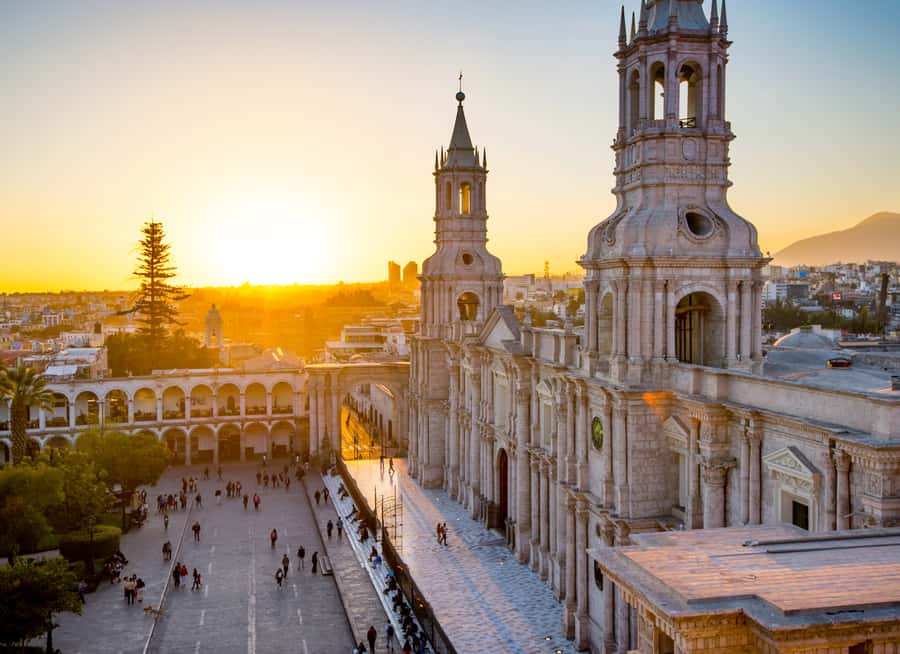
Arequipa reveals itself best on foot, and this two-hour walking tour packs a lot into a short route. You move from the grand Plaza de Armas to quiet courtyards, a camelid center, a volcano viewpoint, and San Lazaro, the city’s first settlement. It is a useful first look at the White City, especially if you have just arrived.
I like the way the tour mixes major sights with small, local details, including alpacas, old gardens, and views of Misti, Chachani, and Pichu Pichu. I also like the guides’ strong focus on stories and practical advice. Edgar, Beatriz, Johan, and Jorge Echeandia have all been singled out for clear explanations, humor, and restaurant tips.
The main point to understand is the payment structure. The $10 charge reserves your place, but you are also expected to offer a voluntary tip at the end. One participant was told to budget 30 to 50 soles per person, so ask about the suggested amount before setting out.
Key points at a glance
- The route begins beside Plaza de Armas: Meet at Santa Catalina Street 204, one block from the square, where your guide carries an umbrella.
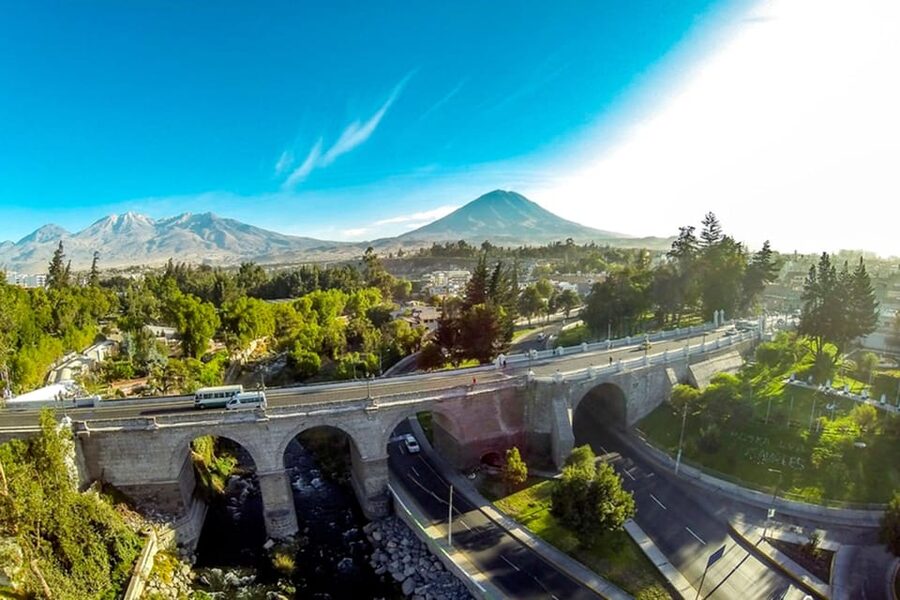
- The walk includes three volcano views: Puente Grau offers sightlines toward Misti, Chachani, and Pichu Pichu when conditions are clear.
- Mundo Alpaca adds an unusual city stop: See llamas, alpacas, Suri alpacas, and vicuñas at a small camelid breeding site.
- San Lazaro gives the tour a local finish: Walk through the neighborhood linked with the founding of the White City.
- The guides are a major strength: English and Spanish tours can include detailed stories, humor, food advice, and answers to questions.
- Museum visits are optional: Santa Catalina Convent, the Juanita mummy museum, and other sites require separate payment and may involve an additional internal guide.
Starting beside Arequipa’s Plaza de Armas
The meeting point is Santa Catalina Street 204, about one block from the Plaza de Armas. Look for an umbrella, the guide’s main identifying sign. The coordinates provided are -16.3967191, -71.5366788, useful if you want to check the location on your phone before leaving your hotel.
That short walk from the square matters. You do not need a taxi or a long transfer, and the tour starts in the center of Arequipa’s historic district. Arrive with enough time to find Santa Catalina Street, since one participant had a delayed start after the guide was not immediately at the meeting point and the organizer did not answer the first call.
The guides work in English and Spanish. Names associated with especially strong tours include Edgar, Beatriz, Johan, and Jorge Echeandia. Their approach seems to suit people who want more than a quick list of dates. You can expect explanations of religious art, colonial architecture, local customs, food, and everyday life in Arequipa.
More Old Town and Historic Centre Walks in Peru:
- Lima: Historic Center Street Food, Market, and Eateries Tour
★ 4.9 · 216 reviews - Arequipa: Walk through the Historic Center of the City
★ 4.9 · 87 reviews - Lima: Historic Downtown, Miraflores & Catacombs Private Tour
★ 4.5 · 28 reviews
Plaza de Armas and the White City’s stonework
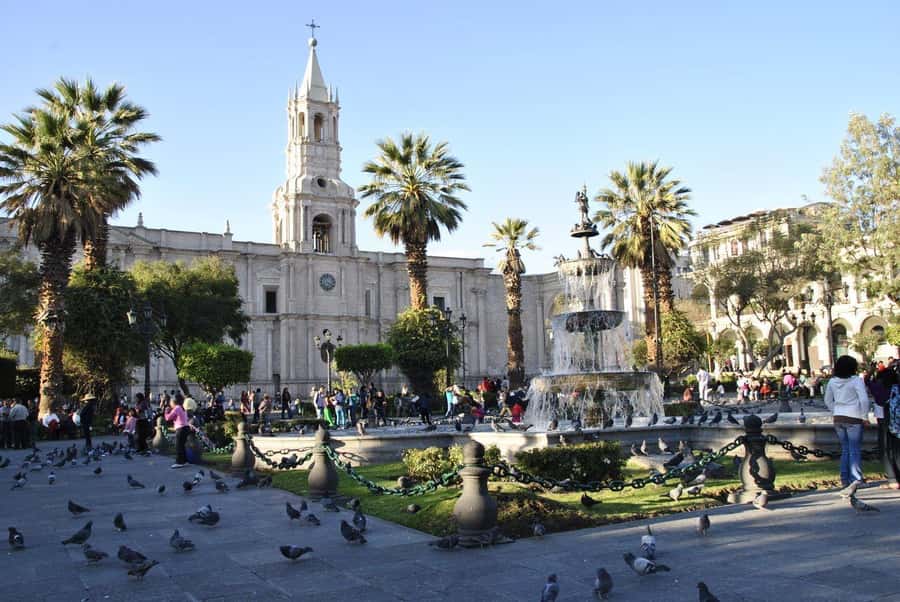
The first stop is Arequipa’s main square, surrounded by traditional arches and portals. This is the right place to begin because the square gives you the basic map of the city and a visual introduction to Arequipa’s pale volcanic stone.
The guide explains the square’s history and points out the buildings and arcades around it. I like this opening because it gives meaning to what might otherwise look like a handsome but fairly standard colonial plaza. Listen for details about how the square relates to Arequipa’s identity as the White City.
This part can feel familiar if you have already taken several colonial-city tours. The value depends heavily on the guide’s storytelling, and the strongest accounts describe guides who use humor, answer questions, and connect the buildings to modern city life. One tour even pointed out the long line of people waiting to renew national identity cards, a small detail that helps you see the square as a working part of Arequipa, not just a photo stop.
The Company cloisters and old city courtyards
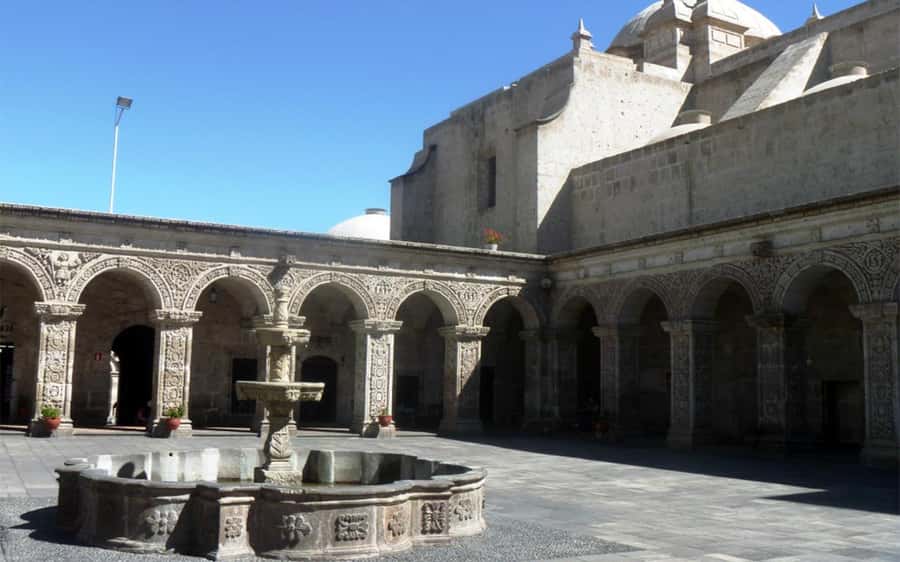
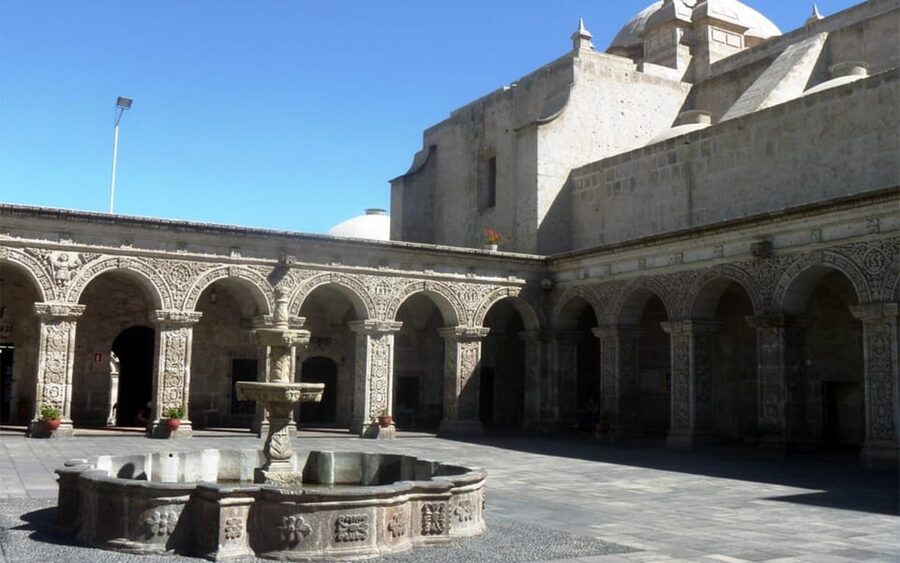
The route continues to the Cloisters of the Company, one of the architectural highlights. Expect carved stone, arcades, religious decoration, and the enclosed feel of a historic courtyard. This is one of the prettiest sections of the walk and a good place to slow down for photographs if the group allows enough time.
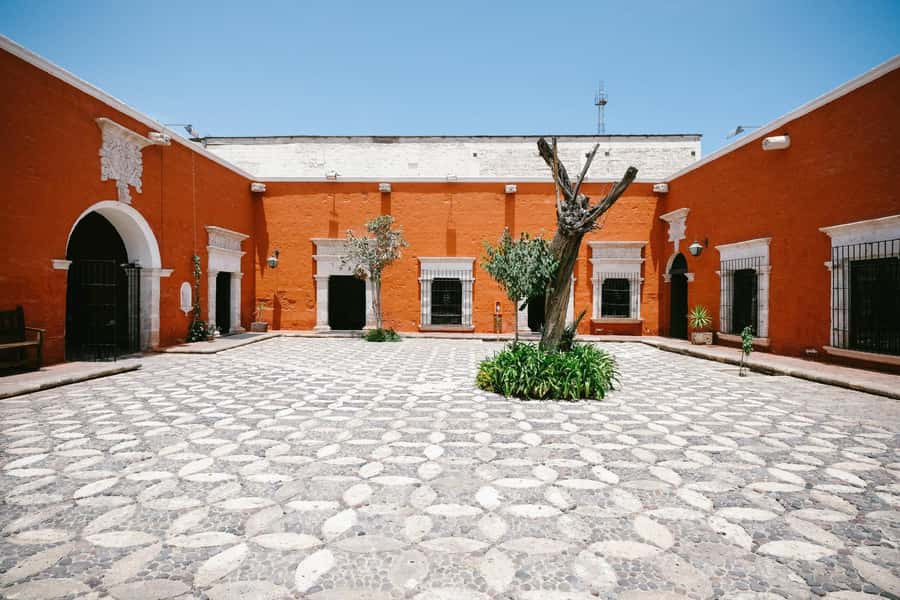
The tour also passes old mansions, city gardens, and charming spaces near the center. These stops are useful because they show the less formal side of Arequipa’s architecture. Instead of seeing only the grand fronts around the main square, you get a sense of the courtyards and gardens tucked behind the streets.
Here, I would keep your camera ready but avoid assuming you will have long photo breaks. One participant found the tour rushed and had little time for pictures. Since the full route lasts about two hours, the guide has to keep the group moving to cover the planned stops.
Puente Grau and three volcanoes above Arequipa
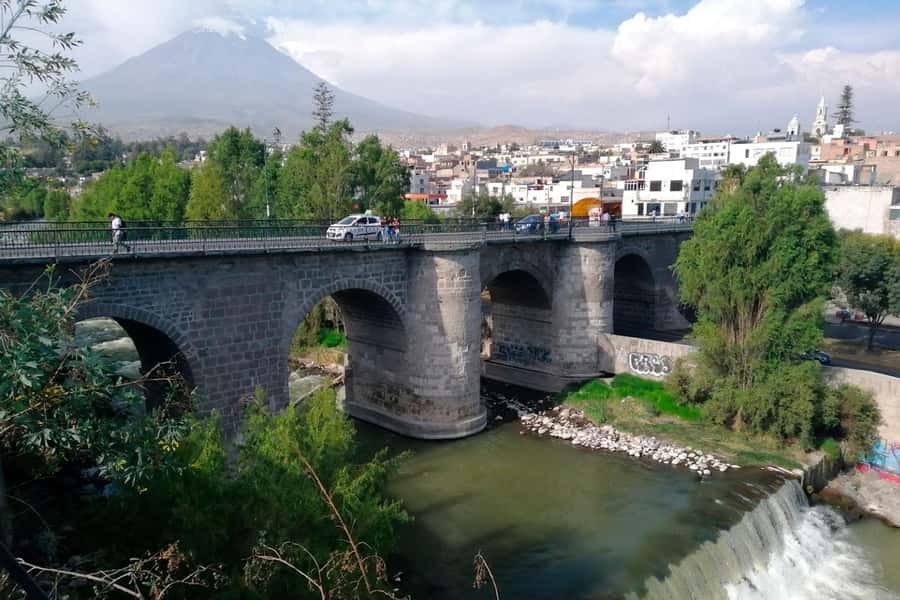
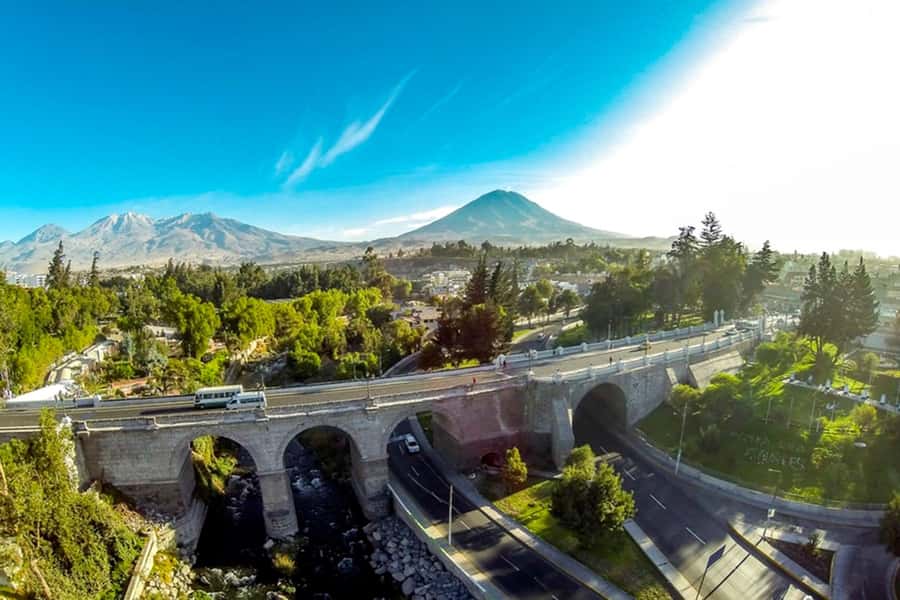
At Puente Grau, the tour reaches a strategic viewpoint for the surrounding volcanoes. On a clear day, you may see Misti, Chachani, and Pichu Pichu. These peaks give Arequipa its dramatic setting and help explain why the city feels so open even while you are walking through a dense historic center.
This is a scenic pause rather than a long mountain excursion. You are not hiking toward the volcanoes, and the tour does not include transport to a remote viewpoint. You simply use a city bridge and elevated position to look outward.
Conditions will shape what you see. Clouds, haze, or changing light can limit the view, so do not judge the experience only by whether all three volcanoes appear perfectly. The stop still helps you understand Arequipa’s geography, and it breaks up the architectural portion of the walk.
More History Walking Tours in Peru:
- Cusco: Historic Walking Tour with Pisco Sour and Music Show
★ 4.6 · 65 reviews - History and Hauntings of Salem Guided Walking Tour
★ 5.0 · 14,564 reviews - Lisbon: History, Stories and Lifestyle Walking Tour
★ 4.8 · 10,902 reviews - Amsterdam: Life of Anne Frank and World War II Walking Tour
★ 4.8 · 10,467 reviews
Mundo Alpaca and Arequipa’s camelid traditions
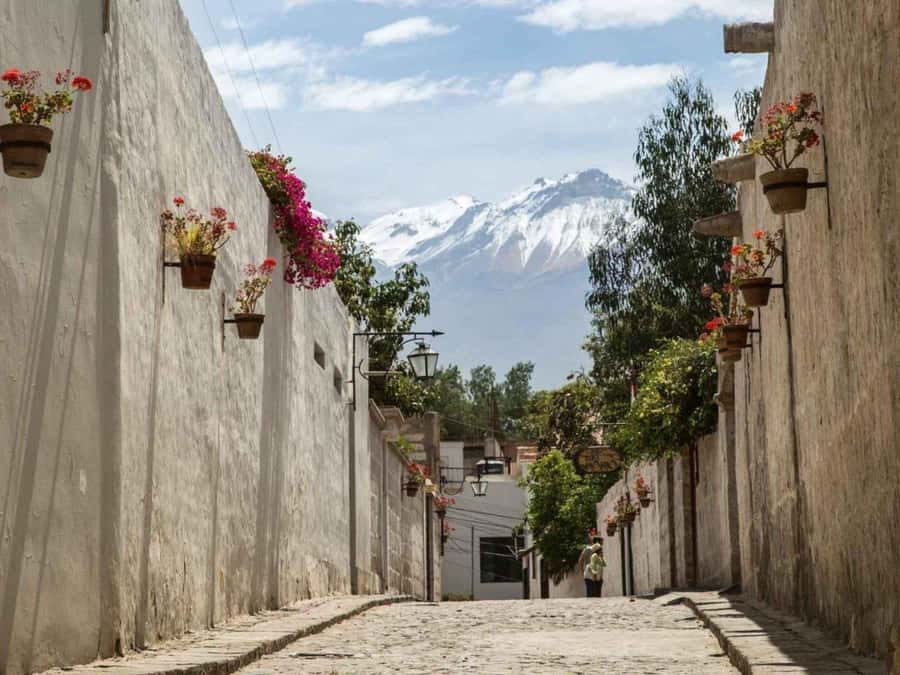
Mundo Alpaca is the route’s most unexpected stop. The site includes an old breeding area for camelids and a small zoo with llamas, alpacas, Suri alpacas, and vicuñas. You may also have the chance to feed the animals, an experience that several people found to be a high point of the walk.
I like this stop because it connects the city tour with Andean life and textile production. You can see the animals whose fibers are used for local fabrics, and you may choose to buy textiles made from the same type of fiber. That shopping option is not essential, but it can make more sense here than buying a generic souvenir elsewhere.
Keep the commercial side in perspective. Mundo Alpaca is both a cultural stop and a place where fabrics are offered for sale. You are free to look without buying, and the visit still has value if you are more interested in the animals and the production tradition than in shopping.
The chance to see a baby llama or alpaca can be especially appealing to families and animal lovers. It also gives the tour a lighter moment after the churches, arcades, and historical explanations. If you prefer a tour focused only on monuments, this stop may feel like a detour. For most first-time visitors, it adds useful variety.
San Lazaro, Arequipa’s oldest neighborhood
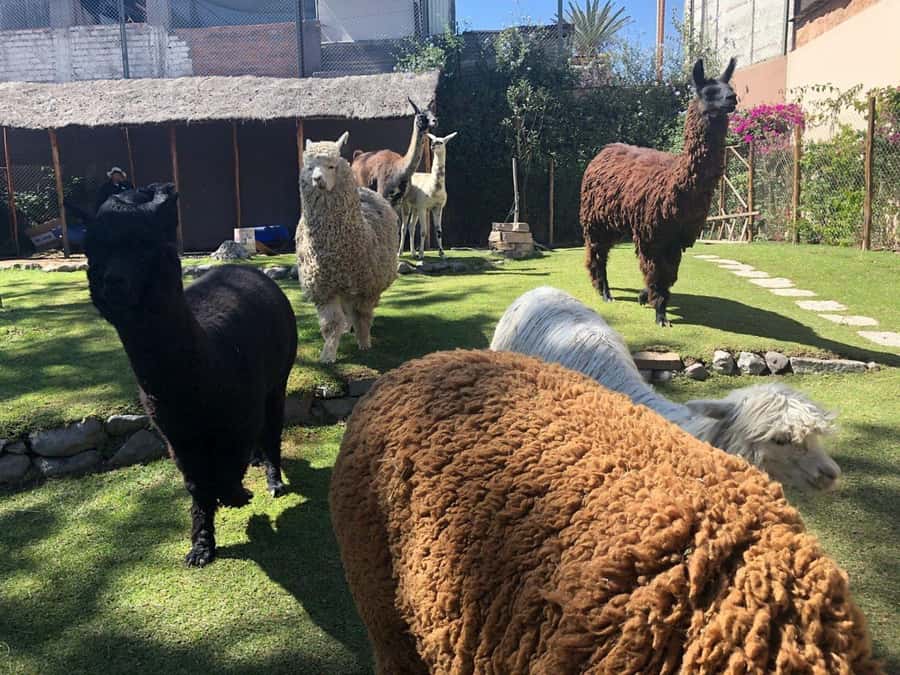
The walk continues to San Lazaro, described as the first town founded in what became the White City. Its streets provide a different mood from the formal center. Here, the focus is on the neighborhood’s origins, older buildings, and the way Arequipa grew outward from its earliest settlement.
San Lazaro is valuable because it keeps the tour from becoming a simple circuit of churches and plazas. You get a look at a historic residential area and hear how the city’s beginnings are tied to this part of town. The route remains on foot, so you see the changes in streets and building styles as you go.
The tour returns near Santa Catalina Street and the Plaza de Armas. That central finish is practical. You can continue sightseeing, find lunch, return to your hotel, or use the guide’s food suggestions to plan the rest of your day.
Optional visits to Santa Catalina and the Juanita mummy
The basic walk does not mean you spend a long visit inside every major museum. If you want to enter Santa Catalina Convent, the Juanita mummy museum, or another representative museum, arrange it in advance and pay the separate entrance cost. Internal guides may also be required.
This distinction is important when comparing prices. The experience includes the walking tour and the listed places on the route, but the text also makes clear that optional museum entries cost extra. Ask exactly which entrances are covered on your chosen departure so you are not surprised at the door.
Santa Catalina Convent is a major addition if you have the time. The Juanita mummy museum offers a very different subject, focused on archaeology rather than colonial architecture. You probably cannot explore every optional site thoroughly within the standard two-hour schedule, so treat these as add-ons rather than guaranteed parts of the walk.
What the $10 price really covers
The advertised price is $10 per person, but it is not the full expected payment. You pay the reservation fee when booking, then give the guide a voluntary tip at the end. The stated reason is to help cover guide service and maintenance payments connected with places visited.
One person described a suggested tip of 30 to 50 soles per person and felt that this was high for a tour presented at times as a free walking tour. That concern is fair. The cost can still be good value, but only if you calculate the reservation fee and likely tip together.
At the same time, the tour covers a surprising range of sights without requiring taxis or a separate guide for each area. You receive a guided introduction to the center, the Company cloisters, volcano views, Mundo Alpaca, and San Lazaro. For someone arriving the night before, that combination can be a useful orientation to the city.
I would ask three questions before booking:
- What tip amount does the guide or company currently suggest?
- Which entrances are included in the standard route?
- Are museum visits part of the two-hour walk or separate additions?
The activity allows cancellation up to 24 hours before departure for a full refund, and you can reserve now and pay later. Starting times depend on availability.
Pace, group size, and guide quality
The strongest part of this experience is the guide. Edgar is praised for history, humor, and useful restaurant suggestions. Johan is described as funny and engaging, while Jorge Echeandia is credited with covering a great deal in a short time. Beatriz is noted for explaining religious architecture and art clearly.
Those details point to the kind of experience you should expect: a moving conversation rather than a silent walk between photo stops. Ask questions as you go. The guides are intended to explain the meaning behind what you see, not simply identify each building.
The tradeoff is pace. A two-hour route that includes several neighborhoods and stops must keep moving. If you want careful architectural photography, long museum visits, or time to sit in each plaza, choose a slower private tour instead. If you want a broad first look and can take quick photos, the pace should work well.
The group can also affect the experience. A large group may make it harder to hear or stay close to the guide, while a small group may allow more questions. The supplied information does not promise a fixed group size, so ask before booking if that matters to you.
Who should book this Arequipa walk?
I would recommend it to first-time visitors who want a clear introduction before exploring Arequipa alone. It is also a good fit if you have only a short stay and want to connect the main square with less obvious stops such as Mundo Alpaca and San Lazaro.
Families may appreciate the camelids, especially the chance to see or feed llamas and alpacas. Food-minded visitors should listen for local restaurant advice, which several guides provide. History fans will get the most from the explanations at the plaza, Company cloisters, churches, and San Lazaro.
I would be more cautious if you dislike tipping systems or want every cost stated in advance. The $10 reservation fee is attractive, but the suggested tip can make the final price higher than expected. I would also choose another format if you need extensive time for photos or a detailed interior visit to Santa Catalina Convent.
Should you book the Historic Center of Arequipa walking tour?
Book it if you want a low-cost, active orientation to Arequipa with strong storytelling, volcano views, colonial courtyards, camelids, and a historic neighborhood in one outing. The mix is more interesting than a standard plaza-and-church circuit, and the central meeting point makes it easy to fit into your first day.
Before booking, confirm the current tip expectation and ask which entrance fees are included. If you are comfortable with that arrangement, this is a practical way to get your bearings, learn the city’s basic story, and collect ideas for the rest of your stay.
FAQ
Where does the walking tour start?
It starts at Santa Catalina Street 204, about one block from Arequipa’s Plaza de Armas. The guide can be identified by an umbrella. The listed coordinates are -16.3967191, -71.5366788.
How long does the tour last?
The scheduled duration is approximately two hours. One participant described a walk lasting two and a half hours, so allow a little flexibility.
Which languages are available?
The live guide is available in English and Spanish.
Are museum entrance fees included?
The walk includes the listed places visited on the route, but Santa Catalina Convent, the Juanita mummy museum, and other museums require separate payment. Internal guides may also cost extra.
How does the payment work?
The booking price is $10 per person. After the walk, you are expected to give the guide a voluntary tip. A suggested amount of 30 to 50 soles per person was reported, so confirm the current recommendation before the tour.
Can I cancel the booking?
Yes. You can cancel up to 24 hours in advance for a full refund. You can also reserve now and pay later.
Just added around Peru
- 6-Day Cultural Tour to Machu Picchu★ 5.0 · 76 reviews
- Piramids of Tucume Tour, Sican Museum and Lambayeque city tour★ 5.0 · 30 reviews
- Arequipa, Historic and Colonial City and Santa Catalina Monastery★ 4.5 · 42 reviews
- Aymara Route Mystical Cultural Tour★ 4.7 · 27 reviews
- Lima: Pachacamac Inca Archaeological Complex Tour★ 4.8 · 164 reviews
- Machu Picchu: historical and photographic guided tour★ 4.9 · 27 reviews
- Lima: Historic Downtown, Miraflores & Catacombs Private Tour★ 4.5 · 28 reviews
- Cusco: Historical Guided City Tour with 4 Inca Ruins★ 4.5 · 99 reviews
Peru History Tours, compared.
Lima’s Vibrant Heritage: Exploring the City’s Landmarks Half-day
Read our review →
Lima: Historic Center Street Food, Market, and Eateries Tour
Read our review →
Cusco: City Tour | Half-Day Tour to 4 Archaeological Sites
Read our review →
Lima: Pachacamac Inca Archaeological Complex Tour
Read our review →
Cusco: Historical Guided City Tour with 4 Inca Ruins
Read our review →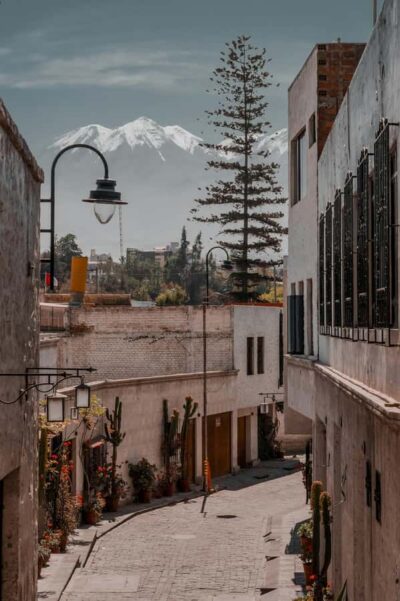
Arequipa: Walk through the Historic Center of the City
Read our review →
Cusco: Historic Walking Tour with Pisco Sour and Music Show
Read our review →Browse the lists this tour appears in