

Review · ATHENS
Athens: History of Rebellion Walking Tour
Athens’ story does not end with the Acropolis. This walking tour follows the city’s harder, less polished history, from resistance to Ottoman rule and fascism to present-day struggles in Exarchia, a neighborhood known for activism, art, and political debate. Guide Maelle connects places, people, and movements in a way that gives modern Athens a human face.
I like two things here: the route links famous places such as Syntagma Square to lesser-known stories, and the small-group format leaves room for questions and conversation. Maelle also gives personal suggestions for food, sights, shopping, and later stops in Greece. The main drawback is simple: you walk and stand for two to three hours, often in the sun, and the subject matter is political and sometimes difficult.
Key points to know before booking
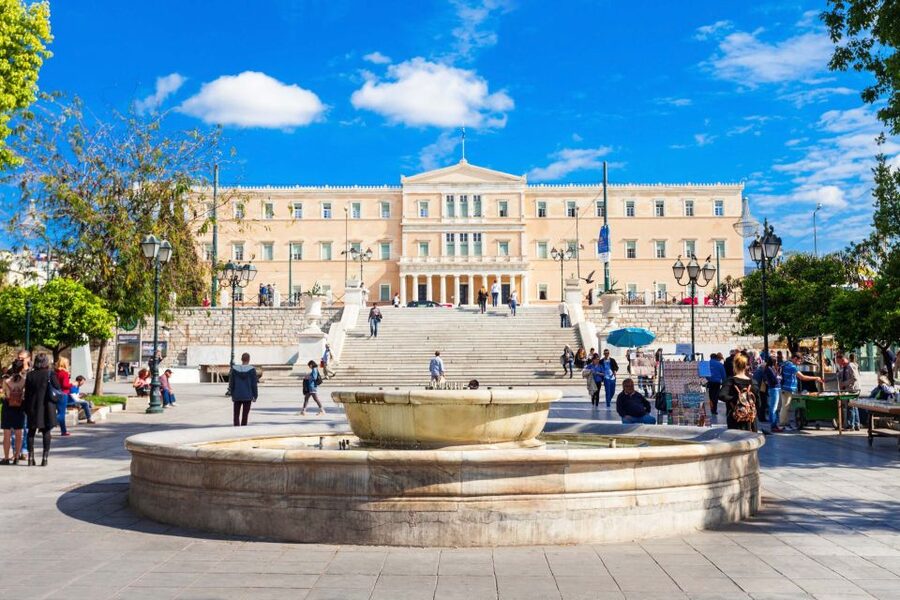
- Ottoman rule to present-day activism: The tour covers roughly 200 years of Greek resistance and social movements.
- A different Athens route: You see Monastiraki, Syntagma, the Parliament, the Academy, Kolonaki, and Exarchia through a modern political lens.
- Maelle leads the experience: She guides in English or French and encourages discussion rather than delivering only dates and names.
- Exarchia is the main payoff: Learn how anarchists, refugees, artists, and the LGBT+ community have shaped the neighborhood.
- Good first-day choice: The tour gives you context for the city and includes practical recommendations for the rest of your stay.
- Prepare for a serious walk: Wear comfortable shoes, bring water, a hat, and sunscreen. The route is not suitable for people with mobility impairments.
Why this tour shows you a different Athens
Most first visits to Athens revolve around temples, marble, and ancient democracy. Those sights matter, but they can leave you with an incomplete picture of the city. Athens is also a place shaped by occupation, revolution, dictatorship, protest, migration, police conflict, and neighborhood organizing.
This tour makes those forces the main subject. You begin in Monastiraki, move through the political center around Syntagma, and finish in Exarchia. The route is useful because it places modern Greek history on the streets where public life still unfolds.
I especially like the link between older resistance and current activism. The tour does not treat rebellion as a single heroic episode from the past. Instead, it asks how ideas about freedom, authority, community, and justice continue to shape Athens today.
That approach suits you if you enjoy history with human questions attached. It is less suitable if you want a light sightseeing walk with only architecture and entertaining anecdotes. Politics, state violence, fascism, inequality, and social justice are central subjects.
More History Walking Tours in Athens
- Acropolis, Parthenon & Athens Old City Heritage Walking Tour
★ 4.5 · 876 reviews - Ancient Athens for Kids 4-Hour Private Walking Tour
★ 5.0 · 66 reviews - Private Athens Walk: Ruins, Markets & Local Stories
★ 5.0 · 41 reviews
Starting in Monastiraki, with Ottoman Athens in view
Meet in Monastiraki Square, in front of Pantanassa Church. Look for a guide holding a sign marked Athens City of Rebellion. Monastiraki is a practical meeting place, close to major central sights and easy to reach on foot.
The opening section looks back to the period when Athens was under Ottoman rule. You hear how resistance helped feed the Greek Revolution roughly 200 years ago, and how individuals who fought for freedom later became part of the national story.
This is not an ancient Athens tour, so do not expect a long explanation of temples or classical philosophy. Instead, the square becomes a starting point for understanding the modern Greek state and the struggles that helped create it.
The short stop at Monastiraki keeps the pace moving. You also pass the Metropolitan Church of Athens, then pause at an out-of-the-way location for more discussion. These brief stops work best as pieces of a larger story rather than as individual attractions.
Moving from the church to the political heart of Syntagma

As you walk toward Syntagma, the tour shifts from national revolution to the public life of modern Athens. Syntagma Square is where major demonstrations, political gatherings, and public disputes have played out. It is also one of the city’s most familiar spaces, which makes the political context easy to connect with what you see around you.
You visit the square, the Hellenic Parliament, and the Tomb of the Unknown Soldier. The emphasis is not simply on taking photographs. You learn why these places matter as symbols of the Greek state and how ordinary people have gathered there to demand change.
The Parliament and the tomb also give the guide a chance to discuss heroic acts, popular movements, and the pressures created by fascism, violence, and oppression. The tour presents history through people and choices, not just a string of dates.
The schedule allows about ten minutes at Syntagma and another ten at the Parliament, with a shorter stop at the tomb. That is enough time for a focused explanation, though not for a full museum-style lecture. You should expect interpretation rather than extensive time inside buildings.
Kolonaki and the Academy of Athens
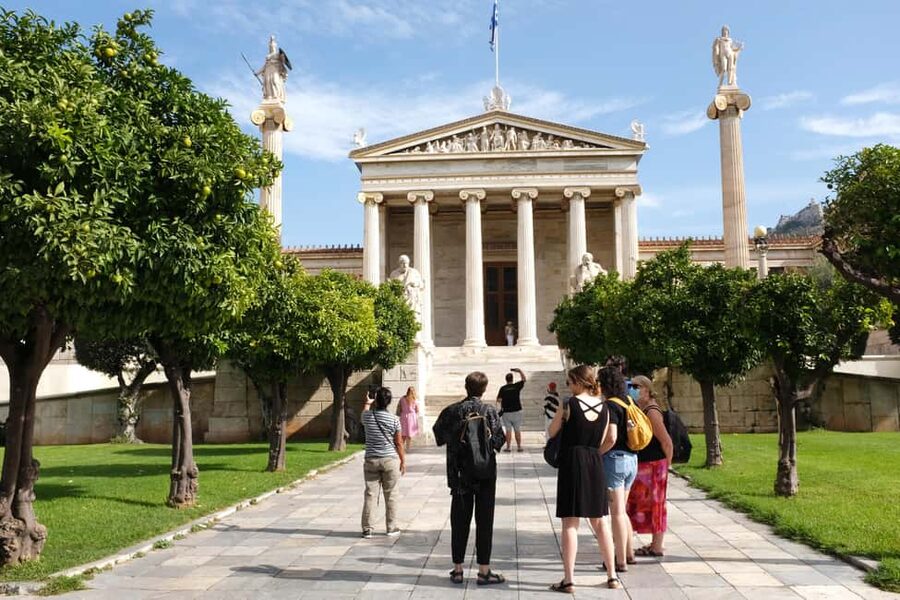
From Syntagma, the route passes through Kolonaki before reaching the Academy of Athens. The change of neighborhood matters. Athens is not one uniform place, and the walk lets you consider how different parts of the city carry different social and political meanings.
At the Academy, the tour continues its look at the ideas and institutions that helped shape modern Greece. The stop lasts about ten minutes and adds an important contrast to the more openly confrontational spaces later on.
This part of the walk may appeal to you if you like seeing how civic symbols work. Grand institutions can represent education, national identity, and official power, while nearby streets may express very different opinions about the state.
Keep in mind that several stops are guided from the outside or are pass-by points. This experience is about the city as a living setting, not about entering a series of monuments.
More History Walking Tours in Greece
- Small-Group Women History in Ancient Greece Walking Tour
★ 5.0 · 38 reviews - Athens:Acropolis – Historical Center Walking Tour in Spanish
★ 5.0 · 32 reviews - Private Athens: Historical Walking Tour Including the Changing of the Guard
★ 5.0 · 27 reviews - Corfu: History and Culture Walking Tour
★ 4.9 · 55 reviews
Entering Exarchia, Athens’ center of dissent
Exarchia is the tour’s most distinctive section. The neighborhood is associated with resistance, anarchist organizing, artists, refugees, and the LGBT+ community. It has also faced police repression and pressure from gentrification.
The guide explains how Exarchia has tried to protect a collectivist way of life while dealing with forces that can change or control a neighborhood. You hear about the area’s social movements and why it remains important in Athens’ debates about authority, housing, public space, and community.
This is where the route feels most connected to daily life. Instead of looking at a monument that represents the past, you are asked to think about a neighborhood still arguing about its future.
The tour includes several stops in Exarchia, including a secret stop, another lesser-known location, and Exarchion Square. At one point, you may discuss street art and how public walls can carry political messages. The guide’s method is interactive: she asks questions and encourages you to think about what you are seeing rather than simply memorizing information.
You should be respectful here. Exarchia is a real neighborhood, not a themed attraction. The tour’s appeal comes partly from its effort to explain local life without turning residents or their struggles into a display.
What Maelle adds to the walk
Maelle is the named guide for this experience, and the strongest feature of the tour is her personal, discussion-based style. She brings together modern Greek history, politics, culture, and social movements, then answers questions about everyday life in Greece and the meaning of street art.
You can expect humor alongside serious material. That balance matters because two and a half hours of political history can become heavy if presented as a lecture. The format instead leaves room for conversation, reflection, and moments of levity.
Maelle also offers suggestions for restaurants, shopping, sights in Athens, and places to visit on the Greek islands. That practical help can make the tour more useful than a one-off history lesson. If you take it near the beginning of your stay, you can use her local advice afterward.
The small-group or private option is another advantage. A small group makes it easier to ask questions and talk through complicated subjects. If your booking becomes private, expect the experience to feel more like a long conversation with a local guide than a standard group walk.
The tour is offered in English and French. Check the available option when you book, particularly if language is important for discussing political or historical detail.
How much value do you get for $44.04?

At $44.04 per person, this costs more than a basic free-style city walk, but it offers a narrower and more specialized subject. You are paying for a 2.5-hour guided route, a small-group or private setting, and a guide who can place modern Athens in context.
The value is strongest if you want something beyond ancient sites. This tour can help explain why Athens feels politically alert, visually expressive, and sometimes openly divided. It also saves you from trying to assemble the background on your own from scattered museums, books, and online searches.
The value is weaker if your priority is maximum monument time. Several stops are short, some are pass-by locations, and the tour does not focus on entering major attractions. You are buying interpretation and access to a different way of reading the city, not admission tickets.
Free cancellation up to 24 hours before the tour and the option to reserve now and pay later make planning less risky. Still, check the exact starting time when you choose a date.
Walking conditions, timing, and practical preparation

The tour lasts 2.5 hours, but you should plan for continuous walking and standing. Comfortable shoes are essential. Bring water, sunscreen, and a sun hat, especially during hot weather.
The route crosses central Athens and includes several stops where you listen outdoors. Shade and seating are not guaranteed, so anyone with limited stamina should think carefully before booking. The experience is specifically not suitable for people with mobility impairments.
The supplied meeting information gives two end points: the route description finishes at Plateia Exarcheion, while the general meeting details say the activity ends back at the meeting point. Confirm the final drop-off point before setting up your next reservation or transportation.
I would take this tour early in an Athens visit. The historical and political context can sharpen your understanding of other neighborhoods, public squares, graffiti, and conversations you encounter later.
Who will get the most from this experience?

This tour is a strong match for you if you enjoy:
- Modern Greek history rather than only classical antiquity
- Political movements and questions about social justice
- Street art and the meaning of public space
- Small groups with time for questions
- Walking tours that challenge easy versions of a city
- Meeting a guide who offers practical local suggestions
It may not suit you if you want a relaxed, purely scenic route, dislike political discussion, or cannot comfortably walk and stand for several hours. The tone is thoughtful and sometimes serious, even though Maelle brings humor and warmth to the conversation.
Families with older teenagers may find the ideas engaging, but the material is not presented as a children’s sightseeing tour. The best audience is someone curious about how ordinary people and social movements have shaped Athens.
Should you book the Athens History of Rebellion Walking Tour?
Book it if you want Athens to make sense beyond the Acropolis. The route connects Monastiraki, Syntagma, the Parliament, and Exarchia into one story about freedom, power, resistance, and community.
I would especially recommend it for a first or second day in the city, when Maelle’s advice can guide the rest of your visit. Choose it with open eyes: you will walk a lot, hear about painful subjects, and spend less time inside famous monuments.
For a more honest picture of modern Greece, this is a worthwhile $44.04. If your idea of Athens is limited to ancient ruins, expect this tour to change the questions you ask about the city.
FAQ
Where does the tour start?
It starts in Monastiraki Square, in front of Pantanassa Church. The guide will hold a sign marked Athens City of Rebellion.
Where does the tour finish?
The route description says it finishes at Plateia Exarcheion. The general meeting information says the activity ends back at the meeting point, so confirm the final location before booking onward plans.
How long does the tour last?
The walking tour lasts 2.5 hours. Starting times vary, so check availability for your chosen date.
What languages are available?
The tour is offered in English and French.
Is this a private tour or a group tour?
Private and small-group options are available.
What should I bring?
Bring comfortable shoes, a sun hat, sunscreen, and water.
Is the tour suitable for people with mobility impairments?
No. The activity is not suitable for people with mobility impairments and involves walking and standing for two to three hours.
What is the cancellation policy?
You can cancel up to 24 hours in advance for a full refund. You can also reserve now and pay later.
Just added around Athens
- Small-Group Women History in Ancient Greece Walking Tour★ 5.0 · 38 reviews
- The original Christian tour on Paul’s footsteps in Athens and ancient Corinth★ 4.5 · 25 reviews
- Ancient Athens tour: Acropolis, Parthenon and Acropolis Museum★ 5.0 · 256 reviews
- Ancient Athens Segway Tour with Agora and Kerameikos★ 5.0 · 94 reviews
- Ancient Sparta & Mystras Private Day Tour from Athens★ 5.0 · 52 reviews
- Athens National Archaeological Museum E-Ticket with Audio Guide★ 3.0 · 57 reviews
- Ancient Corinth, Sanctuary of Hera, Blue Lake & Canal from Athens★ 5.0 · 26 reviews
- Half Day Historical Athens City Private Taxi Service Tour★ 5.0 · 79 reviews
Athens History Tours, compared.

Athens: Acropolis & up to 5 Archaeological Sites Combo Pass
Read our review →
Historical Delphi One Day Tour with Arachova Stop & Expert Guide
Read our review →
From Athens: Ancient Corinth Day Trip with Canal & VR Guide
Read our review →
Historic Athens: Small Group Electric Bike Tour
Read our review →
Acropolis, Parthenon & Athens Old City Heritage Walking Tour
Read our review →
Private Biblical Tour Ancient Corinth & Isthmus Canal from Athens
Read our review →
Athens: National Archaeological Museum Ticket w/ Opt. Audio
Read our review →Browse the lists this tour appears in