Review · ATHENS
Athens:Acropolis – Historical Center Walking Tour in Spanish
The best part of this four-hour walk is the south-slope entrance to the Acropolis, which brings you first to the Theater of Dionysus instead of sending you straight into the main gate crowds. From there, your Spanish-speaking guide leads you uphill through the Propylaea, past the Temple of Athena Nike, and onto the great platform facing the Parthenon.
I like the strong mix of ancient monuments and living Athens. You get the Acropolis, then Plaka’s lanes, the outside of the Ancient Agora, the Tower of the Winds, and Mitropolis Cathedral. I also like the guides’ personal touch. Efi and Andrea are praised for clear explanations, patience, humor, and useful tips for the rest of your stay.
The main thing to weigh is the extra entrance ticket. It is not included in the $57 tour price, and you must have an Acropolis entry slot between 8:00 and 9:00 a.m. The route also involves uneven ground and uphill walking, so it is not suitable for people with mobility impairments.
Key points to know before booking
- Enter from the south slope: Begin at the Theater of Dionysus and avoid starting at the busiest main entrance.
- Hear the Acropolis in Spanish: Guides such as Efi and Andrea explain the myths, buildings, and city views in a lively, personal way.
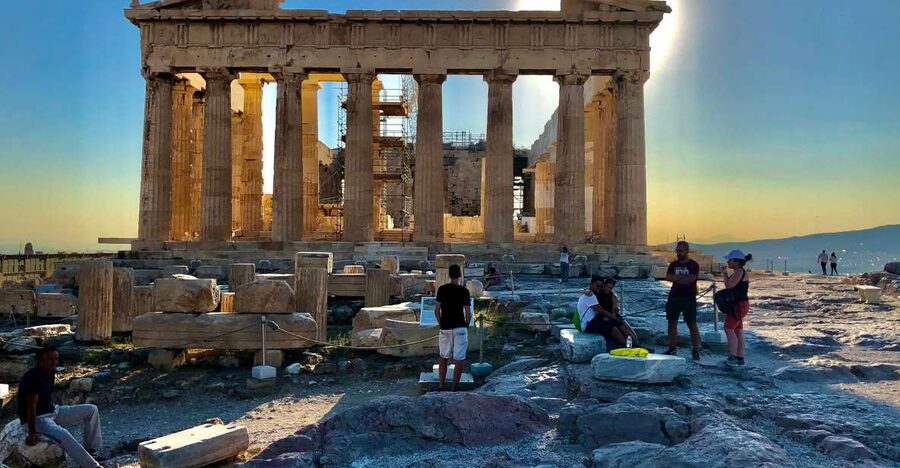
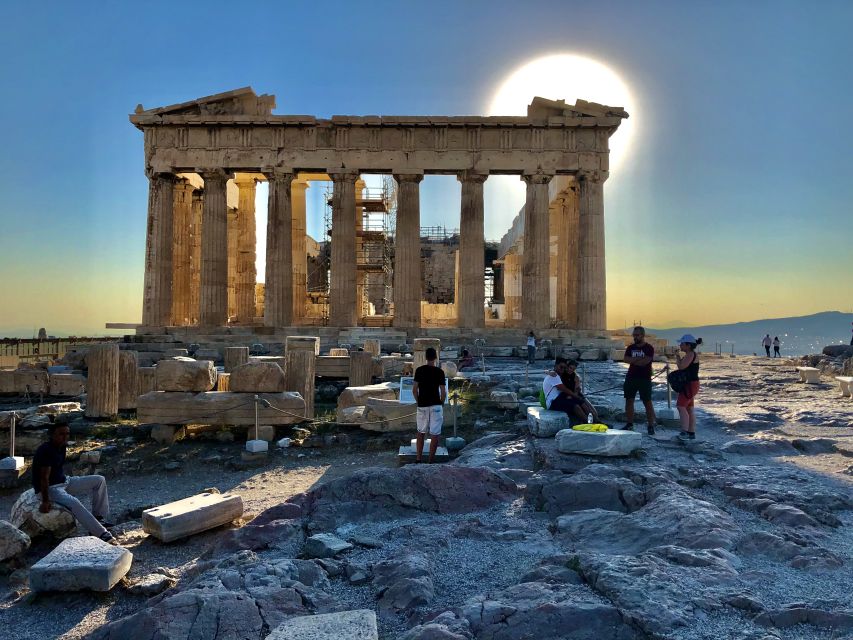
- See the Parthenon from the best angle: The tour pauses directly in front of the temple for context, photos, and time to take in its design.
- Pair ruins with old Athens: After the Acropolis, walk through Plaka and pass the Ancient Agora, Tower of the Winds, and Mitropolis.
- Plan for an early start: Your Acropolis ticket must be for the 8:00 to 9:00 a.m. time slot.
- Bring proper shoes: The route includes stone paths, steps, and slopes, and baby carriages and electric wheelchairs are not allowed.
Why the south entrance makes a difference
The Acropolis is Athens’ essential sight, but your first few minutes can shape the whole visit. This tour begins at the lower gate near the Acropolis Museum, then enters through the south slope. That approach takes you to the Theater of Dionysus, often described as the oldest theater in the world, before you climb toward the summit.
This is a smart route for a morning visit. You begin with a major site rather than treating the theater as a quick afterthought. Your guide can explain how drama, public life, and religious festivals fit into ancient Athens before the Parthenon takes over the view.
You should expect a walking tour, not a ride between monuments. The Acropolis has rough stone surfaces, steps, and uphill sections. Comfortable shoes are not a small detail here. Bring water as well, although food and drinks are not included in the tour.
The meeting point is at the lower Acropolis gate, only a few meters from the Acropolis Museum. Look for the guide holding a sign with the office logo. Hotel pickup is not provided, so you need to reach the meeting point on your own.
More Ancient History Tours in Athens
- Athens: Acropolis & up to 5 Archaeological Sites Combo Pass
★ 4.2 · 13,904 reviews - Athens: Ancient Greek Theater Performance
★ 4.7 · 2,481 reviews - Historical Delphi One Day Tour with Arachova Stop & Expert Guide
★ 4.5 · 1,247 reviews
The Theater of Dionysus and the road uphill
The Theater of Dionysus sits on the southern slope below the main Acropolis plateau. It is a fitting opening because it connects the hill to the public life of ancient Athens. Here, your guide begins placing the site into context instead of starting with a quick list of stones and dates.
As you continue upward, the focus shifts from theater to sacred ground. The walk helps you see the Acropolis as a carefully planned approach, not just a group of famous buildings scattered across a hill.
Your guide also introduces the story of Athena and Poseidon. According to the ancient myth, the two competed to become the city’s patron deity. Athena offered the olive tree, while Poseidon struck the ground with his trident. This story gives the city’s name, identity, and religious traditions a human shape.
The guides are an important part of this experience. Efi has been praised for her long experience, patience, warmth, and ability to explain difficult material clearly. Andrea is also described as enthusiastic, good-humored, and generous with practical tips for time in Greece. The tour is offered in Spanish, so it is a good fit if you want detailed explanations without having to translate as you walk.
Propylaea, Athena Nike, and the Caryatids

The Propylaea is the monumental gateway to the Acropolis. Its size and position made the approach feel formal and controlled. Your guide explains how the entrance could act as a funnel against enemies while also preparing visitors emotionally for the sacred buildings beyond it.
That is one of the strengths of a guided visit. On your own, you can admire the columns and marble, but it is easy to miss why the entrance was placed where it was and how the entire uphill route worked.
Near the gateway is the Temple of Athena Nike, a small Ionic temple with a graceful profile. It is easy to overlook beside the Parthenon, but the guide gives it proper attention. The building honors Athena as a bringer of victory and adds a lighter, more delicate note to the heavier forms around it.
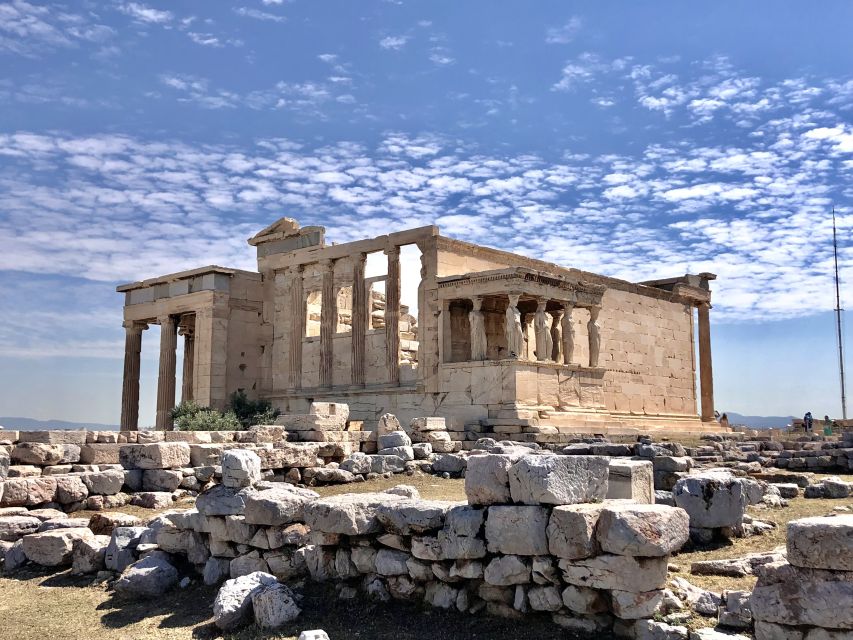
The Caryatids are another major stop. These sculpted female figures serve as architectural columns at the Erechtheion. Their marble clothing, posture, and calm expressions make them one of the Acropolis’ most memorable details.
You should expect time for photos and short pauses. One of the strongest features of this tour is its willingness to let you stop, rest, and look instead of forcing a nonstop lecture. That matters on a busy hill where the experience can otherwise become a race from one famous monument to the next.
Facing the Parthenon at the top
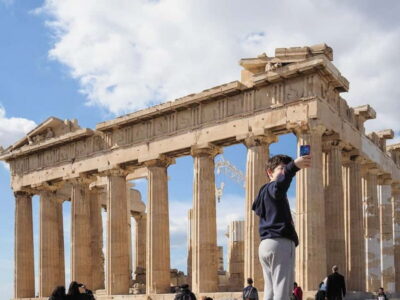
The high point of the Acropolis visit is the Parthenon. The tour stops directly in front of it, giving your guide room to explain why this temple was built and why its design has had such a lasting effect on architecture.
The Parthenon was built about 2,500 years ago and dedicated to Athena. Its fame comes not only from its size or age, but from the balance of its parts. Your guide focuses on the building’s harmony and the ideas behind its design, helping you see more than a damaged temple under repair.
Do not expect the Parthenon to look complete. The structure has endured war, explosions, looting, weather, and centuries of change. Its present condition is part of the story, but the surviving columns and sculptural details still show why the building became such a powerful model for architecture around the world.
From the summit, your view reaches well beyond the temple. You can see Hadrian’s Arch, the Temple of Olympian Zeus, the Odeon of Herodes Atticus, the National Observatory, and the hills of Lycabettus, Philopappos, and the Areopagus.
These views are useful because they show Athens as a connected city. The Acropolis was not isolated from daily life. It overlooked temples, theaters, public meeting places, roads, and hills that still shape the modern city.
The tour includes a short photo break here. That pause is worth protecting. You have paid for a guided explanation, but you should also have a few quiet minutes to take photographs and enjoy the setting without trying to write down every date.
More Ancient History Tours in Greece
- From Athens: Ancient Corinth Day Trip with Canal & VR Guide
★ 4.6 · 1,073 reviews - Acropolis, Parthenon & Athens Old City Heritage Walking Tour
★ 4.5 · 876 reviews - Private Biblical Tour Ancient Corinth & Isthmus Canal from Athens
★ 5.0 · 762 reviews - Athens: Ancient Corinth & Nafplio Full Day Trip with Swim
★ 4.8 · 531 reviews
From ancient Athens to Plaka
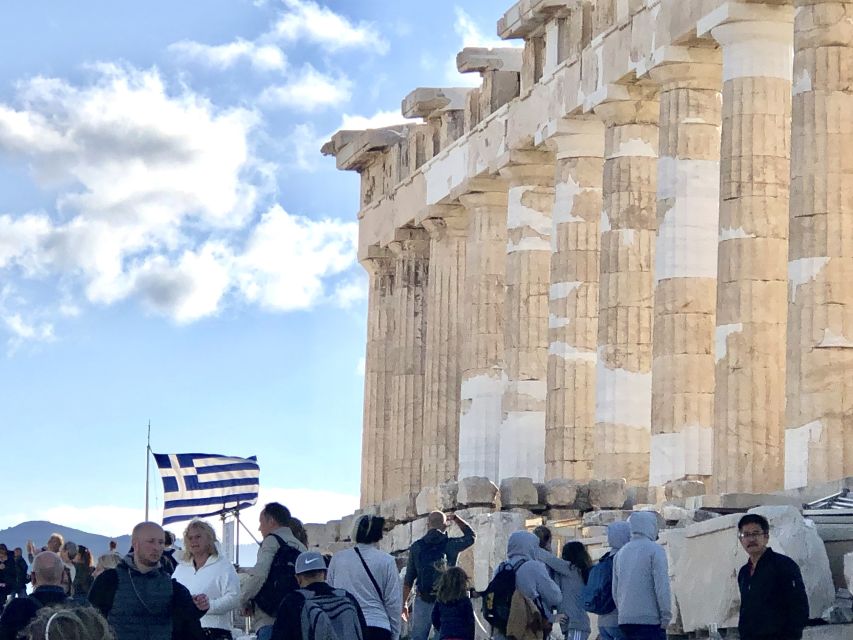
After the Acropolis, the route moves into the Old Town and Plaka. This change of pace is one of the tour’s best features. The Acropolis gives you grand monuments and wide views, while Plaka brings you into the more intimate streets at the foot of the hill.
Plaka is known as Athens’ most picturesque and photogenic neighborhood. You will walk through its lanes with the guide pointing out relevant corners of the historic center. The experience is not only about ancient Athens. It also helps you understand how the city feels at street level.
The transition from archaeological site to neighborhood makes the four-hour length worthwhile. A shorter Acropolis-only visit might be enough if you already know Athens, but first-time visitors often need this second half to connect the monument with the city around it.
The pace can vary with the group and the guide’s explanations. One participant felt the historical discussion could have been shorter and more direct. That is a fair point to consider if you prefer a brisk route with only the main facts. On the other hand, Efi is especially praised for making her explanations engaging and allowing time to rest and take photographs.
The Ancient Agora from outside

The route passes outside the Ancient Agora, the public center where Socrates, Plato, and Aristotle are connected with the intellectual life of Athens. You do not enter the Agora on this tour, so this is an exterior look rather than a full archaeological visit.
That distinction matters. If the Agora is high on your list, you may want a separate ticket or another visit. Still, seeing the area as part of a wider walk gives you a useful sense of how the Acropolis, public square, courts, markets, and neighborhoods related to one another.
The stop also includes a view of what is described as the best-preserved temple in Athens. Your guide can explain why the Agora was more than a market. It was a place for debate, civic decisions, trade, and daily contact between citizens.
This portion is best for orientation. You get the setting and the historical connection, but not the full experience of walking through the site itself.
The Tower of the Winds and Mitropolis Cathedral
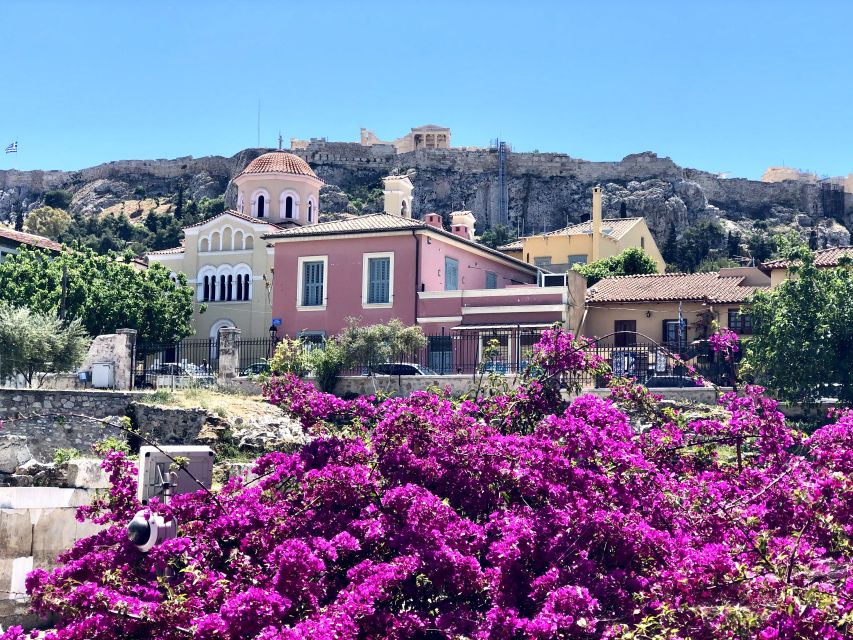
The walk ends at the Tower of the Winds, an unusual ancient structure in the Roman Agora. It is often described as the oldest meteorological observatory in the world. Its purpose and form make it a fine final ancient stop because it shows a practical side of Greek and Roman city life.
The tower is less famous than the Parthenon, but that is part of its appeal. Its presence helps broaden the day beyond the Acropolis’ greatest hits. You see that ancient Athens was also interested in time, weather, direction, and measurement.
The final visit is to Mitropolis Cathedral, the central church of Athens. This offers a look at the Orthodox faith that remains central to the country’s population. The church is also associated with the marriage of Queen Sofía and Juan Carlos.
Ending at Mitropolis gives the tour a useful modern connection. You begin with ancient religion on the Acropolis and finish with a major Christian church in the heart of Athens. The two settings show how the city’s sacred traditions changed over time.
Is $57 a fair price?
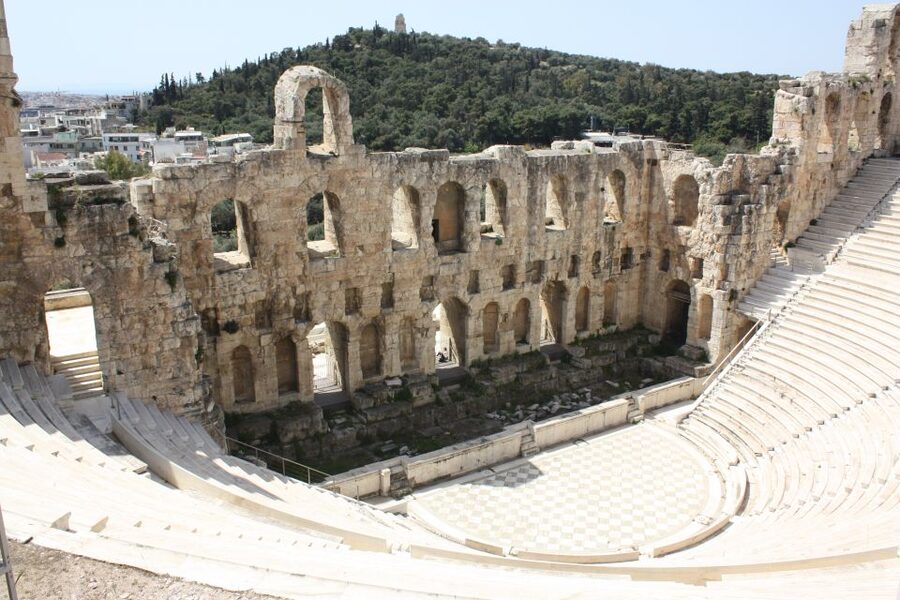
At $57 per person, the tour is not the cheapest way to see the Acropolis, especially because the entrance fee is extra. You also need to secure an Acropolis ticket for the 8:00 to 9:00 a.m. slot. The operator may help arrange the ticket at the official cost if you do not already have one, but you should clarify this after booking.
The value comes from the four hours of guided context. You are not paying only for entry. You are paying for a Spanish-speaking official guide, headphones, a planned route, and help connecting the Acropolis with Plaka and central Athens.
That value is strongest for a first visit. If you already know Greek mythology, classical architecture, and the layout of Athens, you may prefer to buy your ticket and explore independently. If you want the major sites explained in Spanish, the cost is easier to justify.
The group may be small, depending on the date. That can make a real difference. A smaller group allows more questions, clearer communication, and a less formal feel. The experience is also easier to manage when the guide pauses for photos or adjusts the pace.
Free cancellation is available up to 24 hours before the tour, and you can reserve now while paying later. Those terms help if your Athens schedule is still changing, but the early Acropolis time slot remains the key planning issue.
Who should book this walking tour?
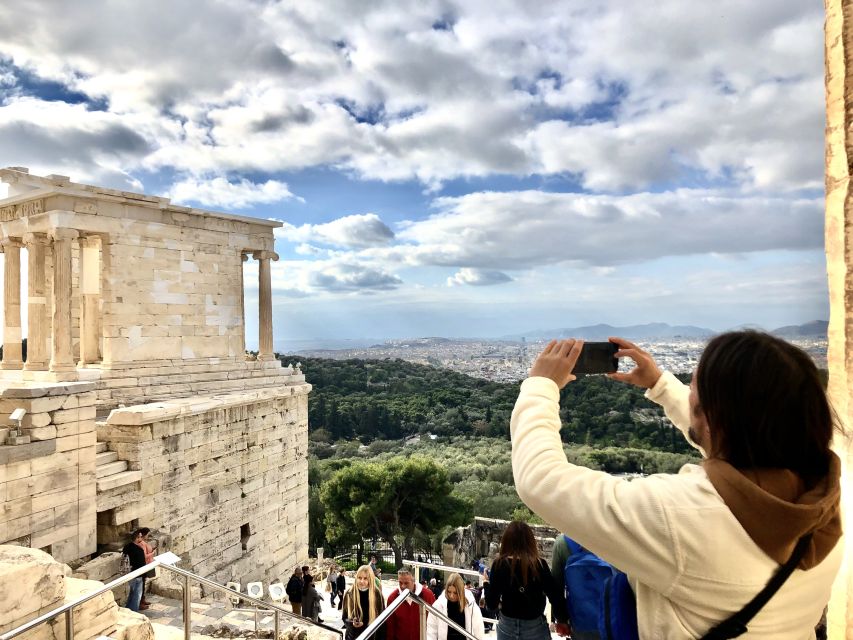
I would recommend this tour to a first-time visitor who wants the Acropolis explained in Spanish and would like a guided introduction to the historic center afterward. It suits couples, families with older children, and anyone who prefers a clear route instead of trying to organize several central Athens sights alone.
It is especially useful if you enjoy stories, myths, and architectural detail. Efi and Andrea are both praised for warmth, humor, patience, and practical suggestions beyond the formal route.
I would think twice if you have difficulty walking uphill or on uneven surfaces. Baby carriages and electric wheelchairs are not allowed, and the activity is specifically not suitable for people with mobility impairments.
I would also consider another option if you want a full Ancient Agora visit, an Acropolis Museum tour, or a short, fact-only walk. The route covers the Agora from outside, and the museum is not included. One person also regretted that a guided museum option was not available at the time.
Should you book it?
Book it if you want the Acropolis to make sense, not just look impressive. The south-slope entry, Theater of Dionysus, Parthenon explanations, city views, Plaka walk, and final stops at the Tower of the Winds and Mitropolis create a well-shaped morning.
The deciding question is simple: do you want a Spanish-speaking guide and a broader introduction to Athens, or do you only want entry to the Acropolis? If you choose the tour, reserve the 8:00 to 9:00 a.m. ticket, wear sturdy shoes, and leave enough energy for the Old Town walk. For a first Athens visit, that combination offers solid value despite the separate entrance fee.
FAQ
Is the Acropolis entrance ticket included?
No. The ticket is not included in the $57 tour price. You need an Acropolis ticket for the 8:00 to 9:00 a.m. time slot.
Can the operator arrange my Acropolis ticket?
The operator may manage the ticket at the official cost if you do not already have one. After booking, you may be contacted about this.
Where does the tour begin?
The meeting point is at the lower gate of the Acropolis, a few meters from the Acropolis Museum. The guide holds a sign with the office logo.
What language is the tour in?
The tour is conducted in Spanish by a live official guide.
How long does the tour last?
The tour lasts four hours.
Does the tour include the Ancient Agora?
No. The route passes outside the Ancient Agora, but entry is not included.
Does the tour include hotel pickup?
No. Hotel pickup and drop-off are not included.
What should I bring?
Bring comfortable shoes. The Acropolis route includes uphill walking and uneven stone surfaces.
Is the tour suitable for people with mobility impairments?
No. The activity is not suitable for people with mobility impairments. Baby carriages and electric wheelchairs are also not allowed.
More History Walking Tours in Greece
- Private Athens: Historical Walking Tour Including the Changing of the Guard
★ 5.0 · 27 reviews - Corfu: History and Culture Walking Tour
★ 4.9 · 55 reviews - Small-group Corfu Town Historical Walking Tour
★ 5.0 · 39 reviews - Olympia’s Ancient Site and Museum Private Walking Tour
★ 4.7 · 31 reviews
More History Walking Tours in Athens
- Athens: History of Rebellion Walking Tour
★ 5.0 · 110 reviews - Ancient Athens for Kids 4-Hour Private Walking Tour
★ 5.0 · 66 reviews - Private Athens Walk: Ruins, Markets & Local Stories
★ 5.0 · 41 reviews - Small-Group Women History in Ancient Greece Walking Tour
★ 5.0 · 38 reviews
Just added around Athens
- Small-Group Women History in Ancient Greece Walking Tour★ 5.0 · 38 reviews
- The original Christian tour on Paul’s footsteps in Athens and ancient Corinth★ 4.5 · 25 reviews
- Ancient Athens tour: Acropolis, Parthenon and Acropolis Museum★ 5.0 · 256 reviews
- Athens National Archaeological Museum E-Ticket with Audio Guide★ 3.0 · 57 reviews
- Ancient Athens Segway Tour with Agora and Kerameikos★ 5.0 · 94 reviews
- Ancient Sparta & Mystras Private Day Tour from Athens★ 5.0 · 52 reviews
- Biblical Corinth Taste Faith & History with wine & Oil Tasting★ 5.0 · 28 reviews
- Ancient Corinth, Sanctuary of Hera, Blue Lake & Canal from Athens★ 5.0 · 26 reviews
Athens History Tours, compared.
Athens: Acropolis & up to 5 Archaeological Sites Combo Pass
Read our review →
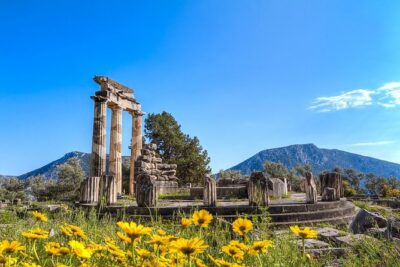
Historical Delphi One Day Tour with Arachova Stop & Expert Guide
Read our review →
From Athens: Ancient Corinth Day Trip with Canal & VR Guide
Read our review →
Historic Athens: Small Group Electric Bike Tour
Read our review →
Acropolis, Parthenon & Athens Old City Heritage Walking Tour
Read our review →
Private Biblical Tour Ancient Corinth & Isthmus Canal from Athens
Read our review →