
Review · CHINA
Between Capitalism & Communism: Hong Kong History Tip Based Tour
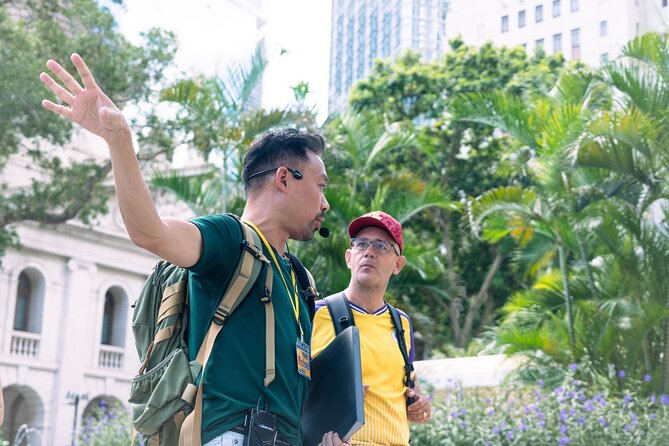
Hong Kong’s story becomes much clearer when you walk from the Court of Final Appeal to Man Mo Temple and watch British colonial power, Chinese tradition, global finance, and present-day politics meet on the same streets. This two-hour tour uses Central and Admiralty as an open-air classroom, with guides such as Alice, Andy, Armie, and Wingman bringing personal stories to the history.
I like the way the tour connects famous places to bigger questions, especially One Country, Two Systems and Hong Kong’s handover to China. I also like the practical finish: street food tasting and a local restaurant recommendation can help you plan lunch. The main drawback is pace. Eight stops in about two hours means short visits, and a group of up to 30 can make discussion less personal.
Key points to know before you book
- Hong Kong politics without a dry lecture: The tour explains colonial rule, the 1997 handover, and how Hong Kong fits within China today.
- A clever Central walking route: You move from the Court of Final Appeal and Statue Square to HSBC, St. John’s Cathedral, Hollywood Road, and Man Mo Temple.
- Personal guides add the human side: Alice, Andy, Armie, and Wingman have each been praised for clear, engaging storytelling and personal perspectives.
- Feng shui meets high finance: The HSBC stop explains the famous lions and the symbolic rivalry between banks in Hong Kong’s financial district.
- A useful first-day activity: The route ends in Sheung Wan, with street food and advice for a local lunch.
- Very low cost, but not a private tour: At $2.63 per person, the value is striking, though the group may reach 30 people.
Why this walking tour gives Hong Kong a sharper edge
Hong Kong is easy to admire and surprisingly easy to misunderstand. You can see glass towers, colonial buildings, red incense coils, and crowded commercial streets without knowing how they fit together. This tour gives those sights a political and historical frame.
The focus is not only on dates and buildings. You hear how the British took control of Hong Kong, why the colonial government developed Central, and how the territory was returned to China. The discussion then moves into the present, where Hong Kong’s legal system, civic identity, and relationship with Beijing remain central questions.
That makes this a good choice near the start of your stay. You will look at Central differently afterward. A courthouse is no longer just a grand old building. A bank tower is not simply a place where money changes hands. Even a temple becomes part of a longer story about scholarship, law, power, and local belief.
The guides are a major part of the experience. Alice has been praised for putting Hong Kong life into perspective, while Andy has been singled out for explaining the territory’s changing character. Armie is known for maintaining a steady stream of information, and Wingman brings a personal story into the walk. The exact guide depends on the day, but you should expect a person who speaks with feeling rather than simply reciting a script.
More Cold War and Communism Tours in China:
- Berlin: Third Reich & Cold War Guided Walking Tour
★ 4.9 · 8,378 reviews - Berlin’s Best: 2 Hour Walking Tour Third Reich and the Cold War
★ 5.0 · 5,486 reviews - Prague: Communism History and Nuclear Bunker Guided Tour
★ 4.7 · 2,417 reviews
Central MTR to the Court of Final Appeal
The walk begins at Central MTR Station, Exit K, at 11 a.m. That is a practical meeting point because Central is easy to reach by public transport and puts you right in the city’s commercial core.
The first stop is the Court of Final Appeal, where the idea of One Country, Two Systems gets a concrete setting. The tour uses the court to discuss how Hong Kong operates as part of China and why its legal structure matters.
This opening works well because it starts with a question instead of a list of colonial dates. You begin by asking how the system works, then move into the forces that created it. The court also gives the subject some weight. Politics here is not an abstract argument. It affects institutions, law, and daily life.
You will spend about 10 minutes at this stop, so do not expect a full legal history. The value comes from the guide’s explanation and the chance to place the building within Hong Kong’s current political story.
Statue Square and the banking district’s feng shui contest
At Statue Square, the tour turns toward the financial district and one of Hong Kong’s more unusual stories: the supposed feng shui battle between major banks.
This is the kind of detail that makes the city easier to read. Hong Kong’s banks compete through money, technology, and corporate power, but buildings also carry symbolic meaning. Their shapes, entrances, towers, and placement have been interpreted through feng shui, a traditional system concerned with balance, fortune, and harmful forces.
You do not need to accept every belief literally to enjoy the story. It shows how old Chinese ideas continue to sit beside modern finance. Statue Square also helps explain how a compact part of Central became a center of commercial authority.
The stop lasts about 10 minutes. It is short, but the subject is memorable. If you enjoy architecture, business, or local belief, this will likely be one of the walk’s most enjoyable sections.
HSBC Main Building and the famous bronze lions
The HSBC Main Building adds another layer to the financial story. The tour introduces the building’s well-known guardian lions and explains why they have become such recognizable figures in Central.
The stop also touches on Hong Kong’s unusual banking identity, including the point that no central bank prints money here. That detail opens a wider discussion about the territory’s financial system and its long role as an international commercial center.
You will spend around 10 minutes here. The guide’s explanation matters more than the time spent looking at the building. This is not a formal architecture tour, and there is no admission included because the experience takes place outdoors. Still, the building makes a strong backdrop for a conversation about wealth, risk, growth, and the city’s limited space.
The reference to Hong Kong growing into the sea is especially useful. The territory’s geography has always shaped its economy and its buildings. Hills, water, and limited flat ground help explain why Central feels so compressed and why vertical construction became so important.
More History Tours in China:
- Beijing: Badaling Ancient Great Wall of China Day Trips
★ 4.8 · 208 reviews - Beijing Historical Tour II including Summer Palace, Lama Temple & Panda Garden
★ 4.0 · 187 reviews - Beijing Historical Tour I – Forbidden City, Tiananmen Square & Temple of Heaven
★ 4.0 · 120 reviews - Beijing Culture: Tea Ceremony, Heritage Instrument & Calligraphy
★ 5.0 · 57 reviews
St. John’s Cathedral and the colonial story
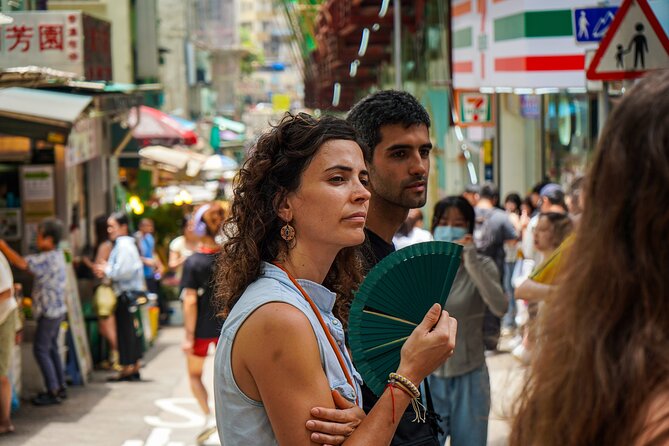
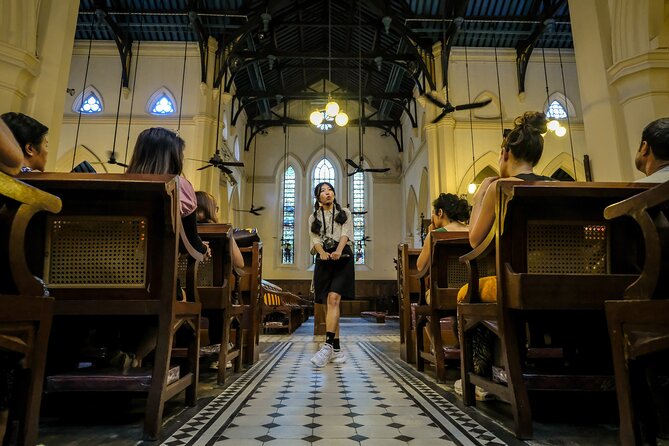
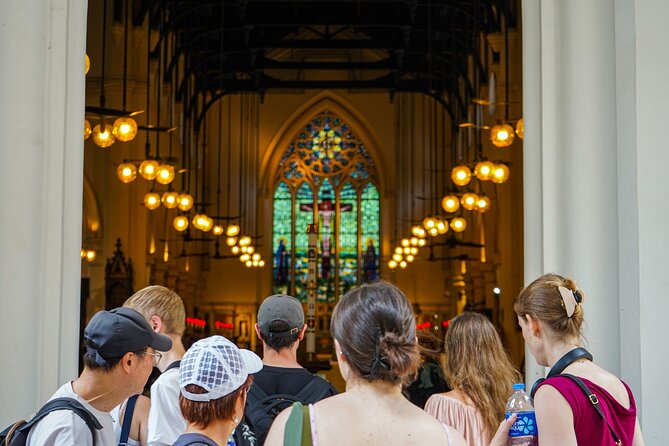
St. John’s Cathedral gives the tour a quieter pause. It is identified as Hong Kong’s oldest church and offers a direct link to the British colonial period.
Here, the guide explains how colonial power appeared not only in government offices and banks but also in religious buildings and public institutions. The cathedral helps you see that British rule was built through a whole network of administration, commerce, law, and culture.
The stop lasts about 20 minutes, making it the longest visit on the route. That extra time should give the guide room to discuss the building and the wider colonial setting. The presentation may also include a personal story, as one guide has connected the cathedral to her own experience of Hong Kong.
This is a good place to listen rather than rush for photographs. The stop is not presented as a simple celebration of colonial architecture. The tour’s wider purpose is to show what colonial rule meant and how its remains still shape the city.
Queen’s Road Central and the cost of doing business
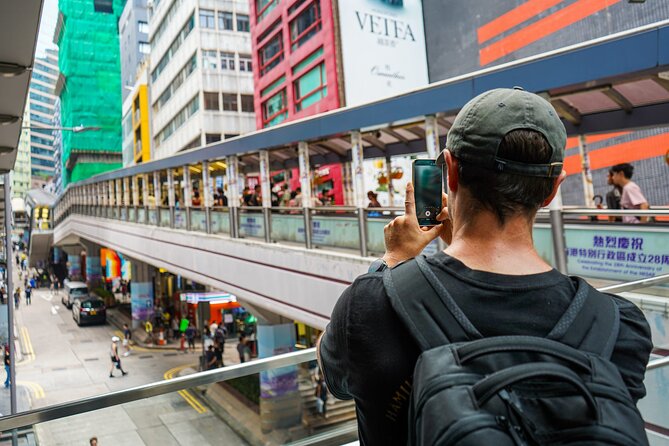
The walk then enters Queen’s Road Central, one of the city’s defining commercial streets. The mood shifts from quiet church grounds to traffic, shops, office towers, and the constant pressure of Central.
The guide uses the street to discuss high rents, corporate life, and the relentless speed of Hong Kong’s business center. That contrast is important. You have just heard about colonial institutions and global finance. Now you see how those systems affect the feel of an ordinary street.
This stop lasts about 10 minutes. It is not a shopping break, and the tour does not promise time inside stores. Instead, you get a quick reading of the street as a place where office workers, businesses, landlords, and shoppers compete for limited space.
I like this part because it keeps the tour from becoming a parade of old buildings. Hong Kong’s past is still visible, but the city is also practical, expensive, and intensely focused on work.
The Central-Mid-Levels Escalators and Hong Kong’s hills
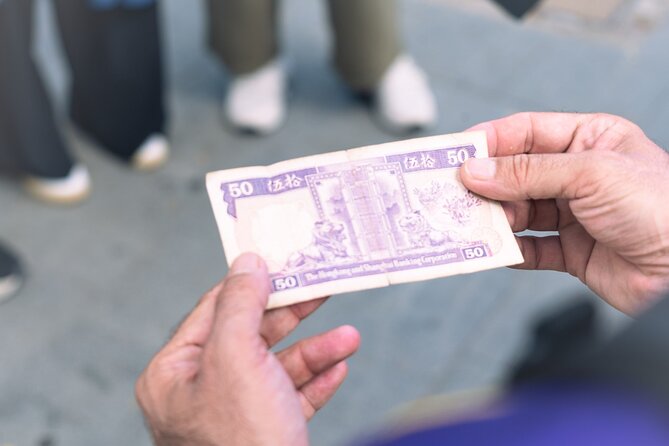
The Central-Mid-Levels Escalators provide one of the tour’s most recognizable pieces of infrastructure. At about 800 meters, the outdoor escalator system carries people through the steep rise between Central and the Mid-Levels.
The guide explains how this engineering project helped deal with Hong Kong’s difficult hills. It also gives you a sense of how the city solves everyday problems in a tight urban space.
The listed stop is about 10 minutes, so you should not expect a long ride or a full exploration of the route. The point is to understand why the escalators matter. They are not only a convenient way to move uphill. They show how transport, housing, commerce, and geography are tied together.
Wear comfortable shoes and be ready for a walking tour rather than a passive sightseeing ride. The physical demands are moderate, but you will be on your feet and moving between several areas.
Hollywood Road and the turn toward creative Hong Kong
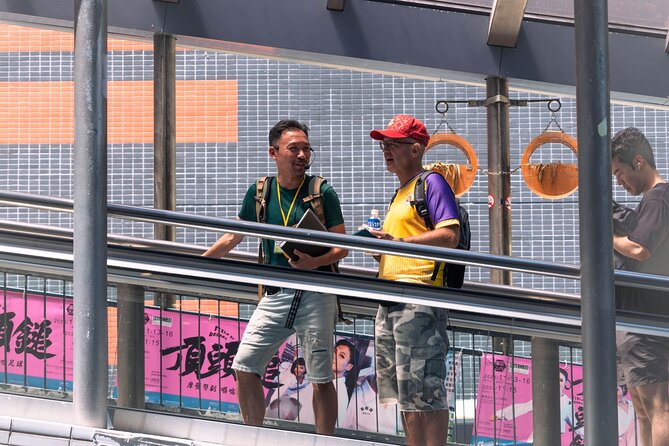
Hollywood Road marks another shift. Its story moves from a colonial divide toward a more creative side of the city, with art, food, and street life taking a larger role.
The tour presents the road as a place where older tensions and newer uses meet. It is a useful reminder that Hong Kong is not only a financial center. Its streets also carry local commerce, religious practice, art, and changing neighborhood identities.
The stop lasts about 10 minutes. That is enough for an explanation, but probably not enough to browse every shop or gallery. If you want time for shopping or photographs, plan to return after the tour.
This is one reason the route works well for a first visit. You get a quick introduction to several districts, then you can decide which places deserve a longer return visit. Hollywood Road and Sheung Wan are particularly well placed for continuing on your own after the walk.
Man Mo Temple and the final link between faith and law
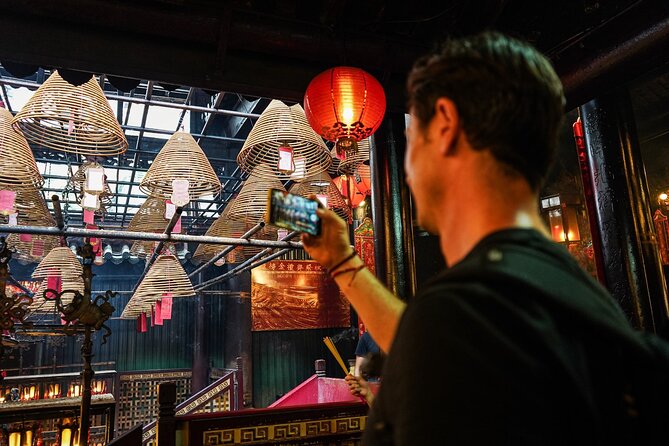
The tour ends at Man Mo Temple, at 124 to 130 Hollywood Road in Sheung Wan. This is an apt final stop because the temple brings the discussion back to older Chinese traditions after the walk through courts, banks, churches, and corporate streets.
Man Mo is presented as a place where scholar worship and modern justice meet. That connection helps tie the route together. The tour begins with the legal system and ends with a traditional site associated with learning, moral authority, and local belief.
You will spend about 10 minutes here. The temple is not just a final photo stop. It gives the guide a chance to compare older forms of authority with the modern institutions discussed earlier.
The ending is also practical. You receive a recommendation for a local restaurant lunch, and street food tasting is included. No detailed food menu is provided, so you should not book this expecting a full meal. Think of it as a small taste and a useful lead for what to eat next.
What $2.63 buys you in real value
At $2.63 per person, this is an unusually inexpensive way to spend two hours in Central. The value comes less from admission tickets, since the stops are viewed from public areas, and more from having a guide explain connections you might miss alone.
You are paying for structure and interpretation. Without a guide, you might walk past the Court of Final Appeal, HSBC, St. John’s Cathedral, and Man Mo Temple as separate sights. With the route, they become chapters in one story about colonial rule, Chinese tradition, international finance, and Hong Kong’s present identity.
There are limits. A group of up to 30 people can make it harder to ask long questions or hear every word in a noisy street. The two-hour schedule also means each stop is brief. If you want an in-depth political seminar, a private guide, or long interior visits, this will feel too compressed.
For a first look at Hong Kong, though, the price is hard to argue with. The tour adds context to several central sights and leaves you with practical ideas for lunch and future exploring.
Who will get the most from this two-hour walk
I would choose this experience if you want history and current affairs presented through real streets rather than a museum lecture. It suits first-time visitors who want a useful orientation before exploring Central, Admiralty, and Sheung Wan on their own.
It is also a good fit if you are curious about:
- Hong Kong’s British colonial period and the 1997 handover
- The meaning of One Country, Two Systems
- Banking, feng shui, and the symbolism of major buildings
- The role of hills and limited space in city planning
- The relationship between traditional religion and modern institutions
- Personal accounts of life in Hong Kong
You should think twice if you dislike group walks, cannot manage moderate physical activity, or need a slow pace. The tour has a maximum of 30 people and moves between eight stops. Bad weather can also cause cancellation, with a different date or full refund offered in that case.
The 11 a.m. start is convenient for a morning activity, but it also places the lunch recommendation at the end of the walk. Bring water and wear comfortable shoes. The meeting point is near public transport, and the finish at Man Mo Temple gives you a good base for continuing through Sheung Wan.
Should you book Between Capitalism & Communism?
Book it if you want Hong Kong to make more sense by the end of your first day. The strongest features are the direct political context, the guides’ personal storytelling, and the smart route from court to bank, church, escalator, creative district, and temple.
Do not book it expecting a private conversation or long visits inside attractions. The experience is short, outdoor, and group-based. But at $2.63, it offers a lot of useful context for very little money. For an affordable introduction to Hong Kong’s politics, history, and daily character, I would put it near the top of your first-day plans.
FAQ
How long does the Hong Kong history walking tour last?
The tour lasts approximately two hours.
Where does the tour begin?
It begins at Central MTR Station, Exit K, on KUnnamed Road in Central, Hong Kong.
Where does the tour end?
The tour ends at Man Mo Temple, located at 124 to 130 Hollywood Road in Sheung Wan.
What time does the tour start?
The scheduled start time is 11 a.m.
Is food included?
Yes. Street food tasting is included, and the guide provides recommendations for a local restaurant lunch.
How many people can join the tour?
The maximum group size is 30 travelers.
Can I cancel for a refund?
Yes. You can cancel at least 24 hours before the start time for a full refund. Cancellations or changes made less than 24 hours before the start time are not accepted for a refund.
Just added around China
- Dazu Ancient Rock Carvings Private Tour Extension★ 5.0 · 24 reviews
- Leshan Giant Buddha and Huanglongxi Ancient Town Day Trip★ 4.5 · 45 reviews
- BusDa-Ancient Great Wall &Badaling Great Wall Full-day Bus Tour★ 5.0 · 56 reviews
- 2-Hour Beijing Private Forbidden City Tour: History & Highlights★ 5.0 · 28 reviews
- Beijing Culture: Tea Ceremony, Heritage Instrument & Calligraphy★ 5.0 · 57 reviews
- 3-Day All-Inclusive Beijing Private Tour: Top Sights+Peking Duck★ 5.0 · 28 reviews
- 2-Hour “Ancient & Modern” Beijing Sidecar Tour (Day /Night)★ 5.0 · 36 reviews
- Shenzhen History , Culture & Scenic + (Drone Delivery) tour★ 5.0 · 26 reviews
China History Tours, compared.

Beijing: Badaling Ancient Great Wall of China Day Trips
Read our review →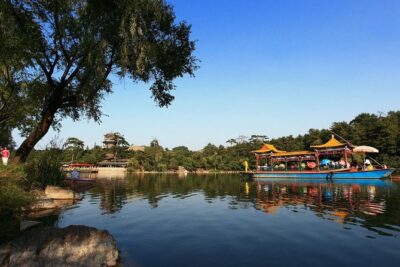
Beijing Historical Tour II including Summer Palace, Lama Temple & Panda Garden
Read our review →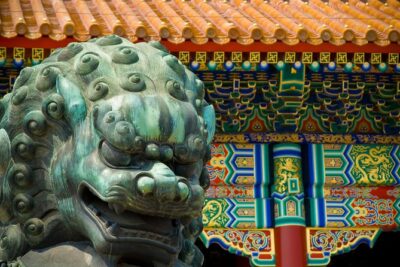
Beijing Historical Tour I – Forbidden City, Tiananmen Square & Temple of Heaven
Read our review →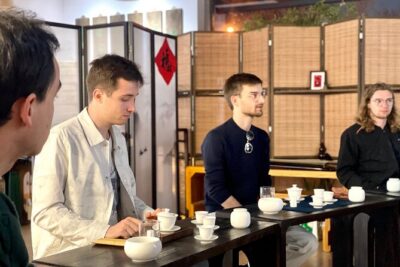
Beijing Culture: Tea Ceremony, Heritage Instrument & Calligraphy
Read our review →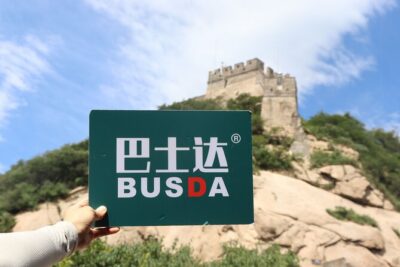
BusDa-Ancient Great Wall &Badaling Great Wall Full-day Bus Tour
Read our review →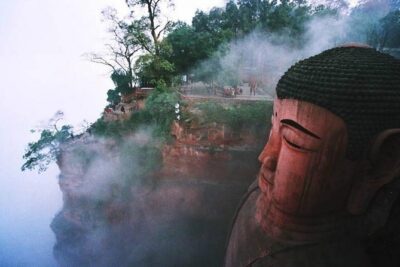
Leshan Giant Buddha and Huanglongxi Ancient Town Day Trip
Read our review →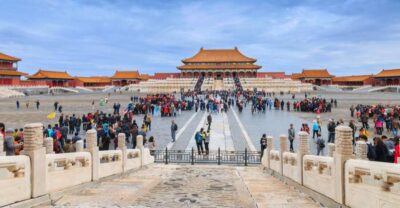
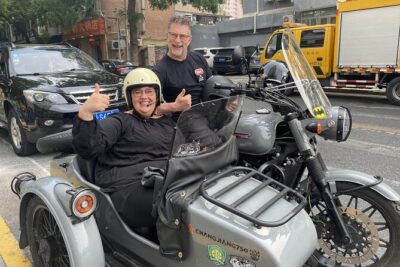
2-Hour “Ancient & Modern” Beijing Sidecar Tour (Day /Night)
Read our review →Browse the lists this tour appears in