Review · BERLIN
Berlin’s Best: 2 Hour Walking Tour Third Reich and the Cold War
Berlin’s story is written into its streets, and this two-hour walking tour links the places where Nazi power, wartime destruction, Soviet occupation, and the Cold War all left their mark. You begin beneath Brandenburg Gate and finish at Checkpoint Charlie, with little time wasted on ordinary sightseeing.
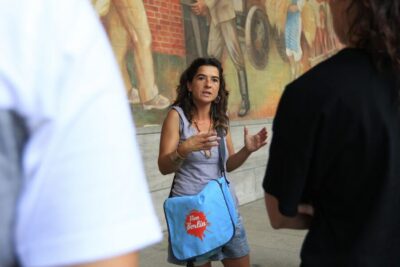
I like the route for two clear reasons: it reaches spots that a bus cannot, including the former bunker site and a long stretch of the old government district, and it gives you a strong historical thread rather than a pile of disconnected monuments. Guides such as Glen, Maggie, Mikey, Tom, and Mikhail are praised for clear explanations, old photographs, humor, and thoughtful handling of grim subjects.
The main catch is pace. You cover a lot of ground in roughly two hours, usually with up to 30 people, so this is an overview rather than a full study of Berlin’s Nazi or Cold War past. Wear good shoes, bring water, and in cold weather, dress warmly.
Key points at a glance
- A full 20th-century route: Follow Berlin from the Reichstag fire and Nazi planning to the Berlin Wall and reunification.
- Brandenburg Gate to Checkpoint Charlie: The start and finish make it easy to connect the tour with public transport and other central sights.
- Several free outdoor sites: There are no admission fees for the listed stops, which keeps the $24.07 price focused on the guide and route.
- A guide-led history lesson: Guides use stories, questions, humor, and sometimes historical photographs to make bare sites easier to understand.
- Serious subjects, handled with care: Expect discussion of persecution, war, Hitler’s suicide, escape attempts, and life under division.
- Simple meeting system: Arrive 15 minutes early at the Tourist Information office by Brandenburg Gate and look for the pink umbrella.
Why this route makes sense in Berlin
Berlin can feel like several cities piled on top of one another. Imperial Germany, the Nazi dictatorship, the ruined postwar capital, East Berlin, West Berlin, and today’s reunited city all occupy the same central streets. This tour gives you a way to read those layers in order.
You start at Brandenburg Gate, move through the Reichstag and Tiergarten, then turn toward the former Nazi government quarter. From there, the route reaches the Holocaust Memorial, Hitler’s bunker site, the old Air Ministry, the Topography of Terror, a surviving section of the Berlin Wall, and Checkpoint Charlie.
That sequence matters. You are not simply checking off famous sights. You are moving from national power to dictatorship, from war to occupation, and from divided Berlin to reunification. The guide supplies the links that the monuments themselves cannot.
The price is $24.07 per person. For a central walking tour lasting about two hours, that is good value if you want orientation and historical context on your first day. The sights themselves are free, so you are paying mainly for the guide’s preparation, storytelling, and ability to explain what happened on the ground beneath your feet.
More History Walking Tours in Berlin
- Berlin: Third Reich & Cold War Guided Walking Tour
★ 4.9 · 8,378 reviews - Third Reich Berlin: Hitler and WWII Walking Tour
★ 5.0 · 3,301 reviews - Berlin: Third Reich, Hitler, and WWII Walking Tour
★ 4.9 · 1,757 reviews
Brandenburg Gate and the meaning of reunification
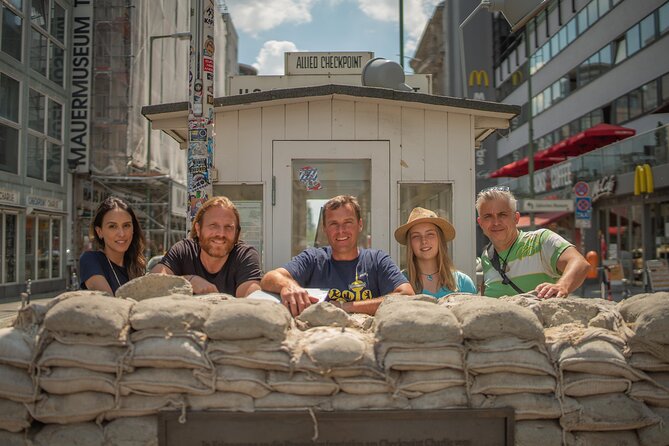
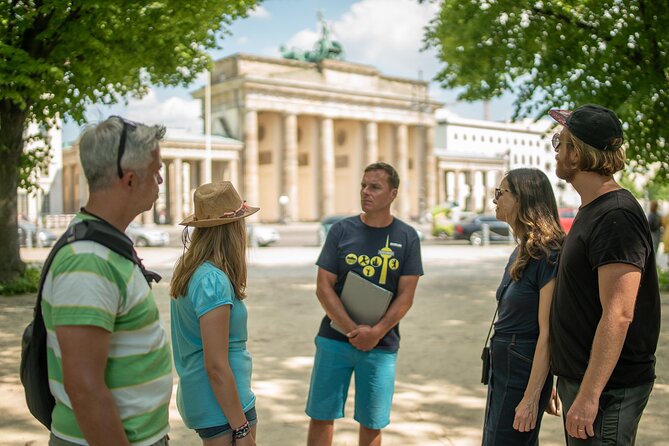
Brandenburg Gate is a sensible place to begin. It is one of Berlin’s best-known symbols, but its meaning has changed sharply over time. The tour uses the gate to explain why it now represents a reunited Germany.
You will meet on the Pariser Platz side, in front of the Tourist Information office. Arrive 15 minutes before the start time and look for the guide with the pink umbrella. That simple marker is useful in a busy square, especially if several walking groups are gathering nearby.
The opening talk sets the tone for the rest of the walk. Brandenburg Gate is not treated as a decorative photo stop. It becomes a starting point for thinking about national identity, division, and the way Berlin has reused old symbols.
The Reichstag and the fire that changed Germany
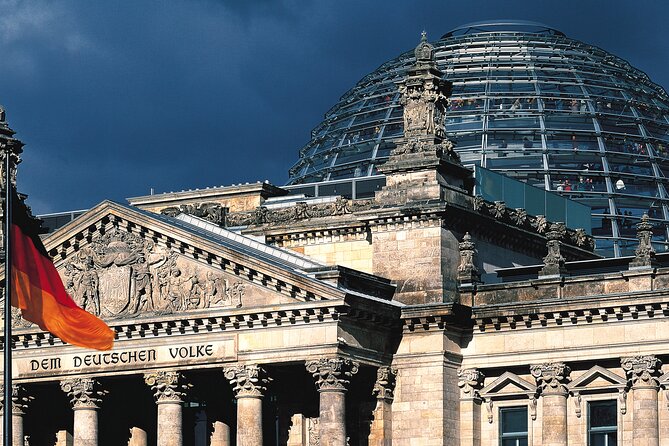
The Reichstag Building is only about a 10-minute stop, but it carries a great deal of political weight. You will hear how the building reflects Germany’s upheavals over the past century, including the Reichstag fire of 1933 and the way Adolf Hitler used the event during his dictatorship.
This is one of the places where a guide adds real value. The building looks orderly today, while the story attached to it is about fear, political repression, and the destruction of democratic government. A short explanation helps you understand why the Reichstag is more than the home of parliament.
Do not expect an interior visit. The tour is an outdoor walking experience, and the listed admission is free. If you want to see the parliamentary building from inside, that would require a separate plan.
Soviet tanks in the Tiergarten
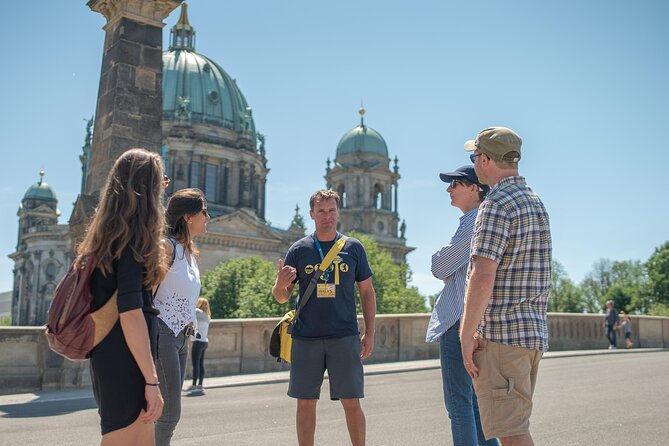
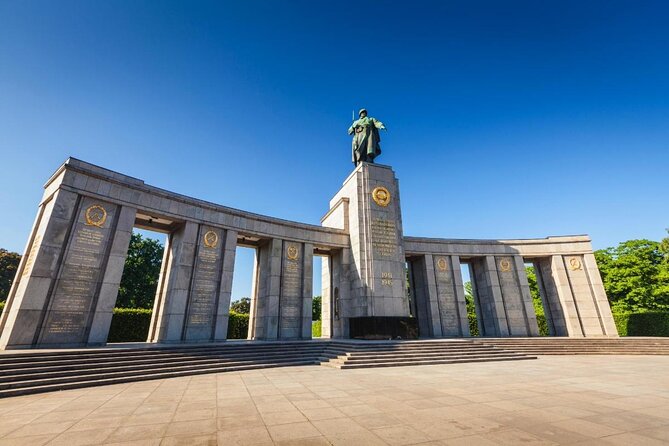
At the Soviet Memorial in the Tiergarten, you see T-34/76 tanks and field artillery from the Second World War. The stop lasts about seven minutes, so the guide has to make the point quickly.
The memorial brings the Soviet role in defeating Nazi Germany into the center of the walk. It also reminds you that the end of the war did not mean Berlin had entered a calm new era. The city became a major prize in the conflict between the Soviet Union and the Western powers.
This is a good example of the tour’s strength. You are not only hearing about events in a classroom. You are looking at military hardware placed in the city where the war ended and the Cold War soon began.
More History Walking Tours in Germany
- Berlin: History of the Third Reich Guided Walking Tour
★ 4.7 · 791 reviews - Berlin Historical Highlights Walking Tour
★ 4.9 · 657 reviews - Berlin Private Complete History All Day Walking Tour
★ 5.0 · 474 reviews - Berlin: Cold War Walking Tour on Berlin Wall Route
★ 4.8 · 437 reviews
The Victory Column and Germania
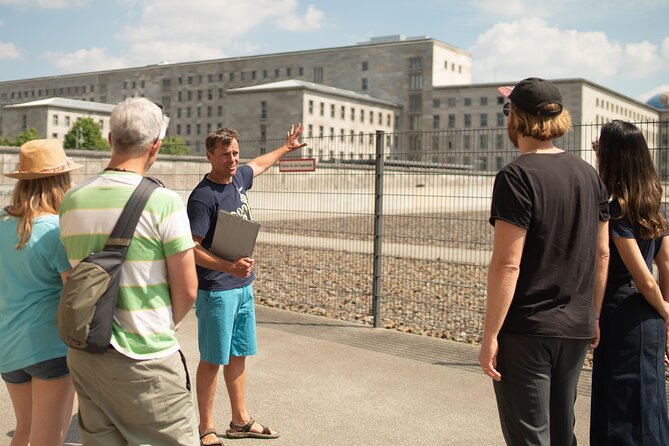
The route also takes in the Victory Column, with an explanation of why Albert Speer moved it from its original location. The guide connects that move to Speer’s plans for Germania, the enormous redesign of Berlin planned under the Nazis.
The proposed new capital was meant to project Nazi power on a world scale. It was also tied to a future in which Germany had won the Second World War. Those plans never became reality, but the discussion helps you see how architecture and urban planning were used as political tools.
This part of the route is especially useful if you want to understand how dictatorship shaped public space. It is not just about buildings. It is about who gets to decide what a capital should say about a country.
Walking through the Holocaust Memorial
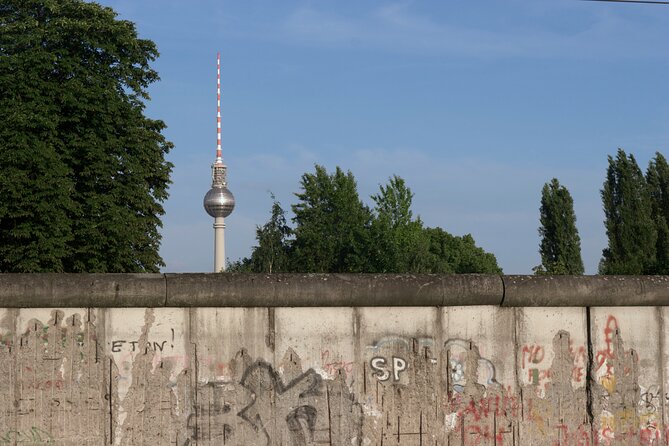
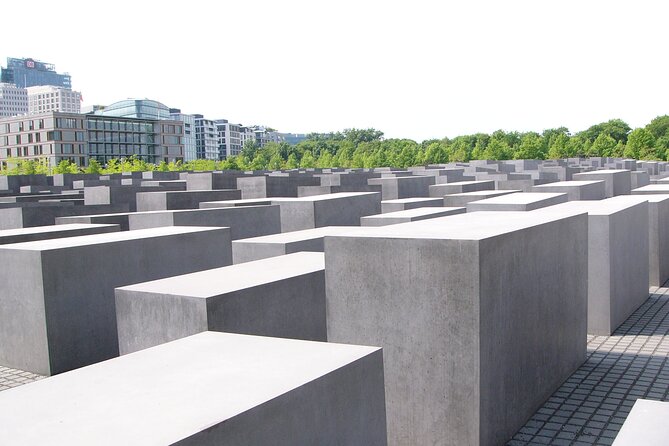
The Memorial to the Murdered Jews of Europe is one of the most powerful stops on the tour. You walk through the field of concrete blocks, a place that feels different as you move farther into it.
The guide explains the memorial and its purpose, while allowing time for you to experience the space. The listed stop lasts around 10 minutes. That is enough for an introduction, though not enough for a detailed visit to every part of the memorial complex.
You should approach this stop with care. It is not a standard photo opportunity or a quick monument on a sightseeing checklist. The memorial is dedicated to the murdered Jews of Europe, and the tour places it within the larger story of Nazi persecution and mass murder.
Standing above Hitler’s bunker
The former Führerbunker is one of the strangest places on the route because there is no grand ruin to inspect. You stand above the site while the guide explains the last days of the war and Hitler’s suicide there on April 30, 1945.
The absence of a visible bunker is part of the point. Berlin has chosen not to turn the site into a shrine. The guide also discusses how Germans have dealt with this destructive past in the decades since the war.
This stop can feel stark and unsettling. A strong guide needs to give facts without turning Hitler into a figure of fascination. The feedback about guides such as Mikey, James, and Rebecca points to an approach that combines respect, plain explanation, and occasional careful humor without making light of the dead.
The former Air Ministry and the birth of East Germany
The route continues along the former Aviation Ministry, the building associated with Hermann Göring’s air force. The walk takes about five minutes, but the building links Nazi administration with the postwar division of Germany.
You will also hear that East Germany, formally the German Democratic Republic, was proclaimed here in 1949. That detail shows how one building could pass from Nazi power to the creation of a Soviet-backed state.
This is another stop where the outside of a building tells only part of the story. The guide gives you the political context, helping you see the connection between wartime institutions, occupation, and the new governments that followed.
Topography of Terror and Nazi police power
At the Topography of Terror, you reach the former headquarters area of the SS, Gestapo, and SD. Today, the site includes an exhibition about the crimes carried out by these Nazi institutions.
The tour gives you about 15 minutes here. That is enough to identify the site and explain why it matters, but you should not expect to cover the full exhibition during the walk. If this subject is a major reason for your visit, return later and allow more time.
I value this stop because it shifts attention away from Hitler alone. Nazi crimes depended on organizations, offices, police systems, and people who carried out orders. The Topography of Terror helps make that machinery visible.
The Berlin Wall on Niederkirchnerstraße
On Niederkirchnerstraße, you see a large surviving section of the Berlin Wall. The guide talks about escape attempts, what happened to people who tried and failed, and daily life on both sides of the divide.
The wall is easy to misunderstand if you only see a short piece of concrete. The stories give it human scale. You begin to picture a city where streets, families, workplaces, and friendships were split by a fortified border.
This stop also prepares you for Checkpoint Charlie. Instead of treating the Wall as an isolated object, the tour explains the political and personal consequences of division in East and West Berlin.
Checkpoint Charlie and the end of the divided city
Checkpoint Charlie is the final stop. It was one of the best-known crossings through the Berlin Wall, and the guide recounts the tense Soviet and American tank standoff in 1961.
You will also hear how the Wall fell on November 9, 1989, and how Berlin and Germany have handled reunification over the past 30-plus years. Ending here makes practical sense. You finish near a major central sight, with the story moving from confrontation to the question of how successful reunification has been.
Checkpoint Charlie itself can feel more commercial and reconstructed than historic. That is worth knowing before you go. The value of ending here lies less in the checkpoint’s appearance and more in the explanation of the crisis that made it famous.
Guides, group size, and the pace
The tour is offered in English only, with a professional local guide. The maximum group size is 30, which is large enough to feel like a group outing but still workable on city streets.
The guide can make or break this experience. Names praised in the supplied feedback include Glen, Ben, Maggie, Rebecca, Tom, Peter F., Simon, Paul, Mikey, Georgia, James, Mikhail, Eyan, Ronja, and Jamie S. You cannot choose a specific guide when booking based on the information provided, but the recurring strengths are clear: good answers to questions, historical photographs at some stops, lively delivery, and a respectful tone around difficult subjects.
The walk is designed to be informative without becoming a lecture. Several guides are described as using humor carefully, which matters during a route that includes genocide, suicide, war, and escape deaths. A good guide can keep the group alert while still giving the subject its proper weight.
The route covers many stops in two hours, so the pace is brisk. You will stop often, but you will not have long to wander at each location. If you prefer slow photography, long museum visits, or detailed architectural study, this may feel rushed.
Practical advice before you go
The meeting point is in front of the Tourist Information office at Brandenburg Gate, on the Pariser Platz side. Arrive 15 minutes early and look for the pink umbrella.
The tour ends at Friedrichstraße 43-45, near Checkpoint Charlie. Since the route is central and near public transportation, it is easy to continue sightseeing afterward or return to your accommodation.
Wear sensible shoes. The walk is outdoors and includes several stops across central Berlin. Winter requires extra planning: bring gloves, dress warmly, and allow for the fact that there may not be an easy restroom break during the route. One useful tip is to take care of that before the tour begins.
Most people can take part, and service animals are allowed. The tour uses a mobile ticket, and confirmation is provided at booking. Free cancellation is available up to 24 hours before the start time. Inside that 24-hour window, refunds are not provided and changes are not accepted.
Who should book this Berlin walking tour?
I would choose this tour if you have limited time in Berlin and want a clear introduction to the city’s Nazi and Cold War past. It works particularly well early in a visit, since you can use the route to decide which places deserve a longer return visit.
Families with older children and teenagers may also find it useful. The guide-led format makes it easier to ask questions, and the feedback indicates that children as young as 11 have been comfortable engaging with the subject.
You may want something else if you need museum interiors, a small private group, or a slow and highly detailed study of one period. This is a broad outdoor survey. Its strength is the way it connects many major sites in one compact walk.
Should you book it?
Book it if you want strong value, a central route, and a serious but approachable introduction to Berlin’s 20th-century history. At $24.07, the tour is a practical way to put the Reichstag, Holocaust Memorial, bunker site, Berlin Wall, and Checkpoint Charlie into one understandable story.
Skip it only if you dislike group walks or already know these subjects in detail. For most first-time visitors, the route offers a useful historical backbone, especially when the guide uses old photographs and answers questions well. Just bring good shoes, allow for the brisk pace, and arrive early for the pink umbrella.
FAQ
How long is the Berlin Third Reich and Cold War walking tour?
The tour lasts approximately two hours.
Where does the tour begin?
It begins at Brandenburg Gate, at Pariser Platz in Berlin. Meet in front of the Tourist Information office on the Pariser Platz side.
Where does the tour end?
The tour ends at Checkpoint Charlie, at Friedrichstraße 43-45, 10117 Berlin.
How early should I arrive?
Arrive 15 minutes before the scheduled start time. Look for the guide with the pink umbrella.
Is the tour offered in English?
Yes. The tour is offered in English only and includes an English-speaking local guide.
What sights are included?
The route includes Brandenburg Gate, the Reichstag Building, the Soviet Memorial in the Tiergarten, the Victory Column, the Holocaust Memorial, the former Führerbunker site, the former Aviation Ministry, the Topography of Terror, a Berlin Wall section on Niederkirchnerstraße, and Checkpoint Charlie.
Can I cancel for a full refund?
Yes. You can cancel at least 24 hours before the experience starts for a full refund. Cancellations or changes made less than 24 hours before the start time are not refunded.
More WWII and D-Day Tours in Germany
- Clash of Titans: Battle for Seelow Heights WW2 tour
★ 5.0 · 71 reviews - Berlin Half-Day World War II Walking Tour
★ 4.5 · 48 reviews - Path of Resistance: Berlin’s Hidden Holocaust Stories
★ 4.9 · 43 reviews - Berlin: Nazi History Walking Tour
★ 4.8 · 33 reviews
More WWII and D-Day Tours in Berlin
- Hitler’s Germany: Berlin During the Third Reich & WWII
★ 4.8 · 476 reviews - Private Walking Tour Berlin Third Reich Hitler and World War II
★ 5.0 · 360 reviews - The History of Berlin: WWII PRIVATE Walking Tour With Locals
★ 5.0 · 209 reviews - Berlin: Guided Bike tour of the Berlin Wall and Third Reich
★ 5.0 · 160 reviews
Just added around Berlin
- Berlin Food & Cultural Tour: Must-Try German & Berliner Classics★ 5.0 · 51 reviews
- Berlin Half-Day World War II Walking Tour★ 4.5 · 48 reviews
- Small-Group Historical Bike Tour in Berlin★ 4.5 · 103 reviews
- Historic center of Berlin – Tour in Italian★ 5.0 · 143 reviews
- Berlin Cold War & World War II Third Reich Walking Tour★ 4.5 · 30 reviews
- Private Taxi Tour City East & West History and Architecture 3-4h★ 5.0 · 42 reviews
- Berlin Wall and Cold War Bike Tour in Small Groups★ 5.0 · 114 reviews
- Private Tour: Jewish Heritage Walking Tour of Berlin★ 5.0 · 29 reviews
Berlin History Tours, compared.

Berlin: Third Reich & Cold War Guided Walking Tour
Read our review →
Third Reich Berlin: Hitler and WWII Walking Tour
Read our review →
Berlin: Third Reich, Hitler, and WWII Walking Tour
Read our review →
Berlin: 3-Hour World Heritage Cruise to Potsdam
Read our review →
Cold War, Berlin Wall, Spies and the East Side Gallery
Read our review →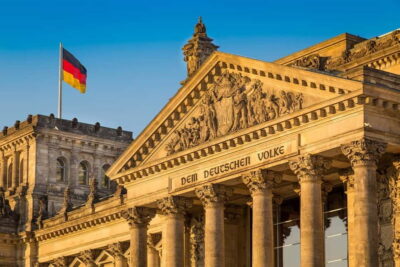
Berlin: History of the Third Reich Guided Walking Tour
Read our review →