
Review · HISTORY TOURS
Brasov: Candlelight Tour of Medieval Architecture
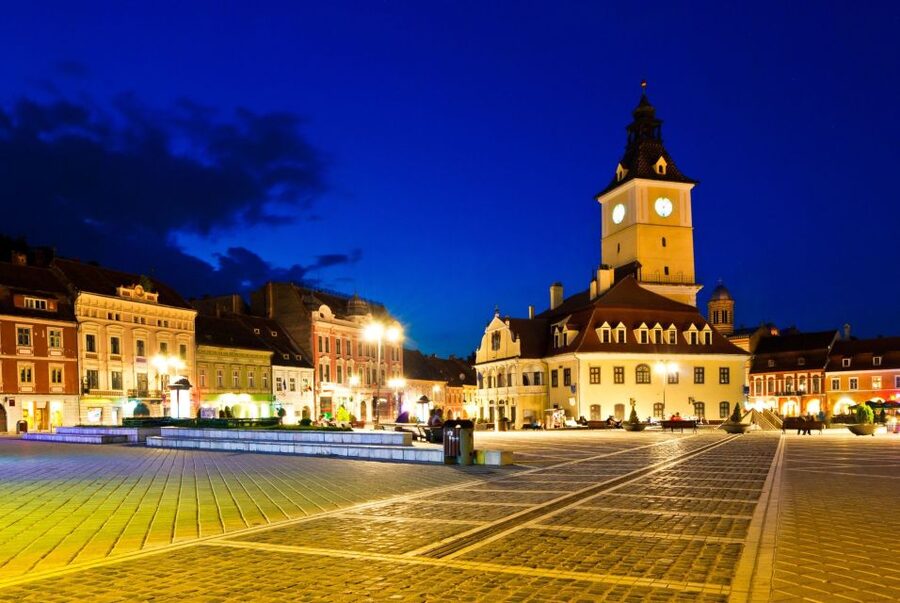
Brasov’s medieval center takes on a different mood after sunset. On this 1.5-hour evening walk, you move from Council Square through old lanes, Gothic churches, city gates, and legends of ghosts and vampires. Local guide Dan has led many guests through the city he has called home all his life, adding personal memories to the history.
I like the route for two clear reasons: it covers a lot of Brasov on foot without requiring transport, and the guides bring local character to the walk. Dan and other guides such as Tibi have shared stories about school, family, religion, culture, and daily life, rather than reciting dates alone. The illuminated streets and buildings also make a strong setting for an evening stroll.
The main consideration is the candlelight promise. One visitor found that no candles were used, although the city lighting created a fine nighttime atmosphere. Darkness can also hide architectural details, and some sites are closed at night. Bring warm clothing and good shoes.
Key points to know before you book
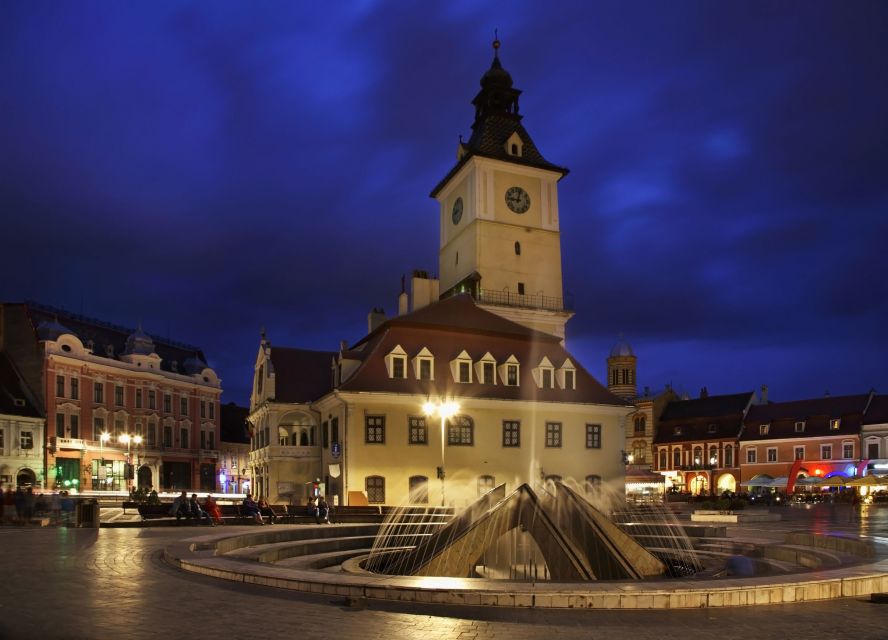
- Council Square sets the scene: The tour begins at Piata Sfatului, in front of the History Museum, with an introduction to Brasov’s past.
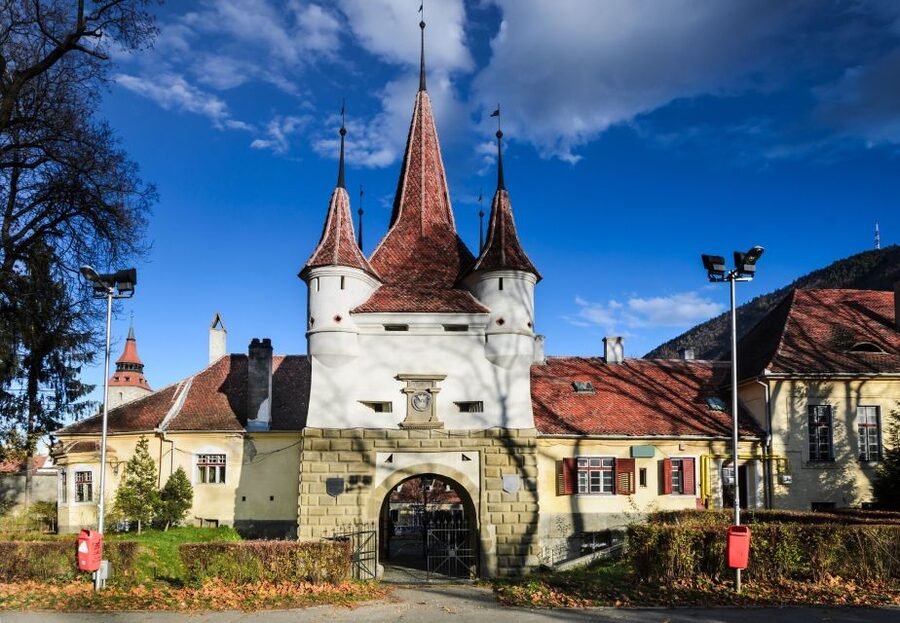
- The route links major landmarks: You see the Black Church, Katherine’s Gate, Schei Gate, St. Nicholas’ Cathedral, Weaver’s Bastion, the Jewish Synagogue, and Rope Street.
- Local storytelling is the main strength: Guides including Dan and Tibi add personal memories and answer questions in an easy, conversational way.
- Night lighting changes the experience: Illuminated facades and quiet lanes can feel atmospheric, but you will see less architectural detail than in daylight.
- The legends are part of the fun: Ghost and vampire tales appear alongside history, though the balance can depend on the guide.
- Plan for cool, wet weather: The tour runs rain or shine, and Brasov can feel cold after dark.
Starting in Council Square with Brasov’s long story
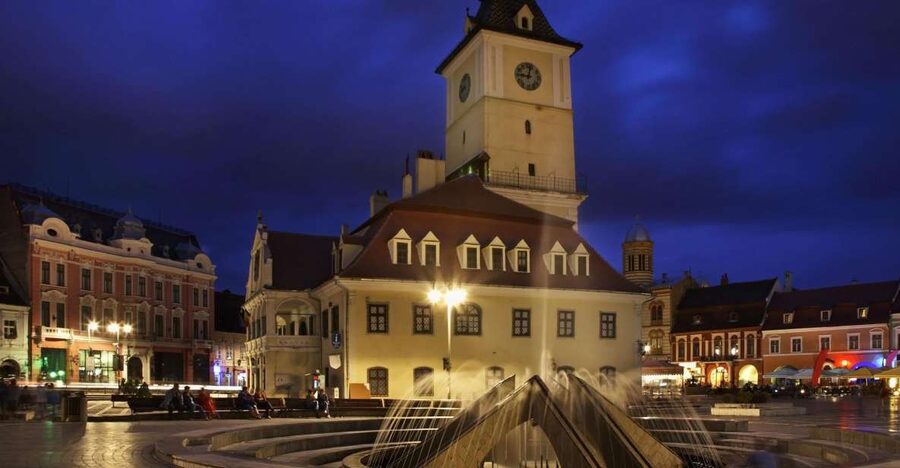
Meet at Piata Sfatului, the old town’s main square, in front of the History Museum at number 30. This is a useful starting point because Brasov’s central square gives you an immediate sense of the city’s layered past. You are not simply looking at pretty facades. You are beginning in the civic heart of a city shaped by trade, religion, ethnic communities, and changing political powers.
The guide first explains how Brasov developed and points out details around the square. This opening matters because the rest of the route moves quickly between churches, gates, fortifications, and narrow streets. A little context here helps you understand why these buildings sit so close together and why the old center feels so distinct from the newer parts of town.
The meeting point is easy to locate, but it is worth arriving with enough time to find the History Museum without rushing. One booking included a slight meeting-point problem, so check the exact address before setting out. The tour is conducted in English, and the activity is listed as wheelchair accessible.
More Medieval History Tours in the world:
- Prague: Medieval Dinner with Unlimited Drinks
★ 4.4 · 19,847 reviews - Prague: Oldtown, Medieval Underground & Dungeon History Tour
★ 4.3 · 10,277 reviews - Ghent: 50-Minute Medieval Center Guided Boat Trip
★ 4.5 · 5,637 reviews
The Black Church and the city after sunset
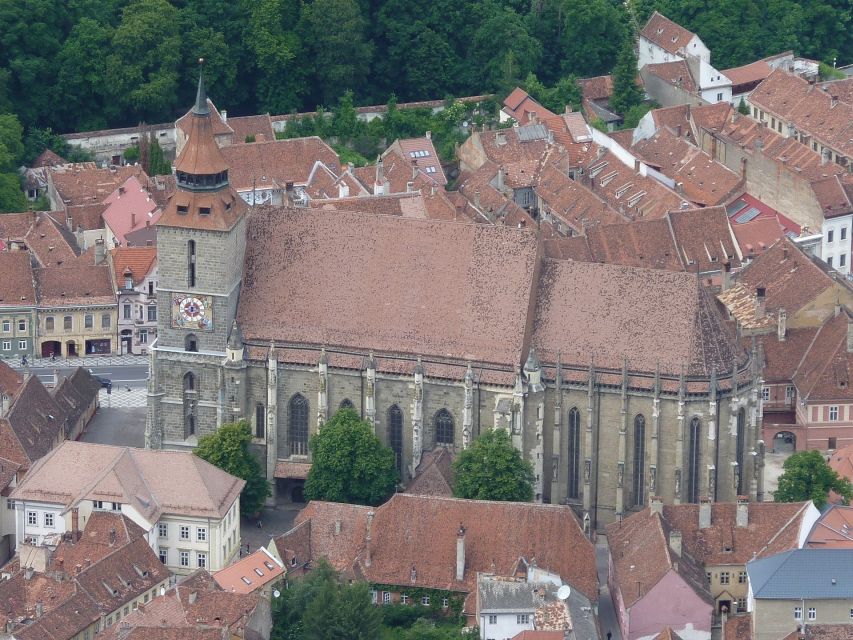
From the square, the group walks to the Black Church, one of Europe’s largest Gothic-baroque churches. Its size gives the first major architectural moment of the tour. At night, the exterior lighting can emphasize the church’s scale and dark stone, while the surrounding streets create a more dramatic setting than a bright midday visit.
The drawback is practical. This is an evening walking tour, not an interior church visit. You should not book it expecting a full look inside the Black Church or detailed study of carved stone and decorative features. Instead, you get an exterior introduction and the chance to place the church within Brasov’s old town.
I like this part because it shows how much of the city’s identity is tied to buildings that still shape daily movement. The church is not an isolated museum piece. It sits beside streets, squares, and houses that make the medieval center feel lived in.
Guide quality matters here. Several guides have been praised for clear explanations and personal stories, with Dan receiving especially strong approval for linking different periods of Brasov’s past. He has also been described as someone who grew up in the city and knows how it changed over his lifetime. That local connection can turn a church stop into a broader conversation about how Brasov functions today.
Through Katherine’s Gate and Schei Gate
The route continues to Katherine’s Gate, built in the 14th century, and Schei Gate, built almost two centuries later. These gateways help you picture the old limits of Brasov and the controlled movement between the walled city and the Schei district.
At night, you may not catch every detail of the stonework or construction. Still, the gates are valuable stops because they make the city’s defensive past easier to understand. A guide can explain why entrances mattered, how different communities used the city, and how the old center connected with areas outside its walls.
This is also one of the sections where the walk feels more like a local orientation than a standard photo stop. You are tracing a route through the city rather than standing in one square for a long lecture. I would keep your phone or camera ready, but do not expect long pauses at every landmark.
The walk is suitable for people who enjoy moving at a steady pace through an old town. Comfortable shoes are strongly recommended. The route uses narrow paths and historic streets, and Brasov’s evening temperatures can drop quickly. One visitor specifically advised bringing a jacket or something warmer, and that is sensible advice outside the warmest months.
St. Nicholas’ Cathedral and Brasov’s religious mix
St. Nicholas’ Cathedral is described as Brasov’s most important Orthodox cathedral. Its inclusion adds an important layer to the tour because the city’s story is not limited to one church tradition or one ethnic group.
The stop helps place Romanian Orthodox life alongside the Lutheran presence represented by the Black Church and the Jewish heritage represented later by the synagogue. That range gives the tour more substance than a simple medieval architecture walk. You see how religion and community helped shape different parts of the city.
Again, the evening setting has a tradeoff. Exterior lighting can make the cathedral feel solemn and memorable, but it may limit the detail you can inspect. If you want to study architectural features carefully, use this tour as an introduction and return during daylight if access is available.
The best guides do not force the route into a rigid script. They respond to questions and connect the sites to culture, family stories, and local experience. Dan has been praised for answering honestly, including admitting when he did not know something. That is a small but useful sign of a guide who values a real conversation over pretending to have every answer.
More History Tours in the world:
- Pompeii: Entry Ticket and Guided Tour with an Archaeologist
★ 4.8 · 19,459 reviews - History and Hauntings of Salem Guided Walking Tour
★ 5.0 · 14,564 reviews - Athens: Acropolis & up to 5 Archaeological Sites Combo Pass
★ 4.2 · 13,904 reviews - Colosseum: Underground and Ancient Rome Tour
★ 4.7 · 12,691 reviews
Weaver’s Bastion and the city’s defensive past
Weaver’s Bastion is one of the largest 14th-century buildings on the route. The stop brings the defensive side of Brasov into view. You are no longer looking only at churches and pretty streets. The bastion shows how organized and fortified the medieval city had to be.
The name also points to the role of craft and trade in the city’s development. Your guide can help explain how ordinary work, guilds, and defense were tied together. This is the kind of background that makes a stone wall more interesting than a quick photograph.
At night, the bastion can feel especially atmospheric, but you should keep your expectations realistic. The tour lasts only 90 minutes, so the guide cannot provide a full military-history lecture or detailed examination of every defensive feature. You get the main story and a strong visual impression.
This stop is also a good test of the tour’s style. If you prefer dates, diagrams, and long formal explanations, you may find the personal storytelling less focused than expected. If you like history tied to real streets and human choices, the format should suit you well.
Ghosts, vampires, and the useful side of local legends
The tour includes ghost and vampire stories connected with Brasov. These tales add a lighter, more playful layer to the evening and fit the narrow lanes, old walls, and shadowed streets.
The legends should not be the only reason you book. The amount of supernatural material can depend on the guide and the questions raised by the group. One person specifically felt the ghost stories did not feature much, while the personal anecdotes made the evening worthwhile. That is a fair warning if you want a dedicated vampire tour.
I see the legends as seasoning rather than the main course. They help you notice the mood of the old town, but the strongest material appears to be the city’s history, architecture, culture, and the guide’s connection to Brasov.
If you have already visited Bran Castle, this walk can work well as a follow-up. It shifts attention away from the Dracula brand and toward Brasov itself. You get stories about the city rather than only the famous castle and its fictional associations.
The Jewish Synagogue and Rope Street
The route includes the Jewish Synagogue, built in 1901. This stop broadens the tour beyond the medieval period and reminds you that Brasov’s built heritage continued to develop well after the 14th century.
That contrast is useful. The walk is marketed around medieval architecture, but Brasov is not frozen in one era. A 1901 synagogue, a Gothic-baroque church, old gates, and narrow lanes all belong to the city’s story. If you pay attention to those changes, the tour becomes a short lesson in how a European town accumulates layers over time.
Rope Street is another memorable stop. It is one of Europe’s three narrowest streets, and its tight proportions make it easy to understand why it has become one of Brasov’s best-known lanes. At night, the street can be atmospheric and fun to photograph, although you will have less light for close architectural details.
The walk through Rope Street also provides a change of pace. After larger churches, gates, and fortifications, this small passage shows the old town at human scale. You can feel how compact the historic center is and why walking is the best way to connect its landmarks.
What the guides add to the route
The strongest part of this experience is the human voice guiding it. Dan appears frequently among the guides praised for this walk, and he is described as a lifelong local with strong affection for Brasov. Other guides have also been described as friendly, funny, and attentive.
That can make a major difference in a short tour. A guide who asks about your interests can spend more time on architecture, religion, local life, or legends instead of giving every group the same speech. Small personal details have included school memories, family connections, local customs, and even apples from the guide’s home area.
Group size may vary. Some bookings have ended up with only two or three people, creating an almost private walk. You should not assume that will happen every time, but a small group would allow more questions and a more flexible pace.
One unusual account described singing rock songs and hearing the guide perform an aria in an alley with good acoustics. That is not a promised part of the experience, but it gives you a sense of the informal personality some guides bring to the evening.
Price, timing, and practical value
At $47 per person, this is not the cheapest way to walk around Brasov. You are paying for a live English-speaking guide, a planned route, local interpretation, and the convenience of seeing several key sites in 90 minutes.
I think the price makes the most sense on a first evening in town. You get your bearings quickly, learn which streets and landmarks deserve a return visit, and finish with a better feel for the city’s layout. If you already know Brasov well or prefer exploring at your own pace, the cost may feel harder to justify.
The activity offers free cancellation up to 24 hours before the start and allows you to reserve now and pay later. Those policies are useful if your Romania plans are still changing. The tour runs in rain or shine, so dress for the forecast rather than relying on the word candlelight to mean an indoor experience.
The most important practical tip is to wear comfortable shoes and bring a warm layer. Evening temperatures can be cold, and wet weather will not automatically stop the walk.
Should you book the Brasov candlelight tour?
Book it if you are visiting Brasov for the first time, enjoy walking, and want history delivered through conversation rather than a formal lecture. It is especially suitable for couples, families, and small groups who like a local guide with room for questions.
I would also recommend it after a daytime trip to Bran Castle. The two experiences can balance each other, with the castle supplying the Dracula association and Brasov supplying the city’s architecture, communities, and everyday past.
Think twice if your main goal is to enter every major building, examine details in daylight, or hear a long sequence of vampire tales. The actual candlelight element may be limited or absent, and some of the best stops are viewed from outside.
For most first-time visitors, the combination of illuminated streets, major landmarks, and guides such as Dan makes the $47 worthwhile. You get a useful introduction to Brasov, plus the chance to see the old town when its narrow lanes and stone buildings feel most atmospheric.
FAQ
How long does the Brasov candlelight tour last?
The tour lasts 1.5 hours.
How much does the tour cost?
The listed price is $47 per person.
Where does the tour meet?
The meeting point is Piata Sfatului nr. 30 in Brasov, in front of the History Museum.
What language is the tour conducted in?
The live tour guide speaks English.
Which landmarks are included?
The route includes Council Square, the Black Church, Katherine’s Gate, Schei Gate, St. Nicholas’ Cathedral, Weaver’s Bastion, the Jewish Synagogue, and Rope Street.
Does the tour include ghost and vampire stories?
Yes. Ghost and vampire stories are part of the tour’s theme, although the amount of supernatural storytelling can depend on the guide.
Is the tour held by candlelight?
The experience is promoted as a candlelight tour, but one account noted that no candles were used. The evening atmosphere comes mainly from Brasov’s illuminated streets and buildings.
Is the tour wheelchair accessible?
The activity is listed as wheelchair accessible.
What should I wear?
Wear comfortable shoes and dress for changing weather. The tour runs rain or shine, and Brasov can be cold after dark.
Can I cancel the booking?
You can cancel up to 24 hours in advance for a full refund. Reserve now and pay later is also available.
Just added around the world
- Scenic Train ride to historical cities of Morretes and Antonina★ 4.0 · 188 reviews
- 6-Day Cultural Tour to Machu Picchu★ 5.0 · 76 reviews
- Jewish Heritage of Curacao★ 4.5 · 68 reviews
- The Curacao’s Colorful History Walking Tour★ 5.0 · 55 reviews
- Discover Scuba Diving Amathounta’s Ancient Port★ 5.0 · 30 reviews
- Olous – Guided Snorkelling Excursion to Discover Olous Sunken Ancient City★ 4.5 · 31 reviews
- Night Walking Tour of Medieval Cuenca★ 5.0 · 64 reviews
- WWII – The Battle of Crete Day Tour★ 5.0 · 103 reviews