
Review · BUDAPEST
Budapest Historic Downtown Bicycle Tour in small groups
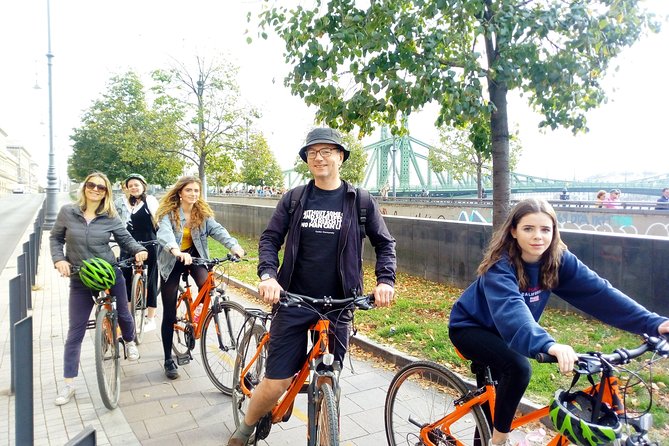
Budapest reveals itself quickly from a bicycle. In about three and a half hours, you ride from the Jewish Quarter to Heroes’ Square, through City Park, along the Danube, and past Parliament, with history explained as the city unfolds around you. The route is ambitious, but it gives you a useful first look at both Pest and the riverfront.
I like the small-group format, which makes it easier for the guide to keep the pace together and answer questions. I also like the mix of grand monuments and everyday city scenes, from the Opera and St. Stephen’s Basilica to student hangouts, historic baths, and the Central Market area.
The main caution is traffic. Much of the ride is manageable, and several sections are flat, but some bike lanes overlap with car lanes. You should be comfortable riding in an unfamiliar city, even though the guides make safety a clear priority.
Key points to know before you ride
- A lot of Budapest in one ride: The route links the Jewish Quarter, Andrassy Avenue, City Park, Parliament, the Danube, and central Pest.
- Small groups help: The tour is advertised for no more than 14 people, while the practical information also lists a maximum of 10, so confirm the group size when booking.
- The route is mostly flat: You will cover plenty of ground, but this is not a gentle beginner lesson. City traffic still demands attention.
- Guides shape the experience: Oliver, Thomas, Dori, Katalin, Valentin, Balint, Karol, and others have led tours praised for clear history, patience, pacing, and safe riding.
- No indoor sightseeing: You see the Opera, Parliament, synagogues, baths, and museums from outside. Entrance tickets are not part of the tour.
- E-bikes may be available: Some groups have received an upgrade, including distinctive wooden-frame electric bikes, but this is not guaranteed with the standard booking.
Why this bike tour works as a first look at Budapest
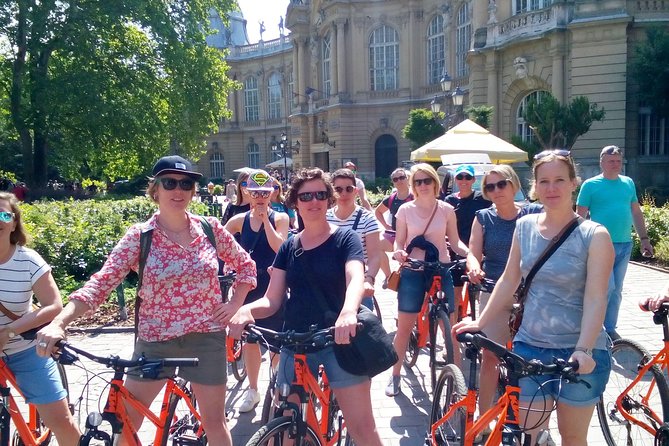
This is a sightseeing ride rather than a cycling workout. The value comes from combining transport, orientation, and live commentary in one half-day outing. You do not spend the morning walking between distant sights, and you get a sense of how Budapest’s districts fit together.
The tour begins at Bike & Relax on Madách Imre út in central Pest at 10:30 a.m. After collecting your bicycle and helmet, you set off with the guide. Bottled water and free luggage storage are included, which is useful if you are carrying bags before hotel check-in or after leaving your room.
The group size matters here. A guide can keep a small group together more easily at crossings and busy roads. Several guides, including Oliver and Thomas, have been praised for waiting for slower riders and keeping the pace steady. That said, you should not treat this as a lesson for someone who has barely ridden a bicycle. The operator specifically says it is not recommended for beginners.
The bikes appear to be a strong part of the offering. Standard bicycles are included, and some groups have been upgraded to e-bikes when numbers were low. The electric models have made the ride toward Buda or the castle area easier on some outings, but the stated route does not promise a Buda Castle climb or an e-bike upgrade. Ask before booking if either is essential to your plans.
More History Tours by Bike, Segway and Tuk-Tuk in Budapest:
- Budapest: Historic Downtown Bicycle Ride with Scenic Views
★ 4.8 · 151 reviews - Segway Guided Tour In Budapest, Historical Buda Castle
★ 5.0 · 28 reviews - Historical Singapore Bike Tour on Full-Sized Bicycles
★ 5.0 · 1,421 reviews
From Rumbach Synagogue to Andrassy Avenue
The early part of the route takes you around the Jewish Quarter, beginning near Rumbach Street Synagogue. You may see street art along the way, and the art deco and Moorish-influenced synagogue provides an early reminder that Budapest’s architecture changes quickly from one block to the next.
You do not enter the synagogue. The short stop is for viewing and explanation, so plan a separate visit if you want to see the interior.
The route then passes the Liszt Academy, a working music school with concert halls and handsome architecture. This is a useful stop because it connects Budapest’s buildings with present-day city life. Students still study classical music here, and the building is not simply a monument frozen in the past.
From there, the bicycles reach Andrassy Avenue, the grand boulevard connecting central Pest with Heroes’ Square and City Park. Along the way, you pass Liszt Square, Nagymező Street, often called the Broadway of Budapest, and sections of the Ring Roads.
Andrassy Avenue is one of the best places to understand Budapest’s late 19th-century ambitions. The guide discusses its architecture, the historic M1 subway, and the avenue’s UNESCO World Heritage status. You are mostly listening from the street rather than stopping for long photographs, so keep your camera ready.
House of Terror and Heroes’ Square
The House of Terror Museum is one of the route’s most serious stops. The building served first as a Gestapo headquarters and later as a prison under Hungary’s communist regime. A section of the Berlin Wall is displayed outside.
You do not go inside. That is both a limit and a useful planning point. The exterior explanation can give you context, but you will need a separate visit if you want the museum’s exhibitions. The subject matter is heavy, and the short stop cannot cover every detail of Hungary’s 20th-century political story.
The ride continues to Heroes’ Square, designed for Hungary’s 1,000-year anniversary in 1896. Its statues and colonnades offer a quick visual guide to the country’s rulers and national figures, from King Stephen to the revolutionary Lajos Kossuth.
This is one of the longer stops, at about 15 minutes, and it deserves the extra time. You can take in the scale of the square while the guide explains how the monument compresses a complicated Central European past into one grand setting.
City Park, Vajdahunyad Castle, and new architecture
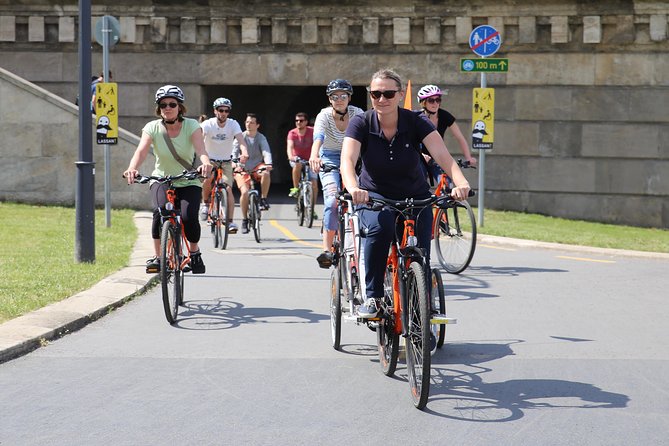
From Heroes’ Square, you ride into Városliget, or City Park. The park covers about one square kilometer and is used for walking, recreation, sport, and leisure. Parts of the area are being redesigned, so some surroundings may look different from one visit to the next.
In winter, you pass the City Park Ice Rink. In warmer months, the artificial lake becomes a place for boating. The tour does not include skating, boating, or other activities, but the changing use of the lake helps you see the park as a place for local recreation rather than only a collection of monuments.
Vajdahunyad Castle is a particularly enjoyable stop. It looks medieval, but its construction was tied to the 1896 millennium celebrations, and its design borrows from several historic styles. The guide explains why this fake castle exists, which is more interesting than simply admiring its turrets.
You also see the statue of Anonymous, a mysterious medieval chronicler seated with a hooded face. The stop is free and outside, giving you time to look around without the pressure of an admission queue.
The route then brings you to two newer architectural landmarks: the House of Music Hungary and the Museum of Ethnography. The House of Music is a modern concert hall with an unusual design. The Museum of Ethnography sits at the edge of the park and has a distinctive shape with views over the surrounding area.
These buildings give the ride a useful modern counterpoint. Budapest is not only about imperial facades and old churches. City Park is also a place where contemporary architecture and large public projects are changing the way the city presents itself.
More Old Town and Historic Centre Walks in Budapest:
- Budapest: Historic Downtown ride on E-Bicycles Buda & Pest
★ 5.0 · 227 reviews - Madrid Essential: Historic Center, Plaza Mayor & Royal Palace
★ 5.0 · 6,416 reviews - Lisbon: Live Fado Show with Port Wine in Historic Center
★ 4.7 · 4,166 reviews - Valencia Old Town Tour with Wine & Tapas in 11th Century Historic Monument
★ 5.0 · 3,234 reviews
The Opera, Basilica, and Budapest’s difficult past
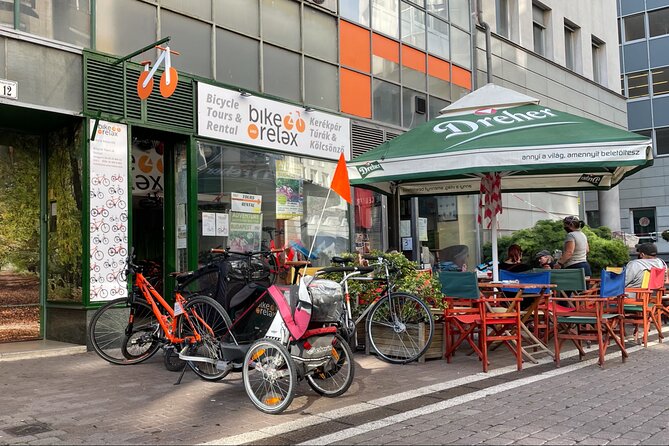
Returning toward central Pest, the bicycles pass the Hungarian State Opera on Andrassy Avenue. Designed by architect Miklós Ybl, the Opera is one of the city’s major architectural landmarks and an important venue for music and performance.
Again, there is no interior visit. The guide focuses on the exterior, its architectural style, and the avenue around it. If you want to attend a performance or take a formal building tour, arrange that separately.
St. Stephen’s Basilica follows. It is Budapest’s largest Catholic church and is associated with the preserved right hand of St. Stephen, displayed under glass. The basilica has been carefully renovated and makes an impressive urban stop, but the tour does not enter the church.
At Szabadság tér, the mood changes. The square mixes financial institutions with reminders of war, occupation, and the Holocaust. It includes controversial memorials and ironic responses to official versions of the past.
This is one of the route’s most valuable sections because it shows how Budapest deals with memory in public spaces. You are not simply moving from pretty building to pretty building. The guide uses monuments, memorials, and street layout to explain conflicts that still shape public discussion.
Parliament and the Danube riverfront
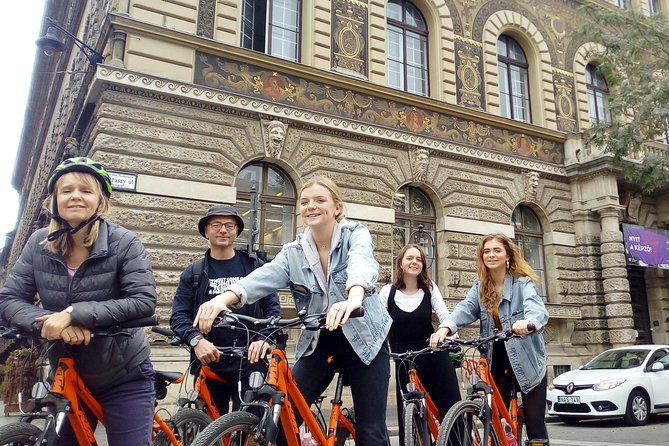
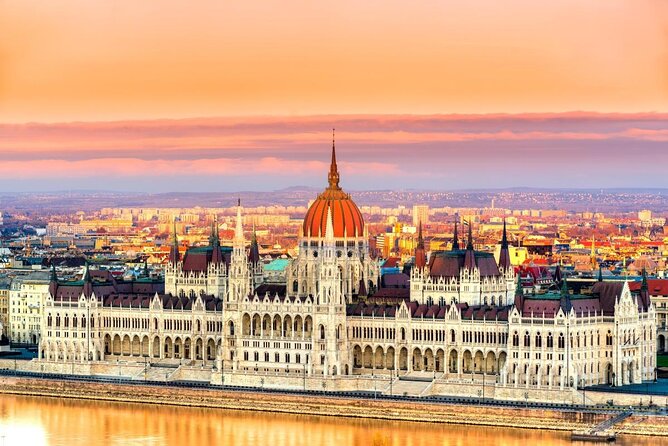
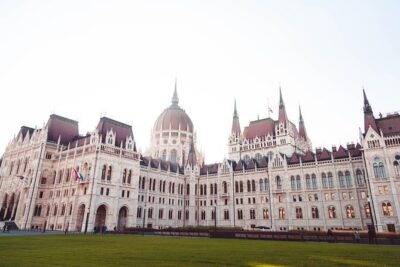
The Hungarian Parliament Building is the visual high point for many people. It sits on the Danube in a grand Gothic Revival style and remains an operating government building. The ride takes you around the exterior, where you can view both the Parliament and the Buda side of the river.
No Parliament entrance is included. That is important because the interior visit requires its own ticket and schedule. The bicycle stop is about seeing the building in context, especially from the riverfront.
Nearby, you pass the Shoes on the Danube Bank memorial. The iron shoes recall Jewish people who were forced to remove their shoes before being shot at the river during the Second World War. Direct access can depend on traffic, so do not assume you will always be able to walk right up to the memorial.
The tour also passes the Chain Bridge, Budapest’s oldest bridge across the Danube. Its position helps you understand the original connection between Buda and Pest, the two historic halves that now form one city.
This section can be busy, and the road conditions require attention. The guides are responsible for leading the group, but you still need to watch traffic, pedestrians, and other cyclists. The route is not a carefree cruise along a completely separated cycle path.
Rudas Baths, Liberty Bridge, and Central Market
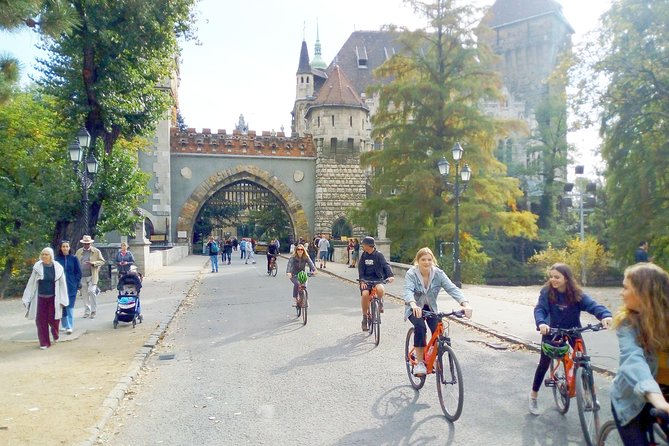
On the river route, you pass Rudas Baths, one of Budapest’s oldest Turkish baths. The building is associated with Ottoman-era bathing culture and remains a working spa. Admission is not included, and the bathing schedule can be divided into men’s and women’s days for the hammam, so check the timetable before planning a return visit.
The ride continues past Gellért Baths on the Buda side. Its Art Nouveau and art deco appearance makes it easy to recognize from the riverbank. The tour does not enter the baths, but the exterior visit can help you decide if a separate bathing session belongs on your Budapest itinerary.
You then cross or pass Liberty Bridge, originally associated with Emperor Franz Joseph and later renamed after the end of the monarchy. The bridge is a popular meeting place for students and young people, and it offers fine river views.
Near the bridge, you pass the Central Market Hall. This is not a food stop, so do not expect time to sit down for goulash or browse every stall. I would mark it for a return visit, especially if you want Hungarian food, paprika, pastries, or the atmosphere of a traditional market.
The route also passes the National Museum. It is another optional stop for later, particularly if you want a larger account of the peoples and events that shaped Hungary.
Finishing at the Great Synagogue
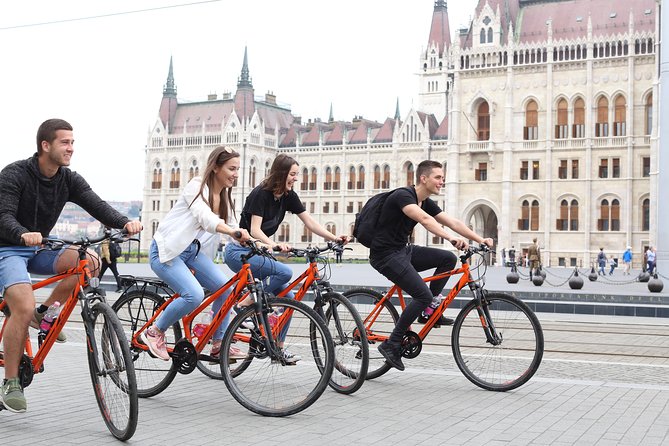
The final major stop is the Great, or Central, Synagogue at the edge of the Jewish Quarter. Its Moorish-style exterior is striking, and the location brings the route back to the district where the ride began.
You do not enter the synagogue. The stop is mainly about the building, its setting, and the surrounding Jewish Quarter. Allow extra time on another day if you want to see the interior complex and its memorial spaces.
From here, the group returns to Bike & Relax on Madách Imre út. The full outing usually takes about three and a half hours, though some rides have run closer to four hours. The number of stops, traffic, questions, and group pace can all affect the finishing time.
How much value do you get for $41.13?
At $41.13 per person, the price is reasonable for a guided half-day city tour that includes the bicycle, helmet, water, and luggage storage. Budapest’s major sights are spread across a wide area, so the bicycle saves you time and lets you cover places that would be tiring to connect on foot.
The value is strongest if this is your first or second day in the city. You can use the route to decide where to return for an indoor visit, a bath, a meal, or a longer walk. The guide’s recommendations can also help. Oliver, Karol, and other guides have offered suggestions for food and places to visit during the ride.
The value is weaker if you want detailed visits inside museums, churches, Parliament, or synagogues. This is an exterior sightseeing tour. You are paying for movement, context, and orientation, not admission tickets or long guided talks inside buildings.
Free cancellation is available until 24 hours before the 10:30 a.m. start. The tour depends on good weather and a minimum number of participants. If poor weather or low numbers cancel the ride, you are offered another date or a refund.
Who should book this ride?
I would choose this tour if you want to see a large part of Budapest without spending a whole day walking. It suits confident cyclists, couples, solo visitors, and small groups who enjoy learning while moving.
It is also a good fit for anyone who likes a clear city overview. The route takes in architecture, national history, Jewish Budapest, the communist period, public memorials, baths, parks, and the Danube in one outing.
I would be cautious if you have little cycling experience, difficulty seeing clearly in traffic, or a body weight above the stated 110-kilogram limit. Children must be accompanied by an adult, and the operator does not recommend the tour for beginners.
Wear layers. You warm up while riding, but wind can make gloves and a hat useful in cooler weather. If you are sensitive to traffic noise, stand close to the guide when possible. One useful criticism of the ride is that historical explanations can be harder to hear beside busy roads.
Should you book the Budapest Historic Downtown Bicycle Tour?
Yes, if your goal is to cover Budapest efficiently and understand what you are seeing. The route is packed, the guides are often praised for safe pacing and clear explanations, and the combination of central Pest, City Park, Parliament, and the Danube gives you a strong first orientation.
Book it with realistic expectations. You will not enter the major buildings, traffic is part of the experience, and you need to ride confidently. For a fair price, though, this is a practical way to get your bearings, see the city’s major sights, and create a list of places worth exploring on foot afterward.
FAQ
How long is the Budapest Historic Downtown Bicycle Tour?
The tour lasts approximately 3 hours and 30 minutes. Some outings may take closer to four hours, depending on traffic, questions, and the pace of the group.
What time and where does the tour begin?
The tour begins at 10:30 a.m. at Bike & Relax, Budapest, Madách Imre út 12, 1075 Hungary. It ends back at the same meeting point.
Are bicycles and helmets included?
Yes. Bicycle use, a helmet, bottled water, and free luggage storage during the tour are included. Helmets are provided but are not obligatory.
Does the tour enter Parliament, the Opera, or the synagogues?
No. The tour views these buildings from outside. Entrance fees are not included, and the itinerary does not provide interior visits.
Is the tour suitable for beginner cyclists?
The operator does not recommend it for beginners. The route is mainly flat, but some bike lanes overlap with car lanes, so you should be comfortable riding in city traffic.
What happens if the weather is poor or I need to cancel?
You can cancel up to 24 hours before the start time for a full refund. The tour may be canceled for poor weather or if the minimum number of participants is not reached, in which case you are offered another date or a full refund.
Just added around Budapest
- Time Machine Budapest Historical Exhibition Ticket★ 5.0 · 32 reviews
- Michael Jackson History Exhibition Ticket★ 5.0 · 42 reviews
- Private Jewish Heritage Tour including Hotel Pickup★ 4.5 · 35 reviews
- Budapest Jewish Heritage: Synagogues, Shoes, Secrets & Flódni★ 5.0 · 47 reviews
- Communist History Evening Walking Tour of Budapest★ 4.5 · 23 reviews
- Jewish Heritage / Full tour★ 5.0 · 59 reviews
- Jewish Heritage in Hungary with a Historian★ 5.0 · 37 reviews
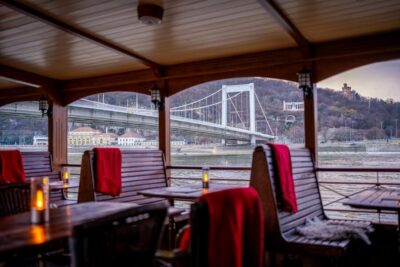
- Budapest Paddle Steamer Danube Cruise with Tokaj & Audio Guide★ 4.5 · 338 reviews
Budapest History Tours, compared.
Budapest Historical Sightseeing – Free Walking Tour
Read our review →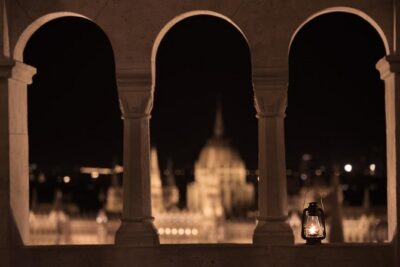
Buda Castle District Dark History, Legends and Vampire Night Tour
Read our review →
Budapest: Sir Lancelot Medieval Dinner with Drink and Show
Read our review →
BloodThirsty Hungary: Walking tour & Dark Historical Stories
Read our review →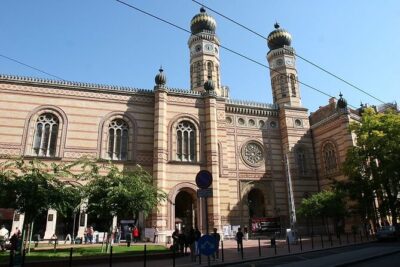
Budapest Jewish Heritage Memorial Walking Tour & Synagogue Entry
Read our review →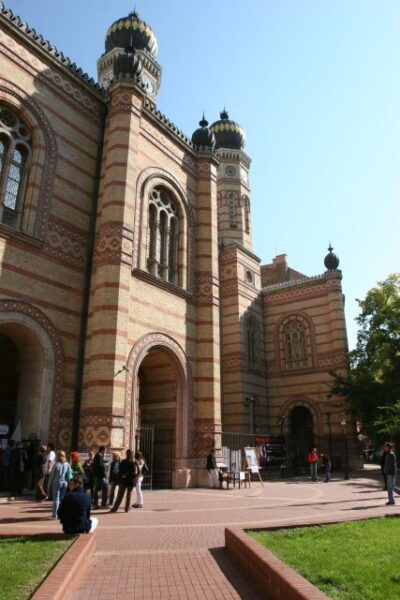
Budapest: Jewish Heritage Guided Tour with Synagogue Ticket
Read our review →
Budapest Paddle Steamer Danube Cruise with Tokaj & Audio Guide
Read our review →Browse the lists this tour appears in