
Review · FRANCE
Carcassonne: Medieval Builder-Themed City Tour with a Guide
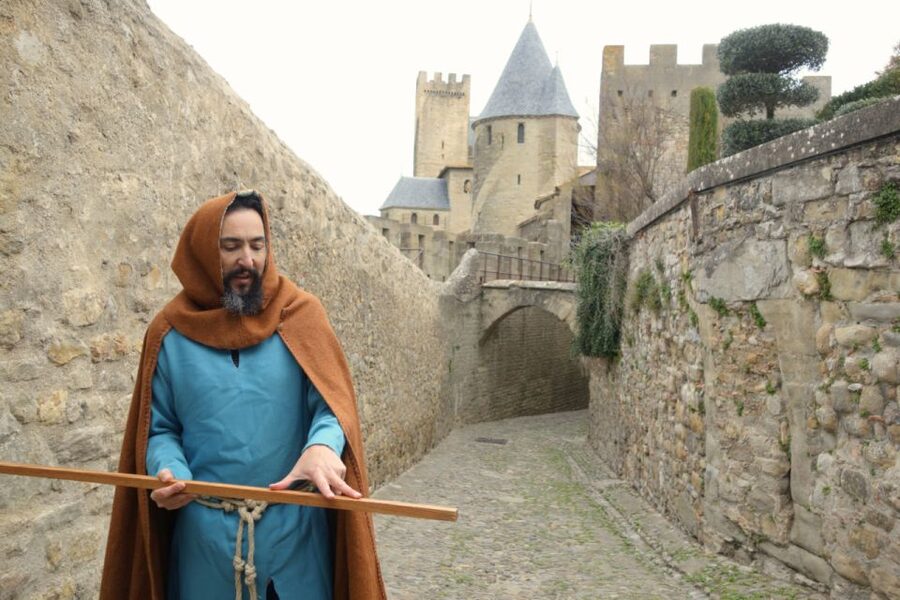
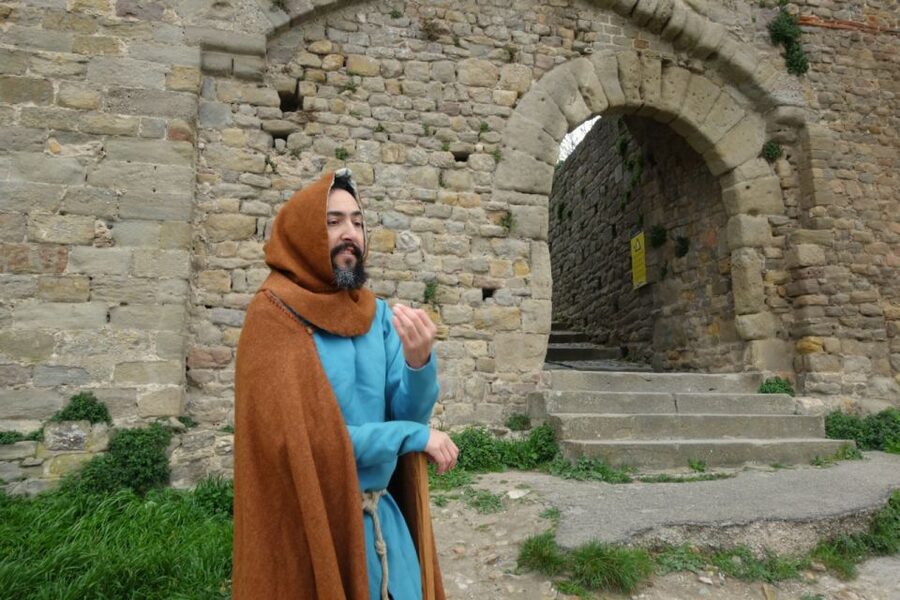
Carcassonne is at its best when the stones start talking. On this 90-minute guided walk, Guilhem, a 13th-century master builder, leads you through the fortified city in period clothing, explaining how people lived and worked during the great building campaigns of the Middle Ages. Tools and objects help turn old walls into a working town.
I like two things right away: the guide stays in character, and the tour gives children something to watch and handle rather than asking them to listen to a long lecture. I also like the clear route, which takes in Narbonne Gate, the lices, the Comtal Castle moat, and the basilica exterior without trying to cover every corner of the city.
The main limitation is language. The live tour is in French, so you will get the most from it if you understand French. Also, children under six are not considered suitable for this activity, even though older children can find its theatrical style especially engaging.
Key points to know before you book
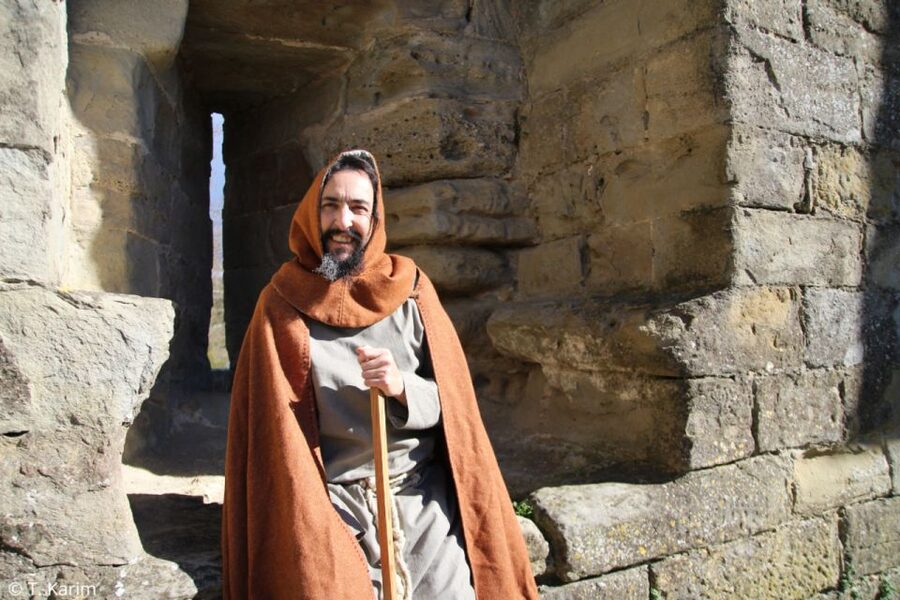
- Guilhem is a 13th-century builder character: The guide presents the city through the eyes of a craftsman connected to royal construction work.
- Period clothing and objects make the past concrete: You see more than walls and hear more than dates.
- The route covers Carcassonne’s key outer sights: Expect the Narbonne Gate, fortified lices, the Comtal Castle moat, and the basilica exterior.
- The tone suits families: Stories, humor, and interaction help children stay with the tour.
- The tour runs in French and lasts 90 minutes: Plan to meet at the Dame Carcas statue by the Porte Narbonnaise gate.
Meeting Guilhem at the Porte Narbonnaise
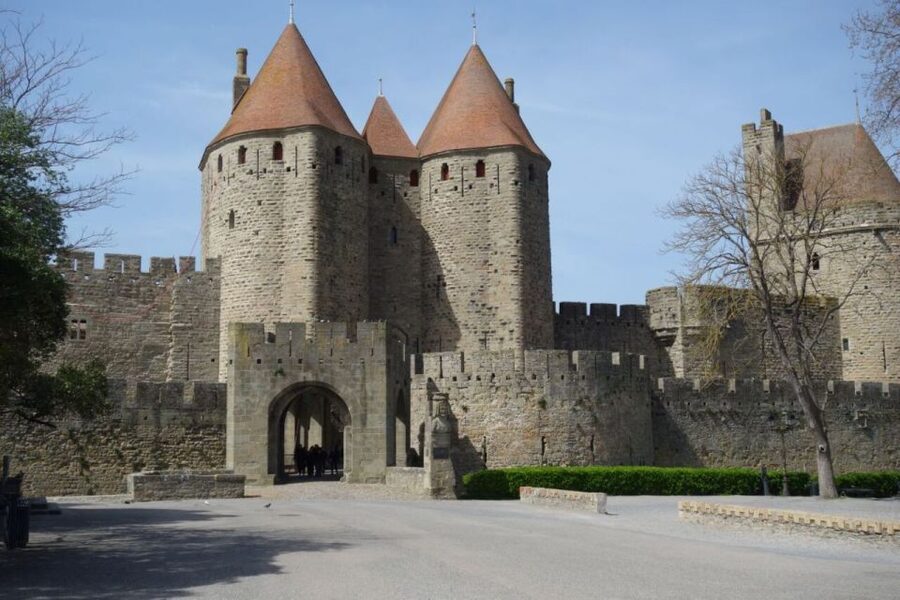
Your starting point is the Dame Carcas statue in front of the Porte Narbonnaise, the main entrance gate to Carcassonne’s medieval city. This is a useful meeting place because the gate immediately gives you the setting: towers, stone defenses, and a strong sense of entering a separate historic quarter.
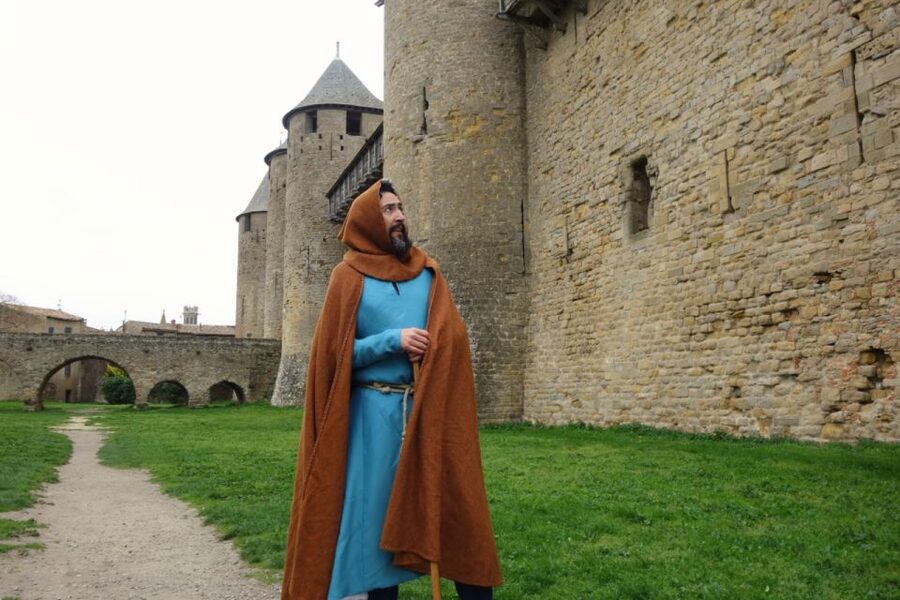
The character you meet is Guilhem, a master builder from the 13th century. His backstory connects him to Pierre the builder, described as one of King Louis IX’s engineers, and to an Occitan mother. That gives the guide a personal angle on both royal construction and local culture.
This is not a standard walk led by someone who simply points at a building and recites its date. The guide uses Guilhem’s point of view to explain the work behind the city. You hear about builders, tools, daily routines, and the practical demands of raising and repairing major defenses.
The approach matters because Carcassonne can feel like a grand stone picture set if you only look at its towers. A builder’s story brings your attention down to the work itself. You begin to think about labor, materials, skill, and the people who made the fortress possible.
The guide’s name may be Thomas, as it was on some departures, although the role remains Guilhem the builder. Thomas has been praised for staying fully in character and for adjusting his explanations to both children and adults. That flexibility is important on a family tour, where a six-year-old and a parent rarely want the same level of detail.
More Medieval History Tours in France
- Colmar, Medieval Village & Castle Small Group from Strasbourg
★ 5.0 · 769 reviews - From Nice: Provence and its Medieval Villages Full-Day Tour
★ 4.8 · 352 reviews - From Strasbourg: Medieval Villages & Wine Tasting Day Trip
★ 4.8 · 329 reviews
Reading the Narbonne Gate like a medieval builder
The Narbonne Gate is an excellent first stop because it shows how Carcassonne controlled entry into the fortified city. Rather than treating the gate as a simple doorway, Guilhem’s presentation encourages you to think about its purpose, design, and connection to the people who built and used it.
Expect stories and historical anecdotes rather than a technical engineering lesson. The tour focuses on making the medieval world understandable through objects and character. A period tool in the guide’s hands can do more for a child’s attention than a long explanation about construction methods.
For adults, the value is the shift in viewpoint. You are not only looking at a famous entrance. You are considering the gate as a workplace, a defensive feature, and part of daily movement through the city.
This stop can be busy and exposed to changing weather, since the tour takes place rain or shine. Wear shoes that are comfortable for walking on historic surfaces, and bring protection from rain or sun when the forecast calls for it.
Walking the lices between the walls
The lices are the open area between the city’s defensive walls. This section gives you a better sense of Carcassonne as a military construction project, not just a cluster of picturesque streets.
Here, Guilhem’s profession becomes especially useful. The guide can frame the walls through questions of labor and defense: what had to be built, why layers of fortification mattered, and how the city’s shape affected everyday life. The tour does not promise access to every interior space, so the emphasis remains on the exterior structures and the stories they suggest.
I like this part for another reason: it gives you room to look. The lices help reveal the scale of the fortifications, and the route allows the story to move between architecture and human experience. You can listen for a while, then take in the towers and walls around you.
Families should know that this is still a walking tour, not a staged show with constant action. The performance style adds energy, but children need to be ready for a full 90 minutes of moving and listening. The guide’s use of objects and humor helps, yet the experience works best for children who already have some interest in stories, castles, or how things are made.
The Comtal Castle moat and the practical side of defense
The route continues to the moat outside the Comtal Castle. Even from the exterior, this area helps explain the relationship between the castle and the wider fortified city.
Guilhem’s perspective turns the moat into more than a photo stop. You can consider how a builder would have viewed the site, how defenses were arranged, and how royal power shaped construction in the 13th century. The story also connects the city to the period’s political and religious tensions, including Catharism.
That reference to Catharism adds needed context. Carcassonne was not built in a vacuum, and the wider history of the region includes conflict, belief, and royal control. The tour presents these subjects through Guilhem’s perspective, so you should expect an accessible introduction rather than a long academic treatment.
This is one place where the tour’s 90-minute length sets a useful boundary. You receive a focused account of the city and its builders, but not an exhaustive history of every siege, ruler, or religious movement. If you want a full study of Catharism or an extended visit inside the castle, you will need additional time elsewhere.
Same city, a different century:
- Normandy D-Day Sites & Cemetery Day Trip from Paris with Lunch
★ 5.0 · 6,877 reviews - Paris: Louvre Museum Entry with History of Mona Lisa
★ 3.9 · 2,823 reviews - Normandy D-Day Small-Group Day Trip with Omaha Beach, Cemetery & Cider Tasting
★ 5.0 · 2,786 reviews - Normandy D-Day Beaches and American Cemetery Day Trip from Paris
★ 4.5 · 2,673 reviews
The basilica exterior and the city beyond the postcard view
The basilica exterior is another scheduled point of interest. From outside, you can consider how religious buildings fit into the life of the medieval city, alongside walls, gates, and royal defenses.
The tour does not include a promise of an interior visit. That is worth noting if the basilica is your main reason for booking. The guide’s focus is the city as a whole, with the exterior serving as one part of a broader route.
What makes this stop useful is the way it widens the story. Builders were not working on military defenses alone. Medieval Carcassonne also needed places of worship, homes, streets, and civic spaces. Guilhem’s world is made up of all these demands, and the tour uses them to connect architecture with ordinary life.
You may find this section more appealing if you enjoy seeing how different parts of a historic town fit together. It is less suited to someone seeking a dedicated church tour with detailed art or architectural analysis.
Daily life, tools, and the story of a working city
The strongest feature of this experience is its focus on people who built and used Carcassonne. Guilhem introduces the daily life of a builder and brings historical objects into the walk. That gives you a more physical sense of the period than a list of dates would provide.
Tools are especially helpful for children. A wall can look remote and untouchable, but a tool suggests a task. It encourages questions about who used it, what materials were needed, and how much work went into a project that now looks permanent.
Adults get something from this approach, too. The tour reminds you that medieval construction was not an abstract process. It required trained workers, organization, supplies, and time. A city like Carcassonne was shaped by thousands of practical decisions.
The guide’s performance is central. Thomas has been noted for matching his explanations to the age of the people in the group, speaking to children at their level without leaving adults behind. That is a fine skill. Family tours often fail by talking only to parents or only to children. Here, the builder character gives the guide a natural way to simplify a point, add humor, or offer a more detailed aside.
Why the theatrical style works, and where it may not
The historical outfit is not just decoration. It signals that the guide is asking you to accept a role-play approach for the next hour and a half. If you enjoy storytelling, the costume helps the setting feel immediate. If you prefer a quiet, formal museum explanation, it may feel a little too performed.
The balance appears to be light and informative rather than theatrical for its own sake. Historical anecdotes sit alongside humor, questions, and objects. The guide remains focused on Carcassonne, rather than turning the experience into a generic medieval show.
This style has clear benefits for families. A child may remember Guilhem the builder long after forgetting a date. Adults can still pick up useful context about the 13th century, royal building programs, daily work, and Cathar history.
The tradeoff is that the presentation depends heavily on the guide. A character-led tour needs energy and confidence. Thomas has received particularly strong praise for his ability to hold attention, and one family found the children aged five and eight captivated. Still, the formal suitability rule excludes children under six, so families should follow the stated age guidance when booking.
What the 23 dollar price buys you
At 23 dollars per person, this is reasonably priced for a 90-minute guided experience in one of France’s best-known fortified cities. You are paying for a live French-speaking guide, a prepared character, period clothing, historical objects, and a planned route through several major exterior sights.
The value is strongest if you want interpretation rather than a self-guided walk. You can enter the medieval city and see the walls on your own, but the builder’s viewpoint supplies the connections between them. You also avoid spending your short visit wondering which details matter.
The price does not include food, drinks, hotel pickup, or hotel drop-off. Since the meeting point is at Porte Narbonnaise, you need to make your own way there. That is simple enough if you are already visiting the medieval city, but it is worth building the meeting point into your day.
The tour is also a good way to avoid overloading your schedule. Ninety minutes gives you a clear introduction without taking up an entire morning or afternoon. You can follow it with your own exploration of the city or a separate visit to places not covered in detail.
French language, weather, and comfort
The live tour is in French. The supplied information does not promise another language or translation, so you should book only if French works for you or for someone in your group.
The route operates rain or shine. That makes a simple packing check worthwhile:
- Comfortable walking shoes
- Rain protection if needed
- Sun protection in hot weather
- Water, since food and drinks are not included
The activity is wheelchair accessible. The tour still takes place in a historic fortified city, so you may want to confirm the practical route details for your own chair before booking if specific access needs are important to you. The published information identifies the activity as accessible but does not provide a detailed surface-by-surface description.
Free cancellation is available up to 24 hours before the start time for a full refund. You can also reserve now and pay later, which helps if your South of France plans are still shifting.
Who will enjoy this Carcassonne tour most
I would choose this tour for families with children aged six and older, especially if the children like costumes, castles, tools, and stories with a clear character at the center.
It also suits adults who want a quick orientation before exploring alone. The route covers several key exterior points, and the builder theme gives you a practical way to read the city. You do not need to be a medieval history specialist.
French-speaking couples and groups should find the format easy to enjoy. The tone is lively, but the subject matter includes daily life, construction, Catharism, and the wider history of Carcassonne.
I would hesitate if you want a quiet architectural study, a detailed religious tour, or extensive time inside the Comtal Castle and basilica. The tour introduces these places from the outside and keeps moving. It is built around storytelling, not a complete monument-by-monument examination.
Should you book the medieval builder tour?
Book it if you want Carcassonne to feel like a working medieval city rather than a collection of old stones. The period clothing, builder character, objects, and humor give the walk a clear identity, while the route covers the Narbonne Gate, lices, castle moat, and basilica exterior.
The best match is a French-speaking family or adult group that values an entertaining guide and a focused introduction. Keep your expectations realistic: the tour lasts 90 minutes, runs in French, takes place outdoors in all weather, and does not include food, drinks, hotel transfers, or promised interior visits.
At 23 dollars, I see it as good value for an engaging orientation, especially if Thomas or another strong guide is leading the group. If you want the city’s walls explained through the eyes of someone who built them, this is a smart way to begin.
FAQ
Where does the Carcassonne medieval builder tour meet?
The meeting point is in front of the Dame Carcas statue at the Porte Narbonnaise gate in Carcassonne.
How long does the tour last?
The guided tour lasts 90 minutes, or one and a half hours.
What language is the tour in?
The live tour guide speaks French. No other tour language is specified.
Is the tour suitable for young children?
The activity is not suitable for children under six. Children aged six and older can take part, with the interactive stories and historical objects offering family-friendly entertainment.
Which Carcassonne sights are included?
The route includes the Narbonne Gate, the lices or outer walls, the moat of the Comtal Castle, and the exterior of the basilica.
Does the tour run in bad weather?
Yes. The tour takes place rain or shine, so bring suitable clothing and shoes for the forecast.
Just added around France
- Medieval Carcassonne: Interactive Ghost Story & City Game★ 3.5 · 33 reviews
- Carcassonne During World War 2★ 5.0 · 127 reviews
- Carcassonne ‘s Medieval Walls: A Self-Guided Tour★ 4.5 · 43 reviews
- Small Group Guided D-Day Tour and Mémorial de Caen Museum★ 5.0 · 237 reviews
- Normandy: Private tour D-Day landing beaches American sector★ 5.0 · 62 reviews
- Mémorial de Caen Museum Admission and Guided Tour of D-Day Sites★ 4.5 · 275 reviews
- Private Day Tour including Normandy Landing Beaches & Battlefields from Caen★ 5.0 · 53 reviews
- Private Bordeaux History Tour with a glass of Bordeaux wine.★ 5.0 · 28 reviews
France History Tours, compared.

Normandy D-Day Sites & Cemetery Day Trip from Paris with Lunch
Read our review →
Paris: Louvre Museum Entry with History of Mona Lisa
Read our review →
Normandy D-Day Small-Group Day Trip with Omaha Beach, Cemetery & Cider Tasting
Read our review →
Normandy D-Day Beaches and American Cemetery Day Trip from Paris
Read our review →
Normandy American D-Day Beaches Full Day Tour from Bayeux
Read our review →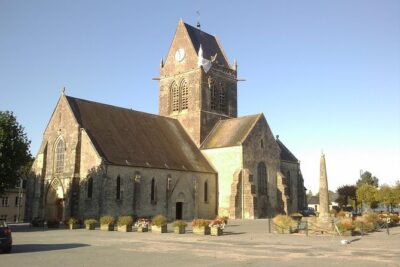
Normandy American D-Day Experience – Group tour from Bayeux
Read our review →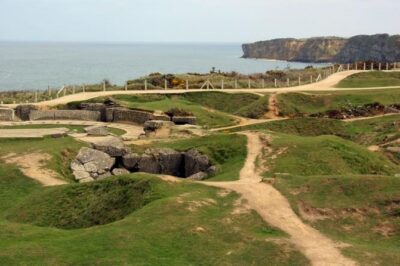
Normandy Beaches Half-Day Afternoon Trip from Bayeux (A2)
Read our review →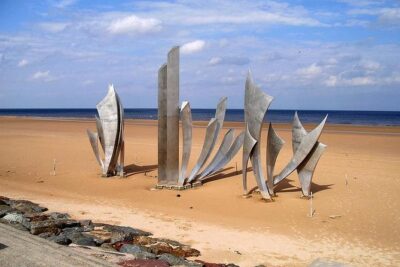
Omaha Beach D-Day Experience – Afternoon group tour from Bayeux
Read our review →Browse the lists this tour appears in