
Review · FRANCE
Champagne Cellar Experience: Explore our historic cellars
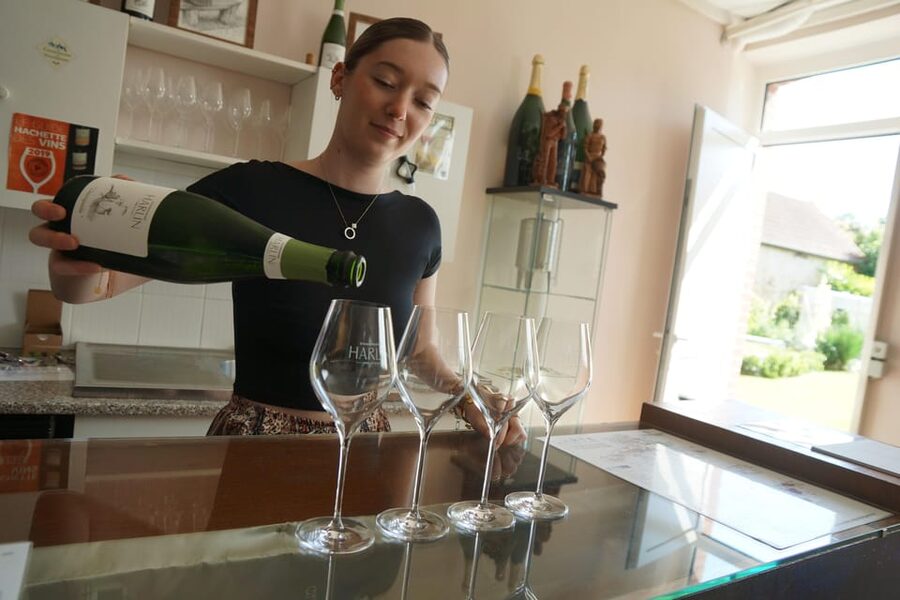
At Champagne Harlin Père & Fils, you get a close look at how a small Champagne producer works, then sit down to taste three champagnes and one ratafia champenois. The useful part is the connection between the cellar, the soil, the climate, and what ends up in your glass. Biodiversity and sustainable viticulture are part of the story, not just decoration.
I like the personal scale of this visit and the chance to taste wines from several Champagne terroirs. I also like that the guide takes time to explain the production process and the tasting itself. The main consideration is timing: the experience is advertised as one hour, while the detailed schedule allows one hour for the visit and another 30 minutes for tasting, so you should leave room in your plans.
- Three champagnes and one ratafia: The tasting gives you more than a single sample and includes a traditional regional fortified drink.
- A working producer’s view: You tour Champagne Harlin’s winery and cellar rather than only seeing a polished display room.
- Three named terroirs: The cuvées reflect Mareuil-le-Port, Épernay, and Tours-sur-Marne.
- Biodiversity in the vineyard: The producer explains efforts to protect nature while growing grapes.
- French and English guiding: You can request the tour in either language when checking available times.
- A practical location: The cellar is less than two hours from Paris, about 20 minutes from Épernay, and 30 minutes from Reims.
A Small Champagne House With Something To Explain
Champagne is often presented through famous names and grand visitor centers. Champagne Harlin offers a different scale. The experience takes place at 8 Rue de la Fontaine, where you enter the courtyard and meet your guide before walking through the winery and cellar.
That setting matters. A small producer can make the visit feel more direct. You are not simply shown a bottle and given a sales pitch. You are introduced to the work behind it, including how grapes from different places become distinct cuvées.
The experience is led in French or English. The guide’s name is not given in the available details, but the personal approach is clear from the visit format. You should expect explanations throughout the tour rather than a quick walk followed by a drink.
The current score is 4.7 out of 5 from 46 ratings. The strongest praise centers on the guide’s clear explanations, the care given to the tasting, and the sense that you are learning how this particular cellar makes champagne rather than receiving a standard introduction.
What Happens at 8 Rue de la Fontaine
Your visit begins in the courtyard of Champagne Harlin Père & Fils. The guide waits there for your arrival and brings you into the experience. Since the meeting point is also the end point, you do not need to arrange a second pickup or find your way between separate parts of the visit.
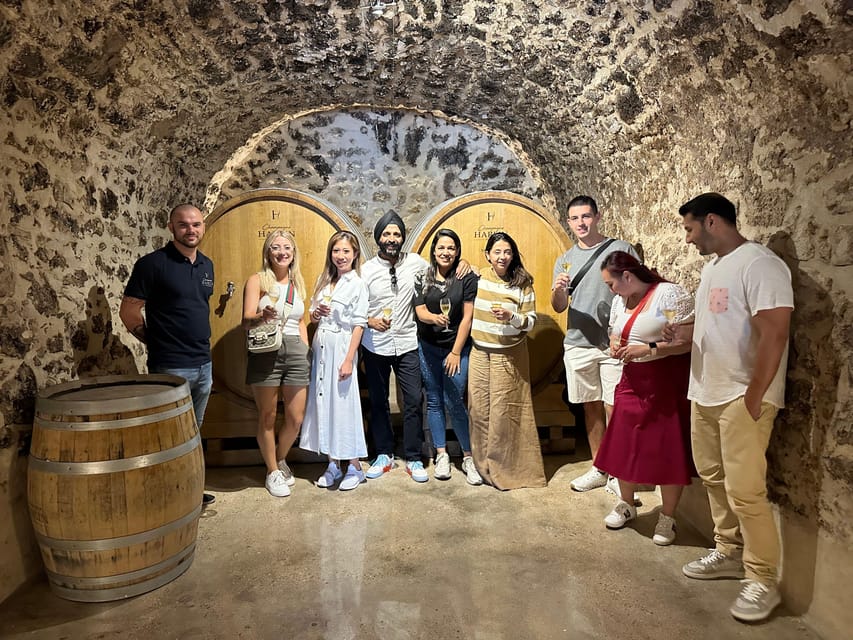
The first part is a guided tour of the winery and cellar. You learn about champagne production at this house and the choices that shape its wines. The experience specifically links the wines to the terroirs of Mareuil-le-Port, Épernay, and Tours-sur-Marne, so the focus is not only on how champagne is made but also on where its grapes come from.
The cellar is the historic heart of the visit. It gives the production story a physical setting, even though the available information does not specify the age, layout, or temperature of the underground rooms. You should expect a tour focused on the cellar and winery rather than a broad vineyard walk.
The vineyard tour is not included. That distinction is easy to miss, especially if you imagine a full day in the vines. This experience is best understood as a cellar tour with tasting. If walking among the vines is important to you, you will need to ask Champagne Harlin about a separate vineyard visit.
More Wine Trips in France:
- From Strasbourg: Medieval Villages & Wine Tasting Day Trip
★ 4.8 · 329 reviews - Nice : Wine Tasting at a Historic Château in a Land Rover !
★ 4.9 · 156 reviews - Nice: Sunset & Wine Tasting in a historic Land Rover
★ 5.0 · 91 reviews
Three Terroirs, Four Glasses
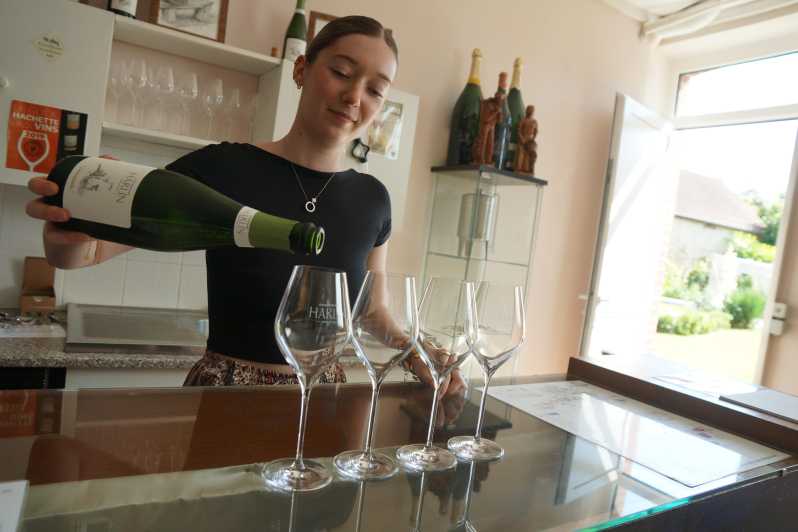
The tasting follows the tour and includes three champagnes plus one ratafia champenois. That is a good lineup for the price because it lets you compare several expressions instead of judging the producer from one bottle alone.
The champagnes are connected with Mareuil-le-Port, Épernay, and Tours-sur-Marne. Each place brings a different combination of soil, climate, and growing conditions. The guide explains how those factors affect the cuvées, giving you a useful way to taste instead of simply asking if you like a particular bottle.
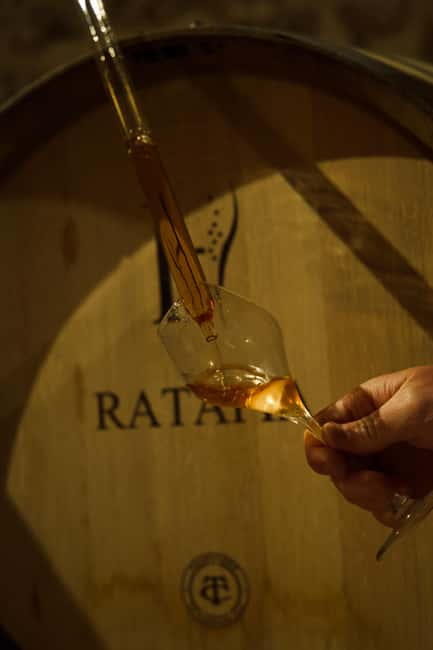
You will also taste ratafia champenois. This regional drink is made from grape must and alcohol, and it is usually served as an aperitif or alongside food. Here, it adds a different style and texture to the tasting. It also helps show that Champagne’s traditions include more than sparkling wine.
The tasting is described as guided and commented. That means the useful part is not just the number of glasses, but the structure. You learn how to taste, what to look for, and how the producer connects the wine to its origin.
For a first Champagne visit, this format works well. You receive enough samples to compare, but not so many that the tasting becomes a blur. If you already know Champagne well, the appeal will rest more on the producer’s approach to biodiversity and the local character of the cuvées.
Why Biodiversity Is Part of the Visit
Champagne Harlin places strong emphasis on preserving biodiversity. This gives the tour a wider focus than fermentation, bottles, and cellar work.
Biodiversity in a vineyard can involve the plants, insects, soil life, and surrounding habitats that support a healthy growing area. The provided details do not list specific farming methods, certifications, or projects, so you should not expect technical claims beyond the producer’s stated commitment. Still, the subject gives you a useful lens for understanding modern Champagne production.
A good wine visit should help you see that a bottle begins long before it reaches the cellar. Climate and soil affect the grapes, while vineyard care influences the fruit that the producer has to work with. By discussing nature and sustainable viticulture, the guide connects environmental choices with the flavor and identity of the wine.
I especially like this aspect because it keeps the visit grounded in current concerns. Champagne is not only a luxury product. It is also an agricultural product, and the quality of each cuvée depends on what happens in the fields.
The Value of $23
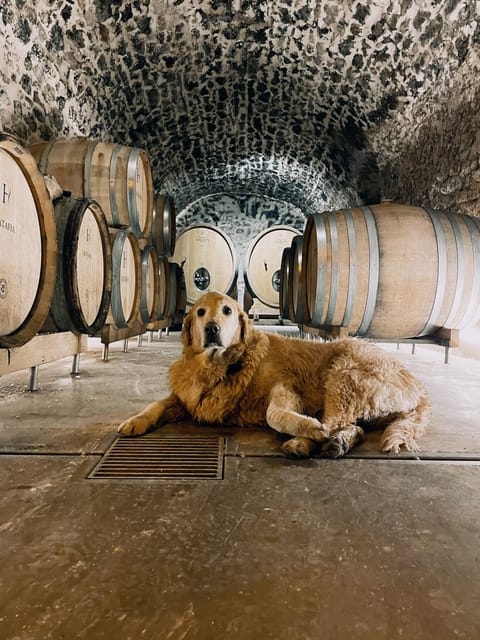
At $23 per person, this is priced as an accessible introduction rather than a major splurge. You receive entry to the Champagne Harlin cellar tour, a guided explanation of the production process, and four drinks in the tasting.
That makes the value fairly strong for a short stop near Épernay or Reims. You are paying for both the wine and the producer’s time. The guide’s explanations are a major part of the experience, especially if you are new to Champagne and want to understand what separates one cuvée from another.
The price is less compelling if you only want a quick glass. A bar or shop can provide that more simply. This visit earns its price through the cellar access, the comparison of several champagnes, and the chance to ask questions about one producer’s methods.
The small-house setting may also suit you better than a grand Champagne brand. Large houses can offer impressive architecture and polished displays, but a family producer can give you a more direct explanation of its work. The tradeoff is that you should not expect a huge visitor complex or a long list of exhibits.
More History Tours in France:
- Normandy D-Day Sites & Cemetery Day Trip from Paris with Lunch
★ 5.0 · 6,877 reviews - Paris: Louvre Museum Entry with History of Mona Lisa
★ 3.9 · 2,823 reviews - Normandy D-Day Small-Group Day Trip with Omaha Beach, Cemetery & Cider Tasting
★ 5.0 · 2,786 reviews - Normandy D-Day Beaches and American Cemetery Day Trip from Paris
★ 4.5 · 2,673 reviews
Allow More Than the Advertised Hour
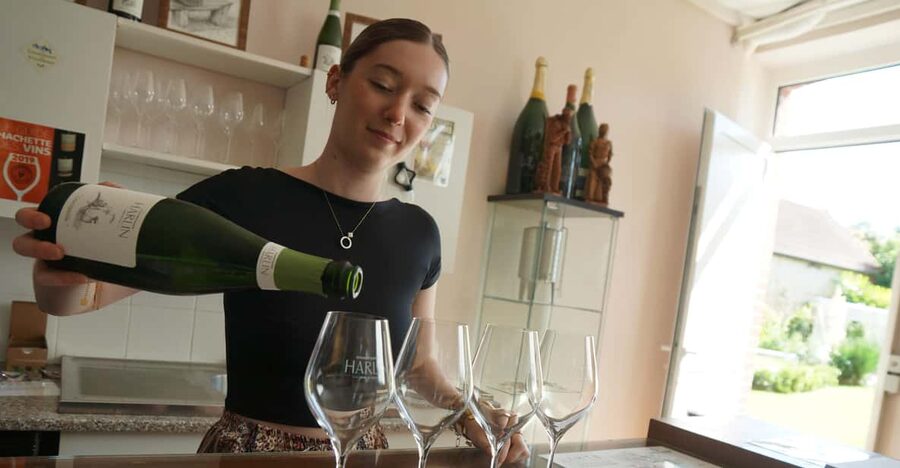
The experience is listed as lasting one hour, with starting times depending on availability. The detailed schedule gives one hour to the winery and cellar visit, followed by a 30-minute champagne and ratafia tasting.
Because of that difference, I would plan for about 90 minutes and avoid booking a train, meal, or second appointment too close to the stated end time. The tasting is part of the main experience, not an optional extra, and rushing through it would defeat much of the point.
The visit begins and ends at 8 Rue de la Fontaine. It is less than two hours from Paris, about 20 minutes from Épernay, and about 30 minutes from Reims. Those travel times make it a practical addition to a Champagne itinerary, but the available information does not specify transport connections or parking, so you should check your route before booking.
If you are building a day around Épernay, this can fit neatly before or after other cellar visits. Just allow time for the tasting and for getting between towns. Champagne roads can make short distances take longer than they appear on a map.
Who Will Enjoy This Most
This is a strong choice for you if you want a producer-led introduction to Champagne. It suits first-time visitors who want plain explanations of how the wine is made and why different villages produce different results.
It also works well for people who care about farming and environmental choices. The biodiversity theme is not a separate lecture added to the tour. It is part of the producer’s identity, so you can connect vineyard care with the wines in your glass.
Couples and small groups looking for a relaxed tasting should find the format manageable. Families can also attend, with one important limit: children under 18 may join the visit but cannot drink alcohol under French law. Fruit juice is provided for them, and they do not need an entry ticket.
The experience is not suitable for pregnant women, according to the provided activity information. That restriction is worth noting even though the visit itself includes a cellar tour and tasting rather than a full day of drinking.
You may want something else if your main goal is a vineyard walk. The vineyard tour is not included, and the visit stays centered on the winery, cellar, and tasting room. You may also prefer a larger Champagne house if grand architecture and a highly staged presentation are more important to you than personal explanation.
What Makes the Explanations Useful
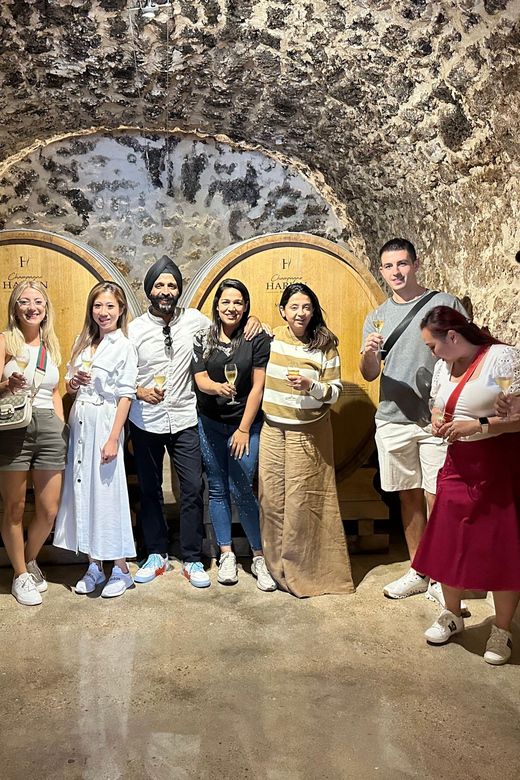
The best part of a Champagne tour is often the moment when a technical process starts to make sense. Here, the guide explains the specific method used at this cellar, not just a generic version of champagne production.
You learn about the path from grape to finished wine, then taste the results. That order helps. Instead of hearing a list of production terms and forgetting them, you can connect the explanation with what is in front of you.
The tasting also gives you a chance to compare styles. The three champagnes are tied to different terroirs, and the guide discusses how soil and climate shape each cuvée. You should listen for the differences in freshness, weight, aroma, and finish, but do not worry about finding the perfect technical vocabulary. The purpose is to understand what you like and why.
The available feedback gives special weight to the guide’s clarity and patience. One French visitor described learning a great deal about champagne and its production, while another highlighted how useful the commented tasting was. That matches the structure of the experience: the teaching is not an afterthought.
Booking and Practical Details
The activity allows free cancellation up to 24 hours before the visit for a full refund. You can also reserve now and pay later, which helps if your Champagne plans are still shifting.
French and English are available. Check the starting times before you commit, since the duration and schedule can vary by availability.
Meet in the courtyard at Champagne Harlin Père & Fils. If the guide is not already waiting, the meeting instructions say he will greet you shortly. Since the same address is used for the tour and return, the arrangement is simple.
Keep the following points in mind:
- The price is $23 per person.
- The visit is at 8 Rue de la Fontaine.
- Three champagnes and one ratafia champenois are included.
- The vineyard tour is not included.
- Children under 18 may attend without a ticket and receive fruit juice, but they may not drink alcohol.
- The tour is offered in French and English.
- Plan extra time because the detailed schedule includes a 30-minute tasting after the cellar visit.
Should You Book Champagne Harlin?
Book this experience if you want a reasonably priced, personal introduction to Champagne with enough tasting to make comparisons. The combination of a winery visit, historic cellar, three champagnes, and ratafia gives you more substance than a quick pour at a shop.
I would choose it especially for a first visit to the region, a short stay near Épernay or Reims, or a day when you want to support a smaller producer. The biodiversity focus adds real interest, and the guide’s clear explanations are the feature most likely to make the visit worthwhile.
Skip it if you need a vineyard walk, a large historic estate, or a full-day wine program. Also, build in about 90 minutes rather than treating the one-hour label as a strict end time.
For $23, this is a sensible way to meet Champagne at working-producer level: direct, educational, and focused on the wine in your glass.
FAQ
Where does the Champagne Harlin experience take place?
The visit takes place at Champagne Harlin Père & Fils, at 8 Rue de la Fontaine in Grand Est, France.
How long does the experience last?
It is advertised as a one-hour activity, but the detailed schedule allows one hour for the winery and cellar visit plus 30 minutes for the tasting. Plan for extra time.
What is included in the tasting?
You taste three champagnes and one ratafia champenois as part of a guided tasting.
Is the vineyard tour included?
No. The Champagne Harlin vineyard tour is not included in this experience.
Can children attend?
Yes. Children under 18 may accompany you without an entry ticket. They cannot drink alcohol, and fruit juice is provided for them.
What languages are available?
The live guide offers the experience in French or English.
How far is the cellar from Épernay and Reims?
The cellar is about 20 minutes from Épernay and 30 minutes from Reims. It is less than two hours from Paris.
Just added around France
- Medieval Carcassonne: Interactive Ghost Story & City Game★ 3.5 · 33 reviews
- Carcassonne During World War 2★ 5.0 · 127 reviews
- Carcassonne ‘s Medieval Walls: A Self-Guided Tour★ 4.5 · 43 reviews
- Small Group Guided D-Day Tour and Mémorial de Caen Museum★ 5.0 · 237 reviews
- Normandy: Private tour D-Day landing beaches American sector★ 5.0 · 62 reviews
- Mémorial de Caen Museum Admission and Guided Tour of D-Day Sites★ 4.5 · 275 reviews
- Private Day Tour including Normandy Landing Beaches & Battlefields from Caen★ 5.0 · 53 reviews
- Private Bordeaux History Tour with a glass of Bordeaux wine.★ 5.0 · 28 reviews
France History Tours, compared.

Normandy D-Day Sites & Cemetery Day Trip from Paris with Lunch
Read our review →
Paris: Louvre Museum Entry with History of Mona Lisa
Read our review →
Normandy D-Day Small-Group Day Trip with Omaha Beach, Cemetery & Cider Tasting
Read our review →
Normandy D-Day Beaches and American Cemetery Day Trip from Paris
Read our review →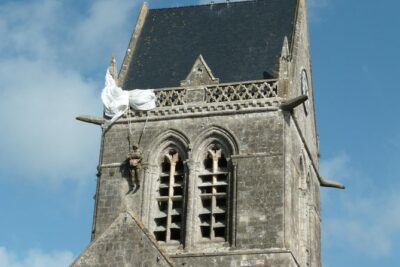
Normandy American D-Day Beaches Full Day Tour from Bayeux
Read our review →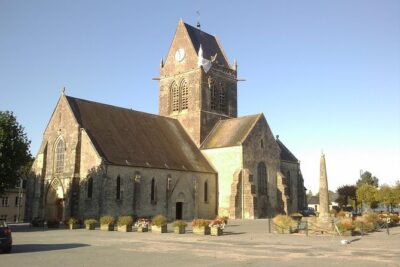
Normandy American D-Day Experience – Group tour from Bayeux
Read our review →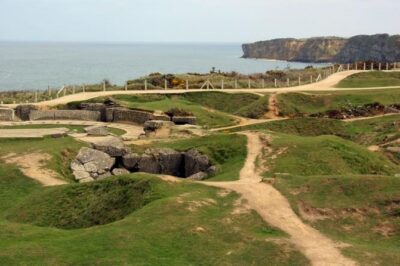
Normandy Beaches Half-Day Afternoon Trip from Bayeux (A2)
Read our review →
Omaha Beach D-Day Experience – Afternoon group tour from Bayeux
Read our review →Browse the lists this tour appears in