

Review · CHARLESTON
Charleston walking tour with a Citadel history professor
Charleston’s past is tucked into its old alleys, graveyards, churches, and house fronts, and Eric Lager knows how to make those quiet places speak. This three-hour walk follows the city from its founding in 1670 through the American Revolution, the antebellum era, the Civil War, and into modern Charleston.
I like two things right away: the group is capped at 12 people, and Eric brings the training of a Citadel history professor rather than a script learned for the season. The tour also looks beyond dates and famous buildings, showing how architecture, religion, politics, military events, and ordinary people shaped the city.
The main consideration is the length. Three hours on foot can feel long in Charleston’s heat or rain, and the tour runs rain or shine unless conditions become unsafe. Wear real walking shoes, bring water, and know that house museums are viewed from outside unless you arrange separate admission.
Key points at a glance
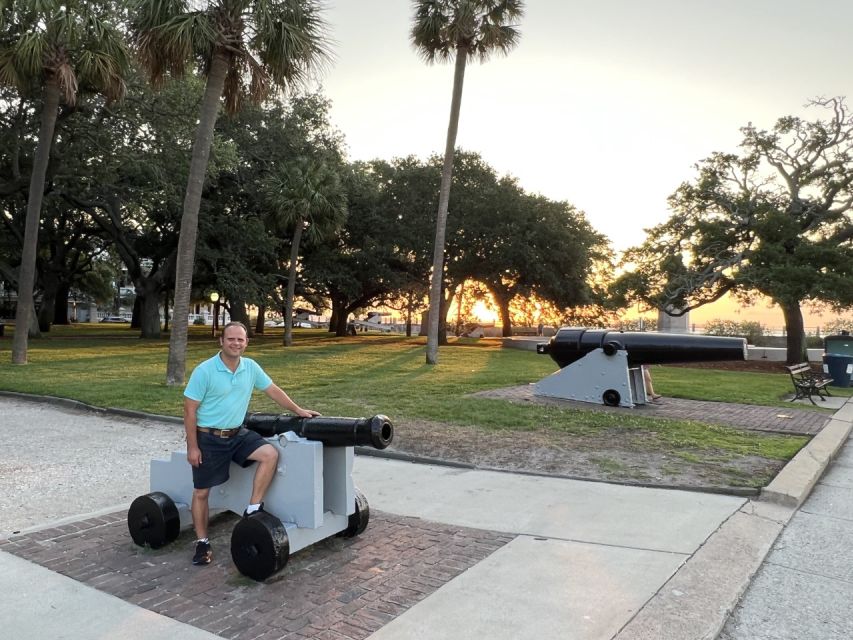
- A professor-led Charleston walk: Eric Lager teaches South Carolina history at the college level and has nearly 20 years of teaching and public-history experience.
- A small group of no more than 12: You can hear clearly, ask questions, and speak with Eric without fighting through a crowd.
- Colonial Charleston brought to life: The walk covers the city from its 1670 founding through the Revolution, antebellum years, Civil War, and present day.
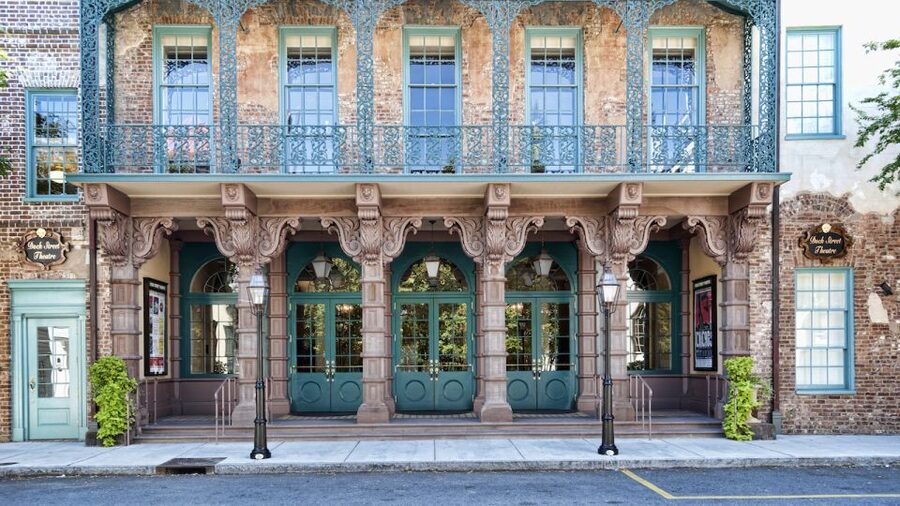
- More than the usual postcard stops: Old alleys, graveyards, the French Huguenot Church, Dock Street Theater, and Washington Park all enter the story.
- Architecture with a reason behind it: Eric explains why Charleston homes and buildings were designed as they were, not just when they were built.
- $40 for three hours: That is a fair price for a focused history walk, especially if you want context rather than a quick list of sights.
Why Eric Lager changes the feel of the walk
A Charleston walking tour can easily become a parade of dates, governors, wars, and buildings. Eric’s background gives this one a classroom quality, but the format remains conversational. He teaches history at the Citadel, holds advanced degrees in South Carolina history, and has spent years working in public history.
That matters because Charleston requires context. A church is not just a church. A theater is not just a pretty facade. A narrow lane may reveal how the old city moved people, goods, and ideas. Eric’s job is to connect those pieces while you are standing in front of them.
I like the balance between formal training and an easy manner. His style is described as clear, humorous, and open to questions. He does not rely on note cards, according to one account of the experience, which helps the walk feel like a conversation rather than a lecture delivered from memory.
You should still expect a lot of information. This is not a casual stroll with three or four fun facts. Eric covers colonial settlement, the American Revolution, the antebellum period, the Civil War, religion, architecture, military events, culture, and local personalities. The small group gives him room to adjust the emphasis when someone asks about a building, a family, or a turning point.
More History Walking Tours in Charleston
- Historic Charleston Guided Sightseeing Walking Tour
★ 5.0 · 6,216 reviews - Hidden Alleyways and Historic Sites Small-Group Walking Tour
★ 5.0 · 2,335 reviews - Charleston historical walking tour with a Professor of History at The Citadel
★ 5.0 · 1,284 reviews
Starting at 108 Meeting Street
The meeting point is at 108 Meeting Street, beside the brick wall on the sidewalk in front of a building with four small white Ionic columns. The building now serves as a graphic design center for the city and is not open to the public.
Look across the street for Hibernian Hall and the pink Mills House Hotel. Those landmarks help you orient yourself, especially if you are arriving on foot from elsewhere in the historic district. Restrooms are available at the Mills House Hotel, but not at the actual meeting point, so use one before the walk begins.
There is no hotel pickup or drop-off. That is normal for a downtown walking tour, but it is worth planning around if you are staying outside the historic district. The experience is offered in English, and you should arrive ready to remain on your feet for most of the three hours.
Colonial Charleston through alleys and graveyards

The best part of the tour is the way it treats Charleston as a place to read, not simply photograph. Eric takes you through old alleys and graveyards, where the city’s past feels less polished and more personal.
Colonial Charleston was shaped by settlement, trade, religion, law, and conflict. You will hear about the city’s founding in 1670 and how its early identity developed. The point is not to memorize a timeline. It is to understand why Charleston became important and why its streets look and feel different from other American cities.
Old graveyards add another layer. Tombstones and burial grounds can show social rank, religious ties, family connections, and the effects of disease and war. Eric uses these spaces to introduce the famous and infamous people who shaped the city. That makes the history human. You are not only hearing what happened, but who benefited, who suffered, and who left a mark.
The alleys are just as useful. They offer a different view of Charleston’s plan and architecture than the main streets do. You might notice details that disappear when you move quickly through the city, from building placement to small design features. Several people who took the walk appreciated that Eric pointed out things they would have missed on their own.
Dock Street Theater and Charleston’s public life
Dock Street Theater gives the walk a natural opening into Charleston’s cultural life. It is one of the named sights on the route, and Eric places it in the story rather than treating it as an isolated landmark.
A theater tells you something about the city that a fort or government building cannot. It points to entertainment, public taste, money, status, and the way people gathered. Eric’s approach connects the building to the larger community around it. You may leave with a better sense of how public life worked in Charleston, not just a picture of an attractive historic facade.
This is also where the professor’s broad background helps. The walk is not limited to military or political history. It brings in architecture, religion, culture, and local personalities. That mix keeps the three hours from becoming a single long lesson on one subject.
You do not enter house museums as part of the $40 walk. That can be a drawback if your main goal is to see Charleston interiors. I see it differently: the walk gives you the citywide framework first, then you can decide which individual sites deserve a separate admission.
More History Walking Tours in the USA
- Charleston: Old Walled City Historical Walking Tour
★ 4.7 · 705 reviews - Historic Charleston Walking Tour: Rainbow Row, Churches, and More
★ 5.0 · 691 reviews - Charleston: History and Architecture Guided Walking Tour
★ 4.8 · 349 reviews - Charleston History and Hops Tour: Bar and History Walk
★ 5.0 · 316 reviews
The French Huguenot Church and religious Charleston
The French Huguenot Church is another major stop. Its presence points to one of the forces that made early Charleston distinctive: the arrival and influence of religious communities with different traditions.
Eric uses religious sites to show how belief shaped identity, neighborhoods, institutions, and public life. The French Huguenot Church is not simply an architectural stop. It helps explain the cultural influences that fed into Charleston’s character.
The value here is the connection between visible buildings and less visible ideas. You may see a church, a cemetery, or a house and initially register only its age. Eric adds the religious and social setting around it. That extra layer helps the historic district make more sense after the tour, even when you are walking without a guide.
The church is viewed as part of the walking route. Entry into house museums is not included, and the supplied details do not promise interior access at any stop. If seeing the inside of a particular building matters to you, plan that separately.
The Four Corners of Law and Washington Park
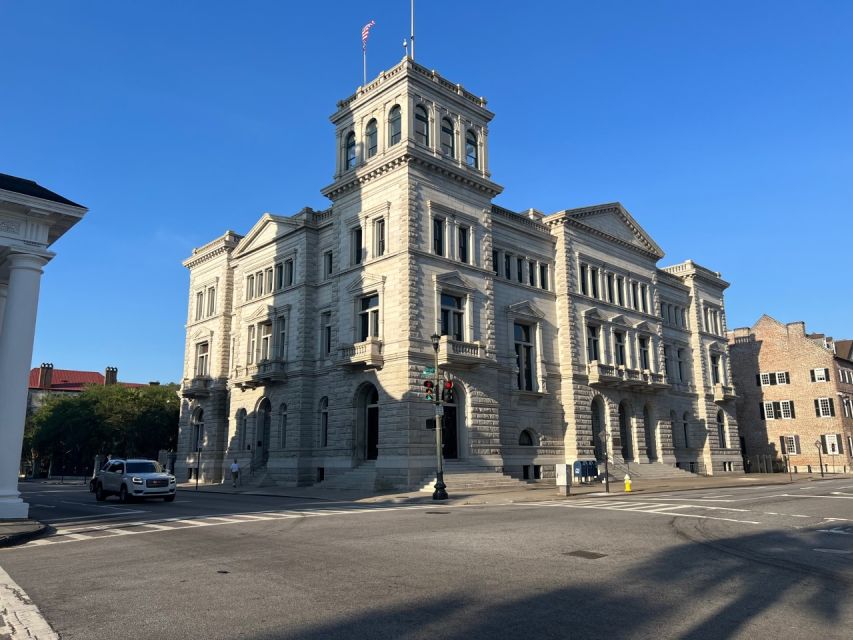
The Four Corners of Law is one of the most useful stops for understanding Charleston’s civic structure. This intersection brings together buildings connected with local, state, federal, and religious authority. Eric explains what those institutions represented and why the area mattered.
You will get more from this stop if you pay attention to the relationships between the buildings. Charleston’s public spaces were designed around power as well as beauty. The Four Corners helps you see the city as a place where law, government, and religion met in public view.
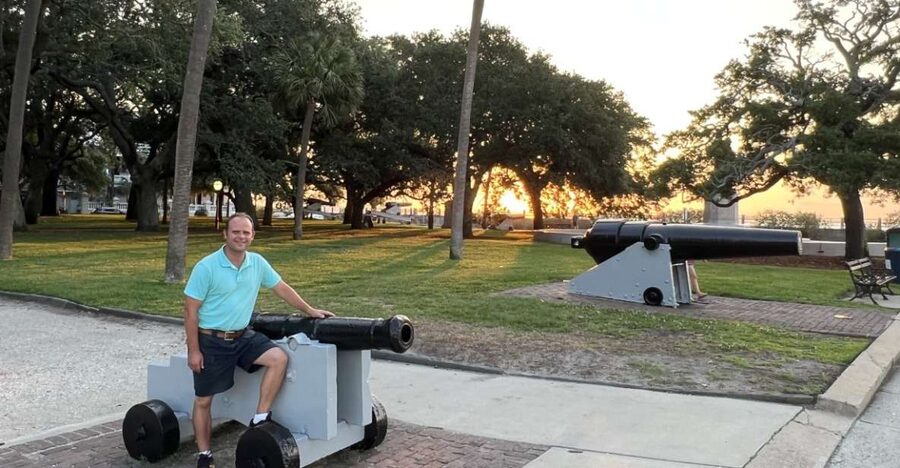
Washington Park provides another setting for stories about Charleston’s people and past. Parks can look peaceful now, but their meaning changes when you learn how the surrounding city developed and who used these spaces. Eric uses the location to connect public memory with the people and events that shaped Charleston.
These stops also show why a guide adds value in a city that is easy to wander. You can walk past the Four Corners of Law or Washington Park on your own. Without explanation, you may not understand why they belong in the city’s central story. With Eric, the details become part of a wider account of authority, conflict, and community.
Architecture that explains how Charleston worked
The architectural portion of the walk is one of its strongest features. Eric does not simply point out period details and attach a date. He explains why Charleston homes and buildings were designed in certain ways, including the practical reasons behind their construction.
That approach changes what you see. A house front becomes evidence of climate, status, family life, urban planning, and local building habits. A narrow side or piazza is no longer just a charming detail. It raises questions about how people lived and how Charleston adapted its buildings to place and weather.
You will also hear about the city’s development over time. Charleston’s architecture reflects changing wealth, changing tastes, and changing political and cultural conditions. Eric’s explanations make those changes easier to spot after the tour.
I especially value this because architecture gives you something to keep using. After the walk, you can continue through the historic district and test your eye. Look at the next house, church, or public building and ask what its design says about the people who built it.
Famous and infamous characters, told with humor

The walk includes stories about the famous and infamous figures of Charleston’s past. That phrase covers more ground than a list of celebrated names. Charleston’s story includes people who shaped politics, religion, business, war, architecture, and public life, along with people remembered for less admirable reasons.
Eric’s humor helps with the volume of information. Several descriptions of his guiding style point to a good sense of humor without losing respect for the seriousness of the subject. That is the right mix for Charleston, where beautiful streets and painful history exist side by side.
You should not expect the past to be softened into a pleasant fable. The stated time periods include the antebellum era and Civil War, so the tour addresses the forces behind a major part of American history. Eric’s academic background is useful here because context matters. A story about a building or person should not be separated from the systems and conflicts around it.
The tour also appears well suited to questions. Small groups make it easier to ask about a name, date, architectural feature, or event while it is fresh. If you prefer a guide who welcomes discussion rather than rushing from stop to stop, this format should work well.
What three hours and $40 really deliver
At $40 per person, this is not the cheapest way to spend a morning in Charleston, but it offers solid value if history is your main reason for visiting. You get three hours with Eric, a trained historian, in a group limited to 12 people. That works out to a focused introduction to the historic district for the cost of a modest meal.
The value is strongest for first-time visitors who want a framework for the city. You will see major sights, unusual corners, religious landmarks, public spaces, and architectural details in one outing. Afterward, you can choose which museums, churches, or neighborhoods deserve a closer look.
It also suits repeat visitors. One person who lives in the area took the walk to learn more about home and found plenty of new material. Charleston rewards that kind of return visit because the city reveals more when you understand what to look for.
The main limitation is that three hours can feel dense. Eric covers a great deal, and several people wished they had taken notes. Bring a small notebook if names and dates matter to you, but do not let note-taking keep you from looking at the city.
Pace, weather, and practical comfort
The walk is described as easy paced, but it is still a three-hour outdoor activity. Wear comfortable shoes, bring water, and prepare for changing weather. The tour runs in rain unless conditions make it unsafe, so a light rain layer may be useful.
Charleston’s heat can make a long walk tiring, especially if you are not used to walking on city streets. The small group helps because you can hear Eric without straining and the pace can support conversation, but it does not remove the physical demands of being outside.
This tour is not suitable for wheelchair users. Pets are not allowed, although assistance dogs are permitted. There is no food or drink included, so plan your own refreshment before or after the walk.
Free cancellation is available up to 24 hours before the tour for a full refund. You can also reserve now and pay later, which helps if your Charleston schedule is still shifting.
Who should book this Charleston history walk
I would choose this tour if you want the city explained by someone who treats history as a living subject, not a list of dates. It is a good fit for history buffs, architecture fans, first-time visitors, repeat visitors, and anyone who likes asking questions.
Families with older children may also find the stories more engaging than a standard lecture, though the three-hour length deserves thought. It is especially useful early in your stay, since the route can help you decide how to spend the rest of your time.
I would choose another activity if you want a short overview, a vehicle-based tour, interior visits to historic houses, or a tour built around food. This experience is firmly a walking history lesson, with the streets and buildings serving as the classroom.
Should you book Charleston History Walk?
Book it if you want depth, a small group, and a guide who can explain why Charleston looks and feels the way it does. Eric Lager’s mix of academic training, storytelling, humor, and local focus gives the walk more substance than a quick sightseeing loop.
At $40, the tour earns its price through time and attention rather than extras. You do not receive food, transportation, or museum entry. You do receive three hours of direct interpretation across Charleston’s colonial, revolutionary, antebellum, Civil War, and modern eras.
My practical advice is to book early if your dates are fixed, wear comfortable shoes, use the restroom at the Mills House Hotel before meeting at 108 Meeting Street, and bring water. If you want one Charleston activity that helps you understand the rest of the city, this is a strong choice.
FAQ
How long is the Charleston walking tour?
The tour lasts three hours. Some past outings have finished slightly earlier or later, so plan for a substantial morning or afternoon on foot.
Who leads the tour?
Eric Lager leads the walk. He is a Citadel history professor with nearly 20 years of combined college teaching and public-history experience.
How large is the tour group?
The group is limited to no more than 12 people. This allows more room for questions and makes it easier to hear the guide.
Where does the tour meet?
Meet at 108 Meeting Street, along the brick wall on the sidewalk in front of the building with four small white Ionic columns. It is across from Hibernian Hall and the pink Mills House Hotel.
Are museum admissions included?
No. Entry into house museums is not included. The tour focuses on seeing and interpreting Charleston’s streets, buildings, churches, parks, alleys, and graveyards from the walking route.
What should I bring?
Bring comfortable shoes and water. The tour takes place outdoors and runs in rain unless conditions are unsafe.
Is the tour accessible for wheelchair users?
No. The activity is not suitable for wheelchair users. Pets are not allowed, but assistance dogs are permitted.
Just added around Charleston
- Charleston’s Historic Pubs, Taverns, and Taprooms Tour★ 4.5 · 33 reviews
- Small-Group Tour: Charleston Old Walled City Historical Walking Tour★ 4.5 · 283 reviews
- Charleston’s Strong Women of the South History Tour★ 4.5 · 27 reviews
- Sip History In a Secret Speakeasy Cocktail Class★ 5.0 · 40 reviews
- Sip History in The Sun Cabana Covered Cocktail Class★ 5.0 · 332 reviews
- Private Sunset Sail BYOB Dolphin/History Tours on 43ft Mystique★ 5.0 · 42 reviews
- Charleston History and Hops Tour: Bar and History Walk★ 5.0 · 316 reviews
- Private Walking Tour of Historic Charleston★ 5.0 · 38 reviews
Charleston History Tours, compared.

Charleston’s Old South Carriage Historic Horse & Carriage Tour
Read our review →
Historic Charleston Guided Sightseeing Walking Tour
Read our review →
Charleston Harbor History Day-Time or Sunset Boat Cruise
Read our review →
Hidden Alleyways and Historic Sites Small-Group Walking Tour
Read our review →
Charleston: Daytime or Sunset Historic Harbor Cruise
Read our review →
Charleston historical walking tour with a Professor of History at The Citadel
Read our review →
Charleston: Historical Downtown Tour by Horse-drawn Carriage
Read our review →
Undiscovered Charleston: Half Day Food, Wine & History Tour with Cooking Class
Read our review →Browse the lists this tour appears in