
Review · HISTORY TOURS
Colonial Zone: Historical Tour with a visit to the Columbus Lighthouse and Tres Ojos Park
The best part of this outing is the contrast: cool limestone caves and mineral lagoons at Los Tres Ojos, then the sunlit streets of Santo Domingo’s Colonial Zone. You also visit the Columbus Lighthouse, a large museum and monument with exhibits from countries around the world.
I like the way the tour connects three very different sides of the capital, and I like the clear, patient guiding reported from names such as Medina, Francisco, Ricardo, and Domingo. The main drawback is the loose two-to-nine-hour duration: timing depends on your pickup, route, and how much of the Colonial Zone you cover.
Key points
- Three major sights in one outing: Los Tres Ojos National Park, the Columbus Lighthouse, and the Colonial Zone.
- A strong history walk: See Calle Las Damas, the First Cathedral of the Americas, Alcázar de Diego Colón, and other colonial monuments.
- English or Spanish guiding: Guides including Medina, Francisco, Ricardo, and Domingo have been praised for clear explanations and patience.
- Good value at $5 per person: Admission tickets, transportation between excursions, water, mamajuana, and a craft-market visit are included.
- Pickup is practical but not universal: Main Punta Cana and Bávaro hotels are covered, while Uvero Alto, Macao, apartments, and Airbnbs may require a fee or nearby meeting point.
- Plan for stairs and walking: The experience is not suitable for wheelchair users.
Three Eyes Park: caves, water, and a short burst of nature
Los Tres Ojos National Park is a fine opening act because it feels far removed from the broad roads and hotel zones of the Dominican Republic. The park is built around underground caverns and cenotes, with clear pools shaped by limestone and water containing a high mineral content.
The name refers to the three principal water-filled openings, or eyes. You walk through the cave system to see the pools from below and from viewing points around the rock. The attraction is not a long wilderness outing. It is a compact natural stop, but the dark caverns, stone walls, and still lagoons give it a strong sense of place.
I would wear shoes with a firm sole and bring water, even though water is supplied as part of the experience. The cave setting can mean uneven footing, and the full outing includes a good deal of walking in the Colonial Zone afterward.
The park works best when your guide gives the setting some context rather than simply pointing out the pools. The tour promises transportation and admission, so you do not have to sort out separate tickets before arriving. Still, the exact time here is not specified, and the total tour length can vary widely.
More Colonial History Tours in the world:
- Vung Tau Essential: Beach, Christ Statue & Colonial Heritage
★ 5.0 · 284 reviews - Full-Day Ho Chi Minh City Tour with Colonial Heritage & Chinatown
★ 5.0 · 246 reviews - Colonial History Tour in Williamsburg Virginia
★ 5.0 · 97 reviews
Columbus Lighthouse: a large monument with a complicated presence
The Columbus Lighthouse, known locally as Faro a Colón, is one of Santo Domingo’s most imposing modern monuments. It was built in honor of Christopher Columbus and functions as a museum, with displays connected to countries around the world. Temporary exhibitions and conference rooms are also part of the complex.
This stop gives the tour a different scale from the Colonial Zone. Instead of narrow streets and low colonial buildings, you encounter a vast monument designed to make a statement. The museum adds more purpose to the visit than a quick exterior photograph would provide.
I would not treat the lighthouse as a conventional lighthouse visit. The attraction is primarily a monument and museum, not a coastal tower with a regular lookout experience. Your guide can help explain why it occupies such an important place in the city’s story.
The visit also adds useful context before the walking tour. Santo Domingo’s past is not confined to one preserved district. The city presents its colonial beginnings, its national identity, and its connection to Columbus through several very different sites.
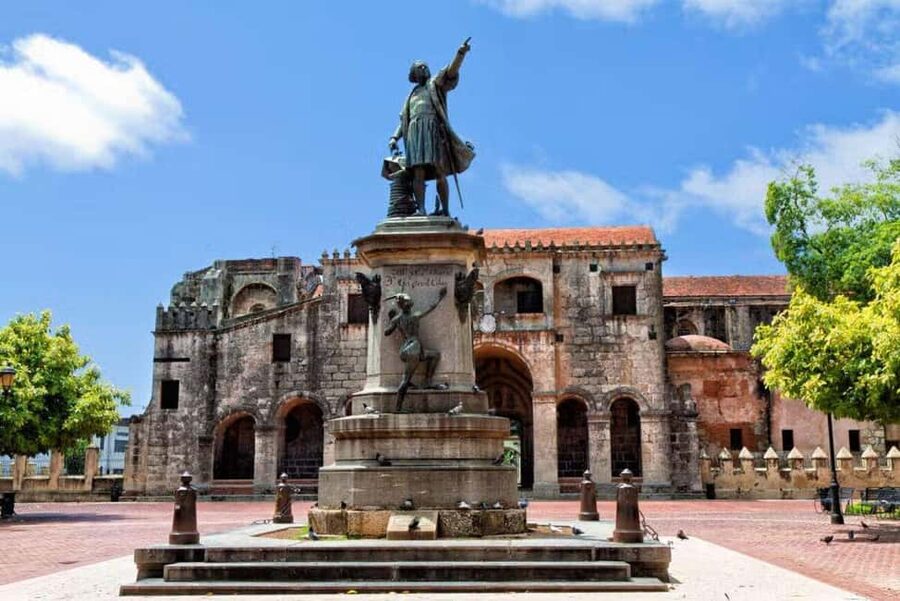
Entering the Colonial Zone through Plaza España
The historic walking portion is the heart of the experience. The meeting information gives two nearby reference points: the Sundial in front of the Royal Houses Museum, with coordinates listed for that spot, and Plaza España, in front of the statue of Nicolás de Ovando. Confirm your exact meeting point and pickup details before setting out, since the information gives both locations.
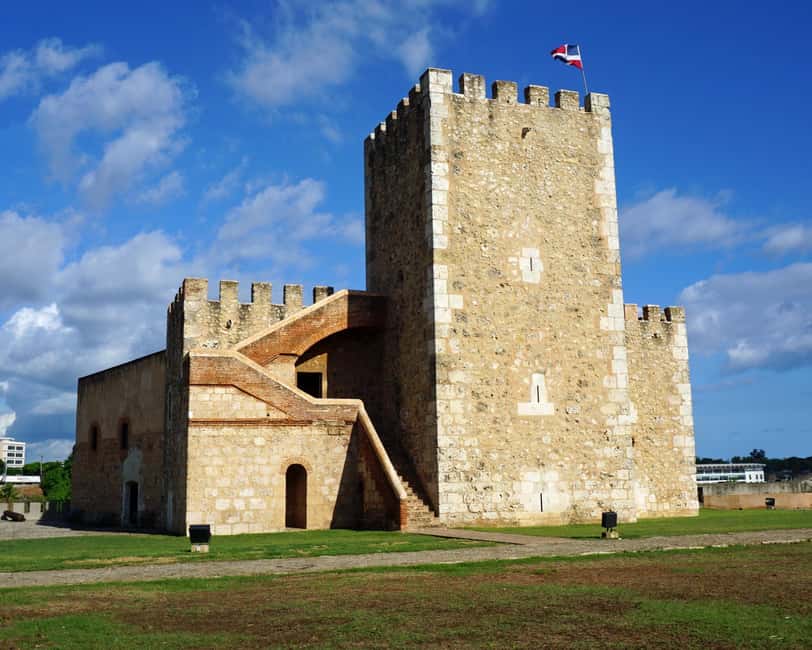
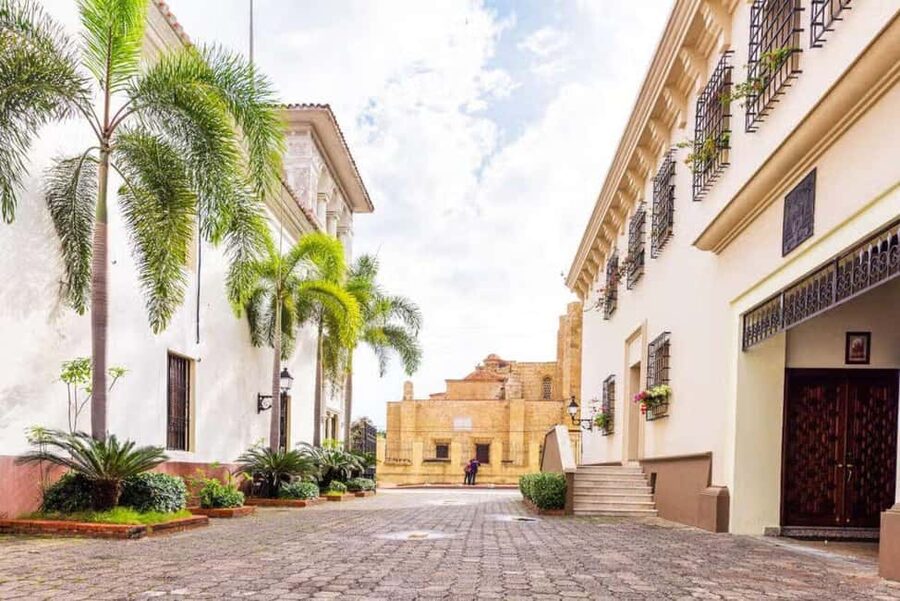
Once you meet the guide, expect about two hours of walking in the Colonial Zone. The district is the first city founded in the New World, established in 1496, and its old streets bring together churches, forts, public squares, museums, and former residences.
The guide-led format matters here. A row of old façades can look attractive without telling you much. With a guide such as Medina, who has been praised for bringing individual streets and buildings to life, you get the stories behind the architecture and the people connected with it.
The walk is described as relaxed and well paced. That is helpful in a district where you want time to look up at balconies, notice old stonework, and pause at the plazas instead of racing from one entrance to the next.
Calle Las Damas and the city’s first cathedral
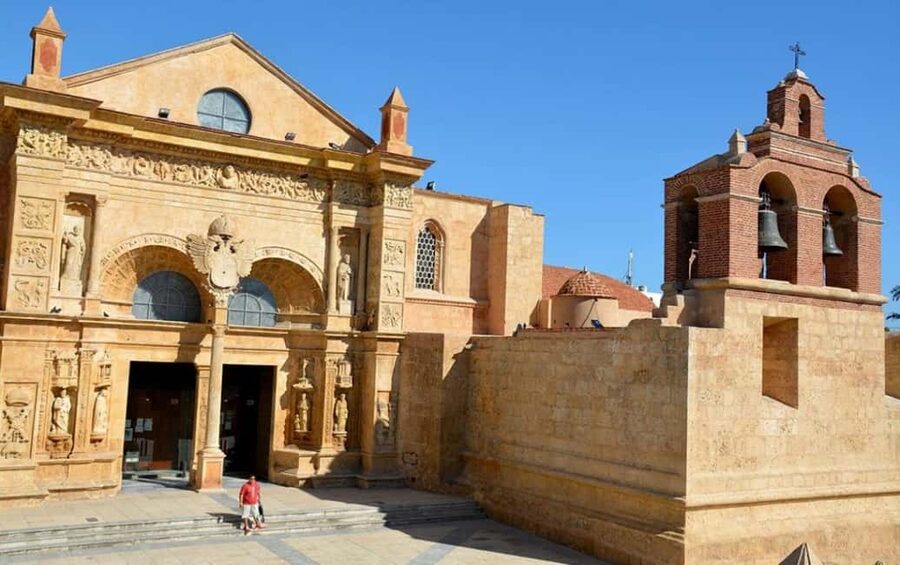
Calle Las Damas is one of the essential walks in Santo Domingo. It is recognized as the first street in the Americas, and its importance comes from more than the claim itself. The street links several major colonial sites and gives you a direct feel for the city’s original plan.
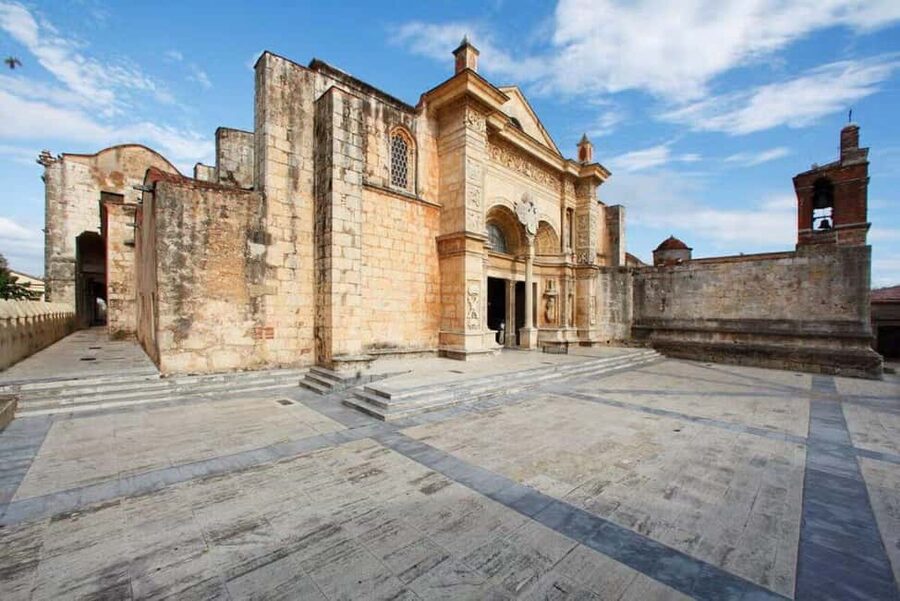
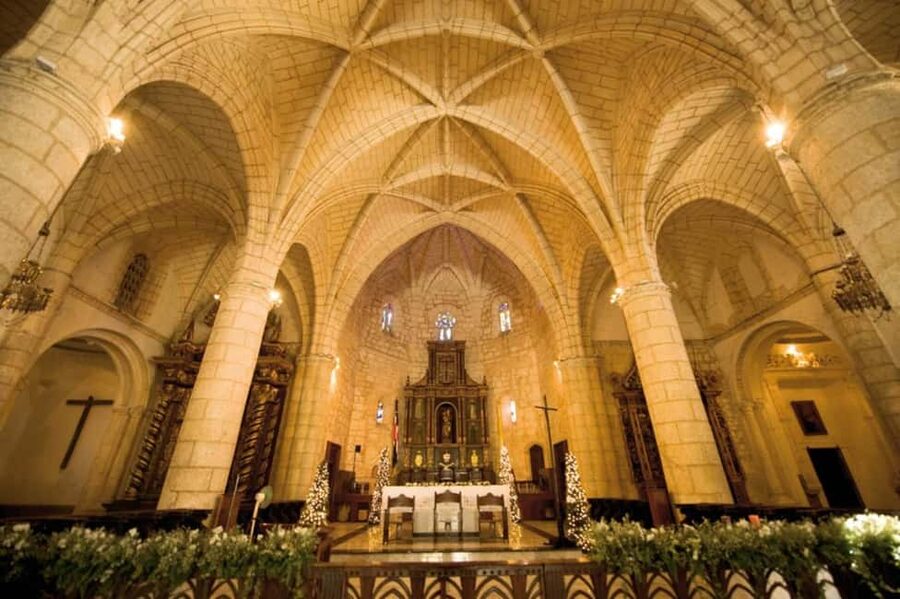
The First Cathedral of the New World is another major stop. The tour identifies it as one of the key places to see, though access can depend on opening conditions. One guide, Jose Miguel Medina, was reported to have arranged a brief cathedral visit when it was officially closed, but you should not count on that happening every time.
That detail points to a useful reality: historic buildings can have changing access. Your guide may help when circumstances allow, but the tour cannot promise entry whenever a site is closed. Even from outside, the cathedral remains a central part of the district’s story.
The best way to approach this part of the walk is to focus on the relationship between the buildings. The cathedral, plazas, residences, and defensive works were not built as isolated sights. Together, they show how the early Spanish settlement organized religious, military, and civic life.
More History Tours in the world:
- Prague: Medieval Dinner with Unlimited Drinks
★ 4.4 · 19,847 reviews - Pompeii: Entry Ticket and Guided Tour with an Archaeologist
★ 4.8 · 19,459 reviews - History and Hauntings of Salem Guided Walking Tour
★ 5.0 · 14,564 reviews - Athens: Acropolis & up to 5 Archaeological Sites Combo Pass
★ 4.2 · 13,904 reviews
Alcázar de Diego Colón and the royal buildings
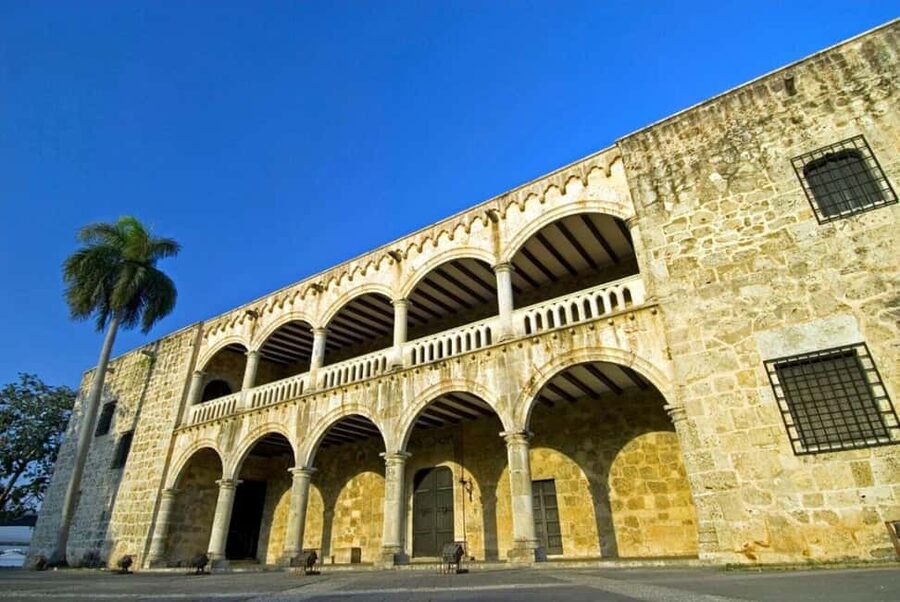
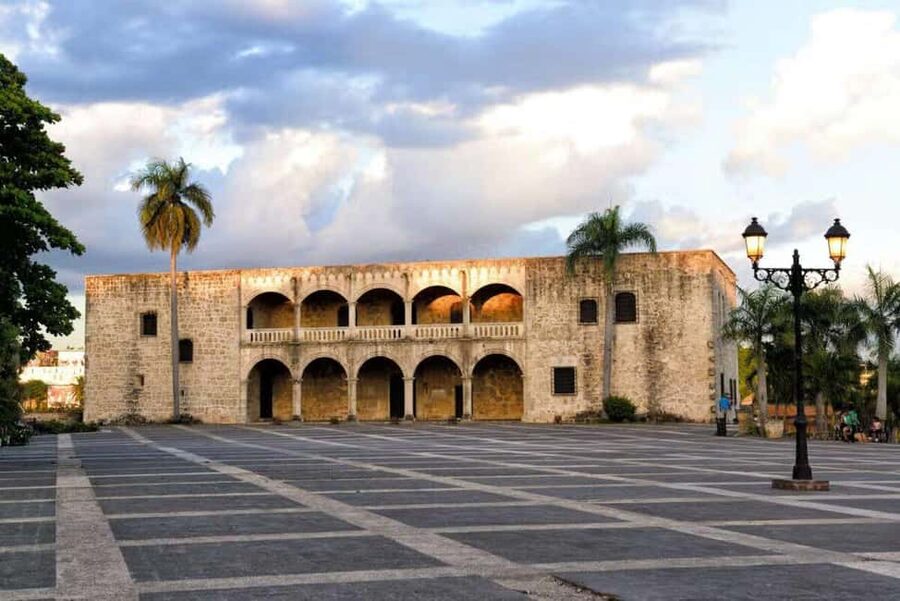
The Alcázar de Diego Colón was the residence of the family of Christopher Columbus, including Diego Colón, the Grand Admiral’s son. Its inclusion gives the tour a personal angle on the early colonial period. You are not only looking at a grand building; you are considering how the Columbus family lived and exercised power in the new settlement.
The Royal Houses Museum is another key stop near the meeting area. It helps explain the institutions that governed the colony and the role of law, trade, and administration in the early city.
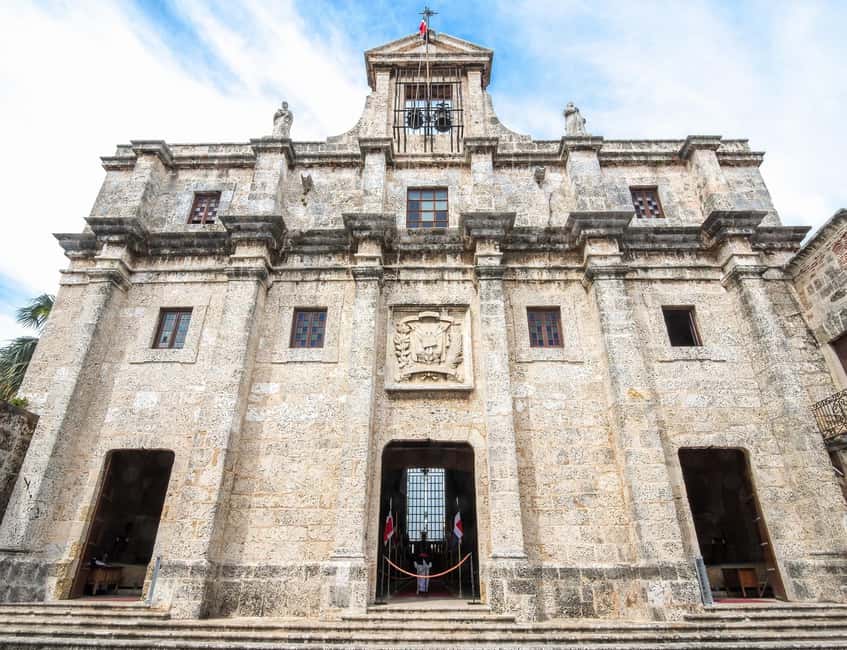
The listed route also includes the National Pantheon, Parque Colón, Ozama Fortress, the Duarte Museum, and the Taino Museum. Not every stop is necessarily given the same amount of time, particularly on a shorter version of the outing, but the range is useful. You see military history at Ozama Fortress, public life at Parque Colón, national figures at the Pantheon and Duarte Museum, and Indigenous culture at the Taino Museum.
I would ask at the start which interiors are included that day. The tour includes tickets to the national monuments and Los Tres Ojos Park, but the amount of time available for each building depends on the day’s schedule.
Why the guiding makes the walking tour work
The strongest thread through the experience is the guide. Several named guides have received praise for clear explanations, patience, and a friendly manner. Medina is associated with an especially personal and well-paced walk, while Francisco has been noted for enthusiasm and strong historical explanations. Ricardo, Domingo, Fernando, and Jose Miguel Medina have also been singled out in positive feedback.
That does not mean you should expect one particular guide unless the operator confirms it. Guide assignments can change. The useful takeaway is that the experience depends heavily on the person leading it, and this tour has a strong record of guides answering questions rather than rushing through a fixed script.
You can expect English or Spanish service. If history is your main reason for booking, tell the guide early. Ask about the Spanish conquistadors, the Columbus family, the Indigenous Taíno people, and the purpose of each monument. The tour is designed to provide information, and it becomes more useful when you make room for questions.
One guide was also praised for helping a guest who was running late. That suggests a patient approach, but I would still arrive on time. Pickup routes from Punta Cana and Bávaro can make the day long, and delays at the beginning may affect the walking portion later.
Transport, pickup, and the real length of the day
Transportation between the excursions is included. Pickup is included for main hotels in the Punta Cana and Bávaro hotel zones. If you stay in Uvero Alto or Macao, an extra pickup fee may apply. Guests in apartments and Airbnbs are given the closest meeting point for pickup rather than guaranteed door-to-door service.
The advertised duration ranges from two to nine hours. That is a wide span, but it reflects different starting points and options. A person already in Santo Domingo can have a much shorter experience than someone traveling from a resort area.
This is important when planning meals, airport transfers, or another booked activity. I would treat the tour as a half-day possibility at minimum if you are being collected outside Santo Domingo. Ask for the expected pickup and return time before paying, especially if you are staying far from the Colonial Zone.
The listed drop-off locations include the Sundial, Bávaro, Columbus Park, and Macao. These choices may be useful for continuing your day, but they also show that the final location depends on the selected option. Confirm the drop-off that applies to your booking.
What the $5 price really gives you
At $5 per person, the stated price is unusually low for a tour that includes transportation between excursions, attraction tickets, a national guide in the Colonial Zone, water, mamajuana, and a craft-market visit. If all those inclusions apply to your selected option, the value is excellent.
The price does not include local shopping. That matters because the craft-market visit is part of the experience, but purchases there are your responsibility. I would treat the market as a chance to see local goods, not as a required buying stop.
The low cost also means you should keep your expectations focused. This is a broad introduction to Santo Domingo, not a private, slow museum study with unlimited time at every monument. You get the advantage of seeing several headline sights in one day, while the tradeoff is that some stops may be brief.
The 4.9 rating from 157 reviews supports the tour’s appeal, especially for organization, guide quality, and the ability to cover the main historic sights in a single outing. The best value comes if you want an overview and plan to return independently to the one or two places that interest you most.
Who should book this Santo Domingo tour?
I would recommend it to a first-time visitor who wants orientation, major landmarks, and a guide’s explanation of Santo Domingo’s past. It suits couples, solo visitors, and anyone staying in Punta Cana or Bávaro who wants more than a resort day.
It also works well for people who enjoy a mix of settings. You get caves, a major museum monument, old streets, churches, forts, plazas, and museums rather than one repeated type of sightseeing.
I would hesitate if you need a fully accessible route. The experience is not suitable for wheelchair users, and the cave visit and historic walking portion may involve uneven surfaces and stairs.
I would also hesitate if you dislike group schedules or shopping stops. The craft market is included, and the route covers many sights in a limited period. For a private, slower visit, an independently arranged guide and transport may suit you better, though it will not match this price.
Practical details to settle before booking
The tour offers free cancellation up to 24 hours before the start time, and you can reserve now and pay later. That makes it easier to hold a place while you settle your resort schedule.
Use the stated meeting information carefully. One instruction places the guide at the Sundial in front of the Royal Houses Museum, while another points to Plaza España by the Nicolás de Ovando statue. Both are in the Colonial Zone, but they are not the same spot. Confirm the exact location, pickup time, language, and expected duration before the day begins.
Alcohol and drugs are not allowed. The tour includes mamajuana, but that does not change the rule about bringing or using alcohol during the activity.
Should you book it?
Book this tour if you want maximum coverage for very little money, with transportation, admission, and a guide bundled together. Its best qualities are the varied route, the historic walking tour, and guides who explain the city in a clear, patient way.
Skip it if you want a slow, private museum day, guaranteed access to every interior, or a wheelchair-friendly route. For everyone else, this is a sensible first look at Santo Domingo, especially if your base is Punta Cana or Bávaro and you want to see the capital beyond the beach.
FAQ
What does the tour include?
It includes transportation between excursions, tickets to the listed attractions and national monuments, a guided visit to the Colonial Zone, a craft-market visit, water, and mamajuana.
How long does the experience last?
The stated duration is two to nine hours. The exact length depends on the selected option, pickup location, and schedule.
Is hotel pickup available?
Pickup is included for main hotels in the Punta Cana and Bávaro hotel zones. Pickup from Uvero Alto and Macao may cost extra. Guests staying in apartments or Airbnbs receive the closest pickup meeting point.
What languages are available?
The tour offers live guiding in English and Spanish.
Where does the Colonial Zone tour meet?
The information gives the Sundial in front of the Royal Houses Museum as a meeting point, with coordinates provided. It also gives Plaza España, in front of the Nicolás de Ovando statue, so confirm the exact meeting location before the tour.
Is the experience suitable for wheelchair users?
No. The experience is listed as unsuitable for wheelchair users.
Just added around the world
- Scenic Train ride to historical cities of Morretes and Antonina★ 4.0 · 188 reviews
- 6-Day Cultural Tour to Machu Picchu★ 5.0 · 76 reviews
- Jewish Heritage of Curacao★ 4.5 · 68 reviews
- The Curacao’s Colorful History Walking Tour★ 5.0 · 55 reviews
- Discover Scuba Diving Amathounta’s Ancient Port★ 5.0 · 30 reviews
- Olous – Guided Snorkelling Excursion to Discover Olous Sunken Ancient City★ 4.5 · 31 reviews
- Night Walking Tour of Medieval Cuenca★ 5.0 · 64 reviews
- WWII – The Battle of Crete Day Tour★ 5.0 · 103 reviews