

Review · FRANCE
Discover Caen like never before: Guided tours between history & secrets!
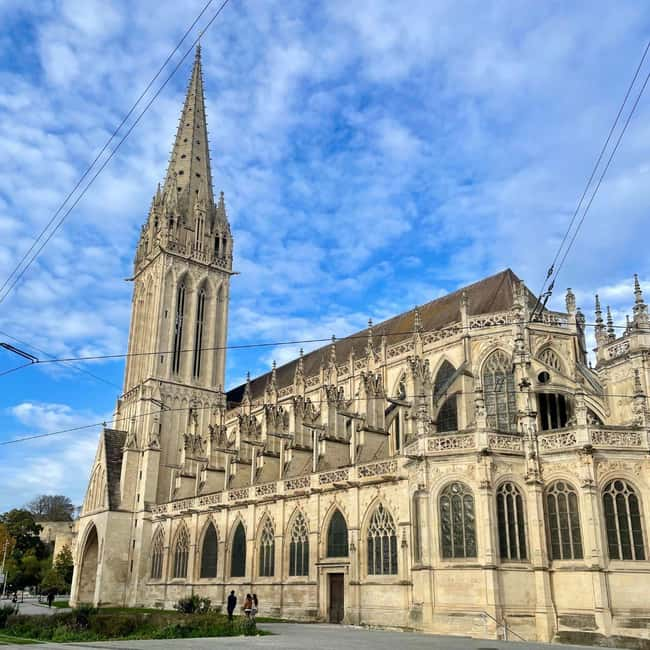
Caen’s story is unusually easy to read in its streets. Medieval churches and half-timbered houses meet a city rebuilt after World War II, while the Abbaye aux Hommes and Château de Caen anchor the walk. I like the small group limit of six, and I like that Thomas, a Caen native, connects famous monuments with details you could easily miss on your own.
You should be ready for a fair amount of walking on cobbled or uneven streets. The tour is not suitable for wheelchair users, people with mobility or visual impairments, or anyone who needs a gentle, fully accessible route.
Key points to know before booking
- Thomas brings local insight: He grew up in Caen, has a master’s degree in history, and guides in French or English.
- The route links several eras: Expect William the Conqueror, medieval architecture, military history, wartime destruction, and postwar rebuilding.
- The group is capped at six: That makes it easier to ask questions and adjust the conversation to your interests.
- The walk lasts about two hours: It gives you a useful first look at central Caen without taking up the whole day.
- Local recommendations are part of the appeal: Thomas has provided restaurant, café, bar, and nearby sightseeing suggestions to guests who asked.
- Bring proper footwear: One two-hour outing was described as a long walk, so comfortable sports or hiking shoes make sense.
Caen is not a city you should judge from a quick pass between the train station and the major Normandy sights. Its old stone buildings, wartime scars, rebuilt streets, and lively central squares make more sense when someone connects the pieces.
That is the main value of this tour. You are not simply ticking off the Abbaye aux Hommes, Place Saint-Sauveur, and Château de Caen. You are learning how Caen changed from a medieval power base to a city heavily damaged during World War II, then rebuilt with a modern identity.
The experience costs $46 per person. That is more than a basic self-guided walk, but the group limit matters. With no more than six participants, you can ask about a building, pause over a detail, or request advice for the rest of your stay. The tour also works well as an opening activity, since it helps you decide which museums, churches, cafés, and nearby towns deserve more of your time.
Meeting Thomas at Place Courtonne
The stated meeting point is Place Courtonne. The guide contacts you by phone to confirm the time and exact meeting details, so keep an eye on your messages before the tour. You are told to look for a Caen-colored sweater, which should make the meeting easier.
Thomas is the guide most closely associated with this experience. He grew up in Caen and has a master’s degree in history, but his appeal is not just academic. He is also described as friendly, humorous, proud of the city, and comfortable speaking English.
That combination matters. A guide who knows dates and names can still deliver a dry walk. Here, the strongest feedback points to Thomas making the past feel connected to the streets around you. He has also used old photographs and maps to show how Caen once looked, a useful touch in a city where much of the built environment changed after the war.
The group limit is six. If demand is light, you may end up with a private or nearly private outing, but you should not book on the assumption that this is guaranteed. Even with a full small group, the format should feel more personal than a large city tour.
More Guided Tours in France:
- Paris: Normandy D-Day Sites Guided Day Trip with Lunch
★ 4.7 · 1,082 reviews - Paris: Dark History and Ghostly Guided Walking Tour
★ 4.7 · 1,000 reviews - Vieux Lyon Cultural & Historical Walking Guided Tour (English)
★ 5.0 · 942 reviews
The Abbaye aux Hommes and William the Conqueror
The Abbaye aux Hommes is one of the tour’s key landmarks. Founded by William the Conqueror, it is an important example of Romanesque architecture and a direct link to Caen’s medieval power.
This is the kind of place that benefits from explanation. On your own, you can admire the scale and stonework. With a guide, you can place the abbey in the story of William’s rule and understand why Caen became so important in the first place.
The tour connects William with the wider story of the city rather than treating him as a single isolated figure. You can expect discussion of medieval Caen, its links with England, and the people and events that shaped its growth.
Do not assume that your ticket includes a full interior visit to the abbey. The experience is presented as a guided city walk, and no admission to monuments is listed. Its strength is the broader route and the explanation given at each stop.
Medieval streets and half-timbered details

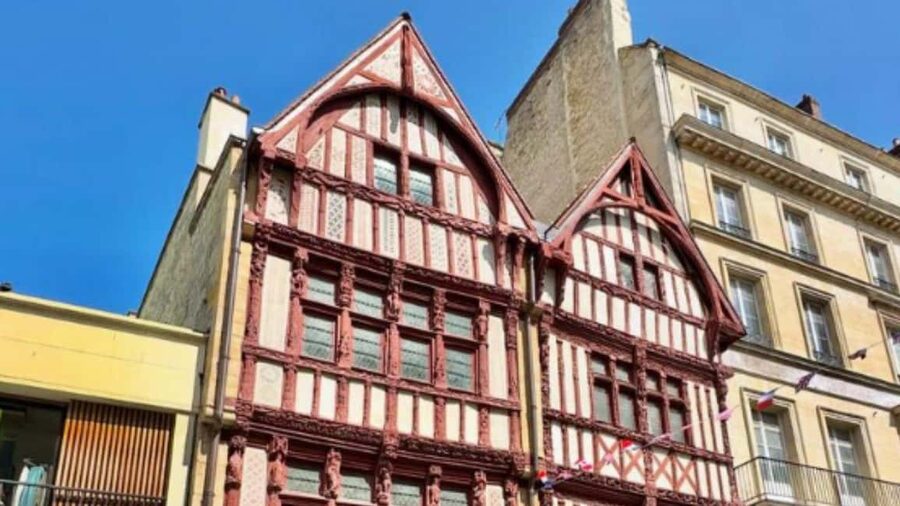
From the main monuments, the walk moves through streets where Caen’s older character is easier to spot. Half-timbered houses and carved details recall the merchants and craftspeople who once filled the city center.
I like this part because it shifts your attention from major landmarks to ordinary buildings. A guide can point out a façade detail, explain how a street fits into the old city, or tell you why a modest-looking building matters. These are the details most people pass without noticing.
The cobbled streets also explain the footwear warning. Wear comfortable shoes with good support. The activity information lists comfortable, hiking, or sports shoes, and one participant described the walk as long. You do not need mountain gear, but thin soles and dress shoes would be a poor choice.
The route is not designed for everyone. Mobility limitations, wheelchair use, and visual impairments are specifically listed as reasons the tour may not be suitable. Anyone over 95 is also listed as not suitable, so older participants should consider the walking demands carefully rather than focusing only on the two-hour duration.
Place Saint-Sauveur and everyday Caen
Place Saint-Sauveur brings a more social side of Caen into the route. The square is associated with its market and cafés, making it a useful contrast to the abbey and castle.
This is where the tour can feel less like a parade of monuments and more like an introduction to local life. You get a sense of how the historic center works today, not just how it looked centuries ago.
If you are planning meals in Caen, this is also a good point to ask Thomas for suggestions. He has offered recommendations for restaurants, cafés, bars, and particular local dishes. These tips are not a formal extra included in the price, but the small group format gives you a natural chance to ask.
Keep your expectations practical. The tour does not promise food tastings or a dedicated food walk. Think of the advice as a useful bonus, especially if you are staying in Caen for more than one night and want to avoid choosing dinner at random.
More History Tours in France:
- Normandy D-Day Sites & Cemetery Day Trip from Paris with Lunch
★ 5.0 · 6,877 reviews - Paris: Louvre Museum Entry with History of Mona Lisa
★ 3.9 · 2,823 reviews - Normandy D-Day Small-Group Day Trip with Omaha Beach, Cemetery & Cider Tasting
★ 5.0 · 2,786 reviews - Normandy D-Day Beaches and American Cemetery Day Trip from Paris
★ 4.5 · 2,673 reviews
Château de Caen and the military story
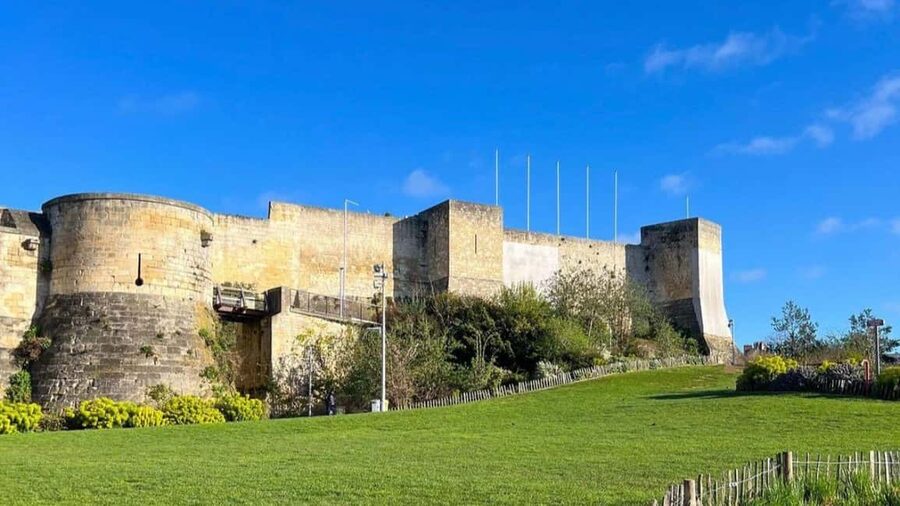
The Château de Caen adds the military chapter. Its large fortifications give you a different view of the city from the religious and civic buildings encountered earlier.
The castle is particularly useful for understanding Caen’s strategic importance. The route does not present the city as a collection of pretty streets alone. It shows why rulers fought over this part of Normandy and how Caen’s links with England affected its past.
The view from the castle is another practical benefit. You can look back across the city and begin to see how its major buildings and districts relate to each other. One particularly thoughtful touch described by a participant was Thomas bringing old maps and photographs, along with coffee on a cold day. That should not be treated as a promised feature, but it gives you a sense of the personal approach he may bring to the walk.
Again, no castle admission is listed. The value comes from the setting, the explanation, and the way the castle fits into the route.
Caen after World War II
The most important part of the tour for many people will be the wartime story. Caen was almost completely rebuilt after World War II, and that fact changes how you read the city.
The tour helps you see both the old remains and the rebuilt sections as parts of one story. You learn about Caen’s medieval roots, then confront the destruction and reconstruction that shaped the city you see today.
This context is valuable because a rebuilt city can confuse first-time visitors. A street may look old at first glance, while another area may carry a more modern postwar design. Without explanation, those changes can seem random. With a guide, they become evidence of what happened to Caen and how its residents recovered.
The tour is not advertised as a full D-Day excursion. If your main goal is the Normandy beaches, the Memorial de Caen, or battlefield sites outside the city, you will need separate plans. This walk is centered on Caen itself, though its WWII discussion gives you a useful starting point for the region.
How Thomas adapts the walk

A strong feature of this tour is the chance to shape the conversation. The route is fixed around central Caen, but the discussion can respond to your interests.
Families can ask for clear stories and fun facts rather than a lecture packed with dates. History fans can spend more time on William the Conqueror, the city’s links with England, or wartime reconstruction. Someone returning to Caen after years away can compare the present city with personal memories.
That flexibility has mattered for families, including one group whose guide adapted the walk for a participant who had once lived in Caen. A teenager also enjoyed the humor and storytelling, which is useful to know if you are traveling with older children who may tire of formal historical tours.
Thomas also appears willing to answer questions after the walk. He has followed up with restaurant suggestions and ideas for other towns and sights in Normandy. This is not a substitute for a proper regional guidebook, but it can help you make better use of your remaining days.
Is $46 a fair price?
At $46 per person, this is a reasonable choice if you value a personal guide and plan to use the advice you receive. You are paying for two hours, local interpretation, a small group, and a route that brings together several separate parts of Caen.
The price is less compelling if you prefer wandering alone or only want quick facts at the main sights. You can see many of the exterior landmarks without paying for a tour. The difference is the explanation: why the monuments matter, what changed after the war, and which small details deserve your attention.
The six-person limit improves the value. In a large group, a guide must keep moving and questions can become awkward. Here, the format allows more conversation and makes personalized suggestions possible.
There is also a flexible booking policy. You can reserve and pay later, and cancellation is free up to 24 hours in advance. Those terms are useful if you are building a Normandy itinerary around changing weather or transport plans.
Who should book this Caen walking tour?
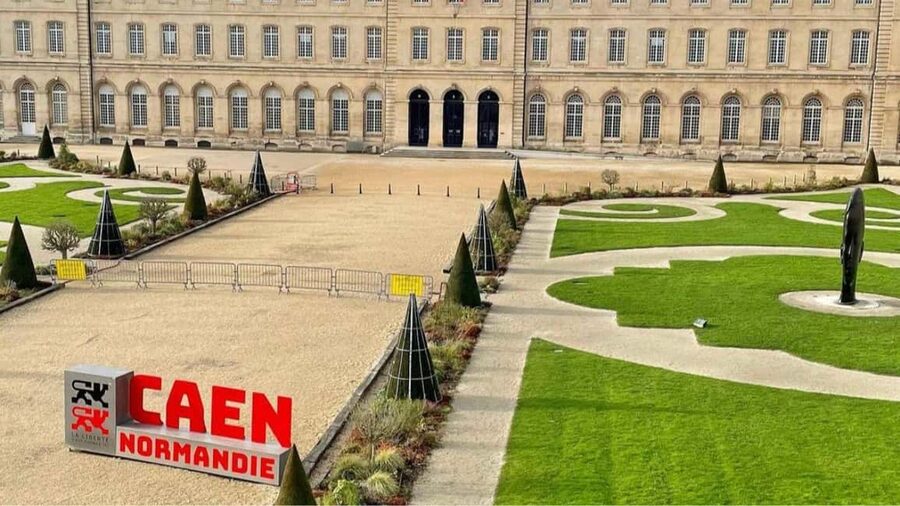
I would recommend it to first-time visitors who want a clear introduction before exploring alone. It is also a good fit for anyone interested in medieval Normandy, William the Conqueror, architecture, WWII, or the process of rebuilding a city.
Families should find the two-hour length manageable, though children still need to be comfortable walking. The small group and storytelling approach are more promising for young people than a formal museum lecture.
English speakers have a good reason to consider it. The tour is offered in French and English, and Thomas has been specifically described as speaking very good English. French speakers can take the tour in French and ask for a more local conversation.
I would be cautious if you need step-free access, have difficulty with uneven streets, or want a tour focused mainly on the D-Day beaches. This is a central Caen walk, not an accessible route or a full Normandy battlefield tour.
Final call: book it if you want Caen to make sense
Book this tour if you want more than a list of monuments. Thomas’s local background, historical training, friendly manner, and willingness to offer practical recommendations give the walk a personal edge.
The best reason to go is the range of stories packed into two hours: William the Conqueror, Romanesque architecture, medieval streets, military power, wartime destruction, and modern rebuilding. The main caution is the walking. Bring good shoes, expect cobbles, and do not mistake the short duration for an effortless stroll.
For a first afternoon in Caen, $46 is a fair price for a small, flexible introduction to the city. It should leave you better prepared to explore the abbeys, castle, museums, restaurants, and wider Normandy on your own.
FAQ
How long does the Caen guided tour last?
The tour lasts about two hours. Starting times depend on availability.
Where does the tour meet?
The stated meeting point is Place Courtonne in Caen. The guide will contact you by phone to confirm the time and meeting details.
Is the tour available in English?
Yes. The live guide speaks French and English.
How many people can join the tour?
The group is limited to six participants.
What should I wear or bring?
Bring comfortable shoes. Sports shoes or hiking shoes are recommended because the route includes walking through central Caen and may include cobbled or uneven streets.
Is the tour suitable for wheelchair users?
No. The activity is listed as unsuitable for wheelchair users, people with mobility impairments, and people with visual impairments. It is also listed as unsuitable for people over 95.
Just added around France
- Medieval Carcassonne: Interactive Ghost Story & City Game★ 3.5 · 33 reviews
- Carcassonne During World War 2★ 5.0 · 127 reviews
- Carcassonne ‘s Medieval Walls: A Self-Guided Tour★ 4.5 · 43 reviews
- Normandy: Private tour D-Day landing beaches American sector★ 5.0 · 62 reviews
- Small Group Guided D-Day Tour and Mémorial de Caen Museum★ 5.0 · 237 reviews
- Mémorial de Caen Museum Admission and Guided Tour of D-Day Sites★ 4.5 · 275 reviews
- Private Day Tour including Normandy Landing Beaches & Battlefields from Caen★ 5.0 · 53 reviews
- Private Bordeaux History Tour with a glass of Bordeaux wine.★ 5.0 · 28 reviews
France History Tours, compared.

Normandy D-Day Sites & Cemetery Day Trip from Paris with Lunch
Read our review →
Paris: Louvre Museum Entry with History of Mona Lisa
Read our review →
Normandy D-Day Small-Group Day Trip with Omaha Beach, Cemetery & Cider Tasting
Read our review →
Normandy D-Day Beaches and American Cemetery Day Trip from Paris
Read our review →
Normandy American D-Day Beaches Full Day Tour from Bayeux
Read our review →
Normandy American D-Day Experience – Group tour from Bayeux
Read our review →
Normandy Beaches Half-Day Afternoon Trip from Bayeux (A2)
Read our review →
Omaha Beach D-Day Experience – Afternoon group tour from Bayeux
Read our review →Browse the lists this tour appears in