
Review · HISTORY TOURS
Experience the Beauty, History and the Culture Of Accra in a Day
Accra’s story comes together quickly on this private six-hour tour. You move from Kwame Nkrumah’s memorial to Independence Square, from the noise of Makola Market to the thoughtful W.E.B. Du Bois Centre, then finish among crafts at the Center for National Culture. It is a useful first look at Ghana’s capital, especially if you have only one day.
I like the private vehicle, which saves you from arranging several taxis across a busy city. I also like the range of stops: this is not only a monument tour, but a mix of politics, Pan-African thought, daily commerce, coastal history, and shopping. The main drawback is pace. Six one-hour stops leave little room for long browsing, and traffic or parking can force changes, particularly around Makola Market.
Key points to know before you book
- Six major Accra stops in about six hours: The route covers national history, local commerce, Pan-Africanism, and traditional crafts.
- Private touring makes the day flexible: Only your group takes part, so guides can adjust the order or allow an earlier meal when practical.
- Emmanuel, Samuel, Benjamin, and Bernice have led highly praised outings: Guests describe the guides as punctual, friendly, helpful, and strong at explaining history.
- Makola Market is the least predictable stop: Traffic and parking can make access difficult, so keep an open mind about timing.
- Round-trip pickup is included: You start at 9:00 a.m. from your Accra accommodation, with transport in a chauffeur-driven vehicle.
- The $80 price is strongest for small groups: It includes private transport and fees, but not lunch.
Why this makes a strong first day in Accra
I would choose this tour early in an Accra stay because it gives you a working map of the city. Instead of spending the morning at one museum, you see how government, memory, commerce, religion, and art fit together across the capital.
The route also gives you two ways to meet Ghana. The formal sites explain independence and Pan-African politics. Makola Market and the craft center show the city in motion, with buying, selling, bargaining, and handmade goods. That balance matters. Accra is not a city you understand from monuments alone.
Your day begins at 9:00 a.m. with pickup from your accommodation. A private vehicle is a real advantage here. You are not figuring out several taxi rides or waiting for a larger group, and your guide can explain the city while someone else handles the driving.
The tour is sold at $80 per person. That includes private transportation plus all fees and taxes, but not lunch. For one person or a couple, the cost is higher than joining a shared bus. For a family or group, the value improves because the experience remains private and the transport cost is built into one booking.
More Local Culture and Traditions Tours in the world:
- Amsterdam Food and Cultural Tour with Tastings
★ 5.0 · 4,315 reviews - Sevilla Food Tour: Tapas, Wine, History & Traditions
★ 5.0 · 3,468 reviews - Tromsø: Reindeer Camp and Sami Cultural Tour with Lunch
★ 4.7 · 3,326 reviews
Kwame Nkrumah Memorial Park and Ghana’s independence story
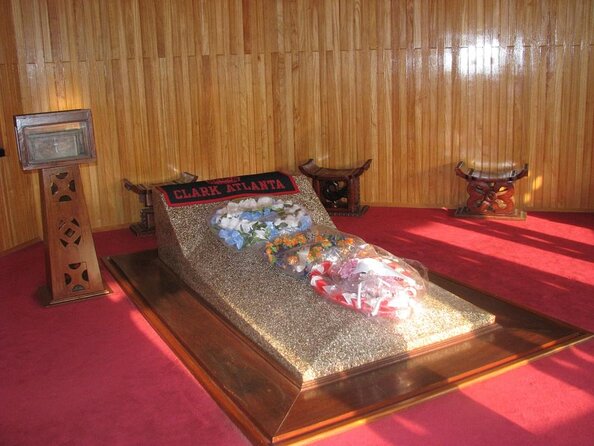
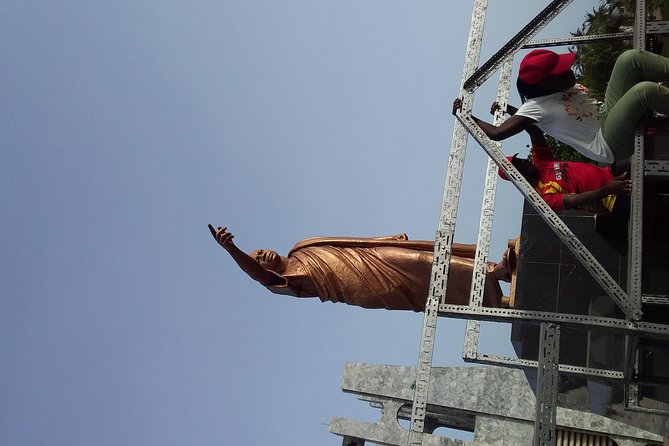
The first stop is Kwame Nkrumah Memorial Park, with about an hour set aside. This is the place to begin Ghana’s modern political story. You learn about Dr. Kwame Nkrumah, the country’s independence leader and first president.
The stop is especially useful if you want more than a quick photograph. Your guide can connect Nkrumah’s role to the wider independence struggle and explain why his name appears so often in Ghana’s public life. One strong part of the experience is the chance to ask questions in plain language rather than simply read display labels.
I would give this stop your full attention. The tour later visits Independence Square, so the two sites work together. At the memorial, you focus on the leader. At the square, you consider the national event and its public setting.
Some visitors may want more time here than one hour allows. If political history is your main reason for visiting Accra, tell your guide at the start. Since this is private, you have a better chance of discussing the balance, though the overall day still has six scheduled stops.
Makola Market, the day’s most unpredictable hour
Makola Market brings a sharp change of pace. After the formal memorial, you enter one of Ghana’s major open-air markets and get a look at the ordinary business of the city. The goal is not simply shopping. You learn how buyers and sellers interact and see a side of Accra that a museum cannot provide.
This is also where practical flexibility matters most. Traffic and parking can be extremely difficult around the market, and the stop may need to be shortened or adjusted. One previous group could not make it into Makola because the area was so crowded with traffic and parked vehicles. That is not a flaw in the idea of the tour, but it is a reason not to treat every stop as guaranteed at exactly the advertised pace.
If you do shop, ask your guide for help. Emmanuel has been praised for assisting with local merchants and negotiating, which can make the experience less awkward for a first-time visitor. You should still decide what you want to buy before bargaining and keep your belongings close in a busy market.
Wear comfortable shoes and bring water. The day can be hot and humid, and market visits involve standing, walking, and waiting. A small snack is sensible too, since lunch is not included and the tour moves through several parts of the city.
Independence Square and the public face of Ghana
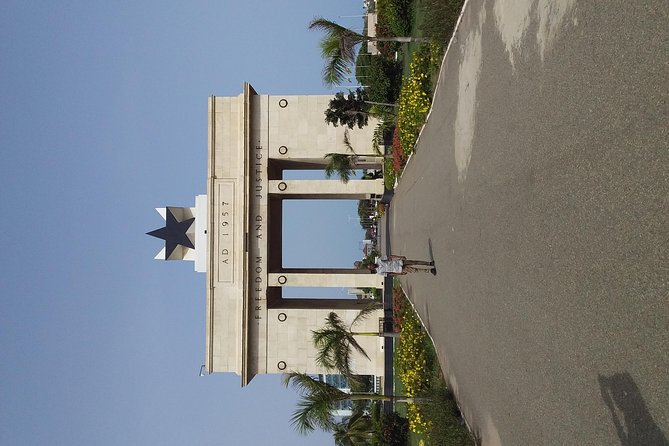
Independence Square gives the tour a broad national setting. Here, your guide explains Ghana’s struggle for independence and the meaning of the square in the country’s public life.
The stop pairs well with the Nkrumah Memorial. Together, they help you follow the story from political leadership to national celebration. I find that this kind of pairing makes a city tour more useful than a list of unrelated sights. You see the memorial, then visit a place where the national story is presented on a much larger scale.
Plan on about an hour. The site is more about understanding the setting and its symbols than wandering through a tightly packed collection of objects. Your guide’s explanation is important, so stay close and ask about the independence events that shaped modern Ghana.
This is one of the stops that works well for first-time visitors. It gives you a clear point of reference before you continue to the more personal and intellectual story at the W.E.B. Du Bois Centre.
More History Tours in the world:
- Prague: Medieval Dinner with Unlimited Drinks
★ 4.4 · 19,847 reviews - Pompeii: Entry Ticket and Guided Tour with an Archaeologist
★ 4.8 · 19,459 reviews - History and Hauntings of Salem Guided Walking Tour
★ 5.0 · 14,564 reviews - Athens: Acropolis & up to 5 Archaeological Sites Combo Pass
★ 4.2 · 13,904 reviews
The W.E.B. Du Bois Centre and a wider Pan-African view
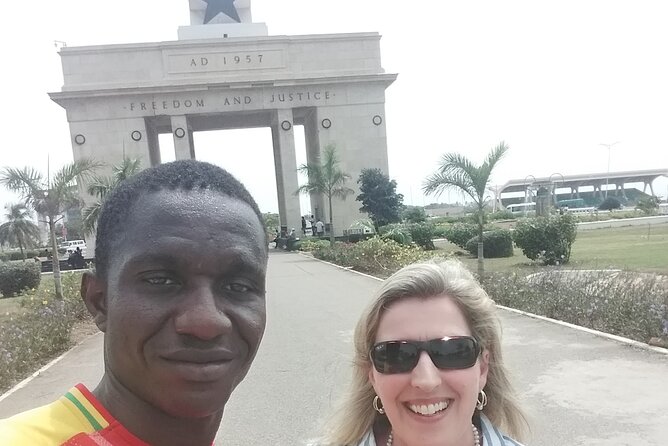
The W.E.B. Du Bois Centre adds an international dimension to the day. You learn about Dr. W.E.B. Du Bois, a major Pan-African thinker whose life and work connect the United States, Ghana, and the wider movement for African unity.
For many people, this is the most thought-provoking stop. It moves the tour beyond Ghana’s national independence and into questions about identity, colonial rule, education, and the bonds between people of African descent around the world. A guide who can explain the background clearly makes a major difference here.
Emmanuel has been praised for giving detailed explanations at this stop, and one solo visitor found the discussion particularly eye-opening. I would allow yourself time to ask questions rather than rushing through the site for photographs.
The center also gives the day some balance. Nkrumah’s memorial is centered on Ghana’s first president. Du Bois represents a broader intellectual and political network. Seeing both helps you understand why Accra has such importance within Pan-African history.
James Town Lighthouse and Accra’s coastal beginnings
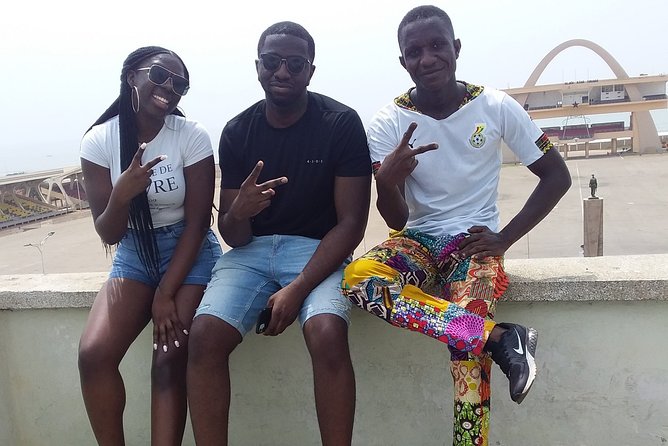
The James Town Lighthouse takes you into the history of the first British settlement in Accra. It is a change from the official spaces earlier in the day, with a focus on the city’s coastal beginnings and colonial past.
The lighthouse is not just a photo stop. Use the hour to ask how James Town developed and how the early settlement fits into Accra’s later growth. Your guide’s local explanation is what turns a landmark into a useful part of the city story.
This stop may appeal most to visitors who want to see an older, more established part of Accra rather than only modern civic buildings. It also gives you a different setting after the memorials and museum-style visits.
The schedule remains tight. If you like to stop often for photographs, enjoy street scenes, or spend time talking with people in the area, six hours may feel short. The private format helps, but it cannot remove traffic or the time needed to cross town.
Center for National Culture and Ghanaian crafts
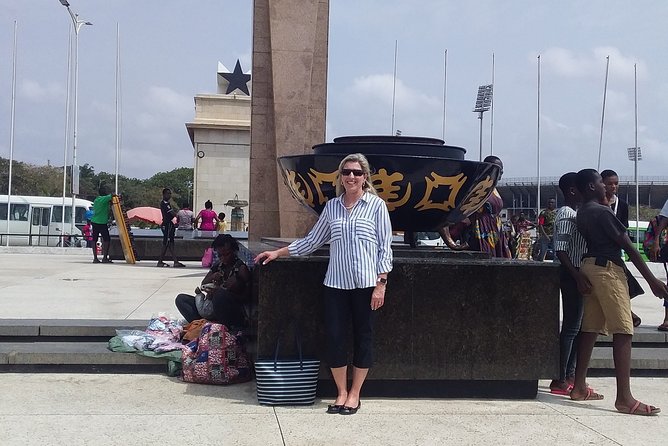
The final stop is the Center for National Culture, described as Ghana’s largest craft market. It is the place to browse traditional goods and look for souvenirs with a stronger local connection than standard airport shopping.
This is where you may find the most room for personal choice. Some people will want to shop for art or gifts. Others may prefer to look at the materials, patterns, and objects without buying. You can tell your guide how much time you want to spend browsing, although the tour’s one-hour plan keeps the visit moving.
A guide can also help you approach the market with better expectations. Prices may be part of the experience, and a little friendly bargaining can be useful. If you are buying a larger item, ask about size, packing, and transport before committing.
The craft center makes a sensible ending because it leaves you with something practical to take away. Just remember that shopping is not included in the $80 price, and lunch is separate as well.
The guides and the value of a private format
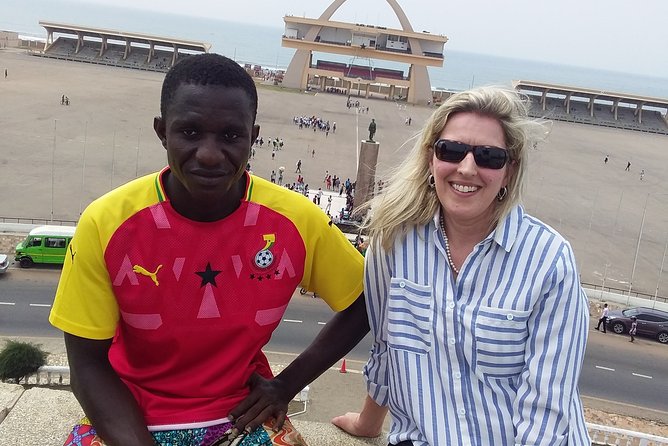
The guide can shape this experience more than any single stop. Emmanuel is repeatedly praised for his calm manner, safe driving, clear explanations, and willingness to take photographs. Samuel has led tours that cover the market, James Town, the Black Star monument area, the memorial, and the art center, while Benjamin has handled a group of 10 with patience and flexibility. Bernice has also been praised for explaining each site and taking photographs so visitors could stay present.
Guide assignments are not guaranteed, so you should not book expecting one particular person unless the operator confirms it. Still, the pattern is clear: this experience depends on a guide who can explain the places, manage the timing, and help you deal with practical matters such as market bargaining.
The private format is especially helpful for solo visitors, families, and groups with different interests. A solo guest can ask many questions without holding up strangers. A family can request an earlier meal. A group of 10 can stay together rather than split among taxis.
The tradeoff is that private touring usually costs more per person than a shared outing. At $80, I see the best value for people who want transport, a personal guide, and a broad first look at Accra without arranging each ride independently.
Timing, comfort, and what to bring
The stated duration is about six hours, with one hour planned at each of six stops. That sounds neat on paper, but Accra traffic can change the rhythm. Keep the day flexible, especially around Makola Market.
Bring plenty of water, a small snack, sunscreen, and comfortable walking shoes. The heat and humidity can wear you down, and the day includes markets, outdoor landmarks, and repeated movement in and out of the vehicle.
Lunch is not included. You can ask about taking a meal break because the private arrangement allows some flexibility, but do not assume that food is built into the price. One family was able to adjust the schedule to eat earlier, which suggests that reasonable requests may be possible when the route allows.
Most people can participate, and service animals are allowed. The tour is near public transportation, but you do not need to arrange public transit if you use the included pickup and private vehicle. Confirmation is provided at booking, and free cancellation is available up to 24 hours before the start time. Cancellations or changes inside that window are not refundable or accepted.
Who should book this Accra city tour?
I would recommend it to a first-time visitor who wants orientation, history, and local shopping in one day. It is also a good fit for solo visitors who want the security of a private vehicle, families who need some control over the schedule, and groups that would otherwise spend the day arranging taxis.
It suits people who enjoy explanation as much as sightseeing. The strongest parts are not only the photographs at Independence Square or the lighthouse. They are the links between Nkrumah, Ghanaian independence, Du Bois, colonial Accra, the market, and the craft trade.
I would hesitate if you want a slow, detailed visit at every site. Six stops in six hours is a lot. You should also be ready for Makola Market to change because of traffic and parking, and you need to budget separately for lunch and shopping.
Should you book it?
Book this tour if you want to get your bearings fast while still learning why Accra matters. The route covers a remarkable range, the vehicle removes much of the city-transfer hassle, and the private setting gives you room to ask questions or request small changes.
If you have several days in Accra, use this as your first-day framework, then return later to the places that deserve more time. If you have only one free day, the tour offers a sensible and well-priced way to see the city’s major historical sites, a major market, and its craft center without trying to plan every ride yourself.
FAQ
What time does the tour start?
The tour starts at 9:00 a.m.
How long does the Accra tour last?
The tour lasts about six hours.
Is hotel pickup included?
Yes. Round-trip transportation from your Accra accommodation is included.
Is this a private tour?
Yes. Only your group participates in the activity.
Which places are visited?
The planned stops are Kwame Nkrumah Memorial Park, Makola Market, Independence Square, the W.E.B. Du Bois Centre, James Town Lighthouse, and the Center for National Culture.
Is lunch included?
No. Lunch is not included in the price.
What is the cancellation policy?
You can cancel at least 24 hours before the start time for a full refund. Cancellations or changes made less than 24 hours before the experience are not accepted, and the amount paid is not refunded.
Just added around the world
- Scenic Train ride to historical cities of Morretes and Antonina★ 4.0 · 188 reviews
- 6-Day Cultural Tour to Machu Picchu★ 5.0 · 76 reviews
- Jewish Heritage of Curacao★ 4.5 · 68 reviews
- The Curacao’s Colorful History Walking Tour★ 5.0 · 55 reviews
- Discover Scuba Diving Amathounta’s Ancient Port★ 5.0 · 30 reviews
- Olous – Guided Snorkelling Excursion to Discover Olous Sunken Ancient City★ 4.5 · 31 reviews
- Night Walking Tour of Medieval Cuenca★ 5.0 · 64 reviews
- WWII – The Battle of Crete Day Tour★ 5.0 · 103 reviews