
Review · WASHINGTON DC
Guided African American History Tour with Reserved Museum Entry
Washington’s monuments tell a familiar national story. This tour asks you to look again, through the lives and struggles of African Americans who helped shape it. You visit Black Lives Matter Plaza, Lincoln and King memorials, Lincoln Park, the African American Civil War Memorial, and finish at the National Museum of African American History and Culture.
I like the strong route through central Washington, which links major sights instead of treating them as isolated photo stops. I also like the live guide commentary, especially with guides such as Dre, Elvis, De’Andre, Jeff, and Antonio, who are praised for connecting national events with specific people and neighborhoods.
The main consideration is the museum entry. A complimentary timed-entry reservation is provided after the sightseeing portion, but the operator cannot guarantee availability, and this is not an official Smithsonian tour. The group can reach 55 people, so arrive early if you want the best choice of bus seat.
Key points to know before booking
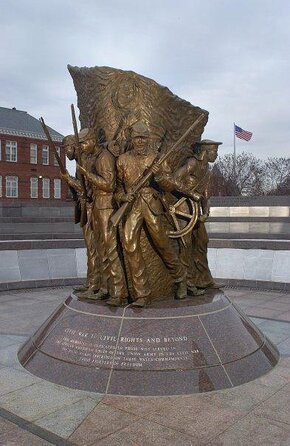
- The tour begins at 10 a.m. at the US Navy Memorial and ends at the National Museum of African American History and Culture.
- You walk and ride a bus, with guided stops at the White House, Lincoln Memorial, Martin Luther King, Jr. Memorial, and Lincoln Park.
- Mary McLeod Bethune gets her own stop, giving the tour a useful focus beyond the most famous male leaders.
- The museum visit is self-guided, and you may continue exploring after the listed one-hour museum period.
- Guides make the difference, with Dre, Elvis, and De’Andre receiving especially strong praise for clear storytelling and thoughtful answers.
- The $89 price includes transportation, water, guiding, and a museum reservation, but not lunch or hotel pickup.
A history tour that connects monuments to real lives
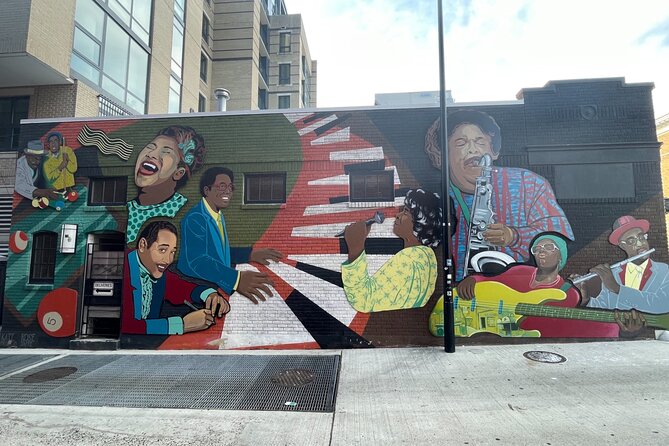
The best part of this experience is its point of view. You are not simply driven past memorials while someone recites dates. The route links Washington’s public spaces to African American soldiers, educators, activists, inventors, political advisers, and community leaders.
That wider lens matters. At the monuments, you will hear about Abraham Lincoln and Martin Luther King, Jr., but the tour also brings in people such as Mary McLeod Bethune, Robert Smalls, Benjamin Banneker, Alice Ball, and Jesse Russell. The supplied tour material describes stories ranging from Freedman’s Village and Black Civil War service to NASA, digital communications, and the struggle over which people receive public memorials.
The tone can be serious, but it is not presented as a dry classroom lecture. Guides are expected to answer questions on the bus and at stops, and several named guides are praised for humor, flexibility, and the ability to speak to children, teenagers, and older adults. That makes this a good choice for a family group with different levels of background knowledge.
You should also expect difficult subjects. The route deals with slavery, racial exclusion, redlining, eminent domain, unequal military service, and the ways Black achievements have often been left out of standard school lessons. I would not book it as a light sightseeing ride. I would book it if you want Washington’s symbols placed in a larger and more honest setting.
More Guided Tours in the USA:
- History and Hauntings of Salem Guided Walking Tour
★ 5.0 · 14,564 reviews - Historic Charleston Guided Sightseeing Walking Tour
★ 5.0 · 6,216 reviews - Historic Savannah Guided Walking Tour
★ 5.0 · 2,918 reviews
Starting at the US Navy Memorial at 10 a.m.
Meet at the United States Navy Memorial and Naval Heritage Center on Pennsylvania Avenue. The meeting point is central and near public transportation, but give yourself extra time. You are asked to arrive at least 20 minutes before departure for check-in, and seats are assigned on a first-come, first-served basis.
The opening stop lasts about 20 minutes and takes place outside. From here, the group moves toward Black Lives Matter Plaza and the White House before settling into the bus portion of the route. Bottled water is included, and live commentary continues onboard.
The bus is useful because Washington’s key African American sites are spread across the city. It saves your legs for the walking stops and lets the guide add drive-by context between the main locations. The tradeoff is that this is a shared group tour, not a private experience. With a maximum of 55 people, you may not always have a close view of the guide or the best seat for every passing sight.
Food is not allowed on the bus, although snacks are permitted. There is no lunch included, so plan to eat before the tour or after reaching the museum area.
Black Lives Matter Plaza and the White House
The White House stop is outside only, paired with Black Lives Matter Plaza. This is a smart early stop because it places current public protest beside the country’s most recognizable seat of executive power.
The value here is not access inside the White House. You will not tour the building. Instead, the guide uses the plaza and surrounding streets to discuss protest, public memory, and the continuing struggle for racial equality.
This is also one of the better places to ask questions. The guides praised most often, especially Dre, are described as willing to explain connections between Washington neighborhoods, government policy, and African American life. The exact stories can vary with the guide, but you should expect interpretation rather than a long photo break.
The plaza is outdoors, so weather matters. Wear shoes suitable for walking and bring protection from sun or rain. The tour can be canceled for poor weather, with a different date or full refund offered under the stated policy.
Lincoln Park and two very different monuments
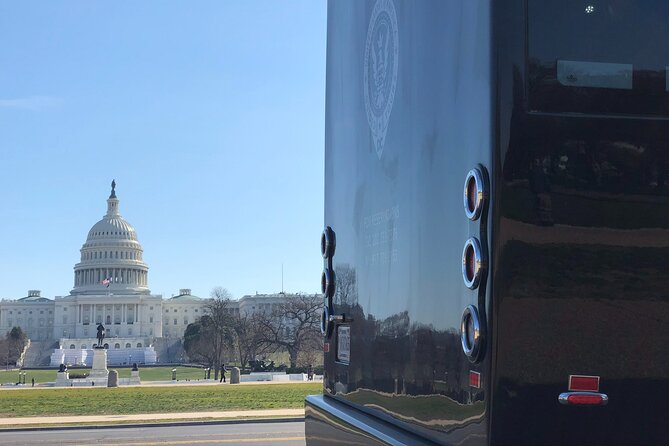
Lincoln Park gives the tour a useful change of pace. The stop includes the Emancipation Memorial and the statue of Mary McLeod Bethune, with about 20 minutes for guided interpretation.
The Emancipation Memorial raises questions about how emancipation has been represented in public art. The nearby Bethune statue shifts attention toward a Black woman who worked as an educator, activist, and government adviser. The supplied material identifies Bethune as the highest-paid government adviser in US history, a detail that gives this stop particular weight.
I like this pairing because it prevents the tour from treating freedom as something granted by one famous president alone. It also gives you a chance to learn about a woman whose work is less familiar to many people than Lincoln’s.
Twenty minutes is enough for a focused explanation, but not enough for a long visit or extended reflection. If you want to study the monuments closely, note the guide’s key points and consider returning later on your own.
More History Tours in the USA:
- Charleston’s Old South Carriage Historic Horse & Carriage Tour
★ 5.0 · 10,023 reviews - Beneath The Streets Underground History Tour
★ 4.5 · 8,006 reviews - Big Island in a Day: Volcanoes Waterfalls Sightseeing and History
★ 5.0 · 6,569 reviews - Boston: Freedom Trail History Small Group Walking Tour
★ 5.0 · 6,450 reviews
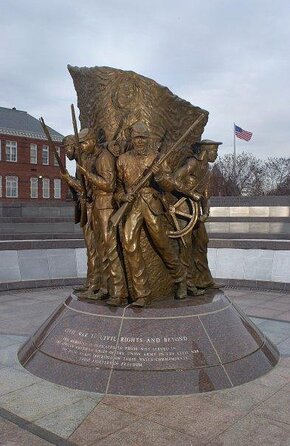
The African American Civil War Memorial from the outside
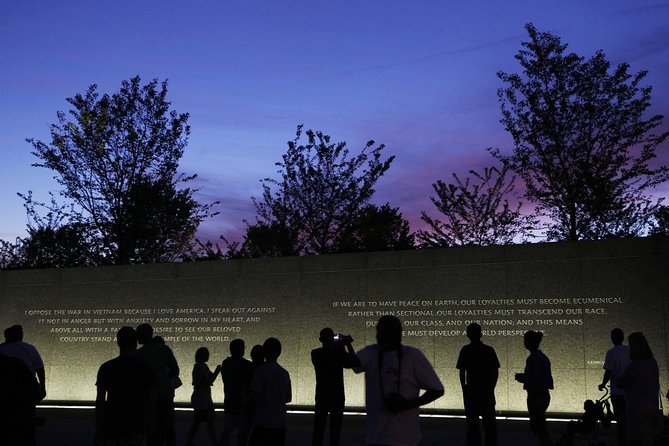
The tour then reaches the African American Civil War Memorial Museum. The guide provides commentary outside the building, and the stop lasts about 20 minutes. Admission to the interior museum is not part of this experience.
That limitation is important. If you expect a full museum visit here, you may be disappointed. The stop is designed to explain the memorial and the role of African American service during the Civil War, not to replace an indoor museum visit.
The subject is central to the tour’s wider story. The guide may discuss the price Black men were required to pay to serve, the role of African American soldiers, and figures such as Robert Smalls. These details help move the story beyond a simple sequence of presidents and battles.
Several guides are praised for bringing lesser-known figures into the discussion. That is where this stop can be most useful: it gives you a stronger sense of the people behind the national story, even though the building itself is not entered.
Martin Luther King, Jr. Memorial and the power of place
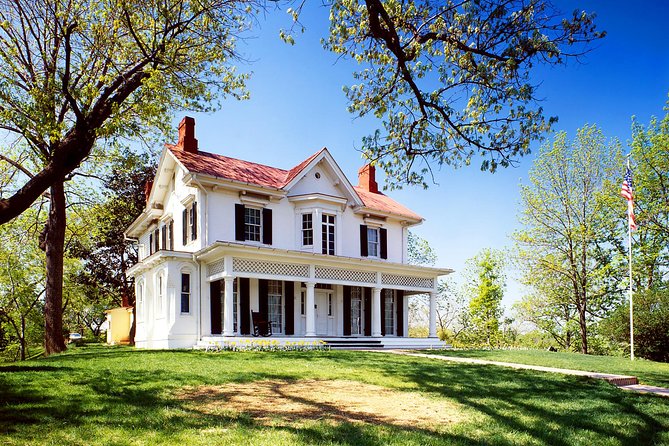
The Martin Luther King, Jr. Memorial is another guided stop of about 20 minutes. This is one of the tour’s emotional centers, but the guide’s role is to place King’s work within a wider movement rather than present him as a lone hero.
The route also refers to Freedom Plaza, where King began a speech before leading a march to the Mall. Depending on the exact path and timing, your guide may connect that account to the memorial and to the wider Civil Rights movement.
A good guide can make this stop more than a photograph. Dre is especially praised for showing how King’s public work connected with Washington’s streets, institutions, and political life. Elvis is praised for adapting his presentation to children and older adults, which matters at a site where younger members of a group may need more context.
You will be outside, so crowd levels, weather, and the pace of the group can affect how long you have to look around. The memorial is powerful on its own, but the explanation is what gives this stop its place in the tour’s larger argument.
Lincoln Memorial and the complicated national story
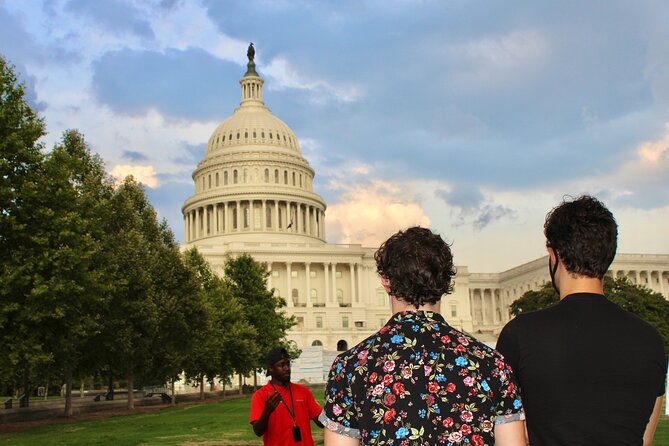
The Lincoln Memorial follows the King Memorial. This pairing is one of the tour’s strongest choices. You see the place associated with Lincoln’s leadership and the site where King’s words became part of the national memory, then hear how African American lives fit into both stories.
The guide may challenge simplified ideas about emancipation and Lincoln’s policies. One detailed account from the supplied material points out that Lincoln’s Emancipation Proclamation did not free every enslaved person. That kind of distinction is useful because it replaces a neat heroic story with the legal and political limits of the period.
The stop lasts about 20 minutes. You will have time to see the memorial and hear the main explanation, but not to explore every nearby feature. If you want quiet time on the steps or a long look inside, return later.
This is also a place where the size of the group matters. Stay close enough to hear the guide and be ready to move when asked. The tour is trying to cover several major places in a limited morning, so it does not offer unlimited time at any one memorial.
The museum finish at 1400 Constitution Avenue
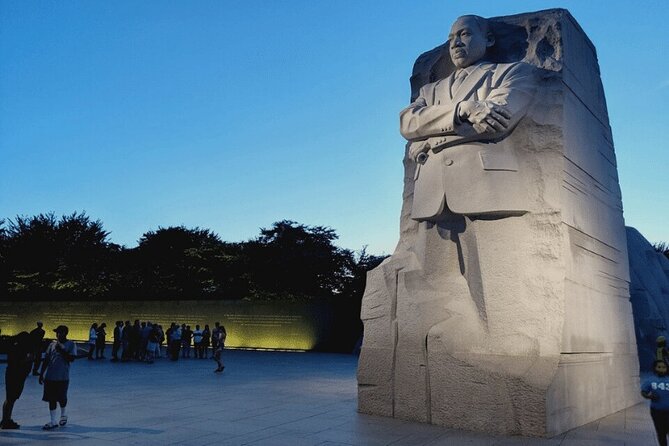
The tour concludes at the National Museum of African American History and Culture, at 1400 Constitution Avenue NW. The included benefit is a complimentary timed-entry reservation after the city sightseeing portion.
The museum visit is independent. The listed schedule allows about one hour, but you are welcome to continue exploring for the rest of the day if museum operations permit. I would treat the hour as an introduction, not a complete visit. The museum is large and covers far more ground than this tour can prepare you to see in one short session.
The sequence works well. The bus and walking route give you names, places, and themes first. The museum then gives you a chance to explore those subjects at your own pace, with displays and objects that cannot be covered from a sidewalk or bus seat.
There is a major caveat. The tour company accesses the Smithsonian’s public reservation system and has no special reservation agreement. Entry is not guaranteed, availability can change, and you may still face a wait or need to follow the museum’s entry rules at the assigned time. The pass is provided after the sightseeing tour, so you should not assume you can use it as a separate museum-only ticket.
The tour is not an official Smithsonian program. You are paying for the company’s guiding service and perspective, followed by complimentary access when available. If the museum is your main reason for booking, check current Smithsonian information as well and keep your plans flexible.
What the $89 price really buys you
At $89 per person, this is not the cheapest way to see Washington’s monuments. You can visit many memorials on your own for little or no admission cost. The price makes more sense if you want transportation, a structured route, live interpretation, bottled water, and help securing museum entry.
The value rests mainly in the guide. Dre is repeatedly praised for linking local Washington history with national events, while Elvis is praised for serving a mixed-age family group. De’Andre is described as bringing culture, trivia, and lesser-known stories to life, and Jeff is praised for humor and careful detail.
The museum reservation adds value, but it should not be counted as a guaranteed ticket. The company itself says it does not factor the pass into the ticket price because the museum is a public institution and availability can change.
You also pay for convenience. The tour begins at one central location and ends at the museum, with no need to plan a route between the White House, Lincoln Park, the Civil War Memorial, and the Mall. Hotel pickup and drop-off are not included, so you handle transportation to the Navy Memorial and onward from the museum.
Who will get the most from this tour
I would choose this experience for a first visit to Washington if you want African American history to be a central part of your sightseeing. It suits families, couples, school-age children, teenagers, and adults who want more context than a standard monument loop provides.
It is especially useful if you are not familiar with figures such as Bethune, Banneker, Alice Ball, Robert Smalls, or the people connected with NASA and digital communications. The guide may also connect Washington neighborhoods such as NoMa, Chinatown, Georgetown’s Herring Hill, and areas shaped by redlining or redevelopment.
This is less suitable if you want a private tour, a quiet museum visit, or long stretches of free time at each memorial. It is also not the right choice if you need guaranteed Smithsonian entry or indoor shelter throughout the morning.
Most people can participate, service animals are allowed, and the route uses public transportation access at the start. You should still be comfortable with outdoor walking, getting on and off a bus, and staying with a group.
Practical booking advice and cancellation rules
Book with the weather in mind. The experience requires good weather, and a cancellation caused by weather may result in a new date or full refund. The same applies if the minimum number of participants is not met.
You can cancel for a full refund up to 24 hours before the local start time. Inside that window, refunds are not provided and changes are not accepted. Arrive at least 20 minutes early, especially if you care about your seat.
Should you book the African American history tour?
I would book it if you want a guided explanation of how African American lives connect to Washington’s best-known monuments. The strongest reasons are the carefully chosen route, the mix of famous sites and less familiar figures, and the chance to continue at the national museum afterward.
I would skip it if your priority is guaranteed museum entry, a small private group, or extended time inside each memorial. At $89, the tour is good value for structure and interpretation, not simply for admission tickets.
Go with realistic expectations, arrive early, bring weather protection, and keep extra time for the museum. If you can accept the museum reservation caveat, this is a thoughtful way to see Washington through a broader American story.
FAQ
Where does the tour begin?
It begins at the US Navy Memorial and Naval Heritage Center, at 701 Pennsylvania Avenue NW, Washington, DC 20004.
What time does the tour start?
The scheduled start time is 10 a.m. You should arrive at least 20 minutes early for check-in.
Where does the tour end?
The city tour ends at the National Museum of African American History and Culture, at 1400 Constitution Avenue NW.
How long does the experience last?
The guided sightseeing portion takes about three and a half hours. The listed museum portion is about one hour, but you may continue exploring independently for the rest of the day.
Is museum admission included?
A complimentary timed-entry reservation is provided for the National Museum of African American History and Culture after the sightseeing tour. Availability is not guaranteed, and the reservation comes through the public reservation system.
Is this an official Smithsonian tour?
No. The experience is operated independently, and the guide’s perspective does not represent the Smithsonian.
What is included in the price?
The price includes bottled water, live commentary on and off the bus, a local guide, transportation during the tour, and a complimentary museum reservation when available. Lunch and hotel pickup and drop-off are not included.
Can I cancel for a refund?
Yes, if you cancel at least 24 hours before the scheduled start time. Cancellations within 24 hours are not refundable. If poor weather or an insufficient number of participants cancels the experience, you will be offered another date or a full refund.
Just added around the USA
- Red Rocks Amphitheatre Historical Walking Tour★ 5.0 · 74 reviews
- 1-Hour Segway Tour of Cheyenne Cañon Art, History and Nature★ 5.0 · 36 reviews
- Colorado Springs – Guided Walking Ghost / History Tour★ 5.0 · 168 reviews
- Ancient Landscapes Private Geology Hike at Garden of the Gods★ 5.0 · 31 reviews
- Village Food Tours Lunch & History Tour★ 5.0 · 80 reviews
- 2.5 Hour Kayaking with Manatee and History Tour in Tarpon Springs★ 5.0 · 24 reviews
- Safety Harbor Ghost Tour★ 5.0 · 60 reviews
- Historical Bicycle Tour of Dunedin★ 5.0 · 44 reviews
Washington DC History Tours, compared.
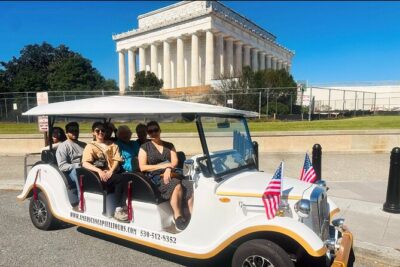
DC Monuments & History Guided E-Cart Tour-Blankets
Read our review →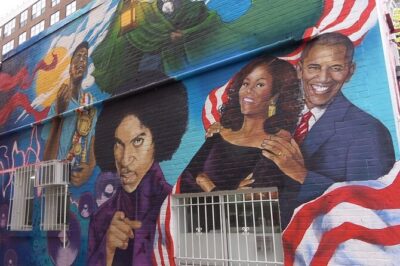
African American History Tour with Museum of African American History Ticket
Read our review →
Historic Georgetown: History, Gossip, & Architecture Walking Tour
Read our review →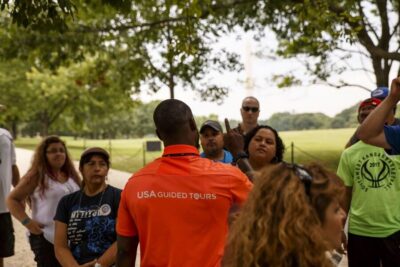
Washington, DC: African American History Tour & Museum Entry
Read our review →
D.C: Monuments & History Guided Open-Air Bus Tour-Day &Night
Read our review →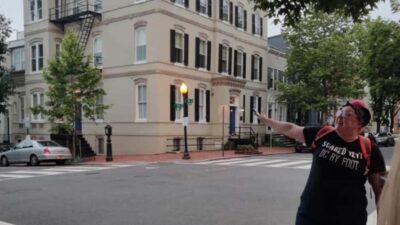
DC: Ghosts of Georgetown Haunted History Nighttime Tour
Read our review →
DC: Georgetown History & Architecture Tour with Local Guide
Read our review →
Washington DC: African American History Museum Private Tour
Read our review →Browse the lists this tour appears in