
Review · HISTORY TOURS
Heritage tour of Phnom Penh in electric bus
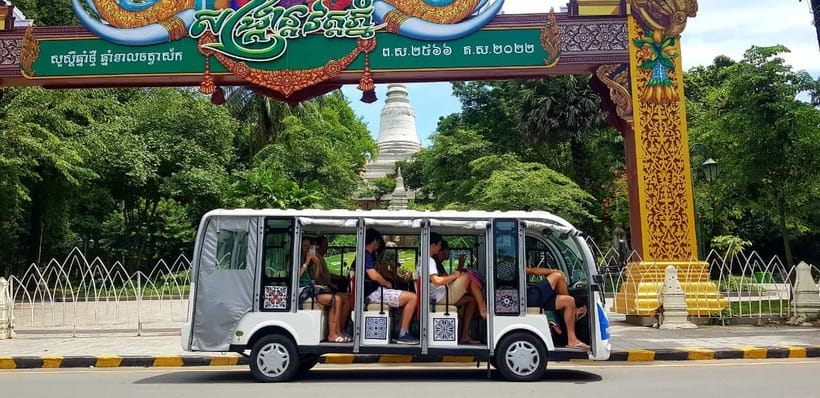
Phnom Penh’s past is easier to grasp from a moving electric bus than from a map. This 2.5-hour heritage tour links 19 stops and 22 places, using old photographs, films, and short historical stories to show how a fishing village became Cambodia’s capital. You also step inside three unusual buildings that you might otherwise pass by.
I like the tablet guides, which let you see interiors closed to the public, and the mix of riding with short walks. I also like the gentle pace in the heat. The main consideration is scope: this is a broad introduction, not a long visit inside each site.
Key points
- Nineteen stops cover 22 major places, giving you a useful first look at Phnom Penh.
- The electric bus keeps the ride relatively restful, especially during hot weather.
- Films, vintage photographs, and historical anecdotes make the city’s past easier to picture.
- Three unusual interiors are included, an Hokkien temple, the National Library, and the Royal University of Fine Arts.
- Audio is available in 10 languages, with live instruction in English or French.
- The tour ends near Street 240, close to the Royal Palace and riverside, so you can continue exploring on foot.
Seeing Phnom Penh through its old streets

Phnom Penh can feel hard to read at first. New development, traffic, colonial buildings, royal landmarks, and reminders of Cambodia’s recent past all sit close together. The Heritage Tour gives you a framework before you set off on your own.
The route is designed around 22 sites connected to the period when Cambodia was under French protection. That does not mean the tour only talks about French buildings. It uses that period to explain the city’s first planned urban growth, the rise of Art Deco design, changing social classes, the royal family, and the lifestyle of Phnom Penh’s early 20th-century elite.
I find this approach useful because individual buildings rarely tell the whole story. A former government building, library, temple, or royal institution makes more sense when you know how the city was organized around it.
The tour also reaches the difficult parts of Cambodia’s recent past. The Khmer Rouge regime and its dark years are included in the historical account. That gives the ride a wider frame, moving beyond pretty architecture and colonial nostalgia.
More History Tours in the world:
- Prague: Medieval Dinner with Unlimited Drinks
★ 4.4 · 19,847 reviews - Pompeii: Entry Ticket and Guided Tour with an Archaeologist
★ 4.8 · 19,459 reviews - History and Hauntings of Salem Guided Walking Tour
★ 5.0 · 14,564 reviews
What the electric bus adds
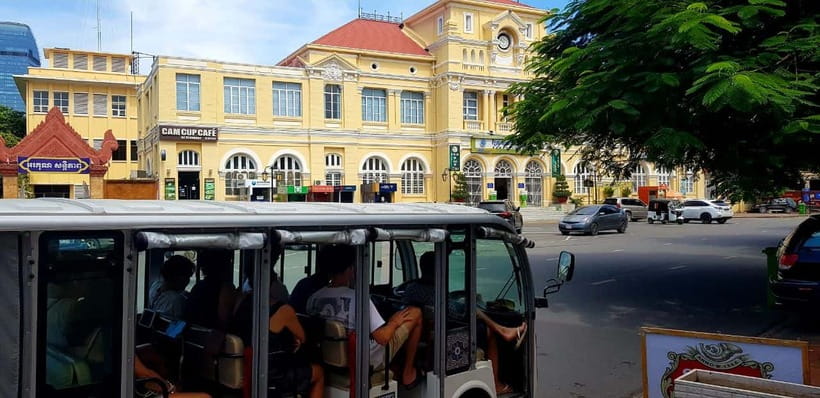
The electric bus is more than a novelty. It gives you a sheltered way to cross the city while keeping the focus on the streets outside. In Phnom Penh’s heat, that matters.
The tour lasts 2.5 hours, long enough to cover a lot of ground without taking up an entire day. You do not spend every minute seated. The route includes stops where you leave the bus, look around, and receive extra explanation from the guide.
This balance is one of the activity’s strongest features. A standard sightseeing ride can leave you feeling as if you only saw façades through glass. Here, the walks break up the ride and give you a closer look at selected places.
Still, you should set reasonable expectations. Twenty-two sites in 2.5 hours means the stops are part of a city overview. You will not have the time to study every building or museum at length. If you already know Phnom Penh well, you may prefer a focused tour of one neighborhood or institution.
The tablet turns closed doors into part of the tour
Each passenger receives a tablet and headset. The audiovisual material is available in English, French, Chinese, German, Italian, Korean, Japanese, Spanish, Khmer, and Russian.
This is especially useful at buildings you cannot enter. The tablet uses film, period photographs, and historical anecdotes to show what lies inside and how places looked in earlier decades. You get a visual sense of rooms and interiors that would otherwise remain out of reach.
I like this format because old photographs can make a street corner suddenly legible. A modern road may not look important until you see how it fitted into the earlier city. The films also give the history a human scale, rather than leaving you with a list of dates and building names.
The live guide adds another layer. Instruction is offered in English or French, while the tablet handles the wider language choice. The guide may offer extra comments during stops, so it is worth keeping the headset material and the spoken presentation together rather than treating the tablet as the whole tour.
From fishing village to planned capital
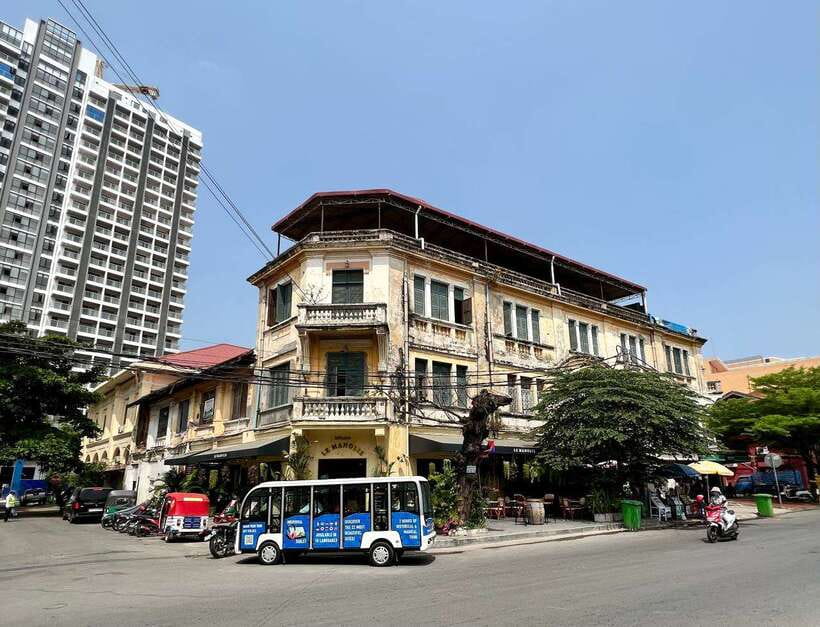
One of the central stories is Phnom Penh’s transformation from a fishing village into the country’s capital. That change helps explain why the city can feel like a mixture of older local traditions and imported planning ideas.
The tour looks at the first urban development carried out on a French model. You learn how streets, institutions, and public life began to take a more organized form. The point is not simply to admire colonial architecture. It is to understand how the capital’s physical layout reflected new political and social forces.
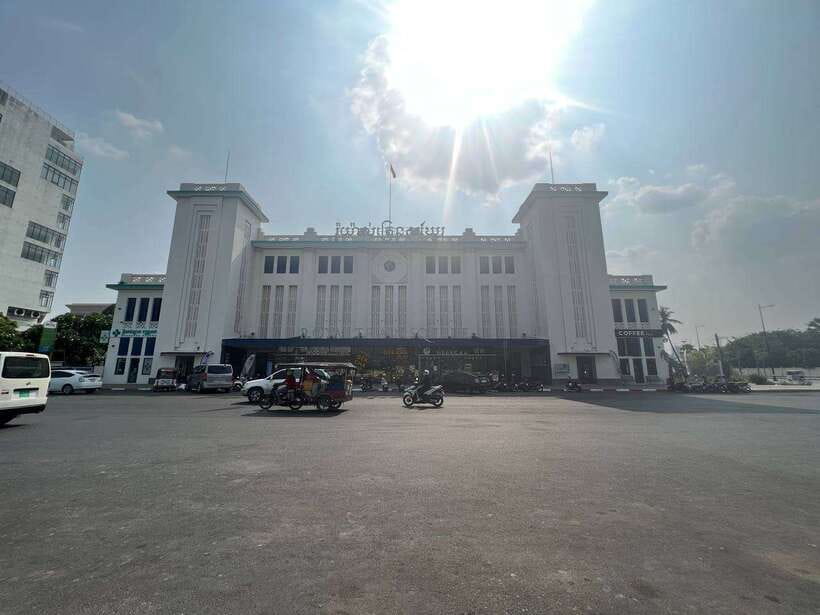
The discussion of Art Deco adds another useful layer. Phnom Penh is often introduced through its royal and religious buildings, but the early 20th century also brought a taste for modern design. The tour connects that architectural fashion with the people who could afford it and the changing identity of the city’s elite.
You should pay attention to the social history here. The program addresses the organization of Phnom Penh society, the royal family, and the daily life of wealthy residents at the start of the 20th century. That makes the buildings more than backdrops. They become evidence of who held influence and how the city functioned.
Same city, a different century:
- Athens: Acropolis & up to 5 Archaeological Sites Combo Pass
★ 4.2 · 13,904 reviews - Colosseum: Underground and Ancient Rome Tour
★ 4.7 · 12,691 reviews - Pompeii: Small Group Tour with an Archaeologist
★ 4.8 · 12,264 reviews - Lisbon: History, Stories and Lifestyle Walking Tour
★ 4.8 · 10,902 reviews
Three interiors that make the route special
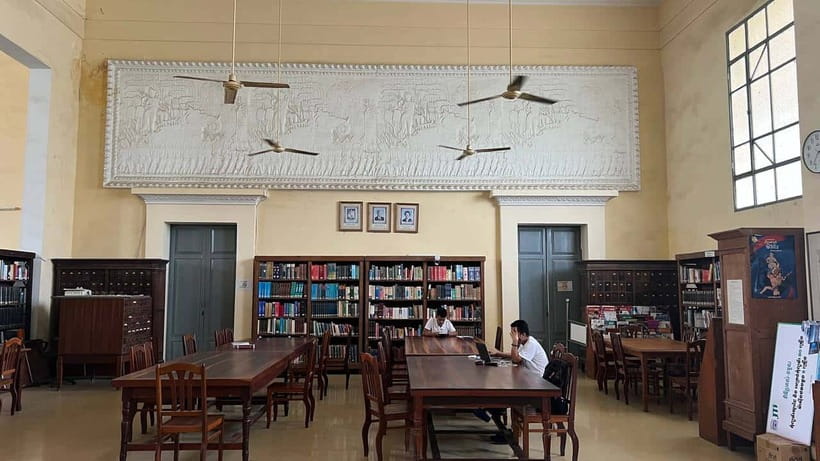
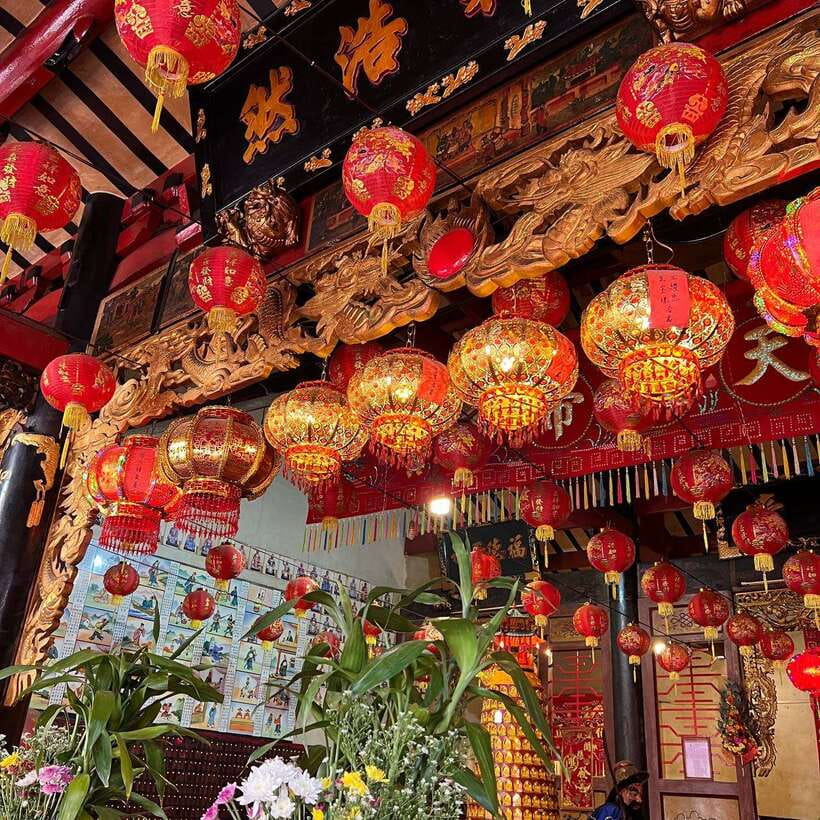
The route includes walks into three less usual places: an Hokkien temple, the National Library, and the Royal University of Fine Arts.
The Hokkien temple gives the tour a chance to look beyond the official colonial and royal story. Its inclusion points to the different communities that helped shape Phnom Penh. You are not only looking at the city as a seat of government. You are also seeing how cultural and religious life formed within it.
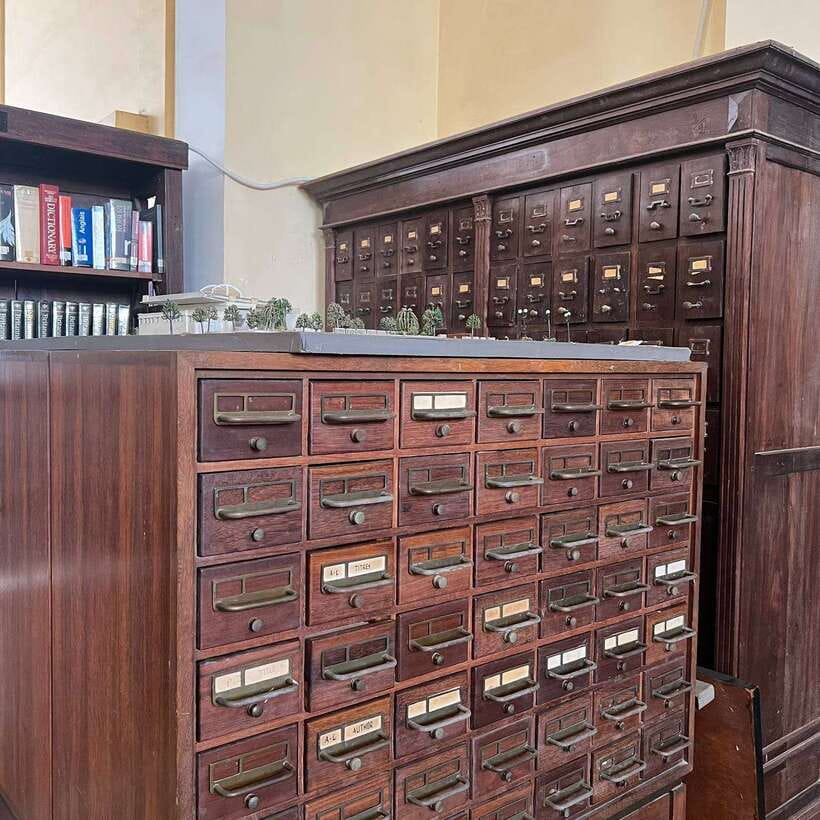
The National Library adds another perspective. Libraries say a great deal about how a city preserves and shares knowledge, and the tablet material can help you picture parts of the building that are not open to ordinary public access.
The Royal University of Fine Arts brings art and education into the story. Its presence helps explain how Cambodian culture is taught, maintained, and represented in a modern institution.
These visits are brief, so you should not expect a full museum-style tour of each interior. Their value is in the access and variety. They interrupt the bus route with places that many independent visitors might not think to seek out.
A clear look at Cambodia’s harder decades
A good city tour should not stop at elegant façades. This one includes the Khmer Rouge period, giving you a reminder that Phnom Penh’s 20th-century story was not a smooth march toward modernization.
The subject is handled as part of the wider history of the capital. That is useful for a first visit because it places the city’s buildings and institutions within Cambodia’s larger political story. The tour does not turn into a dedicated Khmer Rouge memorial visit, so you should choose a specialized site or museum separately if that is your main interest.
I appreciate the inclusion because it prevents the colonial material from becoming too polished or selective. Phnom Penh’s past includes royal ceremony, urban growth, cultural life, hardship, and political violence. A short tour cannot explain every part in detail, but it can show you why the city deserves a thoughtful look.
How the stops work in practice
The tour has 19 stops covering 22 sites, so you will see several related places within the same area or stop. Some are viewed from the bus, while others include a chance to get out and walk.
The guide explains the setting at each stop, and the tablet supplies extra visual material. At some points, the spoken commentary gives you more than the screen alone. That combination is particularly helpful when a building is visible from the street but its interior or earlier appearance is not.
You should treat the route as a guided orientation to Phnom Penh. Take note of the places that interest you most. The best use of the tour is often to return later, when you have more time to visit a particular temple, street, palace area, or cultural institution.
The ride also helps you understand distances. Phnom Penh can look compact on a map, but the relationship between the historic center, civic buildings, royal sites, and riverside is clearer when you move between them with a guide.
Ending near Street 240
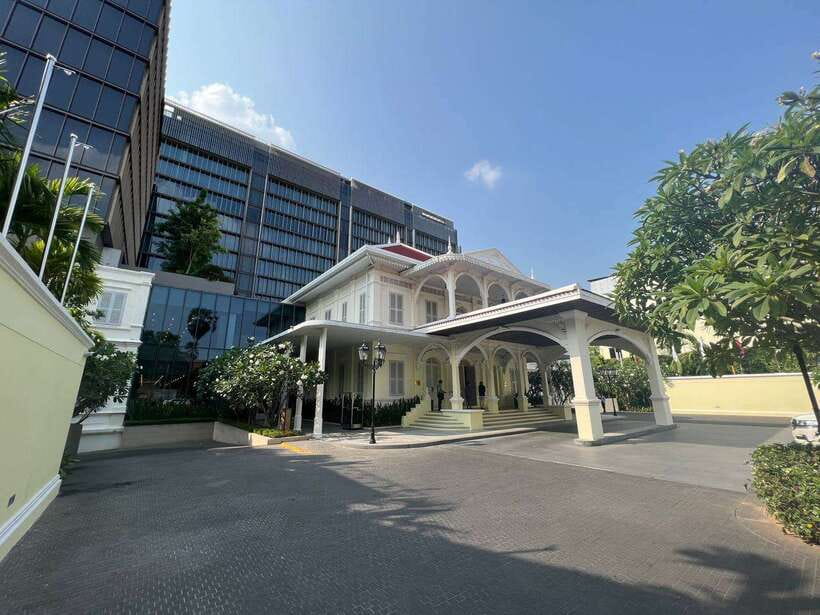
The tour ends on Street 240, close to the Royal Palace and the riverside. This is a smart finish because you are left in an area where you can continue on your own.
Street 240 is a practical place to extend the afternoon, and the Royal Palace area gives you an obvious next stop. The riverside offers another direction if you want to keep walking or simply sit down after the bus ride.
Because hotel pickup and drop-off are not included, you should plan your own way to and from the starting point. Private tuk-tuk transport is also not included. The final location helps offset that inconvenience, since you can continue exploring instead of being returned to a hotel before the day has really begun.
Food and drinks are not included either. A bottle of water is provided, but you should plan your own meal or café stop around the tour.
Is $27 a fair price?
At $27 per person, the value depends on how you use the experience. If you only want transport past famous buildings, it may feel expensive. If you want a structured introduction, multilingual commentary, historical visuals, short walks, and access to three unusual interiors, the price is reasonable.
You are paying for more than a bus seat. The tablets, headsets, water, live guidance, and audiovisual production all add to the experience. The ability to see films and old images of buildings that are closed to the public is particularly useful.
The tour can also save you time during your first day in Phnom Penh. Instead of trying to work out the city’s main historical zones alone, you get a guided overview and a list of places to revisit. That makes the cost easier to justify for a first-time visitor with limited time.
I would be less likely to recommend it to someone who already has a strong knowledge of Phnom Penh or wants long visits at individual monuments. The format is wide rather than deep.
Who will get the most from this tour?
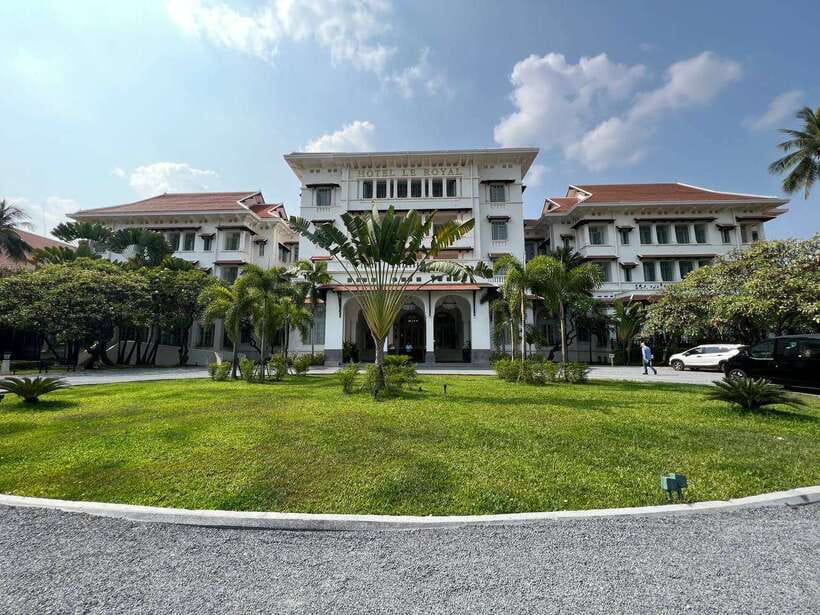
I would choose this tour early in a Phnom Penh visit. It is suited to you if you want context before visiting the Royal Palace, central historic buildings, and riverside area independently.
It also works well if you prefer a calm ride to a long walking tour. The electric bus offers a break from the heat, while the stops keep you from sitting for the full 2.5 hours.
The language selection is a real advantage. You can use one of 10 audio languages, including English, French, Chinese, German, Italian, Korean, Japanese, Spanish, Khmer, and Russian. Live instruction is available in English and French.
You may also find the format helpful if you enjoy visual learning. The tablet is not just a translation device. It uses film, old photographs, and anecdotes to make the past easier to picture.
I would choose another activity if your main goal is food, nightlife, shopping, or a dedicated visit to the Khmer Rouge sites. Those subjects are outside the main purpose of this tour.
My verdict on the Phnom Penh Heritage Tour
I recommend this as a first-day city orientation, especially if Phnom Penh is new to you. The strongest parts are the mix of electric bus travel and walking, the old images and films, and the chance to enter three places that are not simply standard tourist stops.
The tour does not give you enough time for a deep visit at all 22 sites. That is the tradeoff. You get range, comfort, and a clear historical frame instead of long time at one monument.
Book it if you want to understand how Phnom Penh developed, see more than the usual headline sights, and finish near the Royal Palace and riverside with ideas for the rest of your stay. Skip it if you prefer a slow, specialist tour with long indoor visits. At $27, it is a solid way to get your bearings fast without spending half a day in the heat.
FAQ
How long is the Phnom Penh Heritage Tour?
The tour lasts 2.5 hours.
How much does the tour cost?
The price is $27 per person.
How many places does the tour cover?
The route has 19 stops covering 22 major sites in Phnom Penh.
Which languages are available?
The audio guide is available in Cambodian, Chinese, English, French, German, Italian, Japanese, Korean, Russian, and Spanish.
Is a live guide included?
Yes. Live instruction is offered in English and French.
What equipment is provided?
You receive a tablet, headset, and bottle of water.
Which unusual places can you enter?
The tour includes walks into an Hokkien temple, the National Library, and the Royal University of Fine Arts.
Does the tour include hotel pickup and drop-off?
No. Hotel pickup and drop-off are not included, and private tuk-tuk transportation is also not included.
Where does the tour end?
The tour ends on Street 240, close to the Royal Palace and the riverside.
Just added around the world
- 3 Hour Whiskey and History Tour★ 5.0 · 152 reviews
- Downtown Denver History & Highlights – Small Group Walking Tour★ 5.0 · 285 reviews
- Denver – Capitol Hill Guided Walking Ghost / History Tour★ 4.5 · 75 reviews
- Private Nightlife Tour in Denver: Culture, History, and Cocktails★ 5.0 · 48 reviews
- Delphi: Archaeological Site & Museum Ticket with Audio★ 3.5 · 24 reviews
- Tip Based: Capitol Hill History & Ghost Tour★ 5.0 · 34 reviews
- 1-Hour Thunderball WWII Adventure Jet Skiing in Darwin★ 5.0 · 70 reviews
- Bombing of Darwin World War II Tour with Harbour Cruise★ 4.5 · 219 reviews