
Review · 1-HOUR EXPERIENCES
Lucerne: 1-Hour Historical Tour with Night Watchman
Lucerne’s night watchman tour turns the old town into a stage. You hear a fire horn and the watchman’s call, then follow a 1.5-kilometer route through squares, lanes, bridges, and guild houses while medieval characters and city scandals come to life. Rolf is one of the guides, and Ralph is also praised by name for his warm, lively presentation.
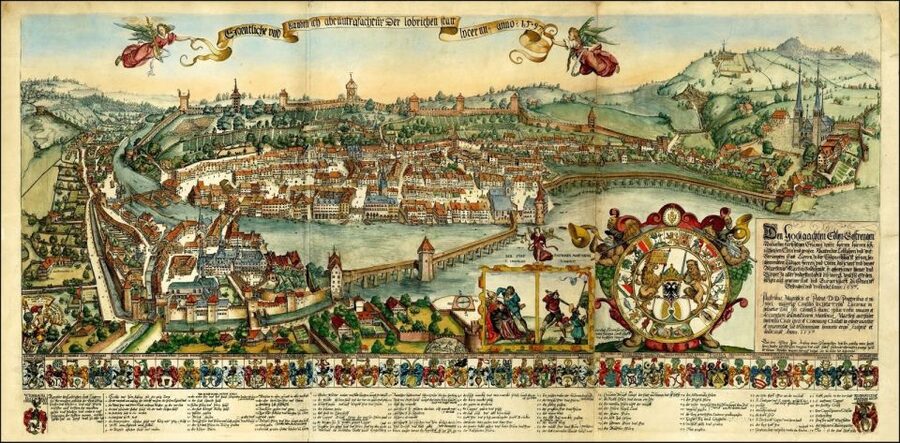
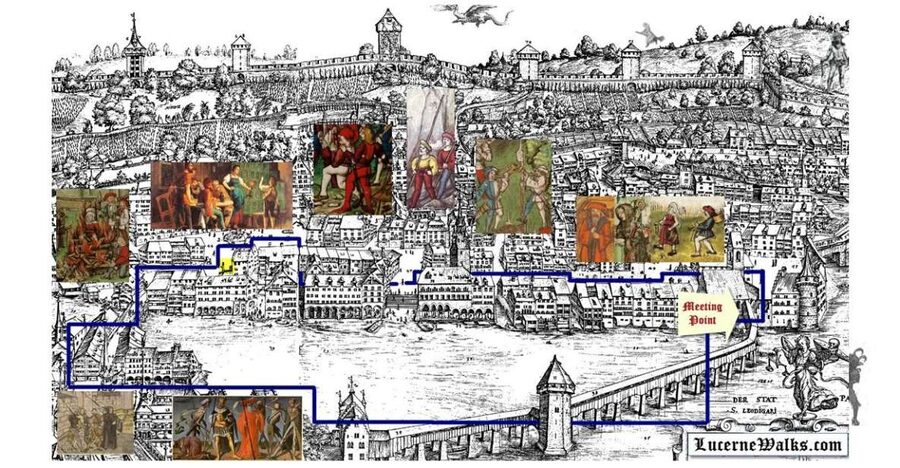
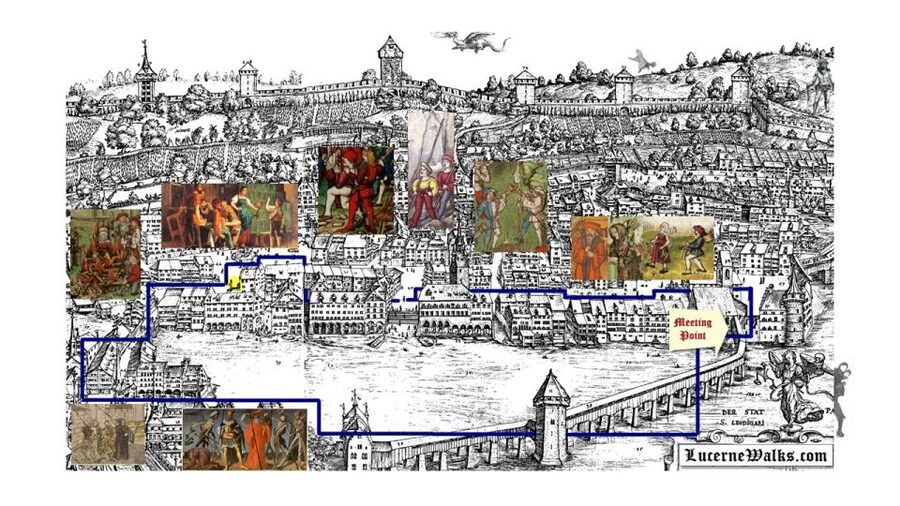
I like the way the tour uses old and new visual aids, including Martin Martini’s 1597 city map, to help you understand what Lucerne looked like long ago. I also like the range of topics: fires, mercenaries, courtrooms, murder legends, public punishment, and rival builders. The main drawback is pace. There is a lot to cover in about 1.5 hours, and several people wished the tour lasted longer.
Key points to know before you book
- A night watchman leads you from Chapel Bridge through the medieval old town, ending back at the bridge.
- The 1597 Martini city map gives you a useful picture of Lucerne before modern streets and buildings changed the view.
- Stories cover more than architecture, including fires, the Swiss art of war, mercenaries, crime, interrogation, and public punishment.
- The route is about 1.5 kilometers, mostly through the historic center, so comfortable shoes matter.
- Rolf and Ralph are named guides, both praised for humor, clear explanations, and an engaging manner.
- The tour runs in all weather, and it is suitable for foldable wheelchairs, but not electric wheelchairs or electric scooters.
Starting beside Chapel Bridge with a fire horn
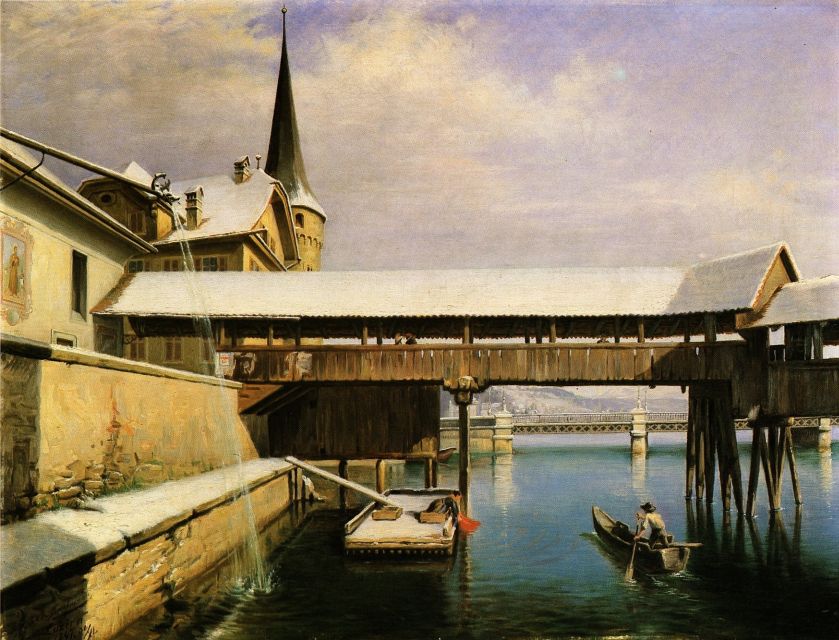
The tour begins on the right bank of the Reuss River, near Chapel Bridge. This is an excellent starting point because you are immediately in the heart of Lucerne, surrounded by the wooden bridge, painted facades, river views, and the old town’s tight street plan.
The opening fire horn and the night watchman’s call set the tone. This is not a dry walk from one plaque to another. The guide presents the city as a place that needed constant watching, quick action, and strict rules.
You first look at the route and nearby sights on Martin Martini’s city map from 1597. That small step makes a real difference. Instead of hearing isolated facts, you can compare the old city plan with the streets around you. I find this kind of visual aid especially useful in Lucerne, where the modern city can make the medieval layout hard to read at street level.
The tour is conducted in English. Guides such as Rolf use humor alongside the historical material, and that helps keep the amount of information manageable. You should still expect a serious history lesson, but the tone is lively rather than academic.
More Evening Trips in the world:
- Charleston Harbor History Day-Time or Sunset Boat Cruise
★ 4.5 · 2,788 reviews - Dubai Evening Heritage Safari by Vintage G Class Al Marmoom Oasis
★ 5.0 · 1,500 reviews - Charleston: Daytime or Sunset Historic Harbor Cruise
★ 4.5 · 1,352 reviews
Kapellplatz and the city’s old measurements
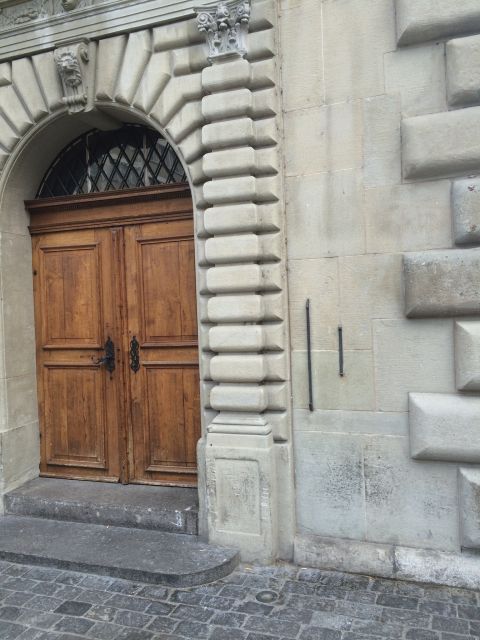
From Chapel Bridge, the route moves into Kapellplatz and along Furrengasse toward Kornmarkt. These are among the best places in Lucerne to notice how the old town was organized around short lanes, public squares, churches, guild buildings, and river crossings.
At the town hall, you see the Luzerner Elle and Luzerner Fuß set into the wall. These old local measurements are easy to miss if you are walking alone. They are also a useful reminder that trade and building once depended on standards that were visible in the town itself, not hidden in a regulation book.
The stop is brief, but it gives you a practical way to think about daily life. Medieval Lucerne was not only a collection of handsome buildings. It was a working town where goods were sold, cloth was measured, buildings were made, and disputes had to be settled.
The story of the giant of Reiden adds a more unusual turn. This kind of tale gives the tour a folk-story side, balancing the harder material about war and punishment. If you prefer only precise political history, the legend may feel less essential. If you enjoy the way old cities mix fact, belief, and local storytelling, it helps the evening feel personal.
Brandgässli and the night of fire
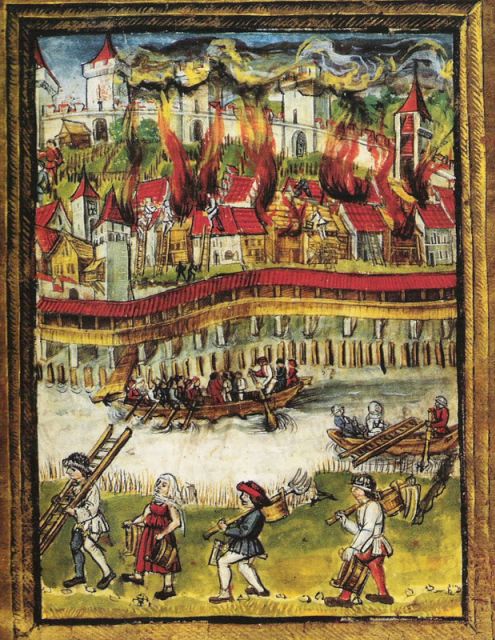
The walk continues through Brandgässli, a lane associated with Lucerne’s night of fire in 1833. Fire was a constant threat in old towns, and this stop connects a narrow street with the fear and confusion of an urban disaster.
The route does not treat Lucerne as a frozen medieval set. The 1833 fire falls outside the Middle Ages, but it fits the watchman’s role and the city’s long struggle with danger. You begin to see why night patrols, bells, horns, and strict local rules mattered.
The tour then pauses near the guild house of the dressmakers. Here, you hear the legend of the night of murder in Lucerne. The story adds tension, but the larger value is the look at how guilds shaped city life. Guild houses were tied to work, status, social order, and local power.
This part is a good example of the tour’s approach. You get a place, a story, and a piece of civic history at the same time. The guide moves quickly, so you will not receive a full study of Lucerne’s guild system. You will get enough context to understand why these buildings mattered.
Wine Market, mercenaries, and medieval justice
At the Wine Market, the night watchman turns to the Swiss art of war and the mercenaries. This is one of the stronger parts of the tour because it connects Lucerne to a subject that reaches well beyond its streets.
Swiss soldiers served abroad, and military service affected money, reputation, politics, and family life. The tour presents this history through stories rather than a long lecture. You hear about the skills and systems behind Swiss warfare, while still standing in the old town where civic and military life overlapped.
The nearby linden tree brings the focus back to local law. The pillory and bank once stood there, making the spot a useful setting for a talk about public punishment and court procedure. You hear about legal violations, court order, and interrogation techniques.
This material may be too grim for some children, which is one reason the tour is not suitable for anyone under 10. For adults and older children, it gives the old town more weight. The attractive facades and river views are only part of the story. Lucerne also had public shame, physical danger, and formal ways to question suspects.
The guide’s humor matters here. The subjects can become heavy, and a lively presenter can keep the tour from feeling like a list of punishments. Rolf is singled out for combining clear historical explanations with jokes, and Ralph is also praised for making the atmosphere friendly and open to questions.
More Quick One-Hour Tours in the world:
- 1 Hour Photo & History Cruise
★ 4.7 · 57 reviews - Wicklow Historic Gaol: 1-Hour Tour
★ 4.4 · 56 reviews - 1-Hour Segway Tour of Cheyenne Cañon Art, History and Nature
★ 5.0 · 36 reviews - Berlin: 1-Hour Guided Tour of the Historic Center
★ 4.2 · 33 reviews
Zöpfli and the quieter side of the Reuss
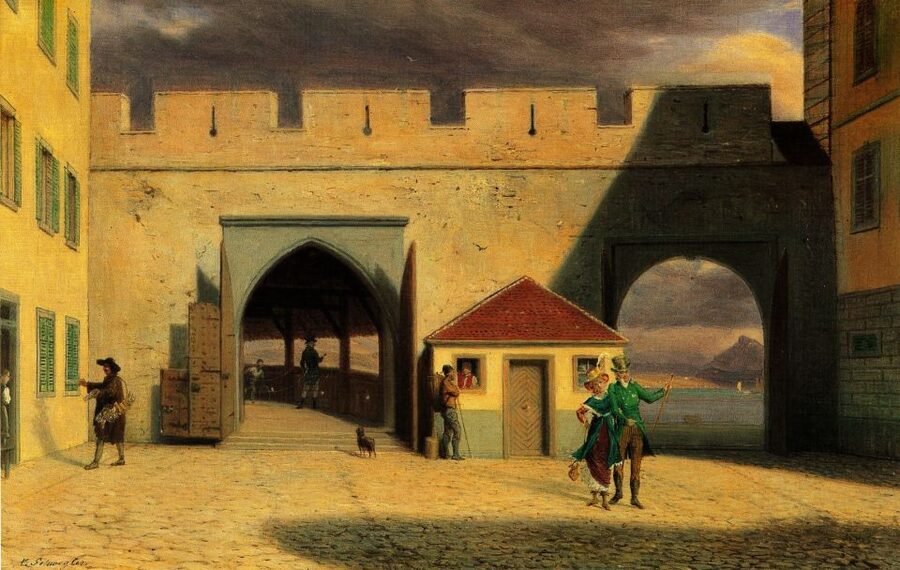
If timing permits, the group stops at Zöpfli, a particularly pleasant spot along the river in the old town. The phrase if timing permits matters. This is a compact tour with many stops, so the guide may need to keep the group moving.
Zöpfli offers a change of mood. After stories about murder, war, and interrogation, the river gives you a calmer place to take in Lucerne’s setting. You can look at the old town from the water’s edge and see why the Reuss was so important to movement, trade, defense, and the city’s shape.
This is also one of the tour’s practical strengths. You do not spend the full walk indoors or in one square. The route keeps shifting between lanes, open spaces, bridges, and river viewpoints. The distance is modest, but the changing surroundings help the 1.5 hours pass quickly.
Across Reuss Bridge to the old pharmacy
The tour crosses Reuss Bridge and passes the first Mint. This section adds another layer to the story of Lucerne as a civic center. Money, trade, government, and control all appear in the same walk.
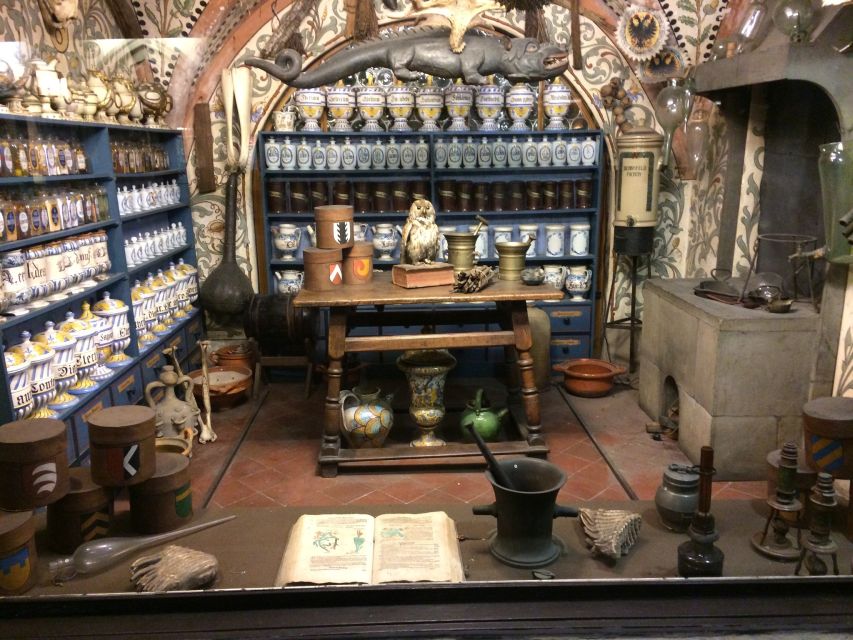
A highlight here is the display window of the medieval Alte Suidtersche Apotheke. You do not simply hear that an old pharmacy exists. You stop at its striking window and get a glimpse of how medicine and commerce were presented in the city.
The pharmacy is a good place to slow down for a moment because small details can disappear when a group is walking. Keep your eyes open and listen for the guide’s explanation of what you are seeing. The tour’s visual aids are useful, but the actual buildings and displays do much of the work.
This stop also shows why a guided walk can be more useful than an independent stroll. You can cross the bridge and pass an old pharmacy on your own, but you may not know which window, wall, or building deserves your attention.
Ritter Palace and two rivals in stone
The route continues to Ritter Palace, where the guide tells the story of the stonemason Hans von Trient and his adversary, Luzius Ritter. The supplied material also spells the second name as Lux Ritter, so you may hear either form during the tour.
This episode gives the walk a human center. Instead of hearing only about rulers and institutions, you encounter skilled workers, competition, status, and conflict. A building becomes the setting for personalities with ambitions and enemies.
The story is followed by a look at the Dance of Death by Jakob von Wal. That work brings the subject of mortality into the walk. It is a fitting late stop for a night watchman tour because it joins art with a medieval reminder that social rank offered no escape from death.
The art component is another reason to choose this tour if you like buildings and visual details. You will not get a full museum-style analysis of the work, but you will receive enough explanation to understand why it belongs in the route.
Returning over Chapel Bridge
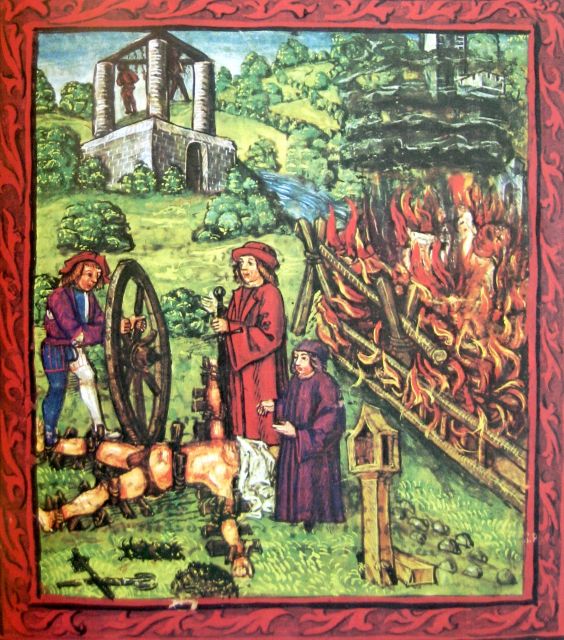
The final stretch follows the river and crosses Chapel Bridge back to the starting point. Walking over the bridge near the end gives the tour a satisfying shape. You began beside it, moved through the old town, and return with a better sense of how the river, bridge, squares, and lanes fit together.
Chapel Bridge is famous, but the tour helps keep it from becoming a quick photo stop. You have already heard about fire, defense, public order, and the movement of people through the city. The bridge now feels connected to Lucerne’s working past.
The walk is not physically demanding in distance, but the old town may include uneven paving and the route moves at a steady pace. Wear shoes you can walk in comfortably. Bring an umbrella or waterproof jacket because the tour runs in all weather.
The full route is accessible with a foldable wheelchair. It is not accessible with an electric wheelchair or electric scooter, and the stair lift on Chapel Bridge cannot accommodate those larger electric devices. If mobility is a concern, contact the operator before booking and confirm the meeting point for your chosen option.
What the $39 price gets you
At $39 per person, this is a fair price for a guided city walk of about 1.5 hours, particularly if you want more than a quick introduction to Lucerne’s famous sights. You are paying for a live guide, a planned route, visual material, and access to stories that are difficult to assemble on your own during a short stay.
The value is strongest for first-time visitors who want to understand the old town while seeing it. The route covers many places, and the guide gives each one a reason to matter. You also avoid spending your limited evening guessing which lane or building deserves attention.
The price is less compelling if you want a slow, specialist tour focused on one subject. The walk covers warfare, guilds, fire, law, art, medicine, architecture, and local legends. That range is entertaining, but no single topic receives a long treatment.
Several people wanted the tour to last longer. I understand why. The guide has enough material for a much longer walk, yet the compact format works well as an evening activity before dinner or after a day trip. Think of it as a lively orientation with memorable stories, not a full course in Lucerne’s past.
Free cancellation up to 24 hours before the start and a reserve-now, pay-later option make the booking less rigid. The meeting point can vary by the option you select, so check the final details rather than assuming every departure begins in exactly the same place.
Who will enjoy this Lucerne walk
I would choose this tour for you if you like architecture, old streets, local legends, and history presented through people and places. It works especially well if you want a guide who can answer questions and keep the pace light.
It is also a good fit for visitors with only a short time in Lucerne. The route gives you Chapel Bridge, Kapellplatz, Kornmarkt, Brandgässli, Wine Market, Zöpfli, Reuss Bridge, the old pharmacy, Ritter Palace, and the river in one outing.
Families should note the minimum age of 10. The stories of murder, punishment, and interrogation may also suit older children better than younger ones.
You should think twice if you dislike group walking, old-town paving, or a presentation that moves quickly between subjects. You may also prefer a longer specialist tour if your main interest is military history, art, architecture, or medieval law.
Should you book the night watchman tour?
Book it if you want Lucerne’s old town to feel like a place where real people worked, argued, worshipped, fought, were punished, and tried to keep fires from destroying the city. The night watchman format adds atmosphere, but the real strength is the guide’s ability to connect specific places with clear stories.
The best reason to go is the combination of strong visual aids and an unusually broad route. Rolf and Ralph are both associated with a warm, humorous style, and the tour gives you plenty of memorable names and details to carry into the rest of your stay.
Skip it if you want a long, slow examination of a single subject or if you need an electric mobility device. For most adults and children aged 10 and older, $39 is a sensible price for a compact, story-filled introduction to Lucerne.
FAQ
How long does the night watchman tour last?
The activity is described as a 1-hour historical tour, while the stated duration is 1.5 hours. Allow about 1.5 hours for the complete experience.
Where does the tour begin?
It begins on the right bank of the Reuss River by Chapel Bridge. The exact meeting point can vary depending on the option booked, so check your booking details.
What language is the tour conducted in?
The live guided tour is conducted in English.
How far do you walk?
The route covers approximately 1.5 kilometers through Lucerne’s old town.
Is the tour wheelchair accessible?
The full route is accessible with a foldable wheelchair. It is not accessible with an electric wheelchair or electric scooter, and the stair lift on Chapel Bridge is not suitable for those devices.
Can children join the tour?
Children under 10 are not suitable for this activity. Children aged 10 and older can join, subject to the booking option and group arrangements.
Just added around the world
- Scenic Train ride to historical cities of Morretes and Antonina★ 4.0 · 188 reviews
- 6-Day Cultural Tour to Machu Picchu★ 5.0 · 76 reviews
- Jewish Heritage of Curacao★ 4.5 · 68 reviews
- The Curacao’s Colorful History Walking Tour★ 5.0 · 55 reviews
- Discover Scuba Diving Amathounta’s Ancient Port★ 5.0 · 30 reviews
- Olous – Guided Snorkelling Excursion to Discover Olous Sunken Ancient City★ 4.5 · 31 reviews
- Night Walking Tour of Medieval Cuenca★ 5.0 · 64 reviews
- WWII – The Battle of Crete Day Tour★ 5.0 · 103 reviews
1-Hour Experiences, compared.


1-Hour Segway Tour of Cheyenne Cañon Art, History and Nature
Read our review →
Berlin: 1-Hour Guided Tour of the Historic Center
Read our review →
Private Tour:Historical Old Town 1-Hour Tour by Tuk Tuk
Read our review →
1-hour Sightseeing Boat Cruise Through Historic City Center
Read our review →Browse the lists this tour appears in