
Review · NEW YORK CITY
New York: Mafia and Gangster History Tour in Little Italy
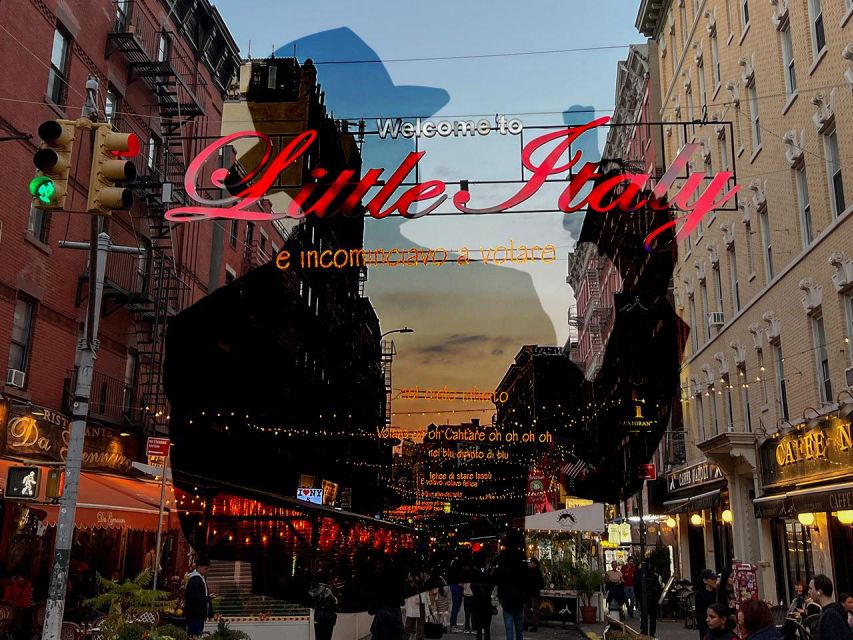
Little Italy still carries the marks of New York’s underworld, and this two-hour walk connects real streets with the people who made them notorious. You’ll hear how Black Hand gangs, Prohibition battles, and Lucky Luciano’s Five Families changed organized crime.
I like the small group of no more than 10 and the guide’s use of old photos and newspaper clippings. I also like the balance between criminals and the people who fought them, including Lieutenant Petrosino and Frank Serpico. The main drawback is that this is an outdoor walking tour, so cold, rain, and uneven city sidewalks can affect the experience.
Key points to know before you book
- See the Ravenite Social Club: Learn how John Gotti used this Little Italy institution as his public headquarters.
- Trace a criminal revolution: Follow the shift from Black Hand extortion to the Five Families and the Commission.
- Visit a real murder site: Umbertos Clam House is linked to the 1972 shooting of Crazy Joey Gallo.
- Meet the crime fighters: The route includes Lieutenant Petrosino Square and the Police Building.
- Expect a compact walking route: The tour covers about one mile in two hours, with several guided stops.
- Bring serious walking shoes: The experience is not suitable for people with mobility impairments.
Little Italy’s underworld story in one mile
This is not a tour built around movie trivia alone. Films such as The Godfather and The Sopranos may come up, but the main subject is the real criminal network that grew around New York’s immigrant neighborhoods, waterfront trade, gambling, protection rackets, and liquor smuggling.
You begin on the corner of Spring and Mulberry Streets, beside DaSalvio Playground at 44 Spring Street. Look for the guide in a white cap, and arrive at least 10 minutes early. The group leaves promptly, and you cannot join after the start.
The route covers only about one mile, but the two-hour schedule gives the guide time to stop, explain, and show historic images. That is important here. Many locations have changed, and a present-day storefront alone may not tell you why a particular address matters.
Guides have included Tom, also referred to as Thomas, as well as Paulie and Tim. Tom receives especially strong praise for his preparation, enthusiasm, and thick binder of photographs. That visual material helps you compare the modern street with the same corner decades ago.
More History Tours in the USA:
- History and Hauntings of Salem Guided Walking Tour
★ 5.0 · 14,564 reviews - Charleston’s Old South Carriage Historic Horse & Carriage Tour
★ 5.0 · 10,023 reviews - Beneath The Streets Underground History Tour
★ 4.5 · 8,006 reviews
Black Hand gangs and the first wave of organized crime
The tour begins with the early Black Hand gangs. These groups used threats, extortion, and violence against fellow immigrants, often sending letters demanding money. The name referred to the black hand symbol used in those threats.
This opening gives you useful context. The New York underworld did not arrive fully formed as a neat collection of crime families. It developed through loose local groups, rival neighborhoods, and men competing for control of gambling, labor rackets, protection payments, and illegal trade.
You will hear how these gangs evolved into more organized syndicates. The shift matters because it explains why figures such as Joe Masseria and Lucky Luciano were not simply individual gangsters with personal followings. They were part of a larger change in how crime was managed.
I appreciate that the story begins before the familiar Mafia names. If you already know the major figures from books and films, this section fills in the earlier stage. If the subject is new to you, it prevents the tour from becoming a parade of names with no clear connection.
The pace also helps. Rather than stopping every few steps, the guide uses the Little Italy walk to connect one period to the next. You get a sense of how street gangs, prohibition-era bootlegging, and organized crime grew together.
Joe Masseria, Prohibition, and the fight for control
The next part follows the battles over liquor during Prohibition. This was the period when illegal alcohol created enormous profits and sharpened the rivalry among New York crime groups.
Joe Masseria, known as Joe the Boss, appears as an important figure in this struggle. The tour explains his role in the fight for control and sets up the conflict that eventually allowed Lucky Luciano to reshape the underworld.
This is where the walking format works well. Little Italy is not presented as a museum exhibit with objects behind glass. You are standing on active city streets while the guide points out places tied to rivalries, power shifts, and violent decisions.
You should expect some grim material. Shootings, extortion, and organized violence are central to the subject, and the tour does not soften that part of the story. Still, the tone is described as entertaining and approachable rather than sensational for its own sake.
A useful feature is the attention given to police efforts. The tour is not simply a celebration of mob bosses, flashy cars, and movie-style glamour. It also asks how law enforcement responded and why some investigations succeeded while others failed.
Lucky Luciano and the Five Families
Lucky Luciano is the tour’s key turning point. The guide explains how he helped move organized crime away from constant internal warfare and toward a more structured system involving the Commission and the Five Families.
You will hear about the way Luciano changed the operating model. Instead of allowing one boss to dominate every major decision, the Commission offered a method for sharing power and settling disputes among leading families.
That does not make the system peaceful. It made organized crime more coordinated, and the tour makes clear that organization could be as dangerous as open conflict. Luciano’s importance comes from this change in structure, not just from his personal reputation.
The tour also covers Luciano’s unusual arrangement with the government during World War Two. This part adds a political and military angle to the story, showing that the relationship between authorities and criminals was not always a simple battle between two fixed sides.
For me, this is one of the strongest sections for anyone who wants more than mobster anecdotes. You come away understanding why Luciano is treated as a major architect of modern organized crime.
Same city, a different century:
- Big Island in a Day: Volcanoes Waterfalls Sightseeing and History
★ 5.0 · 6,569 reviews - Boston: Freedom Trail History Small Group Walking Tour
★ 5.0 · 6,450 reviews - Historic Charleston Guided Sightseeing Walking Tour
★ 5.0 · 6,216 reviews - Charleston Horse-Drawn Carriage Tour: Explore Historic Charleston
★ 5.0 · 3,561 reviews
The Ravenite Social Club and John Gotti
The walk then reaches the Ravenite Social Club, one of the best-known stops on the route. The club became closely associated with John Gotti, the Gambino crime family boss often called the Dapper Don.
The guide spends about 15 minutes here, using the location to explain Gotti’s public image, influence, and eventual fall. The Ravenite was not just a backdrop. It became a place where Gotti held court and where journalists and federal investigators watched the activity around him.
This stop is especially useful if your interest began with the later Mafia era. Gotti’s tailored suits and confident public manner helped turn him into a media figure, but the tour places that image beside the harder facts of power, prosecution, and decline.
You will likely spend time outside rather than entering a functioning criminal headquarters. That is worth understanding before you book. The value comes from the guide’s story and visual material, not from access to a preserved interior.
The small group helps here. With no more than 10 people, it should be easier to hear the explanation on a busy sidewalk and to see the photos as the guide passes them around.
Lieutenant Petrosino Square and the Police Building
The route shifts from mob figures to investigators at Lieutenant Petrosino Square. Lieutenant Giuseppe Petrosino was an early crime fighter who worked against the organized groups operating in New York.
His story gives the tour a needed change in viewpoint. You are not only following the people who built criminal empires. You are also learning about the officials who tried to understand those networks, gather evidence, and stop violence.
The tour then continues to the Police Building for another guided stop. This section explores the institutional side of the story and includes Frank Serpico, who risked his life to expose police corruption.
Serpico’s inclusion broadens the subject beyond Mafia mythology. Organized crime cannot be understood only through gangsters. Police corruption, political pressure, investigative limits, and public trust all shaped what happened on these streets.
This is one reason the experience suits people who are not already devoted to mob films. The subject becomes a story about New York law enforcement and public life, not only a catalog of notorious criminals.
Umbertos Clam House and the death of Crazy Joey Gallo
The final major stop is Umbertos Clam House, connected with the 1972 shooting of mobster Crazy Joey Gallo. The restaurant is linked to one of the tour’s most dramatic stories, and the guide explains what happened at the site.
You should expect the location to function as a present-day restaurant rather than a preserved crime scene. The power of the stop comes from the contrast between an ordinary dining address and its place in mob history.
The route also covers the death of Sally Bugs Briguglio. Together, these stops show how quickly public legend can grow around a violent event, especially when the setting is a familiar neighborhood restaurant or social club.
The ending has a clear shape. You begin with early extortion gangs, move through Prohibition and Luciano’s reorganization, follow Gotti’s public era, and finish with crime scenes tied to later mob violence. The walk returns to 44 Spring Street after about two hours.
Film connections without losing the real story
The guide may also point out locations connected with The Godfather and one location from The Sopranos. These references are a useful extra, especially if you enjoy seeing how filmmakers use New York streets.
Still, I would not book this as a film-location tour. The movie references are optional additions to a much larger historical story. The focus remains on actual figures, actual police work, and the evolution of organized crime.
That balance is a strength. Film fans get familiar touchpoints, while people interested in social history, policing, or New York neighborhoods get more substance than a simple screen-tour route.
What the guide adds to the experience
The guide matters a great deal on a tour like this. A street corner cannot explain itself, and the difference between a forgettable walk and a useful one comes from how clearly the story is organized.
Tom is repeatedly praised for arriving prepared with photographs and newspaper articles. Those materials let you see buildings as they once appeared and put faces to names that might otherwise blur together.
His style is described as friendly, funny, passionate, and easy to follow. One practical note is that one person felt the guide could speak more slowly. If you have hearing difficulties or prefer a slower pace, stay close to the guide and mention it at the start.
The guide has also shown flexibility in weather-related situations. One booking became a private tour after another group did not arrive, and another was rescheduled because of weather. You should not count on having a private experience, but a group of 10 is already small by city walking-tour standards.
Price, weather, and walking conditions
At $40 per person, this is fair value if you want a focused history tour rather than a general Little Italy stroll. You get two hours with a live English-speaking guide, several specific locations, historic images, police history, and a route that covers a lot without requiring a long walk.
The value depends on your interest in guided context. If you only want to photograph Mulberry Street and eat in Little Italy, you can explore the area on your own. You will not get the same explanation of the Black Hand, the Five Families, the Ravenite, or the individual crime scenes without doing extra research.
Wear comfortable shoes. The distance is modest, but you will be on your feet for the full experience, with stops on city sidewalks. The tour is not suitable for people with mobility impairments.
Weather deserves attention. The walk may be cancelled because of bad weather or too few bookings, with a full refund in that case. You can also cancel up to 24 hours before the start for a full refund, and the reserve-now, pay-later option gives you some flexibility when your New York plans are still changing.
Pets are not allowed, although assistance dogs are permitted.
Who will enjoy this Little Italy walk
I would recommend this tour to you if you like:
- New York social and criminal history
- The real stories behind Mafia films
- Small groups and live storytelling
- Police investigations and corruption cases
- Walking tours that connect several periods instead of covering one person only
You do not need to be a Mafia expert. The route starts with early gangs and explains how the different groups and eras connect. That makes it suitable for first-time visitors to the subject as well as people who already know the main mob films.
It may not suit you if you dislike stories involving murder, extortion, or violence. It is also a poor choice if you want a mostly seated activity, indoor access, or a tour devoted mainly to restaurants and architecture.
Should you book it?
Book it if you want a compact, well-organized look at Little Italy’s criminal past, especially if historic photos and strong personal storytelling matter to you. The best reasons to go are the small group, the carefully linked route, the Ravenite Social Club, and the balance between gangsters and crime fighters.
Skip it if your main goal is food, shopping, or a movie-only experience. For $40, though, this is a solid use of two hours in Lower Manhattan, provided you arrive early, wear good shoes, and choose a day when you are comfortable being outdoors.
FAQ
How long is the Mafia and Gangster History Tour?
The tour lasts two hours and covers about one mile, or 1.5 kilometers.
Where does the tour meet?
Meet on the sidewalk at the corner of Spring and Mulberry Streets, next to DaSalvio Playground at 44 Spring Street.
How early should I arrive?
Arrive 10 minutes before the scheduled start. The tour begins promptly, and you cannot join after it has started.
What language is the tour in?
The live guided tour is in English.
How large is the group?
The group is limited to 10 participants.
What locations are included?
The route includes Little Italy, the Ravenite Social Club, Lieutenant Petrosino Square, the Police Building, and Umbertos Clam House before returning to 44 Spring Street.
Is the tour suitable for people with mobility impairments?
No. The tour is not suitable for people with mobility impairments, and comfortable shoes are recommended.
Just added around the USA
- Red Rocks Amphitheatre Historical Walking Tour★ 5.0 · 74 reviews
- 1-Hour Segway Tour of Cheyenne Cañon Art, History and Nature★ 5.0 · 36 reviews
- Colorado Springs – Guided Walking Ghost / History Tour★ 5.0 · 168 reviews
- Ancient Landscapes Private Geology Hike at Garden of the Gods★ 5.0 · 31 reviews
- Village Food Tours Lunch & History Tour★ 5.0 · 80 reviews
- 2.5 Hour Kayaking with Manatee and History Tour in Tarpon Springs★ 5.0 · 24 reviews
- Safety Harbor Ghost Tour★ 5.0 · 60 reviews
- Historical Bicycle Tour of Dunedin★ 5.0 · 44 reviews
New York City History Tours, compared.
NYC: Speakeasy Drinks and Prohibition History Tour
Read our review →
The Original Greenwich Village Food & Cultural Tour Since 1999
Read our review →
The Speakeasy Adventure: A Tipsy Trip Through History
Read our review →
Speakeasy Drinks and Prohibition History Tour NYC
Read our review →
NYC: Night Out Prohibition History Bar and Speakeasy Tour
Read our review →
NYC: History of Slavery & Underground Railroad Walking Tour
Read our review →
Soul of Harlem: Strivers Row, Apollo Theatre, Gospel History
Read our review →
New York City: Flatiron Food, History, and Architecture Tour
Read our review →Browse the lists this tour appears in