Review · NEW DELHI
Old Delhi Food, Heritage&Cultural Walk with Rickshaw ride to Masterji Kee Haveli
Old Delhi reveals itself best at street level, where a spice market, a family-run shop, a crowded lane, and a private old mansion can all appear within the same short walk. This four-hour experience brings those pieces together with local guides such as Varun and Vivian, food stops, a rickshaw ride, and a home-cooked meal at Masterji Kee Haveli. I like the small group limit of eight, and I like that the meal takes you inside a family home rather than keeping you only on the street.
The main consideration is the setting itself. Old Delhi can be noisy, crowded, hot, and confusing to reach, and the start and finish times may shift with traffic, weather, group pace, or road conditions. You will get more from this tour if you dress modestly, wear practical shoes, and arrive ready for a close-up look at city life rather than a polished sightseeing circuit.
What makes this Old Delhi walk worth your time
- A family home at Masterji Kee Haveli: Visit an old private mansion where one family has lived for generations, then sit down for a traditional home-cooked meal.
- Food with context: Sample street food described as safe by the operator, then connect those flavors with local customs and daily life.
- A small group of up to eight: The format gives your guide room to answer questions and manage the narrow lanes.
- Khari Baoli spice market: Spend time in Asia’s largest wholesale spice market, operating since the 17th century.
- A practical rickshaw break: Use a cycle or electric rickshaw when your feet need a rest.
- Stories from Old Delhi residents: Guides including Varun, Vivian, Dhruv, Vuron, and Deet have been praised for their personal approach and storytelling.
Start in the lanes around Chawri Bazar
The meeting point is on Ajmere Gate Road in Bazar Sirkiwalan, near Chawri Bazar. This is not a quiet hotel lobby or a simple monument entrance. You are meeting in the working heart of Old Delhi, where the first challenge is getting your bearings.
The operator strongly suggests taking Delhi Metro’s Yellow Line to the nearest practical station or using an Uber radio taxi. If you arrive by car, come from the Ajmeri Gate side and have your driver contact the tour leader before leaving your hotel. That advice matters. Old Delhi has many similar-looking lanes, and a driver who approaches from the wrong side may struggle to reach the meeting point.
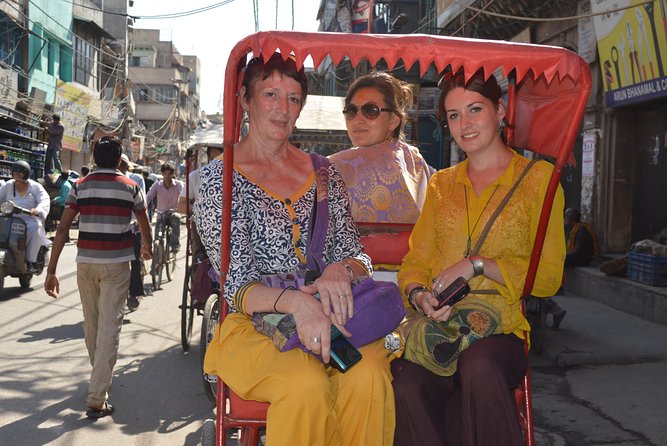
Once together, your guide leads you through local bazaars and side streets. The value here is not only seeing old buildings. You get a look at the businesses that keep the district moving, including shops run by families who have worked in the area for generations. The guide’s job is part navigator, part storyteller, and part photographer. Varun and Vivian are among the guides specifically praised for making the day feel personal and well managed.
The route is designed around conversation and observation. You may stop to speak with business owners, examine goods, learn about local religious communities, and hear how people live behind the public face of the market. The experience includes Hindu, Muslim, and Sikh cultural context, which gives the walk more balance than a route focused only on food or architecture.
More History Walking Tours in India
- Fontainhas Heritage Walk by Make It Happen
★ 5.0 · 2,834 reviews - The Great Indian Food Tour: Old Delhi Food and Heritage Walk
★ 5.0 · 1,698 reviews - Old Goa Heritage Walk by Make It Happen
★ 5.0 · 797 reviews
Street food with a local guide beside you
Food is one of the strongest reasons to choose this experience. Depending on the time of day, you receive breakfast, lunch, or an early dinner, along with street-food tastings, bottled water, tea or coffee, and fresh lemonade in summer.
The operator presents the street food as safe, but you should still tell the guide about allergies, dietary limits, or foods you avoid before tasting anything. The supplied information does not promise a vegetarian, vegan, gluten-free, or allergy-specific menu, so ask directly when booking or at the start.
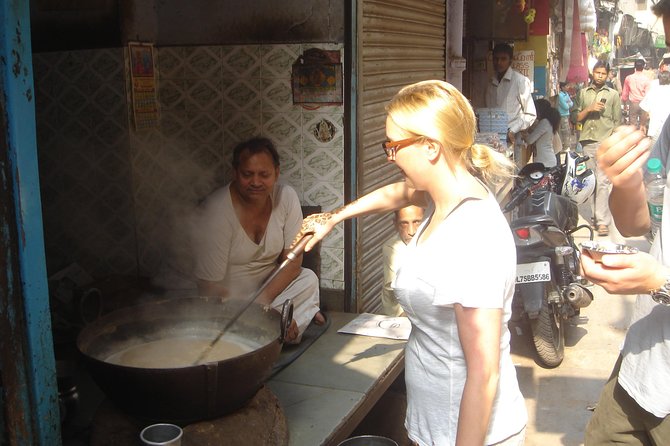
The food stops are useful because they are not presented as isolated samples. Your guide can explain what you are eating, how it fits into local routines, and why particular market streets matter. One particularly appealing part is the move from public food stalls to a private home meal. You get both sides of Old Delhi dining: food prepared for the street and food served in a family setting.
The meal at Masterji Kee Haveli is included rather than treated as an optional extra. For the morning tour, the package includes a larger lunch. For the afternoon tour, it includes an early gala dinner. The exact dishes are not listed, so do not book this expecting a fixed menu or a restaurant-style tasting card. Think of it as a traditional meal served in a lived-in place.
Entering Masterji Kee Haveli
Masterji Kee Haveli is an old private mansion in the city, occupied by one family for generations. That detail gives the visit its character. You are not simply looking at a restored façade or walking through a public museum. You are being introduced to domestic life behind the market streets.
You should expect to remove your shoes in some parts of an Indian home. The operator advises checking with your host, since the rule may apply only to certain rooms or areas. Wear clean socks if that makes you more comfortable, and avoid footwear that is difficult to remove.
The meal is also a social moment. The strongest praise for this tour centers on the warmth of the home-cooked food and the gracious setting. That does not mean the haveli is a formal dining room. Its appeal is the opposite: you are seeing a private mansion as a home, not as a staged attraction.
This portion may be especially meaningful if you want to understand how Old Delhi works beyond its storefronts. The walk shows public life. The haveli offers a glimpse of private life. Together, they give the tour a clearer sense of place than a food crawl alone.
Khari Baoli, where the air changes
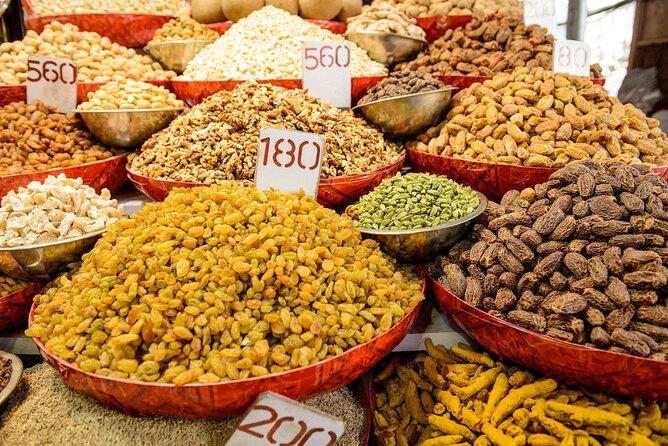
The visit to Khari Baoli lasts about 30 minutes. The market sits at the western end of Old Delhi and has operated since the 17th century. It sells spices, nuts, herbs, rice, tea, and other food products on a wholesale scale.
This is a place for your senses. You will likely notice the aromas before you fully understand the layout. The market is practical and commercial, not arranged for sightseeing, so your guide’s help is important. They can point out what is being sold, explain the role of the market, and help you move through the area without wasting time.
The short duration is sensible. Khari Baoli can be intense, especially if you are not used to crowded commercial streets. Thirty minutes gives you a strong taste without making the entire tour about one market. If you want time for careful shopping, ask your guide how much is realistic. The experience includes opportunities to shop for Indian souvenirs, but shopping is not the central purpose.
More Local Culture and Traditions Tours in India
- The Cultural And Historical Walking Tour in Margao
★ 5.0 · 280 reviews - Experience Bangalore – City Tour, Authentic Food & market (Food/Culture/History)
★ 5.0 · 156 reviews - Old Delhi Walking Tour: Food, Culture & Spice Bazaars
★ 5.0 · 94 reviews - See Bangalore through my eyes (Cultural / Historical / Walking Tour)
★ 5.0 · 60 reviews
A rickshaw ride that gives your feet a break
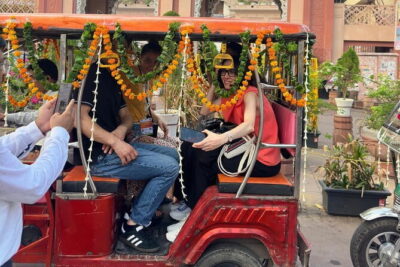
The cycle or electric rickshaw ride is more than a novelty. Old Delhi’s lanes cover a lot of ground, and four hours of walking can become tiring in heat or traffic. The ride gives you a change of pace and lets you watch the streets from a lower, slower vantage point.
The route may also be affected by congestion, road conditions, or mechanical problems. The operator warns that timing can change for these reasons, along with weather, group size, age range, and individual energy levels. Build a little flexibility into your day, especially if you have a train, flight, or reservation soon afterward.
The experience has been described as including both rickshaw and tuk-tuk travel in some accounts, but the listed inclusion is cycle or electric rickshaw. I would treat the rickshaw ride as guaranteed in principle, while not expecting a specific vehicle type every time.
How the small group changes the experience
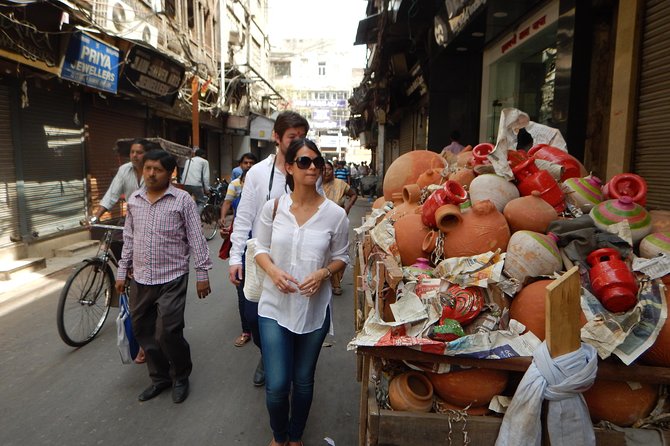
The maximum group size is eight people. That is a useful limit in Old Delhi, where a large group can block a lane, lose sight of its guide, or turn a family visit into a crowded queue.
A small group also makes it easier to ask direct questions. You can pause to clarify a religious custom, ask about a spice, or request help with a food choice without shouting across a crowd. Guides are also described as local friends, storytellers, and photographers, so the tone is intended to be personal rather than lecture-like.
The names attached to this experience include Varun, Vivian, Dhruv, Vuron, and Deet. Your actual guide may be someone else, but the important point is that the tour is led by people presented as Old Delhi locals. Their connection to the area is central to the format.
The no-tipping policy is unusual and worth noting. The operator specifically asks you not to offer tips. That removes one small uncertainty at the end of the day, though you should still follow the provider’s stated policy rather than treating gratuity as expected.
Timing, clothing, and getting ready
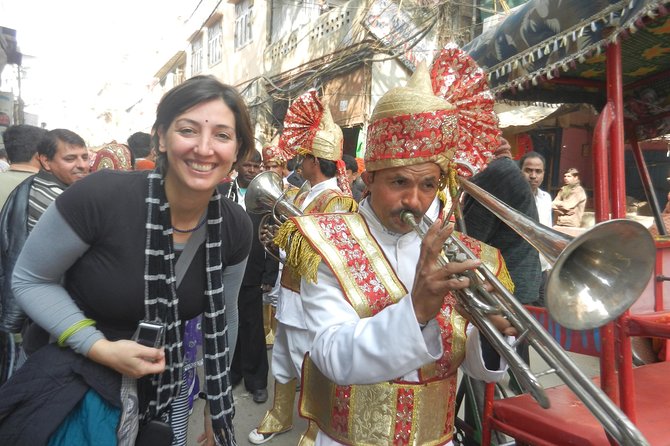
You can take the experience in the morning or afternoon. The morning option includes breakfast and a larger lunch. The afternoon option includes street-food tasting and an early gala dinner. Choose based on your wider schedule and appetite, not just the sightseeing route, since both versions cover the same general mix of food, heritage, market streets, and local life.
Wear modest clothing. Women are asked to cover their shoulders and legs to at least the knee, and carrying a scarf is recommended. A cap is useful for sun protection. Comfortable footwear matters, but remember that you may need to remove it inside parts of the haveli.
Most people can participate, and the tour is near public transportation. Still, the route involves walking through crowded streets and lanes. If your energy is limited, tell the guide early so the pace can be managed when possible. The rickshaw portion helps, but it does not turn the entire outing into a seated tour.
Keep your belongings close. The provider accepts no responsibility for lost or stolen personal items, and busy markets are not the place for a loose phone or an open wallet. The operator also warns about fake government tourist offices and false claims that an area is closed. If someone approaches you with a story that the tour has been canceled or Old Delhi is shut because of a demonstration, contact your tour leader rather than changing plans.
Is $52.73 a fair price?
At $52.73 per person, this is not the cheapest way to wander Old Delhi, but the price covers a lot in four hours. You receive a guide, multiple food tastings, breakfast or lunch or dinner depending on timing, bottled water, tea or coffee, seasonal lemonade, a rickshaw ride, and entry to Masterji Kee Haveli.
The value is strongest if you would otherwise book several separate pieces. A self-guided walk can show you the streets, but it will not necessarily get you into a private mansion, organize a home meal, or help you decide which food stalls are suitable. A standard sightseeing tour may explain major monuments but skip the family businesses and dining connections that give this experience its character.
The price is less compelling if you mainly want a quiet architectural walk, a long shopping session, or a carefully itemized tasting menu. The schedule moves between several kinds of experience, so it favors variety over depth at any single stop.
The small group also matters. Paying a little more for a group capped at eight can be worthwhile in streets where timing, navigation, and conversation are difficult. The award history and high rating suggest strong customer satisfaction, but I would still judge the tour by its actual contents: food, transport, a local guide, and a family-home visit are the parts that justify the cost.
Who should book this experience?
I would choose this tour if you want Old Delhi explained by someone who lives there, rather than simply photographed from a passing vehicle. It suits first-time visitors who want an organized introduction to food, markets, religion, family life, and old neighborhoods in one outing.
Families may also find it a good fit. Children aged 9 and 10 have reportedly enjoyed the food and cultural side of the experience, though each child’s tolerance for crowds and walking will differ. The rickshaw ride adds variety, and the meal offers a natural pause.
Food-focused visitors should book it if they care about context as much as tasting. You will sample local dishes, but the point is not a restaurant ranking. It is the connection between food, markets, homes, and daily routines.
I would hesitate if you dislike crowded streets, cannot manage several hours with some walking, or need a guaranteed dietary menu. I would also leave extra time after the tour because delays are possible and the end point is at Hamdard Building on Asaf Ali Road. The group may return to the starting point, or the team may coordinate a drop-off at your car or ride near Hamdard Building.
Should you book the Old Delhi food and heritage walk?
Book it if you want an active, personal introduction to Old Delhi and value a home meal, local storytelling, and food stops more than polished sightseeing. The best parts are the mix: Khari Baoli gives you the working market, the lanes show everyday business, the rickshaw offers a breather, and Masterji Kee Haveli opens a door into family life.
Skip it if you want a precise schedule, a quiet route, or a fully specified menu. For most visitors who have four flexible hours and want to understand Old Delhi through its people and food, the $52.73 cost is reasonable, especially with the eight-person limit and the number of inclusions.
FAQ
How long does the Old Delhi food and heritage walk last?
The experience lasts approximately four hours.
Where does the tour start?
It starts at Ajmere Gate Road, Bazar Sirkiwalan, Chawri Bazar, Old Delhi, New Delhi, Delhi 110006.
Where does the tour finish?
It ends at Hamdard Building, Asaf Ali Road, Kalyanpura, Chandni Chowk, Delhi 110006. The group may also return to the starting point.
How many people can join the tour?
The tour has a maximum of eight participants.
Is food included?
Yes. The package includes street-food tasting, bottled water, and breakfast, lunch, or dinner depending on the tour time. Tea or coffee is included, with fresh lemonade offered during summer.
Is the rickshaw ride included?
Yes. Cycle or electric rickshaw rides are included.
Is a visit to Masterji Kee Haveli included?
Yes. The tour includes a visit to Masterji Kee Haveli and a traditional home-cooked meal.
What should I wear?
Dress modestly, with shoulders covered and clothing reaching at least the knees. Carry a scarf and a cap for sun protection. You may need to remove your shoes inside parts of the haveli.
Can I cancel for a full refund?
Yes. You can cancel at least 24 hours before the local start time for a full refund. Cancellations or changes made less than 24 hours before the start time are not accepted for a refund.
More Food and Drink Trips in India
- Old Delhi Food-Spice Market-Temples Tour Soon Featured on NETFLIX
★ 5.0 · 304 reviews - Heritage Walk & Street Food Tasting in Jaipur
★ 5.0 · 158 reviews - The Great Indian Food Tour: Old Delhi Food and Heritage Walk
★ 5.0 · 106 reviews - Jaipur: History Street Food Tour with Local Guide
★ 4.4 · 50 reviews
More History Tours by Bike, Segway and Tuk-Tuk in India
- 3-Hour Old Delhi Heritage Walking tour with Rickshaw ride
★ 4.6 · 158 reviews - Fort Kochi Heritage Day Cycling Tour
★ 4.2 · 26 reviews - Historical Singapore Bike Tour on Full-Sized Bicycles
★ 5.0 · 1,421 reviews - Charlotte’s Ultimate Southern Charm Historical City Cart Tour
★ 5.0 · 1,347 reviews
Just added around India
- Exploring Mylapore: A Cultural & Historical Walking Tour★ 5.0 · 42 reviews
- Georgetown heritage walking tour in Chennai about the founding of Chennai★ 5.0 · 144 reviews
- Chennai Heritage & Cultural Walk (2 Hours Guided Walking Tour)★ 3.5 · 32 reviews
- The Hipster Chandigarh Architecture History Tour★ 5.0 · 54 reviews
- See Bangalore through my eyes (Cultural / Historical / Walking Tour)★ 5.0 · 60 reviews
- 2 days Private tour of Hampi world heritage site from Bangalore by car★ 5.0 · 75 reviews
- Discover Bangalore with Me (A Private Historical Walk Tour)★ 5.0 · 24 reviews
- Treasures of Mysuru – day tour★ 5.0 · 27 reviews
New Delhi History Tours, compared.
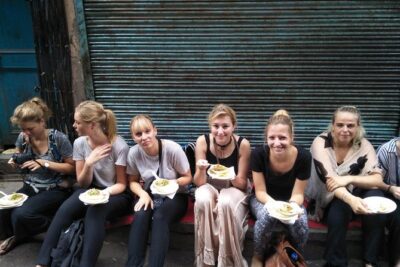
The Great Indian Food Tour: Old Delhi Food and Heritage Walk
Read our review →
Old Delhi Food-Spice Market-Temples Tour Soon Featured on NETFLIX
Read our review →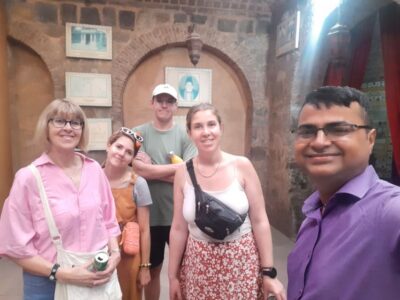
Old Delhi: Spices, Heritage and Bazaars Walking Tour
Read our review →
3-Hour Old Delhi Heritage Walking tour with Rickshaw ride
Read our review →The Great Indian Food Tour: Old Delhi Food and Heritage Walk
Read our review →