
Review · INDIA
Heritage Walk & Street Food Tasting in Jaipur
Jaipur’s best introduction may be found not behind a palace gate, but in a paper plate of hot kachori on a crowded old-city lane. This three-hour food and heritage walk links snacks with the streets, crafts, temples, and painted houses that give the Pink City its character.
I like the mix of local food and city history, and I like the way guides such as Vivek, Kumar, Raj, and Pushpendra lead people into lanes they would be unlikely to find alone. The small group size, capped at 10, also makes it easier to ask questions and adjust the pace.
The main consideration is that this is a proper walking tour through busy old-city streets, not a relaxed restaurant crawl. You need comfortable shoes, modest clothing for temple visits, and a willingness to eat standing or at small local shops.
Key points at a glance
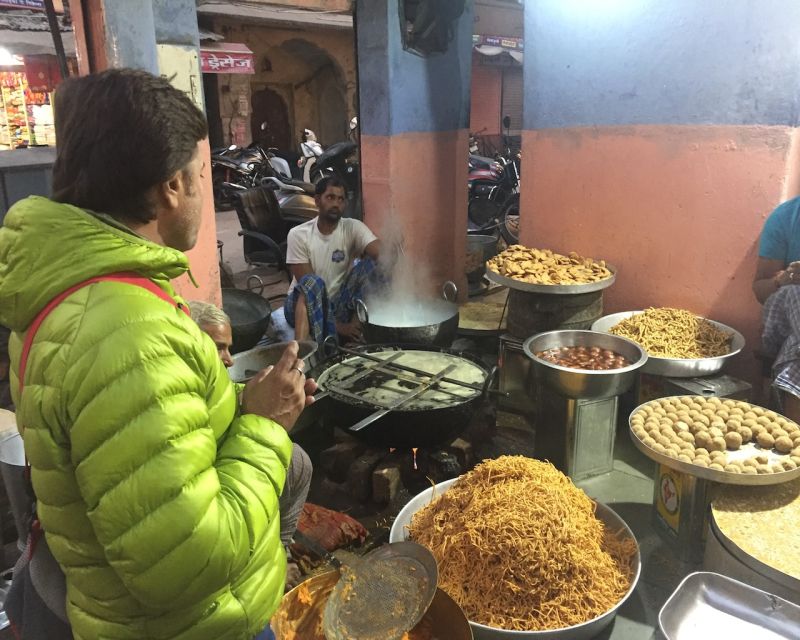
- About 15 food tastes are possible: Expect samosa, kachori, sweets, masala chai, and other local snacks at several stops.
- The walk leaves the main roads: You enter Jaipur’s smaller gullies, artisan quarters, market lanes, and streets away from the usual sightseeing circuit.
- The food comes with context: Your guide explains ingredients, cooking traditions, food quality, and the role of snacks in local life.
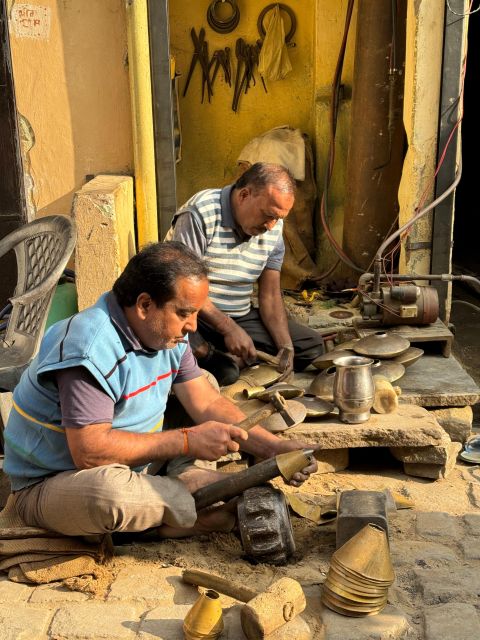
- Jaipur’s crafts are part of the route: Look for metal beaters, bangle makers, handicrafts, and working artisans.
- The tour is small and flexible: Groups are limited to 10, and guides have adjusted routes, food choices, and timing to suit different interests.
- The meeting point is central: Start at the entry gate of Golcha Cinema and finish at Chhoti Chopad.
Why this Jaipur walk is more than a food stop
Many food tours reduce a city to a list of dishes. This one uses food as the thread holding Jaipur’s old quarters together. A samosa tells you something about everyday eating. A sweet points toward local celebration and shop traditions. A cup of masala chai gives you a reason to pause while the guide explains the street around you.
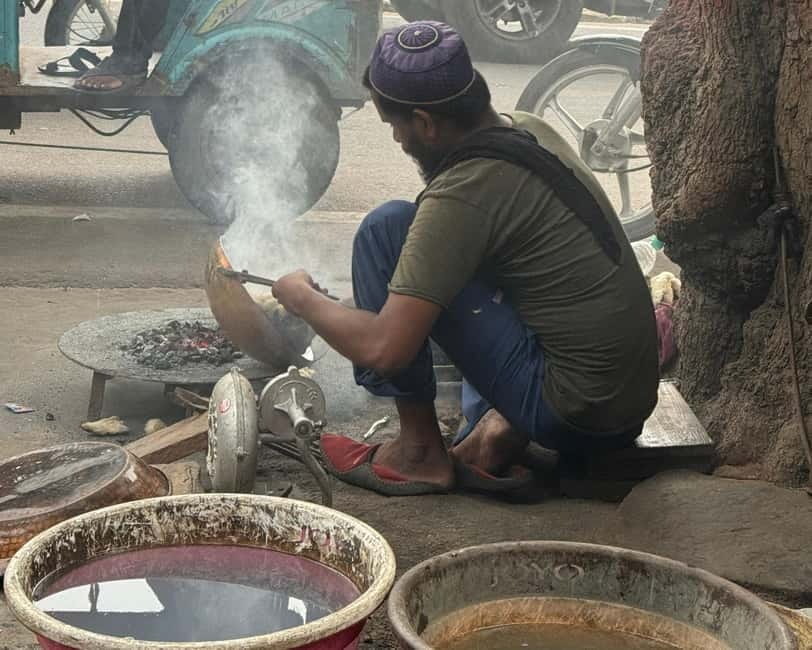
The route also puts you in contact with Jaipur’s working city. You pass painted homes, market stalls, temples, community spaces, and craft workshops. The city is not presented as a museum. You see people making, selling, worshipping, trading, and moving through their daily routines.
That balance is the tour’s strongest feature. If you only want to eat, you may find the history stops slow you down. If you only want monuments, the food stops will interrupt the sightseeing. For anyone who wants both, the combination makes good sense.
The tour has earned a 5 out of 5 rating from 158 reviews, with particularly strong praise for the guides’ warmth, local knowledge, and ability to make people feel at ease. The names vary by departure, but Vivek appears often, along with Kumar, Raj, Pushpendra, and others. The most consistent strength is the guide rather than a fixed performance.
More History Walking Tours in India
- Fontainhas Heritage Walk by Make It Happen
★ 5.0 · 2,834 reviews - The Great Indian Food Tour: Old Delhi Food and Heritage Walk
★ 5.0 · 1,698 reviews - Old Goa Heritage Walk by Make It Happen
★ 5.0 · 797 reviews
Starting at Golcha Cinema and entering the old city
Meet at the entry gate of Golcha Cinema. The exact start time depends on availability, so check the schedule when booking. From here, you head toward the old city on foot.
This is a useful meeting point because the tour begins with movement rather than a long transfer. There is no hotel pickup or drop-off, so you need to arrange your own way to Golcha Cinema and your onward transport from Chhoti Chopad.
Your guide sets the tone early. Guides have been praised for explaining the route clearly, keeping solo participants comfortable, and helping people navigate streets that can feel confusing at first. That matters in Jaipur, where a short distance on the map can involve several turns, traffic, pedestrians, stalls, and narrow side lanes.
The group limit of 10 is another practical advantage. You are not following a large flag through the market, and you can ask about ingredients, architecture, religion, or daily life without shouting over a crowd.
Chaura Rasta: chai, snacks, and the city’s working rhythm
The first main section is around Chaura Rasta, with roughly 45 minutes for walking, food, and explanation. This is where the tour begins to show how Jaipur works beyond its major landmarks.
Expect an early taste of local street food, likely including samosa or another savory snack, followed by masala chai at a local tea shop. The supplied food list also includes kachori and famous sweets, with additional items depending on the route and the day.
I like this opening because it gives you a gentle introduction to unfamiliar food. Your guide can point out what to choose, explain how it is made, and help you decide how much spice or sweetness suits you. One guide has also been praised for showing people what to look for when judging street food quality, which is useful if you plan to eat independently later.
The food is served at local shops rather than presented as a formal sit-down meal. That keeps the experience close to everyday Jaipur, but it also means limited seating and a less polished setting. Come prepared for quick stops, small portions, and the possibility of eating while standing.
Do not eat a large breakfast or lunch before you arrive. The portions may be small at individual stops, but they add up. Some outings include as many as 15 tastes at around six places, which can leave you very full.
Badi Chaupar: views, local snacks, and Jaipur’s planned design
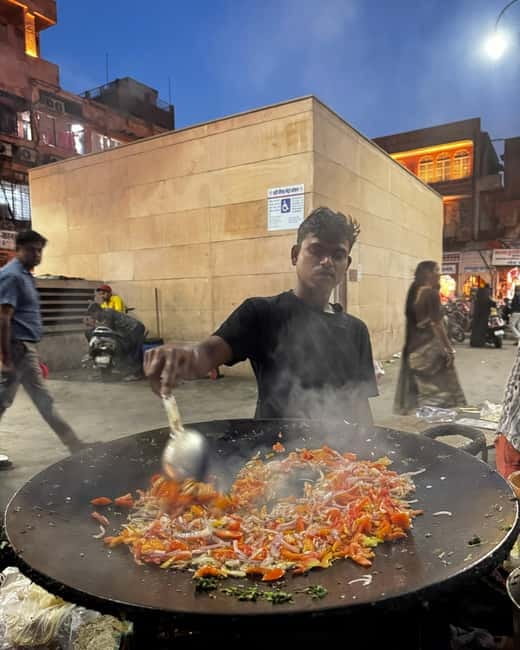
The walk continues toward Badi Chaupar for another 45-minute section. Here, the food is paired with views and explanations of Jaipur’s old-city plan.
The city’s geometry is an important part of the experience. You learn about the quadrants, the entry gates, and the deliberate design behind the streets. This gives you a better way to read Jaipur as you walk. Instead of seeing only a market lane, you begin to understand how the old city is arranged and how its main areas connect.
Badi Chaupar is also a good place to pause for regional snacks and another drink or tasting. The exact food order can vary. One useful point is that the tour does not appear to depend on a rigid menu, so your guide may change the sequence or adjust choices based on the group.
That flexibility helps people with different eating habits. A picky eater, a person with low spice tolerance, or someone concerned about unfamiliar food can explain those limits before or during the walk. The route is still a street food experience, so you should not expect a completely controlled menu, but the guides have shown care in tailoring options.
You may also notice that food is only one part of the stop. The guide may draw attention to fresco-painted buildings, market activity, religious details, or a story connected with the neighborhood. Those small explanations are what keep the tour from becoming a simple snack checklist.
More Food and History Tours in India:
- The Great Indian Food Tour: Old Delhi Food and Heritage Walk
★ 5.0 · 106 reviews - Jaipur: History Street Food Tour with Local Guide
★ 4.4 · 50 reviews - Sevilla Food Tour: Tapas, Wine, History & Traditions
★ 5.0 · 3,468 reviews - Victoria Guided Food and History Tour
★ 5.0 · 2,015 reviews
Tripolia Bazar: crafts, history, and quieter lanes
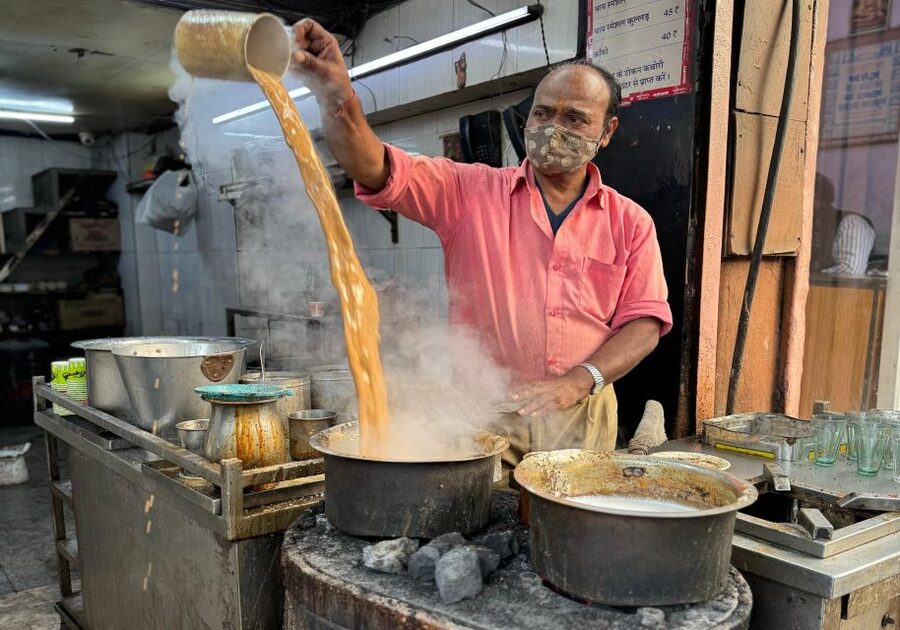
Tripolia Bazar brings the tour into another 45-minute stretch of walking and guided sightseeing. This is one of the sections where you leave the main lanes and enter the smaller gullies of Jaipur.
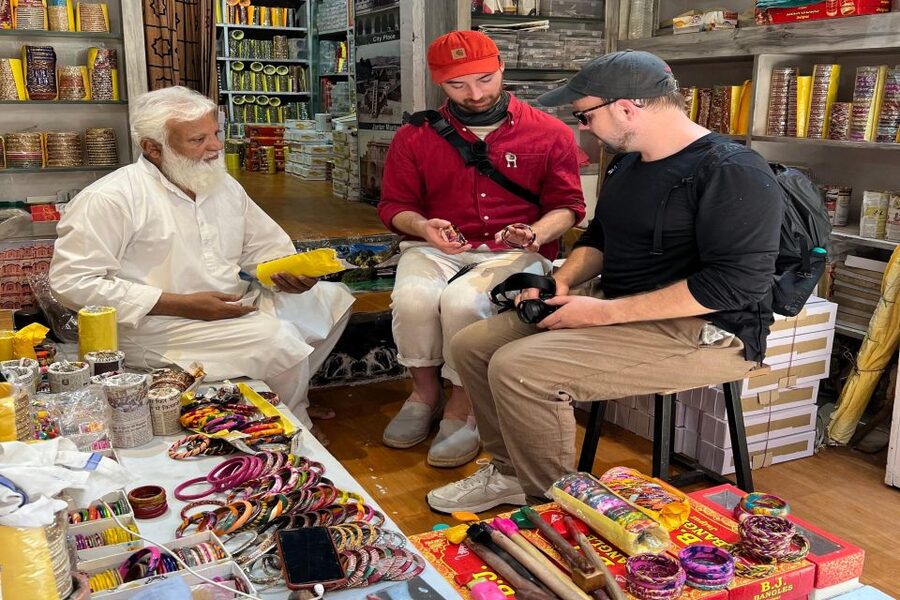
The old city is full of working craft traditions, and the walk may introduce you to local artisans. One especially distinctive stop is a street associated with the Thatheras, a community of metal beaters. You may also see the making of bangles using sealing wax, as well as other handicrafts.
These encounters are valuable because they show the labor behind objects that can look decorative in a shop window. You are not simply told that Jaipur has crafts. You see how skill, tools, family practice, and local trade connect in the neighborhood.
The artisan visits are observational, not a promise that you will take part in making an item. You should also keep in mind that working streets are not staged attractions. The pace may pause for a demonstration or conversation, but the city continues around you.
Tripolia Bazar can be busy and visually crowded. That is part of the setting, yet it can be tiring if you dislike traffic, noise, or uneven walking conditions. Wear shoes with good support and keep your belongings secure in the ordinary way you would in any busy market.
Choti Chaupar: final bites and the old city at street level
The final 45-minute section takes you toward Choti Chaupar, with more local snacks and food tasting before the tour ends at Chhoti Chopad.
By this point, you will have a clearer sense of how the food, markets, temples, and crafts fit together. The later stops may include more savory food or sweets, depending on the route and what you have already sampled. The tour includes samosa, kachori, masala chai, famous sweets, and other local dishes, but it does not promise a fixed number of separate recipes.
One practical tip is to pace yourself. A few people have found that sweet dishes arriving too early can make the savory food harder to enjoy later. If you have a strong preference, tell the guide. The experience is more comfortable when you treat it as a series of small tastes rather than one large meal.
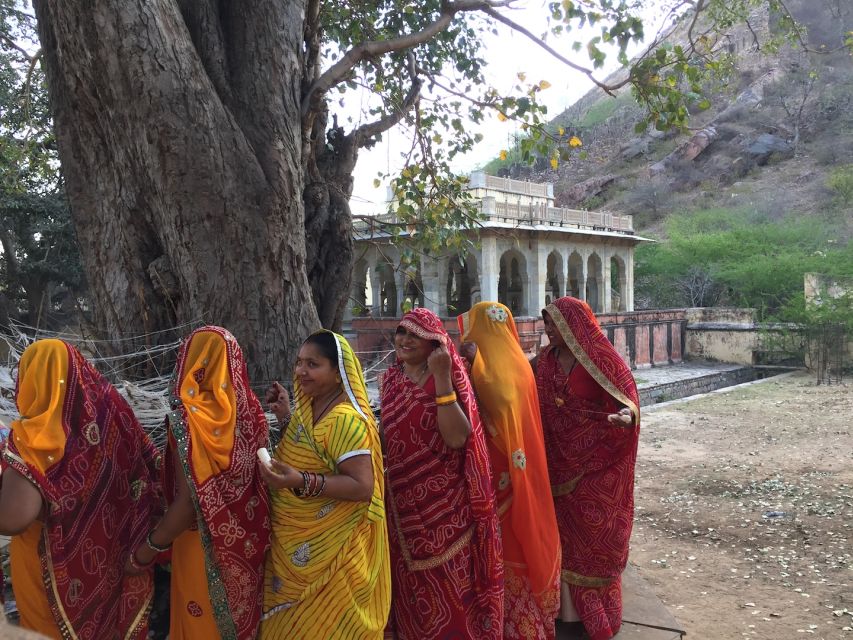
The route includes a Hindu temple. Photography is allowed, but avoid flash inside temples, dress modestly, and follow the guide’s instructions about local customs. You may also see a community well, another reminder that the old city contains shared spaces and neighborhood traditions alongside its shops.
The finish at Chhoti Chopad is convenient for continuing on foot or arranging your own transport, but hotel drop-off is not included. Plan the end of your evening accordingly.
What the food experience is really like
The food is the main reason many people book, and the tour delivers plenty of it. Samosa, kachori, sweets, chai, and other regional snacks form the backbone of the route.
The more important point is how the food is presented. Your guide explains what you are eating, how it fits into Jaipur’s food culture, and which stalls or shops are suitable for the group. That guidance can remove much of the uncertainty that makes first-time street food intimidating.
Several guides have been praised for taking people to places they would not have tried alone. This does not mean every item will suit every palate. Indian snacks can be spicy, oily, sweet, or strongly seasoned, and food preferences vary. Tell the guide about allergies, spice limits, digestive concerns, or foods you avoid before the tasting begins.
The tour includes a bottle of water, but you should also carry water and use sunscreen and a hat in hot weather. Personal medication is listed among the recommended items. The activity is not suitable for wheelchair users because of the walking route and old-city street conditions.
Why the guides matter so much
The route is useful, but the guide shapes the experience. Vivek is repeatedly praised for his warm manner, clear explanations, local connections, and willingness to adapt. Kumar is described as easy to understand and strong on food and Jaipur’s history. Raj and Pushpendra are also noted for friendly, engaging walks.
The most useful quality is not simply the amount of information. It is the ability to make the old city understandable without turning every stop into a lecture. Good guiding helps you know where to stand, what to taste, how to behave in a temple, and why a plain-looking lane matters.
The guides have also helped solo participants feel at ease, including women traveling alone. That does not replace your own judgment, but it is reassuring when the route moves away from the main tourist streets.
Flexibility is another recurring strength. Guides have adjusted food choices, answered detailed questions, slowed down for photographs, and in some cases helped people correct a meeting-point mistake. Do not assume every departure will run longer than three hours, but the experience appears capable of adapting when circumstances allow.
Is $21 good value for three hours?
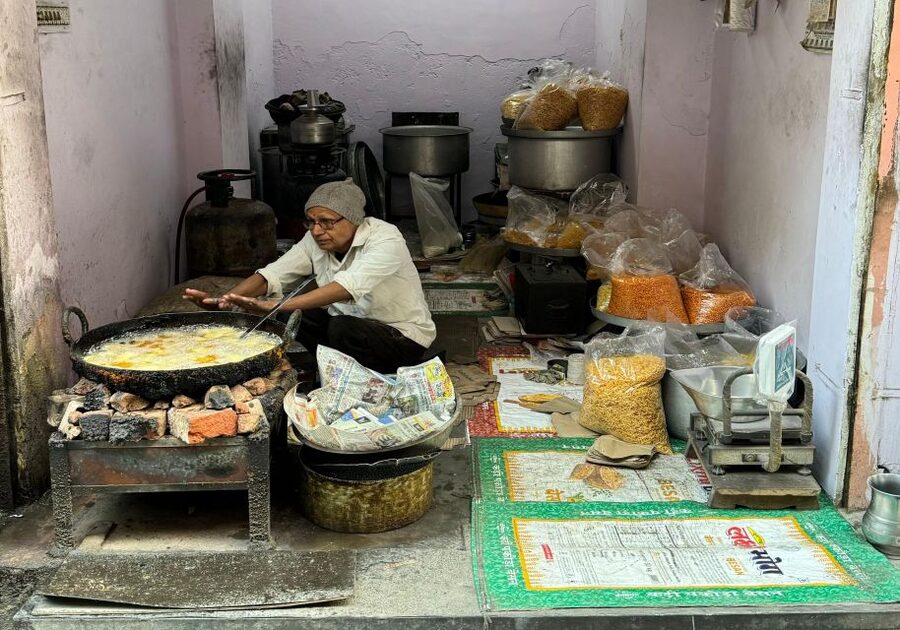
At $21 per person, this is strong value if you want both food and orientation. The price includes the street food, bottled water, English-speaking cultural walk guide, and the heritage walking tour.
You are not paying only for snacks. You are also paying for route planning, local introductions, explanations of food quality, access to less obvious lanes, and the confidence to explore Jaipur’s old city at street level. The included food can be substantial, especially if your route contains many small tastes.
The value is lower if you want a long, seated meal or a private tour. You also pay separately for getting to Golcha Cinema and leaving from Chhoti Chopad. Alcohol is not included, though that is hardly a concern for this particular route.
Free cancellation up to 24 hours before the activity and reserve-now, pay-later booking add useful flexibility. Check the available start times, since the tour runs for three hours but does not list one fixed departure for every date.
Who should book this Jaipur food walk?
I would choose this tour for a first full day in Jaipur, especially if you want to understand the old city before visiting major sights such as the City Palace or Jantar Mantar. It gives you useful orientation and may help you decide which markets, foods, and neighborhoods deserve a closer look later.
It suits:
- Food-focused visitors who want local snacks rather than a formal restaurant meal.
- Solo visitors who would rather explore busy side streets with a guide.
- Couples and families comfortable with walking and tasting unfamiliar food.
- People interested in crafts, architecture, religion, and daily life.
- Anyone who wants practical advice about street food before eating independently.
It is less suitable for people who need step-free access, dislike walking, want a luxury setting, or prefer a fixed menu with guaranteed dishes. It may also feel too full for anyone who has recently eaten.
Book the tour with an open mind, but do not arrive without telling the guide what you cannot eat. That simple conversation can make the three hours much more enjoyable.
Should you book it?
Yes, if you want Jaipur explained through its food, lanes, crafts, and people rather than through monuments alone. The strongest reasons are the small group, the reasonable $21 price, the wide range of tastings, and the guides’ clear ability to make unfamiliar streets feel manageable.
I would especially recommend it early in your Jaipur stay. You get a practical introduction to the Pink City, learn which snacks to seek out, and see parts of the old quarters that are easy to miss on your own.
Skip it only if you want a seated culinary experience, cannot manage three hours of walking, or prefer a tightly fixed sightseeing schedule. For most visitors who enjoy local food and curious conversation, this is an excellent way to get your bearings fast.
FAQ
How long is the Heritage Walk and Street Food Tasting in Jaipur?
The tour lasts three hours.
How much does the tour cost?
The listed price is $21 per person.
Where does the tour start?
Meet at the entry gate of Golcha Cinema in Jaipur.
Where does the tour finish?
The tour finishes at Chhoti Chopad, also written as Chhoti Chaupar in the route description.
What food is included?
The included tastings feature samosa, kachori, famous sweets, masala chai, and other local snacks from local shops.
Is hotel pickup included?
No. Hotel pickup and drop-off are not included, so you need to arrange your own transport to Golcha Cinema and from Chhoti Chopad.
What language is the tour in?
The live tour guide speaks English.
How large is the group?
The tour is limited to 10 participants.
What should I bring?
Bring a passport or ID card, comfortable walking shoes, comfortable clothing, and any personal medication. Water, sunscreen, and a hat are also advised.
Is the tour suitable for wheelchair users?
No. The experience is not suitable for wheelchair users.
Can I cancel the booking?
You can cancel up to 24 hours in advance for a full refund. Reserve-now, pay-later booking is also available.
More Food Trips in India
- Amsterdam Food and Cultural Tour with Tastings
★ 5.0 · 4,315 reviews - Barcelona: Tapas Walking Tour with Food, Wine, and History
★ 4.8 · 4,261 reviews - Madrid Tapas & Taverns Small Group Food & History Tour
★ 5.0 · 2,664 reviews - Historic Ybor City Food Walking Tour
★ 5.0 · 2,210 reviews
More Food and Drink Trips in India
- Old Delhi Food, Heritage&Cultural Walk with Rickshaw ride to Masterji Kee Haveli
★ 5.0 · 742 reviews - Old Delhi Food-Spice Market-Temples Tour Soon Featured on NETFLIX
★ 5.0 · 304 reviews - Experience Bangalore – City Tour, Authentic Food & market (Food/Culture/History)
★ 5.0 · 156 reviews - Old Delhi Walking Tour: Food, Culture & Spice Bazaars
★ 5.0 · 94 reviews
Just added around India
- Exploring Mylapore: A Cultural & Historical Walking Tour★ 5.0 · 42 reviews
- Chennai Heritage & Cultural Walk (2 Hours Guided Walking Tour)★ 3.5 · 32 reviews
- Georgetown heritage walking tour in Chennai about the founding of Chennai★ 5.0 · 144 reviews
- The Hipster Chandigarh Architecture History Tour★ 5.0 · 54 reviews
- See Bangalore through my eyes (Cultural / Historical / Walking Tour)★ 5.0 · 60 reviews
- 2 days Private tour of Hampi world heritage site from Bangalore by car★ 5.0 · 75 reviews
- Discover Bangalore with Me (A Private Historical Walk Tour)★ 5.0 · 24 reviews
- Treasures of Mysuru – day tour★ 5.0 · 27 reviews
India History Tours, compared.
The Great Indian Food Tour: Old Delhi Food and Heritage Walk
Read our review →
Old Delhi Food, Heritage&Cultural Walk with Rickshaw ride to Masterji Kee Haveli
Read our review →
Blue City Heritage Private Walking Tour With Pickup and Drop-Off
Read our review →
Private Heritage Walking Tour in Jaisalmer Fort and Old Bazaar
Read our review →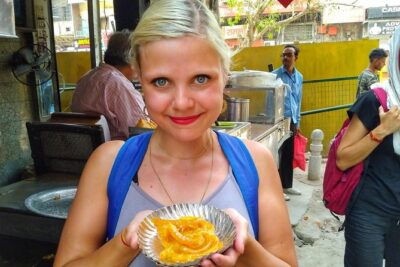
Old Delhi Food-Spice Market-Temples Tour Soon Featured on NETFLIX
Read our review →Browse the lists this tour appears in