
Review · HISTORY TOURS
Old Riga in Italian: History&Legends
Old Riga is best understood on foot, one story and crooked stone lane at a time. This two-hour walk links the House of the Blackheads, Bremen Town Musicians, the House of the Black Cats, Swedish Gate, the Three Brothers, and the cathedral before ending at the Freedom Monument.
I like the Italian-speaking guide and the small group limit of 10, which should make it easier to ask questions and keep the pace personal. I also like the unusual seven-symbol theme: it gives you a simple way to decide which image or building best captures Vecriga for you.
The main thing to consider is the focus. This is a history-and-legends walk, not a tour of every major sight in central Riga. One participant specifically wished the nearby castle had been mentioned and included, so you may want to visit that separately.
Key points at a glance
- Town Hall Square begins the story: Start near the small metal Christmas tree beside the House of the Blackheads, in the heart of Old Riga.
- Seven symbols shape the walk: Use the city’s best-known images and buildings as clues to Riga’s past.
- The route crosses many eras: Hear about German, Polish, Swedish, imperial, Soviet, and independent Latvia.
- Legends add a playful edge: Medieval tales, musicians, black cats, and a ghost give the old streets more character.
- Italian makes the history easier to follow: The live guide speaks Italian throughout the two-hour walk.
- Families get a useful price break: Children under 14 can join free, and the route is listed as wheelchair accessible.
Starting beside the House of the Blackheads
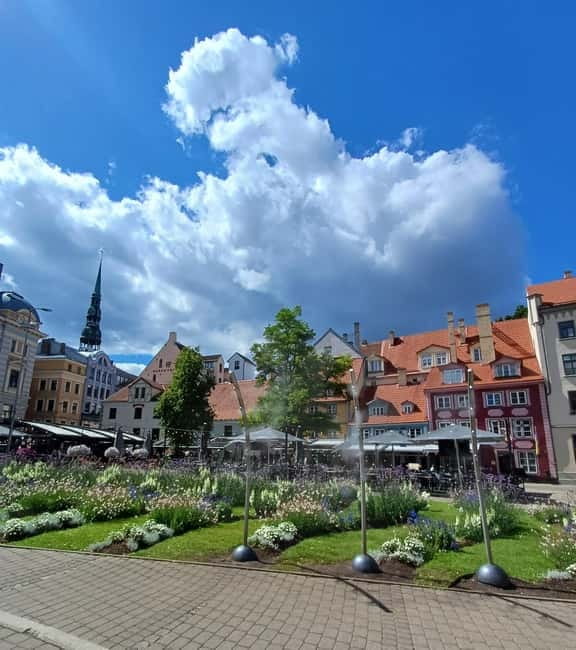
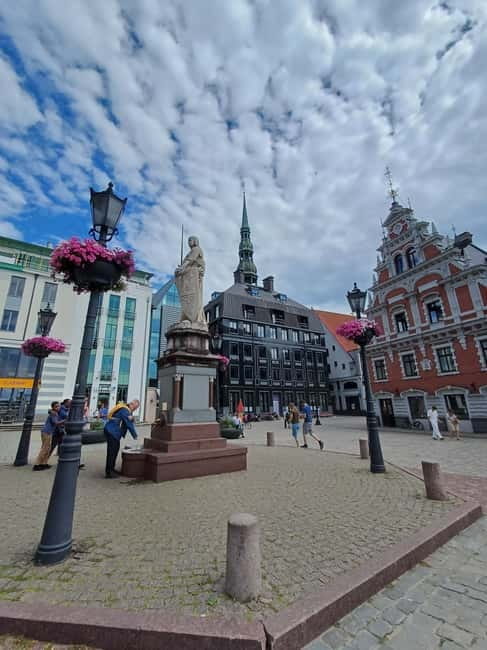
Your meeting point is easy to identify: look for the small metal Christmas tree near the House of the Blackheads in Town Hall Square. This is a sensible place to begin because the square puts you close to the symbolic center of Vecriga, Riga’s Old Town.
The House of the Blackheads is one of the city’s most eye-catching façades, and it gives the guide a good opening point for explaining Riga as a Hanseatic trading town. You will hear how the city’s story passed through German, Polish, Swedish, imperial, Soviet, and independent Latvian periods.
That broad sweep is useful. Riga can feel like a collection of handsome buildings until someone explains how different powers shaped the streets, institutions, and public spaces. You will not get a full university course in two hours, but you should leave with a clear framework for understanding what you see.
Town Hall Square also helps you get your bearings. If you arrive early, you can use the surrounding buildings to identify the starting area without wandering far through the Old Town.
More History Tours in the world:
- Prague: Medieval Dinner with Unlimited Drinks
★ 4.4 · 19,847 reviews - Pompeii: Entry Ticket and Guided Tour with an Archaeologist
★ 4.8 · 19,459 reviews - History and Hauntings of Salem Guided Walking Tour
★ 5.0 · 14,564 reviews
From Hanseatic trade to Riga’s many rulers
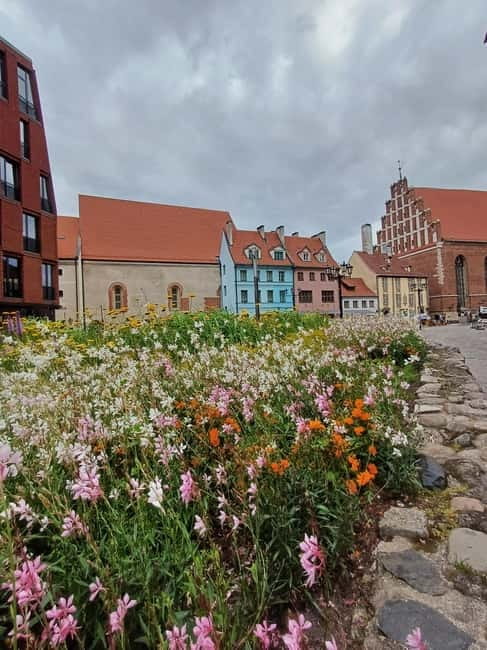
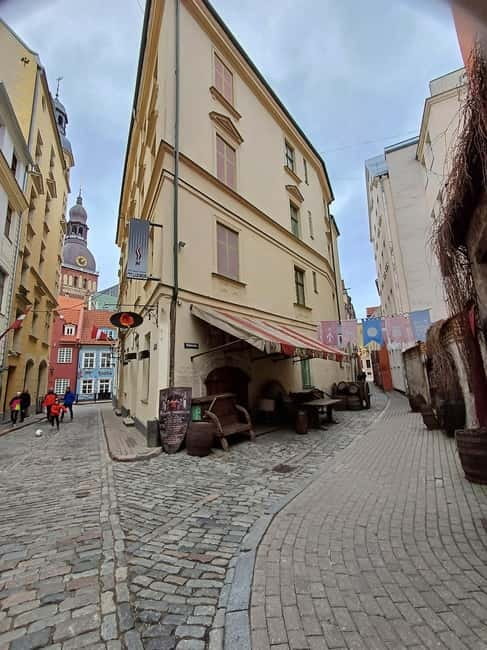
The walk presents Riga as more than a medieval postcard. Its past includes the German influence of the Hanseatic era, periods under Polish and Swedish rule, imperial Russia, the Soviet period, and the return to independence.
I like this structure because it gives you historical variety without requiring you to remember a long list of dates. The guide moves from buildings and street scenes to the political changes behind them. A façade becomes a clue, and a narrow lane becomes part of a larger story.
The experience also sounds particularly well suited to people visiting Riga for the first time. You get a broad introduction before deciding which buildings or museums deserve a closer look later. If you already know the city well, the legends may be more valuable than the basic orientation.
Since the tour lasts only two hours, expect a brisk selection of important places rather than a slow examination of every monument. The benefit is coverage. The trade-off is that some subjects will receive only a short explanation.
Bremen’s musicians and the city’s playful symbols
One stop features the musicians of Bremen, a sculpture that connects Riga to a familiar European fairy tale while also fitting the tour’s larger theme of symbols. The exact meaning you take from the city’s images is part of the fun: the route invites you to choose which of seven symbols best represents Old Riga.
That idea gives the walk a little more personality than a standard building-by-building tour. Instead of simply collecting names, you are encouraged to look for the images that make Riga memorable to you.
The symbols also help families stay involved. Children may not want a long explanation of political history, but a group of strange animal figures, a black cat, or a ghost can keep their attention. Children under 14 can join free, which makes this a practical choice for families watching the sightseeing budget.
The tour is still built around spoken history, so younger children who need constant activity may find parts of it slow. The guide can make the stories lively, but the walk remains a history tour rather than a children’s entertainment program.
The House of the Black Cats and medieval Riga
The House of the Black Cats adds another memorable image to the route. Its cats give the guide a natural opening for stories about Riga’s merchants, rivalries, and urban legends.
This is where the tour’s title makes sense. You are not just looking at old stone and plaster. You are hearing how people imagined the city, explained its odd corners, and passed stories from one generation to the next.
The best use of a stop like this is to listen for the line between fact and legend. A legend may not provide a literal record of an event, but it can show what a city finds amusing, unsettling, or worth remembering. That approach makes the old streets feel less static.
If you prefer only documented political history, some of the folklore may feel less important. If you enjoy a city’s stranger side, these tales are likely to be among the most enjoyable parts of the walk.
Same city, a different century:
- Athens: Acropolis & up to 5 Archaeological Sites Combo Pass
★ 4.2 · 13,904 reviews - Colosseum: Underground and Ancient Rome Tour
★ 4.7 · 12,691 reviews - Pompeii: Small Group Tour with an Archaeologist
★ 4.8 · 12,264 reviews - Lisbon: History, Stories and Lifestyle Walking Tour
★ 4.8 · 10,902 reviews
The cathedral, Three Brothers, and Swedish Gate
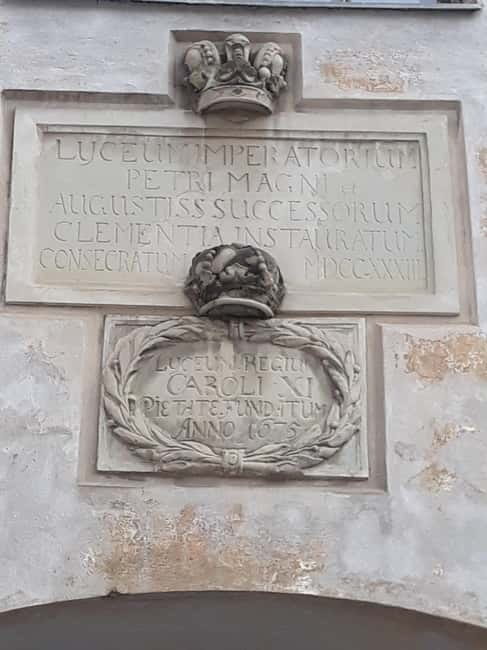
The route continues to several of Old Riga’s key medieval monuments. The cathedral, the Three Brothers, and Swedish Gate each represent a different part of the city’s older structure and give you a better sense of how the historic center developed.
The Three Brothers are especially useful as a visual stop because the group of buildings shows how domestic architecture changed over time. You get a glimpse of ordinary urban life, not just grand civic monuments.
Swedish Gate brings another period into view. The name points toward the Swedish chapter of Riga’s past and helps connect the military and political history of the city with the streets you are walking through.
The cathedral adds a major religious landmark to the route. Together, these stops create a balanced picture: civic power at Town Hall Square, merchant life, homes, religion, and city defenses.
The route is listed as wheelchair accessible, which is important in an old city where paved streets and historic surfaces can affect comfort. Still, you should bring comfortable shoes. The tour is a continuous walking experience, and old streets are not the place for flimsy footwear.
Narrow streets, noise, and a ghost of Riga
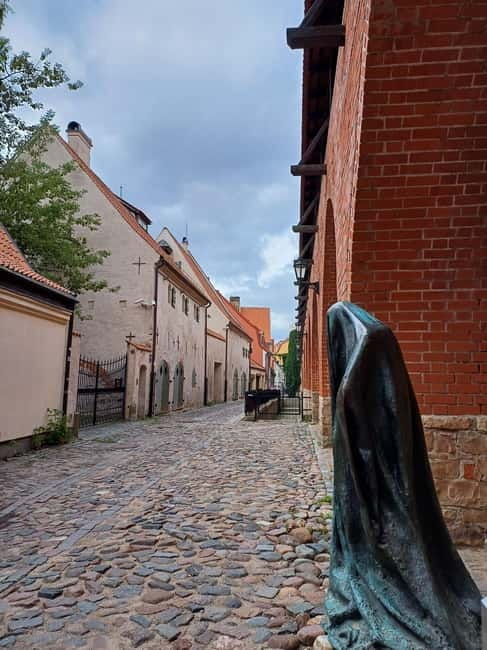
One of the more atmospheric parts of the walk comes when a noisy, narrow paved street meets a ghost story. This is the point where the tour shifts from visible monuments to the mood of Old Riga.
You might find this especially effective in the older lanes, where the surroundings are less formal than the main squares. A legend can make you notice a doorway, wall, or corner you might otherwise pass without a glance.
The ghost element also keeps the experience from becoming too serious. Riga’s past includes war, changing governments, and difficult political periods, but a city is also made from rumors, jokes, fears, and odd tales. The guide uses those elements to create a more personal picture of the people who lived here.
Do not expect a theatrical ghost performance. The information describes a walking tour with legends, not actors or staged effects. The pleasure comes from hearing the story in the actual street where it belongs.
Reaching the Freedom Monument
The tour ends at the Freedom Monument, giving the walk a clear modern endpoint. After beginning with medieval and Hanseatic Riga, you finish with a symbol connected to Latvia’s national identity and independence.
That ending gives the two hours a useful arc. You start in the old commercial heart, pass through the city’s medieval buildings and legends, and finish with a monument representing a later chapter of Latvian history.
The final stop also gives you a chance to decide what to do next. You can continue exploring the Old Town, return to a building that caught your interest, or use the monument as a reference point for the rest of your day.
The route does not include every major attraction in central Riga. In particular, the nearby castle was not included for at least one participant, so I would not book this expecting a complete checklist of the city’s sights. Think of the walk as a strong Old Town introduction with a few deliberate themes.
What the guide adds in Italian
The guide is Italian-speaking, and Nelli Saraceno leads the experience. The strongest praise centers on her preparation, kindness, passion, and care for the group.
That last point matters in Riga’s colder months. One winter participant noted that Nelli was attentive to keeping the group from standing outside in the cold for too long. The tour takes place outdoors, so this practical awareness can make a real difference in January or February.
Another useful detail is that the tour can still feel personal with only two people booked. The small-group format is limited to 10, but a smaller turnout may give you more room to ask questions and shape the conversation.
You should also expect the guide to explain curiosities rather than recite only formal facts. The praise for her storytelling and passion suggests that the tour’s value lies in how she connects the monuments, legends, and different periods of Riga’s past.
Is two hours enough for Old Riga?
Two hours is enough for a strong first look, but not enough for every major sight. That is not a flaw if you want a focused orientation. It becomes a limitation if you are trying to cover the cathedral interior, castle, museums, and every historic street in one booking.
The compact length works well on a first day. You can learn the shape of the Old Town in the morning, then return later to the places that interest you. It also fits neatly into a short city break or a day when you have other plans.
The route should be comfortable for someone who prefers a manageable walk instead of a full-day excursion. You still need suitable shoes, since the experience involves narrow paved streets and several historic areas.
I would avoid scheduling it too tightly against another timed activity. A walking tour depends on the group’s pace and the guide’s explanations, and you will get more from it if you are not watching the clock.
The $24 price and who gets the best value
At $24 per person, the tour offers good value if you want a live introduction in Italian and prefer history with storytelling. The price includes the Italian-speaking guide and the small-group walking tour, with no separate transport or attraction admissions listed.
That means you are paying mainly for interpretation and orientation. The buildings are already part of the city, but a good guide helps you understand why they matter and how the different periods fit together.
Families receive an extra advantage because children under 14 can join free. For a family, that can make a guided introduction far more affordable than paying separate admission charges for several attractions.
The value is weaker if you want interior visits, a meal, transport, or a long stop at each monument. Those are not part of the stated experience. You are buying a focused walk through Old Riga, not an all-inclusive sightseeing package.
Flexible booking also helps. You can cancel up to 24 hours before the start for a full refund, and you can reserve now and pay later. Those terms are useful when your Riga plans may change, though you should still check the available starting time before booking.
Who should book this Old Riga walk?
I would choose this tour if you want:
- An Italian-language introduction to Riga
- A small group rather than a large city walk
- A mix of documented history and local legends
- A route through the main visual symbols of Vecriga
- A short first-day activity that helps you plan the rest of your stay
- A family-friendly option with free admission for children under 14
I would look elsewhere if you want a museum-heavy tour, a full visit to Riga Castle, or detailed access to building interiors. The route is built around outdoor storytelling and historic streets.
It also suits curious families, couples, and solo visitors who enjoy asking questions. With a maximum of 10 people, the format should be less anonymous than a large group, and the Italian language makes it especially useful for Italian-speaking visitors who want more than a self-guided walk.
Should you book Old Riga in Italian?
Yes, if you want a well-priced, Italian-language walk that mixes Riga’s major Old Town sights with symbols, legends, and a clear historical timeline. The route gives you the city’s essential visual markers, from the House of the Blackheads to the Freedom Monument, while Nelli Saraceno’s praised warmth and preparation add a personal touch.
Keep your expectations in the right place. This is not a complete tour of every central Riga attraction, and the castle may need a separate visit. Bring comfortable shoes, allow the full two hours, and treat the walk as your introduction to the city rather than your entire Riga itinerary.
FAQ
How long does the Old Riga in Italian tour last?
The tour lasts two hours.
What language is the tour conducted in?
The live tour is conducted in Italian.
Who is the guide?
The experience is led by Italian-speaking guide Nelli Saraceno.
Where is the meeting point?
Meet near the small metal Christmas tree beside the House of the Blackheads in Town Hall Square.
How much does the tour cost?
The listed price is $24 per person.
Can children join for free?
Yes. Children under 14 years old can join free.
Is the tour wheelchair accessible?
Yes. The activity is listed as wheelchair accessible.
What should I bring?
Bring comfortable shoes for the walking route.
Just added around the world
- 3 Hour Whiskey and History Tour★ 5.0 · 152 reviews
- Downtown Denver History & Highlights – Small Group Walking Tour★ 5.0 · 285 reviews
- Denver – Capitol Hill Guided Walking Ghost / History Tour★ 4.5 · 75 reviews
- Private Nightlife Tour in Denver: Culture, History, and Cocktails★ 5.0 · 48 reviews
- Delphi: Archaeological Site & Museum Ticket with Audio★ 3.5 · 24 reviews
- Tip Based: Capitol Hill History & Ghost Tour★ 5.0 · 34 reviews
- 1-Hour Thunderball WWII Adventure Jet Skiing in Darwin★ 5.0 · 70 reviews
- Bombing of Darwin World War II Tour with Harbour Cruise★ 4.5 · 219 reviews