
Review · EVENING EXPERIENCES
Oslo: Historic Myths & Legends Evening Walking Tour
Oslo’s old center gets more interesting when you hear the stories hiding behind its stone walls. This two-hour evening walk mixes Viking beliefs, trolls, nisse, huldra, prisoners, robberies, and medieval justice as you move from City Hall to Christiania Torv, Akershus Fortress, and Bankplassen.
I like the way the tour connects folklore with real places, rather than treating myths as loose bedtime stories. I also like the guides’ friendly, conversational approach. Maria and Anastasia receive especially warm praise for making complicated history easy to follow, while still leaving room for questions and city tips.
The main drawback is practical: this is an outdoor walk in Oslo weather, and evening conditions can be cold, dark, windy, or snowy. The route is not suitable for wheelchair users or people with mobility impairments, and the official age guidance excludes children under 13, even though one family said their older children loved it.
Key points to know before you book
- City Hall is the meeting point: Find the guide near the Swans fountain at the entrance to Oslo City Hall on Fridtjof Nansen’s square.
- Norse myths meet urban history: Expect stories about Vikings, trolls, nisse, huldra, spirits, bells, flutes, and local beliefs.
- Akershus Fortress is the dramatic centerpiece: You hear about its design, defenses, prisoners, and the people who met grim fates inside its walls.
- The route includes crime and punishment: Bankplassen brings tales of audacious thefts and the sometimes severe justice system of medieval Oslo.
- The walk lasts two hours: It is relaxed and paced for conversation, photos, and questions rather than a hard march.
- Dress for the season: Comfortable shoes are essential, and winter visitors should prepare for piercing wind, snow, and temperatures below freezing.
Why this evening walk works so well in Oslo
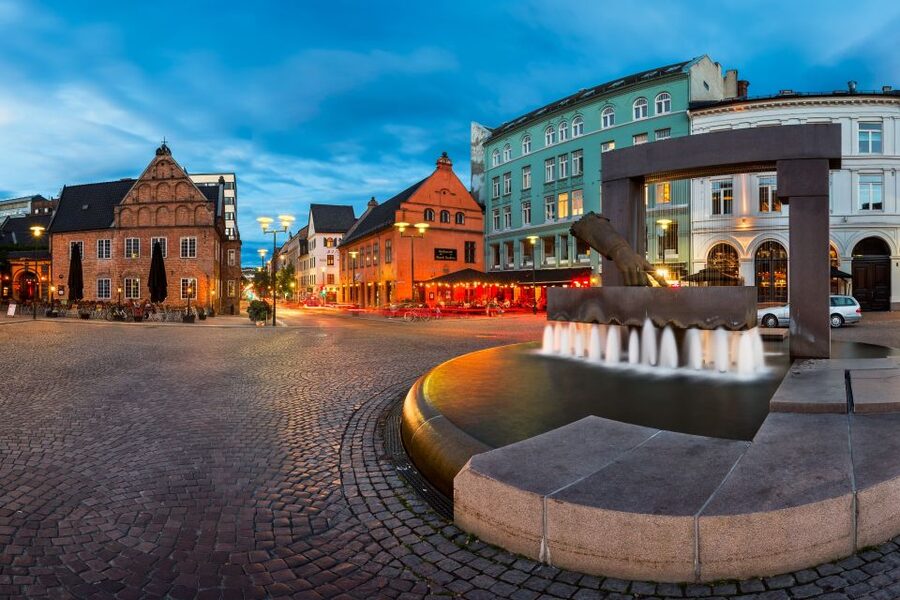
Many city walks give you dates, building names, and a quick explanation of what you are seeing. This one takes a different route. It uses myths and strange local tales as a way into Oslo’s past, then ties those stories to actual squares, walls, buildings, and public spaces.
That approach is useful on a first visit. You are not simply memorizing that a fortress was built for protection. You are hearing what protection meant in everyday life, what happened to prisoners, and how people understood danger before modern policing and courts.
The mood changes with the hour. In summer, the evening light can make the walk feel open and relaxed. In autumn and winter, darkness adds atmosphere around the old buildings, though you should not mistake the tour for a ghost hunt. The guide does not take you underground, and the main goal is cultural and historical context, not paranormal investigation.
The tone is light. Tales of trolls and mysterious beings sit alongside practical information about the city. That balance keeps the walk from becoming either a dry lecture or a theatrical scare show.
More History Walking Tours in the world:
- History and Hauntings of Salem Guided Walking Tour
★ 5.0 · 14,564 reviews - Lisbon: History, Stories and Lifestyle Walking Tour
★ 4.8 · 10,902 reviews - Amsterdam: Life of Anne Frank and World War II Walking Tour
★ 4.8 · 10,467 reviews
Starting beside Oslo City Hall
Meet near the Swans fountain at the entrance to Oslo City Hall, on Fridtjof Nansen’s square. This is an easy central starting point, but give yourself time to locate the fountain before the tour begins, especially in the dark or in poor weather.
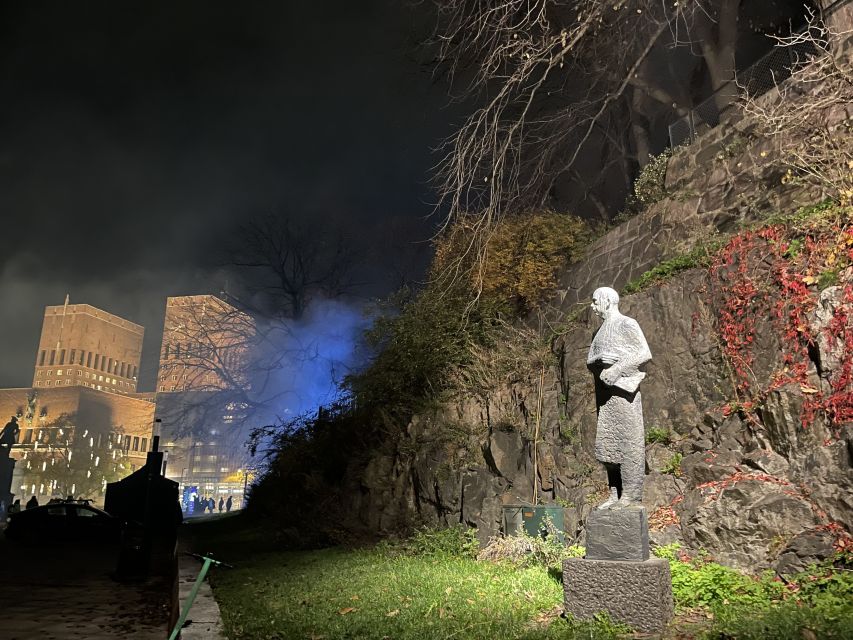
The City Hall stop gives the guide a useful opening. The building is linked to stories of Norway’s past, including the lives and journeys of the Vikings who sailed the northern seas. You also hear about wooden friezes inside City Hall that show Viking beliefs and imagery.
That detail matters because the tour does not treat City Hall as a modern civic building with no connection to older Norway. The decorations help show how national stories and Norse ideas have been used in public art. Your guide can point out how the building carries older symbols into a twentieth-century setting.
The City Hall section also introduces the supernatural side of the walk. You may hear about mischievous trolls, helpful nisse, and the huldra, a mysterious being from Norwegian folklore. These stories are presented as part of the culture that shaped local fears, customs, and ways of explaining the unknown.
Guides such as Maria and Anastasia are praised for their humor and energy, but the experience depends partly on how much you enjoy storytelling. If you want a strict architectural tour with long technical explanations, this may feel too playful. If you like learning why people told certain stories and how those stories relate to place, the opening should suit you.
Christiania Torv and Oslo’s older center
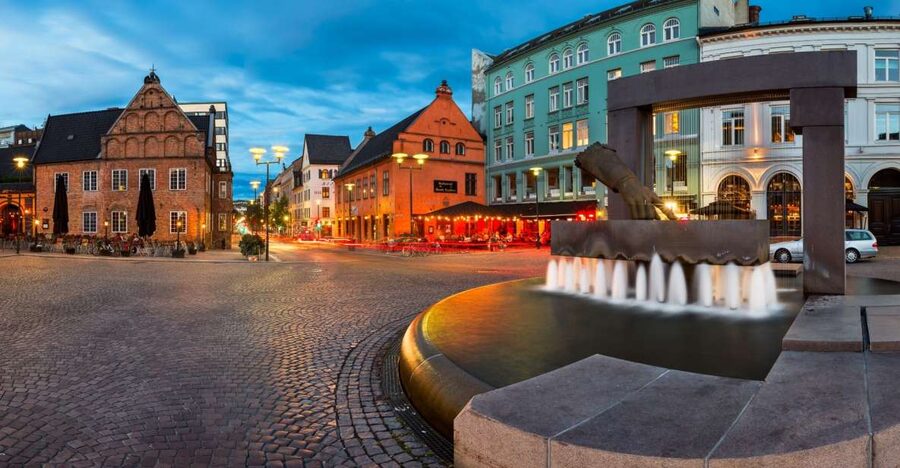
From City Hall, the route continues to Christiania Torv, one of the key historic squares on the walk. Here, your guide shifts from broad Norse themes to episodes tied more closely to Oslo’s urban past.
The square becomes a stage for stories about people, events, and changes that left a mark on the city. The value of this stop is not just the view. It gives you a sense of how public spaces collect layers of use. A square can serve as a meeting place, a site of power, a setting for trade, or a place where people watched justice being carried out.
This is also where a good guide makes a difference. The tour is delivered in English, and several guides are praised for clear speech, patience with questions, and an easy way of explaining unfamiliar names and customs. Maria is frequently singled out for combining humor with useful detail, while Anastasia is described as especially enthusiastic and good at telling vivid stories.
The route is not built around long visits inside museums. You are moving through the city, listening outdoors, and looking at buildings and spaces as the story unfolds. That keeps the pace lively, though it means you should not expect extensive indoor time or a large number of formal exhibits.
Akershus Fortress, walls, prisoners, and power

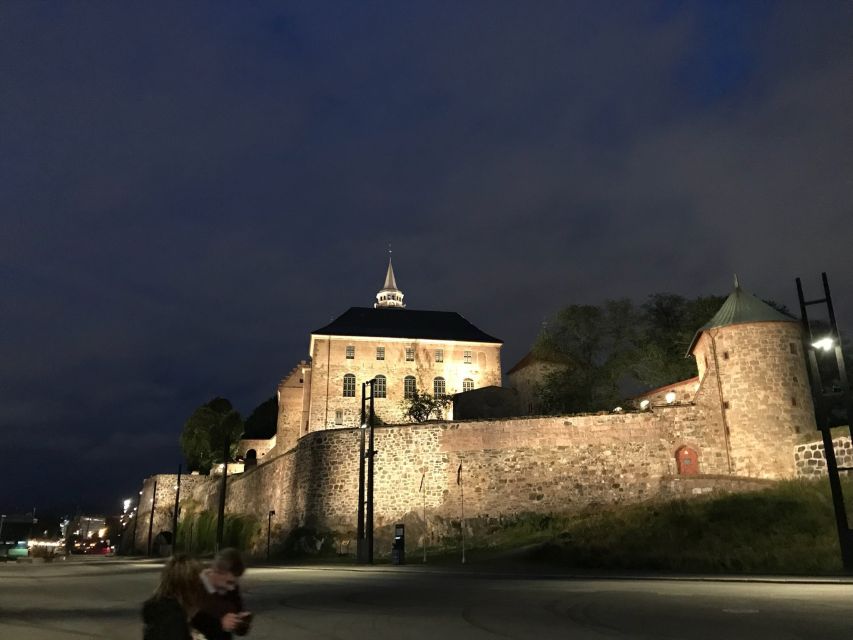
Akershus Fortress is the most visually striking part of the route. The guide explains its intricate design and the engineering choices that helped protect Oslo through different periods.
You will hear why a fortress was needed, how its position and structure supported defense, and how the site changed over time. The subject is not limited to military architecture. The fortress also brings stories of prisoners and the fates they faced within its walls.
That human angle makes the stop more memorable. A fortress can look impressive from the outside, but stories about confinement and punishment remind you that it was also a working place of fear, authority, and control. The guide’s job is to connect the masonry to the people who lived, worked, fought, or suffered there.
The tour does not promise access to every interior area, and the supplied information describes visits to locations in and around Oslo rather than a full fortress admission program. Expect to explore the relevant surroundings and hear the stories connected to the site, not a long underground expedition.
You should also plan for uneven outdoor conditions. The walk is not suitable for wheelchair users or people with mobility impairments. Wear shoes that are comfortable for two hours on city streets and fortress grounds, and take extra care in winter when snow or ice may make footing harder.
More Evening Trips in the world:
- Charleston Harbor History Day-Time or Sunset Boat Cruise
★ 4.5 · 2,788 reviews - Dubai Evening Heritage Safari by Vintage G Class Al Marmoom Oasis
★ 5.0 · 1,500 reviews - Charleston: Daytime or Sunset Historic Harbor Cruise
★ 4.5 · 1,352 reviews - Buda Castle District Dark History, Legends and Vampire Night Tour
★ 4.5 · 1,240 reviews
Bankplassen and Oslo’s old crimes
At Bankplassen, the subject turns from supernatural tales and military defenses to daring thefts and intricate robberies. This is one of the tour’s more unusual features. Many introductory walks stop at grand buildings and famous people. This one gives space to the city’s criminals and the schemes that once unsettled Oslo.
The stories help explain how property, trust, and public order worked in earlier times. A robbery is more than a colorful anecdote when you place it beside the justice system of medieval Oslo. You begin to see how authorities defined wrongdoing, how punishment was used, and how uneven justice could be.
This section should appeal to anyone who prefers social history over a list of dates. You hear about the people who broke rules, the methods they used, and the consequences they faced. The tone remains engaging rather than grim, but the subject can include death and severe punishment.
One guide described the city’s stories about death as a particularly memorable part of the walk. That is a useful warning for sensitive visitors. The tour is not marketed as a horror experience, but it does not avoid darker episodes from Oslo’s past.
Folklore that still shapes the way you see Norway
The myths are not included just to make the walk mysterious. They give you a better sense of the fears and hopes that shaped Norwegian culture.
Trolls are the most familiar figures for many visitors, but the guide also introduces nisse and huldra, along with beliefs about spirits and underground kingdoms. You may hear about the protective role of bells and old fears linked to flutes. These details show how ordinary objects and natural places could carry special meaning.
The Viking material adds another layer. Rather than presenting Vikings only as raiders and explorers, the tour uses their beliefs and symbols to explain how Norse ideas remain visible in Norwegian culture and public art.
I find this mixture more useful than a walk that treats folklore as a simple costume show. You are encouraged to think about why these tales lasted, what they told people about danger, and how they relate to the buildings and customs you see in Oslo today.
Do keep your expectations in check. You will hear legends, but the tour focuses on their historical and cultural meaning. There is no claim that you will encounter ghosts, and there is no underground exploration.
How the two-hour pace feels
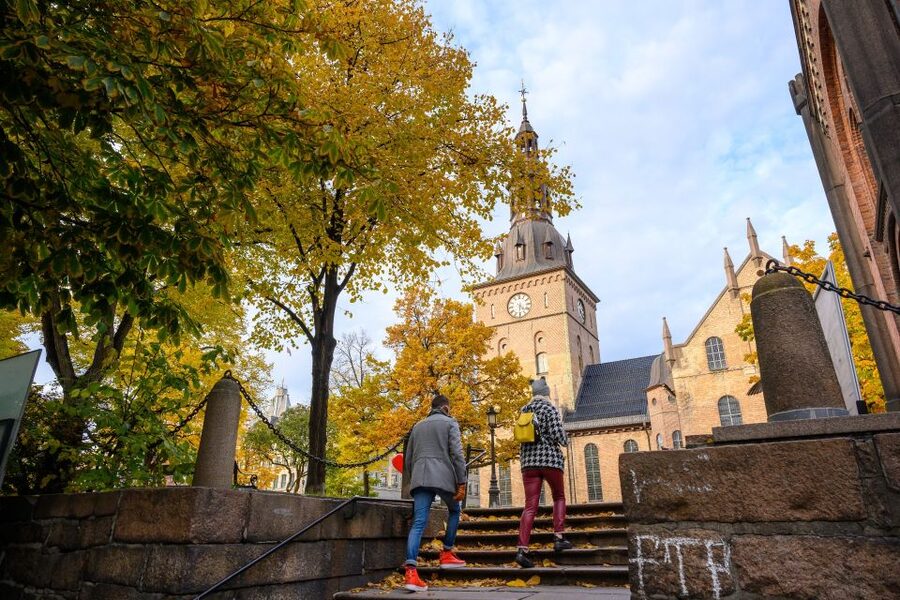
The walk is described as relaxed and manageable, with time for questions, personal anecdotes, and photographs. That makes it a good choice for your first or second evening in Oslo, when you want an introduction without committing to a full-day activity.
Two hours is long enough to cover several central sites but short enough to fit around dinner or another evening plan. Guides keep the group moving, yet the experience is not meant to feel like a race from one landmark to the next.
The evening timing changes with the season. In December, one group walked from 4:00 to 6:00 p.m. and found the city fully dark. Darkness adds atmosphere, but it also makes warm clothing and visible footwear more important. In winter, wind can feel sharper than the temperature suggests. Visitors have enjoyed the tour in conditions around minus 10 degrees, but that does not mean you should arrive in light clothing.
Summer offers a different experience, with longer daylight and the chance of a colorful sunset. In October, the illuminated city and evening sky added to the appeal. The route works year-round, but your comfort will depend heavily on the forecast.
The guide usually shapes the pace as much as the route. Maria is repeatedly praised for being personable, funny, and open to questions. Anastasia is praised for enthusiasm and vivid storytelling. Other guides may lead the walk, so do not book solely on the hope of a particular person unless the provider confirms it.
Price, value, and who should take it
At $42 per person, this is not the cheapest way to walk around central Oslo. You can see many of the same streets on your own for nothing. The question is what you are paying for.
The fee buys two hours of live English commentary, a planned route, local stories, and context that is difficult to assemble from building plaques. If you are interested in folklore, old crimes, Norse beliefs, and the human side of historic places, the price is reasonable. It is especially useful at the start of a stay because guides often suggest other parts of Oslo to visit afterward.
The value is weaker if you only want landmark photographs or a formal tour of fortress interiors. It also may not suit you if you dislike standing outdoors in the cold or prefer self-guided exploration.
The walk is best for adults, solo visitors, couples, and older families with teenagers. One family said children aged eight and ten loved it, but the stated guidance says children under 13 are not suitable, so families should follow the official rule when booking. A 13-year-old who enjoys stories and unusual facts may have a great time, while a younger child may find the darker material or evening timing less comfortable.
The tour is in English only. You do not need food or drinks for the activity, and neither is included. Hotel pickup and drop-off are not included, so plan to reach City Hall and leave from the central area on your own.
Free cancellation is available up to 24 hours before the start time, and you can reserve now and pay later. Those policies help if your Oslo plans depend on weather or changing arrival times.
Should you book the Oslo myths and legends walk?
Book it if you want Oslo explained through stories rather than a plain list of sights. The strongest parts are the connection between folklore and real locations, the Akershus Fortress tales, the unusual crime stories at Bankplassen, and the guides’ friendly delivery.
I would choose it early in a city visit. You will get useful orientation, learn which details to notice, and leave with suggestions for exploring more of Oslo. Just bring warm layers in the colder months, wear solid walking shoes, and remember that the tour is educational folklore, not ghost hunting.
Skip it if you need step-free access, dislike outdoor evening activities, or want a detailed indoor fortress tour. For everyone else, the 4.8 rating from 408 ratings fits the experience: it is a lively, good-value introduction to Oslo’s old streets and stranger stories.
FAQ
How long is the Oslo Historic Myths and Legends Evening Walking Tour?
The tour lasts two hours.
What language is the tour conducted in?
The tour is conducted in English with a live English-speaking guide.
Where does the tour meet?
Meet near the Swans fountain at the entrance to Oslo City Hall on Fridtjof Nansen’s square.
Which places does the walking tour visit?
The route includes Oslo City Hall, Christiania Torv, Akershus Fortress, and Bankplassen, along with other central locations connected to the stories.
Is this a ghost tour?
No. The tour discusses legends about ghosts and underground kingdoms, but it focuses on their historical and cultural meaning. It does not include underground exploration.
What should I bring?
Bring comfortable shoes. In cold, windy, snowy, or dark conditions, you should also dress warmly and appropriately for an outdoor evening walk.
Is the tour suitable for everyone?
The activity is not suitable for children under 13, people with mobility impairments, or wheelchair users. It does not include hotel pickup, hotel drop-off, food, or drinks.
Just added around the world
- Scenic Train ride to historical cities of Morretes and Antonina★ 4.0 · 188 reviews
- 6-Day Cultural Tour to Machu Picchu★ 5.0 · 76 reviews
- Jewish Heritage of Curacao★ 4.5 · 68 reviews
- The Curacao’s Colorful History Walking Tour★ 5.0 · 55 reviews
- Discover Scuba Diving Amathounta’s Ancient Port★ 5.0 · 30 reviews
- Olous – Guided Snorkelling Excursion to Discover Olous Sunken Ancient City★ 4.5 · 31 reviews
- Night Walking Tour of Medieval Cuenca★ 5.0 · 64 reviews
- WWII – The Battle of Crete Day Tour★ 5.0 · 103 reviews
Evening Experiences, compared.

Charleston Harbor History Day-Time or Sunset Boat Cruise
Read our review →
Dubai Evening Heritage Safari by Vintage G Class Al Marmoom Oasis
Read our review →
Charleston: Daytime or Sunset Historic Harbor Cruise
Read our review →
Buda Castle District Dark History, Legends and Vampire Night Tour
Read our review →

Lisbon: Daytime or Sunset Boat Cruise with History and Wine
Read our review →
Gdańsk: Sunset Cruise on a Historic Polish Boat
Read our review →
Creepy Crawl Night-Time Haunted Pub Walking Tour of Savannah’s Historic District
Read our review →Browse the lists this tour appears in