Review · PORTO
Porto Guided Tour to the Historical Center on a Tuk Tuk
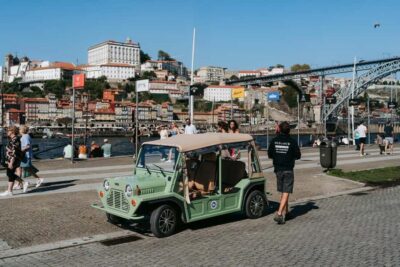
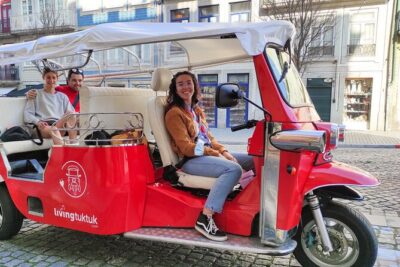
Porto packs steep streets, grand churches, iron bridges, and river views into a tight area. This private tuk tuk tour gives you a quick orientation without asking your legs to climb every hill, while still slipping into narrow lanes that larger vehicles cannot reach. You see the cathedral, São Bento Station, Clérigos, Ribeira, and the Serra do Pilar viewpoint in roughly two hours.
I especially like the chance to cover both Porto and Vila Nova de Gaia in one short outing, and the stop for a small glass of Port wine adds a fitting local touch. The main caution is sound: engine noise and traffic can make the guide hard to hear, and a few people have found the commentary too light or the meeting point difficult to locate.
Key points at a glance
- A fast first look at Porto: The route links the cathedral, São Bento, Clérigos, Ribeira, major bridges, and Serra do Pilar.
- Small private groups: Each tuk tuk carries two, three, or four adults of average height, with larger parties split between vehicles.
- A strong viewpoint stop: The terrace at Serra do Pilar gives you broad views over Porto, Gaia, the Douro, and the Dom Luís I Bridge.
- Short walking breaks: You get out at selected sights, including the cathedral, São Bento, Clérigos, and Serra do Pilar.
- Useful for steep streets: The vehicle saves time and effort on Porto’s hills and reaches narrow cobbled lanes.
- Bring weather protection: The tour needs good weather, and a rainy day can make the open-sided ride cold and wet.
Why a tuk tuk works well in Porto
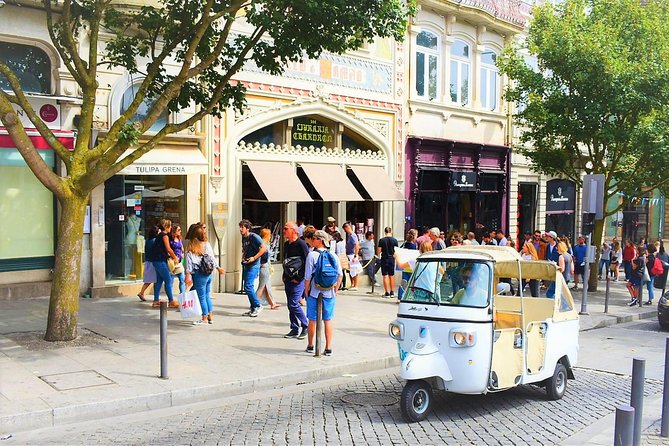
Porto is compact on a map but tiring on foot. The historic center rises and falls sharply, and the most interesting routes often run along narrow, uneven streets. A tuk tuk lets you see more in less time, especially if you are visiting for only a day or want a city overview before exploring on foot.
The small vehicle is also useful for orientation. You can connect the high cathedral district with the central streets, the Clérigos area, the old commercial quarter, the Douro waterfront, and the opposite bank in Gaia. That makes the tour more than a parade of monuments. It helps you understand how Porto fits together.
You should think of this as an introduction, not a full sightseeing visit inside every building. The listed stops at the cathedral, the Episcopal Palace, Clérigos Tower, and other monuments do not include entrance tickets. You usually have a few minutes to look around, take photographs, and hear the story before moving on.
Because this is a private activity, only your group participates. That gives the driver-guide some room to adjust the pace. A good guide may spend more time at a viewpoint, suggest a restaurant, or accommodate a request. Ana, Anna, Victor, Bernardo, Fabian, Gabby, Natalia, and Gonçalo are among the guides praised for humor, local tips, clear planning, or strong historical explanations. The quality can depend heavily on who leads your ride.
More Old Town and Historic Centre Walks in Portugal
- Porto: Historical Center Walking Tour
★ 4.8 · 898 reviews - Porto: Private Tour to the Historic Center in a Classic Car
★ 4.9 · 268 reviews - Porto: Historic Center Tuk-Tuk Tour
★ 4.5 · 244 reviews
From the theatre district to Porto’s medieval wall
The starting point is on Rua de Augusto Rosa, close to Porto’s cathedral. The opening part of the ride brings you through the old upper city and past the Carlos Alberto Theatre, a handsome early twentieth-century building designed by Marques da Silva.
The theatre was built in 1910 after the earlier Real Theatre burned in 1908. Its Louis XVI-inspired front includes decorative symbols linked with pain, quality, hate, and love. You probably will not have time for a performance or an interior visit, but the building gives you an early look at Porto’s mixture of formal architecture and older urban fabric.
You also pass the Fernandine Wall, one of the city’s less obvious remains. Built between 1368 and 1437, it once ran for roughly 3,000 paces and reached an average height of about 30 feet. The wall was funded in part by a wine tax, a small detail that neatly connects Porto’s military past with its long wine trade.
This is one of the better parts of the route for context. You see that Porto was not built as a neat grid. Its old core grew around defensive walls, religious houses, steep lanes, and the river. From a tuk tuk, you can cover the area without losing time to repeated uphill walks.
Porto Cathedral and the Episcopal Palace
The Sé do Porto, or Porto Cathedral, dates from the twelfth and thirteenth centuries. Its Romanesque beginning is still visible, but centuries of additions and changes have produced the medieval-looking version you see today.
The stop is scheduled for about 10 minutes, and entry is not included. That is enough to admire the exterior, the broad setting, and the views around the cathedral, but not enough for an unhurried visit to every part of the complex. If the cathedral is high on your list, plan to return on your own.
Nearby, the Pelourinho at the cathedral terrace is a 1945 reproduction based on a 1797 drawing. It recalls the old civic authority of the city. The open terrace also makes it easier to understand Porto’s steep relationship with the Douro and Gaia across the water.
The Paço Episcopal, or Bishop’s Palace, fills another side of this historic setting. It may date back to the thirteenth century and was remodeled in the eighteenth century, with work linked to Nicolau Nasoni. The grand facade, framed windows, and central coat of arms show the move from medieval power to eighteenth-century display.
You get about five minutes here, and admission is not included. That timing is best for an outside view and a short explanation, not a full palace visit. I would use the tour to mark the building on your map, then return later if you want a slower look.
São Bento Station and the city center
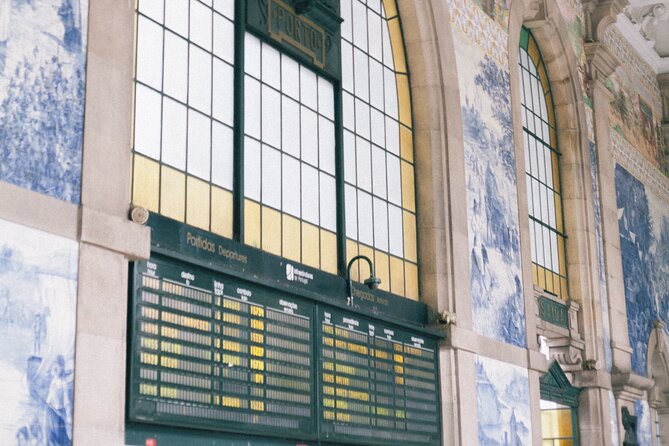
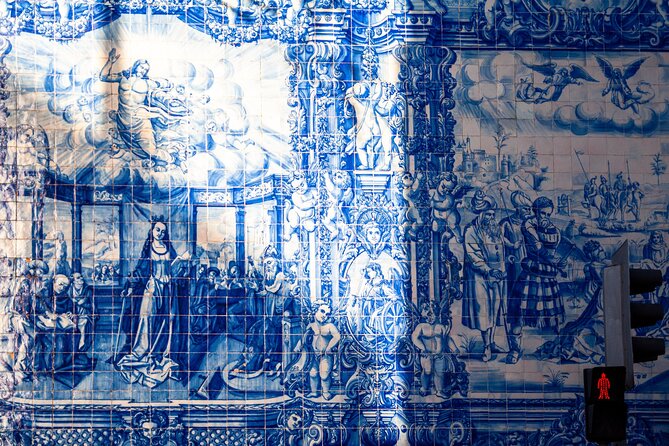
São Bento Railway Station is one of Porto’s essential interiors. Its iron and glass roof is impressive, but the main attraction is the entrance hall, covered with about 20,000 narrative tiles painted by Jorge Colaço.
The tile scenes show episodes from Portuguese history and daily life. Even if you have only a few minutes, the hall gives you a quick lesson in how Portugal uses blue and white tile as both decoration and storytelling. Admission is free, and the scheduled stop is about 10 minutes.
The tuk tuk can help here because the station sits in a busy central area where walking routes cross in several directions. You can step inside, take in the hall, and return to the vehicle without spending a large part of your morning finding your way through traffic.
The route then passes several city squares and fountains. Praça de Dona Filipa de Lencastre began taking its present form in the early eighteenth century, when new streets and a large square replaced an older medieval setting. Praça de Carlos Alberto was once known as the Square of Blacksmiths. Its garden includes a memorial to Portuguese soldiers who died in the First World War.
At Praça de Gomes Teixeira, the Fonte dos Leões adds a playful note. The nineteenth-century fountain was cast in France and is largely a copy of the fountain in Leicester’s Town Hall Square. These smaller details are easy to miss if you concentrate only on Porto’s famous churches, so listen for them during the ride.
More History Tours by Bike, Segway and Tuk-Tuk in Porto:
- Historic Porto by Private Electric Tuk Tuk to Top Landmarks
★ 4.5 · 735 reviews - Historical Singapore Bike Tour on Full-Sized Bicycles
★ 5.0 · 1,421 reviews - Charlotte’s Ultimate Southern Charm Historical City Cart Tour
★ 5.0 · 1,347 reviews - Barcelona: 2.5-Hour Bike or E-Bike Historical Tour
★ 4.5 · 1,262 reviews
Carmo, Carmelitas, and the Clérigos quarter
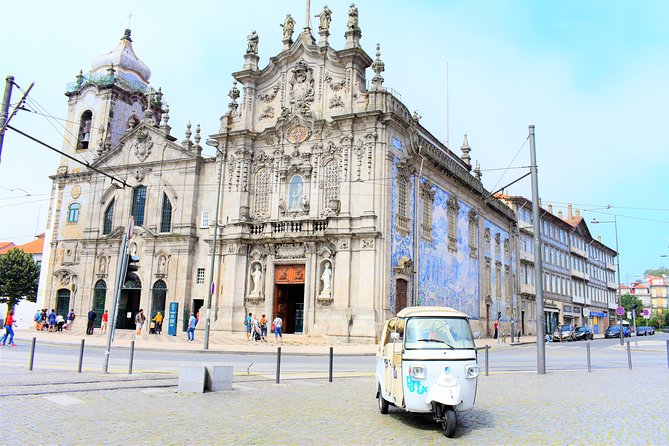
The route continues past two important churches, Igreja dos Carmelitas and Igreja do Carmo. The first has a classical facade and a Porto rococo altarpiece. The second is known for its ornate interior and blue-and-white tiled side facade, added in 1912.
These churches are close together but not identical. Their architecture shows how Porto layered religious buildings, decorative carving, painted tile, and later repairs into a compact neighborhood. The tour may focus on the exterior, and the short timing means you should not expect a full examination of the interiors.
The Cordoaria Garden gives the tuk tuk route a change of pace. The public garden was created in the nineteenth century on land once linked with rope makers. It includes statues and modern sculpture, including work by Juan Muñoz. The garden was remodeled during Porto’s year as European Capital of Culture in 2001.
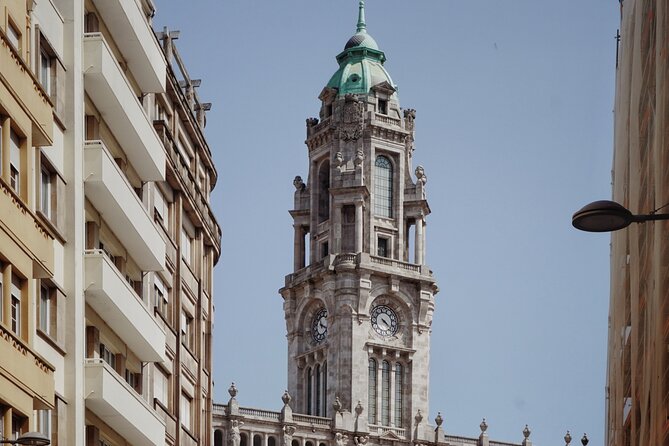
Clérigos Tower is the area’s visual anchor. The Baroque church and tall bell tower can be seen from many parts of Porto. The stop lasts about five minutes, and tower admission is not included. You will have time to identify the building and hear why it matters, but climbing the tower requires a separate visit.
This is a good example of the tour’s value and its limit. You can place the major sights in the city’s layout very quickly. You cannot properly visit all of them during a 1 hour 50 minute ride.
From the old center to Ribeira
The ride then moves toward the lower city and the Douro. Along the way, it passes the Monastery of São Bento da Vitória, a late sixteenth-century religious complex that has served several civic and cultural roles. Parts of the building now connect with the National Theatre São João, while other sections have housed music and archival work.
The Stock Exchange Palace, or Palácio da Bolsa, is another major stop along the historic route. This neoclassical building was designed in 1842 for Porto’s Commercial Association. Its Arabian Room is the famous interior, but entering it requires a separate ticket and more time than this tour allows.
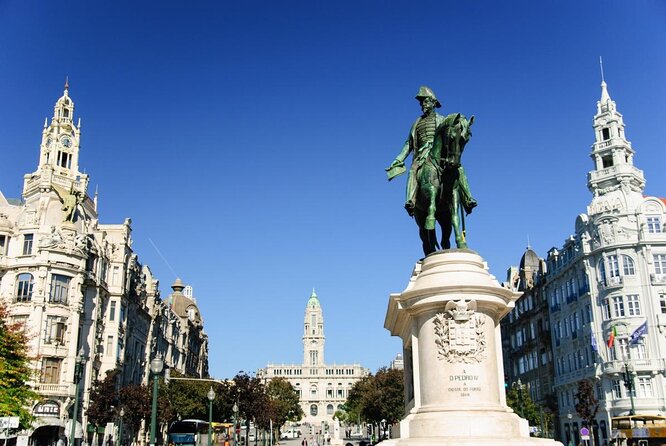
You also pass the statue of D. Pedro IV, unveiled in 1866. Its reliefs recall the donation of D. Pedro’s heart to Porto and the arrival at Mindelo. The monument helps explain the city’s political loyalties, though you may need to ask the guide for the full story if traffic or engine noise interrupts the explanation.
The old Ferreira Borges Market is a fine example of Porto’s iron architecture. Built in 1885 to replace the Ribeira Market, it soon changed purpose and now houses the Hard Club entertainment venue. Beside it, Praça do Infante D. Henrique includes a monument tied to Portugal’s age of navigation.
One of the most striking churches on the route is São Francisco. Construction began in the fourteenth century, while much of the interior received its lavish gilded woodwork in the seventeenth and eighteenth centuries. The Tree of Jesse and the catacombs are important details, but the brief tour stop is not designed for a complete interior visit. The church is a National Monument and part of Porto’s UNESCO-listed historic center.
The Alfândega Nova building, once a nineteenth-century customs house, completes this part of the route. Its iron structure works with stone, brick, and wood, and it now houses the Museum of Transport and Communications along with a congress center. From here, the riverfront setting becomes more apparent.
Serra do Pilar and the best wide view
The tour’s most memorable section is often the crossing to Vila Nova de Gaia and the stop at the Monastery of Serra do Pilar. The monastery began in 1538 and was completed around 1670. Its circular church and circular cloister are unusual, with the cloister supported by 36 Ionic columns.
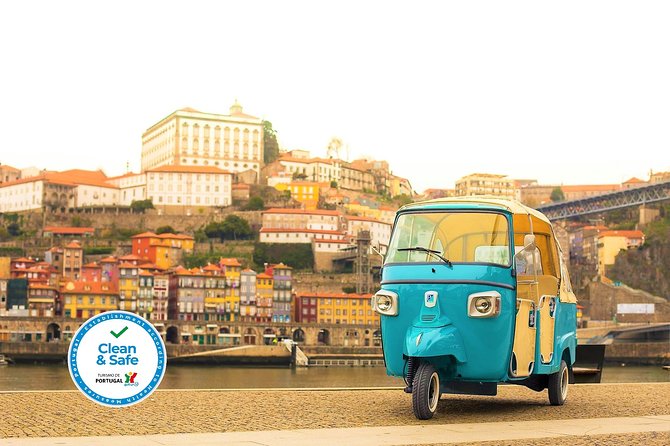
The terrace is the reason to come. From here, you can see Porto’s cathedral, the Dom Luís I Bridge, the riverfront, Gaia, the Fontainhas area, and the São João Bridge. The view explains the geography far better than a street map can.
You get about 15 minutes at Serra do Pilar, the longest named stop on the route. That gives you time for photographs and a proper look around. If you take this tour early in your stay, use this viewpoint to decide which areas deserve a return visit on foot.
The Dom Luís I Bridge is a highlight from this side of the river. Designed by Théophile Seyrig, a student of Gustave Eiffel, it opened in 1886 with two iron decks. Its upper deck now carries Porto’s metro, linking the cathedral side with Gaia and the Garden of Morro.
The route also passes the Infante Bridge, opened in 2003 to replace road traffic on the upper deck of Dom Luís I. Its high arch and clean lines make a useful comparison with the older iron bridge. You get both a nineteenth-century engineering landmark and a modern bridge in one short stretch.
What the ride feels like in practice
Each tuk tuk holds two, three, or four adults of average height, with a stated limit of 75 kilograms per person. Larger groups use multiple vehicles but travel together and stop at the same places.
That capacity matters. A group of four may fit comfortably, but a larger party can feel divided, especially if you want to hear every explanation. One report raised concern about a group of six being placed in a vehicle meant for four, so confirm the vehicle arrangement when booking a larger party.
The route is private, which is a real advantage for families and couples. Children must be accompanied by an adult, and service animals are allowed. Most people can take part, and the meeting point is near public transport.
The main practical weakness is sound. A tuk tuk is open to traffic noise, and you may miss comments while moving. Some guides use a loud, lively style and keep the ride engaging. Others may point out sights without much explanation. If your guide is difficult to hear, ask for important details again at the next stop.
Traffic can also change the plan. Porto’s streets have frequent construction and closures, including work connected with new metro lines. The tour provider says times can change with local traffic, and a cancellation caused by poor weather or road conditions may lead to another date or a full refund.
A raincoat is sensible even when the forecast looks uncertain. The vehicle offers less protection than a closed van, and wind and rain can make the ride uncomfortable. The experience requires good weather.
Is $42.33 a fair price?
At $42.33 per person, the tour is not the cheapest way to look at Porto. You can walk through much of the historic center for nothing, and many churches and public spaces cost little or nothing to enter.
The price makes more sense if you value time, transport, and a private guide. In under two hours, you cover both sides of the river, several hilltop areas, the center, the Ribeira district, and a major viewpoint. You also avoid paying separate taxi fares between scattered sights.
The Port wine glass is included, as are the driver-guide and local guide. Monument entry is not included, so budget separately if you want to enter the cathedral, Clérigos Tower, the Episcopal Palace, the Stock Exchange Palace, or São Francisco Church.
I see the best value for a first morning in Porto, especially if you have limited mobility, limited time, or a family that will tire on steep streets. If you have several days and enjoy walking slowly, you may prefer to use this money for a smaller number of paid interiors and explore the lanes at your own speed.
Who should book this Porto tuk tuk tour?
Book it if you want a broad first look rather than a detailed monument visit. It suits first-time visitors, short stays, families, couples, and anyone who wants help understanding Porto’s unusual geography.
It is also useful for photography. Guides have taken groups to good viewpoints, and Serra do Pilar gives you the kind of wide city view that is hard to find from the lower streets.
You may want to skip it if you dislike open vehicles, need uninterrupted commentary, or prefer long visits inside churches and museums. You should also avoid booking it as your only plan on a wet or windy day.
My best advice is to schedule it near the start of your stay. Use the ride to mark São Bento, Clérigos, Ribeira, Gaia, and the viewpoints you want to revisit. A strong guide, such as Ana, Anna, Victor, or Gonçalo, can turn a quick circuit into a useful local orientation. A weak guide leaves you with little more than a drive past buildings, so the guide assignment matters.
FAQ
How long does the Porto tuk tuk tour last?
The experience lasts approximately 1 hour and 50 minutes.
Where does the tour start and finish?
It starts at R. de Augusto Rosa 180, 4000-528 Porto, Portugal, and finishes back at the same meeting point.
Is the tour private?
Yes. Only your group participates in the activity.
How many people fit in one tuk tuk?
Each tuk tuk holds two, three, or four adults of average height, with a stated limit of 75 kilograms per person. Larger groups use multiple vehicles and travel together.
Is Port wine included?
Yes. A Port wine glass is included in the experience.
Are monument entrance fees included?
No. Entrance tickets for monuments are not included in the tour price.
Can children take the tour?
Yes, but children must be accompanied by an adult.
What happens if the weather is poor?
The experience requires good weather. If it is canceled because of poor weather, you will be offered another date or a full refund. Free cancellation is available when you cancel at least 24 hours before the start time.
More Tuk-Tuk Rides in Porto
- Madrid Historical Tour with Local Guide in Eco Tuk Tuk Private
★ 5.0 · 876 reviews - Explore Lisbon by Tuk Tuk: History and Viewpoints
★ 5.0 · 840 reviews - Private Tuk Tuk Tour Through Lisbon’s Historical Streets
★ 5.0 · 734 reviews - Lisbon: Guided Tuk-Tuk Tour Along the Historic Tram Line 28
★ 4.8 · 475 reviews
More Old Town and Historic Centre Walks in Porto
- Porto: Private & Flexible Walking Tour in Historic Center
★ 4.5 · 35 reviews - Porto: Historical Center Walking Tour
★ 4.8 · 33 reviews - Madrid Essential: Historic Center, Plaza Mayor & Royal Palace
★ 5.0 · 6,416 reviews - Lisbon: Live Fado Show with Port Wine in Historic Center
★ 4.7 · 4,166 reviews
Just added around Porto
- Porto: History & Lengends walking tour★ 5.0 · 31 reviews
- Porto: Private Tour to the Historic Center in a Classic Car★ 4.9 · 268 reviews
- PORTO: Historical Walking Tour★ 4.8 · 92 reviews
- Porto: Private & Flexible Walking Tour in Historic Center★ 4.5 · 35 reviews
- Porto: Historic Center Tuk-Tuk Tour★ 4.5 · 244 reviews
- Porto: Historical Center Walking Tour★ 4.8 · 33 reviews
- From Porto: Full-Day Douro Historical Tour★ 4.6 · 120 reviews
- Braga & Guimarães Tour: Small Historical Group Tour★ 4.9 · 98 reviews
Porto History Tours, compared.

Douro Valley: Historical Sites, Wine Experience, Lunch & Cruise
Read our review →
Porto: An Intimate Fado Show in a Historical Tavern
Read our review →

Porto: Private Tour of the Historic City in a Ford T Car
Read our review →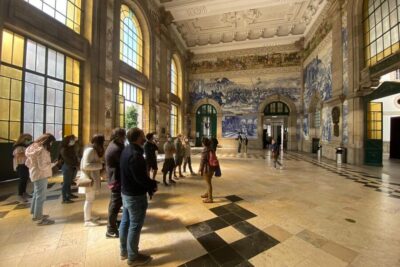
Historic Porto by Private Electric Tuk Tuk to Top Landmarks
Read our review →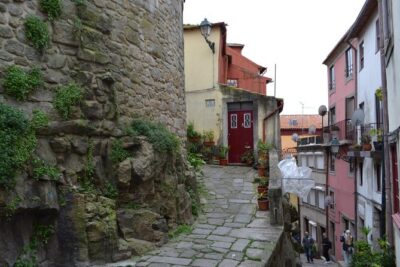
3-Hour Porto Jewish Heritage Walking Tour with Local Guide
Read our review →