Review · PORTO
Porto: Historical Center Walking Tour
Porto’s old center makes far more sense when you see it on foot. This 2.5-hour route links the hilltop Sé Cathedral, the riverfront Ribeira, the old defensive wall, grand monuments, and narrow stairways into one useful first look at the city. Lucas is the main guide named, and his storytelling, local tips, and easy adjustments to guests’ interests are a major strength.
I like the route’s broad sweep and its steady pace. You get both famous sights, such as São Bento Station and Livraria Lello, and less polished lanes leading toward Ribeira and the former Jewish quarter. The main drawbacks are Porto’s hills, uneven streets, and the fact that the tour is not suitable for people with mobility impairments. Meeting Lucas may also take a little care, since one person found the statue meeting point hard to spot without a sign.
Key points to know before booking
- A useful first look at central Porto: The route connects the cathedral, riverfront, civic center, churches, station, and major viewpoints.
- Lucas brings the history to life: He is praised for clear explanations, anecdotes, local restaurant advice, and adapting the walk to your interests.
- Expect hills and steps: The route uses alleys, stairways, and historic streets, so comfortable shoes matter.
- São Bento gets extra time: The station receives a 30-minute guided stop, longer than the other listed locations.
- The price is reasonable for orientation: At $32 per person, you are paying for a focused local introduction rather than admission tickets or transport.
- Plan for English or Spanish: The live guide operates in those two languages.
Why this walk is a smart way to meet Porto
Porto can feel confusing at first. The city rises sharply from the Douro, the riverfront sits below the cathedral, and several historic districts are connected by stairways rather than obvious streets. This tour gives you a mental map early in your stay.
You begin beside the Estátua de Vímara Peres, near Sé Cathedral. From there, the route works downhill toward Ribeira, then loops back through the historic center and climbs toward the monuments around Cordoaria, Vitória, and Clérigos. It finishes where it started, which makes the walk practical for planning the rest of your day.
I especially like the route’s mix of religious, commercial, civic, and residential history. Porto is not presented as a row of isolated photo stops. Instead, you see how the cathedral hill, river trade, churches, courts, bookshops, and railway station fit together.
The guide also adds value beyond fixed facts. Lucas has offered advice on small port producers, local restaurants, and other places to see. That sort of practical help can save you from spending your first evening in a tourist trap, although recommendations naturally depend on your own taste and opening hours.
More History Walking Tours in Portugal
- Porto: Historic City Center Walking Tour
★ 4.7 · 1,172 reviews - Porto: Historical Center Walking Tour
★ 4.8 · 898 reviews - 3-Hour Porto Jewish Heritage Walking Tour with Local Guide
★ 4.5 · 396 reviews
Starting at Sé Cathedral and the Bishop’s Palace
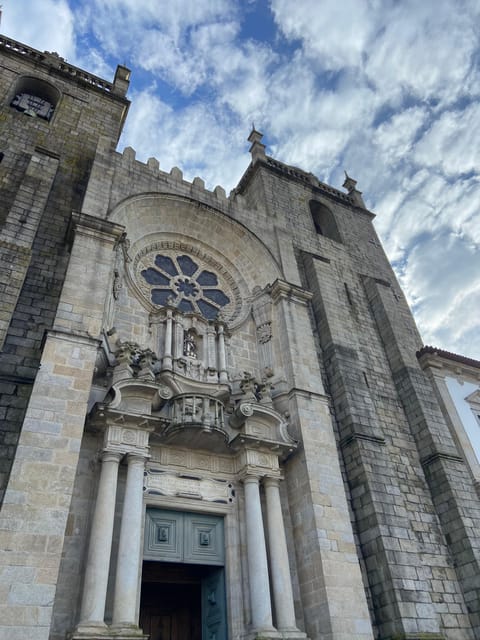
The first major stop is Porto Cathedral, known locally as Sé. The cathedral area gives you a strong opening because it sits high above the older city and helps explain Porto’s religious and political past.
You receive about 15 minutes of guided attention here. That is enough for a clear introduction, but not enough for an extended architectural study or a slow visit to every part of the cathedral complex. If you want a detailed look inside, plan separate time before or after the walk.
Next to the cathedral is the Paço Episcopal, or Bishop’s Palace. Its position reinforces the influence of church authorities in Porto’s development. The tour connects this building to the broader Judeo-Christian framework that shaped Portugal, while also pointing toward the city’s Jewish past.
The meeting point is convenient, but give yourself time to find the correct statue. The Estátua de Vímara Peres is near the cathedral, and one person found the guide difficult to identify without a sign. Confirm the guide’s appearance or contact details before setting out.
Down through alleys to Ribeira
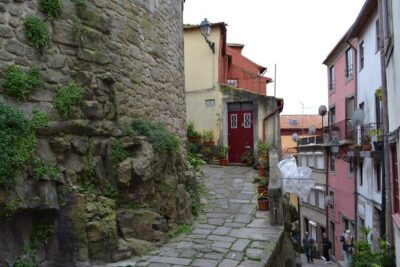
From the cathedral area, the walk heads down toward Ribeira. This is one of the most useful sections because the route shows how sharply Porto changes in a short distance.
You move through alleys and stairways toward the old riverside traders’ neighborhood. Ribeira’s position beside the Douro helps explain its commercial importance. The river was not simply scenery. It supported the movement of goods, people, and port wine, and it shaped Porto’s character as a trading city.
The guided stop lasts about 15 minutes. That gives you time to understand the district and take in the setting without turning the tour into a long riverside pause. You will want to look around as you walk, but keep your attention on the paving underfoot. Porto’s old lanes can be uneven, and the downhill section can be hard on knees.
This is also where the tour feels most connected to everyday city structure. You see how the upper town relates to the riverfront rather than visiting Ribeira as a separate attraction. For a first day in Porto, that connection is valuable.
Following the old wall near Palácio da Bolsa
The route then brings you toward Palácio da Bolsa, the Stock Exchange Palace. This grand building represents Porto’s commercial and civic ambitions, offering a useful contrast to the cathedral and narrow Ribeira lanes.
The listed guided stop lasts 15 minutes. The tour information does not promise an interior admission, so you should treat this as a guided look at the monument and its place in the city rather than assume a full palace visit. If the ornate interiors are high on your list, check separately for an entry visit.
The route also follows the path of the 14th-century defensive wall as it loops around the historic center. That detail helps you read Porto’s streets. Instead of seeing random turns, you begin to understand where the old city was protected and how later growth pushed beyond its earlier limits.
The combination of wall history and Palácio da Bolsa works well. One tells you about defense and the shape of medieval Porto. The other points to trade, business, and the city’s later public life.
More Old Town and Historic Centre Walks in Portugal
- Porto Guided Tour to the Historical Center on a Tuk Tuk
★ 4.5 · 418 reviews - Porto: Private Tour to the Historic Center in a Classic Car
★ 4.9 · 268 reviews - Porto: Historic Center Tuk-Tuk Tour
★ 4.5 · 244 reviews - Porto: Private & Flexible Walking Tour in Historic Center
★ 4.5 · 35 reviews
Vitória, the Jewish quarter, and Cordoaria
The walk continues through Vitória and toward the former Jewish quarter known as Juderia do Olival. This section is important because it widens the story beyond churches and famous monuments.
The description emphasizes the walk up to the Jewish quarter, so expect some climbing. Porto’s history was shaped by more than one religious community, and this part of the route adds a needed layer to the city’s story. The information available does not specify a separate interior visit or a preserved museum stop here, so the value lies mainly in the streets, setting, and guide’s explanation.
Cordoaria brings you back toward a part of town filled with major monuments. The route connects this area with the Palace of Justice, Clérigos, Livraria Lello, and other landmarks. You get a sense of how compact Porto’s central sights are, even though the hills make them feel farther apart.
This is where Lucas’s flexibility appears especially useful. Several people found that he adjusted the route or discussion to their interests. That does not mean you can redesign the entire walk, but it suggests you can ask questions instead of simply following a fixed speech.
Clérigos Church and Livraria Lello
Clérigos Church and its tower are among Porto’s best-known landmarks. They also provide a clear reference point for the city center. A 15-minute guided stop gives you context about the monument and its place in Porto’s skyline.
The tour does not list tower admission, so do not book this expecting to climb Clérigos as part of the $32 price. You can use the walk to decide if a separate visit fits your schedule.
Nearby, Livraria Lello draws huge interest because of its famous interior and striking staircase. The route includes a 15-minute guided stop, but again, the information does not state that admission is included. The guide can help explain why the bookshop matters and where it sits within the historic center, while you should arrange a separate ticket if you want to go inside.
This distinction matters for value. The tour gives you an informed introduction to several major sights, but it is not an all-inclusive entry pass. You pay for the walking route and guide, not guaranteed access to every monument.
São Bento Station gets the longest stop
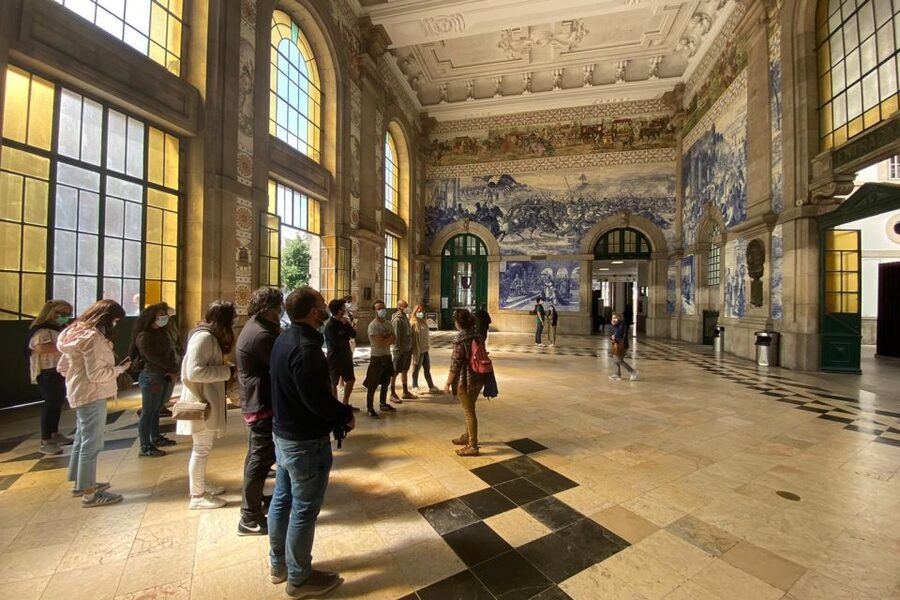
São Bento Station receives 30 minutes, twice the listed time of most other stops. That extra attention is well judged because the station is more than a transport hub. Its decorative interior is one of the city’s signature sights, and you need a little time to look properly.
The stop also offers a break from the steepest parts of the route. You can focus on the building, ask questions, and connect Porto’s railway age with the older religious and commercial districts already covered.
As with the other locations, the supplied details identify this as a guided stop but do not spell out an admission arrangement. The station is a working public place, yet access conditions can change. Ask the guide what you can see during the tour and plan extra time if you want a slower visit.
The station is also a practical orientation point. From here, it is easier to understand the relationship between the cathedral, Aliados, Clérigos, and the lower riverfront. A good guide should help you turn that visual impression into a usable map, and Lucas is repeatedly praised for doing exactly that.
Avenida dos Aliados and the return uphill
Avenida dos Aliados brings the route into Porto’s grand civic center. Its broad avenue and public buildings feel very different from Ribeira’s tight lanes. That contrast is one of the walk’s strengths.
The guided stop lasts about 15 minutes. You will hear about the city’s public face and see how Porto expanded and presented itself beyond the medieval core. The change in scale gives the tour a clear rhythm: cathedral hill, river quarter, old wall, monuments, station, and civic avenue.
The route then returns to the Bishop’s Palace area and ends near the original statue. Since the walk includes several climbs, you should not judge the pace only by the 2.5-hour duration. Porto’s hills make even a steady walk more demanding than a flat city stroll.
Wear shoes with good grip and choose comfortable clothing. The activity specifically warns that it is not suitable for people with mobility impairments. If you have only mild difficulty with hills, contact the provider before booking rather than assuming the route can be shortened.
What the $32 price really covers
At $32 per person, the cost is fair if you want a local introduction to Porto’s center. You receive 2.5 hours of guiding, a route that connects many major sights, and advice that can help shape the rest of your visit.
The value is strongest for first-time visitors. Instead of paying for separate sightseeing walks in Ribeira, Sé, Clérigos, Aliados, and São Bento, you cover the main historic layout in one session. The guide’s local recommendations also add something a map cannot provide.
The price is less attractive if you mainly want interior access. No admission tickets are listed, and the tour gives many places only 15 minutes. You should see it as a city orientation walk with historic explanation, not as a series of full monument visits.
The booking terms are useful for uncertain plans. You can reserve now and pay later, and cancellation is free up to 24 hours before the activity for a full refund. Starting times depend on availability, so check the schedule that fits your arrival day.
Lucas, Andreia, and the guiding style
Lucas receives the clearest and most consistent praise. He is described as personable, passionate about Porto, good at explaining national and city history, and able to answer questions. His style appears to be warm rather than formal, with anecdotes that keep the route moving.
He also seems willing to adapt. That matters on a walking tour with many possible interests. You can ask more about religious history, Jewish heritage, port wine, architecture, or local food instead of receiving the same level of detail at every stop.
One booking credits Andreia as the guide, so Lucas may not lead every departure. The provider lists English and Spanish, and the available guide may vary by date. If having a particular guide matters to you, confirm before booking.
The overall rating is 4.8 from 33 reviews, with repeated praise for the clear explanations, steady pace, local suggestions, and ability to make Porto’s past feel connected to the streets around you. One minor practical criticism concerns finding the guide at the statue. Arrive early and keep your booking information handy.
Who should book this Porto walk?
I would choose this tour for a first or second day in Porto. It gives you enough structure to understand the old center, while leaving the rest of your stay open for museums, wine lodges, longer meals, and separate monument visits.
It suits you if you enjoy walking, want history explained in plain language, and prefer a local guide over an audio recording. It is also useful if you want restaurant advice and suggestions for smaller port producers.
It is a weaker match if you need step-free access, dislike hills, or want long interior visits. The route covers a lot of ground, and the 15-minute stops are designed for orientation rather than close study.
Should you book it?
Book this Porto Historical Center Walking Tour if you want the city to make sense quickly. For $32, you get a well-planned route through Sé, Ribeira, the old wall, Vitória, Clérigos, Livraria Lello, Aliados, São Bento, and the Bishop’s Palace, with a local guide who can add useful advice.
I would book it early in a Porto stay, then return on your own to the sights that deserve more time. Just wear proper shoes, allow for hills, do not assume monument entry is included, and confirm how to identify the guide at the Estátua de Vímara Peres.
FAQ
How long does the Porto Historical Center Walking Tour last?
The tour lasts 2.5 hours.
What is the price?
The price is $32 per person.
Where does the tour start?
It starts next to the Estátua de Vímara Peres near Porto Cathedral.
Which languages are available?
The live tour is available in English and Spanish.
Is the tour suitable for people with mobility impairments?
No. The activity is not suitable for people with mobility impairments, and the route includes hills, alleys, and stairways.
What should I bring?
Bring comfortable shoes and comfortable clothes.
More History Walking Tours in Porto
- Porto: Jewish Heritage Walking Tour
★ 4.7 · 266 reviews - PORTO: Historical Walking Tour
★ 4.8 · 92 reviews - Porto: History & Lengends walking tour
★ 5.0 · 31 reviews - History and Hauntings of Salem Guided Walking Tour
★ 5.0 · 14,564 reviews
More Old Town and Historic Centre Walks in Porto
- Madrid Essential: Historic Center, Plaza Mayor & Royal Palace
★ 5.0 · 6,416 reviews - Lisbon: Live Fado Show with Port Wine in Historic Center
★ 4.7 · 4,166 reviews - Valencia Old Town Tour with Wine & Tapas in 11th Century Historic Monument
★ 5.0 · 3,234 reviews - Prague Old Town, Medieval Underground and Dungeon Historical Tour
★ 4.5 · 3,227 reviews
Just added around Porto
- Porto: History & Lengends walking tour★ 5.0 · 31 reviews
- Porto: Private Tour to the Historic Center in a Classic Car★ 4.9 · 268 reviews
- PORTO: Historical Walking Tour★ 4.8 · 92 reviews
- Porto: Private & Flexible Walking Tour in Historic Center★ 4.5 · 35 reviews
- Porto: Historic Center Tuk-Tuk Tour★ 4.5 · 244 reviews
- From Porto: Full-Day Douro Historical Tour★ 4.6 · 120 reviews
- Braga & Guimarães Tour: Small Historical Group Tour★ 4.9 · 98 reviews
- “Porto: Fado Show with Guided Tour in a Historic Monastery”★ 4.9 · 164 reviews
Porto History Tours, compared.

Douro Valley: Historical Sites, Wine Experience, Lunch & Cruise
Read our review →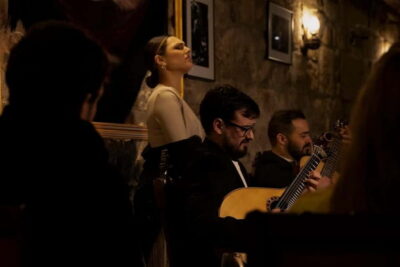
Porto: An Intimate Fado Show in a Historical Tavern
Read our review →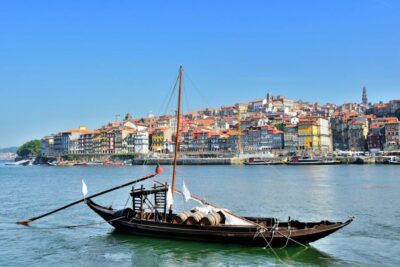

Porto: Private Tour of the Historic City in a Ford T Car
Read our review →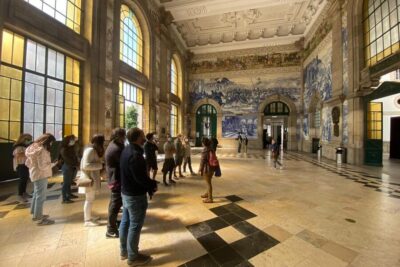

Historic Porto by Private Electric Tuk Tuk to Top Landmarks
Read our review →
Porto Guided Tour to the Historical Center on a Tuk Tuk
Read our review →