
Review · PORTO
3-Hour Porto Jewish Heritage Walking Tour with Local Guide
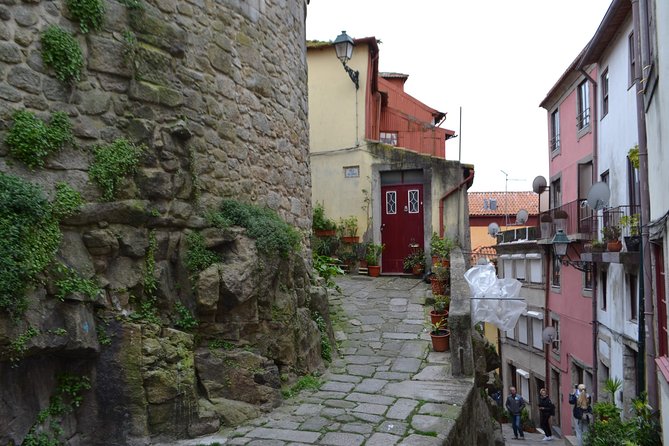
Porto’s Jewish story is largely a story of traces. You will not spend this tour walking through a preserved medieval Jewish district. Instead, your guide helps you read the city itself, pointing out former quarters, old gateways, memorials, and places where centuries of Jewish life were pushed out of sight. That makes this three-hour walking tour especially useful if you want history with a strong sense of place.
I like two things here. First, the route connects Jewish history with Porto’s rise as a merchant city, rather than treating the subject as a footnote. Second, guides such as Ricardo, Pedro, and Pablo bring research, old images, and plenty of local context to streets that can otherwise look ordinary. The catch is clear: this is a hilly walk with stairs, and much of the physical heritage has disappeared.
Key points to know before you book
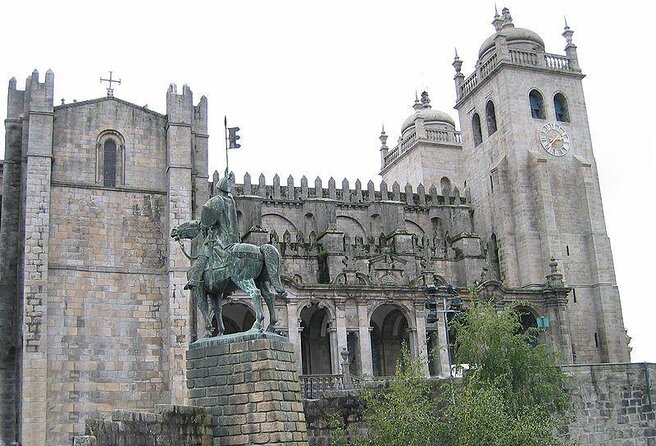
- The tour begins at Porto Cathedral, a central but busy meeting point in the old city.
- You follow the outlines of several former Jewish quarters, both inside and outside Porto’s medieval walls.
- The Portuguese Inquisition is a major part of the story, including forced conversion, confinement, and attempts to erase Jewish identity from public memory.
- Ricardo is especially praised for his research and presentation, while Pedro and Pablo are also noted as engaging guides.
- The route includes steep streets, stairs, cobbles, and viewpoints, so comfortable shoes are essential.
- The Porto Synagogue and Jewish Museum are not included, making this a street-based history tour rather than a museum visit.
Why Porto’s Jewish past is easy to miss
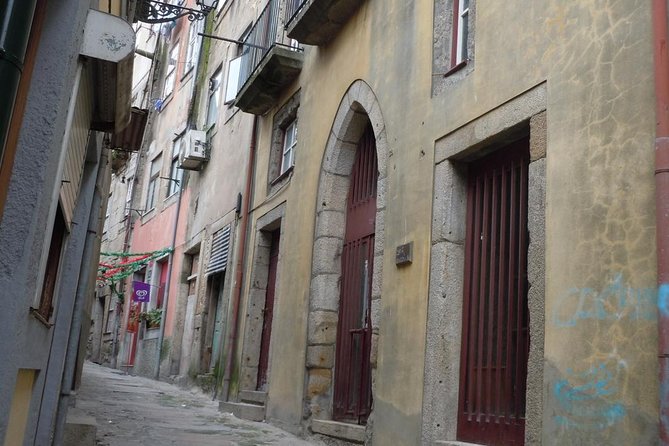
Porto has an important Jewish past, but it is not presented in one neat historic district. Centuries of persecution, forced conversion, redevelopment, and deliberate removal of Jewish markers mean that you often need someone to explain what you are seeing.
That is the central value of this experience. Your guide gives meaning to places that might otherwise pass unnoticed. A medieval gate, a church, a fountain, or a view over the old city can become part of a larger story about Jewish merchants, religious restrictions, and the pressure placed on Jewish communities in Portugal.
You also learn how Jewish residents helped establish Porto’s merchant trade during the city’s early years. The subject is not limited to religion. It reaches into commerce, city building, neighborhood life, and Portugal’s changing political climate.
The tour also explains the difference between Jewish life before the Portuguese Inquisition and the later period when conversion and concealment became matters of survival. That wider setting helps you understand why so few obvious remains are visible today.
More History Walking Tours in Portugal
- Porto: Historic City Center Walking Tour
★ 4.7 · 1,172 reviews - Porto: Historical Center Walking Tour
★ 4.8 · 898 reviews - Porto: Jewish Heritage Walking Tour
★ 4.7 · 266 reviews
Starting at Porto Cathedral
The meeting point is Porto Cathedral, Terreiro da Sé. This is a practical place to begin because it puts you in the heart of Porto’s oldest quarter, but you should allow time to find it. One person who arrived late had trouble following public transport directions and locating the meeting point, so I would not leave this for the last minute.
The cathedral stop is brief, listed at about 10 minutes, and admission is free. You are not signing up for a long cathedral tour. Instead, the building serves as the opening frame for Porto’s religious and civic history.
From here, your guide explains the role Jewish residents played in the city’s commercial life. That opening matters because it places the Jewish community inside Porto’s development, rather than presenting it as an isolated group existing apart from the city.
The cathedral area is also a useful orientation point. Porto’s old center is full of slopes and tightly packed streets, and the route soon begins to make use of both.
Ribeira Square and the old Jewish quarter
The route moves toward Praça da Ribeira, where you spend roughly 15 minutes hearing more about the old Jewish quarter. This is one of the better places to connect the story of Jewish life with Porto’s riverfront trade.
The square itself is a busy historic setting, but the Jewish story here is less about a single preserved building and more about how neighborhoods functioned. Your guide traces the outline of a former quarter and explains how Jewish residents lived and worked within the city.
I find this kind of explanation more useful than simply looking at an old wall. It shows you how the community was tied to trade and city life, while also explaining the restrictions placed on where people could live.
Do not expect a fully restored Jewish quarter with readable signs at every turn. The route asks you to use your imagination, guided by the details your leader points out. If you want visible architecture at every stop, you may find the experience frustrating. If you want help understanding absence, it is much more rewarding.
Monastery, memorials, and erased evidence
At Mosteiro de São Bento da Vitória, the tour pauses for about 10 minutes. The stop adds another layer to the story of how Jewish history was remembered, altered, or left out of the city’s public record.
You then visit Igreja Paroquial de Nossa Senhora da Vitória, another place connected with memorial information. These stops are not museum visits, and there is no separate entrance included. Their value comes from the guide’s explanation of what happened in and around these sites.
Several people who have taken the tour praise guides for bringing printed photographs and historical documents into the walk. Ricardo, in particular, is often singled out for his preparation, depth of study, and ability to answer questions without losing the group’s attention.
That can make a major difference here. Without the guide, a church or monastery may appear to have little connection with Jewish Porto. With the right explanation, it becomes part of the story of conversion, public memory, and the long process by which Jewish identity was suppressed.
More Jewish Heritage Tours in Portugal
- Lisbon Jewish Heritage and History – Private Tour Van
★ 5.0 · 294 reviews - Lisbon: Jewish History Tour of Lisbon
★ 4.8 · 84 reviews - Lisbon: Jewish History Private Tour
★ 4.8 · 59 reviews - Lisbon: Jewish History in Portugal Guided Walking Tour
★ 4.6 · 52 reviews
Postigo do Carvão and medieval Porto
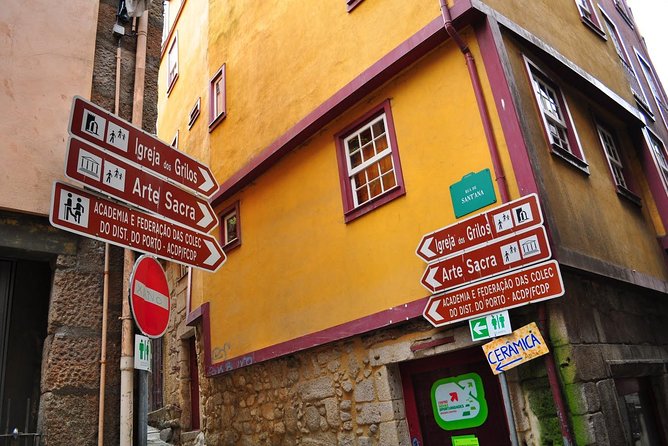
Postigo do Carvão is one of the route’s most tangible historic points. This former medieval gateway gives you a clearer sense of Porto’s old defenses and the way people moved through the city.
The stop lasts about 10 minutes. Your guide uses the gate to explain the physical shape of medieval Porto and the relationship between the city walls, the river, and the old neighborhoods.
This is also where the tour’s focus on Jewish quarters inside and outside the walls becomes easier to picture. You are not simply hearing a list of dates. You are seeing the limits of the medieval city and learning how Jewish residents occupied different parts of it over time.
The gate is a good reminder that Porto’s past is layered. A place built for movement and defense can also tell a story about separation and confinement. That is one reason I would take notes or photos of the sites as you go. Later, the details can blur together.
From the old streets to Porto’s viewpoints
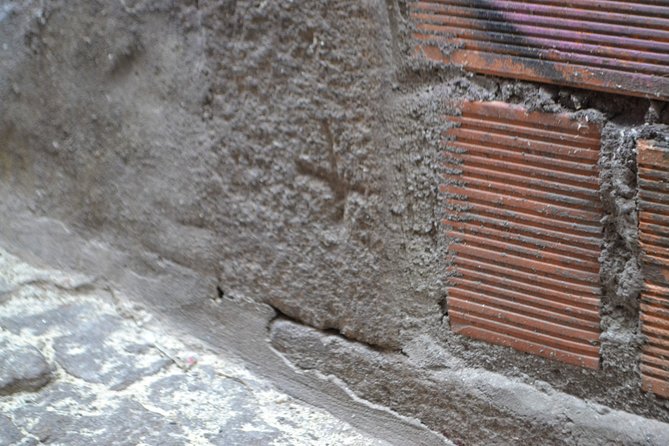
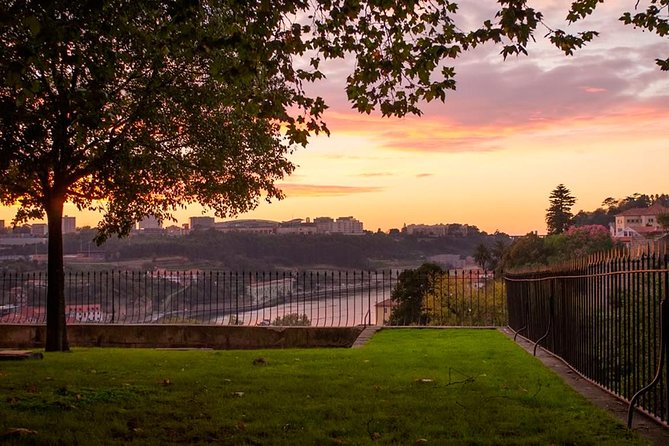
The walking route includes Passeio das Virtudes and Miradouro da Vitória. These viewpoints offer some of the best visual pauses of the tour.
At Passeio das Virtudes, you get a broad view across Porto’s lower city and the Douro area. At Miradouro da Vitória, the guide points out another angle on the old center. The views give your legs a break and help you understand the city’s steep layout.
They also add emotional weight to the history. You can look across rooftops and older streets while hearing about communities that once lived in this same city but left behind few visible signs.
The final listed stop is Passeio das Virtudes. The tour description also places the finish around Ribeira Square, about a 10-minute walk from the cathedral, so it is worth checking the exact ending point with the operator on the day. Either way, you finish in the historic center rather than at your hotel, with easy access to continue exploring on foot.
Chafariz da Porta do Olival and the story of confinement
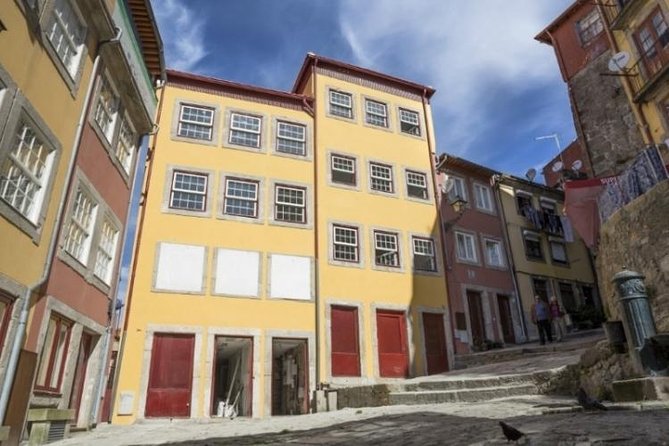
Chafariz da Porta do Olival is another short stop, lasting about 10 minutes. Here the guide continues the story of medieval Porto and the former Jewish areas around the city.
One of the most important details on the route is a gate that once opened onto a medieval ghetto. The explanation of this site helps you understand that Jewish residents were not merely living in a convenient neighborhood. At times, they were confined by law and separated from other residents.
The tour also addresses the Portuguese Inquisition and its treatment of Jewish people. You hear how the Inquisition persecuted Jewish communities and how authorities worked to erase their role from the national story.
This section is serious, and rightly so. The tour does not turn persecution into a dramatic prop. Instead, the guide connects the policies to the physical city, showing you where separation happened and why the surviving evidence is so limited.
How difficult is the three-hour walk?
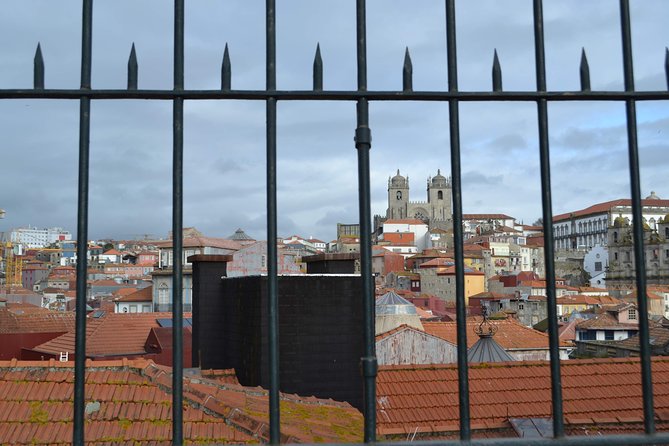
You should take the physical demands seriously. Porto is built on hills, and this route includes steep streets, stairs, old cobbles, and uphill sections. One description of the experience called the walk difficult for anyone not prepared for hills, while another stressed that it remained manageable with good shoes.
I would rate it as a city walk for people with a solid level of fitness. You do not need to be an athlete, but you should be comfortable walking for three hours and handling repeated climbs.
Wear shoes with firm soles and good grip. Wet weather can make the old streets slippery, so dress for the forecast. The tour operates in all weather conditions unless poor weather leads to cancellation and a different date or refund.
There are viewpoints and pauses along the route, but this is not an easy, flat stroll. If stairs and hills are a concern, a private tour could let your group discuss the pace with the guide, though the basic terrain remains the same.
Guides who make the difference
The strongest part of this experience is the guide. Ricardo receives the most praise for his research, clear English, enthusiasm, and ability to keep the group involved. He uses photographs and documents to show what has vanished, and he connects Jewish history with the wider story of Porto and Portugal.
Pedro is also described as friendly and well prepared, taking time to explain the old neighborhoods and answer questions. Pablo is praised for bringing energy and humor to the subject without losing sight of the history.
Guide quality always varies by date, but the experience clearly depends on having someone who can interpret the city well. A quiet route with few surviving Jewish buildings needs a strong storyteller. The best guides turn that limitation into the point of the tour.
The tour is offered in English. The usual group can be small, with private bookings limited to your own party and nonprivate departures capped at 10 according to the tour description. Another detail lists a maximum of 20, so group size may depend on the departure type or booking arrangement. If a small group matters to you, confirm it when booking.
What the price includes, and what it does not
At about $36.30 per person, the price is fair if you value interpretation more than admission tickets. You are paying for about three hours with a local professional guide, not for entry to a collection of preserved historic interiors.
The route itself uses free public spaces. There is no hotel pickup, and you will need to reach Porto Cathedral on your own. The Porto Synagogue and Porto Jewish Museum are not part of the tour, either.
That distinction matters. I would see this as an introduction to Jewish Porto and a walking orientation, not a complete Jewish heritage day. You can use what you learn here to decide if you want to visit the synagogue or museum separately.
Group discounts may be available, and you can choose a morning or afternoon departure. Morning is likely the safer choice if you want to walk before the day becomes hot or if you have other plans later. The afternoon option can work well if you arrive in Porto later or prefer a slower start.
Free cancellation is available until 24 hours before the start time. Changes or cancellations made inside that window are not refundable. If poor weather causes the operator to cancel, you are offered another date or a full refund.
Who should book this Porto walking tour?
I would recommend it to you if you have a serious interest in Jewish history, Portuguese history, or the way a city preserves and forgets its past. It is also a good choice early in a Porto visit because the route helps you understand the old center’s hills, walls, gates, and riverfront connections.
You will get the most from it if you enjoy listening, asking questions, and looking closely at places that do not announce their past. The guides are praised for answering questions and adding useful suggestions about other places to see and eat.
I would hesitate if you want a tour filled with intact synagogues, museum galleries, or dramatic architectural remains. There is very little specifically Jewish architecture left to see. The experience is strongest when you accept that its subject is partly the disappearance of a community from the visible city.
Should you book it?
Book this tour if you want the human story behind Porto’s old streets and you are willing to walk uphill for it. The price is reasonable for a three-hour guided route, and the strongest guides, especially Ricardo, add detail that you would be unlikely to notice alone.
Skip it if you need a flat route or expect entry to the synagogue and Jewish Museum. For everyone else, this is a thoughtful way to see Porto from a less familiar angle. Bring comfortable shoes, arrive early at the cathedral, and treat the missing evidence as part of the lesson.
FAQ
Where does the Jewish heritage walking tour begin?
The tour begins at Porto Cathedral, at Terreiro da Sé, 4050-573 Porto, Portugal.
Where does the tour finish?
The listed final stop is Passeio das Virtudes in Porto. The tour description also places the finish around Ribeira Square, about a 10-minute walk from the cathedral, so confirm the exact ending point when booking.
How long does the tour last?
The walking tour lasts approximately three hours.
Is the Porto Synagogue included?
No. A visit to the Porto Synagogue is not included.
Is the Porto Jewish Museum included?
No. The Porto Jewish Museum is not included.
Is the tour offered in English?
Yes. The tour is offered in English.
Is the route suitable for anyone with limited mobility?
The tour requires a strong level of physical fitness and includes stairs, steep streets, hills, and cobbled areas. Comfortable shoes are recommended, and wet surfaces may be slippery.
More History Walking Tours in Porto
- PORTO: Historical Walking Tour
★ 4.8 · 92 reviews - Porto: Private & Flexible Walking Tour in Historic Center
★ 4.5 · 35 reviews - Porto: Historical Center Walking Tour
★ 4.8 · 33 reviews - Porto: History & Lengends walking tour
★ 5.0 · 31 reviews
More Jewish Heritage Tours in Porto
- Budapest Jewish Heritage Memorial Walking Tour & Synagogue Entry
★ 5.0 · 568 reviews - Budapest: Jewish Heritage Guided Tour with Synagogue Ticket
★ 4.8 · 533 reviews - Private Jewish Heritage Journey by Barcelona Dreaming
★ 4.8 · 383 reviews - Warsaw: Jewish History Guided Walking Tour in English
★ 4.7 · 324 reviews
Just added around Porto
- Porto: History & Lengends walking tour★ 5.0 · 31 reviews
- Porto: Private Tour to the Historic Center in a Classic Car★ 4.9 · 268 reviews
- PORTO: Historical Walking Tour★ 4.8 · 92 reviews
- Porto: Private & Flexible Walking Tour in Historic Center★ 4.5 · 35 reviews
- Porto: Historic Center Tuk-Tuk Tour★ 4.5 · 244 reviews
- Porto: Historical Center Walking Tour★ 4.8 · 33 reviews
- From Porto: Full-Day Douro Historical Tour★ 4.6 · 120 reviews
- Braga & Guimarães Tour: Small Historical Group Tour★ 4.9 · 98 reviews
Porto History Tours, compared.

Douro Valley: Historical Sites, Wine Experience, Lunch & Cruise
Read our review →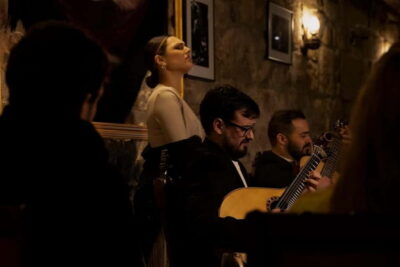
Porto: An Intimate Fado Show in a Historical Tavern
Read our review →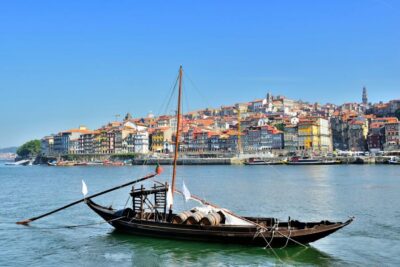
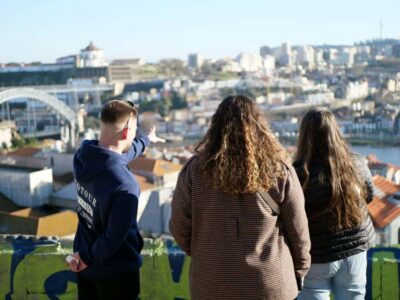
Porto: Private Tour of the Historic City in a Ford T Car
Read our review →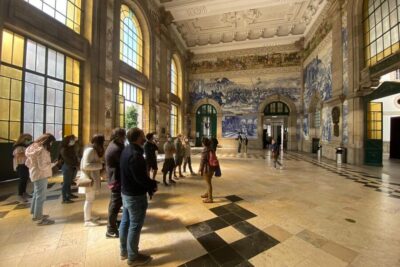
Historic Porto by Private Electric Tuk Tuk to Top Landmarks
Read our review →
Porto Guided Tour to the Historical Center on a Tuk Tuk
Read our review →
Porto: Private Tour to the Historic Center in a Classic Car
Read our review →Browse the lists this tour appears in