
Review · ROME
Rome: Ostia Antica Archaeological Park Ticket & Audio App
Ostia Antica gives you something Rome’s famous center cannot: a whole ancient city to walk through, not just a single monument. Streets, apartment blocks, villas, baths, mosaics, frescoes, and a theater reveal how ordinary Roman life worked beside the Tiber.
I like the freedom to explore at your own pace, and I like that the ticket reaches beyond Ostia to the Castle of Julius II, the Museum of Ships, the Imperial Ports, and the Necropolis of Porto. The main drawback is the park’s size and uneven paths. It is easy to lose your way, and a full visit can become an all-day walk.
Key points before you book
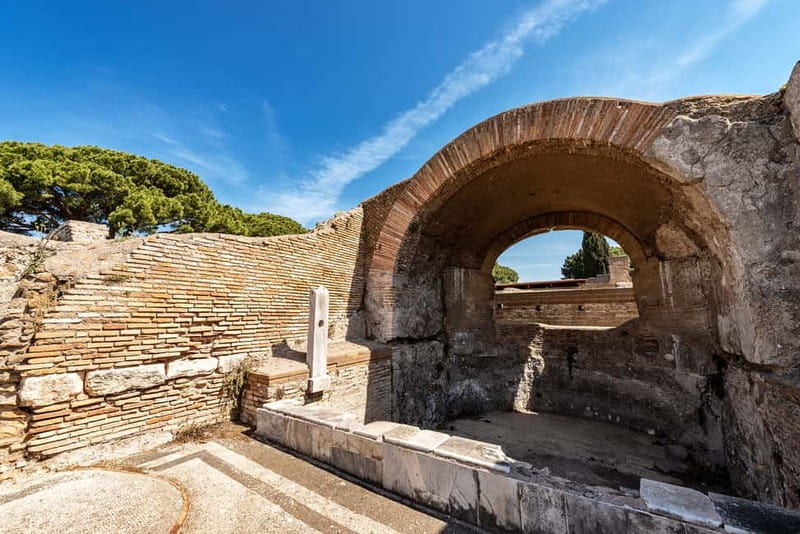
- A real Roman city, not just a ruin: Walk through streets, apartments, villas, baths, and public buildings spread across a large archaeological park.
- Strong surviving decoration: Mosaics and frescoes remain visible in several buildings, giving you a better sense of daily life than bare stone walls can.
- Audio guide included: Bring a charged smartphone and use the digital guide to add context as you move through the site.
- Five archaeological destinations covered: The ticket includes Ostia Antica, Castle of Julius II, the Museum of Ships in Fiumicino, the Imperial Ports of Claudius and Trajan, and the Necropolis of Porto on Isola Sacra.
- Plan for uneven ground: Comfortable, sturdy shoes matter here, especially if you intend to explore for several hours.
- Check the validity wording: The general description says eight days from first activation, while the detailed admission note says seven days. Confirm the current term when booking.
Why Ostia Antica feels different from Rome’s headline sights
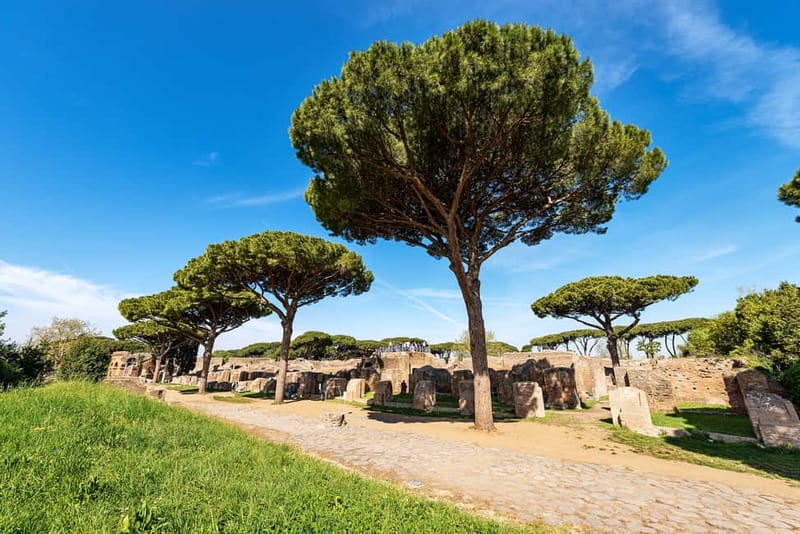
Ostia Antica was Rome’s port city at the mouth of the Tiber. Tradition credits King Ancus Marcius with founding it in 620 BC as a Roman colony. Over time, river silt covered much of the settlement, helping preserve its buildings and decorative work.
That preservation is the chief reason to come. You are not only looking at foundations. You can follow an ancient street, peer into former homes, and see mosaics still marking the floors of public and private buildings.
Rome’s Colosseum tells you about spectacle. Ostia Antica gives you a broader picture of urban life. You might find apartment blocks, villas, bath complexes, shops, religious buildings, and public spaces spread through one walkable site. The scale helps you picture a functioning community rather than an isolated monument.
The park is also less tightly programmed than many central Rome attractions. There is no fixed guided route supplied with this ticket. You exchange your voucher at the Ostia Antica ticket office, enter, and choose how much ground to cover.
That freedom is useful, but it places more responsibility on you. The route is not always clear, and even a guidebook may not make every turn obvious. Download or obtain a map if possible, then use the audio app as a companion rather than expecting it to guide every step automatically.
More Archaeological Site Tours in Rome:
- Rome Pantheon Semi-Private Guided Tour with an Archaeologist
★ 5.0 · 60 reviews - Ancient Rome: Archeological area Largo Argentina
★ 3.9 · 49 reviews - Rome: Private Colosseum Experience and Ancient Ruins Tour
★ 4.6 · 25 reviews
Streets, apartments, and the shape of Roman life
Start by paying attention to the town itself. The streets are not just a way to reach the next monument. They show how the settlement was organized and how people moved between homes, public buildings, and commercial areas.
The two-story apartment blocks are especially helpful for understanding the city as a place where many people lived close together. They counter the common image of ancient Rome as a collection of grand villas and emperors’ monuments. Ostia also had practical housing for a dense urban population.
You can then compare those apartment buildings with the larger villas. The difference in space and decoration gives you a useful social contrast. The preserved mosaics and frescoes are not merely pretty details. They help show how Roman interiors were finished and how decoration signaled comfort, taste, or status.
Give yourself time to look down. Some of the best details are underfoot, where mosaics mark rooms and public spaces. Look up as well, since wall paintings and traces of fresco work can change the feel of an otherwise plain structure.
The audio guide is valuable here. Without context, several walls can look alike after a while. With explanations, a room may become a home, a bath, a public facility, or part of a larger complex. The guide also gives you a way to pace your visit without joining a group.
The tradeoff is that audio navigation can be awkward. You may hear about a specific site and still need to work out exactly where it is. Keep your phone charged, pause when needed, and do not rush simply to follow the next audio stop.
Frescoes and mosaics reward a slower visit
The preserved decoration is one of the strongest reasons to choose Ostia Antica. Mosaics and frescoes survive in enough quantity to make the ancient city feel more immediate.
A quick walk can leave you with the general impression of old stone. A slower visit lets you notice patterns, room layouts, and changes in decoration from one building to the next. I would rather see fewer structures carefully than race through the whole park while missing the surfaces that make it special.
The site’s size makes this a practical decision. One rating described the visit as an all-day walk, and that is a fair warning. The park is extensive, and the paths can be uneven. Wear shoes with real support, carry water in warm weather, and plan breaks before your legs complain.
There is a café on the grounds, but it can be particularly hard to find. Do not count on stumbling across it at the exact moment you need food or a drink. Bring water and treat the café as a useful option rather than your only plan.
The park’s open layout also means shade and comfort may vary from one area to another. The supplied information does not promise a particular level of shade, seating, or refreshment access, so prepare for a long outdoor visit.
The theater and the Procoio villas
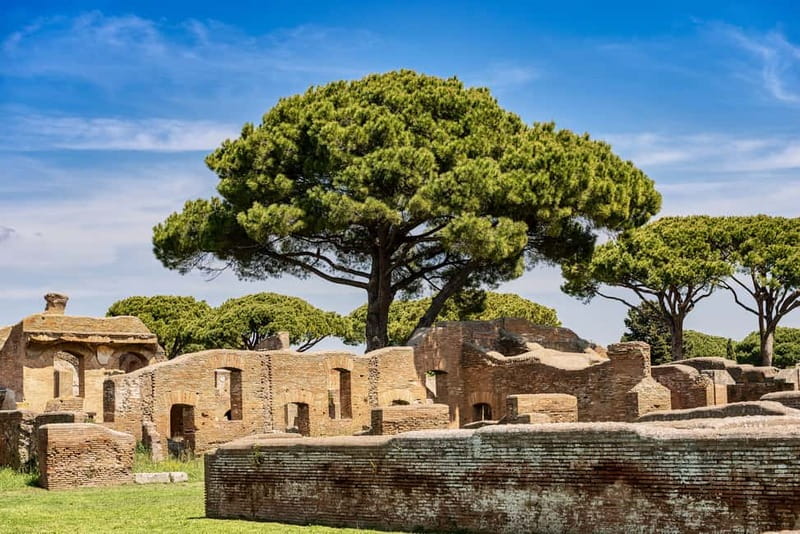
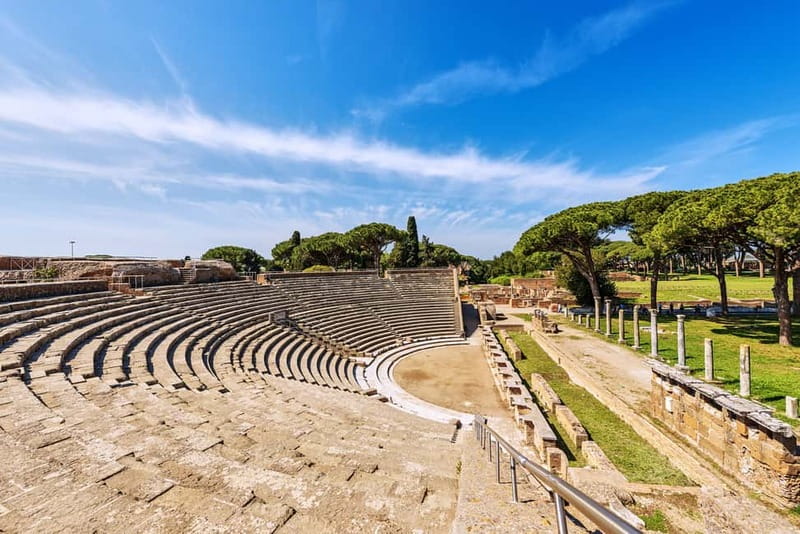
The seaside villas of Procoio add another layer to the visit. Their large bath complex shows how much space and organization went into Roman bathing culture. Baths were not simply places to wash. They were substantial public facilities, and their size helps you understand their role in civic life.
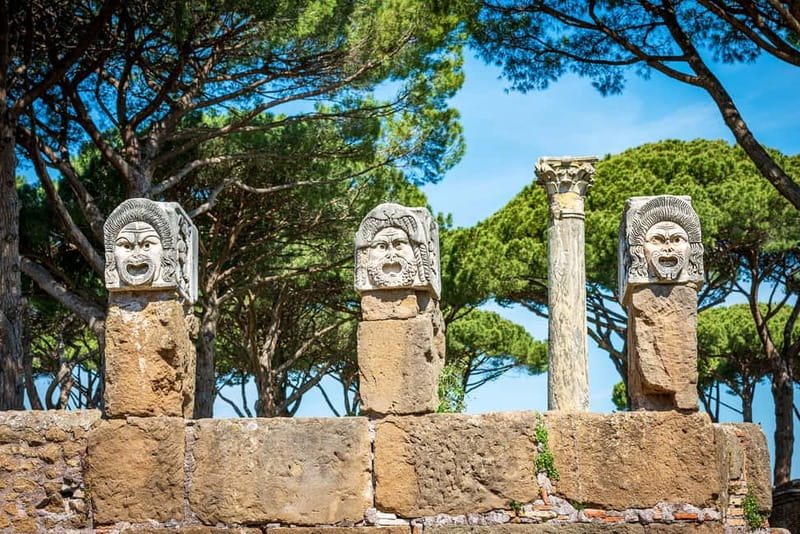
The nearby amphitheater is another clear highlight. Its stone theatrical masks are particularly striking. They give the structure a direct connection to performance and make the site easier to imagine than a simple arc of masonry would.
These buildings are good stops for the audio guide because their purpose benefits from explanation. You can see walls and rooms, but the guide helps connect them to the way the town functioned.
Do not expect a compact sequence in which every highlight sits beside the next one. The park covers a broad area, and the walking itself is part of the experience. If you have limited energy or time, select the areas that matter most to you rather than trying to claim every corner.
More Self-Guided Tours in Rome:
- Rome: Ancient Baths of Caracalla Ticket & Audio Guide
★ 4.2 · 99 reviews - Taormina: Ancient Theater Skip-the-Line Ticket & Audio Guide
★ 4.5 · 2,412 reviews - Athens: National Archaeological Museum Ticket & Audio Guide
★ 4.3 · 1,330 reviews - Medieval Torture Museum Ticket with Audio Guide and Ghost Hunting
★ 5.0 · 962 reviews
What the five-site ticket adds
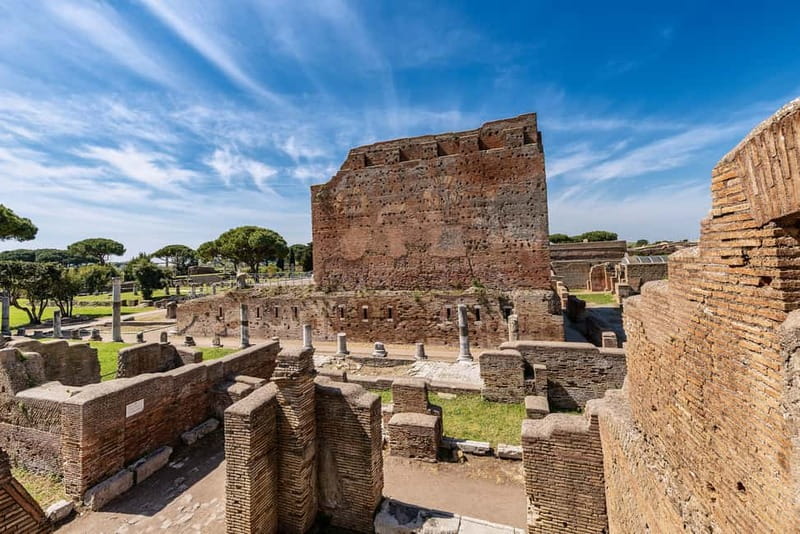
The ticket is not limited to Ostia Antica. It also includes one admission to each of four related places:
- Castle of Julius II
- Museum of Ships in Fiumicino
- Imperial Ports of Claudius and Trajan
- Necropolis of Porto on Isola Sacra
This broad coverage can improve the value of the $27 price, especially if you plan to visit more than one location. It also lets you build a small Roman port itinerary instead of treating Ostia as an isolated day out.
The important limitation is that transportation is not included. The ticket gives you entry, not a transfer between the sites. You will need to organize how you reach each one and allow enough time for the visits.
The additional sites are named in the admission package, but the supplied information gives no detailed route, transport plan, or time requirement for them. I would therefore treat them as optional additions unless you have already planned the logistics. Ostia Antica is the main experience described, and it can easily fill a substantial part of your day.
The ticket’s validity is also worth checking carefully. The general information states that it is valid for eight days from first activation. The detailed note says seven days from first admission. Both descriptions say one admission to each included site. Since that is a material difference, confirm the current validity period before you rely on it for a multi-day plan.
The audio app and the postcard feature
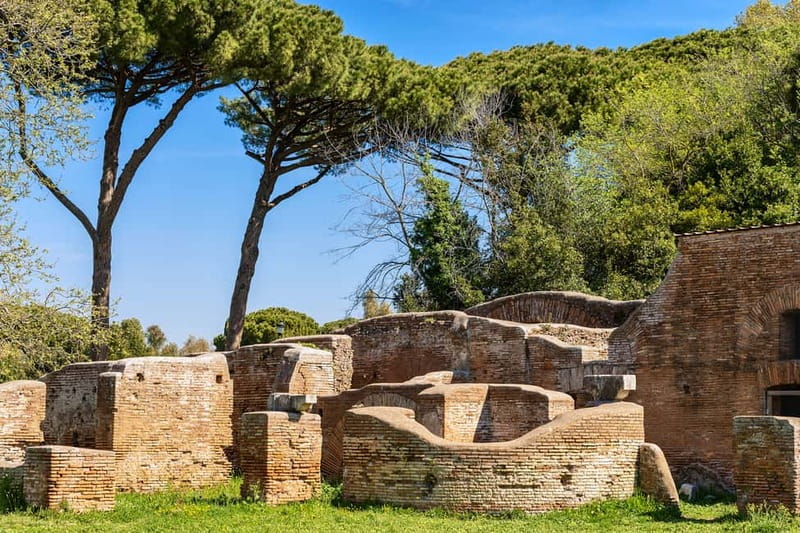
A digital audio guide is included, so you do not need to arrange a separate guide to get basic explanations. This suits you if you like stopping, rewinding, and setting your own pace.
It is also useful for visitors who want more than a silent walk through ruins. One of the strongest practical lessons from the experience is that Ostia Antica makes more sense with guidance. The audio app helps turn scattered remains into a story about homes, public buildings, decoration, and city life.
Still, a phone-based guide has limits. You must bring a charged smartphone, and you need to keep track of both your battery and your location. The paths are not always obvious, so use a map if you can. If the audio stops referring clearly to your surroundings, pause and get your bearings before moving on.
The postcard feature is a small but unusual extra. You can turn one of your own digital photos into a postcard and send it to friends or family anywhere in the world. It will not change the archaeological visit, but it gives you a physical souvenir tied to your own photograph rather than a standard shop purchase.
Is $27 good value?
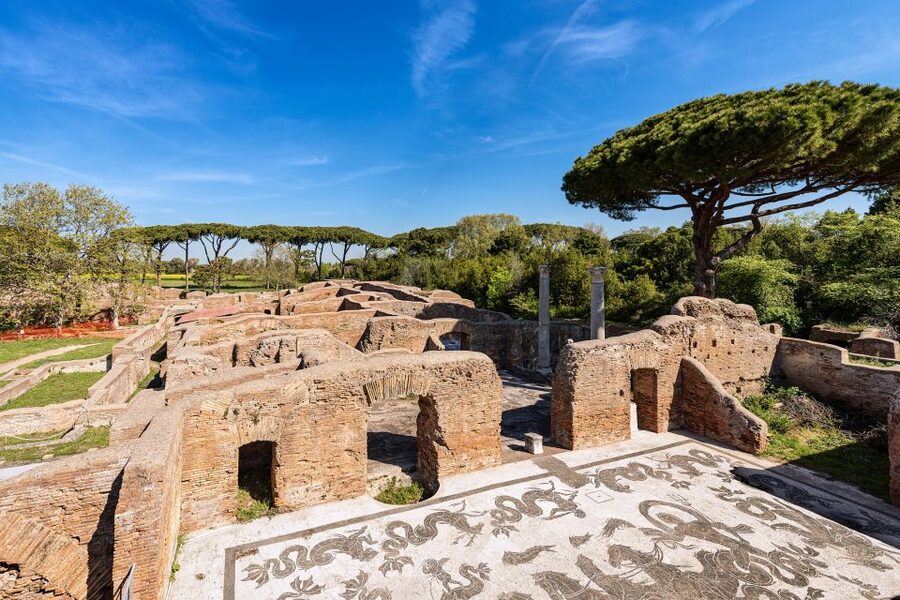
At $27 per person, the ticket is reasonably priced if you plan to spend several hours at Ostia Antica or use one or more of the additional admissions. The main archaeological park is extensive, and access to mosaics, frescoes, villas, apartments, baths, and the theater gives you plenty to see.
The value becomes stronger for a history-minded visitor who can use the connected sites during the validity period. The Castle of Julius II, Museum of Ships, Imperial Ports, and Necropolis of Porto are not just decorative extras on paper. They extend the subject from an ancient town to the port system around Rome.
The value is weaker if you want a quick, simple attraction near central Rome. Transportation is not included, the site is large, and the route can be confusing. You are paying for access to a place that rewards time and preparation, not for a short, tightly managed tour.
I would also factor in the cost of a map, water, and possibly food during the day. Those are ordinary sightseeing expenses, but the park’s size makes them more important here than at a compact city museum.
Practical planning for your visit
Begin at the Ostia Antica ticket office, where you exchange your voucher. Bring a valid passport or ID card, since identification is required.
Wear comfortable shoes, preferably with sturdy soles. The paths are uneven, and the distance between highlights can make flimsy footwear a bad choice. Carry a charged smartphone for the audio guide, and bring water, particularly in summer.
Allow more time than you would for a single monument. The site is large, and the most rewarding visit includes time to stop for mosaics, frescoes, apartment blocks, villas, and the theater. If you hurry, you may see the outline of the city but miss the details that make Ostia Antica memorable.
A map is especially useful because the route is not always clear. The audio guide adds information, but it does not remove the need to pay attention to where you are. The café can be difficult to locate, so do not plan your whole day around finding it.
The activity ends back at the meeting point, and there is no transportation included. Plan your arrival and departure separately from the admission itself.
Free cancellation is available up to 24 hours before the scheduled activity for a full refund. You can also reserve now and pay later, which helps if your Rome plans are still shifting.
Who should book Ostia Antica?
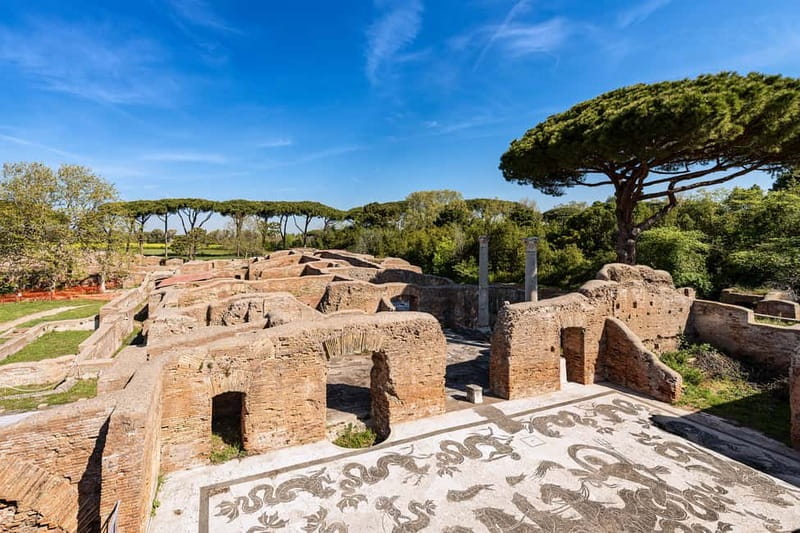
I would choose this for anyone who wants Roman history at street level. It suits you if you enjoy archaeology, ancient architecture, mosaics, frescoes, or long walks through open-air sites.
Families with older children may also find the city easier to picture than a museum case full of objects. The streets, rooms, masks, baths, and apartment blocks give you physical spaces to discuss as you walk.
It is less suitable if you need a short visit, dislike uneven ground, or want a fully guided experience with every movement organized for you. The audio app is included, but it is not the same as having a guide beside you to answer questions and point out each location.
Independent visitors who enjoy setting their own pace will get the most from it. You can focus on the buildings that interest you, stop for photographs, and use the multi-site ticket over several days if the current validity period works with your plans.
Should you book it?
Book this ticket if you want to see a preserved Roman town rather than another single monument. Ostia Antica offers a strong mix of urban planning, homes, villas, baths, mosaics, frescoes, and theater architecture, with an audio guide to supply needed context.
Before booking, accept three facts: the park is large, the ground is uneven, and transportation to the additional sites is your responsibility. Confirm the ticket validity because the supplied details say both seven and eight days.
For $27, it is a good buy for a prepared visitor who can spare most of a day and may use the other admissions. If you want a quick, effortless stop, choose something smaller. If you want to picture how a Roman port city actually worked, Ostia Antica deserves a place on your Rome plan.
FAQ
Where do I start the Ostia Antica experience?
You start by exchanging your voucher at the Ostia Antica ticket office.
How long is the ticket valid?
The general activity details state that the ticket is valid for eight days from first activation. The detailed admission information states seven days from the first admission, so confirm the current validity period when booking.
What sites are included?
The ticket includes Ostia Antica Archaeological Park, Castle of Julius II, Museum of Ships in Fiumicino, Imperial Ports of Claudius and Trajan, and the Necropolis of Porto on Isola Sacra.
Can I visit each included site more than once?
No. The admission information specifies one admission to each included site during the ticket’s validity period.
Is transportation included?
No. Transportation is not included, so you must arrange travel to Ostia Antica and the other included sites yourself.
Is an audio guide included?
Yes. A digital audio guide is included. You need to bring a charged smartphone.
What should I bring?
Bring a valid passport or ID card, comfortable shoes, and a charged smartphone. Water is also a sensible choice for the long, uneven paths.
Can I cancel the booking?
Yes. You can cancel up to 24 hours in advance for a full refund. Reserve now and pay later is also available.
More Audio Tours in Rome
- Gettysburg Battlefield Self-Guided Driving Audio Tour
★ 4.5 · 910 reviews - Delphi: Archaeological Site & Museum Ticket with Audio Tours
★ 4.3 · 721 reviews - Athens: National Archaeological Museum Ticket w/ Opt. Audio
★ 4.4 · 713 reviews - Naples: National Archaeological Museum Ticket & Audio App
★ 4.4 · 617 reviews
Just added around Rome
- Rome: Colosseum and Ancient Rome Guided Walking Tour★ 4.5 · 95 reviews
- Secrets of Rome: Historical True Crime Small Group Tour★ 4.9 · 85 reviews
- Rome: Rome at Night Evening Historical Walking Tour★ 4.9 · 24 reviews
- Rome Secrets: Dark History & Tasty Bites Tour★ 5.0 · 37 reviews
- Rome: Introduction to the Colosseum and Ancient City Tour★ 4.8 · 75 reviews
- Rome Pantheon Semi-Private Guided Tour with an Archaeologist★ 5.0 · 60 reviews
- Rome: Food Tour of the Historic Center with Rooftop Spritz★ 4.7 · 43 reviews
- Rome: Guided Tour of Colosseum and Ancient Rome★ 4.9 · 74 reviews
Rome History Tours, compared.
Colosseum: Underground and Ancient Rome Tour
Read our review →
Rome: Colosseum with Arena, Roman Forum and Palatine Guided Tour
Read our review →
Colosseum with Arena, Roman Forum and Palatine Hill Guided Tour
Read our review →
Colosseum & Ancient Rome with Arena Floor Option I Max 6 People
Read our review →
Rome: Colosseum, Ancient Rome Tour or AudioGuided Tour
Read our review →
Colosseum Underground & Ancient Rome Guided Tour
Read our review →
Rome: Colosseum Arena, Roman Forum & Palatine Hill Tour
Read our review →
Colosseum, Roman Forum & Palatine Hill Guided Tour
Read our review →Browse the lists this tour appears in